
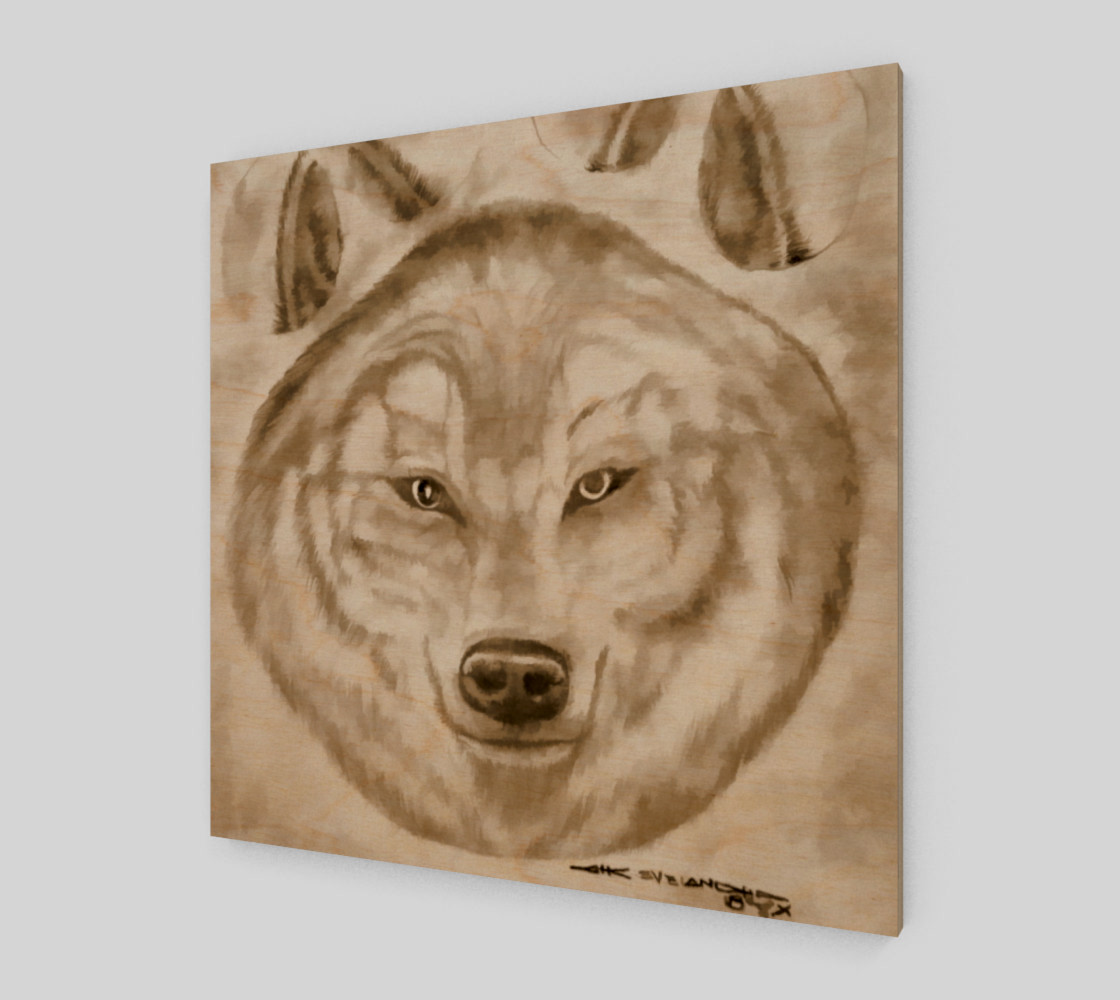
Perry Cleveland was born in Navajo Nation’s Fort Defiance, Arizona (Navajo: Tséhootsooí)* near Window Rock** (often covered in Western movies). His parents died in a car accident when Perry was little and so he never knew them. He was raised by grandmother and grandfather Frank C.Nez, of famed Nipple Bute. He lived to be one hundred years old, in a cedar log home ensconced in mud (known as a “hogan home”, typically built in octagon shape with stove in the center of the room.
The hogan was surrounded by grandmothers of four different clans that lovingly tended to all of their children. One of Perry’s cousins did leather work and another silver-smithing so typical of Navajo artisans. Another cousin also draws, like himself, and paints.
Perry has fond memories of his farm where his family raised corn, chicken, sheep, goats, cows and other animals. This is where his love for critters, truly apparent in all of his drawings, started. Perry memories of drawing went back to the tender age of seven years old, when he picked up any pen he could find drawing on anything he could find—like paper plates, brown paper backs and Arizona desert Rocks. He animals were all gone by the time he went to high school. As for his grandfather: Frankie stayed on the family until well into the 1970s—until the Navajo-Hopi Land dispute.
In 1984, the US government decided that the Cleveland family had to give up the land which was, up until then, located in the center of the center of Navajo Nation reservation to the Hopi tribe. A modest monetary consolation was bestowed by the government to make up for this small inconvenience. After this, all the animals and the family dispersed.
Perry left at age nineteen to travel on his own, kissing his past and future promises, good-bye.
He hitch-hiked across Arizona and New Mexico while drawing animals like cows and horses he remembered from his childhood days and often shared his unique gift with homeless people by way of selling his beautiful animal drawings so that his friend can eat for the day.
After Perry left home, he shacked up in a bachelor frat house with seven people, a radio, and a couch. Perry used be sign his drawings as “Lone Wolf” in those days until 1989 (may be of interest to collectors.)
The traveling spirit has been with Perry throughout his adult life. The Nomadic inclinations of his grandfathers so abruptly halted by the confinements of reservations where nobody ever gets to own land made him throw it all in the wind while, giving away his drawings for a sandwich, a drink or the satisfaction of knowing he just kept a friend alive.
When looking into an animals eyes, Perry feels calm and a sense of knowing who they really are and, in return, a sense of knowing that they truly know who he really is. They’re pure spirits looking out for us. His spirit creatures are often accompanied by feathers. A solo eagle feather stands for an acknowledgement by the chiefs that an enemy or predator animal was kept at bay. Three feathers conote fearlessness.
The eagle represents your freedom. It can travel anywhere. Likewise, Perry can pick up a rock to draw on it when he is hungry or thirsty. If he can help someone else, he will do it for free.
Perry Cleveland’s unique signature under all of his drawings not only looks like a work of art all its own but is full of meaning: Next to the artful rendering of his name that is reminiscent of an arrow, you will notice a buffalo head, and four dots representing the four corners of Earth, to which he will kiss his creation good-bye when passing it on to its new owner.
Remarkably, all Indian Country nations honor four sacred mountains that are located within the vicinity of their individual homelands. For the Mescalero Apaches, for example (where Perry now makes his home after raising a family with a former Apache wife, he now with partner, Ms. Comanche). Now, a common quest bonds all tribes: to keep the original culture moving forward in parallel to integrating to the dominant culture where the quest for wealth rules–a concept distasteful and repugnant to many Native souls. In southern New Mexico, the four sacred mountains are the Sierra Blancas, Guadalupe mountains, Three Sisters and Obscura Mountain peak. One might easily replace those names by those surrounding Fort Defiance or the San Francisco Bay Area sentinels seen from the towering Mt. Umhunum. The concept remains the same: Mother Earth will always be there to envelop and cradle us, shows us the way, takes care of us and we have an obligation to take care of her.
Perry often uses the base symbol of the circle quartered in fours by two lines which is a powerful base metaphor for the way of life for Apaches, also. Representing the entire Universe and four directions, it can be picked apart to be four triangles representing the four sacred mountains, four stages of live, four seasons, four parts of a speech and other rites paramount to the way of living a truthful life that is in harmony the best interest of Earth and all creatures inhabiting it.
With his drawings, Perry Cleveland is an acting messenger of culture and somebody who wishes to share the integrity of creatures. If we listen carefully, can we hear them bekon us to heed our inner voices to re-connect with truth and beauty that is all around us?
To view but a few of Perry’s artworks, check out his online store here or contact him via the artist dashboard on that page.
—JLE
From Wikipedia.com:
*Fort Defiance was built on valuable grazing land that the federal government then prohibited the Navajo from using. As a result, the appropriately named fort experienced intense fighting, culminating in two attacks, one in 1856 and another in 1860. The next year, at the onset of the Civil War, the army abandoned Fort Defiance. Continued Navajo raids in the area led Brigadier General James H. Carleton to send Kit Carson to impose order. The fort was reestablished as Fort Canby in 1863 as a base for Carson’s operations against the Navaho. General Carleton’s “solution” was brutal: thousands of starving Navajo were forced on a Long Walk of 450 miles (720 km) and interned near Fort Sumner, New Mexico, and much of their livestock was destroyed. Following completion of this campaign in 1864 the fort was abandoned once again and it was burned by remaining Navajo, with only its walls remaining. The Navajo Treaty of 1868 allowed those interned to return to a portion of their land, and Fort Defiance was reestablished as an Indian agency that year. In 1870, the first government school for the Navajo was established there.
**Window Rock (Navajo: Tségháhoodzání) is a small city that serves as the seat of government and capital of the Navajo Nation, the largest territory of a sovereign Native American nation in North America. It lies within the boundaries of the St. Michaels Chapter, adjacent to the Arizona and New Mexico state line. Window Rock hosts the Navajo Nation governmental campus which contains the Navajo Nation Council, Navajo Nation Supreme Court, the offices of the Navajo Nation President and Vice President, and many Navajo government buildings.
Today, the site of Fort Defiance is populated by buildings dating from the 1930s to the present day used by various governmental agencies including the Bureau of Indian Affairs, Indian Health Service, and the Navajo Nation. The largest of these buildings was the Fort Defiance Indian Hospital until 2002.
To visit Perry’s shop where you can admire some of his work, click here.