The camera never lied … until AI told it to

The camera never lied … until AI told it to

An amateur photographer who goes by the name “ibreakphotos” decided to do an experiment on his Samsung phone last month to find out how a feature called “space zoom” actually works.

The feature, first released in 2020, claims a 100x zoom rate, and Samsung used sparkling clear images of the moon in its marketing.

Ibreakphotos took his own pictures of the moon — blurry and without detail — and watched as his phone added craters and other details.

In a time of both misinformation and too much information, quality journalism is more crucial than ever.
By subscribing, you can help us get the story right.

SUBSCRIBE NOW

The Photographer Who “Deceived” Thousands On Instagram With AI Images

The Photographer Who “Deceived” Thousands On Instagram With AI Images
The Photographer Who 'Deceived' Thousands On Instagram With AI Images

Jos Avery said the AI tool has been hugely beneficial

Paris:

Jos Avery was given a camera almost four decades ago, sparking a lifelong fascination with photography.

But last September he found a new creative outlet, one that led him to deceive thousands of people: the artificial intelligence program Midjourney, which generates wild and wonderful images from brief text instructions.

“Soon after starting with Midjourney, I became obsessed with the creative possibilities,” Avery told AFP.

Midjourney and rivals like DALL-E 2 and Stable Diffusion generate unique pictures by mashing up a vast back catalogue of images they have been “trained” on.

na12mrbg

For Avery, a 48-year-old software engineer and lawyer by training from Virginia in the United States, Midjourney was liberating.

He said it allowed him to create beautiful art without needing to tackle his own social anxieties.

“Then I started to wonder if I could make AI images that could pass for photographs,” he said.

This led to his fateful experiment: He started an Instagram account to house his Midjourney output, without being entirely upfront about the origins of the images.

– ‘Misleading’ –

“At the beginning, I don’t think many people thought the images were photographs,” he said. “The eyes and skin were unrealistic.”

He fixed these glitches with a dose of Adobe Photoshop, eventually populating his Instagram feed with stunning and stark portraits of beautiful — but unreal — people.

More users flocked to his feed, and more of them began to think the images were genuine.

pv36ktl

“People would ask in the comments about my camera and lens equipment,” he said.

“I’d respond with the equipment I actually use for real photos or equipment I had included as part of the prompt.”

He admits his answers were “misleading” since they suggested he had used his gear to create those specific images.

Yet he just got deeper into the deception, spending hours choosing and editing images to boost the realism and deleting earlier efforts that were more obviously AI-generated.

His follower count was rising rapidly, so the experiment was a success.

But he was struggling to maintain the facade.

– Losing sleep –

“It grew far beyond my expectations,” Avery said.

“The followers and my misleading answers made me feel uneasy, and I had trouble sleeping at night.”

He eventually told the specialist website Ars Technica what he had done, added a mention of AI to his Instagram biography and started to give honest answers to his followers.

“I’ve slept a lot better since then,” he said.

Although he did get some abuse — “I had to block about 30 people” — he said the reaction overall was positive, and his Instagram account, now with almost 40,000 followers, is still growing.

These days he populates it with both real photography and clearly labelled images generated from Midjourney.

He said the AI tool has been hugely beneficial, helping him discover a love for portrait photography.

But the downside is that once again he isn’t sleeping so well — he stays up all night creating images on Midjourney.


(This story has not been edited by NDTV staff and is auto-generated from a syndicated feed.)

Jos Avery: the ‘AI-obsessed’ photographer who tricked Instagram

Jos Avery: the ‘AI-obsessed’ photographer who tricked Instagram
Jos Avery was given a camera almost four decades ago, sparking a lifelong fascination with photography.

But last September he found a new creative outlet, one that led him to deceive thousands of people: the artificial intelligence program Midjourney, which generates wild and wonderful images from brief text instructions.

“Soon after starting with Midjourney, I became obsessed with the creative possibilities,” Avery told AFP.

Midjourney and rivals like DALL-E 2 and Stable Diffusion generate unique pictures by mashing up a vast back catalogue of images they have been “trained” on.

For Avery, a 48-year-old software engineer and lawyer by training from Virginia in the United States, Midjourney was liberating. He said it allowed him to create beautiful art without needing to tackle his own social anxieties.

“Then I started to wonder if I could make AI images that could pass for photographs,” he said.

Discover the stories of your interest

imageimage

This led to his fateful experiment: He started an Instagram account to house his Midjourney output, without being entirely upfront about the origins of the images.‘Misleading’

“At the beginning, I don’t think many people thought the images were photographs,” he said. “The eyes and skin were unrealistic.”

He fixed these glitches with a dose of Adobe Photoshop, eventually populating his Instagram feed with stunning and stark portraits of beautiful – but unreal – people.

More users flocked to his feed, and more of them began to think the images were genuine. “People would ask in the comments about my camera and lens equipment,” he said.

“I’d respond with the equipment I actually use for real photos or equipment I had included as part of the prompt.”

He admits his answers were “misleading” since they suggested he had used his gear to create those specific images.

Yet he just got deeper into the deception, spending hours choosing and editing images to boost the realism and deleting earlier efforts that were more obviously AI-generated.

His follower count was rising rapidly, so the experiment was a success. But he was struggling to maintain the facade.

Losing sleep

“It grew far beyond my expectations,” Avery said. “The followers and my misleading answers made me feel uneasy, and I had trouble sleeping at night.”

He eventually told the specialist website Ars Technica what he had done, added a mention of AI to his Instagram biography and started to give honest answers to his followers.

“I’ve slept a lot better since then,” he said.

Although he did get some abuse – “I had to block about 30 people” – he said the reaction overall was positive, and his Instagram account, now with almost 40,000 followers, is still growing.

These days he populates it with both real photography and clearly labelled images generated from Midjourney. He said the AI tool has been hugely beneficial, helping him discover a love for portrait photography.

But the downside is that once again he isn’t sleeping so well – he stays up all night creating images on Midjourney.

Stay on top of technology and startup news that matters. Subscribe to our daily newsletter for the latest and must-read tech news, delivered straight to your inbox.

Protecting the Creative Works of Cherokee Artists

Protecting the Creative Works of Cherokee Artists

Guest Opinion. For too many generations, citizens of tribal nations around the country, including Cherokee Nation citizens, saw their language, their culture and their artistic expression suppressed and eroded by policies of the United States. Meanwhile, many non-Indians have profited from art based on stereotypes and misrepresentations of Native Americans.

The federal Indian Arts and Crafts Act, first passed in 1990, finally put some long-needed protections in place. It is a truth in advertising law intended to protect Indian artists and consumers. Unfortunately, the law still defines “Indian” and “Indian tribe” too broadly. Instead of reserving the label of “Indian art” to members of federally recognized tribes, current law extends that protection to state-recognized tribes, which have not passed any of the important federal safeguards against falsely claiming tribal identity.

Never miss Indian Country’s biggest stories and breaking news. Sign up to get our reporting sent straight to your inbox every weekday morning. 

Recently, I sent a letter urging Congress to strengthen the federal Indian Arts and Crafts Act by reserving its protections to members of federally recognized tribes. I called for Congress to include these changes in the proposed ARTIST Act.

The list of fake tribes and state-recognized tribes is long. At least 10 state-recognized groups across the country make a false claim to Cherokee history and culture. These groups pose as Cherokee tribes and issue membership cards, usually for a fee. Rather than earn federal recognition through a rigorous examination of history, facts and the law, they perpetuate a fraud.

Unfortunately, the Indian Arts and Crafts Act — a law intended to protect Native artists — helps these “tribes” in their quest for legitimacy. Under the law, artists with membership in these fraudulent organizations compete alongside Cherokee citizens in selling art under the federally protected “Indian art” label. 

This is an offense to our ancestors, an offense to our artists and confusing to art patrons. As Chief, I will not tolerate it. So, let’s do something about it. Let’s tell Congress that our ancestors endured too much to allow fake tribes to undermine our culture and lifeways. Let’s tell Congress that our artists, and artists in all federally recognized tribes, deserve to be respected. Let’s tell Congress that if a person is going to sell their art as Indian art, they ought to at least be an Indian.

Deputy Chief Bryan Warner and I took an oath of office to preserve and defend Cherokee sovereignty and culture, which are threatened by the countless examples of people falsely claiming Cherokee Nation citizenship and ancestry. Our oath compels us to speak up to federal leaders.

We need your help, too. Genuine Native artists across the Cherokee Nation and across the country need your help. I’m asking you to join me and Deputy Chief Warner in calling on Congress to remove non-federally recognized tribes from the Indian Arts and Crafts Act. The law must be changed to protect actual Cherokees, including thousands of Cherokee artists, artisans and craftspeople who are citizens of the Cherokee Nation, the Eastern Band of Cherokee Indians or the United Keetoowah Band of Cherokee Indians.

Cherokee Nation Principal Chief Chuck Hoskin, Jr.

Tribes like the Cherokee Nation — which has been continuously federally recognized since the founding of the country — and other tribes and bands recognized later under federal law are the only legitimate tribes. If groups posing as tribes under state law want the unique rights and responsibilities of Indian tribes, including protections for Indian artists, these groups should go through the rigorous process of federal recognition, just like the other 574 federally recognized tribes.

The Senate Committee on Indian Affairs is seeking comment on the proposed ARTIST Act of 2023. Now is the time to push for changes in federal law that give Indian artists the respect and protection they deserve.

You can visit the Cherokee Nation’s Citizen Action website for a template letter showing your support for the strengthening of the Indian Arts and Crafts Act. Email your letter and comments to [email protected]. The deadline to let your voice be heard is Friday, April 14.

Chuck Hoskin, Jr. is the pirncial chief of the Cherokee Nation.

More Stories Like This

The Catholic Church Should Admit Its Sins
Native Graduates Have the Right to Wear Eagle Feathers, Tribal Regalia
Right-Wing Commentator Trashes GVSU’s Celebration for Native American Students 
Easing the Food Insecurity Burden Across the Cherokee Nation Reservation

12 years of Native News

This month, we celebrate our 12th year of delivering Native News to readers throughout Indian Country and beyond. For the past dozen years, we’ve covered the most important news stories that are usually overlooked by other media. From the protests at Standing Rock and the rise of the American Indian Movement (AIM), to the ongoing epidemic of Murdered and Missing Indigenous People (MMIP) and the past-due reckoning related to assimilation, cultural genocide and Indian Boarding Schools.

Our news is free for everyone to read, but it is not free to produce. That’s why we’re asking you to make a donation this month to help support our efforts. Any contribution — big or small — helps. If you’re in a position to do so, we ask you to consider making a recurring donation of $12 per month to help us remain a force for change in Indian Country and to tell the stories that are so often ignored, erased or overlooked.

Donate to Native News Online today and support independent Indigenous journalism. Thank you. 

About The Author
Author: Chuck Hoskin JrEmail: This email address is being protected from spambots. You need JavaScript enabled to view it.


Sitting Bull portrait sells at auction to private bidder

Sitting Bull portrait sells at auction to private bidder
image

CLEARWATER, Fla. — The rare portrait of Lakota leader Sitting Bull (1831-90) that was up for sale at Blackwell Auctions sold for $67,100 on March 18 to a private purchaser from the northeastern United States.

The portrait was one of four paintings of Sitting Bull created by New York artist and activist Caroline Weldon, and is thought to be the only one still in private hands.

#placement_575850_0_i{
display: block !important;
}
#placement_575850_0_i{width:100%;margin:0 auto;}

Big Island Now : National landmark known for large Hawaiian archives welcomes new leadership

Big Island Now : National landmark known for large Hawaiian archives welcomes new leadership

April 9, 2023, 6:00 AM HST

Five unknown Hawaiian men pose on a “carte de visite,” or visiting card. The cards became popular during the mid-19th century as photography became affordable. Photo Courtesy: Hawaiian Mission Houses Digital Archive

Hawaiian Mission Houses Historic Site and Archives – a National Historic Landmark in downtown Honolulu – has named a new executive director among several staff changes.

New executive director Erin Shapiro, a museum professional who most recently served as deputy director of community engagement at the Taubman Museum of Art in Roanoke, Virginia, will now lead the historic site and archives.

“I am so honored and excited to be back in Hawai‘i and to be a part of this organization,” Shapiro said. “I look forward to continuing to grow HMH’s digital outreach capacities and am excited to see the expanded impact the collection has on our local, state, national and global communities.”

ARTICLE CONTINUES BELOW AD

The American Board of Commissioners for Foreign Missions sent 12 companies of missionaries, support staff and teachers, who landed at the Hawaiian Islands between 1820 and 1848. Hawaiian Mission Houses seeks to share the uniqueness of the relationship that occurred in the mid-19th century between the missionaries and Hawaiian aliʻi (chiefs) to cooperate on introducing literacy, Christianity, constitutional government, polyphonic music, Western medicine and the living legacy of that cooperation.

Cooke descendants circa 1922. James “Bud” Morgan is on the far left in the front sitting on his father’s lap. Taken at Luakaha in the back of Nuuanu Valley where the Cookes and then the Athertons had a large house. Photo Courtesy: Hawaiian Mission Houses Digital Archive

The Hawaiian Mission Houses library and historical archive holds over 80,000 digital pieces and is home to one of the largest collections of Hawaiian language printed material in the world.

“Collecting is an intrinsic part of humanity and asking someone what they collect is an insightful way to get to know who they are on a deeper level. Institutional collections function in a similar manner; they are a blueprint of what the organization’s mission and focus is,” Shapiro said. “The Hawaiian Mission Houses Historic Site and Archives has a remarkable permanent collection spanning material culture, books, letters, illustrations and more … Access to and engagement with an institution’s collections has been a priority throughout
my career and will be a focal point as executive director.”

New Hawaiian Mission Houses Executive Director Erin Shapiro. Photo Courtesy: Hawaiian Mission Houses
ARTICLE CONTINUES BELOW AD

Other staff changes at the Hawaiian Mission Houses Historic Site and Archives are as follows:

  • Elisabeth Case – began Feb. 1 as Director of Development and Marketing. Case has worked with multiple sectors including hospitality, culture and the arts, and education and nonprofits such as The Contemporary Museum (Hawai‘i’s contemporary art museum), Hawai‘i Opera Theatre, and the Hawai‘i chapter of the American Cancer Society.
  • Lisa Solomine – will be stepping into a new role at Hawaiian Mission Houses as curator of community engagement. This newly created position will focus on the development of community and institutional partnerships at the local, state, national, and international level.
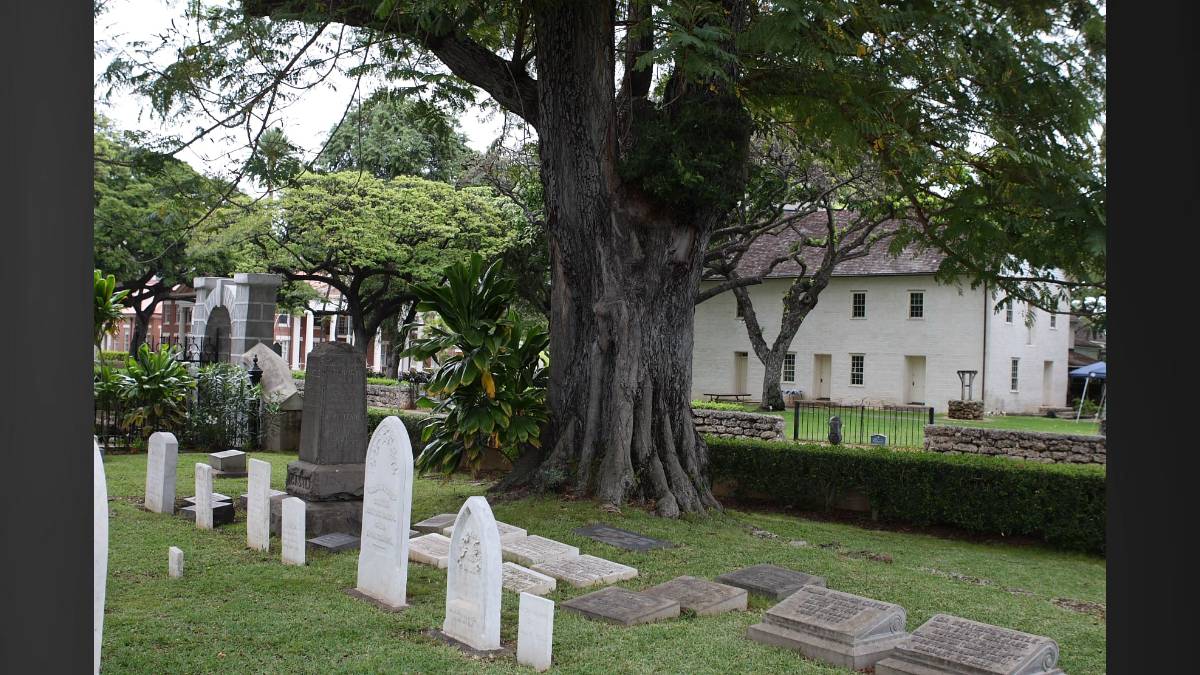
The Hawaiian Mission Houses’ cemetery. The first adult missionary buried here was Elizabeth Edwards Bishop (1798 – 1828), the first wife of the Reverend Artemas Bishop, who came to the Hawaiian Islands in 1823 from New Haven. Photo Courtesy: Hawaiian Mission Houses
  • Mike Smola – has been promoted to director of education. He has been on staff since 2008 and has been curator of public programs for the last 12 years. He is also the researcher behind the award winning History Theatre programs at Hawaiian Mission Houses.
  • Marissa Rohlfing – is the incoming society relations director. Born and raised in Hawai‘i, she is a Cooke descendant from the Cooke/Atherton lineage. With a background that includes event planning, running media campaigns, financial management, and creating and sustaining community relationships, Rohlfing aims at cultivating healthy civil discourse between descendants and the administration.
  • Susan Pelfrey – the new curatorial assistant has been involved with Hawaiian Mission Houses since 2000. As Hawaiian Mission Houses’ new curatorial assistant, she will be providing care and maintenance of the collections which will involve everything from updating the database to organizing the collection areas to identifying objects in need of conservation.

For more information visit Missionhouses.org.

Brent Young 1968-2023

Brent Young 1968-2023

SEATTLE — “We are saddened to share that Brent Young, 54, lost his battle with prostate cancer, Friday, March 10, 2023. Much loved by all, Brent was a devoted son, brother, husband and uncle.”

He is survived by his wife, Leanne; mother, Diana; brothers, Darren and Jonathan; two nieces and three nephews. He reunites in heaven with his father, Bill, and his infant daughter, Josie.

Born in Pennsylvania, Brent spent his childhood in Youngstown, helping his dad run the family pizza shop and engaging in all kinds of shenanigans with his two brothers and many neighborhood friends. A graduate of Youngstown State University, Brent went on to live in Minneapolis, Chicago and his most recent home, Seattle. He had a career in sales and marketing in the parking industry, but most relished his time spent in pursuit of art, music and having fun with friends.

As a founding member and guitarist for the Youngstown band The Februarys, Brent and his buddies entertained throngs of fans with their alternative rock and shirtless riffs on the guitar. He also produced numerous works of art that were exhibited and sold in neighborhood establishments, many of which featured his favorite subjects of elephants and flags.

Wherever he lived, Brent embraced the home sports teams with unrivaled enthusiasm and enjoyed rooting them on at local pubs, dressed head-to-toe in team memorabilia. With his contagious laugh and talent for putting others at ease, he was surrounded by good friends and good times throughout his 54 years. Generous and big-hearted, Brent was known to gift Garrett’s popcorn, throw a BBQ with his award-winning ribs or lighten the mood with a corny joke. He loved to go camping and fishing, never turned down a game of golf and cherished Christmas more than the average 6-year-old. For the less fortunate, he kept a stash of socks and beef jerky in the back of his beloved Mini Cooper so that he could hand them out to anyone in need.

Brent found comfort in attending church and demonstrated his faith by loving and helping others. His life was too short, but he was able to enjoy his final years by traveling the world with his wife and spending quality time with those who were precious to him.

“He brought joy to so many, and we will miss him dearly.”

A celebration of life will be held at 3 p.m. Saturday, May 20, 2023, at Covenant Presbyterian Church, 2012 W. Dickens Ave., Chicago, Ill.

(special notice)

‘Greetings from Buffalo’ lauded the city’s tourism. Then came the copyright infringement notices

‘Greetings from Buffalo’ lauded the city’s tourism. Then came the copyright infringement notices

Casey William Milbrand’s Ellicott Street mural Greetings from Buffalo has been celebrated as a symbol of Buffalo’s tourism and a made-for-Instagram backdrop.


FEATURES Casey Milbrand mural CANTILLON

Artist Casey William Milbrand works on his colorful new “Greetings from Buffalo” mural on the south side of the Washington Market building at 461 Ellicott St., Tuesday, Oct. 25, 2016.


But nearly seven years after the mural’s creation, Milbrand faces criticism for sending invoices to businesses and institutions requesting sums from $5,000 to $180,000 for alleged copyright infringement. In two of these letters and invoices shared with The Buffalo News, Milbrand includes screenshots that show images of his murals used in businesses’ marketing, promotional and branding materials without attribution to the artist.

If organizations do not meet the asking price within 10 days, the documents read, the invoice offer is moot and Milbrand writes that he will contact his attorney. Because Greetings from Buffalo is protected by federal copyright – a copy of which he also includes in the letter – Milbrand could through U.S. Copyright Law pursue up to $30,000 for each infringement and $150,000 for each if he can prove his work was intentionally reproduced for profit. 

People are also reading…

Get your selfie-sticks ready, Buffalo. There’s a new mural in town, and it is almost ready to compete for your Instagram-fueled affections. Casey William Milbrand expects to complete his picture-postcard mural on the south wall of the Washington Market at 461 Ellicott St. this week. The piece, funded with $6,500 in crowd-sourced donations, practically glows with Buffalo pride. It depicts a

The News has confirmed that since 2021, Roswell Park, the University at Buffalo, 43North, Welcome 716 and Buffalo Bike Tours have all received invoices from Milbrand alleging copyright infringement. The invoice sent to UB asked for $180,000, confirmed university spokesperson John Della Contrada, who said UB removed the images immediately from its website and photo archives. The university had no further comment due to ongoing litigation, he said. Milbrand is a 2003 UB graduate, according to the school’s website.

Greetings from Buffalo has “become the go-to place for tourists and residents alike who are looking for the perfect selfie to show off their Buffalove,” reads a blurb on the artist’s website. Milbrand said Tuesday that copyrighting protects his artistic rights while emphasizing the community value of his work. 

“Beyond my own art, I want to inspire other Buffalo-based artists and artists across the country how to value themselves, how to respect themselves, and most importantly, how to protect their work as working professionals,” Milbrand said in a statement. “Copyrighting every single mural design is necessary if you want to be a professional artist.”

Some of the targets of Milbrand’s invoices – and even some who originally supported his endeavor – have spoken against the method the artist employs and the funds he demands to protect his copyright.

“This was meant to be a city beautification project,” said Jason Rothschild, vice president for Signature Development, which owns the building adorned with the Greetings from Buffalo mural. “We offered that wall up free of charge to the artist.” 

Rothschild said he is weighing options on the future of the mural.

“It’s antithetical to the idea of community,” said Marc Moscato, owner of Buffalo Bike Tours and a target of Milbrand’s invoicing.

Unique, colorful murals are popping up around Western New York. Take a look at some of them through the camera lens of The Buffalo News’ photographers.


Ellen Przepasniak


Two small businesses impacted

Moscato, who describes his bike tour business as a “side hustle,” said he never corresponded with Milbrand before receiving a letter from Casey Milbrand Design Inc. last Monday.

The letter included five screenshots from Moscato’s business website, BuffaloBikeTours.com, a few of which showed bicycle riders posing in front of the Greetings from Buffalo mural, including one with a “Book Now” link for his guided history tour. Moscato said he did not know Milbrand’s artwork was copyrighted.

The invoice attached to the letter requested $5,000. Moscato said Wednesday that the amount is greater than his tours’ total revenue from last year, and that the image of the riders in front of Milbrand’s mural represents a “Kodak moment” from one of about a dozen stops along the history tour. Moscato said he has removed the images from his website and no longer plans to stop at Milbrand’s mural on the tour.

“It’s bizarre behavior,” said Moscato of Milbrand’s approach. “It’s not how I’d conduct myself or my business.”

Moscato said he holds a master’s degree in arts administration and stressed that he believes artists should be fairly compensated for their work. He wished Milbrand would have called him or even sent a cease-and-desist order to give Moscato a chance to remedy the situation by means other than paying $5,000. 

“That more than anything else is the upsetting thing,” Moscato said.

After he posted from his personal Facebook account asking for advice on how to respond to the invoice, Moscato said he received an email from Stuart B. Shapiro, Milbrand’s attorney, threatening a defamation suit.

Casey William Milbrand, the artist who launched a thousand Instagram selfies and wedding proposals with his photogenic “Greetings From Buffalo” mural on Ellicott Street, is at it again. Milbrand’s new mural, a blast of bold color and ’70s-era typography, on the side of CRāVing Restaurant at 1472 Hertel Ave., will bear a simple message about the surrounding neighborhood in lower-case

Justin DeLuca, president of Welcome 716, which produces a hotel guide and website, confirmed his business was billed by Milbrand for $80,000 on Dec. 3. The invoice alleged Welcome 716 used the artist’s murals in promotions and advertising. DeLuca declined to speak in detail about the situation, but he said the issue represents a significant burden to his business.

Neither Moscato nor DeLuca said they received a cease-and-desist order prior to being invoiced.

Asked how he would respond to angry business representatives to whom he has alleged copyright infringement, Milbrand pointed to his growth as a professional artist.

“As an artist you must become an expert on things you never dreamed of,” he said. “Copyrighting, licensing, contract negotiations, project management, proposal writing and project fundraising are all new skills that I learned from teaching myself how to run my own art business. My mural designs have raised thousands of dollars for the community beyond the painting of my murals.”

Milbrand explained that, in working with promotional site Step Out Buffalo, his Greetings from Buffalo design raised $25,000 for five nonprofits to deal with the effects of the Covid-19 pandemic, while the design for his Lookin’ Good mural on Hertel raised $5,000 for the Pride Center of WNY and MOCHA Center. The artist said he also donated the design for his Let Hope Shine Through mural to Family Promise of WNY, raising about $2,000 toward the organization’s emergency homeless shelter.


Family Promises of WNY mural

Executive director Lu Firestone, right, and muralist Casey Milbrand, with his painting called “Let Hope Shine Through” in a hallway at Family Promises of WNY facility on Hickory Street in Buffalo on Wednesday, April 14, 2021.


Attorney: Lack of public knowledge about copyright law

When organizations don’t comply with his financial requests for alleged infringement, Milbrand has been willing to take them to court. Shapiro, his attorney, has filed legal complaints alleging copyright infringement in U.S. District Court for Milbrand at least twice, against Roswell Park in 2021 and 43North last month.

A Roswell Park spokesperson confirmed this week that the cancer center settled for a “modest amount” out of court, and legal documents show Milbrand voluntarily dismissed the case last April. The case against 43North, a business startup incubator, is active, however, and Shapiro declined to share specifics.

The Kenmore-based attorney said he is also an instructor at SUNY Fredonia, where he teaches copyright and intellectual property law. Shapiro said he advises students, if faced with a notice of copyright infringement, to apologize, acknowledge compensation for the work is needed and suggest a reasonable counteroffer to the amount invoiced. He said there’s a lack of public knowledge about copyright law. 

In a notice of copyright infringement, the initial approach is up to the artist, Shapiro explained. Some may send a cease-and-desist order, which usually requires removal of all reproductions among other remedies, while other artists may request direct compensation in an amount they believe to be appropriate.

If an infringement case reaches court, U.S. Copyright Law dictates a range of $200 to $150,000 in statutory damages can be awarded for each infringement, depending largely on whether the infringer knowingly reproduced copyrighted material for profit. A court can cancel damages if the reproduction is deemed fair use, a hot topic in a U.S. Supreme Court case involving Andy Warhol’s artwork of musical artist Prince.

Mural a ‘source of community pride’

Visit Buffalo Niagara was “thrilled” by the idea of Milbrand’s Greetings from Buffalo mural in 2016. The tourism organization supported Milbrand’s crowdfunding campaign to raise money for the downtown project, which received $4,640 total from 70 donors

“Murals are a big part of an engaging urban landscape and Casey’s contribution is sure to make downtown Buffalo an even more stimulating experience for visitors – one we’re sure they’ll share with friends and family via Facebook, Instagram and Twitter,” read Visit Buffalo Niagara’s statement in 2016. “If you want to be a part of the New Buffalo we urge you to make a contribution to Casey’s Indiegogo campaign.”

Visit Buffalo Niagara’s tune has recently changed.

“Visit Buffalo Niagara respects the right of artists and creatives to protect their intellectual property,” said Patrick Kaler, president and CEO of the tourism bureau, in a statement. “That said, we regret that the Greetings from Buffalo mural has become a source of dispute and hard feelings after being so warmly embraced by the community who helped to make it happen.”

Kaler noted that the mural was “conceived of as a goodwill gesture intended to welcome locals and visitors to downtown Buffalo.”

“The fact that it is now the subject of legal action is entirely contrary to the spirit and intent of the mural and why Visit Buffalo Niagara helped facilitate its creation in the first place,” Kaler continued. “We hope that any disputes over the mural will be settled amicably and that it once again becomes a source of community pride.” 


LOCAL MURALS OF BUFFALO GEE

Hertel Alley, a public art festival in 2019, featured dozens of murals, including this one by Nicole Cherry. 


Joel P. Feroleto, Buffalo Common Council representative for the Delaware District, expressed concern about potential ramifications for public art in Buffalo. 

“I’ve worked with several local artists and had wonderful experiences,” Feroleto said Thursday, citing previous collaborations with Philip Burke, Chuck Tingley and Eduardo Kobra. “I hope this doesn’t deter building owners from allowing public art projects on their properties in the future.”

Aaron Ott, curator of public art for the Albright-Knox Art Gallery, commissioned Shark Girl, the Freedom Wall and several other projects as part of the gallery’s Public Art Initiative with Erie County and the City of Buffalo. He said his organization has not worked with Milbrand and is not involved in the disputes. For public works commissioned by Albright-Knox, the gallery’s website dedicates an entire section to clarify copyrights and usage.

In recent weeks, families went on neighborhood “hunts” for rainbows and teddy bears. Beginning May 10, there’s a new hunt in town: a walking/driving tour of works displayed by local artists outside of homes and two galleries. Installations are mostly in Buffalo but also Snyder, Tonawanda, Kenmore and West Falls. The event, “Proximity: In Search of Signs of Life

“We believe that public art is inherently for public enjoyment,” Ott said in a statement. “We and the artists we work with expect and celebrate public engagement with the artworks. We do not believe that threatening unnecessary litigation and monetary demands is aligned with the spirit of public art.”

The backlash has not deterred Milbrand.

“I love that as a creator I get to choose what uses work for my corporation and the highest good as I see fit,” Milbrand said. “Every day I wake up I am filled with joy because I get to create from the purest place in my heart and I love what I do.”

A project by the Niagara Falls National Heritage Area features four new text-based murals on a stretch of Main Street in Niagara Falls.


Ben Tsujimoto can be reached at btsujimoto@buffnews.com, at (716) 849-6927 or on Twitter at @Tsuj10.