RSJH Art Students Are Reatured in Youth Arts Exhibits

RSJH Art Students Are Reatured in Youth Arts Exhibits
ROCK SPRINGS — There’s still time to check out the current exhibit at the Community Fine Arts Center, which includes 126 Rock Springs Junior High School students artwork that will be on display until May 6. Each year, displays of the Sweetwater County School District No. 1 students’ artwork highlight the celebration of National Youth

PHOTOGRAPHY SHOW FEATURES KEYS WEEKLY CONTRIBUTOR MARK HEDDEN

PHOTOGRAPHY SHOW FEATURES KEYS WEEKLY CONTRIBUTOR MARK HEDDEN
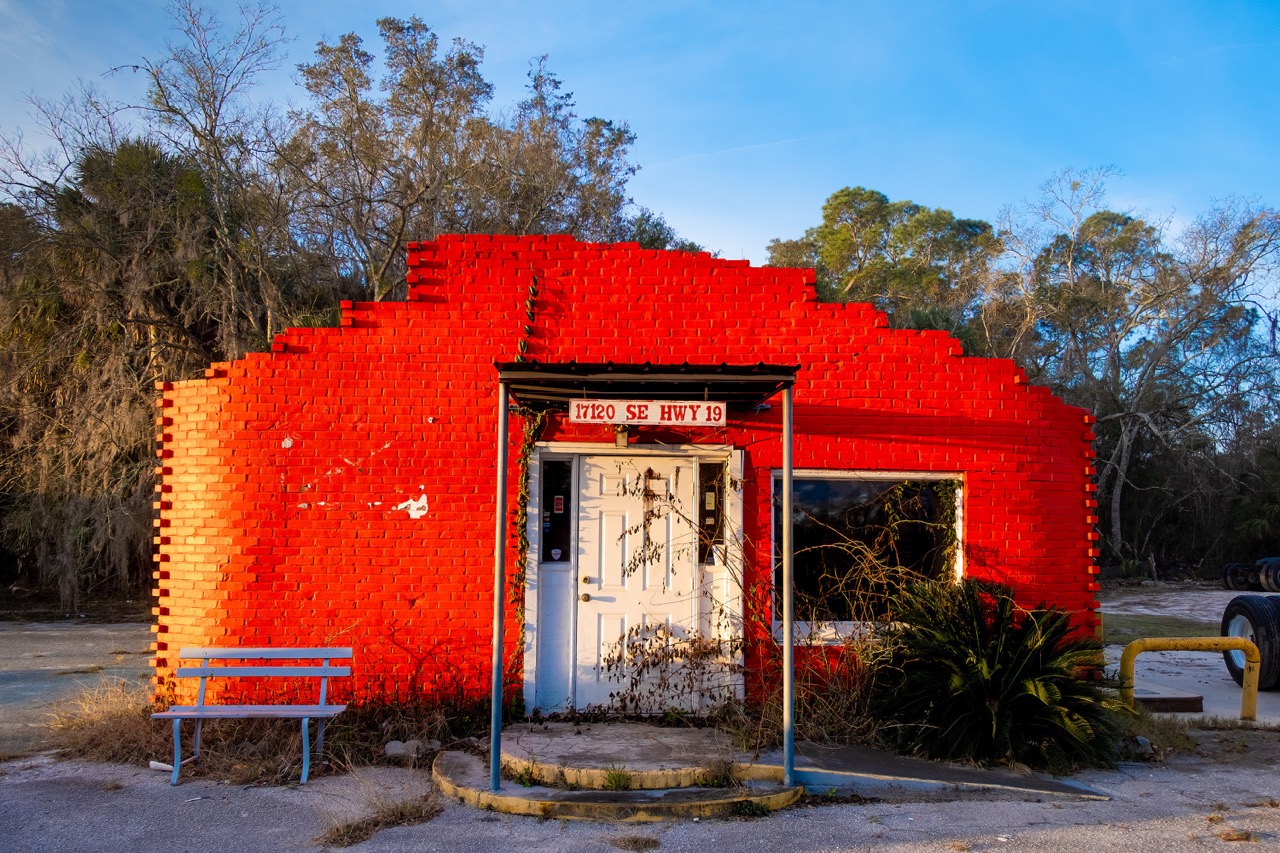
‘Highway 19 Revisited’ by Mark Hedden is part of the ‘Photo/Work’ photography show that opens May 5 at JAG Gallery and features the works of Hedden and Lynne Bentley-Kemp.

JAG Gallery, 1075 Duval St., will feature a joint art show by photographers Lynne Bentley-Kemp and Mark Hedden, who is also a Keys Weekly columnist and contributor. 

An opening reception for the show entitled, “Photo/Work” will take place at the gallery from 5 to 7 p.m. on Friday, May 5. The show will be on display until May 23. 

“Most of my shows have been of large, documentary photography projects – environmental portraits, street photography nightscapes and other topics. I’m really looking forward to showing some work that I’ve shot outside of those projects, stuff that maybe hasn’t had a home elsewhere,” Hedden said. “Some are images from the start of a new project, some are continuation of older projects, and some are standalone photos that I hope bring their own context with them.”

Hedden is a writer, photographer and semi-professional birdwatcher. He has lived and worked in Key West for close to 30 years. His photo work is primarily documentary, often accompanied by text. Inspired by the concept of resource partitioning in the natural world, where multiple species coexist in the same landscape, Hedden’s work often examines the tiny island of Key West from differing perspectives, creating a series of conceptual maps of the same location.

Kemp’s photographs, often of the natural world and the water surrounding her Florida Keys home, have been shown and sold worldwide.

“Lynne Bentley-Kemp has cultivated a meditative practice of documenting the natural environment that seeps into her life,” states a description of a prior photography show at The Studios of Key West. “As a daily practice, she captures the water and sky surrounding her home each morning, resulting in thousands of images.”For more information about the show and the artists, email [email protected] or call the gallery at 305-407-6202.

Success! Please check your email for confirmation.

Sights & Scenes From Churchill Downs’ Opening Night Extravaganza: Through Eyes & Lens(es) of Coady Photography

Sights & Scenes From Churchill Downs’ Opening Night Extravaganza: Through Eyes & Lens(es) of Coady Photography

(Churchill Downs was aglow on Opening Night / All Photos by Coady Photography)

Editor’s Note:

It was a night to behold. Dazzling lights. Spectacular races. Fans pouring in, dressed to the hilt.

It was the perfect scene and the perfect setting to kick start “Kentucky Derby Week 149.”

Here’s a few views from the stellar photo team at Coady Photography, led by the fearless Kurtis Coady:

Wendy Red Star Takes Columbus Museum Of Art Visitors To The Apsáalooke Reservation

Wendy Red Star Takes Columbus Museum Of Art Visitors To The Apsáalooke Reservation

Wendy Red Star (Apsáalooke (Crow), b. 1981) wanted to be a horse trainer. Becoming her generation’s most prominent Native American artist wasn’t a consideration.

She loved horses and couldn’t draw.

When Red Star left the Apsáalooke Reservation in southern Montana where she was born and raised to go to college–Montana State University in Bozeman–she selected the school based on its proximity to home. She wanted to take classes close enough where she could trailer her horses. A portfolio did not accompany Red Star as she set out to make her mark on the world, but her horses did.

“I had a horrible time in my high school art class because it focused on realistic drawing and I really had a hard time,” Red Star told Forbes.com. “I thought, ‘if this is what art is, then I certainly can’t do it.’”

She credits her MSU professors with encouraging her to believe she could do it.

“I enrolled in graphic design and as part of graphic design, you had to take some core art classes,” Red Star remembers. “I had taken a 3-D art class and that’s when I was exposed to all these new mediums, not just bronze sculptures of elk, but actual conceptual works and that’s when I was like, ‘oh, there’s something here for me. There’s something that I can work with here.’”

Work with it she has.

Red Star has gone on to produce a stunning archive of photography, textiles and mixed media installations exploring themes of Apsáalooke history, the indigenous roots of feminism and contemporary life on the reservation. Her work has become a fixture inside America’s most prestigious art museums, rarified space for any artist, let alone a female Native American artist.

The latest example, “Wendy Red Star: A Scratch on the Earth,” a retrospective on view at the Columbus Museum of Art through September 3, 2023. The most comprehensive exhibition of her work to date, the show features more than 40 items highlighting 15 years of her studio practice.

Included are her now-iconic Four Seasons photographic self-portraits from 2006 which planted Red Star’s flag firmly among the vanguard of American contemporary art while she was still in her mid-20s, and 2017’s Diplomats of the Crow Nation photo-text pieces offering most audiences a completely new way of seeing historic photographs of Indigenous people.

“A Scratch on the Earth” features a new project as well, and what can’t be seen in Monsters may be as interesting as what can be.

The Little People

Co-directed by Red Star and Amelia Winger Bearskin (Seneca-Cayuga Nation of Oklahoma), Monsters is a five-minute video screened in a simulated sweat lodge documenting the Montana landscape near the Apsáalooke Reservation. Utilizing a cutting edge 360-degree camera which can produce “surround video,” viewers become immersed in aspects of Crow mythology related to the land.

Bearskin provided the technical know-how, Red Star the concept. Red Star sought a return to the reservation to investigate a legend.

“I always grew up hearing about the Little People, and the Little People have a sacred rock there–a bolder–it’s called Prayer Rock,” Red Star said.

This specific area is near Pryor, MT where Red Star lived.

“They’re protectors of the Apsáalooke, but also, you don’t mess with them,” Red Star explained of the little people, also referred to as Nirumbee or Awwakkulé, which translates into “keepers of the land.” “Sometimes, people don’t even like to talk about them. It’s a fearful respect, and part of showing them respect is going to that rock and leaving offerings. We leave money and beads and all sorts of things, but they’ve always been our protectors and they actually show up in some of the oral stories of our enemy tribes who won’t go near that place because they ended up getting in trouble.”

Enemy tribes weren’t the only ones to find trouble near Prayer Rock.

Developers blew a hole through it in the early 1900s so they could run a train from Billings through the mountain to Cody, WY increasing access to nearby Yellowstone National Park. Buffalo Bill Cody, that town’s namesake, was a backer.

The venture went bankrupt not long after opening; the train kept having mechanical trouble passing through the reservation, particularly that tunnel.

Red Star and Bearskin decided to visit the area with their 360-degree camera.

“We captured all this amazing footage, and it’s deeply personal footage,” Red Star said. “We actually got close to where they say the Little People live, we were on the railroad tracks.”

Being that the camera films in 360-degrees, the filmmakers must vacate the surroundings where the device is placed to avoid being in the shot.

“We would walk off in the distance and hide behind rocks or trees or whatever, so we went and hid and then let it shoot for a few minutes,” Red Star remembers. “Then we came walking back and one of the dogs (along with them) started barking uncontrollably. We were looking where it was looking and we could see nothing, but it was one of those moments where your hair stands on end and it was right by the cave and there was nothing, so we quickly gathered that stuff up and left and we walked as fast as we could.”

The state-of-the-art camera requires footage being uploaded to the cloud for storage and processing.

“Amelia did that when she got back and the only footage that didn’t come back from the cloud was that specific footage,” Red Star said. “We decided we need to respect the Little People.”

Instead of trying to expose the them, the film’s focus turned toward respecting the land, in honor of the Little People and how they protect the land.

Sweat Lodge

Visitors view Monsters by entering a faux sweat lodge.

“Sweat lodges are very important to Crow; they have a few different reasons why they use it, and one is a recreational use where sometimes people use it daily and go in and take a sweat,” Red Star said. “Then there are more special, ceremonial uses. Even in recreational use, they still say prayers and there’s a protocol in there, but for me, it’s emerging into that landscape, so when you crawl in, you close the door, and then you’re in these different scenes of this very important landscape.”

While firmly rooted in the past, all of Red Star’s work makes clear that the Apsáalooke and other Indigenous people are contemporary. In addition to incorporating more Native artists in broad-based group shows of contemporary art like she has been, Red Star sees reinforcing contemporaneity as the next step museums must take in improving their representation of Native people.

Referring to Native people as in the presentcontemporary Native artists–I think it’s really important,” she said. “There’s something that always happens within the writing of Native artists’ work that attaches us to the past, instead of letting us be in the present as we are.

The best opportunity to see the Apsáalooke in the present comes the third week of August during the annual Crow Fair celebration at Crow Agency, MT. The week-long, public event draws tens of thousands of visitors to the largest teepee encampment in the world and numerous other events and activities.

Visit. Learn. Enjoy. Just steer clear of the Little People.

Artist Preston Singletary finds transformation in glass and his Native culture

Artist Preston Singletary finds transformation in glass and his Native culture

Working with glass started out as “a very cool day job” for renowned glass maker and artist, Preston Singletary. He was a recent high school graduate making Christmas ornaments and paperweights in a factory setting, learning how to handle the fragile material. After meeting artists who were working with glass, including two Native American glass makers, he was inspired.

“At the time, that was a pretty unique situation because it wasn’t very common to see people of color working with glass,” says Singletary, who is Tlingit, Filipino, and mixed European heritage. “Several years later, I started to dabble in the cultural arts myself, and that’s where I kind of found my ultimate success — connecting the material to my (Tlingit) culture.”

For more than 40 years, he’s been experimenting with the mythology and designs he’s learned from his Indigenous Alaskan background, incorporating those into his art along with collaborations with artists from other Indigenous cultures. His critically acclaimed exhibitions have been on display in traveling and permanent shows, including the National Museum of the American Indian, the Smithsonian Institution, the Museum of Fine Arts in Boston, Mass., and the Seattle Art Museum. He is also the featured guest in the Joyce Axelrod Lecture series on May 5 and in “Cultural Transformations with Preston Singletary” on May 6, both at the Mingei International Museum in Balboa Park. He took some time to talk about his work, his upcoming appearances in San Diego, and his perspective on contemporary Indigenous art and culture. (This interview has been edited for length and clarity. )

Q: When you began working with glass in 1982, what did you initially plan to do with it? How did you see yourself using it?

A: Well, I started directly out of high school and, at the time, it was just a very cool day job, so to speak. I started in a factory, making pretty basic items, like Christmas balls and paperweights, and some things that were working on a consistent form and getting comfortable with handling the material.

I was exposed to some artists and how they work with glass. A good friend, Dante Marioni, his father, Paul Marioni, is a glass artist and one of the early pioneers from the early origins of the studio glass movement. Then, I went to Pilchuck Glass School, which is an international school, located north of Seattle. It was founded by Dale Chihuly and it’s an international meeting place for glass makers from all around the world.

Soon after, I started to work in the fairly specialized studio of Benjamin Moore. There, we worked for lots of different artists and designers and, basically, I was expected to assist on a very high level. I learned a lot through working with lots of different people. Each time, we worked for different artists who required a totally different sort of approach, so it’s unique to every artist or every person you work for. I kept going back to Pilchuck, year after year, and meeting people from all around the world and getting a lot of inspiration from being with all of these other people.

Q: When did you begin incorporating your Tlingit culture and heritage into your glasswork?

A: I started dabbling in it, really, as early as 1988. That’s when I first started trying to transfer some of the design work onto the glass through a sandblasting process. There was a woman there [at Pilchuck Glass School] and that was a big part of her work, drawing on this rubber stencil and then cutting out the designs. Then, sandblasting it and just wearing the surface of the glass down until it brought up the resolution. In my case, today, I sandblast three layers of color to create that contrast, but this was a very basic and simple way for me to put the designs onto the glass. I really was looking for a way to distinguish myself from other glass makers, trying to find my own niche, and that’s how I did it, I turned to my cultural background.

Q: And I read that your great-grandparents were full Tlingit, and that you recall them telling you stories and teaching you about your culture?

A: Yeah, my great-grandmother lived to be quite old, to be 100. We spent a lot of time around her. I grew up outside of the traditional Tlingit territory, that’s basically up in Alaska, so it’s a very different cultural and geographical location. I think that’s what just planted the seed in my head. There are stories that were shared with us, me and my cousins. There are aunties, and I have great-aunts and -uncles, as well. We’re a pretty big family and I learned, through discussing it with my family, but also reading books about my own culture. I was self-taught, in a lot of ways, until I started going up to Alaska and spending time up there, which I do pretty regularly these days. I go up and interact with the tribal community in a very direct way today, but it took a while for me to have the time to go spend up there and work with different elders and learn about different aspects from talking with different people.

Q: What kinds of references of Indigenous glass making were you aware of at the time, and how did that shape the way you approached your work?

A: As I mentioned, when I was up there that very first time, I met two men who were some of the earliest Native glass artists that I know of. One was Tony Jojola from New Mexico, and then the other was Larry Ahvakana in northern Alaska; so, Alaskan, like me, but the very extreme north, from Barrow, Alaska, so he had a different cultural style than my own. I knew of only a handful of other Native glass artists. In some cases, you can approach glass as a designer, more so than as a maker. The folks that I’m thinking of who inspired me, were working with the master craftspeople that could make the work for them and they would design it, which is perfectly acceptable in our glass community. We don’t usually make a distinction between the two. The thing is, for me, I came to it from the angle of being a maker. Then, I had to learn about the objects and the stories and the history, and understand aspects of the protocol and the culture. So, there’s a lot to catch up with in terms of understanding all of that. When I started, there was only a handful of Native American people working in glass and, today, there’s many more people that are both makers and designers, too.

“Unassimilated” by Preston Singletary. Blown and sand-carved glass.

(Photo by Russell Johnson)

Q: You’re scheduled to speak in San Diego on May 5 and 6, where you’ll discuss your work, your creative process, and Indigenous art. How would you describe the way that you see and understand contemporary Native art?

A: In my estimation, it usually means something that is a life practice where you’re interpreting your own culture, the objects or the concepts of your culture. In this case, since I’m a maker, I make objects, so I kind of go in many different directions. I used to spend a lot of time trying to make things that would look like the things from the culture — a totem or a hat or a spoon, a mask or a rattle. Today, I play a little bit more freely with that. I do things that are more modern. I let modernism sort of influence what I do, but I spend a lot of time working with other Indigenous people from around the world. I feel like what we’re trying to accomplish is to kind of keep the symbols and stories alive with our art. It comes in all forms; it comes in the form of an object or comes in the form of a conceptual piece. Or, in my case, it also goes into contemporary music. That’s just part of my expression, working with other Native performers and singers and musicians, storytellers, what have you. I think that what we’re trying to do is to sort of declare who we are on our own terms. People can come to learn something about our culture because that’s what we’re trying to share and there’s all kinds of ways to do that.

Q: You mentioned earlier that, in your glass work, you would try to stick to things that people would recognize, like a totem or a spoon, and now you feel a little bit more freedom to play with that. What would be an example of ways that that you’re doing that that would be understood as more modern?

A: There’s an era of art that was started by the modernists (Picasso to Jackson Pollock to Henry Moore) and was, sometimes, maybe more directly inspired by African art, Oceanic art. In some ways, a lot of these forms were kind of appropriated, but inspired by these cultures. So, I like to look at the work of [Isamu] Noguchi and [Henry] Moore and make sort of a spare, organic form, but then ornament it with Northwest coast art; kind of play with more of an abstract sculptural form, but in the three-dimension. It will have the typical design work what I do on the object itself. Sometimes, it’s more literal, like a series of mobiles that an object rests on a table, but has kind of branches floating around and glass balls and elements, what have you. That’s kind of a direct tribute to [Alexander] Calder.

Q: How has your perspective of contemporary Native culture evolved over the years, and what does it look like today?

A: I grew up fairly urban. That’s an understatement—I grew up very urban. I grew up in Seattle and I’ve lived here my whole life, so I’ve seen it change and I’ve seen the appreciation for Native art grow. I’ve seen a little bit more opportunity for Indigenous artists and people of color, so that, to me, I think is really exciting. I think that, as a culture, it’s a balancing act to actually practice your culture and live in the modern world. There are a lot of trade-offs, but in that, I think that there’s an opportunity to bring more awareness. I think what’s happening on television with Native stories is really exciting, so that’s a new opportunity to kind of showcase and celebrate the culture and provide opportunities for Natives to get involved with movies and TV and what have you.

Q: What is it about the medium of glass, specifically, that has continued to hold your interest in creating artwork that reflects your Tlingit identity?

A: Glass is my first medium and really the one that I understand best. I think glass, in terms of sculptural approaches and the way that I can handle the material, just brings another dimension to Indigenous art. I saw, early on, several confluences of influence that come into my whole story. It’s meeting those folks up at Pilchuck (the other two glass artists), traveling to Japan and seeing how the glass makers there could make work that had sort of an Asian influence to it, and I found that quite fascinating. I really have a fondness for Japan, so that was kind of eye opening. If it exists there, I imagine that Native Americans could work with the material and the same kind of thing would happen over time. I realized, too, that I occupy sort of a unique position because I’ve been doing it for so long that this is kind of like my life’s work. This is what I’m doing today, and it gives me a tremendous sense of purpose and it gives me this opportunity to reach a broad number of people because it’s bringing people’s awareness to a new material. In a lot of ways, it’s a transformative medium. That metamorphosis from being a furnace full of hot glass, into becoming an actual shape and form; that’s how I think of the process and it has this ability to transform culture and bring a new awareness to it.

Q: You mentioned in one of your other responses that you’ve been working with other Indigenous artists and in other countries, creating artwork together. Can you talk a bit about what that work has looked like?

A: I’ve spent a few years traveling to these Indigenous artist gatherings (one in Hawaii, another in New Zealand, and some previous gatherings). When we come together, it’s really profound because we share a lot about our culture and sharing stories and processes. By doing that, I learned how other cultures create work for the current society and art market. A lot of the work that I do doesn’t necessarily go back into the culture. You’re making a totem pole, you’re making it for your community; today, we’re sort of forced to go to the commercial market. The fact is, in the old days, the clan leaders were the ones that had control of the local resources and all the material wealth, and they were able to commission totem poles to be made. Today, the clan leaders all, everybody in this country, for the most part, has a job. Therefore, they’re not financially empowered to commission totem poles for the community, but in the old days, that was one of the only ways that you could raise your status within the community, by hosting a potlatch and being generous with your wealth and distributing it. A kind of redistribution of wealth is what a potlatch actually is.

Some of my favorite collaborations were with the Maori people and this one man, in particular, named Lewis Gardiner, who is a jade carver. We would combine glass and jade sculptures and sort of melt or glue them together. We’ve looked at similar kinds of symbols or stories, and we represent them in sculptural form. Then, there’s a woman down in New Mexico, Jody Naranjo, and she and I have been collaborating. I think we’ve done four different shows. She’s Santa Clara Pueblo and she represents her culture’s pottery. My love and my initial training is working with classical forms; this was a way for me to get back to making vases. That was really fun because, in some ways, it’s kind of a joy just to make a round, vessel form and not have to get all complicated and make it sculptural. We have a lot of fun.

World’s Largest Tomato Soup Can Sculpture: world record in Napoleon, Ohio

World’s Largest Tomato Soup Can Sculpture: world record in Napoleon, Ohio
Napoleon, Ohio, United States–On the outskirts of town at the the side of the Campell’s Soup plant Napoleon, Ohio, stands a gigantic Tomato soup can painted with a traditional Campbell’s label; at 33 feet wide and 33 feet tall, the giant can has the capacity to hold 200,000 gallons and it would take 2,178,645 cans of tomato soup to fill the tank, thus setting the world record for being the World’s Largest Tomato Soup Can Sculpture, according to the WORLD RECORD ACADEMY: https://bit.ly/3LjWddx