The Nonbinary Lens: Photographers in Conversation

The Nonbinary Lens: Photographers in Conversation

Photography has long been used to challenge mainstream cultural narratives and create new ones. For artists living in a world that often denies their existence, photography can be a tool of empowerment, revealing beauty, vulnerability, and humanity.

Join artists Jaypix Belmer, Jess T. Dugan, and C. Rose Smith for a virtual conversation moderated by visionary curator theo tyson. Each artist will discuss how they use the photographic image to construct queer visual histories through intimate representations of individuals with nonbinary, transgender, and gender-expansive identities. 

This program will have automated captions and is hosted via Zoom webinar. Registration is required.

REGISTER NOW

ABOUT THE PARTICIPANTS

theo tyson (she/they) is a curator who invites conversations about the sociocultural implications of race, gender, identity, and sexuality through a lens of fashion, art, and culture. Their practice focuses on creating sartorial spaces of reclamation and authority to share the powerful stories of Black women and those on the LGBTQI+ spectrum. theo privileges noncanonical ways of seeing, offering audiences poignant new perspectives from which to view the rich diversity of our humanity. Their previous posts include Spelman College Museum of Fine Art, SCAD FASH Museum of Fashion + Film, and the Boston Athenæum. Most recently, tyson co-curated the exhibition Being Muholi: Portraits as Resistance at the Isabella Stewart Gardner Museum and served as an advising scholar for Patrick Kelly: Runway of Love at the Peabody Essex Museum. Currently, she is the Penny Vinik Curator of Fashion Arts at the Museum of Fine Arts Boston.

Jaypix Belmer (they/them) is a non binary black, indigenous person of color who uses the lens as a tool for storytelling. Born and raised in Boston, MA, Belmer is a graduate of New England Art Institute with a B.A. in Photography and has worked with clients in both private and commercial industries, delving into the subtle intricacies of class, capturing the unconsidered people and places who inhabit the urban landscape while attempting to bring light to the voiceless.

Jess T. Dugan (they/them) is an artist whose work explores issues of identity through photography, video, and writing. Dugan’s work has been widely exhibited and is in the permanent collections of over 50 museums throughout the United States. Dugan’s monographs include Look at me like you love me (MACK, 2022), To Survive on This Shore: Photographs and Interviews with Transgender and Gender Nonconforming Older Adults (Kehrer Verlag, 2018) and Every Breath We Drew (Daylight Books, 2015).

C. Rose Smith (they/them) is a Boston-based artist who uses photography, fashion, and time-based media to thread the connections between identity, memoir, and sociopolitical landscapes. Smith’s recent achievements include the 2023 Prix Picto De La Mode Top 10 Finalists with Picto Foundation Paris, France and 2023 Coup de Coeur Award with Leica Camera Paris, France, 2022 Inaugural Silver List of Emerging Photographers and was a 2021 finalist for the Aperture Magazine Portfolio Review Prize. Smith’s work has been featured in group exhibitions at Hangar Arts Center in Brussels, Belgium; Fotofest  Biennial, Houston, TX; Blue Star Contemporary, San Antonio, TX; SCAD Museum of Art, Savannah, GA; and Museum of Contemporary Art of Georgia, Atlanta.

Flowers featured in New Kensington Camera Club’s annual spring exhibit at Pittsburgh Mills mall

Flowers featured in New Kensington Camera Club’s annual spring exhibit at Pittsburgh Mills mall

Dozens of pictures and other art of flowers are featured in “Art in Bloom,” the New Kensington Camera Club’s annual spring floral photography and art show.

The exhibition has prizes for both the artists and the public who will decide the winners.

Club President Joel Varga said the show features 85 entries from 29 artists from the Alle-Kiski Valley.

“They’re over the top,” he said of the quality of the work. “They’re all very, very good.”

The show is going on through May 20 at the club’s “Focus on the Arts Gallery,” which is in the Galleria at Pittsburgh Mills in Frazer. The gallery is open from 5 to 8 p.m. Fridays and noon to 5 p.m. Saturdays.

This is the third year for the show in its present format, Varga said. The club has had a floral photography art show in some form for at least a decade.

For this show, Varga said each participant could enter up to four pieces.

Prizes for the artists are gift cards for Michaels of $50, $30 and $20, Varga said.

For voters, the first-place prize is a $25 gift card to a mall business of the winner’s choice, while the second is a $15 gift card. The third prize is a movie package for two at GQT Pittsburgh Mills Cinemas.

Those interested in visiting the gallery are advised to use mall entry 2 by M@C Discount, formerly Sears Grand, and turn left. The gallery is down the hall and across from Blackburn’s.

Brian C. Rittmeyer is a Tribune-Review staff writer. You can contact Brian by email at brittmeyer@triblive.com or via Twitter .

A Photographer Whose Subject Is Everyday Life

A Photographer Whose Subject Is Everyday Life
image

Judith Joy Ross, who has been taking portraits for decades, is the subject of a large retrospective at the Philadelphia Museum of Art.

This article is part of our Museums special section about how art institutions are reaching out to new artists and attracting new audiences.


BETHLEHEM, Pa. — To hear the photographer Judith Joy Ross tell it, her life and career are riddled with nonstarters.

Her stint in graduate school? “Complete failure,” she said. Her teaching career? “Utter failure.”

In her photography archive on the second floor of her yellow house here, there is a box marked “downers,” containing what she considers bad prints of good images.

Ms. Ross, who has been taking pictures for nearly 60 years, has never been much of a self-promoter.

“I have a problem with authority figures,” she said on a gray day in February.

Despite all that, Ms. Ross, 76, is the subject of a large retrospective at the Philadelphia Museum of Art, with about 200 of her photographs on display until Aug. 6, almost all of them portraits.

“She’s a giant,” said Peter Barberie, a curator of photographs at the museum. “In 500 years, people will be talking about her work.”

The show was jointly organized by the Philadelphia museum and the Fundación Mapfre in Madrid, where it appeared first; it then made stops at Le Bal in Paris and Fotomuseum den Haag in the Netherlands. “She’s better known in Europe than she is here,” Mr. Barberie said.

Although she rarely works in color, calling Ms. Ross’s photographs black-and-white is not exactly right; the images occupy a place on the spectrum between gray and sepia. And except for her 1986-87 series featuring Washington politicians, Ms. Ross has taken pictures mostly of people on the street, in parks or in schools.

“Untitled, Eurana Park, Weatherly, Pennsylvania” (1982) by Ms. Ross.Judith Joy Ross and Galerie Thomas Zander, Cologne

“The subject matter is not easy; it’s complex,” said Joshua Chuang, an independent curator who organized the show. “She’s not photographing celebrities.”

Mr. Chuang added that photography was more than a medium to Ms. Ross. “She found out in the 1970s that the camera was a way to connect with people,” he said.

Ms. Ross agreed, up to a point. “It looks like I love people,” she said of her work. “I do love them for a few seconds. After that? No. Goodbye.”

The Dutch artist Rineke Dijkstra, who also photographs people, said she first saw Ms. Ross’s work in the 1990s.

“I fell in love with her pictures,” said Ms. Dijkstra, who has had a solo show at the Guggenheim Museum.

“You can feel if pictures are ‘open,’ and if the people are being prejudged,” Ms. Dijkstra said, noting that that was not the case with Ms. Ross.

“Celia” (1980).Judith Joy Ross and Galerie Thomas Zander, Cologne

Ms. Ross said that her major series had all stemmed from a different question. For her series taken in Eurana Park in Weatherly, Pa. — represented at the museum by several images including an untitled 1982 image of two children sitting on a stump — it was a large query, indeed: “Why is life worth living?”

Ms. Ross is a Pennsylvania native who grew up in the town of Hazelton. At the Moore College of Art & Design in Philadelphia, she took a photography class “by accident,” she said, and that led to her first picture: a piece of trash on a cobblestone street, illuminated by raking light.

“It still stuns me how mysterious it is,” she said.

Even though in 1970 she got a master’s degree in photography at the Institute of Design at the Illinois Institute of Technology in Chicago, Ms. Ross says she thinks she did not become a real photographer until a decade later.

“I didn’t have a theme,” she said. “I had been photographing people, but randomly.”

People get curious when Ms. Ross appears with her wooden folding camera. “They think the circus has come to town,” she said. But its effect is that of an icebreaker, and a piece of protective armor.Thea Traff for The New York Times

A change in equipment was also transformational. Ms. Ross started working with a wooden, folding 8-by-10 Deardorff camera that stands on a tripod. (She still owns and uses it.)

People get curious when she appears with the large contraption. “They think the circus has come to town,” she said. But its effect is that of an icebreaker, and a piece of protective armor.

“I am so self-conscious, I can’t even point a cellphone at you,” she said. “I need it for me.”

The Eurana Park series of 1982 was the first time Ms. Ross brought her considerable tenacity to bear over a long period. She picked the town of Weatherly because it was close to a family summer home.

“I stood there for the summer at Eurana,” Ms. Ross said, frequently photographing children. “It was a totally inappropriate space to do that. But I didn’t care. That tells you what kind of person I am.”

People visiting the Vietnam Veterans Memorial became her next long-term subject. Sixteen works from the 1983-84 series are in the Philadelphia show, including an untitled 1984 portrait of a Black boy.

Visitors to the Vietnam Veterans Memorial became a long-term subject for Ms. Ross, including this untitled portrait from 1984.Judith Joy Ross and Galerie Thomas Zander, Cologne

Ms. Ross recalled that it forced her to ask, “How do you deal with pain and suffering?”

One of her biggest challenges was taking pictures of politicians she didn’t agree with during the making of her congressional series, including Senator Strom Thurmond, Republican of South Carolina.

“I didn’t like Strom,” she said. “But I was in awe of him. It was like meeting the king.” He served in the Senate for 48 years and died in 2003.

Armed with some of her photographs, Ms. Ross overcame her shyness and submitted her work to the Museum of Modern Art, earning a same-day meeting with John Szarkowski, an influential photography curator.

“He asked me if I had heard of August Sander, and I denied it,” Ms. Ross said, referring to the German photographer known for his portraits. “He knew I was lying.” (Sander is one of her biggest influences, she said, a list that also includes Robert Adams and Eugène Atget.)

Mr. Szarkowski put Ms. Ross in the 1985 “New Photography” show at MoMA with three other artists; the poster for the show hangs in her house.

Mr. Chuang called Ms. Ross a tough critic of her own work. “She has stacks of incredible pictures that she has never thought to show to other people,” he said.

“It looks like I love people,” Ms. Ross said of her work. “I do love them for a few seconds. After that? No. Goodbye.”Thea Traff for The New York Times

Even though her most famous series were done in the 1980s, she has been making plenty of striking work since then, including “Annie Hasz, Easton Circle, Easton, Pennsylvania” (2007), featured in the Philadelphia show.

Ms. Ross, who is represented by the German dealer Thomas Zander, said that sales of her work had been slow lately. She attributed it to the decidedly non-fashionable character of her work, both in style and content. “It’s not in color, and it’s of people,” she said.

The dominance of digital photography is not helping, either. The special paper that Ms. Ross likes to print on — which helps her get the rich tones she is known for — is no longer made. “I have a freezer full of it, but it’s almost gone,” she said.

Ms. Ross was in her basement standing by her photography development equipment — in a small room with her washer and dryer — when she said that she had an idea for a new series, market headwinds and occasional cynicism be damned.

“I’m not showing anybody anything yet,” she said. “But I’m hopeful.”

At These American Museums, You Can Travel the World

At These American Museums, You Can Travel the World
image

This year, art exhibitions explore the Parisian suburbs, Pacific islands, grand Indian palaces and more through paintings, photography, sculpture and sketches.

This article is part of our Museums special section about how art institutions are reaching out to new artists and attracting new audiences.


Around the country this spring and summer, museums are aiming to transport visitors to the palaces of Udaipur, the Maya civilization, France during the Industrial Revolution, Japanese landscapes and the diverse communities of Queens — all for the price of an admission ticket.

NEW YORK CITY

“Aliza Nisenbaum: Queens, Lindo y Querido”

Aliza Nisenbaum’s vibrant portraits often highlight people working behind the scenes to keep civic life running smoothly, such as hospitals, transportation hubs and now, even the institution presenting her work. In her first solo show at a New York museum, the Mexican artist, who is based in New York, is presenting new paintings, some depicting Queens Museum staff members and residents of its surrounding neighborhood. Through Sept. 10; Queens Museum, queensmuseum.org

“Memory Map” (2000) by Jaune Quick-to-See Smith, who has a retrospective at the Whitney Museum of American Art.Courtesy of the artist

“Jaune Quick-to-See Smith: Memory Map”

The Indigenous artist Jaune Quick-to-See Smith, now 83 and based in New Mexico, gets her first New York museum retrospective. The artist, a citizen of the Confederated Salish and Kootenai Nation, has long made contemporary art inspired by Native American imagery. In her paintings, collages, mixed media and installations, she challenges commonly held beliefs about history and identity, as she does with her distorted maps of the United States, many of which are on view. Through Aug. 13; Whitney Museum of American Art, whitney.org

“Karl Lagerfeld: A Line of Beauty”

This year’s Met Gala and accompanying Costume Institute exhibition will celebrate the life and career of Karl Lagerfeld, the German fashion designer who died in 2019. The show pairs about 150 of his creations for Chanel and the other fashion houses at which he worked, with their original sketches, offering a glimpse at how his two-dimensional drawings were translated into wearable art. May 5 to July 16; Metropolitan Museum of Art, metmuseum.org

“The Sassoons”

From the early 1830s through World War II, members of the Jewish family at the center of this show moved from Iraq and settled in India, China and England, amassing an impressive collection of art over the course of four generations. This show brings together pieces from their diverse collection — including Jewish ceremonial art, Chinese ivory carvings and paintings by Thomas Gainsborough, John Singer Sargent and even Winston Churchill — and revisits their family history. Through Aug. 13; Jewish Museum, thejewishmuseum.org

“Love Songs: Photography and Intimacy”

This group show, focused on love in all its beautiful and occasionally painful forms, collects images from more than 15 photographers. On view will be selections from “The Ballad of Sexual Dependency” (1973-86), Nan Goldin’s personal chronicles of friendship, love and loss. And from the Japanese photographer Nobuyoshi Araki, images of his honeymoon will be juxtaposed with photos capturing the grief he experienced during and after his wife’s death. June 2 to Sept. 11; International Center of Photography, icp.org

“It’s Pablo-matic: Picasso According to Hannah Gadsby”

In the Peabody and Emmy Award-winning comedy special “Nanette,” Hannah Gadsby riffs on Pablo Picasso’s life and work from a feminist perspective. Now the comedian, who also has an art history degree, takes it even further as a curator of this exhibition, which will focus on how the artist depicted women. The show will feature a total of 100 works, including a number of Picasso’s paintings, sculptures and drawings — many from his “Vollard Suite” series (1930-37) — as well as pieces from the museum’s collection of feminist art. June 2 to Sept. 24; Brooklyn Museum, brooklynmuseum.org

“Daniel Lind-Ramos: El Viejo Griot”

The multidisciplinary artist Daniel Lind-Ramos uses found and gifted objects to create his large-scale, detailed sculptures. This show brings together 10 of Mr. Lind-Ramos’s works, including three he created in the aftermath of Hurricane Maria in 2017, incorporating items collected in Puerto Rico, as well as two new pieces that address the Covid-19 pandemic, created with pieces of cleaning tools, sanitation products and lights from emergency vehicles. Through Sept. 4; MoMA PS1, momaps1.org

NEW WINDSOR

“Beatriz Cortez: The Volcano That Left”

Beatriz Cortez, a sculptor born in El Salvador and based in Los Angeles, will present three new and recent site-specific creations in the Hudson Valley. The show will be anchored by a new handmade work in steel, “Ilopango, the Volcano that Left” (2023), inspired by a volcanic eruption that devastated the Maya civilization in what is now El Salvador. May 20 to Nov. 13; Storm King Art Center, stormking.org

WATER MILL

“Artists Choose Parrish: Part 1”

To commemorate the Parrish Art Museum’s 125th anniversary, its curators identified artists with a connection to the East End of Long Island. Then they asked them to pick at least one piece from the museum’s collection and pair it with a work of their own. Presented in staggered phases, the first show features a neon work by the interdisciplinary artist Pamela Council in conversation with an installation by Dan Flavin, a renowned minimalist. And Nanette Carter will pay homage to multiple artists who influenced her collage work, including the abstract expressionist Frank Wimberley and the modernist Romare Bearden. Sunday through July 23; Parrish Art Museum, parrishart.org

LOS ANGELES

“Beyond the Light: Identity and Place in 19th-Century Danish Art”

The drawings, oil sketches and paintings in this show highlight a period of national reflection in Denmark, one that resulted in realistic depictions of the country’s landscapes, architecture and communities. Among more than 80 works are a number that reflect the country’s connection to the sea, including Johan Christian Dahl’s “Copenhagen Harbor by Moonlight” (1846). May 23 to Aug. 20; Getty Center, getty.edu

“Femme piquée par un serpent (Mamadou Gueye),” a 2022 painting by Kehinde Wiley, nods to “Woman Bitten by a Serpent,” an 1847 sculpture by Auguste Clésinger.via Kehinde Wiley and Galerie Templon; Photo by Ugo Carmeni

SAN FRANCISCO

“Kehinde Wiley: An Archaeology of Silence”

Kehinde Wiley’s painted portraits recasting Black figures in Western European scenes, such as in “Napoleon Leading the Army Over the Alps,” often strike a celebratory note. But this show of new work, a rumination on systemic racism and violence, evokes a much more somber tone. In 25 paintings and sculptures, Mr. Wiley uses the same artistic concept to depict wounded and dead Black subjects, referencing classic imagery of heroes, martyrs or saints. Through Oct. 15; de Young Museum, famsf.org

WASHINGTON

“Canova: Sketching in Clay”

Before the neo-Classical Italian sculptor Antonio Canova (1757-1822) could create a marble sculpture like “The Three Graces,” he would often “sketch” the concept first in clay. This show presents these preparatory works as worthy achievements in their own right that also reveal the artist’s process. June 11 to Oct. 9; National Gallery of Art, nga.gov

Centennial Asian Pacific American Heritage Month Festival

The Smithsonian’s National Museum of Asian Art celebrates its centennial with two weeks of special programming, including performances, film screenings and panel discussions centered on Asian arts and culture. Visitors can, among other things, hear musical performances from the Chinese composer Huang Ruo, the Korean American K-pop artist Eric Nam or the Syrian American rapper Omar Offendum; view the 1920s Japanese silent film “A Page of Madness”; or see site-specific sculptures created by the artist Sagar Kamath. May 1 to May 14; National Museum of Asian Art, asia.si.edu

“Frank Stewart’s Nexus: An American Photographer’s Journey, 1960s to the Present”

At 14, Frank Stewart borrowed a camera from his mother and shot the 1963 March on Washington. He has been documenting American life, with a focus on the Black experience, ever since. This retrospective collects more than 100 of his photographs taken over six decades, including the 30 years he worked as the lead photographer for the Jazz at Lincoln Center Orchestra. June 10 to Sept. 3; the Phillips Collection, phillipscollection.org

“Exterior of a Restaurant in Asnières” by Vincent van Gogh (1887). The painting, of a Paris suburb now known as Asnières-sur-Seine, is part of a show at the Art Institute of Chicago about how artists depicted the evolution of the Paris suburbs.Van Gogh Museum, Amsterdam (Vincent van Gogh Foundation), via Art Institute Chicago

CHICAGO

“Van Gogh and the Avant-Garde: The Modern Landscape”

This survey of roughly 75 paintings focuses on five artists and how they depicted an evolving area. From 1882 to 1890, Vincent van Gogh, Georges Seurat, Paul Signac, Émile Bernard and Charles Angrand captured the transformation of the Parisian suburbs, around what is now Asnières-sur-Seine, into a growing industrial hub, experimenting with their stylistic choices in the process. May 14 to Sept. 4; Art Institute of Chicago, artic.edu

CLEVELAND

“A Splendid Land: Paintings from Royal Udaipur”

The Indian city of Udaipur was, in the 17th century, a thriving royal metropolis known for its monsoons and magnificent “floating” palaces built in its artificial lakes. Court artists captured palace life, parties and the mood evoked by its picturesque landscape in large-scale paintings, 33 of which will be on view in this exhibition, some for the first time publicly. June 11 to Sept. 10; Cleveland Museum of Art, clevelandart.org

DETROIT

“James Barnor: Accra/London”

This career retrospective covers work the British Ghanaian photographer James Barnor made from the 1950s through the 1980s, in which he captured shifting social and political movements from an African perspective. The show collects his early portrait work in Accra, his images of everyday life during Ghana’s transition to an independent nation and his fashion photography in London during the 1960s. May 28 to Oct. 15; Detroit Institute of Arts, dia.org

MILWAUKEE

“Scandinavian Design and the United States, 1890-1980”

Scandinavian design has become almost ubiquitous in American interiors, and this show delves deep into designers, objects and ideas from Denmark, Sweden, Finland, Norway and Iceland. The 20th-century cultural exchange between the United States and those countries is seen in more than 180 objects, including furniture, textiles and decorative pieces. Through July 23; Milwaukee Art Museum, mam.org

MINNEAPOLIS

“Fukuda Kodojin: Japan’s Great Poet and Landscape Artist”

This is the first exhibition centered on the Japanese scholar and artist Fukuda Kodojin outside Japan, a chance for American audiences to see his calligraphy, poetry and painting. Among nearly 60 selected works are his hanging scroll landscape paintings, depicting mountainous and arboreous terrain. Through July 23; Minneapolis Institute of Art, new.artsmia.org

ST. LOUIS

“Action/Abstraction Redefined: Modern Native Art, 1940s-1970s”

One common thread tying together the artists featured in this show is that many of them — including Fritz Scholder, Lloyd Kiva New and Linda Lomahaftewa — either worked or studied in Santa Fe, N.M., at the Institute of American Indian Arts, which opened in 1962. The artistic styles developed there challenged public perception of Native American art, as seen in roughly 90 contemporary paintings, sculptures, textiles and works on paper. June 24 to Sept. 3; St. Louis Art Museum, slam.org

DENVER

“Islands Beyond Blue: Niki Hastings-McFall and Treasures from the Oceania Collection”

Closed since 2016 for renovations, the Denver Art Museum’s Arts of Oceania gallery will reopen with an exhibition that combines ancient material from the Pacific region with contemporary work. America’s history of nuclear testing in the region is referenced by a large-scale lei piece by Niki Hastings-McFall, who is from New Zealand and of Samoan and Pakeha descent. The installation is presented alongside pieces from the museum’s collection made on the islands most affected by that testing. Opens May 14; Denver Art Museum, denverartmuseum.org

BOSTON

“Presence of Plants in Contemporary Art”

Artists of all disciplines have long been inspired by plants, but this show celebrates those actually using organic matter in their art. The work of seven artists will be displayed throughout the museum, such as Piero Golia’s growing sculpture that incorporates oyster mushrooms, and a sculptural painting by Henrik Hakansson that features cuttings from invasive species. June 22 to Sept. 17; Isabella Stewart Gardner Museum, gardnermuseum.org

“Station IX: Jesus falls the third time” (1969) by Bruce Onobrakpeya is part of the artist’s “Fourteen Stations of the Cross” series. It is part of a solo show at the High Museum of Art in Atlanta.Bruce Onobrakpeya, via High Museum of Art, Atlanta

ATLANTA

“Bruce Onobrakpeya: The Mask and the Cross”

This 90-year-old artist from Nigeria gets his first-ever solo show at an American museum. The exhibition highlights the way Mr. Onobrakpeya blends Christian iconography with Nigerian characters and settings in his printmaking practice. One highlight is his “Fourteen Stations of the Cross” series of prints, which is based on murals he completed for a Catholic church in Lagos in 1967. Through July 30, High Museum of Art, high.org

A still image from “Tears of Chiwen” (2017), an animated film by Sun Xun that focuses on a Chinese mythical creature, features his painting, woodcut, charcoal and ink drawing work.Sean Kelly and ShangART

LITTLE ROCK, ARK.

“Sun Xun: Tears of Chiwen”

When this museum reopened its doors after a renovation that began in 2019, it started showing a new animated film by the multidisciplinary artist Sun Xun that uses the Chinese mythical creature known as chiwen to examine East Asian cultural identity. The short film, which runs about nine minutes, features the Beijing-based artist’s detailed painting, woodcut, charcoal and ink drawing work. Through Aug. 13; Arkansas Museum of Fine Arts, arkmfa.org

MIAMI

“Claire Tabouret: Au Bois d’Amour”

Claire Tabouret’s impressionistic paintings of landscapes and figures often echo artists who came before her, but she gives the works a contemporary twist. Inspired by the work of Édouard Vuillard and Les Nabis artists, the Los Angeles-based French artist will present monoprints, a new large-scale tapestry and what she calls “fluff” paintings, done on faux fur. May 5 to Oct. 29; ICA Miami, icamiami.org

STUART, FLA.

“The Highwaymen: From the Street Corner to the Smithsonian”

In the 1950s and ’60s, a group of Black, largely self-taught painters sold colorful landscapes of Florida along the state’s roadways, often right out of their cars. The work of these artists, known as the Highwaymen, was shut out of galleries at the time. But now a collection of more than 70 of their paintings are displayed together, honoring the work of the enterprising artists. Through July 14; Elliott Museum, hsmc-fl.com

FORT WORTH

“Maize God” (A.D. 715), part of a survey of Maya art traveling from New York to Fort Worth.Jeenah Moon for The New York Times

“Lives of the Gods: Divinity in Maya Art”

After a well-received debut in New York, this survey of rarely seen and newly discovered Maya art — a collaboration between the Met and the Kimbell Art Museum — opens in Texas. The intricately painted ceramic vessels, carved sculptures and ornaments on display offer a window into the ancient civilization’s complex mythology and understanding of humanity. May 7 to Sept. 3; Kimbell Art Museum, kimbellart.org

HOUSTON

Si Lewen: The Parade

In 1957, the Polish-born Jewish artist Si Lewen published “The Parade,” a wordless graphic novel in which he illustrated the horrors he witnessed fleeing Germany, fighting in the U.S. Army in World War II and visiting the Buchenwald concentration camp soon after its liberation. For the first time, all 55 of the original drawings he made in preparation for the book are displayed together, along with eight related works. Through Sept. 3; Menil Collection, menil.org

HONOLULU

“Salman Toor: No Ordinary Love”

Born in Pakistan and based in New York, the artist Salman Toor says that he draws and paints from the perspective of “a queer man from a Muslim cultural background.” In this survey of recent work, Mr. Toor will let viewers into private scenes: a car ride with friends, a teen exploring what might be his mother’s makeup or two figures sharing a secretive touch. July 14 to Oct. 8; Honolulu Museum of Art, honolulumuseum.org

Call Them Dissidents. But Don’t Call Them Feminists.

Call Them Dissidents. But Don’t Call Them Feminists.
image

Over the last 60 years, Brazil’s women artists made work about universal rights abuses, not gender issues, a new show finds. “It was all of us, all citizens, who didn’t have rights.”

The Brazilian artist Berna Reale sits atop a horse painted scarlet, a cage-like muzzle covering her face.

As the animal clops down the empty street at dawn, Reale guides it with black leather reins, her hands in gloves that match. Her dark hair is cropped short and her back is straight. She wears a black military uniform and a serious expression on her face.

The 2012 performance piece, “Palomo,” which took place in the Amazonian city of Belém, is meant to question the idea that institutions like the police project a sense of peace and security. Like all of Reale’s performances, “Palomo” didn’t happen in a museum but in a public outdoor space, giving her a much broader audience and spontaneous responses from people who didn’t set out to look at art that day.

“When you perform for people on the street you don’t know how they’ll react,” says Reale, 57, who also works with the police as a forensics expert. “It creates tension. They have the right to be bothered by it, just like I have the right to be there performing it.”

One of Brazil’s most important contemporary artists, Reale is featured with 17 other prominent and emerging creators in a new book, “Dissident Practices: Brazilian Women Artists, 1960s-2020s.” Written by the art historian Claudia Calirman, it explores how women artists responded to some of the country’s most difficult historical and political moments — from its military dictatorship in the mid-1960s and return to democracy in the mid-1980s to the social changes surrounding gender norms and the objectification of women in the 2000s.

Anna Maria Maiolino, “Por um fio (By a thread),” from the series “Fotopoemação (Photopoemaction),” 1976/2017.via Anna Maria Maiolino and Hauser & Wirth Gallery

Eleven of these artists, including Reale, are also participating in an accompanying exhibition of the same name, curated by Calirman at the Anya and Andrew Shiva Gallery at John Jay College of Criminal Justice, through June 16.

While women have been at the forefront of Brazil’s art world for decades, they were not always willing to use their visibility to discuss the gender-related issues they personally faced.

“They didn’t talk about women’s issues,” says Calirman, an associate professor of art history at John Jay College of Criminal Justice and chair of the department of art and music. “If they did, they would be looked down on. So they were mostly doing art about other things. And when they would go there, it would be a very thorny issue.”

For those who worked throughout Brazil’s 1964-1985 military dictatorship, making sure their work was not considered feminist, or read through that lens, was a conscious decision, in part to steer clear of being pigeonholed as a “women’s issues artist.” It was also about making sure that sweeping human rights violations directed at all citizens were being addressed.

Anna Bella Geiger, who was born to a Jewish-Polish family in Rio de Janeiro, says she made a point to include both Indigenous men and women in her 1977 piece “Brasil native/Brasil alienígena (Native Brazil, alien Brazil).”

Anna Bella Geiger, “Brasil nativo, Brasil alienígena (Native Brazil, alien Brazil),” 1976/77. Nine pairs of postcards juxtapose scenes of Indigenous life (the Bororo Indians) with images of white people that imitate them. (The artist inserted herself into the set of corresponding images.) The work questions mementos that tourists take back to their supposedly civilized lands.via Anna Bella Geiger and Henrique Faria, New York

“There was no time or mental space to focus on women’s rights,” she says. “It was all of us, all citizens, who didn’t have rights then. We couldn’t vote, we couldn’t give our opinions in newspapers because they were censored. We were isolated and alienated.”

Tatiana Flores, a professor of Latino and Caribbean studies and art history at Rutgers University, says that culturally many Latin Americans typically disliked classifications like feminist that can “read as a U.S. imposition.”

“Certainly, discussions of race and racism in Latin America are frequently dismissed as U.S. concerns mapped onto Latin America. The topic of feminism functions in a similar way. Calirman’s book will spark important and necessary conversations.”

The second book Calirman has published on the subject, “Dissident Practices” focuses on what women artists were doing during some of Brazil’s most important historical moments and societal changes, and how they responded to them.

By including works that are humorous and playful — from artists like the performer Márcia X, the sculptor Lyz Parayzo and the visual artist Renata Felinto — Calirman hoped to draw more readers in.

“They’re fun,” Calirman says of the art pieces. “You open the book and you start laughing.” She added, “I didn’t want to do anything heavy. I didn’t want to do protest art.”

In the 2012 video piece “White Face and Blonde Hair,” Felinto takes the racist practice of blackface — still used in some comedy shows on Brazilian TV at the time — and turns it on its head, painting her face white and wearing a long blond wig while browsing high-end boutiques in São Paulo’s affluent Jardins neighborhood, an area many Black Brazilians avoid because of the instances of racism that have taken place there. She wore big sunglasses and a pearl necklace, tossing her hair and shaking her shopping bags to make sure all her purchases were on display.

Renata Felinto, “White Face and Blonde Hair,” 2012, from a new exhibition, “Dissident Practices: Brazilian Women Artists, 1960s-2020s,” at the Shiva Gallery in New York.via Renata Felinto

The goal, Felinto says, “was about giving this feeling of embarrassment back to people who are the type who usually make us feel that way.” Felinto adds, “During the performance, some women watching were indignant. They realized quickly that it was about them.

“It’s the kind of work that makes people laugh, but it’s a nervous laugh. And that’s what I wanted.”

Aleta Valente, one of the youngest artists included in the exhibition “Dissident Practices: Brazilian Women Artists, 1960s-2020s,” is part of a new generation of women to come onto Brazil’s art scene, using social media to build visibility and create space for artists from more diverse backgrounds. Her work is an exploration of the self through photos, videos, selfies and memes.

In her 2019 self-portrait “Material Girl,” Valente poses provocatively on top of a pile of discarded construction materials, an unfinished cinder block wall behind her. It’s meant to call into question the construction of female stereotypes and the way in which women’s bodies are seen as materials for consumption.

Aleta Valente, from the series “Material Girl,” 2015. It relates to the way women are seen as materials for consumption.via Aleta Valente and Galeria A Gentil Carioca, São Paulo

“Obviously I’m feminist, but that’s not all my work is,” Valente says. “When an artist is a woman and she’s depicting her experience in the world, her way of looking at the world, she’s immediately labeled feminist. But when men look at the world it’s seen as a universal experience. That’s what bothers us as artists. Being put in a box.”

Reale agrees. Her work focuses largely on violence against minorities. That means, unfortunately, that women are often the subjects of her performances, because, as she notes, Brazil is a world of extreme inequality.

“If that’s what it means to be a feminist, then I guess I am one,” she says reluctantly. “If there has to be a word for it, sure, we’re feminists.”

Dissident Practices: Brazilian Women Artists, 1960s-2020s

Through June 16, Anya and Andrew Shiva Gallery at John Jay College of Criminal Justice, 11th Avenue at 59th Street, Manhattan, (212) 237-1439; shivagallery.org.

Committee Holds Listening Session on Updating IACA

Committee Holds Listening Session on Updating IACA
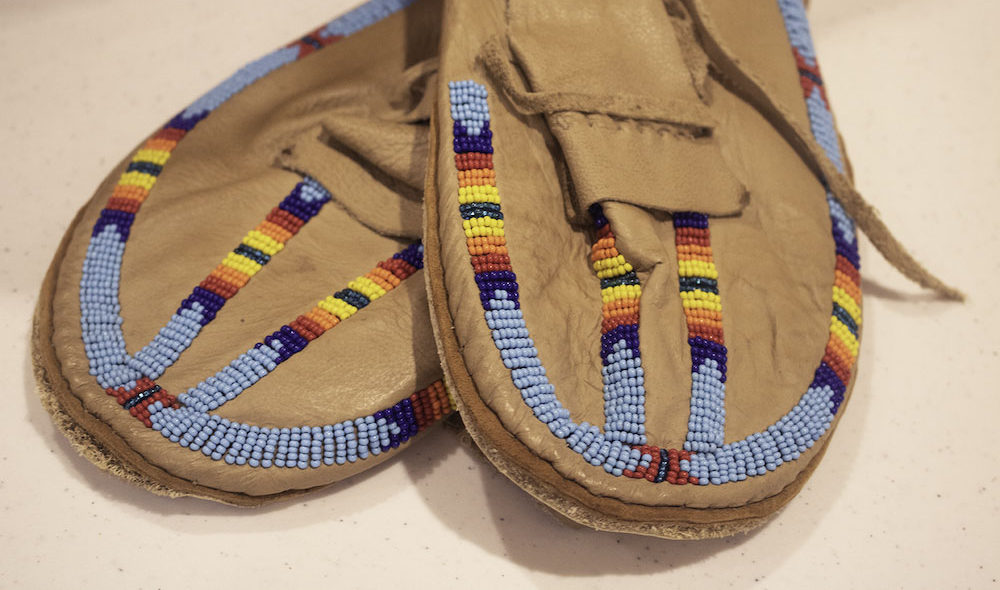
Osage moccasins
Osage Nation

WASHINGTON, D.C. – The Senate Committee on Indian Affairs staff held a virtual listening session, “The ARTIST Act: Updating the Indian Arts and Crafts Act,” on the discussion draft of the Amendments to Respect Traditional Indigenous Skill and Talent (ARTIST) Act of 2023.

First enacted in 1935, the Indian Arts and Crafts Act (IACA) is a truth-in-advertising law that prohibits misrepresentation in the marketing of Indian-made arts and craft products within the United States. Congress has only amended the law three times: in 1990, 2000, and 2010.

IACA also created the Indian Arts and Crafts Board (IACB) within the Department of the Interior to promote economic development of federally recognized American Indians and Alaska Natives through expansion of the Indian arts and crafts market. IACB is charged with implementing and enforcing the IACA and estimates the annual sales of Indian arts and crafts exceeds $1.5 billion.

The ARTIST Act discussion draft would amend IACA by strengthening enforcement and accounting for contemporary sales and marketing platforms. Specifically, the ARTIST Act discussion draft would amend IACA to:

  • Expand protections for Native American artists and Native American-controlled businesses and organizations contributing to the Indian arts and crafts market
  • Ensure Native Hawaiian artisans can define, develop, and support their own economies by including their arts and crafts in the definition of “Native-made” products captured by IACA
  • Authorize any federal law enforcement officer to investigate or make arrests for potential violations of IACA
  • Direct the Secretary of the Interior to dispose of arts and crafts determined to be in violation of IACA
  • Create a forfeiture fund to pay proper expenses related to seizures and forfeitures, including rewards for reporting violations of the IACA
  • Direct remaining forfeiture funds to establish grant programs for arts programs at Bureau of Indian Education schools
  • Require permanent country of origin labeling for all non-Native products
  • Direct the Secretary of the Interior to add the term “Native” to 25 C.F.R. 309.24(a))
  • Authorize the Secretary of the Interior to provide training to federal law enforcement officers on the enforcement of IACA and the Safeguard Tribal Objects of Patrimony (STOP) Act
  • Direct the Secretary of Homeland Security to require all appropriate U.S. Customs and Border Protection personnel to participate in IACA and STOP Act enforcement training
  • Require the IACB to produce an annual report to Congress on the prosecutions, allegations, exceptions, and lost revenue impact on the Native American arts and crafts industry due to counterfeit items
  • Direct the IACB to conduct a feasibility study on using an online registration system for the Source Directory of American Indian and Alaska Owned and Operated Arts and Crafts Businesses and a plan to include Native Hawaiians in the source directory

Comments will inform the legislative process and serve as a resource for future discussions on updating the Indian Arts and Crafts Act.

The Committee will continue to accept written comments on the discussion draft bill until May 19, 2023. Comments may be submitted to [email protected].

Joan Fontcuberta: Redefining Photography and Taming Monsters

Joan Fontcuberta: Redefining Photography and Taming Monsters

Joan Fontcuberta discovered photography at school, when a teacher introduced him to the inner workings of the dark room. He saw it as a real magic trick. He reproduces this magic when he engages in unorthodox experiments in the photochemical laboratory installed in his home. “You talk about working, I talk about having fun,” he says when asked about his photography. Blind spoke with the photographer Joan Fontcuberta at the Rencontres de la Jeune Photographie Internationale.

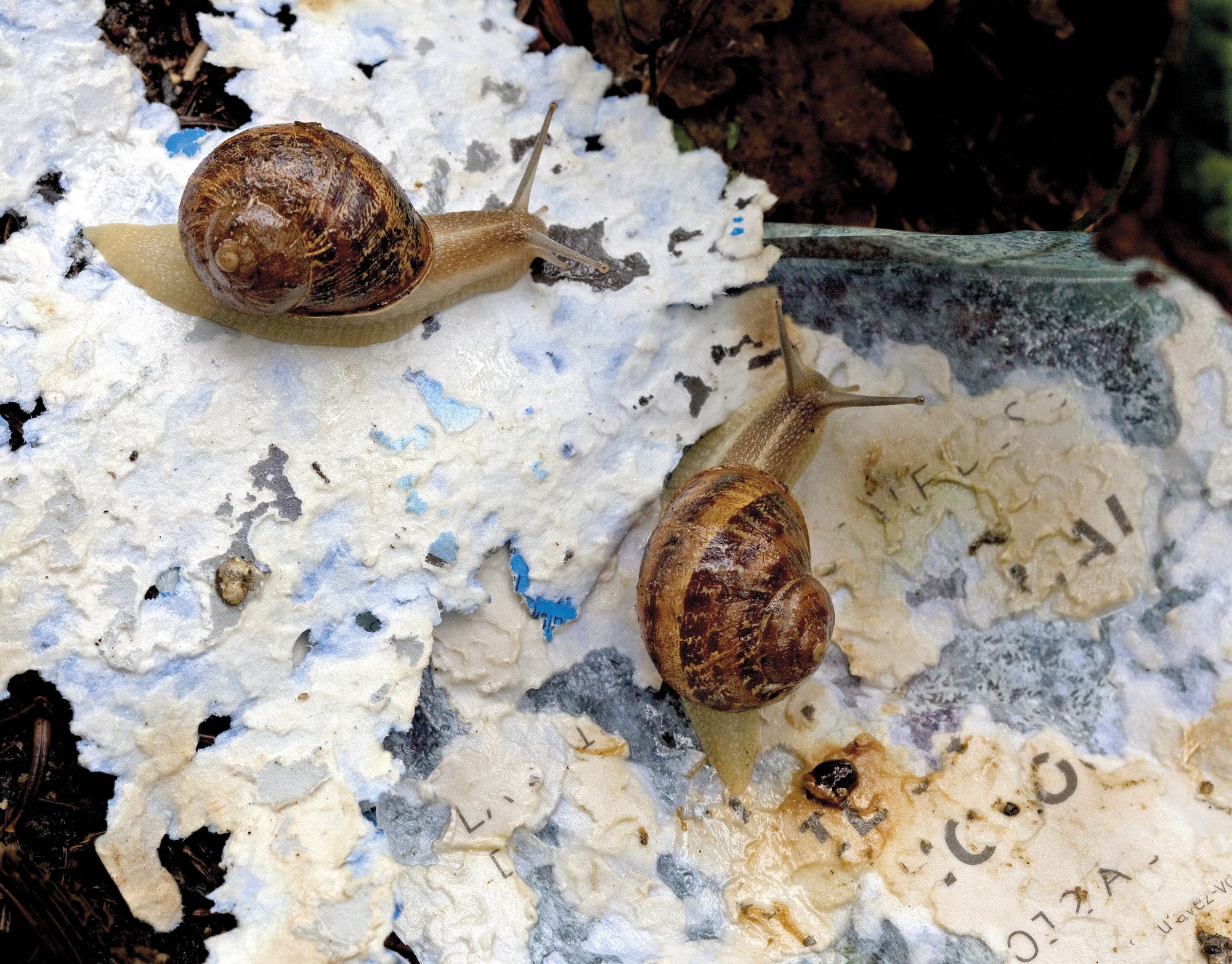
Gastropoda © Joan Fontcuberta

Joan Fontcuberta, you are the guest of honor at the 2023 Rencontres de la Jeune Photographie Internationale in Niort. Is it important to you to support younger generations of artists?

I have been teaching all my life. Teaching is an important part of my creative work. I am as much an artist as a teacher. When I create, I want to transmit, and finally, I teach to learn. I am constantly in contact with different worlds with which I make new connections with my own work. It is in dialogue with the new generations that I can bring my ideas to life.

In Monsters, your exhibition featured at the Villa Pérochon, you use artificial intelligence. How do you envision its role in the artistic field?

It is a new tool that will allow a wider range of possibilities of expression. 

“The old world is dying, and the new world struggles to be born: now is the time of monsters.” Can you explain this quote from Antonio Gramsci that accompanies your exhibition?

For Gramsci, the revolutionary horizon is shifted to the world of the image. Here, analog photography is in transition to a new visual order. Algorithms are the monstrosities. 

Is it possible to tame these monsters? 

We must try to make the transition from a natural stupidity to an artificial intelligence. Humans are stupid: we need prosthetics to achieve greater intelligence. Technologies such as artificial intelligence can help us, but they may not be able to do this. It is a political, philosophical, spiritual, social question… 

To rethink photography is to tame the monsters. Because photography, born during the industrial revolution, was also born with an original sin: to transmit an ideology. And I think that it is necessary to critique it. 

And the image is the origin of this critique?

The image is that which our imagination conforms to, it has a very important role. This is not an opinion, it is an observation made by anthropologists and historians. It has always been that, at the foundations of our civilization, interpretation is visual. Let’s take the transition from ape to human. In the beginning, the human communicates through gestures. He generates a sign system that can only be captured by means of the eye. Thought has a visual nature, it is the image that configures the way to organize our idea of reality.

Concerning artificial intelligence, the question of intellectual property is at the heart of the concerns, since a work created by AI is made from other works whose provenance is unknown. What do you think about this?

If we rethink photography, we must also rethink the condition of the author. We must not forget that, historically, this condition is based on the notion of capitalism: it is a question of property. So, do we envisage keeping this notion of property or do we develop an idea of sharing? 

I think that the work is much more important than the artist, but every type of technological innovation poses problems for the economy of images. In the future, image professionals will necessarily have to find new methods. What we can eventually do is slow down the arrival of these technologies, or else look for ways to adapt to this situation. But their impact is inevitable, like that of a meteorite. 

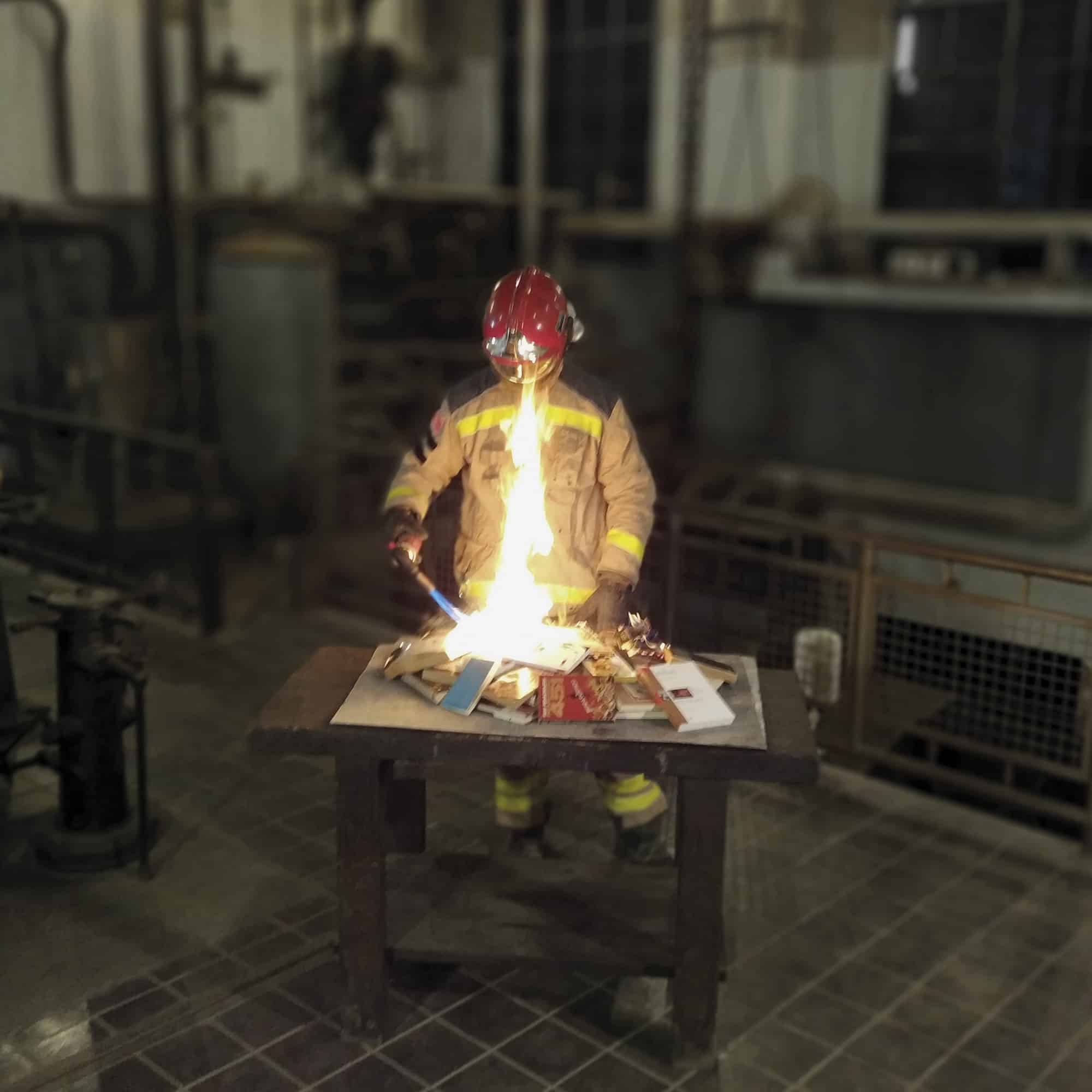
Fahrenheit © Joan Fontcuberta

What do you think photography will look like in a decade or so?

I think that, in the future, today’s categories of the image will undergo change. Painting, drawing, photography … everything will mix together. Already, with the digital camera, we juggle between photo and video. There is already a certain hybridity.  

You have said that photos are not eternal. In the future, could the image disappear to make room for the virtual?

Photography has engaged in a battle with time, but the latter has taken its revenge. First of all, the photo as a physical object is kind of a relic. In the past, it replaced the presence of a body. There was a magical, religious, and superstitious attachment to the image. In the nineteenth century, it was an archival tool. But what happens to memory when pictures can be erased? Every image is now condemned to die, just like people. In my work, I am interested in “suffering” images. They come from archives, often degraded by floods or a hostile environment. Damaged, they will soon disappear; but, above all, speak to memory which has almost disappeared.

The relationship between algorithms and memory is the opposite: they anticipate what is to come, while the photograph archives memories and freezes them. Algorithms are a regime of prediction. They are a way of traveling in time but in a different manner.

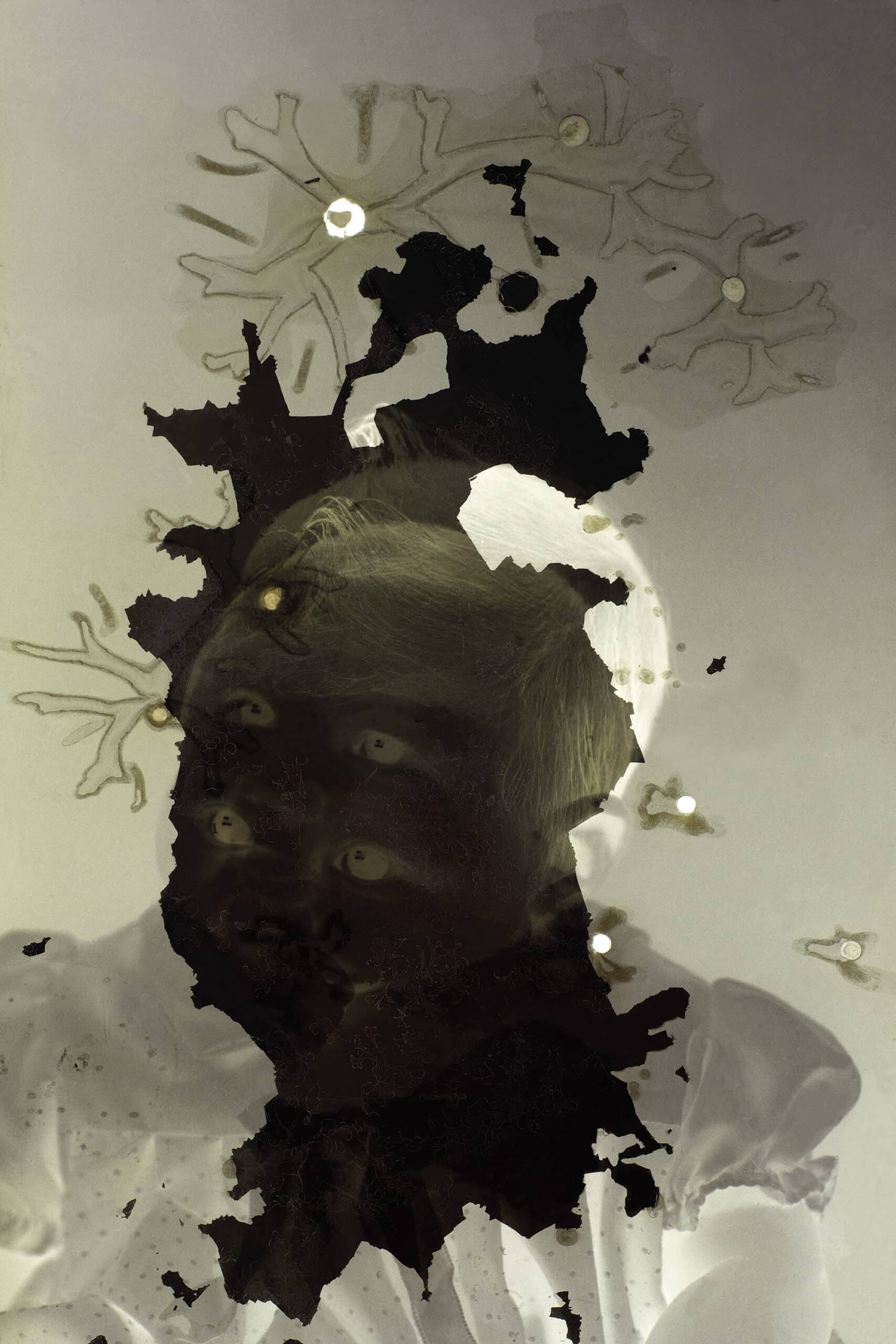
Trauma © Joan Fontcuberta

Joan Fontcuberta, Monsters. March 25 to May 27, 2023. Villa Pérochon, 64 rue Paul-François Proust, 79000 Niort, France. The exhibition is part of the Rencontres de la Jeune Photographie Internationale.

Japanese Photographer Has Taken The Cutest Pictures Of His Then 4-Year-Old Daughter (26 Pics)

Japanese Photographer Has Taken The Cutest Pictures Of His Then 4-Year-Old Daughter (26 Pics)
image

Once a photographer becomes a parent – especially to a baby daughter – he no longer has to look for a model to work with. This was once again proved by Japanese photographer Toyokazu Nagano, taking just the most adorable photos of his youngest daughter, 4-year-old Kanna. The photo series is well described by its laconic name – My Daughter Kanna – as the girl and her natural charm is just enough to fill an entire frame. Each picture is taken on the same road, with little Kanna giving all of her into each pose and mood.

Even though each picture is enhanced with some cute costumes and props, like a tiny piano, a plush panda, or a giant gelato tower, what draws you the most is how photogenic Kanna is, and what wild facial expressions she can pull off. The girl doesn’t seem to be the least bit intimidated by the camera and seems to be especially fond of making some noise.

More info: Instagram | flickr.com | Facebook | twitter.com

AI imagery goes against everything I believe photography is about

AI imagery goes against everything I believe photography is about

I recently came across a succinct description of what us photographers do… “lens-based practice”. Although, “camera-based practice” is arguably just as accurate. 

With the rise of AI, it’s going to be even more necessary to distinguish photography – i.e. image making using a camera and lens – from the frightening prospect that is AI-based image generation. This is machine learning software that simply uses a short text description to make up a picture from elements that it has absorbed from millions of tagged sample images. 

There several AI image generators (opens in new tab) available – such as Dall-E 2, Stable Diffusion, Picsart, Craiyon and Midjourney – which have varying capabilities and applications. Dall-E, for example, even allows users to specify the lens focal length and aperture in their AI-generated images… and the results have been described as “shockingly realistic”.

The results look very convincing, convincing enough that an AI-generated image – meant to look like it was taken by a camera drone – actually won a photo competition in Australia. Submitting the image was a stunt by its creator – Sydney- based company Absolutely Ai – and it came clean after the results were announced… but a point was emphatically made. As it happens, a close examination of the image would have revealed some visual anomalies which means, just for starters, competition judges will have to be a lot more alert.

More alarmingly, a spokesperson for Absolutely Ai, quoted elsewhere, said, “We didn’t need to wake up at sunrise, drive to the beach and send the drone up to capture the image. We created this image from our couch in Sydney by entering text into a computer program”. 

I don’t know about you, but frankly that appals me as it is the antithesis of everything that photography is about… namely the physical, technical and creative efforts that go into realising an idea or vision. It’s cheating on a breath- taking scale, and the potential for AI art to be deceptive or downright dishonest is immense. 

We have, of course, sown the seeds for this with our embrace of image manipulation in programs like Photoshop, but because artificial intelligence is now involved, it’s going to be a lot harder to spot the fakes. Additionally, a lot of Photoshop work is pretty obvious – and mostly always acknowledged by its authors – but an image created by AI looks more like a genuine photograph, such as you might take at sunrise on a beach after making the effort to be in the right place at the right time. 

Then there’s the little issue of copyright, which will be impossible to police because components of the image have come from everywhere and there could be hundreds of different inputs. It’s very likely most of the source images would have been plundered without their authors’ knowledge or permission. 

I remember the furore a few years ago when the now- defunct Australian Institute Of Professional Photography (AIPP) stripped a photographer of her awards and membership for, among other things, using some unattributed elements in images submitted for competition. These elements were tiny, but traceable, which is something that’s going to be much harder to do – if not impossible – with an AI-generated image. What we’re facing now is child’s play compared to those misdemeanours. 

Not surprisingly, major stock libraries are using AI-generated images to gain additional revenue from their existing libraries or making licenses available to AI art companies. However, stock libraries are potentially also victims and, for example, Getty Images is currently taking legal action in the UK against Stability AI (the owner of Stable Diffusion), citing that it unlawfully copied and processed millions of images protected by its copyright.

AI art is not going to affect photography specific to a particular event or subject matter – such as a wedding, portraits, product or sports – but for ‘generic’ imagery that’s more conceptual or thematic, it can deliver results that would otherwise take a lot of time and effort to produce. Incidentally, Midjourney – currently one of the most popular AI image generators – can create pictures that include celebrities or public figures, but others prevent it, along with inappropriate content.

AI art is problematic for professional photographers because – at least as far as public perceptions are concerned – it undermines and devalues every aspect of what we do, most specifically the creative input. One thing is certain: it’s not going to go away any time soon.

Read more

Artist in Residence Noelle Garcia uses art to explore Indigenous identity, family history and recovered narrative

Artist in Residence Noelle Garcia uses art to explore Indigenous identity, family history and recovered narrative

Noelle Garcia uses art to understand Indigenous identity

A+woman+with+brown+hair+and+blue+shirt+points+toward+a+TV+screen.

Jessica Ma/Daily Senior Staffer

Artist in Residence Noelle Garcia spoke about her drawings, paintings and sculptures, which touch on themes of identity, family history and recovered narrative.

Jessica Ma, Assistant Campus Editor

The Center for Native American and Indigenous Research hosted a public talk with its 2023 Artist in Residence Noelle Garcia on Wednesday evening. 

Garcia, a multidisciplinary artist from the Klamath, Modoc and Paiute tribes from Oregon and Nevada, is currently based in the Chicago area. Her art focuses on themes of identity, family history and recovered narrative.

During her talk, Garcia walked the audience through a presentation of some of her artworks, and described the experiences and sentiments behind them. Through art, Garcia described her childhood experiences growing up with her father who was incarcerated. He often sent drawings in his letters to her, she recalled.

“I grew up understanding drawing as this expression of affection,” Garcia said. “Having gone through all the art schools, affection is something we don’t talk about in art.” 

Garcia shared a drawing from her father’s funeral, which she translated into a painting — something she does frequently. The painting is intentionally abstract, she said, so it can be a place to play with space, lines and paint. 

CNAIR Associate Director of Community Outreach and Engagement Pamala Silas, an enrolled member of the Menominee Tribe of Wisconsin and descendant of the Oneida Tribe of Wisconsin, said Garcia weaves her life stories into her artwork. 

“Art is embedded in our everyday life,” Silas said. “It was wonderful to hear the stories and see how it transcends everything about who she is. There’s a freedom she expresses in trying new things.”

To select the artist in residence, CNAIR partnered with the Center for Native Futures, a non-profit organization dedicated to creating a Native and Indigenous gallery space in the city of Zhegagoynak or Chicago.

Center for Native Futures co-founder Chris Pappan, who is of Osage, Kaw and Cheyenne River Sioux descent, said the center strives to invest in Indigenous artists by sharing their work with a broader audience. 

“They asked us to put forward an artist, so we thought Noelle would be the perfect choice,” Pappan said. “I’m getting to know her as a person and as an artist.”

Silas said CNAIR aims to “carve out a space” for Garcia as she pursues her artistic endeavors.

While at NU, Garcia — who previously taught at National Louis University and the School of the Art Institute of Chicago, Homan Square — has been invited to art classes to conduct guest critiques, Garcia said. 

Garcia, who loves to paint, described the process as similar to nature. Paint doesn’t have any edges, she said, which makes it engaging to work with. 

In addition to painting, Garcia also creates soft sculptures, for instance, by covering bottles of pills with beads. Indigenous people are more likely to have heart disease and diabetes, which research stipulates derives from generational trauma, Garcia said. 

“If you use Indian health care, sometimes they’ll send you these giant bottles of pills,” Garcia said. “People will bead around pens, around lighters. I thought, ‘Well, I can bead around bottles.’” 

Garcia said she feels frustrated about the way art is taught in American education. Academia centers Eurocentric ideas of what art should be and what art history is, she said. 

Education is used as a means of erasure, Garcia added, as institutions give positions based on academic credentials, which isn’t representative of artistic knowledge. 

“You’re not going to give this amazing grandma who does amazing beadwork a professor position, because she doesn’t have a degree,” Garcia said. “But why is she going to get a degree in Indigenous studies when she’s lived it and knows more than some of the academics?” 

Garcia also emphasized the importance of mentorship. When she works with other Indigenous artists, she aims to support and uplift them, she said — a practice she wants to see other educators adopt.

For Garcia, learning and teaching are a part of her practice. Indigenous history contains missing pieces due to boarding schools and relocation, Garcia said. Learning practices such as basket making involves going to museums and meeting with elders, she said. 

“My dad has not been able to learn these things, because he was forced into a boarding school. But I can learn it for him,” Garcia said. “I can teach my kids how to do it, and I can teach my art students how to do it.” 

Email: [email protected] 

Twitter: @JessicaMa2025

Related Stories:

‘The land is our relative’: NAISA hosts second annual Pow Wow on Earth Day

30 Days of Indigenous programming celebrates Native American and Indigenous heritage

NAISA commemorates 158th anniversary of the Sand Creek Massacre, reiterates demands to NU