Contemporary Seminole Artists Make History At Ringling Museum Of Art In Sarasota, FL

Contemporary Seminole Artists Make History At Ringling Museum Of Art In Sarasota, FL

The Ringling Museum of Art in Sarasota made history on March 18, 2023, when it opened the exhibition “Reclaiming Home: Contemporary Seminole Art.” History not only for itself, but all of Florida, as the first museum presentation of contemporary art by Native Americans with ancestral, historical, and present-day connections to the state.

The Ringling is the State Art Museum of Florida, built from the wealth and upon the collection of circus impresario John Ringling who began wintering his troupe of performers, animals and Ringling Bros and Barnum & Bailey Circus support staff in Sarasota in 1927. Ringling was also one of the early 20th century’s most prolific art collectors.

The grandiose pink, Renaissance-style palace with 21 galleries enclosing a courtyard filled with copies of iconic sculptures–including Michelangelo’s David–first opened in 1930 and was bequeathed by Ringling to the people of Florida upon his death in 1936.

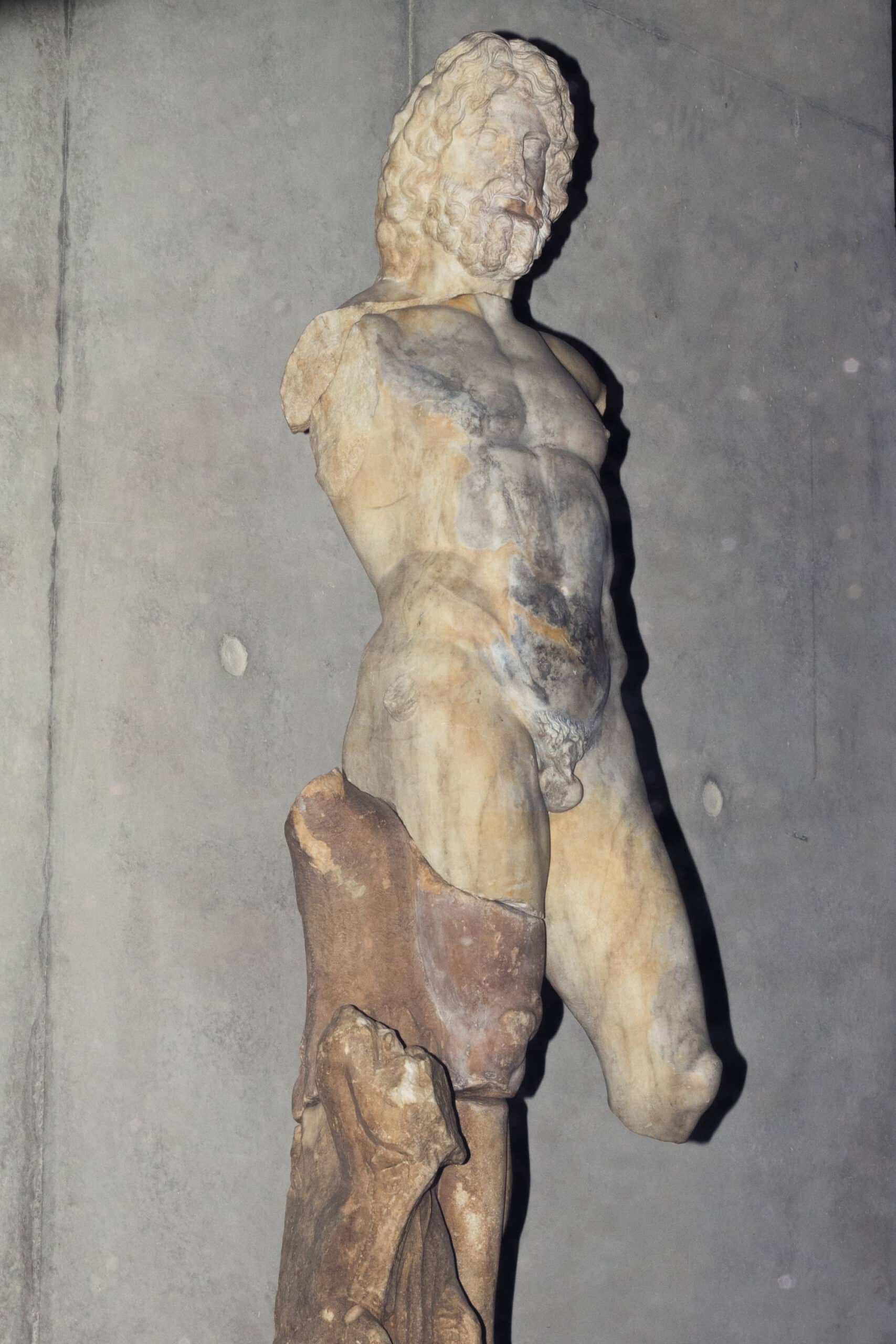
It houses work by Velazquez, El Greco, Van Dyck, Veronese, Tiepolo, Gainsborough and Rubens–the premier collection of European Old Master paintings in the Southeast. It houses exemplary Greek and Roman antiquities acquired by Ringling in 1928 from the Metropolitan Museum of Art. It houses art objects from China, Japan and across Asia.

But until this spring, nothing of or from Florida’s indigenous people.

“Reclaiming Home” highlights the breadth and depth of the artwork by Seminole, Miccosukee, and mixed-heritage artists from Florida along with important pieces by internationally recognized artists of Muscogee (Creek) and Seminole descent from Oklahoma and beyond. Twelve artists contributed dozens of items ranging from paintings to patchwork, beadwork, bandolier bags and sashes, wood carvings, a large dugout canoe, ceramic sculptures, video presentations, multimedia pieces, ceramics, skateboard decks and a mural.

“I think this show was groundbreaking–not just in Florida–because it took (Native American art) to a level of fine art,” Jessica Osceola (Seminole; b. 1984) told Forbes.com. “Being in that kind of gallery, the setting, the curation, everything they did elevated our place in the fine arts community.”

The Ringling’s prestige, placing the work of these artists in its Modern and Contemporary galleries otherwise occupied by Josef Albers, Marcel Duchamp, Alexander Calder, Ellsworth Kelly and Robert Rauschenberg, makes a clear statement about the significance of the Native artists and their artwork.

Equals.

Importantly, the show also takes as its singular focus contemporary art. The Ringling is an art museum, not a history museum. The exhibition’s focus is art, not ethnography.

Even today, contemporary Native American art often shares institutional space with Native American artifacts, tethering Native American stories to the past. Subconsciously, the impact on audiences conjoins Indigenous people to history, instead of placing them firmly in the here and now.

“I hope (visitors to the exhibition) say, ‘these people not only exist’–because I get that a lot, ‘wow, you guys still exist?’ Yes, first of all–then, I hope they (see) how (we’re) living and working in present day, contributing to our story now,” Osceola said.

Reclaiming Home, Claiming the Museum

At 25-years-old, Corrine Zepeda (Seminole) is the second youngest artist with work in “Reclaiming Home.” Summer vacations in her family were spent at museums.

“We would go and sit in galleries for hours,” she told Forbes.com. “I always hated it as a kid. I was like, ‘why are we doing this? I’m bored. I don’t want to be here and take the guided tour and learn about all of the paintings.’”

She of course appreciates the lessons now, but back then, which wasn’t all that long ago, trips to the Museum of Modern Art or The Guggenheim in New York failed to interest Zepeda not only because she was confined by their walls, but also because of what was on their walls.

“You don’t see yourself on TV, you don’t see yourself in the movies, or in books, and it also carried over into art,” Zepeda said. “I never saw myself in any of the art.”

Zepeda’s heritage is mixed. Seminole and Mexican on her father’s side; German, Scottish and Welsh on her mother’s.

“I could see my mom in the images, she looks a lot like some of the paintings, but then I would look at my dad and myself and think, ‘I don’t see anybody who looks like me,’” she remembers. “For my little cousins to see my art on the wall (at Ringling) was a big deal because they know now it’s possible to do that; now you’re seeing yourself in these images.”

It’s difficult for white audiences in America to even imagine going into museum spaces and not being surrounded by paintings with people who look like them created by artists who look like them. The dominant white culture. Museums have always been complicit in establishing, promoting and continuing it.

Conversely, for racial minorities, going into a mainstream museum and seeing a single item depicting someone who looks like them can cause spontaneous outbursts of celebration.

In the Ringling’s nearly 100-year history, it had all of one object in its permanent collection created by a Native artist, and that artist had no connection to Florida. In addition to the exhibition, the museum has acquired a work by Osceola to add to its permanent collection.

“There’s two sides to that. We’ve set the standard, there’s a couple of different museums who have already reached out to a handful of us to ask us to also exhibit there, which is really great, but on the other hand, it’s 2023 and we’re just now starting to accept Native artists in these spaces,” Zepeda said. “We’re just now getting representation in museum spaces? It’s kind of alarming, but I’m glad that Ringling has made the effort and I hope other institutions will also do the same thing.”

Southeast, not Southwest

For Western art audiences and institutions, the presentation of contemporary Native American art as novel may seem strange. In Oklahoma, Texas, Colorado, Arizona, New Mexico, California, Montana, there’s nothing groundbreaking about showing contemporary Native American art in a museum. It remains that way in the Southeast.

Indian removal, assimilation policies and Popular Culture have resulted in most Americans thinking “West” when they think about Native people. Headdresses and teepees. The Sioux and the Cheyenne. Horses and buffalo.

Largely forgotten are the Eastern Woodland tribes. Same as in the West, Indigenous people and communities covered every square inch of the eastern half of what is now called the United States.

This unconscious bias impacts the art world as well where “Indian art” is often assumed to only encompass traditionally Southwestern material–turquoise and silver jewelry, Pueblo pottery, Diné weavings.

“I was approached by a man at the opening at Ringling and he (said), ‘I love (the exhibition), have you ever considered going out to Santa Fe and setting up (at Indian) Market, and (I told him), respectfully, ‘no,’” Zepeda said. “He was like, ‘why?’ There is a very big (difference) between the two of us and I absolutely adore all of my Southwestern Native American friends and they love me, but our art and our cultures and the way we live our lives are two different ways, two different styles of existing.”

Go to Albuquerque and then go to Sarasota and you’ll understand what she means. Not only are Florida and New Mexico separated by 2,000 miles, but the climate, the soil, the topography, the sunlight, the vegetation, the animals, the–everything–is completely different. Florida is blue and green and humid with water on three sides. New Mexico is tan and clear and parched and mountainous.

Naturally, the Indigenous people in either place developed separate ways of life and cultural practices and artwork from one another. That nuance, Native Americans as diverse, not monolithic, remains lost to a large segment of Americans.

“Each one of us are unique so I kind of get mad, and I’m mad from myself and my tribe, but I’m also mad for my Southwest friends because I’m like, ‘listen, they’re a whole different people than us!’ We’re two completely different people,” Zepeda said.

That, too, is a benefit for exhibitions of Native American art in mainstream museum spaces. Education. Like it or not, every Native artist working today carries the burden of education and explanation along with their artmaking. Jackson Pollock was never expected to be an expert on American history when showing his paintings in the way audiences expect Indigenous artists to be tribal historians.

But that’s the reality.

“Reclaiming Home” can be seen at the Ringling Museum of Art through September 4, 2023. Every day, the Ah-Tah-Thi-Ki Museum of Seminole culture and history, located on the Big Cypress Indian Reservation, which assisted the Ringling in this presentation, welcomes the public to learn more about the tribe.

Exciting Children’s Festival announced for Chesterfield this Summer

Exciting Children’s Festival announced for Chesterfield this Summer

By Josh Marsh

A new Children’s Festival is coming to Chesterfield this Summer, providing families with a free weekend of fun and entertainment.

The Chesterfield Children’s Festival will include music, theatre, storytelling, dance, and art workshops. It is being organised by Junction Arts, an award-winning arts charity based in the town.

Taking place in Queen’s Park on the 29th and 30th July, the event is set to celebrate the joy of childhood, imagination and play – promising to bring colour and excitement to Chesterfield during the summer holidays.

The two-day event will focus on arts and culture, with a number of acts and activities taking place over the weekend.  Entertainment announced so far includes a silent disco tour, an interactive game zone, a comedy club, a circus, storytime yoga, tie-dye workshops, face-painting and a brass band that plays everyone’s favourite Disney tunes!

Music and live theatre will take place in and around the town centre during the festival weekend, the full line-up will be announced in June.

Junction Arts will also commission a new artwork on the themes of childhood, play and games to celebrate the launch of the festival. Three local primary schools in Chesterfield and surrounding areas will work with the artist during several engagement sessions in the spring.

Junction Arts Project Coordinator, Jemma Burton said: “We’re delighted to announce the launch of the Chesterfield Children’s Festival, a weekend that’s all about fun with live performances and lots of opportunities to get creative. We have secured lots of high-quality acts already, but we’ll be announcing more very soon!

“Everyone is welcome, there’s no need to register or buy a ticket, families can simply turn up, get involved in the workshops or just enjoy the entertainment on offer. We look forward to seeing you there!”

Junction Arts hope that this will become a much-loved annual event for the town, inspiring children and young people for generations to come.

The Chesterfield Children’s Festival will take place on Saturday 29th and Sunday 30th July, from 10am-4pm daily.

For more information visit: www.junctionarts.org or follow @junctionartsuk

Junction Arts supports the marketing and economic growth of the town through Chesterfield Champions, a network of over 200 organisations across Chesterfield and North Derbyshire.

queens park

Honoring the legacy of civil rights activist, artist, and singer Harry Belafonte

Honoring the legacy of civil rights activist, artist, and singer Harry Belafonte


CNN
 — 

Throughout an acclaimed career spanning more than six decades, entertainer Harry Belafonte leveraged his passion and talents to champion the arts, spotlight humanitarian issues and advance justice. Born in 1927 Harlem, he moved to his mother’s native island, Jamaica. There, he embraced Caribbean culture and witnessed the impact of British colonization on the island. In his late teens, Belafonte served in the US Navy and later fell in love with performing. In 1946, he played the lead in “Days of Our Youth” at Harlem’s American Negro Theater. His understudy was Sidney Poitier.

In 1960 Belafonte became the first African American to win an  Emmy.

Among Belafonte’s signature musical contributions was his 1956 version of “Day-O (The Banana Boat Song)” on his studio album, “Calypso.” The album sold more than 1 million copies. In 1960 Belafonte became the first African American to win an Emmy. He earned the honor for “Revlon Revue: Tonight with Belafonte.” Throughout his career, Belafonte was nominated for 11 Grammys and won 2. In 1985 he helped orchestrate the “We Are the World” supergroup single, raising awareness –and more than $50 million—for emergency famine relief in Africa.

Belafonte received many awards for his artistry and commitment to humanity across the globe including the National Medal of the Arts from US President Bill Clinton in 1994.

To honor Belafonte’s life and legacy Impact Your World presents ways you can support causes the singer and activist championed.

Belafotne pictured with civil rights leader and friend, Martin Luther King Jr.

Fight for equity and justice

Belafonte was a close friend of Dr. Martin Luther King Jr. and was a lifelong supporter of the civil rights movement.

  • Sankofa.org – Founded in 2013 by Belafonte, Sankofa.org is a civil rights organization striving to change systemic injustices. The group seeks equity through criminal justice reform, legislation, and economic action. Sankofa.org leverages the talent of visual artists, performers, and writers to promote activism and social change.
  • The Gathering for Justice – The Gathering for Justice focuses on putting an “end to child incarceration” and ‘“working to eliminate the racial inequities that permeate the justice system.” Founded by Belafonte in 2005, The Gathering for Justice is rooted in the sacrifices of past civil rights leaders. The organization follows a King-inspired, nonviolent philosophy to create change and bolster civic engagement.

Uplift humanity

  • UNICEF – In 1987 Belafonte was appointed a UNICEF Goodwill Ambassador for his longstanding commitment to humanitarian issues. The organization says Belafonte has been an “eloquent campaigner for the world’s children,” meeting with leaders and diplomats to champion UNICEF’s causes.
In addition to the arts, Belafonte spent a lifetime championing humanitarian causes and civil rights.

Advance education

  • The Harry Belafonte 115th Street Library is a branch of the New York Public Library in Harlem. Belafonte was born in the neighborhood in 1927, and according to library officials, became a “perfect namesake” with his commitment to “open, free and equal access to education and opportunity.”

Il Salotto Milanese’s Street Furniture Looks to the Future

Il Salotto Milanese’s Street Furniture Looks to the Future

In more design news from Milan Design Week 2023 at Salone del Mobile, LAND and The Italian Lab launched a street furniture collection: Il Salotto Milanese. The landscape architecture company and street furniture brand worked together to create a response to Milan Design Week’s challenge of using urban elements of iconic and sustainable design. Four pieces comprise the collection – a bench, a waste basket, and two seats – inviting you to take a moment to rest, have a conversation, or simply enjoy a beautiful day.

Il Salotto Milanese pulls from Milan’s energy and the iconic design elements that characterize the city’s public spaces. Through blending urban mining, craftsmanship, and design, the collection builds a unique outdoor experience. Special attention has been given to material choices that favor innovative, recycled, recyclable, durable, and resistant materials to reduce the products’ environmental impact as much as possible.

outdoor cement chair, bench, and garbage can

Colored cement with recycled aggregates and recycled plastic are the primary materials that make up Il Salotto Milanese. The plastic chosen is of high durability and resistance, made from local raw materials and waste aggregates. Meanwhile, the cement contributes sustainably to the circular economy thanks to the processing and reuse of residue from the plastic industry.

outdoor cement bench and garbage can

outdoor cement bench

outdoor cement chair, bench, and garbage can

To learn more about Il Salotto Milanese, visit theitalianlab.it.

Kelly Beall is senior editor at Design Milk. The Pittsburgh-based graphic designer and writer has had a deep love of art and design for as long as she can remember, and enjoys sharing her finds with others. When undistracted by great art and design, she can be found making a mess in the kitchen, consuming as much information as possible, or on the couch with her three pets. Find her @designcrush on social.

Netherlands Presents Tulip Sculpture in Astana as Symbol of Friendship and Unity Between States

Netherlands Presents Tulip Sculpture in Astana as Symbol of Friendship and Unity Between States
ASTANA – A Tulip sculpture honoring the 30th anniversary of the establishment of diplomatic relations between Kazakhstan and the Netherlands was unveiled in the capital’s Botanical Garden, reported the Kazakh Foreign Ministry’s press service on April 25. Deputy Foreign Minister Roman Vassilenko, Ambassador of the Netherlands to Kazakhstan André Carstens, representatives of the diplomatic corps, the capital’s…

Niort Celebrates Emerging and International Photography

Niort Celebrates Emerging and International Photography

For twenty-eight years, the Rencontres de la Jeune Photographie Internationale has extended an invitation to eight (sometimes seven) young people and hosted them at the Fort Foucault, an artists’ residence in the city of Niort. When the festival was launched in 1994, the guest photographers worked with photochemical film and applications were sent by mail. The general idea, however, was already the same: to offer time and place dedicated exclusively to photographic creation. Patrick Delat, artistic director of the Rencontres, sums up the event as “a sort of creative laboratory, all in a spirit of goodwill.”

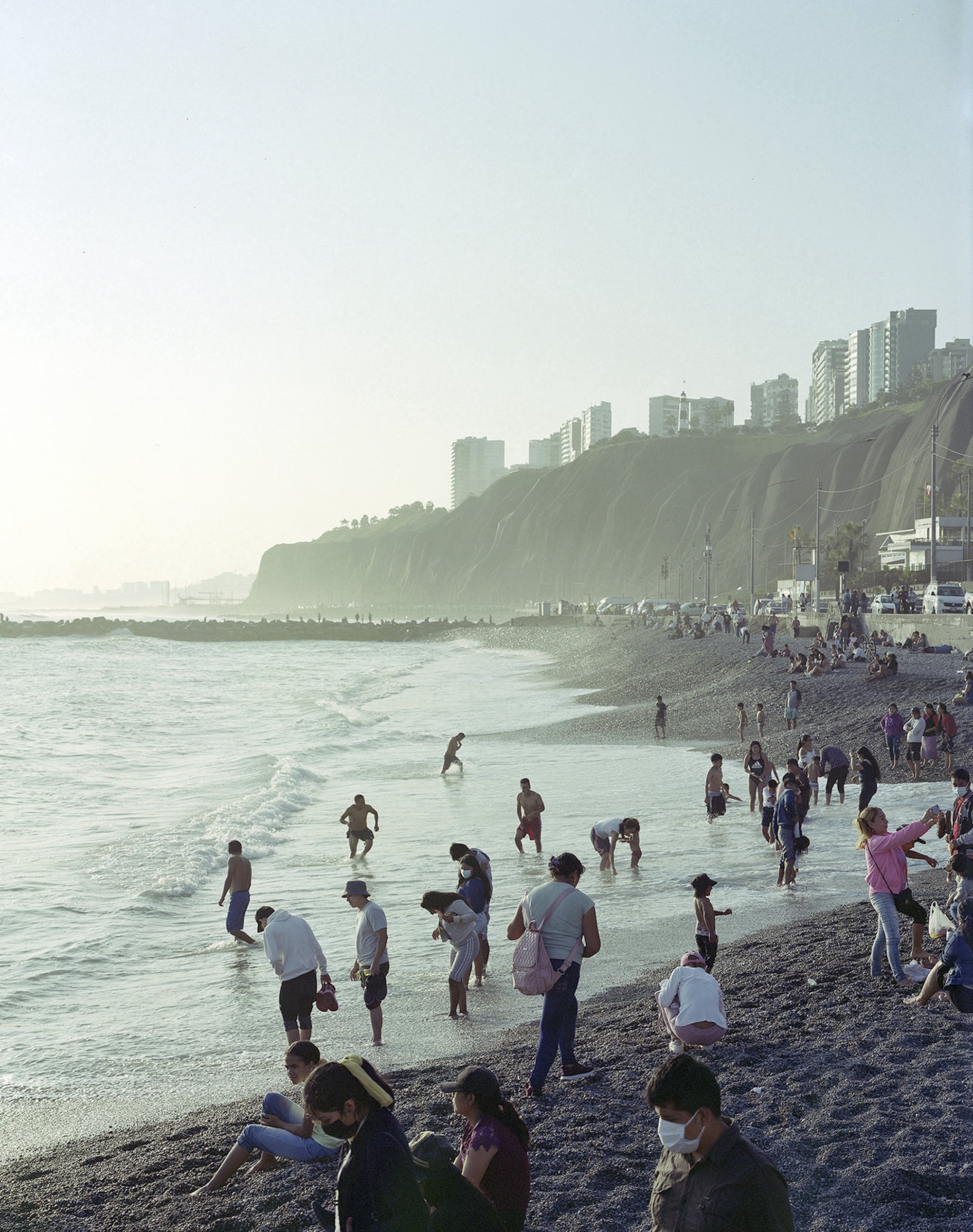
© Victor Manuel Gamarra Goicochea

“Every year, I put together a program that allows the general public to discover all facets of photography, whether it be photojournalism, as with Philip Blenkinsop; classic analog photography, as with Descamps or Françoise Huguier; or visual arts, as with Corinne Mercadier,” says Delat. 

This year, Joan Fontcuberta is the guest of honor of the Rencontres. The Spanish artist occupies the Villa Perochon with his exhibition Monsters. A true “image recycler,” he recovers “orphaned” images from archives and puts them into dialogue with others, produced by artificial intelligence. Fontcuberta, who is also the sponsor of the 2023 residency, mentors the seven young artists-in-residence in their creative process.

Time to experiment

The Rencontres are organized in two phases. From March 25 to April 14, the Médiathèque Pierre-Moinot exhibited the works of the 2023 guest artists which they had submitted in their applications. Following fifteen days of creation, the first exhibition dedicated to the earlier works of the seven residents is replaced with the work they completed during their residency. The new works are now on view until May 27.

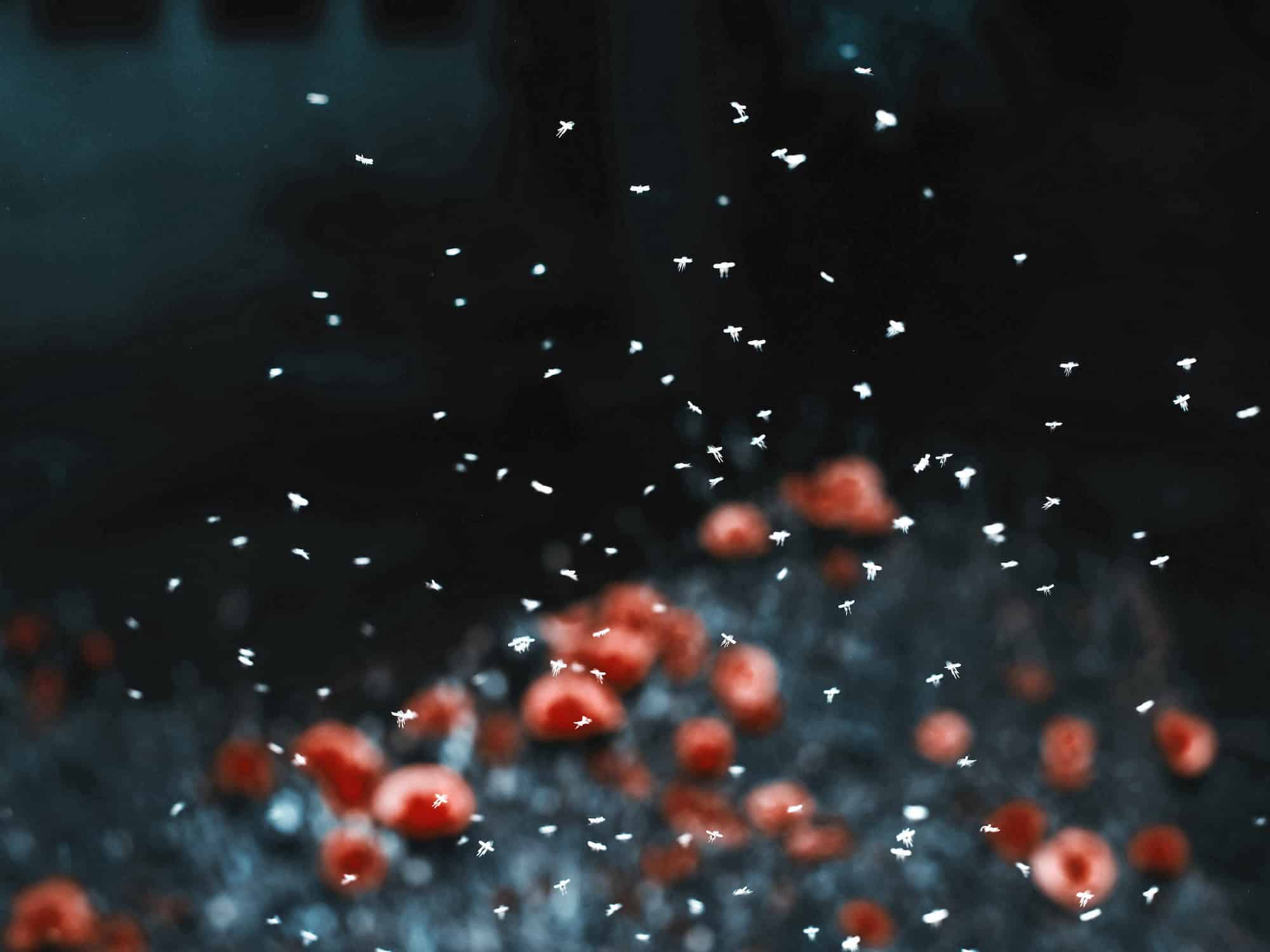
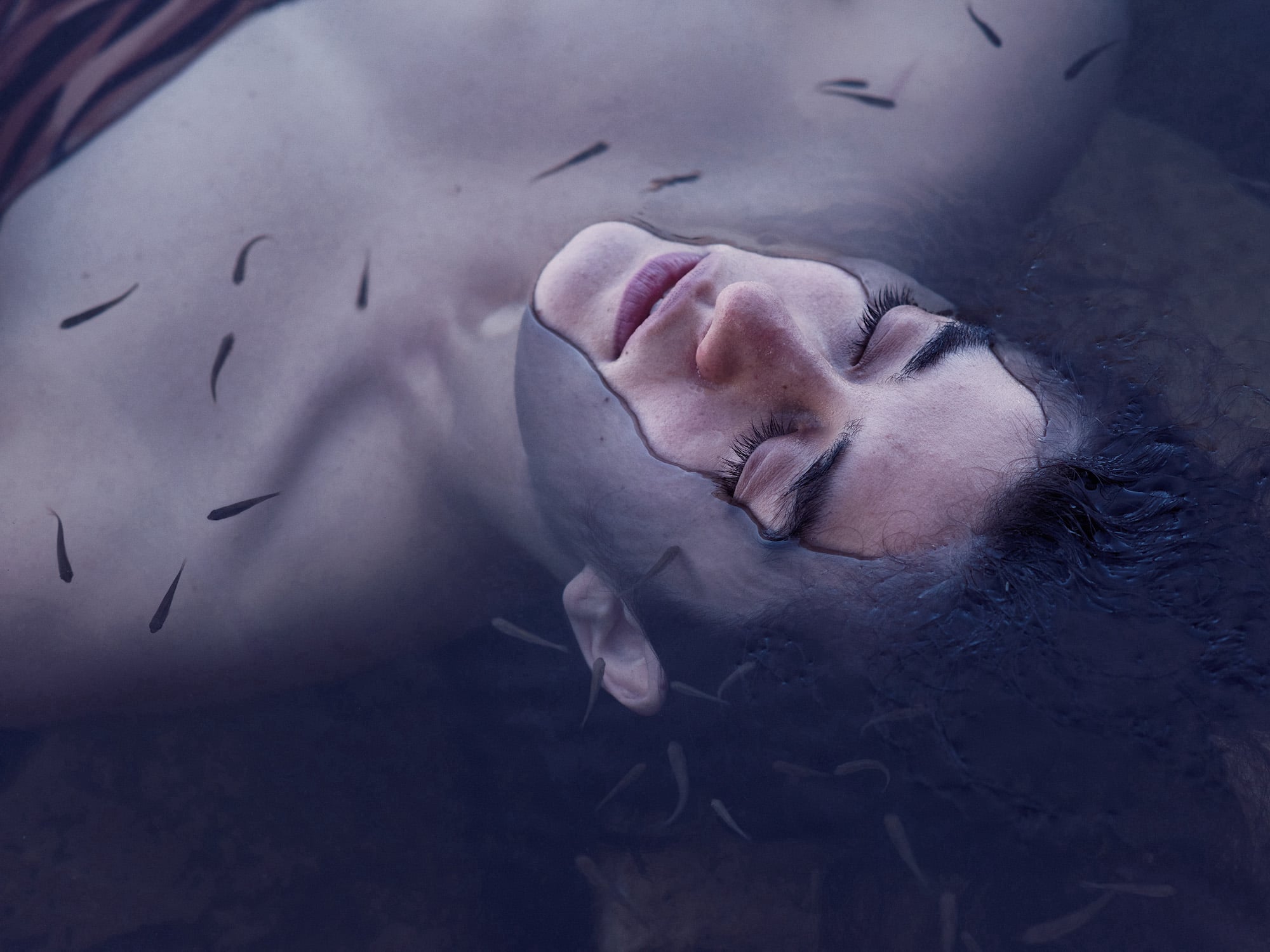
The 2023 residency offers a very varied selection in terms of creation. Representing France, Romy Alizée takes a feminist look at sexuality in her erotic, transgressive, black-and-white prints. Chloé Milos Azzopardi, through her almost supernatural pictures, questions our relationship with the natural world, between domination and servitude.

Autoportrait avec Celio, 2020 © Romy Alizée
Self portrait with Celio, 2020 © Romy Alizée
© Chloé Azzopardi
© Chloé Azzopardi
© Chloé Azzopardi
© Chloé Azzopardi

Valia Russo approaches the concept of collapse. Between 2021 and 2022, she created a photographic documentation of the early signs of this collapse, which according to her, has been unfolding for some time. Soft and poetic, her flash photographs of night subvert the idea of chaos that they foreshadow. Finally, France-Lan Lê Vu’s photographic installations are a reflection on the reprisal of natural techniques and alternative modes of photography in the face of ultra-modernity.

Here, the world comes to an end more quietly © Valia Russo
© France Lan Lê Vu
© France Lan Lê Vu

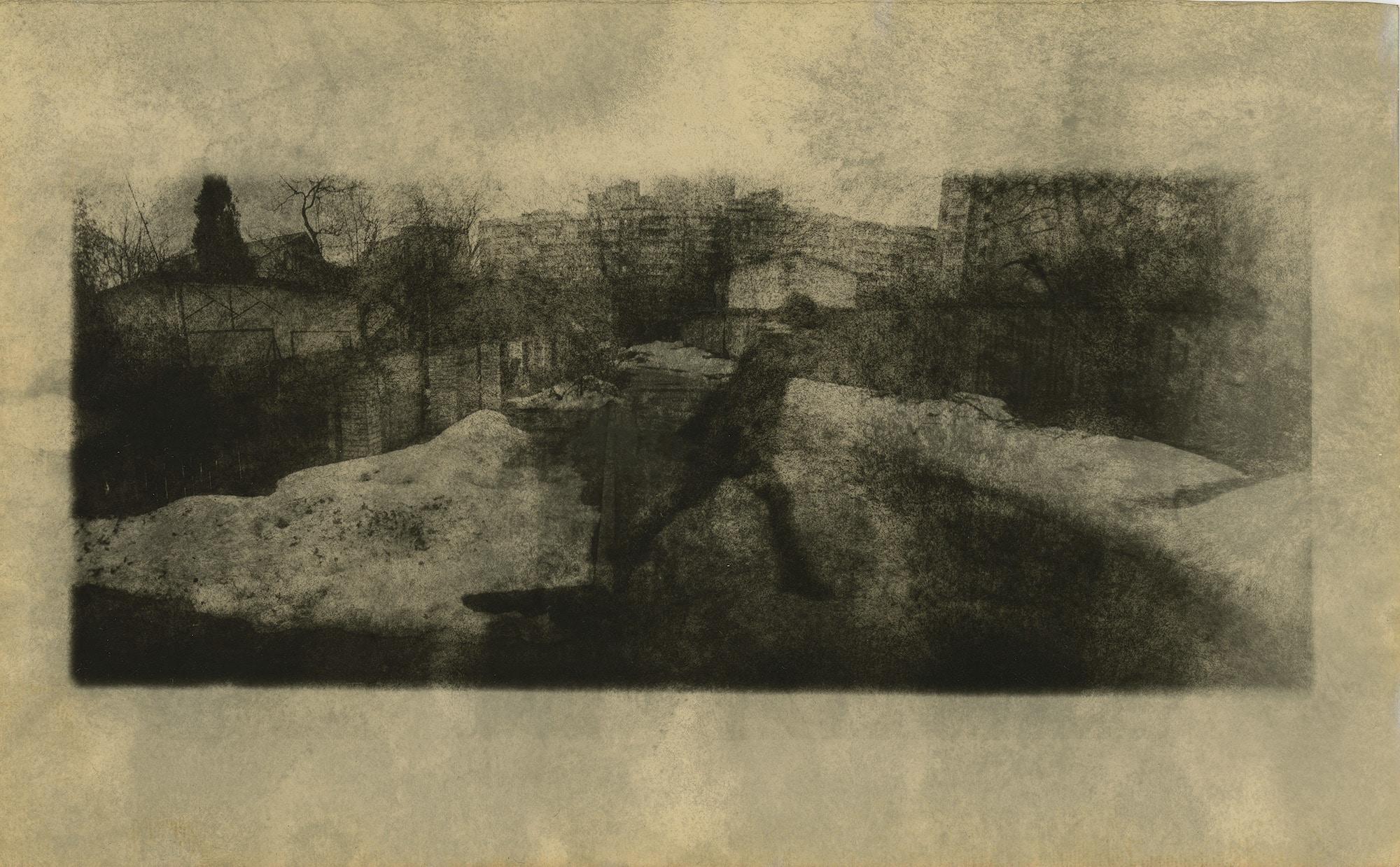
As for the international artists, three photographers have come to settle down in Niort. Md Fazla Rabbi Fatiq approaches the colonial history of Bangladesh and the reality of tea cultivation. Victor Gamarra retraces his childhood in Peru, on the beaches of Lima; while the Ukrainian photographer Yehor Simakov develops his memory on old Soviet paper, like a puzzle of archives and films.

© Md Fazla Rabbi Fatiq
© Victor Manuel Gamarra Goicochea
© Yehor Simakov
© Yehor Simakov

A journey into the heart of the city

In parallel to the residency, the Rencontres hosts a panel of exhibitions, made up of works by former residents and guest artists. This is an opportunity to discover the emblematic sites of Niort, “a city built on a human scale,” points out Delat.

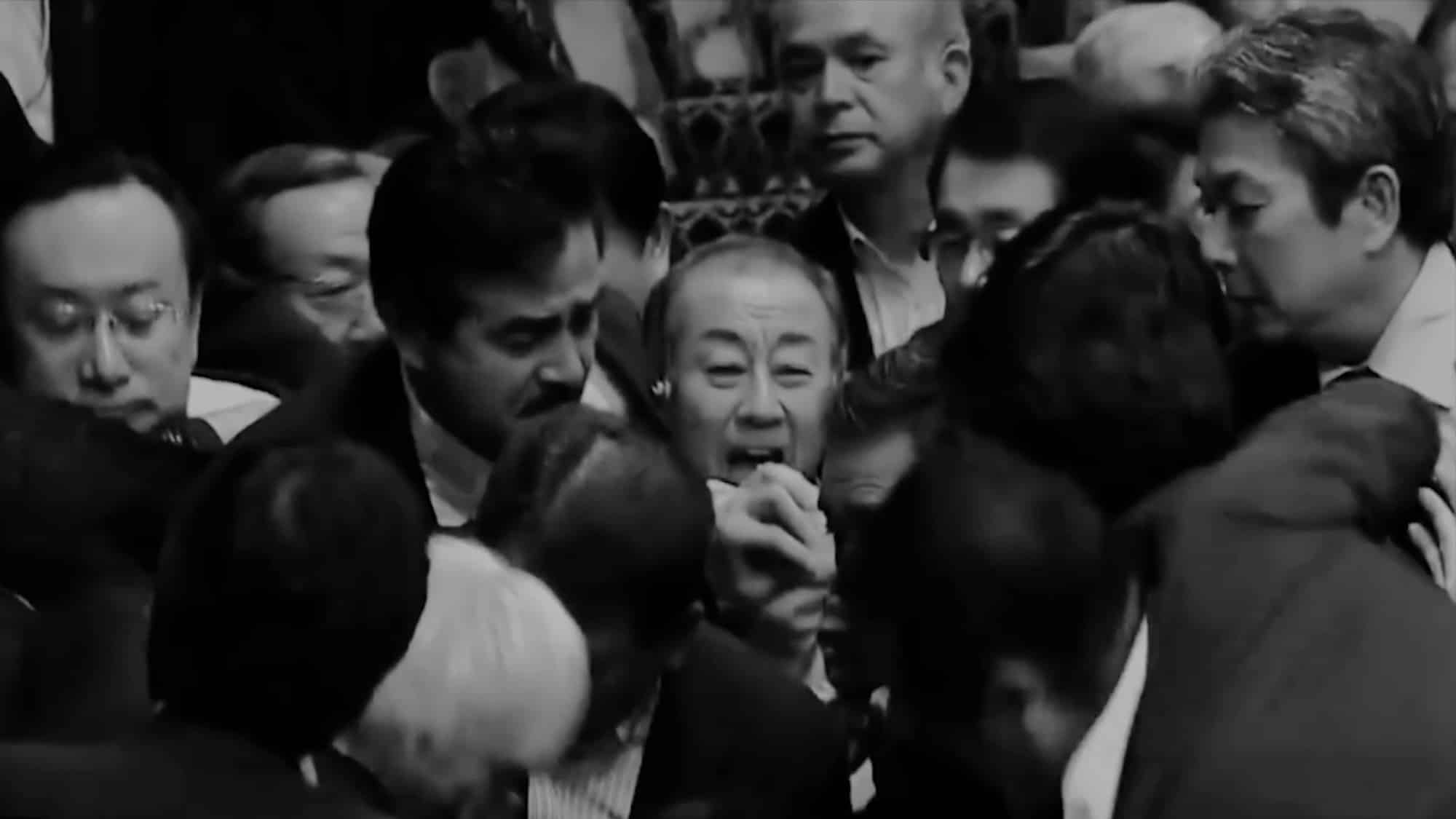
Niort’s former city hall and now visual arts space, Le Pilori showcases the works of former residents, Soham Gupta and David Fathi. Artist in residence in Niort in 2015, David Fathi presents his new project The Dead Govern the Living. Combining photographic images and archival videos of politicians fighting with their bare hands, the artist reflects on the future, order, and progress.

David Fathi - Les morts gouvernent les vivants 02
Les morts gouvernent les vivants © David Fathi

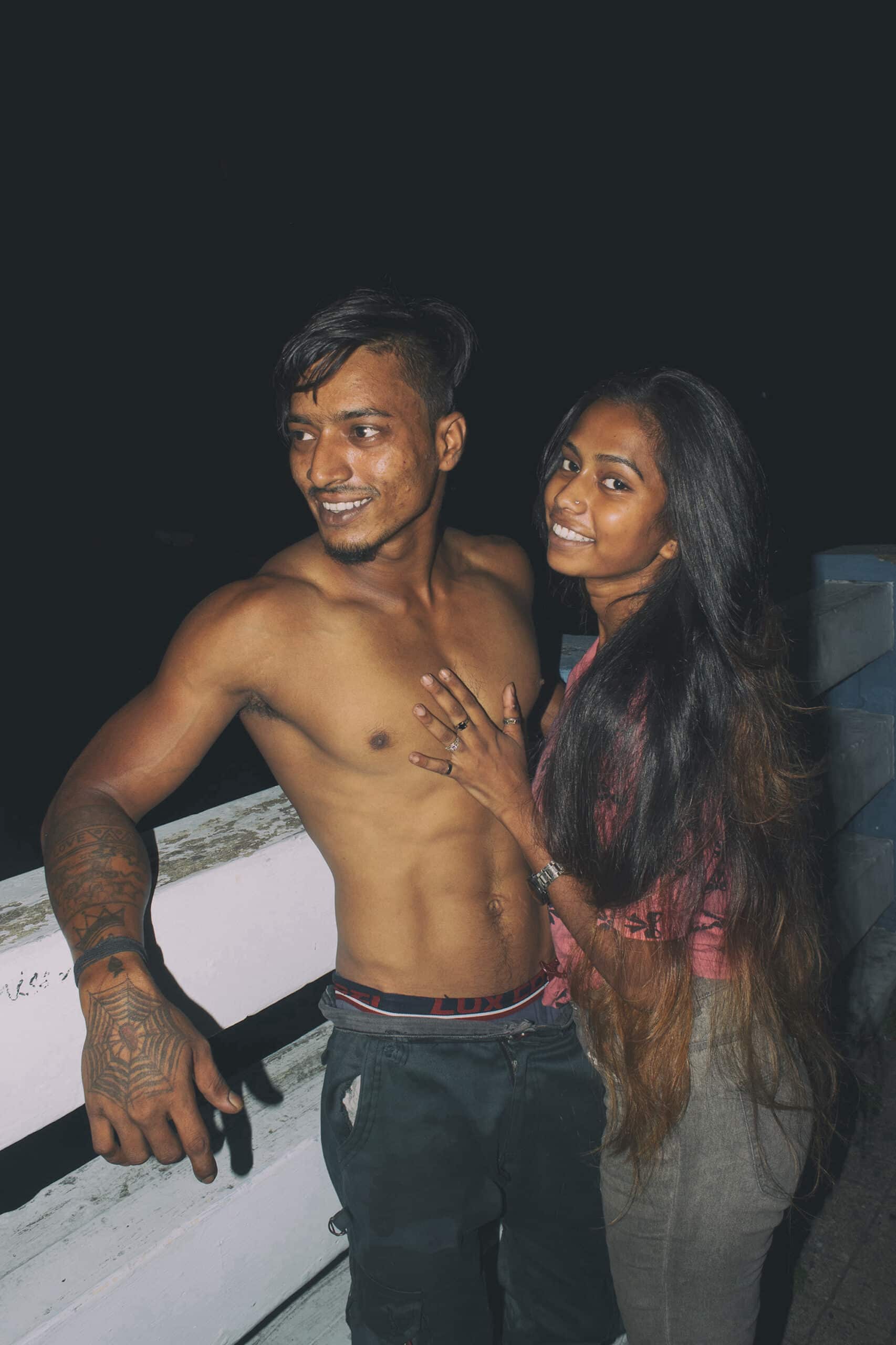
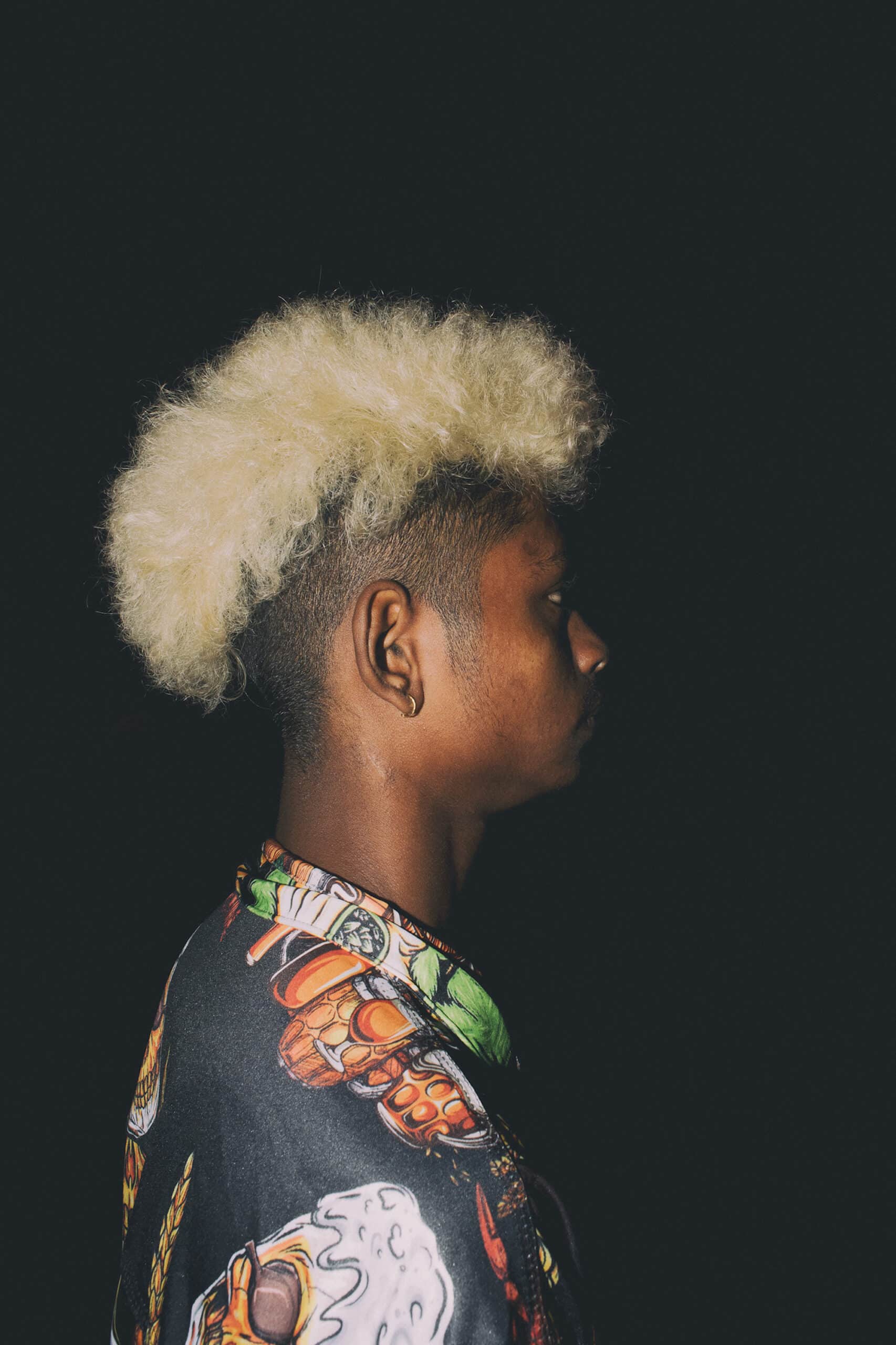
Similarly, in his photographic archive Desi Boys, Soham Gupta focuses on marginalized Indian youth and victims of xenophobia, as they confront the Hindu nationalist right, new technologies, and globalization. A photographer whose work straddles documentary, art, and writing, Gupta also exhibits Angst, a series of portraits of the poor in Calcutta, his hometown, which had already been presented during his residency in 2016.

Desi Boys © Soham Gupta

Silver gelatin prints on photosensitive paper from the 1970s, reproductions of letters and archival documents on original Chinese paper. It is at the Pavillon Grappelli, former school of drawing and now a digital arts space, that Rachele Maistrello presents her series Blue Diamond. The Italian photographer plunges us into a fictitious universe more real than life itself. Reality or science fiction? It is up to the visitor to make up their own mind.

Blue Diamond © Rachele Maistrello

Not far from there, in the green island of the Desmettre gallery, the artificial botany gives way to an anarchy of wild grass. In this place, entirely surrounded by water, Sylvie Bussières combines botany, photographic images and graphite mines. Created during the confinement, her works give life to the weeds that proliferate in the absence of human presence.

Weeds © Sylvie Bussières

Finally, Greece is invited to the Séchoir, with the works of six Greek photographers curated by Manolis Moresopoulos, director of the Athens photo festival. The exhibition Rites of Passage questions the culture and identity of Greece, a country with a considerable historical past, but with an uncertain future. Whether it is about the impact of the industrial crisis, spirituality, mourning, or the rituals of the afterlife, each artist reveals the intermediate space between presence and absence.

The Truth is in the Soil © Ioanna Sakellaraki
Iconostases © Marilia Fotopoulou
Eleu sis © Myrto Papadopoulos

Rencontres de la Jeune Photographie Internationale. Exhibitions on view Tuesday to Saturday, 1:30 p.m. to 6:30 p.m., free admission.

3 Fun and Easy Spring Photography Ideas for Beginners

3 Fun and Easy Spring Photography Ideas for Beginners

Spring is here, and it brings with it a veritable plethora of fun and interesting photography opportunities. If you are ready to bust out your camera and shake off the rust from winter, check out this great video tutorial that will show three fun and easy spring photography ideas to get you rolling, along with some helpful advice for improving your images.

Coming to you from Park Cameras, this helpful video tutorial discusses three fun and straightforward spring photography ideas. One of the best parts about spring is how rapidly everything changes, which means an ever-rotating range of image opportunities. As such, you can easily go to the same location multiple times, as you will often get different weather, blooms, and wildlife with each successive visit. One thing to bring along to increase your opportunities is a macro lens. With all the blossoming plant life, it is worth getting some close-up shots as well. And the great thing about macro photography is that there are image opportunities all around us; you often do not have to travel far, if at all, to find worthwhile photos. Check out the video above for the full rundown, and get outside with your camera!

THE TACO BELL FOUNDATION SERVES UP $10 MILLION IN LIVE MÁS SCHOLARSHIPS TO EDUCATE, INSPIRE, AND CONNECT FUTURE LEADERS

THE TACO BELL FOUNDATION SERVES UP $10 MILLION IN LIVE MÁS SCHOLARSHIPS TO EDUCATE, INSPIRE, AND CONNECT FUTURE LEADERS

The Taco Bell Foundation is breaking down barriers to education for young people pursuing their passions, in a record-breaking year for applications and awards.

IRVINE, Calif., April 26, 2023 /PRNewswire/ — Today, the Taco Bell Foundation announced it is awarding more than $10 million in Live Más Scholarships – the most in the nonprofit’s history. The scholarships will be distributed to 980 students, ages 16-26, eager to ignite powerful change within their community and beyond. This year, the Taco Bell Foundation is giving $2.5 million to Taco Bell restaurant team members and $7.6 million to Taco Bell fans nationwide. Award amounts range from $5,000$25,000 per recipient.

The Live Más Scholarship is a passion-based scholarship that gives students the tools and resources to boldly pursue their educational dreams. To qualify for the scholarship, applicants must submit a two-minute video describing their passion, a positive change they want to make in the world, and how their education will help them achieve that goal.

This year, the Taco Bell Foundation received its highest number of scholarship applications – nearly 14,000. Recipients include more than 300 fans of the brand, 150 Taco Bell restaurant team members, and over 500 renewal recipients through the Taco Bell Foundation’s renewal application, allowing applicants to renew their scholarships up to three times.

Scholarships awarded to Taco Bell fans are funded 100% by customers who participate in the Taco Bell Foundation’s Round Up fundraiser by rounding up to the nearest dollar, proving change can change lives. While team member scholarships are funded completely by donations from Taco Bell Corp. and Taco Bell Franchisees.

“The Live Más Scholarship is more than a check. It provides a community for these young scholars where they can learn from one another and grow outside of the classroom,” said Jennifer Bradbury, Executive Director of the Taco Bell Foundation. “The Live Más Scholarship opens a door of connections, opportunities, and programs to help students flourish in their passions.”

Check out the stories of two 2023 Live Más Scholars who will be using their scholarships to create a better world for us all:

  • King A.: King is a passionate animator who is currently studying Art and Business Marketing at the University of Nebraska-Lincoln (UNL). The son of Togolese immigrants, he hopes to one day open his own animation and art studio that will help first-generation American animators, like himself, succeed in the industry. King is a Taco Bell team member and learned about his scholarship during a surprise party at the Taco Bell where he works and where his dad is the Restaurant General Manager.
  • Stacy E.: Born deaf in a Spanish-speaking household, Stacy quickly learned the challenges that come with language barriers. Over time and with the proper resources, Stacy learned American Sign Language and fell in love with Deaf Education. Stacy, now working on her Associate of Arts, is planning to continue her education at Stephen F. Austin State University to pursue a degree in Deaf and Hard of Hearing Studies. With this education, Stacy hopes to return to the classroom as a resource for deaf and hard of hearing youth in order to make a difference in their lives and educational journeys.

Live Más Scholars will have the opportunity to travel to San Diego, California, and attend the Live Más Scholarship Summer of Connection this July. The in-person conference is designed for attendees to cultivate the necessary skills and connections needed to boldly pursue their careers and make a difference in their community.

About Taco Bell Foundation
Taco Bell Foundation, Inc. is a 501(c)(3) public charity that helps America’s young people pursue their educational goals and career aspirations. Since 1992, the Taco Bell Foundation has reached more than 5 million young people across the country and has awarded $155 million in grants and scholarships, focused on education and career readiness. For more information about the Taco Bell Foundation, visit www.tacobellfoundation.org.

Delani Marchigiani – Edelman
[email protected] 

Richard Villagomez– Taco Bell Corp.
[email protected]

SOURCE Taco Bell Corp.