A farmer in Idukki has installed an 8-feet sculpture of the notorious wild tusker.
Evicted wild tusker Arikomban gets a sculpture in Idukki, his old stomping ground


Leelanau County is home to destinations like Empire, Northport, Leland, and Suttons Bay. The county is even more popular f…
Read More >>


Summer is arguably the best time of year to enjoy New York City’s architecture, parks, and buzzing arts and culture scene, warranting an extensive exhibition guide like the one before you. Below is a list of indoor shows, outdoor installations, and art events to help you plan your summer in the city, including suggestions for day trips to Upstate New York and Long Island. Here’s to a peaceful, restorative, and art-filled sunny season. — Hakim Bishara, Senior Editor
Entering Lizania Cruz’s exhibition feels a bit like trespassing on a crime scene investigation. A massive stack of cardboard boxes — each labeled with the Spanish word for “evidence” and the various geographic loci of Cruz’s project — leads us into a sterile gallery filled with film and photographic documentation, archival findings, and even a collage of images and clippings that resembles a classic evidence board. Many of these works chronicle the Dominican state’s pattern of suppressing Black and Brown activists who challenge authoritarian rule and United States imperialism. Outside, a yellow A-frame sign invites passersby to apply to be a “civilian reviewer” of Cruz’s research by finishing the statement on a banner hanging above the entrance; you’ll understand when you see it for yourself. — Valentina Di Liscia
Proxyco (proxycogallery.com)
121 Orchard Street, Lower East Side, Manhattan
Through July 8

A cherished tradition since 2007, the New York Academy of Art’s juried summer exhibition features works by students, alumni, and faculty of the Manhattan school. The works in this year’s edition, selected from nearly 500 submissions, portray the practice of artmaking as a much more daring and delightfully experimental enterprise than what’s on view in most of the surrounding Tribeca galleries. One standout is 2015 graduate Tamalin Baumgarten’s tiny oil-on-panel painting “Almost There” (2022), a view from a ship cabin window that disrupts the cloying aesthetic of the Instagram influencer travel photo with its hushed tones and uncanny mood. — VDL
Wilkinson Gallery at the New York Academy of Art (nyaa.edu)
111 Franklin Street, Tribeca, Manhattan
Through July 9

Mary Grigoriadis’s alluring works explore bodily spatial conditions and unseen expanding boundaries in their contrasting colors, symmetrical patterns, measured brushstrokes, and iconographic shapes. This exhibition, which spans the late 1960s through the mid-’90s, presents oil and acrylic paintings featuring colorful, geometric patterns juxtaposed against the stark white borders of raw linen. — Maya Pontone
James Cohan Gallery (jamescohan.com)
52 Walker Street, Lower East Side, Manhattan
June 22–July 28

Curated by artist and writer Mira Dayal, this group exhibition features works by 18 AIR National Artist Members, who plumb experiences such as trauma, care, and healing with varying media. — EV
AIR Gallery (airgallery.org)
155 Plymouth Street, Dumbo, Brooklyn
June 30–July 30

Alexis Ralaivao creates smooth oil paintings that explore only one or two elements at a time — the glimmer of an earring, the pattern of a tan on bare skin, the way silverware rests on a restaurant plate. Ralaivao mostly works with only three models: his girlfriend, his brother, and a close friend. His works exude a tangible sense of intimacy, veering away from staged studies of subjective snapshots. This show features 11 paintings and it’s the Berlin-based artist’s biggest New York exhibition to date. — Elaine Velie
Kasmin Gallery (kasmingallery.com)
509 West 27th Street, Chelsea, Manhattan
Through August 11

Georgia O’Keeffe is best known for flower paintings, typically rendered in oil on canvas. This show examines the comparatively lesser-known works on paper she created alongside her most recognizable paintings, providing a glimpse into her process. — EV
The Museum of Modern Art (moma.org)
11 West 53rd Street, Midtown, Manhattan
Through August 12

Oceanic, Portal is an experience-based façade installation featuring three ghostly dancers teleporting between the Natural Bridges Beach in Santa Cruz, California, and the Leslie-Lohman Museum of Art in New York City. The 3D video was captured using LiDAR scanners and altered with augmented reality elements. Artists micha cárdenas, Gerald Casel, Ian Costello, Cynthia Ling Lee, Susana Ruiz, and Huy Truong draw connections between the exacerbated need for liberation and justice for marginalized groups throughout the COVID-19 pandemic and the ecological conditions impacting marine life on the West Coast. — Rhea Nayyar
Leslie-Lohman Museum of Art (leslielohman.org)
26 Wooster Street, Soho, Manhattan
Through August 13

We know and love his sunflowers, but this show pays homage to a less frequently appreciated aspect of Vincent van Gogh’s visual language — his cypress trees. More than 40 works explore the varied ways in which the artist depicted the evergreen plant over two years in Southern France, including some made during his stay at an asylum in Saint-Rémy. “Starry Night” (1889) temporarily left its home at the Museum of Modern Art to make an appearance in the show. — EV
The Metropolitan Museum of Art (metmuseum.org)
1000 Fifth Avenue, Upper East Side, Manhattan
Through August 27

Honoring the 100th anniversary of the publication of Kahlil Gibran’s The Prophet, the Drawing Center has put together a massive exhibition celebrating the legacy of the Lebanese-American poet and artist. The show includes over 100 works of art, exhibited alongside Gibran’s manuscript pages, notes, clippings from print media, and other such tidbits in the interest of illustrating the artist’s full practice, materially and philosophically. — RN
The Drawing Center (drawingcenter.org)
35 Wooster Street, Soho, Manhattan
Through September 3

Photographs by 16 artists explore love and intimacy in this show, conceptualized as a mixtape to a lover. The works date from 1952 to 2022 and range from quiet semi-nude portraits to snapshots of grinning party-goers. All of the works, however, reflect on the assigned and chosen families of the photographs’ subjects or the artists behind the camera. — EV
International Center of Photography (icp.org)
79 Essex Street, Lower East Side, Manhattan
Through September 11

For the duration of the summer, the New York Botanical Gardens is presenting Ebony G. Patterson’s multidisciplinary installations across its grounds and gallery spaces. Embedding themselves in the botanical environments, Patterson’s works dig into notions of life and death, and the interactions of race, gender, and colonialism — all done with sheer beauty. — RN
New York Botanical Garden (nybg.org)
2900 Southern Boulevard, Bronx Park, Bronx
Through September 17

Amor Rojo, titled after the prominent Bolshevik party member, Soviet ambassador, and Marxist feminist Alexandra Kollontai’s novel Red Love (1927), is Dora García’s third and final film installment analyzing the uptick in feminist rebellions in Mexico through Kollontai’s ideological lens. With the help of three researchers accessing Kollontai’s archives in Mexico City, García connects Kollontai’s feminist theories on free love and elimination of the nuclear family to the increase in Mexican trans-feminist uprisings. She applies this research to explore the patriarchal structures that fuel alarming rates of gender-based violence across the country. — RN
Amant (amant.org)
315 Maujer Street, East Williamsburg, Brooklyn
Through September 17

This historical exhibition honors the life’s work and teachings of Lenape herbalist and preservationist Nora Thompson Dean of Oklahoma, also known as Weenjipahkihelexkwe,. Having dedicated her life to Lenape customs across social and educational avenues, Thompson Dean was considered a bastion of cultural knowledge sought out by other Indigenous preservationists, scholars, educators, and artists for her insights. The show includes letters, photographs, and printed material associated with Thompson Dean’s life and practice as well as a plant-based installation featuring culturally significant crops in the Morgan Garden. — RN
The Morgan Library & Museum (themorgan.org)
225 Madison Avenue, Murray Hill, Manhattan
Through September 17

Runway and ready-to-wear clothing, sketches, jewelry, literature, music, and catwalk footage are exhibited together in this show of over 180 works by more than 40 artists and designers from 20 countries in Africa. The exhibition begins with the 1950s, demonstrating how the continent’s thriving fashion field was set ablaze when many African countries gained back their sovereignty after long periods of European colonialism. — EV
Brooklyn Museum (brooklynmuseum.org)
200 Eastern Parkway, Prospect Park, Brooklyn
June 23–October 22

This exhibition spans 50 years of Shelley Niro’s explorations of her Six Nations Kanyen’kehá:ka (Mohawk) identity. Her self-portraits, and photographs of other women from her community, are mixed with more fantastical creations, questioning the roles Native peoples are expected to perform in American society. — EV
The National Museum of the American Indian (americanindian.si.edu)
1 Bowling Green, Financial District, Manhattan
Through January 1, 2024

At the Frick Madison, the material and conceptual anchor of Swiss artist Nicolas Party’s site-specific installation is Venetian Rococo artist Rosalba Carriera’s “Portrait of a Man in Pilgrim’s Costume” (c. 1730). Carriera’s pastel portrait is flanked by two original portraits by Party and surrounded by a pastel mural of decadent fabric drapery, which samples from the likes of Jean-Étienne Liotard and Maurice-Quentin de La Tour, comprising an installation that pays homage to Carriera and other 18th-century pastelists who helped popularize the medium. — RN
The Frick Collection (frick.org)
Frick Madison, 945 Madison Avenue at 75th Street, Upper East Side, Manhattan
Through March 3, 2024

The 60 members who make up the Pueblo Pottery Collective curated this exhibition highlighting the creativity, craft, and community-based traditions of the Indigenous Southwest through ceramic works from the Río Grande Pueblos, the Ysleta del Sur community, and the Hopi Tribe. Spanning from the 11th century to the present day, Grounded in Clay showcases over 100 vessels that map the imbued histories and traditions of their respective creators. — RN
The Metropolitan Museum of Art (metmuseum.org)
1000 Fifth Avenue, Upper East Side, Manhattan
July 14–June 4, 2024

Compiling research into public burial lots with artworks made of marble and glass, Rowan Renee investigates how socioeconomic inequities affect memorialization through an immersive installation in Green-Wood Cemetery’s historic chapel. As Green-Wood’s 2022 artist-in-residence, Renee’s summer exhibition draws the viewer’s gaze away from striking Victorian-era monuments and lush flora and toward the overlooked imprints of generational racial and class discrimination on memorials along the cemetery’s perimeter. — MP
Green-Wood Cemetery (green-wood.com)
500 25th Street, South Slope, Brooklyn
Through September 4

The title of Nisenbaum’s exhibition of massive and explosively colorful figurative paintings was adapted from Vicente Fernández’s 2006 rendition of the song “Mexico, Lindo y Querido” (“Mexico, Beautiful and Beloved”). It includes portraits of South and Central American residents in Queens’s Corona neighborhood alongside student work from her bilingual painting workshop at the museum. — RN
Queens Museum (queensmuseum.org)
Grand Central Parkway and Van Wyck Expressway, Flushing Meadows–Corona Park, Queens
Through September 10

With a map of event sites that speckle the banks of the Hudson River and venture further into Delaware County, this four-day event in July could make for a wonderfully pastoral weekend road trip to Upstate New York. Launched only in 2020, Upstate Art Weekend has seen exponential growth with over 130 art organizations, galleries, museums, and creative spaces participating in this year’s iteration. Alongside returning participants like the Wassaic Project, Alexander Gray Associates, and Geary are a variety of art-oriented spaces such as the Trolley Barn Gallery in Poughkeepsie, Blue Marble Arts in Stone Ridge, Collar Works in Troy, and many more. — RN
Upstate Art Weekend (upstateartweekend.org)
Various Locations
July 21–24

Renee Cox has played many roles throughout her long and varied artistic career, including as a model, fashion photographer, curator, and painter. In this show, three decades of the feminist artist’s imaginative portraits of women are displayed alongside a new immersive video installation. — EV
Guild Hall (guildhall.org)
158 Main Street, East Hampton, New York
July 2–September 4

Shinnecock artist Courtney M. Leonard has long used her art as a way to pay homage to the natural world and probe the potential of sustainable living. Many of her works are hyper-local to Long Island and pay special attention to water, featuring subjects such as whales and native shells. This exhibition, however, is even more site-specific: The Heckscher Museum commissioned Leonard to create a large-scale map of Long Island. Leonard hung thousands of small porcelain thumbprints that look like shells and used a deep purple color to render the peninsula’s image. — EV
Heckscher Museum of Art (heckscher.org)
2 Prime Avenue, Huntington, New York
Through November 12

This large-scale exhibition features over 100 artworks and archival materials from Native American, First Nations, Inuit, and Alaska Native artists. Indian Theater chronologically explores how the development of contemporary art functions as a tool for collective Indigenous resistance and self-determination, beginning with the performance and theater that emerged from the 1969–71 Occupation of Alcatraz by the Indians of All Tribes group. — MP
Hessel Museum of Art (ccs.bard.edu)
33 Garden Road, Annandale-On-Hudson, New York
June 24–November 26

Canadian artist Michael Snow, who died earlier this year, carved out a long career of creating mind-bending films, paintings, sound installations, performances, and photographs. He often employed hyperbole and humor to critique capitalism and point out the absurdity of daily life under its overbearing presence. This survey exhibition showcases the work Snow made throughout the decades, highlighting the experimentation he employed not only in his messaging, but also in his manipulation of mediums. — EV
The School (jackshainman.com)
25 Broad Street, Kinderhook, New York
Through December 30

Rita McBride’s long-time interest in public infrastructure and its impact on perspective is explored in this presentation at Dia Beacon, which centers her monumental interactive sculpture “Arena” (1997) alongside several freestanding and wall-mounted artworks. The exhibition also features a series of virtual and physical performance engagements by the experimental interdisciplinary group Discoteca Flaming Star, with choreography by Alexandra Waierstall. — MP
Dia Beacon (diaart.org)
3 Beekman Street, Beacon, New York
July 1–January 2025

Pippa Garner famously drove “backwards” over San Francisco’s Golden Gate Bridge in 1974 in a specially outfitted car she made as a conceptual artwork. Nearly 50 years later, this show debuts Garner’s newest automobile creation, “Haulin’ Ass!” (2023). It comprises a 2003 red Ford Ranger, removed from its underlying frame and turned backwards. Like her earlier piece, Garner’s new work is also completely functional. — EV
Art Omi (artomi.org)
1405 County Route 22, Ghent, New York
June 24–October 29

Artist Mary Mattingly’s site-specific installation at Socrates Sculpture Park in Queens includes a 65-foot-high clock that mirrors the Manhattan skyline, includes edible plants, and maintains its tempo with water pumped from the river. The exhibition includes a self-sufficient home, too, ultimately asking viewers to reflect on the environmental impact of humans and consider the fragility of nature’s balance. — EV
Socrates Sculpture Park (socratessculpturepark.org)
32-01 Vernon Boulevard, Long Island City, Queens
Through September 10

The third in an outdoor series of installations, On the Grounds displays a site-responsive installation made of wood, clay, and fiber in the landscape encompassing Al Held’s Boiceville studio. The exhibition includes dock-like structures and ceramic vessels by Bahamian visual artist Anina Major that continue her exploration of diasporic ties to home. Major also engages with Held’s former swimming pool that has been reclaimed by the elements. New York-based artist Sagarika Sundaram’s abstract wool sculptures containing natural spiral allusions are also spread throughout the grounds, nestled in specific areas chosen by Sundaram. — MP
Al Held Foundation (alheldfoundation.org)
26 Beechford Drive, Boiceville, New York
Through October 14

Beatriz Cortez’s gargantuan steel-welded sculptures are majestic, awe-inspiring things. This body of work stems from her interest in the eruption of the Ilopango caldera that took place over 1,500 years ago in what is now El Salvador, where she grew up. The artist finds poetic parallels between volcanic behavior, migratory patterns, and ancestral histories. In a metaphorically resonant journey, her nomadic sculpture “Ilopango, the Volcano that Left” (2023) will travel by boat up the Hudson River to the Curtis R. Priem Experimental Media and Performing Arts Center (EMPAC) in Troy after its run at Storm King. — VD
Storm King (stormking.org)
1 Museum Road, New Windsor, New York
Through November 13

A steel reimaging of Robert Indiana’s “Love” (1970), Nicholas Galanin’s “In every language there is Land / En cada lengua hay una Tierra” (2023) compiles generations of Indigenous land displacement, colonial violence, and capitalist propaganda into a 30-foot sculpture Brooklyn Bridge Park. The artwork is made out of the same materials as the US-Mexico border wall, and spells out “Land” in four layers of colossal text that visitors can pass through — a sharp critique of the impassable reality of barriers. — MP
Public Art Fund (publicartfund.org)
Brooklyn Bridge Park, Dumbo, Brooklyn
Through March 10, 2024
OLEAN — The Tri-County Arts Council invites all visual artists who live in New York’s Southern Tier to apply to the 2023 Southern Tier Biennial art exhibition.
The deadline for entering the biennial is Saturday.
Accepted works will be exhibited Sept. 17 through Nov. 4 in the stunning Peg Bothner Gallery at the Tri-County Arts Council in Olean.
“The Southern Tier Biennial was founded in 2003 with a bequest by Olean native, philanthropist, and art lover F. Donald Kenney, managed through the Cattaraugus Region Community Foundation, to create an opportunity for regional artists to exhibit in a professional gallery and be seen by jurors that can help further an artist’s career,” said Sean Huntington, STB exhibition coordinator.
“Every two years, the Southern Tier Biennial gives us a glimpse into the wonderful creative talent that this region has to offer,” he said. “It’s truly an incredible show. I encourage every visual artist, including those working in craft media, to apply.”
In addition to the opportunity to show their work, accepted artists have the chance to win one of five awards totalling $5,250 — $3,000 to the Best of Show winner ($1,000 cash and $2,000 stipend towards a solo show in fall 2024 at the TCAC); a $750 Juror’s Choice Award; and $500 for three Honorable Mention winners.
Each biennial is juried by new jurors, this year’s jurors are Andrea Alvarez, assistant curator at the Buffalo AKG Art Museum (formerly the Albright-Knox Art Gallery) in Buffalo; Judy Barie, director of the Chautauqua Visual Arts Galleries in the Chautauqua Institution; and Tullis Johnson, curator and manager of exhibitions and collections at the Burchfield Penney Art Center in Buffalo.
For full information and the online application, visit www.southerntierbiennial.com.

CASTINE, Maine (WABI) – It was a big day in a small way for the Guild school.
It’s an event that takes place at Maine Maritime Academy annually and hundreds of miniature artisans come together to do what they enjoy the most.
Students get the opportunity to take weeklong courses and seminars on miniature art.
Some artists get to display their skills whether it’s in the form of food, furniture or a place that looks like home.
Participants always look forward to this opportunity because it’s one of the most popular miniature artisan events in the world.
“I started doing miniatures during covid when we were at home and I needed some creative outlet,” said Becky Gannon, student at the guild school.
“Besides loving miniatures, I discovered this beautiful online community and I wanted to meet them, and I wanted to learn from some of these people who crafted their skills.”
Another participant sells miniature artisans all over the world.
“I have always loved miniatures ever since I was a tiny child,” said Darren Scala.
“I spent a career in a corporate marketing role and about eight years ago things changed, and I said I want to do something else. I love miniatures, so this is all about combining the interest in miniatures with a background in marketing and I’m doing everything I’ve always wanted to do, which is being involved in this tiny world.”
Although many participants look to build their crafting skills, they have other ways they express their miniature interests.
Gannon has her own podcast called Mad about Miniatures and if you’re interested in listening you can go to the link here.
Participants always appreciate enjoying their fine arts in Castine.
For more information on the Guild School, you can head to their website.
Copyright 2023 WABI. All rights reserved.


Photo: Vu Tran
Until last year, traveling through La Guardia Airport was a deeply undignified experience. The baggage areas suffered from low ceilings and creepy fluorescent lighting; the floors and surfaces were built from cheap industrial materials that recalled midtown cubicles; the cramped footprint and poor crowd control made you feel like a turkey marching to slaughter. Now, when you get out of the taxi and roll your luggage into Terminal B’s gloriously lit, high-ceilinged baggage area, your vision is flooded by artist Laura Owens’s 500-foot mosaic wall, I 🍕NY, a periwinkle sky dotted with cumulus clouds and pixelated emoji images of New York icons: a pizza slice, the Cyclone, the sign from the Stonewall Inn. It’s one of the many large-scale artworks commissioned for LGA’s two new terminals as part of its public art program, which is overseen by curators from the the Public Art Fund in Terminal B and the Queens Museum in Terminal C. Boasting a budget of over $22 million dedicated to art alone, the LGA renovation is one phase in a larger $30 billion revamp of New York’s three commercial airports, projected to finish in 2030.
Most airports don’t have anyone with an M.F.A. consulting on their art installations. This is perhaps why so many might recall the art in airports, if they can recall it all, as bland corporate décor or maddeningly literal, like the giant flamingo in the Tampa airport or the monumental blues guitars in Austin. There are a few exceptions, like Chicago’s O’Hare airport, home to Michael Hayden’s iconic neon installation, which turns a claustrophobic walkway into a giant kaleidoscope, and SFO, which has 34 employees to oversee its museum-quality collection. But mostly, we use “airport art” as a pejorative. The other city airport offers a perfect example: the New York–themed “Selfie Station” that JFK revealed last year in Terminal 4, a booth that invited visitors to take selfies with shopping carts full of “Thank You” grocery bags as if lugging around suburban-style carts were a quintessentially New York activity. The architects of LGA’s new public art program mostly sidestepped the twin traps of blandness and kitsch, demonstrating a seriousness that reflects the importance of art (and artists) to the city’s identity. But also, from the passenger’s perspective, it feels like somebody up there actually cares.
The art starts immediately as you walk from the parking garage into Terminal B’s pre-security atrium. On the way in, you move through a lofty corridor where sunlight illuminates Sabine Hornig’s translucent window installation, La Guardia Vistas. Photos of unmistakable New York buildings — the green-glass façade of the U.N. Headquarters, the red-and-white smokestacks of the Con Ed plant in Astoria — are collaged into one tightly packed skyline and tinted in stained-glass hues to create a cathedral-like ambience. In the baggage area, Laura Owens’s mosaic wall has a mood-boosting effect: Its pastel colors make the room feel animated, and its use of folksy mosaic tiles creates an air of whimsy that’s unusual for an airport. (I saw two children playing tag underneath a tile rendering of a halal food cart, which matched the vibe.) The centerpiece of the atrium is a monumental sculpture by artist Sarah Sze, who’s known for architectural assemblages made of countless tiny parts. This commission is among her most technical: a radiant sphere of metal rods that floats in a cutout between the arrivals and departures floors. The contrast between its complex schematics and its buoyancy (enhanced by hundreds of photos of the sun that form its inner lining) evokes the wonder one might feel watching a 450-ton 747 lift into the air like a paper lantern.
Sarah Sze’s Shorter Than the Day.
Photo: LaGuardia Gateway Partners
But once you get past security, typical airport schlock starts to interrupt the air of refinement. When I ask my friends for their thoughts on the art in Terminal B, the first thing they usually mention is the ridiculous fountain in the food court that spits water in the shape of various New York icons in sync with a pop cover of Frank Sinatra’s “New York, New York.” Granted, the people eating and milling about in the food court seemed quite captivated by it (it certainly evoked more of a response than the Sarah Sze sculpture), but it felt more like a Midwest megamall attraction than a New York City landmark. Meanwhile, on the wall next to Mariam Ghani’s rainbow-hued ceramic mural in the baggage-claim area, The Worlds We Speak, there’s a cheesy photo panorama of Manhattan with a big “I ❤️ New York” logo that interrupts passengers’ brief but welcome respite from the otherwise constant marketing.
Iconic NY, Terminal B’s water feature.
Photo: LaGuardia Gateway Partners
Terminal C next door has fewer quirks, but it’s also clearly built for a more moneyed clientele. Owned and operated exclusively by Delta, it boasts the largest and most luxurious Delta Sky Club ever built, a 38,000-square-foot lounge with an outdoor terrace under construction. And if Terminal B’s art program consists of family-friendly artworks with immediate appeal, the Queens Museum curators who oversaw Terminal C took risks on a headier selection. Entering the terminal from the departure area, the first thing you see is Rashid Johnson’s 45-foot-tall mosaic, The Travelers’ Broken Crowd, one of two large-scale works adorning the marble walls on either end of the magnificent pre-security atrium. Visible from all three floors of the gate area thanks to generous sight lines, it consists of rows of tiny abstract faces crafted from a riotous array of materials: jagged ceramic shards, chunks of charred wood, wax and soap wedges, even oyster shells and mirrors smashed into spiderwebs. The mosaic captures the dynamism and vitality of a thronging New York avenue, but, with sharp edges that add an anxious undertone, it avoids looking like a Disneyfied view of city life.
Bookending the other end of the atrium is a monumental wall installation by Bronx native Ronny Quevedo called Pacha Cosmopolitanism Overtime. Not quite a painting and not quite a sculpture, it’s a 45-foot-tall panel made from materials typically used in basketball courts: tan wooden planks and curving play lines in bold primary colors. It’s situated on a wall next to an escalator, and as you ascend or descend, the play of natural light across the latticework of intersecting lines creates a welcome feel of unencumbered flow. Quevedo, who grew up watching soccer games here in Queens with his dad, an ex–professional player from Ecuador, was inspired by the indoor courts where the city’s Latin communities meet for weekend matches. He knows that most people will think of basketball when they see it, but for him it refers to a very specific local phenomenon that constitutes a huge part of New York City’s DNA, even if many New Yorkers don’t know it. “These games are where I got to meet people from so many other diasporas: Colombians, Guatemalans, Venezuelans, Brazilians, Argentinians,” he says. “It made me understand that my upbringing was similar to others’, and that soccer is this unifying force.”


From left: Rashid Johnson’s The Travelers’ Broken Crowd. Photo: Vu TranRonny Quevedo’s Pacha Cosmopolitanism Overtime. Photo: Vu Tran
From left: Rashid Johnson’s The Travelers’ Broken Crowd. Photo: Vu TranRonny Quevedo’s Pacha Cosmopolitanism Overtime. Photo: Vu Tran
In Terminal C, it’s the specificity of the pieces that rises to the challenge of a public space like La Guardia. Both Johnson and Quevedo evoke, for instance, the social fabric of nearby immigrant neighborhoods like Jackson Heights, where you can pass Tibetan, Nepalese, Colombian, and Ecuadorian blocks in a 15-minute walk. But the artists achieve this through a subtle balance of abstraction, material references, and a bit of backstory, gesturing at the finer points of their lived experience rather than hammering us over the head with “we are the world” platitudes.
The revived public art program is, in some ways, a return to La Guardia’s roots as a flagship airport in the New Deal era’s Federal Art Project. It reminds me, in its ambition, of one of the most spectacular murals of that era, James Brooks’s Flight, which lives a quiet existence in the rotunda of La Guardia’s Marine Air Terminal, its oldest and smallest wing. Then-Mayor Fiorello La Guardia, who militated for the construction of the airport — and famously refused to deplane at Newark because his ticket said New York, not New Jersey — commissioned Flight with those federal funds. Rendered in a high modernist style that complements the building’s Art Deco idiom, it includes cameos from the ancient Greek mathematician Archytas, said to have designed the first mechanical bird, along with Icarus, da Vinci, and the Wright brothers. Astrological motifs, cosmic abstractions, and portraits of the airport’s workers are interspersed among these vignettes. By today’s cynical standards, it presents a remarkably utopian vision for better living through technology, with the scale to match.
Aliza Nisenbaum’s The Ones Who Make It Run.
Photo: Vu Tran
For passengers who have yet to see Flight, there’s Aliza Nisenbaum’s mural The Ones Who Make It Run in the Delta post-security checkpoint area. It also features airline workers — in this case, 16 real-life Delta employees, from taxi dispatchers to firefighters and pilots — arranged against the windows that look out across the Flushing Bay. It is the only commissioned artwork that lives on this side of security (an odd choice, since passengers usually only have time to kill once they’re past TSA), and it’s displayed a little unceremoniously, so you could be forgiven for hurrying past it. Though it seems at first like a work of social realism, Nisenbaum emphasizes the endearing quirks of her subjects’ facial expressions through her use of blue and green highlights, presenting her subjects as individuals, not archetypes. She spent hours with each worker as part of her process, interviewing them about their lives and observing their demeanor, and these details come across in the work. Depending on your personal philosophy, you might feel disconcerted by the Delta logo conspicuously displayed on the bottom left, as if the diversity of its staff were a selling point. But if every corporation and city or state government took public art this seriously, this concession would be a small price to pay.

Capture One has brought its eponymous photography app to the iPhone. Photographers can connect their camera to their phone and shoot images directly to the app. Capture One works with more than 500 cameras, the company says, including Canon, Sony, Nikon, Fujifilm, Leica and Sigma models.
The app can automatically apply edits to images as your camera sends them to your iPhone. As such, Capture One suggests, photographers can swiftly provide their clients with edited images. You can plan ahead by creating styles on Capture One’s desktop or iPad apps and AirDropping them to your iPhone.
Capture One enables photographers to share a live link of a shoot with their colleagues, who can follow along in real time whether they’re remote or on location. The company suggests this will allow collaborators to quickly select their favorite shots and provide feedback from any device, wherever they might be.
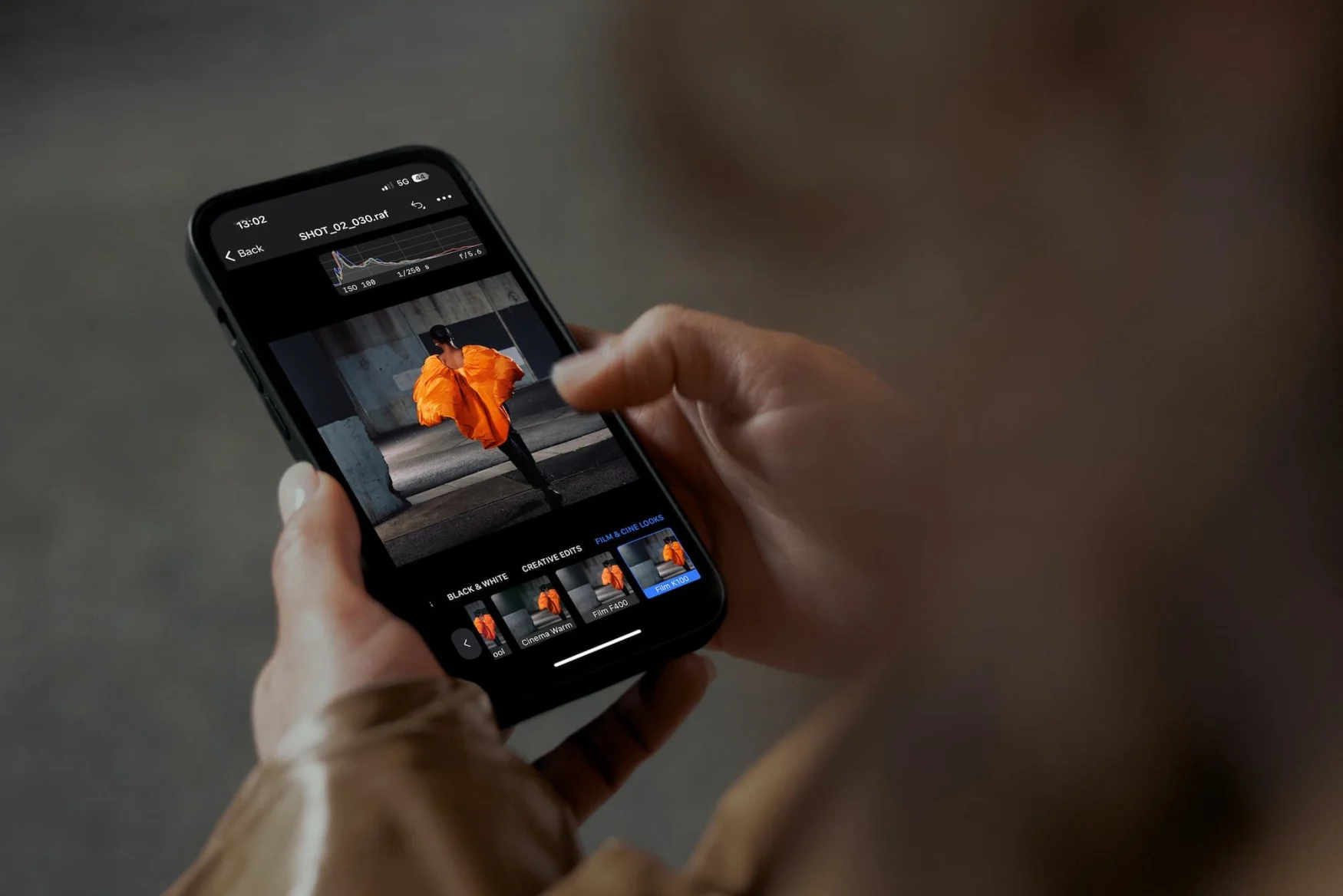
Gabija Morkūnaitė/Capture One
Other features of the app include RAW conversion and color processing. You’ll be able to transfer shots via the cloud to Capture One Pro and finish editing on your desktop. Capture One says ratings, color tags and edits will remain intact when you transfer your images. You can export images from the app however you like, the company said, including to an external SSD.
Capture One, which is an increasingly popular Lightroom alternative, is available in the App Store now. A subscription costs $5 per month after a seven-day trial, but users who have the iPad app or the All in One bundle can use Capture One on iPhone at no extra cost.









