User Generated Content to Connect an International Audience

User Generated Content to Connect an International Audience

Image: Emilia Ramos / Supplied by International Center of Photography

MuseumNext delves into the world of user generated content with Anna Selle and Kim Cabrera from the International Center of Photography (ICP) in New York. They explain how making art a participatory event can drive engagement, grow audiences and create rich content.

Starting in the summer of 2022, the International Center of Photography’s digital marketing team successfully launched and implemented three user-generated content campaigns to great effect. Through #ICPShareTheStreet, #HauntedICP, #ICPFaceToFace and most recently, #LoveAtICP, Instagram was utilised to showcase a range of contributions from photographers around the world.

Anna Selle, Senior Manager of Marketing and Communications at ICP, says, “We have a very broad and diverse audience of people on our social media channels – many of whom will likely never visit us in the Lower East Side. As part of our drive to engage those people we wanted to run campaigns that emphasised our role as a ‘center’ of photography and a place where photographers of all ages and levels of expertise are catered to.

“Social media is an obvious place to connect people from across different cultures and geographies, so the idea for our user generated campaign was to create something that tapped into our network.”

ICP already had some experience with this type of initiative. Having launched a campaign called “ICP From Anywhere” during the height of the pandemic to connect with audiences trapped at home, Anna and Digital Marketing Coordinator, Kim Cabrera, were confident that the project could have genuine impact.

Kim says, “I think we wanted to provide a dedicated space that could showcase work that might not be traditional exhibition material. There’s only a small percentage of photography that we can feature on-site at ICP. But we have a much greater ability to shine a light on other works online.”

Taking an iterative approach to user generated campaigns

As the owner of digital strategy, Anna first brought the idea for a user generated content campaign to the ICP team during its summer blockbuster exhibition: William Klein: YES. Anna says,

“I think this served as a solid pilot for the strategy. We leveraged an on-site exhibition that gained a lot of attention – in this case Willian Klein’s street photography – to get our social audience to share their own images.”

Kim adds, “It’s important to use a physical exhibition as a hook because it helps to spark interest and gather ideas. But it also serves to help us promote the exhibition and drive footfall among more local audiences. That’s where #ICPShareTheStreet came from.”

Image: Amy Touchette / Supplied by International Center of Photography

From this first experiment, the team have grown and developed the user generated content initiative, making it a recurring fixture in the institution’s social media calendar. Over time, additions such as competitions have been built into the strategy in order to maximise engagement, while the timings for campaigns have been refined to optimise promotional support for the on-site exhibition.

However, Anna notes, “To be honest we found that incentives such as winning tickets to the museum or being sent ICP swag weren’t the main drivers of engagement. They helped, of course, but it seems to us that the idea of users’ work being shared and amplified is more important.

“At this point in time, the core of the campaigns is really resharing content from ICP’s Instagram account, which has nearly 400,000 followers right now.”

Analysing the results

Speaking of social statistics, it’s been clear that these user generated content campaigns have a marked effect on the ICP’s social metrics. The team have seen the Instagram rate of audience growth increase 300% year-over-year since the start of the user-generated campaigns.

Campaigns also served to convert a healthy percentage of the online, social audience into exhibition visitors. Kim says, “The street photography campaign in particular was hugely impactful and saw our audience and engagement metrics shoot up.

“But just as important as the individual metrics is the insight it gives us. It helps us to establish what we should be focusing on in the future. Social media is so flexible and the data we get from campaigns is so immediate that we have the freedom to try new ideas. Not everything will work out but we can have the confidence to experiment a little bit because it’s easy to test and pivot all the time – even with a small marketing team.”

Anna adds, “It’s important to note that the user generated content isn’t a one-time thing. If we’ve shared content and built a campaign, we essentially have an archive of really impactful and interesting material that can be revisited in the future. Even though photos may not be part of our own collection, the nature of Instagram and other social media platforms enables us to share and support content from image makers more than once.”

Image: Bego Amaré / Supplied by International Center of Photography

In order to maximise reach and engagement, Anna says, that strategic boosting of posts was also important – particularly early in each campaign when the marketing team was trying to build interest.

“Using social media advertising is certainly a quick and cost-effective way to get the word out. We didn’t have a large budget for advertising, so this has been a great tool for us.”

Asked finally, for their advice to other museums looking to launch their own user-generated campaigns, Anna says, “The in-built tools of social media platforms like Instagram really make it easy to both drive interest in our exhibitions and also monitor that success. So, as part of our user generated campaigns, we’ve included links through to the exhibition pages on our website, which enables us to see how many link clicks and ticket sales are generated.

“These metrics are obviously just as relevant as audience size and engagement figures. In fact, they were imperative for our senior managers and our executive director to see.”

Kim adds, “I would add that it’s important to understand how you want to use social media when starting out with this kind of campaign. It’s crucial to consider how you want to promote awareness, be inclusive and work towards the institution’s broader goals. Social media is fun, it’s a little bit more casual, it’s a way to be nimbler but it’s also an institutional platform. We still always want to be aware of who or what we are amplifying when we engage with user-generated content.”

Find out more about how museums are utilising the latest strategies, technologies and tools to enhance the work they are doing for their audiences and communities with MuseumNext’s virtual conference series. More information here.

Colorado-based company accused of cultural appropriation over Native-inspired designs, products

Colorado-based company accused of cultural appropriation over Native-inspired designs, products

Connor Ryan, a pro skier from Denver and member of the Hunkpapa Lakota, was strolling the Outdoor Retailer trade show in Denver’s Colorado Convention Center in 2019 when he came across some mittens that sparked his ire.   

“I was with friends, all of us from different Indigenous groups, and we saw these different patterns and symbology from our cultures in the bead work of these gloves. If it was a Native brand, I feel like we would have known them,” said Ryan, an athlete with Natives Outdoors, a Native American-owned collective of outdoor athletes and designers that advises outdoors businesses working at the intersection of tribal lands and recreation. “We tried to interact with them and they immediately were really defensive and asked us to leave.”

In the four years since, Ryan and other Native Americans have criticized Colorado-based Astis Mittens for cultural appropriation and not employing Native artists to create the intricately beaded designs on the company’s leather-fringed, fur-cuffed mittens. The company’s founders often talked about their idea for their mittens coming from a pair of mittens made by a Cree artist. The word for mittens in the Cree language is “astisak.”

Outdoor sports media brand Teton Gravity Research last month announced it was ending a collaboration with Astis after hearing from athletes and activists like Ryan “that one of our vendors was practicing cultural appropriation,” a statement from the Wyoming-based TGR reads. The company recently trumpeted its collaboration with Astis but has removed the designs from its online store

TGR worked with Ryan to develop programs that will support the Shoshone and Arapaho Fish and Game Office, which manages wildlife on the 2.3 million-acre Wind River Indian Reservation in Wyoming. TGR also is contributing to the Sealaska Heritage Institute in Alaska to support the group’s interns studying snow science and avalanche forecasting. 

“We are taking steps to improve our vetting process for retail vendors and endeavor to continually raise the bar for future business practices,” reads a statement from TGR’s founders.

The Cree origin story no longer appears on the Astis website. The company, which is headquartered in Minturn, directs a portion of revenue from mitten sales to the American Indian College Fund. A statement from the fund on the Astis website says the mitten-maker has made a “large commitment” and is providing full-time scholarships for Native American students at the Institute of American Indian Arts in Santa Fe, New Mexico.


“With their investment in Native students and communities, Astis is empowering the next generation of Native leaders to create social and economic transformation in Indian Country,” reads the statement on the Astis website. 

The Astis scholarship program started last year and supported three students. The company will be supporting three students again for another year.

Marco Tonazzi joined Astis co-founder Bradford Peterson in 2022 as a partner, replacing a previous owner and helping the company recover from the pandemic slowdown. The Vail Valley entrepreneur with two hotels and retail operations in Minturn and Vail Village is helping Astis “do more to recognize the relationship and inspiration” the mitten company draws from Indigenous cultures, he said in an interview with The Colorado Sun. 

“This is something that is so important to Brad. He has wanted to do this for so long but it was not something he was able to do before. The values were not there in the previous ownership structure,” Tonazzi said. “Our inspiration comes from many areas and the beadwork does not only come from Native communities but it comes from Inuit, Norway, Mexico and other sources. The Native community is an important source of inspiration and we are working to better understand how we can give back and support that community.”

Two mittens hang from a wall mount.
Native American advocates argue Colorado-based Astis Mittens has appropriated Native designs in the intricately beaded, fur-lined mittens that were inspired by Cree artisans. (Courtesy Astis Mittens)

Peterson and Tonazzi said they want to sit down with Native American leaders like Ryan and “talk and learn and understand each other and maybe find out that our differences are not that big,” Tonazzi said. 

“It’s hurtful to be attacked without having an option to have a conversation,” he said. 

Astis’ owners say they are working to hire Native artists who will help the company create designs. That plan is unfolding and the company expects to name specific artists soon, Peterson said. Other brands have done exactly that. Pendleton, the storied blanket-maker in eastern Oregon got its start selling woven wool to Native Americans and now employs Native artists. Pendleton has donated almost $1 million to the American Indian College Fund

“We will be changing and we are evolving,” Peterson said. “There are ways to go about things and one way is to shout and make accusations and another is to work together to make change. Everyone has different ideas and different opinions and everyone should have a voice. We are revamping this company and getting in line to be a better company and more well rounded.”

The scholarships are not enough, said Ryan, who has pushed the outdoor industry to better recognize the Native American influence in all aspects of outdoor recreation. 

“Nothing is enough,” he said, describing his uncle, a bead-working artist “who can barely feed himself” and his family. “They sell stolen goods and art from people who have experienced genocide. They perpetuate the genocide of my people and make money off of it. There is no right way to do that.”

Astis has several collaborations with other brands, including Icelantic Skis. 

Icelantic co-founder and CEO Annelise Loevlie said the collaboration is more than 10 years old but they have not ordered anything from Astis in the last few years. She had not heard of the Native American concerns with the mitten-maker, but she said she’s listening now. 

“Honestly this has not been on my radar because it’s not something I have brought into my radar,” Loevlie said. “This is something I’m going to look into though. All of this cases reconsideration of our partnership with Astis and another other brand we are working with. Not in a shameful way, but in a way that encourages growth and understanding. On all sides. I’m learning through this too.”

Raising awareness of Native culture, influence

That’s part of the process, Ryan said. These concerns are raised to get more awareness of how Native American culture shapes outdoor experiences and a deeper respect for that culture and influence.

“There are a lot of great examples coming out but I think it can be hard for folks if they want to do it right. I certainly don’t want the Astis situation to scare brands away from working with Native communities,” Ryan said. “But it’s clear that Astis only works with stolen designs and stolen cultural items.”

There is an upswell of awareness and recognition of the Native roots that anchor American public lands. Offensive slurs have been stripped from landscapes and businesses. Native names are replacing the names of white settlers on peaks, valleys and landmarks across the country as part of a cultural shift and embrace of history that precedes the arrival of settlers. 

Len Necefer founded Natives Outdoors in 2017 to amplify Native stories and artists in the outdoor recreation industry. Today the Native-owned and staffed business works to connect outdoor companies with Native artists and build campaigns around designs that accurately reflect the Indigenous connection with the art.

“I can understand the Native frustration with Astis,” said Necefer, who is Diné.  “It’s something that is going to continue to come up with that company.”

Necefer has spent several years tracking the use of Native American imagery and symbols as part of a larger amplification of cultural appropriation. There are countless brands that have applied Native imagery on products and very few use Native artists in that design, marketing and production process. Necefer’s work helps to elevate Native artists. 

His work with outdoor companies like Smartwool, Eddie Bauer and Bogs includes deals that return 4% to 8% of sales of products with Indigenous art to artists and Native communities. 

“We want to make sure that the story and meaning of the design is not lost,” Necefer said. “Culturally appropriated designs can erase the history and people behind the product.”

Many Native artists struggle to pay bills and most are unable to launch a major business, Necefer said. Native Americans continually rank among the most impoverished demographics on the continent, with low wages and high rates of unemployment

Necefer helps brands acknowledge how incorporating Native images without recognizing the artists who created them ignores the history of colonialism and settlers stealing lands from Indigenous people.  

That recognition is increasing as more businesses work directly with Native artists. The challenge with Astis is that the entire product is a Cree design. It’s not just about the beadwork, Necefer said. 

“I see them trying. I’m not going to discount the financial impact scholarships have on Native people’s lives, but they are facing a PR challenge moving forward if they continue to use these mittens and designs that come from the Cree people,” Necefer said. 

Necefer and his peers are not against using Native designs in products. That art can help sustain Native culture, artists and communities. And consumers are demanding that kind of art. 

“If we can help companies build a product that meets that demand and creates a higher price point that makes sure there is a meaningful benefit going back to Native communities, that’s the goal,” Necefer said. “It’s hard with Astis. I think their business model has a fundamental flaw that will always conflict with Native artists.”

The Daily Sun-Up podcast | More episodes

Remembering Joe Senungetuk, a practitioner in the art of resistance

Remembering Joe Senungetuk, a practitioner in the art of resistance

Joe Senungetuk said he really didn’t care if his art sold, but if it stirred a reaction, it was worth it. He hoped his pieces would become time capsules for future generations of Alaska Natives — to help them understand their history and appreciate their culture.

But the Inupiaq artist, who died on May 31, leaves behind many contemporary art fans who loved his carvings, sculptures, and paintings.

Senungetuk lived to be 83, through years of sweeping change for Alaska Natives. He born in a time when people of the Northwest Arctic lived mostly on what the land and water provided. As a child in Wales, he chafed at teachers who punished him for speaking his language and annoyed them by drawing in the margins of his school papers, instead of sticking to the lines.

But he grew up to study art at the University of Alaska Fairbanks and the San Francisco Art Institute.

As a young man, he resisted pressure to produce commercial art for tourists, which at the time was the only market available for Native artists. Instead, he used his art to tell stories about his culture and its struggles to survive in a modern world.

His wife, Martha, says his pieces weren’t always pretty.

“There are hoards of people that just want to make pretty pieces,” Martha Senungetuk said. “I know that he was one of a kind, that could not just create something that people admired, but something that will last for hundreds of years.”

Joe Senungetuk's wife, Martha, hopes  he will be remembered for his genius to say a lot with very little.

Photo by Rhonda McBride

/

Joe Senungetuk’s wife, Martha, hopes he will be remembered for his genius to say a lot with very little.

Joe Senungetuk had a panoramic view of time, a common thread in his work. One of his pieces still hangs in his living room window — two masks combined to tell a story about colonialism. One face is white and small, suspended over another that is brown and large, which represents Alaska Native people. It’s titled “The White Man Came… and He Hung around… and He Hung Around.”

Senungetuk says the size of each mask reflects the amount of time each group of people has spent in Alaska and the disproportionate power wielded by newcomers to the state.

In an interview with Alaska Public Media’s Lori Townsend Senungetuk put it this way,

“The United States, as a country, started somewhere around 200 some years ago,” Senungetuk said. “And to me that ends up being like the first 16 inches of a football field.”

Senungetuk was an artist immersed in history, a serious student of Indigenous art, the world over. He says those works from early human artists were like a Bible to him. He admired their sophistication, especially that of his Inupiat forefathers, who could, with a few concentric circles, suggest the ripples created when seals poke their noses out of the water.

It was this kind of art, Senungetuk said, that was used to tell stories.

“The original purpose of them were to give birth to an idea, to a dance, to a ceremony that would celebrate new life,” Senungetuk said.

Joaqlin Estus

/

In his later years, Joe Senungetuk became an Elder in Residence at Alaska Pacific University, along with his wife Martha.

Senungetuk believed modern Native artists could also use art to give birth to ideas. As an artist he used them to make social commentary, like the time he tore a bar stool apart to tell the story of his own battle – and that of fellow Alaska Natives – with alcoholism.

He pulled out the upholstery from a bar stool to fashion a frame for a wooden mask, then used springs from the seat to cover the mask, to make it look like a face behind bars. He called his work: “Imprisoned by State and Self.”

His friend and fellow artist, Jeff Clark, says Senungetuk made a conscious effort to produce art to stand the test of time.

“It’s about trying to figure out how this nonsensical world can make sense to you,” Clark said. “Maybe 200 years later, someone will go, ‘Wow! They really did understand what was going on.’”

Photos by Francisco Martinezcuello, KYUK

/

Joe Senungetuk created Sedna Rising for the Yukon Kuskokwim Correctional Center in Bethel. According to Inupiaq legend, Sedna was a sea goddess, whose father threw her off a kayak in anger. He chopped off her fingers, hands and arms to keep her from climbing back into the kayak. They turned into seals, walruses and whales.

Senungetuk was quoted in a magazine as saying, “My art and creating is spiritual to me. And it’s also a bit of resistance.”

“I can just see him smiling ever gently, when he says that with a little bit of resistance,” said Bob Onders, a former president at Alaska Pacific University, who helped to recruit Senungetuk and his wife as Elders in Residence at the university.

Onders says Senungetuk’s art told some harsh truths, but he was always gentle with people.

“I think he was just a peaceful presence, a comforting smile.”

Onders remembers how students seemed to enjoy basking in Senungetuk’s wisdom. He was often seen carving and talking with them about Native culture.

Onders says most people don’t realize that Senungetuk was also a writer. Onders says his book, “Give or Take a Century: An Eskimo Chronicle” is much like his art in how it offers “enduring wisdom.”

Senungutuk finished the book in 1971. It tells the story of his childhood in Wales and the cultural upheaval his family experienced when they moved to the larger community of Nome.

Onders says the book looks ahead to the impact modernization would have on life in Alaska and Native peoples.

“When you think about the time when he wrote that, and what he had been doing prior to that, what he put on paper was incredible,” Onders said. “Even the title speaks to how he thought far beyond his current time frame.”

Smithsonian Museum of the American Indian collection.

/

“Crab Fishing Through Ice,” a wooden block print by Joe Senungetuk. May 26, 1966. Smithsonian’s Museum of the American Indian collection.

Senungetuk hoped his book, which includes some of his art, would be a cultural compass for future generations.

“There is a fundamental lesson in knowing about your past, your culture’s past,” Senungetuk said.

Smithsonian Museum of the American Indian collection.

/

Joe Senungetuk’s work in the Smithsonian’s Museum of the American Indian Collection. Brooch (left) representing a bird, nest and egg – 1966. “Mother and Child” wooden sculpture-1967.

Senungetuk said his culture was the inspiration for almost all of his work. And although life was far from smooth, he once said cutting into soft wood with a sharp blade felt like a knife sliding through butter – a feeling he enjoyed all his life.

Paul McCartney’s photos of early Beatlemania are in a book and on display in London

Beatles fan in New York, February 1964. Taken out of the back of the Beatles’ car on West Fifty-Eighth, crossing the Avenue of the Americas.

©1964 Paul McCartney

©1964 Paul McCartney

This famous moment in music history is now visible from a different angle.

Any capsule history of rock music, or pop music, or the 1960’s will include the Beatles’ arrival in the United States in early 1964. The images are all familiar — young men with bowl haircuts (that they’d later grow out) and businesslike suits (which they’d later trade for more exotic sixties fashions) and their catchy hit songs (which they’d later make weirder and more psychedelic). Also familiar: the screaming fans, who would remain about the same for decades.

What’s different about the photos in Paul McCartney’s book 1964: Eyes of the Storm is the point of view of the photographer: McCartney himself.

Self-portraits in a mirror. Paris, 1964.

©1964 Paul McCartney

©1964 Paul McCartney

One of the most striking images shows a crowd, mostly women, behind police barricades at New York City’s Plaza Hotel. They are screaming directly at McCartney even as he snaps their picture in black and white.

In another image, McCartney photographs two men as they point cameras at him.

Photographers in Central Park, New York City.

©1964 Paul McCartney

©1964 Paul McCartney

McCartney says an archivist brought the photos out of his archives. He hadn’t seen them in decades. “Most of them I don’t remember taking because it was a whirlwind,” he said.

Some of the images capture his fellow band members at rest in hotel rooms. Others show America as it was in 1964 — in particular, New York, Washington D.C. and Miami, the three U.S. cities the Beatles toured. (The book also shows prior stops in Liverpool, London and Paris.) One photo shows a railroad worker watching their train pass; others are portraits of police officers who watched over them.

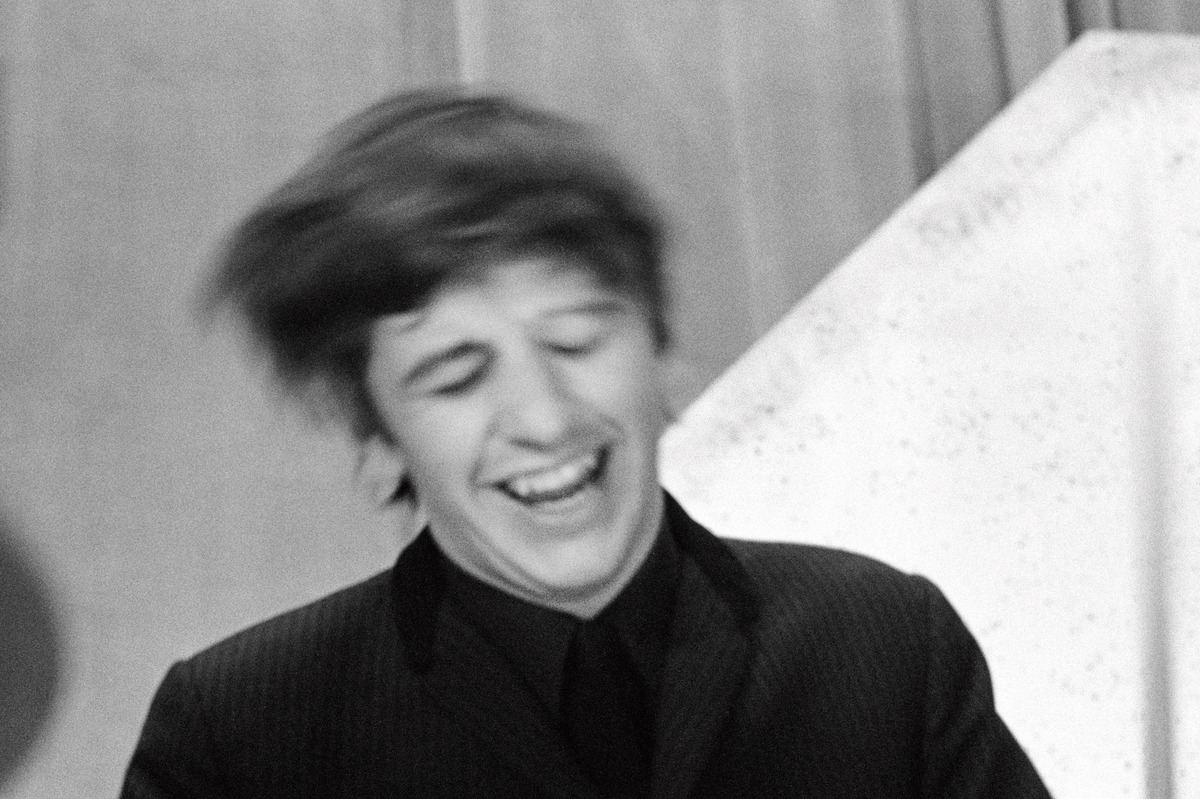
Ringo Starr, in London.

©1963 – 1964 Paul McCartney

©1963 – 1964 Paul McCartney

“I’m very proud of being part of the working class, which I think you guys would call blue collar,” McCartney said, referring to his youth in Liverpool, England. “If you’re looking for photos, they’re often the great faces. The faces where there’s a story behind them.”

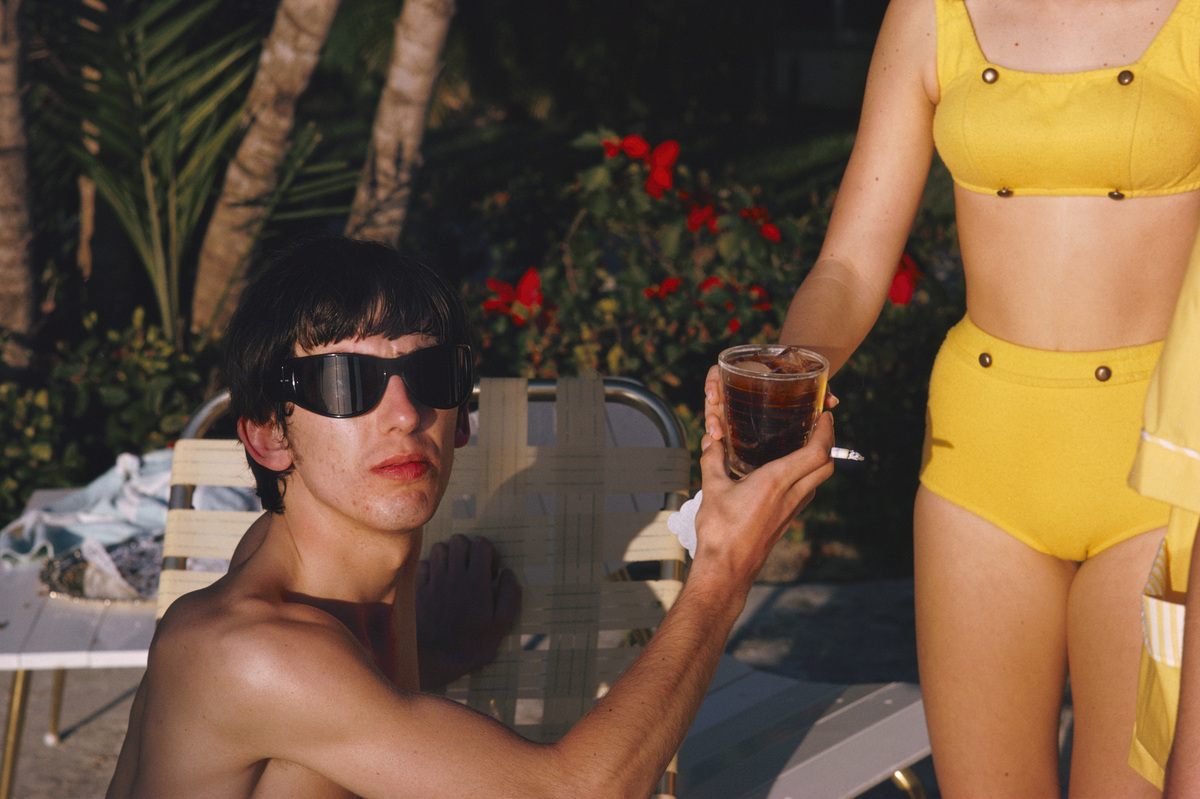
George Harrison in Miami Beach, 1964.

©1964 Paul McCartney

©1964 Paul McCartney

The photos, which now hang in a London art gallery, document a moment when McCartney, not quite 22, was experiencing an almost unprecedented level of fame.

John Lennon in Paris, 1964

©1964 Paul McCartney

©1964 Paul McCartney

He recalls it as “a very special time” in America. It was a few months after the assassination of President John F. Kennedy, and a few months before Congress passed the Civil Rights Act of 1964. “The attitudes that had gone before us were being changed.”

The Beatles changed with the times: their once-cheerful hits evolved rapidly through the 1960’s, at times growing dark, weird, or druggy. Yet their music retains a timeless quality. Though the band had broken up by 1970, much of their catalog remains familiar.

McCartney’s photographic return to an early moment in his journey prompted a question: Is there anything he wishes he could go back and tell his younger self?

Self-portraits. London, 1963.

© 1963 – 1964 Paul McCartney

© 1963 – 1964 Paul McCartney

Get to know the people you work with, he answers. “I think I might have said to my younger self: Look, you know, not only take this moment, but really nurture these relationships.” He said that today he talks regularly with Ringo Starr, the only surviving Beatle besides McCartney.

McCartney then interrupted his own insight. “Oh, wait a minute,” he said. In fact he was close to his bandmates in the early days, “so I’m probably just making it up.”

The audio version of this interview was edited by Reena Advani and produced by Barry Gordemer. Majd Al-Waheidi edited it for digital.

An old school building, damaged by hurricanes, again home for Lake Charles artists and nonprofits

An old school building, damaged by hurricanes, again home for Lake Charles artists and nonprofits

Hurricanes Laura and Delta caused immense damage to buildings across southwest Louisiana in 2020, including many of the region’s cultural institutions. Now, many of them have found a new home inside a historic school building in downtown Lake Charles, which finally reopened Monday after years of repairs following the storms.

“Central School was a thriving hub for arts and cultural activities, an incubator for aspiring artists, musicians and performing artists,” Lake Charles Mayor Nic Hunter said at a ribbon cutting for the historic schoolhouse turned cultural center. With tenants moving back in, it is taking that role again, providing a space for artists, nonprofits and cultural organizations to work and mingle.

“It’s really exciting to all be in one space and bounce ideas off of each other,” said Kari Casey, director of outreach and programming for the Children’s Museum of Southwest Louisiana. The museum saw its space in downtown Lake Charles destroyed by Laura and is currently waiting for its new building to be constructed.

“Everybody is doing the best we can to bring Lake Charles back, especially when it comes to the arts and humanities,” Casey said. The reopening of Central School, which has long served as a cultural hub for the city, is one step in that direction.

“These walls are filled with arts and culture,” Casey said. “You come and you’re inspired to carry on the tradition.”


CS Casey

Kari Casey, director of outreach and programming, in the temporary office of the Children’s Museum of Southwest Louisiana at Central School in Lake Charles.


Another organization with a long history in the city has also found its temporary home at Central School. The Lake Charles Little Theater, founded in 1926, had been bouncing around town for nearly three years after losing its home, located only a few blocks away, to Laura.

“We’ve done shows all across town in all kinds of different sized venues,” said Brett Downer, director of the theater’s board. “We’ve been in borrowed spaces, temporary spaces. That’s the beauty of Central School. Now that it’s back, we have a permanent home.”

Eventually, he said, the theater is planning to have its own building once again, but with its old location a complete loss, rebuilding will take years. Until then, the theater will be utilizing its space in the historic school building for rehearsals, auditions, office space and, once it’s repaired, shows in the schoolhouse’s auditorium.

Newer organizations, too, have found their place in the bright and airy 1912 building.

Saige Mestayer, marketing and campaign director for Smoke & Barrel, a nonprofit that puts on its namesake whiskey and barbecue festival every winter, along with a growing number of other events, said that having an office to work out of has been game changing.

“I love this, having a space and being able to connect with so many people,” Mestayer said. The “vintage feel” of the building adds to the charm, she pointed out. Mestayer joined the nonprofit in April and said that, since moving into the space after roughly two months of working from home, “the productivity is through the roof.”


CS Mestayer

Saige Mestayer, marketing and campaign director for Smoke & Barrel, in her new office at Central School in Lake Charles.


Currently, she’s planning a new early childhood education program the nonprofit is hoping to create under the umbrella of the United Way of Southwest Louisiana.

Restoring the historic building was no easy task, Hunter pointed out. “Repairing any structure post-disaster is not easy, but repairing a historic structure, like Central School, requires extra care,” the mayor said. All in all, the restoration cost the city $4.8 million, a cost the city is hoping to be reimbursed for by FEMA, and took nearly three years to complete.

But, Hunter noted, the restoration of historic buildings like Central School and the nearby historic city hall — now used primarily for art exhibits and events — is worth it.

“These were buildings with significant historic value,” Hunter said. The Community Foundation of Southwest Louisiana has created a special fund dedicated to the preservation of both buildings, Hunter announced at Monday’s ribbon cutting.


CS SIGNS

Signs listing tenant of Central School in Lake Charles before Hurricane Laura.


Historic preservation has, at times, taken a backseat to economic redevelopment in Lake Charles, said historian Adley Cormier, with many historic buildings only visible in historic photographs today. The Majestic Hotel, which hosted U.S. presidents during their visits to Lake Charles, and the Arcade Theater, where Houdini performed in his day, are just two prominent structures that were lost nearby and are still missed by residents today.

And while repeated hurricanes have not made the task of preservation any easier, Hunter pointed out that the repairing of Central School marked a success.

“It’s just a wonderful thing that we have a community and a city that has embraced these historic structures and that we don’t repeat some of the mistakes of the past,” Hunter said.

Veterans of Vietnam and the Cold War topic of next Historic Photography Show

Veterans of Vietnam and the Cold War topic of next Historic Photography Show

The Pennsylvania Room of the Ligonier Valley Library has announced the title of this year’s Historic Photography Show, “Faces of Ligonier Valley: Veterans of Vietnam and the Cold War.” The exhibit will be held July 11 through Sept. 12, in the Pennsylvania Room and hallway. Photographs of men and women who served during this era, artifacts and documents are being solicited for loan. Documents and photographs will be copied (with the lender’s permission), and all materials will be returned at the close of the exhibit.

An Opening Reception will be held on Tuesday evening, July 11, from 4 to 7 p.m. in the Pennsylvania Room. Refreshments will be served.

9 Canonical Body Artists You Should Know

9 Canonical Body Artists You Should Know
body-artists


Body artists often make works about the relationship between the body and the mind. Through their body, they explore themes like suffering, pain, nudity, or shame. Body art also deals with gender, power, and identity. Body artists have often blurred the existing lines in the relationship between the artist and the audience. In recent years, many body artists have been experimenting with body implants and virtual bodies. Here are 9 body artists that you should know.

What is Body Art?

body artist marina abramovic
Marina Abramovic during The Artist is Present performance, 2010, via WSJ

The breadth of body art is wide: Body and face modifications have been around for a long time dating back to prehistoric times. Tattooing and face painting are old practices originating in the native cultures of New Zealand and North America. Mimes can also be considered a type of body art that originated in Ancient Greece. Performance art, also known as Body art, first appeared as a medium of its own in the middle of the 1960s, and then had a revival in the 1990s.

During the 1960s and 1970s, the Western world saw several social revolutions like the struggle for women’s equality. The perpetuation of idealizations of women’s bodies in Western art and the media, which men overwhelmingly generated, started being studied by artists and art historians. Feminist artists reclaimed their bodies and used new ways to represent them. Using their bodies in performance became a way for many artists to assert control.

By using their bodies artists connected their individual experiences with the shared human experience. A body artist’s performance, thus, functioned as a synecdoche to humanity and the challenges we face in finding common ground for our experiences. The body became a perfect tool to show that something personal was indeed political.

1. Chris Burden

chris burden shoot
Shoot by Chris Burden, 1971, via Carnegie Museum of Art

Get the latest articles delivered to your inbox

Sign up to our Free Weekly Newsletter

​​Chris Burden cemented his place in art history with the work called Shoot. In a public exhibition in 1971, the controversial artist invited a friend to fire at him with a .22 rifle from a distance of 15 feet. The gunman was slightly off target, and the bullet entered Burden’s arm. This performance allowed the audience to witness a real example of what happens when someone gets shot. The desensitization of society to violence and the difference between seeing a terrible event live and on television were the main themes in this work.

2. Marina Abramović

marina abramovic balkan baroque
Balkan Baroque by Marina Abramović, 1997, via Christie’s

In response to countless murders in the former Yugoslavia, Abramović composed Balkan Baroque. She spent four days washing each of these gory bones while sitting on top of 1,500 cow bones, wearing a white dress, surrounded by projected photographs of her and her parents. She sang some of her country’s folk songs and recorded an explanation of how to eliminate rats in the Balkans. Due to the scorching heat and foul stench in the basement chamber, the performance progression became visceral. She believed that the analogy between being unable to wash away all the blood and not being able to remove the disgrace of war had a universal application.

3. Yoko Ono

yoko ono cut piece
Cut Piece by Yoko Ono, 1964, via MoMA, New York

Yoko Ono was one of the pioneers of participatory art. Ono first performed her Cut Piece in Kyoto in 1964. Since then, she has performed it in Tokyo, New York, London, and, most recently, Paris in 2003. The involvement of others is fundamental to her work. Cut Piece depends on the audience’s willingness to understand and comply with the artist’s directions, or the rules she called the score. These rules defined the roles of participants.

Cut Piece had the artist sitting on a stage in her finest suit, holding a pair of scissors in front of her. The audience was directed to approach her one at a time, using the scissors to snip off a small piece of her garment which they were to keep. Some people cautiously approached her, snipping a tiny square of fabric from her skirt or sleeve. Others came boldly, slicing off the bra straps or the front of her clothing. In an interview with MoMA, Ono stated: When I do the Cut Piece, I get into a trance, and so I don’t feel too frightened.…We usually give something with a purpose…but I wanted to see what they would take….There was a long silence between one person coming up and the next person coming up. And I said it’s fantastic, beautiful music, you know? Ba-ba-ba-ba, cut! Ba-ba-ba-ba, cut! Beautiful poetry, actually.

4. Valie EXPORT

valie export body configurations
Body Configurations by Valie EXPORT, 1976, via MoMA, New York

This photograph shows a woman tracing the cityscape of Vienna with her body by bending her back to mimic the curb’s curve. The image overlaps with a thick red line that follows the shape emphasized by the position, making the relationship between the city and the body prominent. It is a part of the Körperkonfigurationen (Body Configurations) series, which Valie EXPORT began working on in the middle of the 1970s. The figures in the series accentuate the geometry of the city. The prints are highlighted by additions like the red line seen in the work above or black ink painted over silver gelatin prints. The artist’s body is depicted as something that contrasts the cityscape.

5. Gina Pane

body artist gina pane azione sentimentale
Azione Sentimentale by Gina Pane, 1973, via MoMA, New York

Gina Pane is best known for her Azione pieces, in which she would execute a series of actions using her own body. These actions frequently demanded extreme physical endurance and pain tolerance. She encouraged the audience to empathize emotionally with what she was experiencing. She performed her actions privately, but they were precisely set and shot so that the viewer might sense the emotional depth of the piece even if they had not observed its making.

Azione Sentimentale is a complex, multilayered work that uses the visual language of ritual and religion to comment on pleasure, grief, and love between women. Pane performed this act in front of an all-women audience at Milan’s Galleria Diagramma. She entered the gallery wearing all white while holding red roses. She offered the roses to the audience and then took them back. She removed the thorns and stabbed her arm with them by neatly arranging them in a row. She then cut the palm of her hand with a razor blade. After which, she started giving the audience white roses stained by her bloodied palm. The juxtaposition of white and red, the blood, and the stigmata all mark sacrifice and allude to Christian theology.

orlan defiguration refiguration
Défiguration-Refiguration, Self-hybridations précolombienne no. 35 by ORLAN, 1998, via AWARE

ORLAN is a pioneer of what she considers Carnal Art. She poses intriguing concerns about consent, self-image, and beauty that foreshadow and inspire many current debates on transhumanism, utopian technology, and body modification. The methods ORLAN uses to draw the audience’s attention to her body, such as cameras, microscopes, and live feeds, are critical for the meaning of her works. ORLAN’s body is the main subject of her works. Her work explores the process of surgery rather than the end product of plastic surgery, making the altered body a place of public debate instead of a spectacle.

7. Beth Stephens and Annie Sprinkle

beth stephens annie sprinkle ecosexuality
Ecosexuality by Annie Sprinkle and Beth Stephens, 2008, via ArtCollaboration.co.uk

Annie Sprinkle has dealt with sex and love in various contexts, from the point of view of a sex worker and a porn actress to that of a performance artist. She and her partner Beth Stephens are pioneers of ecosexuality, a form of earth-loving sexual identity that declares that the Earth is our lover. Seeing nature as a lover suggests that a connection with the Earth is reciprocal, and as a result, ecosexuality holds people responsible for protecting the environment. This questions heteronormative notions and redefines concepts of gender, love, and sexuality.

Beth Stephens and Annie Sprinkle married Earth in 2008. The first marriage was followed by many more, including a white wedding to the snow, a purple wedding to the moon, and many more. The wedding guests joined Stephens and Sprinkle as they vowed to love, honor, and cherish many facets of the cosmos. Sprinkle and Stephens have authored vows for marrying the Earth, ecosexual manifestos, and directions for making love to the Earth called 25 Ways to Make Love to the Earth.

8. Herman Nitsch

herman nitsch orgies mysteries theatre drawing
The last supper drawing from The Orgies Mysteries Theatre by Herman Nitsch, 1983, via Nitsch Foundation

Herman Nitsch was a contemporary artist from Austria. His performances are theatrical and they incorporate different media. He focused on involving bodies in rituals and violence in order to explore life more holistically.

The Orgies Mysteries Theater was a 6-day performance held at a folk festival meant to celebrate humans. The work consisted of different artistic mediums and it was first performed in the 1950s.

9. Yayoi Kusama: Body Art Without the Artist’s Body

yayoi kusama infinity mirror rooms
Infinity Mirror Rooms by Yayoi Kusama, 2011/2017, via Tate, London

Infinity Mirror Rooms is a series that Kusama started making in the 1960s. The artist has now produced over twenty of these rooms. Each Infinity Mirror Room is a pitch-black room entirely covered in mirrors. Kusama had previously decorated these rooms with lanterns, phalluses, and pumpkins. Today, little LED lights suspended from the ceiling flash repetitively to create pulsing electronic polka dots. The mirrors provide the impression of limitless space. The person experiencing the room becomes essential to the piece itself.

The artist’s body is not present, nevertheless, the work depends on the viewer’s body and physical presence to create meaning. The participant’s body doubles, triples, and quadruples in infinity. Thus, this work plays with the perception of the body and identity.

Indigenous artists turn trams into moving galleries

Indigenous artists turn trams into moving galleries

Six city trams have been transformed into a moving gallery of Indigenous art.

The Melbourne trams hit the tracks on Tuesday to bring the work of First Nations artists to the streets.

The designs are centred on the theme of Blak Futurism – a call to envision a better future for Australia’s first peoples.

Among the six artists from Victoria is Boonwurrung/Erub woman Amina Briggs, whose purple, pink and blue design incorporates native birds and a national map with the word reclaim above it.

The artworks will remain on the trams for 12 months.

Each tram features a QR code to allow passengers to learn about the artists and their designs.

The third annual project is part of the RISING festival and brings together Yarra Trams, Creative Victoria and the Department of Transport.