The Guardian’s picture editors select photo highlights from around the world
Gigantic rubber ducks and the first AI sculpture: Friday’s best photos


Anne Mooney, FAIA, LEED AP and founding principal at Salt Lake City- and Los Angeles-based Sparano + Mooney Architecture, knew from her very first design studio course that the industry was meant for her. “The work excited and engaged me in a way nothing else had,” she said. “The late nights and intensely rigorous work somehow energized me and tapped into a level of creativity that I hadn’t recognized in me before. It is an incredible gift to find the thing in life that you were meant to do as it sets us on a clear path for who we can become both professionally and personally.”
With more than 25 years of experience in architectural design, project management, and construction management, Anne oversees the planning, programming, design, and process management of the firm’s key projects. As an accredited professional since 2004, Anne steers the firm’s LEED and Net-Zero Energy coordination efforts to deliver sustainable design solutions for each client. She also currently serves as the Co-Chair of the AIA Utah Committee on the Environment (COTE) and the Building Envelope Council (BEC).
“My work has always been both a career and a hobby – I enjoy travel, film, reading, and daily life infused with great architecture and design. My favorite city is Barcelona. I had a memorable day there that included visits to Gaudi’s La Sagrada Familia, the Joan Miro museum, and the Barcelona Pavilion. That was architectural heaven for someone like me,” she shared. “I have also had the experience of living in Italy on several occasions and this is a country that has design infused in all aspects of life from architecture and interiors, to fashion and food.”
“When I was in graduate school, I lived in Switzerland and visited the work of Le Corbusier in France and Switzerland. Experiencing these buildings in person (the housing, commercial, worship, and cultural spaces) made me understand the power of design in a visceral way that images are unable to convey,” Anne shared. “On a larger scale, the Marseille Unite d’Habitation was inspiring as it brought public amenities – childcare, shops, public art, etc. – into a residential building with small, but well-designed, units. And on the micro scale, the Le Corbusier cabin and house designed with Eileen Grey, E1027, are examples of simple domestic spaces along the beautiful French Riviera. Nearby you can also find the grave site he designed for himself and his wife as their final “home.” Proof that design is in everything if you only know how to look for it.
Anne has served as an architectural professor and design critic, training, educating, and mentoring emerging architects and design professionals. Her award-winning designs have been featured in over 35 national and international publications and exhibitions. She was named one of the Top Women in Architecture in 2020 by Mountain Living Magazine, and was awarded the Silver Medal by the AIA Western Mountain Region in 2021. Anne is also a committed educator of the next generation of architects holding an appointment as Professor of Architecture at the University of Utah School of Architecture.
Anne was elected to the American Institute of Architects College of Fellows in 2023. A monograph of the firm’s work and design process, titled Sparano + Mooney Architecture: A Way of Working, was published by Hatje Cantz (Berlin: 2022), and the firm’s premier exhibition exploring its methodology will open at the Utah Museum of Contemporary Art from March 10 to July 15, 2023. Make sure to visit if you’re in town!
This week, Anne Mooney is joining us for Friday Five!

This spectacular piece of marble was found in the European Marble & Stone slab yard this year – one of the delights of working as an architect is discovering raw materials like this and designing spaces to celebrate them. In each design commission, we develop a material language and set of ideas around materials. This involves considering how materials are deployed in a design and detailed in the architecture. I am always looking at how we employ materials and finishes to convey ideas and curate experiences in the spaces we design.

Spending time in nature is grounding and opens my mind creatively. This labyrinth in Kayenta, Utah is both a landscape and a meditative, moving
experience in the desert. I feel privileged to spend my time in the American West where we are surrounded by natural beauty, from the mountains to the deserts. The generations of artists working in this context are also inspiring – from those working with monumental land art installations to modest land form interventions like this assemblage of stones creating a pattern to form a purposeful path.

My trusty companion, Phideaux, is a joy to come home to each day and sometimes can be found next to me in the office! As work pressures inevitably rise up, it has been nice to have the reliable companionship of a beloved pet. At the end of the day, this pup is always happy to see me come through the door hoping for a few treats and with luck a walk or a hike along a favorite trail. Our home has concrete floors which are easy to maintain and forgiving with pets. Phideaux is seen here on a durable, indoor-outdoor Chilewich rug which is easy to clean when he tracks in mud from the garden.

I love everyday objects we interact with often that are well-designed and constructed. This bowl was thrown by my daughter, Claire, who has a love of clay. The stoneware piece was made to be used as a small snack bowl or for ice cream, but I use it for everything. It has a lovely color and the bottom of the piece has the foot indented instead of the more commonly seen raised foot so it sits seamlessly on a surface.

No filters! This photograph was taken early one morning when the dawn light illuminated the fall foliage in the most magical way. Rare moments like these are fleeting and spectacularly rewarding for the early riser. In the span of ten minutes the view transformed into the typical morning view – which is still wonderful – but missing the extraordinary coloring offered just a bit earlier. I am not typically a morning person, but days like this are making me seriously reconsider!
Photography courtesy of Anne Mooney.

Canyon House, located in Emigration Canyon just above Salt Lake City, Utah. This contemporary family residence of 2,500 SF was designed for a couple with young children. The home was designed to capture expansive canyon views while offering a series of gathering and entertainment spaces for the family, both indoors and out. Photo: Dennis Mecham

St. Joseph the Worker Catholic Church + Day Chapel. This worship project in West Jordan, Utah, began with community outreach, programming, and master planning phases led by Sparano + Mooney Architecture to help determine the vision for the replacement of a 1960s church and rectory building. Photo: Jeremy Bittermann

Nora Eccles Harrison Museum of Art (NEHMA) at Utah State University. The façade design is composed of linear vertical panels of opaque and perforated zinc, referencing the materiality of the Performing Arts building but with a unique pattern and design approach. The porosity of the façade invites glimpses into the museum by the passerby, and at night the activity and exhibitions housed within glow through this façade. Photo: Jeremy Bittermann

Wabi-Sabi, located in Emigration Canyon above Salt Lake City. This home, designed for a young family, celebrates a unique elevated canyon view with a rare and direct connection to nature. The design was conceived as an expression of both static and dynamic elements, referencing the relationship among the mountain, vegetation, and wildlife on the site. Photo: Matt Winquist
This post contains affiliate links, so if you make a purchase from an affiliate link, we earn a commission. Thanks for supporting Design Milk!


Art Industry News is a daily digest of the most consequential developments coming out of the art world and art market. Here’s what you need to know on this Friday, June 9.
Hurvin Anderson’s Dispatches From the Barbershop – The familiar scene of Anderson’s local establishment recurs in the artist’s current exhibition, “Hurvin Anderson: Salon Paintings,” at the Hepworth Wakefield in the U.K. “Apart from the home, it is one of the places Black men and women can speak freely,” Anderson said of the place that has inspired a range of canvases that delve into the “sociopolitical context of the shops.” (New York Times)
Artist Chinyee Dies at 94 – The first-generation Chinese-American artist, whose native home of Nanjing, China, and travels around the world with the United Nations influenced her colorful abstract canvases, has died. In 2007, her gallery Alisan Fine Arts organized a 50-year retrospective at the Shanghai Art Museum and two of her works are currently on view at the Fondation Vincent Van Gogh in Arles, France, as part of the traveling group exhibition, “Action, Gesture, Paint: Women in Abstraction, A Global History (1940–70).” (E-mail)
Joan Rivers’s Comedy Trove Heads to Museum – A collection of more than 65,000 typewritten jokes penned by the late comedian will soon be in the collection of the Jamestown, New York-based National Comedy Museum. The cache is in good company, joining collections of works by George Carlin and Carl Reiner. (NYT)
Curator of British Pavilion Named – Tarini Malik will serve as the curator of John Akomfrah’s work at the next edition of the Venice Biennale, slated to open in April 2024. Malik has been a curator at London’s Hayward Gallery and Whitechapel Gallery, and said that the exhibition will “draw on the legacies of the work John has made over the past 40 years,” and will both “feel connected to the city of Venice, but also look at the institution of the British Pavilion.” (The Art Newspaper)
Sukanya Rajaratnam Joins White Cube – The New York-based gallerist will join White Cube in the role of global director of strategic market initiatives this September. Rajaratnam left her position at Mnuchin Gallery after 15 years in January. (ARTnews)
A.I.-Powered Collecting Platform Launches – Docent, billed as the “Spotify for art collecting” is set to launch during Basel art week in Switzerland before going live in Paris, London, and Miami later this Fall. (Press release)
Tate and Museum of the Home Acquire Rebecca Solomon Work – The two institutions now jointly own the Pre-Raphaelite artist’s canvas, which reflects the gender, race, and religious mores of its time. The central figure was modeled by Jamaican-born Fanny Eaton, who inspired many artists of the period. (Press release)

Rebecca Solomon, A Young Teacher (1861). Courtesy of Tate and Museum of the Home.
Follow Artnet News on Facebook:
Want to stay ahead of the art world? Subscribe to our newsletter to get the breaking news, eye-opening interviews, and incisive critical takes that drive the conversation forward.


The photographer spent three years studying the moon’s alignment before taking the shot.
Christ the Redeemer, the colossal statue of Jesus Christ at the summit of Mount Corcovado in Brazil’s Rio de Janeiro, is a world famous tourist spot. Thousands of people flock to the Brazilian city to catch a glimpse of the statue, which was constructed in 1931. But a photographer recently clicked a stunning shot of the statue that has now gone viral. Taken after three years of failed attempts, Leonardo Sens’ photo appears to show ‘holding’ the moon with both hands.
The photographer has posted the picture on his Instagram handle. According to the description, it was clicked on June 4 as the moon went down behind the statue.
The post also mentions that the long-awaited shot was taken from Icarai Beach in Rio de Janeiro municipality of Niteroi, which is seven miles away from the statue.
Mr Sens told Brazilian news outlet G1 that he spent the last three years studying the moon’s alignment before taking the perfect shot.
“In the end, everything went well and I was able to register the long-awaited photo,” he said.
There are other photos too in the Instagram post, which has amassed more than 6.5 lakh likes.
“I have seen several pictures of the moon but you managed to leave the perfect angle in a memorable way,” one user commented on Instagram.
“I don’t even know what to say about these photos… it’s incredible, exciting,” said another.
According to Encyclopaedia Britannica, the statue stands 98 feet tall, with its horizontally outstretched arms spanning 92 feet.
It is made of reinforced concrete and sits on a square stone pedestal base about 26 feet. The statue is the largest Art Deco-style sculpture in the world, said Britannica.

“My funds are in Liverpool, not in Atlanta.” Any lover of the 1939 Hollywood classic Gone With the Wind will remember Clark Gable delivering this line. But why does Gable’s Rhett Butler, a rich socialite who spends his time lazing around on cotton plantations in the deep South of America, keep his money in Liverpool?
The answer is right there on the screen, in the clothes Gable wears. Liverpool was built on cotton.
Now, the city’s relationship with this most bloody of commodities is the subject of the Liverpool Biennial, the largest and longest running visual arts festival in the UK, the latest edition of which opens on 10 June (until 17 September).
The biennial begins at Tate Liverpool, which is built on the city’s marina and the UK’s first commercial wet dock, completed in the early 18th century. In 1759, a Liverpool newspaper ran an advertisement for an auction; the highest bidder could secure 28 bags of cotton, fresh from Jamaica. The clipping is now held in the neighbouring Merseyside Maritime Museum, for it is the first recorded example of cotton dealing in Liverpool.

The Cotton Exchange, a Grade II Listed building on Edmund Street in Liverpool, once the home of Liverpool’s cotton industry © Liverpool Biennial
By the end of the century shipments arrived at the city’s docks from Brazil, India, the Middle East and, frequently, from the port city of Charleston in the US state of South Carolina. The cotton had been handpicked by plantation slaves whose ancestors had survived the boats from Africa. The trade made Liverpool, briefly, one of the richest ports in the world.
The biennial’s title is uMoya: The Sacred Return of Lost Things and is curated by the South African artist Khanyisile Mbongwa. “uMoya” is an isiZulu word with a multivalent meaning; it can be translated to mean spirit, soul, breath and wind.
During an opening press conference, Mbongwa set out the ambitions for uMoya. The biennial, she said, was “an attempted return of that which has been lost and taken from those who have been silenced or forgotten.” The works on show are “emancipated practices” from “histories of duress”—the work of artists who have been “displaced from their native tongue”. She defines her curatorial practice, she said, as one of “care and cure”.

Khanyisile Mbongwa, curator of the Liverpool Biennial 2023, which opens on 10 June © Bongeka Ngcobo, courtesy Liverpool Biennial
The artworks on show “require us to search our inner being,” asking the people of Liverpool “to not see themselves as an audience, but as a witness”. Alongside her curatorial practice, Mbongwa is a Sangoma; a form of shamanic, spiritual healer. She ended her address with a ritualistic isiZulu tradition that acknowledged her ancestor’s sprits.
Is there a lot of care and cure in the Liverpool Biennial? Frankly, it seems pretty punchy.
The festival features the work of 35 artists from six continents and 25 countries—15 of them have created original work commissioned for the biennial. Their work is displayed across 14 separate exhibition spaces, including what are referred to as “found venues”—makeshift exhibition spaces in vacated and derelict buildings that date back to beginnings of the cotton trade. These include the city’s Cotton Exchange, where the money exchanged hands, and the Tobacco Warehouse, once the largest brick building in the world, where the product was stored.

Torkwase Dyson’s installation view of Liquid a Place (2021) at Pace Gallery ©Torkwase Dyson, courtesy Pace Gallery. Photo by Damian Griffiths
If visitors start their journey through the biennial at the Tate, then they will begin with the American artist Torkwase Dyson’s Liquid a Place (2021). These big, steel lumps, half smooth, half mottled and rusting, look as if they have sat in the water of the dock out front, weathered by the elements and only half visible, like a ship’s hull.
An adjoining label makes the explicit point that the dock—the very thing the gallery stands on—was built “to service and expedite the Transatlantic Slave Trade”. That trade, we are told, resulted in the death of 2.4 million enslaved Africans. The work, then, “examines the history and future of Black spatial liberation strategies”.

Edgar Calel, Ru k’ ox k’ob’el jun ojer etemab’el (The Echo of an AncientForm of Knowledge), 2021 © James Retief, courtesy Edgar Calel and Proyectos Ultravioleta.
Mbongwa writes alongside that Liverpool is there to be “excavated—laying bare its history of colonialism, role in the trade of enslaved people and the making of the British Empire”. Mbongwa, then, has set her stall out: we are stood, literally, on problematic ground. She wants us to come to terms with it. The spirits of the dead are alive, but unheard. We must search our inner being.
Upstairs, we find the indigenous Guatemalan artist Edgar Calel’s The Echo of an Ancient Form of Knowledge (2021). Calel’s work, without meaning to be too reductive, consists of fruit arranged on rocks. Lots of rocks, loads of fruit. Jagged lumps of sediment, carrots, celery and peppers on top. A mischievous Cattelan-esque provocation surely? Apparently not. The adjoining label tells us that Calel’s work “acts as a form of resistance in the wake of ongoing racism, social exclusion and cultural erasure of Indigenous people”.

Sandra Suubi’s Samba Gown (2021) at Open Eye Gallery © Mark McNulty, courtesy of Liverpool Biennial
In Open Eye Gallery, we find the work of Saandra Suubi, a Ugandan artist working with salvaged objects, photography and performance. The series, titled Samba Gown (2021), is orientated around a flowing bridal gown, upon which messages like “women have no say in the marriage” and “men are like babies” are scrawled. On the walls, a stately African woman wears the cloak amid a landfill site; destitute people and shaggy white storks pick through the plastic waste close-by. The exhibition feels half-formed—a performance must have taken place in this forlorn location, but the photographs only hint at it. This is also, we are told from the top, is “a statement of resistance”.
Close-by, David Aguacheiro, a Mozambican artist, presents the series Take Away (2018). In its centre, oil drums are piled into a small wooden boat. The sculpture is surrounded by monochrome photographic portraits that speak of loss, dislocation and disaster. The work mediates on the “disguised colonists [who] wage manufactured wars to live rich at the expense of the people,” the artist writes.

David Aguacheiro, ‘Take Away’, 2018. Liverpool Biennial 2023 at Open Eye Gallery © Mark McNulty, courtesy of Liverpool Biennial
I don’t mean to be flippant about the sincerity of marginalised or Indigenous artists. Embracing a diversity of globalised voices and working towards a better understanding of our shared histories are always, in themselves, good and righteous endeavours. Art is often a fruitful forum for discussing politics. We hold these truths to be self-evident.
But some of the art on show at the biennial is, nevertheless, problematic in its own right.
The first problem is one of fungibility. Emancipated art is today, a genre in itself; one that is becoming populated quickly as it continues to be platformed. Installations of oil drums, references to boats, woven textiles, ancestral garments, motif-heavy self-portraits—the truth is that many artists, working globally, are trading on these “histories of duress”, which means they run the risk of becoming derivative, overly literal and distinctly repetitive.
Suubi must, for her own sake, compete with contemporaries like, for example, the Black American artist Nick Cave, who has long used cloaks, textiles and clothing as a way of exploring his ancestry, identity and gender, or Rebecca Belmore—the first Indigenous artist to present Canada at the Venice Biennale, in 2005. Belmore’s cast clay sleeping bag Ishkode (Fire) (2021) stole the Whitney Biennale in 2022.
For Aguacheiro, he must try and stand shoulder to shoulder with artists like Lydia Ourahmane, who created The Third Choir (2014), an installation of drums used to transport oil from her native Algeria, almost a decade ago; it is now in Tate Britain’s permanent collection. Or how about the Johannesburg-based photographer Mohau Modisakeng, whose motif-heavy portraits of Black identity gained such attention when he represented South Africa at the Venice Biennale in 2015.
The biennial is also facing an issue of framing. When curators deal with complicated and confrontational subject matter, they often retreat under the safety net of a seemingly benign curatorial syntax. This internationally recognised lexicon, one taught at art school, often seeks to position art in ‘liminal’ states of ambiguity, or posit them as mediating on new ways of viewing. This language is, in fact, riven with cliche. And when these cliches are relied upon, when they are deployed liberally and unspecifically, they can have a crushing effect on the art on show.

Shannon Alonzo, Subterranean Sentiments of Belonging – Cycle 2, 2021 © Ryan Lee, courtesy Shannon Alonzo, Subterranean Sentiments
This safety net is flung over many of the works at the biennial, from the strong to the weak. Shannon Alonzo’s Mangroves (2023) is a site-specific mural of Caribbean portraits, interwoven with mangrove swamps, created in charcoal in the basement of the Cotton Exchange. It is a beguiling, ghostly work from a young artist with a clear skill in draughtsmanship. Yet we’re told it is “a collective story of resistance, erasure, women’s labour, tradition and joyous celebration”. On the one hand; no kidding. But also, surely, Alonzo’s spontaneous work is so much more than this.
But, under this weight, occasionally the biennial sings. In the gardens of Liverpool Parish Church, the Nigerian artist Ranti Bam exhibits a series of curving, splitting clay sculptures; each has been created by the artist embracing the clay as it hardens before leaving it to deepen its form through its own internal physics. The series is titled Ifa (2021), a reference to the Yoruba word ‘ifá’, which means the divine, and Ìfá, which translates as ‘to draw close’.
The female form has a long history in art — but has it ever been depicted like this? The sculptures are left outside to deal with whatever Liverpool has to throw at it; the artist expresses delight when a passing bird evacuates on one.

Ranti Bam’s Ifas (2023). Installation view at St Nicholas Church Gardens, Liverpool Biennial 2023 © Rob Battersby, courtesy Liverpool Biennial
The works, then, speak of youth and fertility, ageing and decay. Their presence in the garden of a House of God imbues them with questions of nature and faith. “Like our skin, they are imperfect,” Bam writes. “The Ifas pucker and crack, fold and fault with dramatic spontaneity.” That’s how to do it.
Liverpool may have been built on cotton. That legacy is still active in the city of today. But who are the modern heroes of Liverpool in 2023? The answer is: Trent Alexander-Arnold, a prodigious footballer whose grandfather emigrated from the commonwealth to make this city his home. It would be the athlete Katarina Johnson-Thompson, the daughter of a Bahamian man, or the actress Jodie Comer, a descendant of Irish immigrants. It would be Molly McCann, who overcame an abusive childhood to become a globally-recognised cage fighter. It would be Mohamed Salah, a devout Muslim raised in a tiny village in Egypt who has made Merseyside his home. The biennial struggles to acknowledge this resplendent city of today, and it should. Because, as we all know, time moves on, all too quickly.

June 9, 2023
This paid piece is sponsored by Dakota State University.
“I’m terrible at math!” is a phrase Kevin Smith has heard often. Other words he has heard associated with the subject include ashamed, lost, boring, stressful, humiliating, wrong and failing.
These math-related words have been uttered countless times throughout Smith’s career, which started as a high school math teacher.
Now as a professor at Dakota State University, he has found it necessary to remember not everyone enjoyed math as he did growing up. Others’ feelings on the subject helped inspire his first children’s book, “Yucky!”
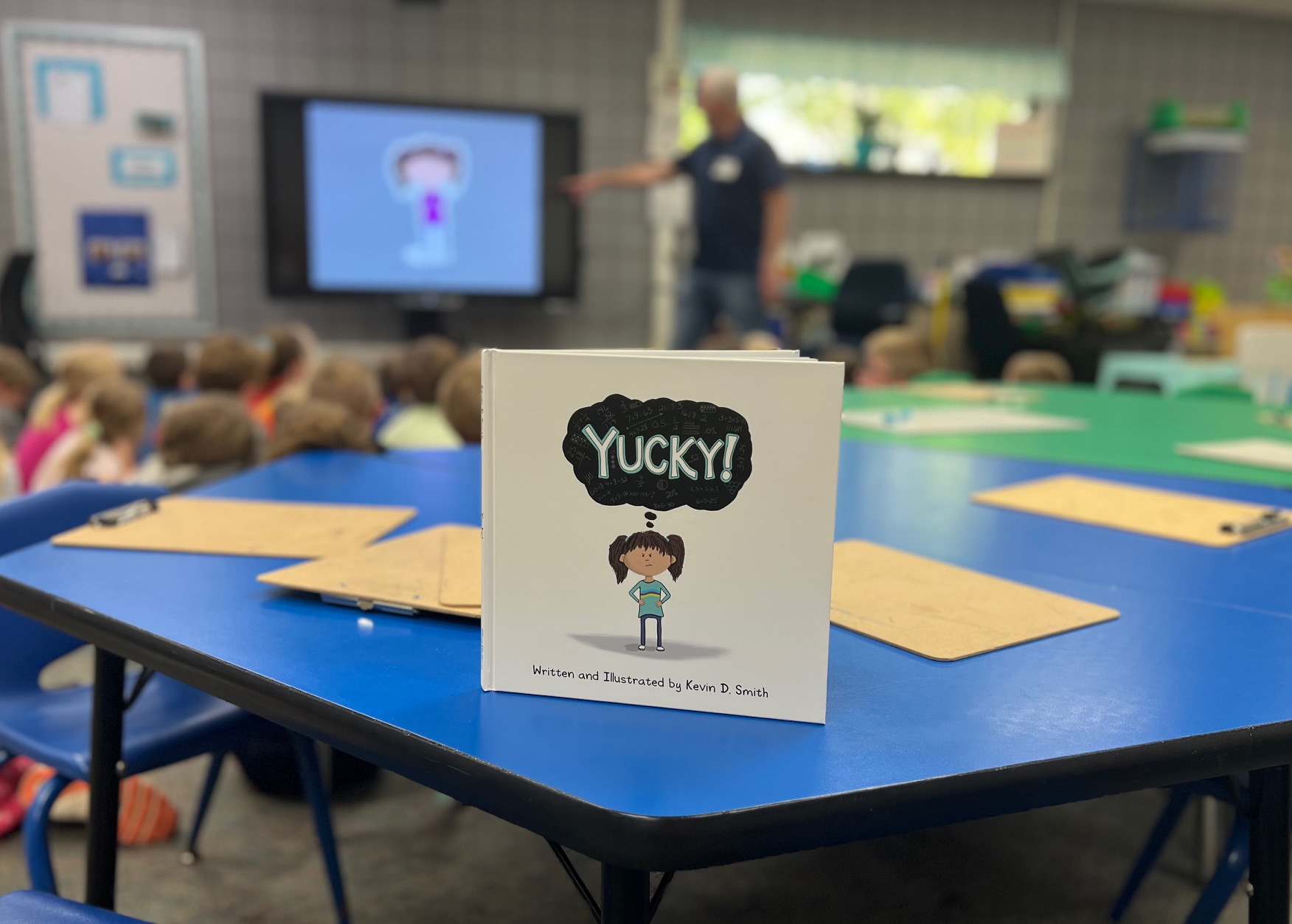

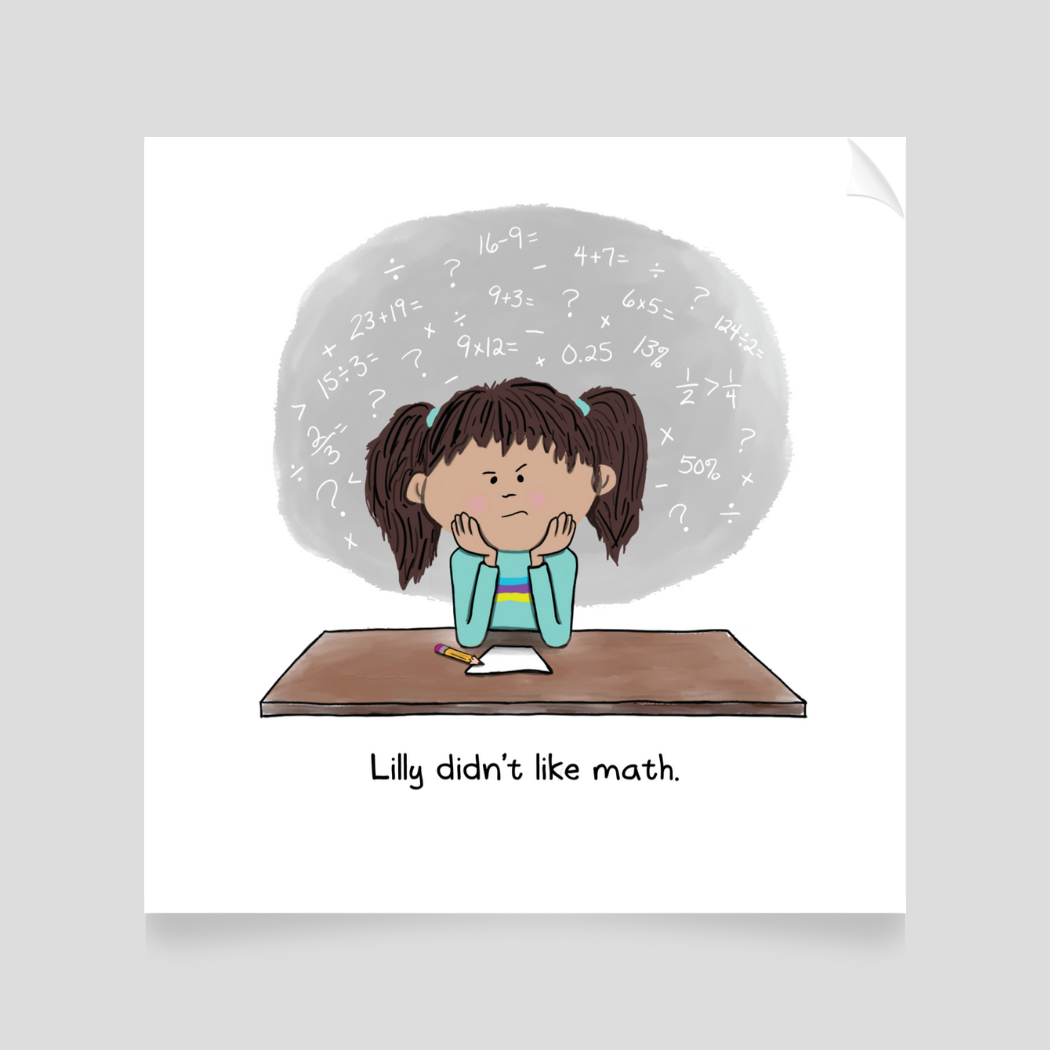
“Yucky!” Follows Lilly’s math struggles until the right teacher comes along and shows her that math can be fun. Once Lilly discovers that math can speak to her creative side, she realizes that ‘Maybe math isn’t so YUCKY!’”
Smith brought his two passions of math and art together in Lilly’s character. She loves art and learns that many of the skills she uses in her art can help her in math, like pattern recognition.
“I’m hoping that it sparks conversations about what math is and that attitude matters,” Smith said.

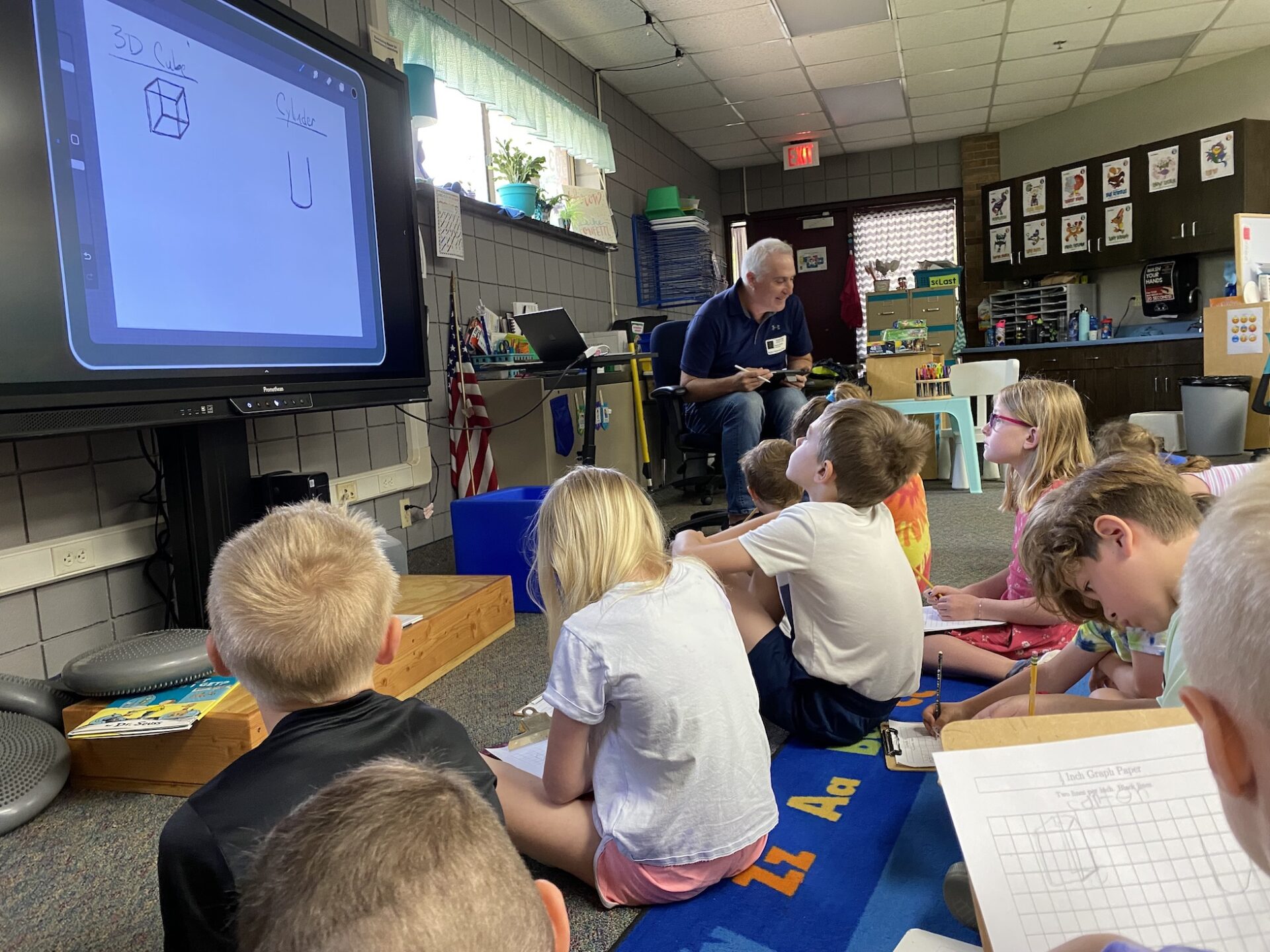
At this year’s DSU virtual Teach Camp, Smith led a session focused on helping students realize that math isn’t yucky. He tries to instill several key ideas in his students, including the importance of developing a positive attitude about the subject and that math can be exciting.
He asked educators at the Teach Camp to brainstorm other words associated with math such as critical thinking, persistence, problem-solving, puzzles, patterns, creativity, imagination and even fun.
He shared with the campers that his book has two messages: what is math and that attitude about math matters. Smith mentioned research that shows when parents share their math anxiety with children, it can impact their children’s performance negatively.
“The first thing we do is talk about our own feelings and attitudes about math,” he said. “It’s important to recognize that negative feelings about the subject can have a detrimental impact on learning.”

Next, Smith stresses the importance of providing students with a safe and supportive environment. “Math anxiety is real,” he said. “We need to recognize this and do things to alleviate that anxiety.”
During the camp session, Smith shared fun student activities that help them learn math by using resources and tools like Mathigon, a free site with games, activities and lessons in math, and Math for Love, which features free lessons, award-winning games and math art shows.
He shares more resources on his web page dedicated to “Yucky!” Smith started writing and illustrating the book in the spring of 2022 and shared it with friends, colleagues and teachers for feedback. He created several revised versions until he was happy with the final product.
While the book’s topic is appropriate for children age 3 to 12, Smith believes the message will resonate with all ages. The book is available for purchase on his website, Kevinandkaia.com, and will be available through Amazon and Barnes & Noble beginning June 13. It also will be sold at several local bookstores.
He hopes teachers, parents and grandparents read the book to their kids. “I want to get the book in the hands of as many people as possible,” Smith said.
Dr. Kevin Smith graduated from DSU in 1993 with a degree in math education. He spent three years teaching high school math in Columbus, Nebraska, before earning his master’s degree in educational technology and working as an instructional designer at the University of Nebraska-Lincoln.
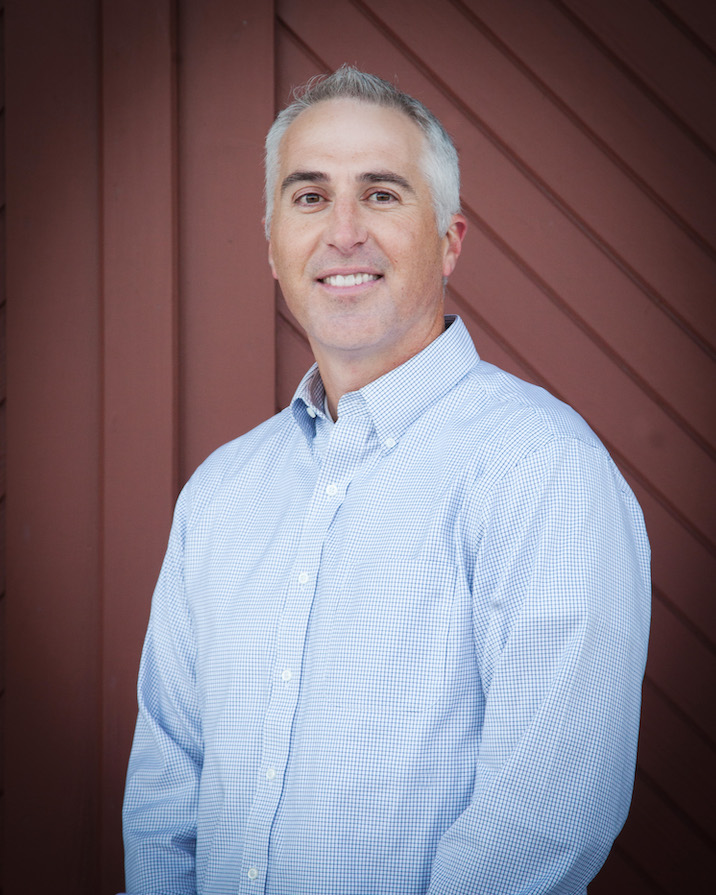

Upon graduating from UNL, Smith continued working as an instructional designer at different companies, developing distance education programs. Smith earned his doctorate in instructional design and technology from the University of Memphis in 2017.
At Dakota State, Smith teaches math education, STEM and educational technology courses. He also is the program coordinator for the Master of Science in Educational Technology.
In 2019, Smith and his daughter Kaia began selling hand-drawn greeting cards at a local farmers market to raise money for a school trip to Washington, D.C. Smith would draw, and Kaia would color them.
They received a lot of positive feedback, and local businesses wanted to carry items in their stores. Over time, they added postcards, stickers and prints to their inventory, which are available on their website, kevinandkaia.com.
They grew their business through email marketing, social media, word of mouth and art fairs.
“We sell our items at wholesale prices to over 150 retailers worldwide,” he said. “In addition, we have done a lot of commissioned art pieces for individuals and businesses.”

James Madison University Athletics is excited to celebrate its graduating class of 2023, with 102 total student-athletes walking at JMU’s commencement ceremonies in May at the Atlantic Union Bank Center.
A total of 89 Dukes are spring 2023 graduates, while 13 more will finish up their degree work during the summer sessions.
SPRING 2023 GRADUATES
Baseball
Donovan Burke, B.S. Communication Studies
Sean Culkin, B.S. Sport and Recreation Management
Dallas Jackson, M.S. Sport and Recreation Leadership
Sam Landess, B.S. Kinesiology
Jacob Steinberg, B.S. General Psychology
Andrew Weight, B.B.A. Business Management
Men’s Basketball
Takal Molson, M.S. Adult Education/Human Resource Development
Vado Morse, B.S. Individualized Study
Women’s Basketball
Jaylin Carodine, B.S. Health Sciences
Madison Green, B.A. Justice Studies
Kiki Jefferson, B.S. Sport and Recreation Management
Cheerleading
Shawn Arrigo, B.S. Biology
Charlotte Baldwin, B.B.A. Business Management
Erin Batik, B.S. Communication Sciences & Disorders
Gerald Bejger, B.S. Physics
Rosalie Chisolm, B.A. Media Arts & Design
Amber Curtis, B.S. General Psychology
Rebecca Cutsinger, B.S. Media Arts & Design
Kaitlyn English, B.S. Psychology
Ethan Feng, B.B.A. Economics
Bryn Hertel, B.S. Health Sciences
Carson Kreide, B.A. History
Taylor LaRusso, B.S. Elementary Education
Jordan Pratt, B.B.A. Finance
Kayla Quinlan, B.S. Health Sciences
Elijah Tomlin, B.S. Intelligence Analysis
Angel Trejo, B.A. Communication Studies
Field Hockey
Mikenna Allen, B.S. Communication Sciences & Disorders
Reagan Bonniwell, B.F.A. Graphic Design
Emily Harrison, B.S. General Psychology
Morgan Merritt, B.S. Health Sciences
Diede Remijnse, B.B.A. International Business
Eveline Zwager, B.S. Health Sciences
Football
Julio Ayamel, B.S. Kinesiology
James Carpenter, B.S. Sport and Recreation Management
Kyle Davis, M.S.Ed. Adult Education/Human Resource Development
Prophett Harris, B.S. Dietetics
Connor Madden, B.S. Communication Studies
Latrele Palmer, B.S. Sport and Recreation Management
John Ransom, B.S. Sociology
Devin Ravenel, B.S. Sport and Recreation Management
Aaron Whear, B.B.A. Business Management
Joe Worman, B.B.A. Finance
Men’s Golf
Yuvraj Joshi, B.B.A. Finance
Nick Schlickenrieder, B.B.A. Finance and Economics
Women’s Golf
Kate Owens, B.B.A. Finance and Economics
Ana Tsiros, B.S. Health Sciences
Lacrosse
Lilly Boswell, B.B.A. Marketing
Maggie Clark, B.S. Kinesiology
Elise Fiannaca, B.B.A. Business Management
Tai Jankowski, B.S. Biology
Sophie Macchia, B.F.A. Art
Taylor Marchetti, B.S. Dietetics
Ellen Palmiere, B.S. Media Arts & Design
Men’s Soccer
Nathan Christenson, B.S. Sport and Recreation Management
Women’s Soccer
Aimy Diop, M.S. Sport and Recreation Leadership
Lidia Nduka, B.A. Justice Studies
Mia Pham, B.S. Computer Science
Amanda Sevcsisin, B.S. Health Sciences
Softball
Reed Butler, B.S. Health Sciences
Swimming & Diving
Isabel Anbar, B.S. Sociology and Communication Studies
Alaina Park, B.S. Kinesiology
Felicity Ryan, B.S. Biology
Jordyn Schnell, B.B.A. Marketing
Karen Siddoway, B.S. Biology
Devan Taylor, B.S. Hospitality Management
Morgan Whaley, M.S. Accounting
Men’s Tennis
Holden Koons, B.B.A. Finance
Women’s Tennis
Daria Afanasyeva, B.S. Sport and Recreation Management
Daniela Voloh, M.S. Accounting
Track & Field/Cross Country
Erin Babashak, B.S. General Psychology
Meredith Beaver, B.S. Health Sciences
Paris Beaver, B.S. Integrated Science & Technology
Bethany Biggi, B.S. Integrated Science & Technology
Isabella Bogdan, B.S. Sport and Recreation Management
Jessica Cantrell, B.S. Kinesiology
Maddie Croteau, B.S. Health Sciences
Annie Dunlop, B.S. English and Secondary Education
Maddy Hesler, B.S. Biology
Sophia Hudak, B.S. Elementary Education
Lanie Jo Knight, MAT Education
Tiana Lewis, B.S. Public Administration
Rachel Lloyd, B.S. Communication Sciences & Disorders
Clare Morelli, B.B.A. Accounting
Hallie Reese, B.S. Hospitality Management
Shelby Staib, B.B.A. Finance
Alexys Taylor, MOT Occupational Therapy
Laura Webb, BSN Nursing
Volleyball
Cameryn Jones, B.S. Communication Studies and Media Arts & Design
SUMMER 2023 GRADUATES
Baseball
CJ Czerwinski, B.S. Sociology
Mason Dunaway, B.S. Sport and Recreation Management
Hunter Entsminger, B.S. Sport and Recreation Management
Cheerleading
Cayleigh Greger
Football
Mateo Jackson, B.S. Individualized Study
Tanner Morris, B.S. Sport and Recreation Management
Isaac Owusu-Appiah, B.S. Sociology
Justin Ritter, B.S. Sport and Recreation Management
Jordan White, B.S. Sport and Recreation Management
Women’s Golf
Kendall Turner, B.S. Mathematics
Men’s Soccer
Prince Loney-Bailey, B.S. Sport and Recreation Management
Sloan Sullivan, B.B.A. Business Management
Swimming & Diving
Lindsey Hammar, B.S. Media Arts & Design
Track & Field/Cross Country
Jordan Otto, M.A. School Psychology
Volleyball
Danielle Nathan, B.S. Sport and Recreation Management
Chloe Wilmoth, B.S. Biology
Additionally, a total of 13 student-athlete (both current and former) graduated back in December, bringing the 2022-23 combined total to 116 across all sports.
Baseball
Kyle Novak, B.S. Sport and Recreation Management
Field Hockey
Cassie Hunter, M.O.T. Occupational Therapy
Football
Tate Beaver, B.S. Biology
Reggie Brown, B.S. Sport and Recreation Management
Hunter Bullock, B.S. Kinesiology
Chris Chukwuneke, B.S. Public Administration
Men’s Soccer
Melker Anshelm, B.S. Media Arts & Design and Communication Studies
Tyler Clegg, B.B.A. Business Management
Luca Erhardt, B.A. Communication Studies
Clay Obara, B.B.A. Business Management
Max Poelker, M.P.A. Public Administration
Women’s Soccer
Melissa Hoffheins, B.A. Media Arts & Design
Track & Field/Cross Country
Sophie Bollinger, M.S. Kinesiology


Jesse Freeman, 38, is an American visual artist and writer living in Tokyo. His mediums include photography, filmmaking, collage and ikebana (flower arrangement). Jesse is a native of Baltimore, Maryland.
1. You are a multidisciplinary artist but how do you describe yourself? As nothing in particular.
2. What do you mean by “nothing in particular”? That I can do anything! So I do nothing in particular. It’s all the same idea. It all comes from an idea and then it goes to each (medium).

In a time of both misinformation and too much information, quality journalism is more crucial than ever.
By subscribing, you can help us get the story right.

The story of the new We Live Here photography exhibition of the Light Catchers Society began with two bullet holes.
A shootout in the neighborhood earlier this year left scars in the walls of The Rec building, the North Gevers Street headquarters of the Eastside nonprofit after-school program. One bullet smashed through two walls and struck the frame of a student photograph still on display from last year’s neighborhood-themed show.
The incident helped solidify the theme for this year’s version of the annual exhibition, with the group of a dozen Booker T. Washington Elementary School sixth graders participating in the program choosing to focus on gun violence.
“The gun violence in the neighborhood is consistent and it’s been rising, just like it has in most other neighborhoods,” said Francisco Cortés, a photographer and educator who has run the Light Catchers Society as a formal after-school program since 2016.
Students in the program learn to operate digital single-lens reflex (SLR) cameras, video cameras and sound recording equipment. Then, they apply their skills with community-based research involving social justice issues. Their program year culminates with an annual photography-based public exhibition that also includes video interviews.

Each year’s We Live Here exhibition engages students to research and reflect on their neighborhood through digital photography and video interviews with residents. Past years’ shows have focused on other issues pertinent to the area, including gentrification and mass incarceration.
Though a dark subject for sixth graders, gun violence has touched the lives of each student or someone they know, Cortés said.
Together with other Washington Elementary teachers and Charlie and Jen Foltz, directors of The GoodHood neighborhood organization that works with Light Catchers, students arranged interviews with Eastside residents, then recorded videos and made photographic portraits that will be featured in the We Live Here exhibition.
One portrait in the show is of Bernice Roundtree, mother of 18-year-old Charles “Chop” Roundtree who was killed by a police officer in his home in 2018.

A goal of the We Live Here portraiture project is to change perceptions and humanize the statistics and negative news that gun violence creates, Cortés said.
“It helps change the narrative, or the perception of people of the East Side,” he said.
Working on the project teaches the students photography and video-making skills and “helps the students build empathy and sympathy for their own neighbors,” Cortés said. “If you understand your neighborhood and your community, you tend to value it more, and tend to not harm the people around you.”
And for Cortés, the Light Catchers mission is personal. “My upbringing is very similar to these kids in this neighborhood,” he said. “So I understand that they need creative outlets. And I understand the traps that are headed their way. … So the earlier they can work on themselves the better.”
The We Live Here exhibition opens Friday with a free public reception at The Rec from 7-9 p.m. The festive event will feature root beer floats, barbecue and live music at 1212 N. Gevers St.





