Clyde Butcher photography exhibit now open in Ludington


Money cannot buy happiness… but it can help you buy a Leica. The German camera manufacturer’s legions of devotees have long elevated the red circle badged cameras from mere imaging tools into aspirational photographic heirlooms. Credit the brand’s timeless appeal to a reputation built upon carefully machined minimalist bodies, distinct optics, veneration associated with some of the most famous photos and photographers, and no doubt the exclusivity of owning a standout design that evokes envy. The newest full frame Leica Q3 camera will likely further burnish this storied rep, adding upon its 2019 predecessor with both subtle and major upgrades, in sum offering what may be considered the ultimate street photography camera.

Taking a similar approach to Apple’s incremental improvements with the iPhone, Leica has retained many of the best attributes of the 2019 Q2, an approach that seems to make sense considering the Q2 has remained extremely popular to this day. This third iteration shares the same 28mm f/1.7 Summilux ASPH lens, a fantastic walk-around optics now further enhanced by the newly upgraded 60 mega-pixel BSI CMOS sensor with Triple Resolution Technology, allowing for 60, 36, or 18 MP resolution. As an amateur nature photographer, I’m thrilled to see the Q3 equipped with an integrated macro mode, allowing the ability to get as close as 17 cm to subjects.

There’s also the inclusion of the same digital zoom of previous Q models, offering cropping to focal lengths of 28, 35, 50, 75, and 90 mm; those who like to shoot specifically for online content will also benefit from two new and practical assistants: Leica Perspective Control and Leica Dynamic Range (designed to ensure perfect JPEG images without any post processing).


Content creators take note: the new Q3 can record video at 8k resolution and in H.265 and Apple’s ProRes codecs; USB-C and HDMI accessories are also supported.
Though we’ve yet to get our own hands on a production model, the 3rd in the Q series seems to share all of the same desirable design cues that have made the Q2 an influencer darling. It looks as beautifully crafted, retaining the handsome contrast between cross-hatched front to machined metal body. What has changed is the addition of new tiltable, water- and dust-resistant IP52 certified 3-inch high resolution touchscreen with 5.76 million resolution, addressing a glaring omission from its predecessor.

And as another sign of the continuing convergence between digital photography and mobile photography, the Leica Q3 now supports wireless charging via an optional Leica Drop XL Wireless Charger and separate camera handgrip. Designed by Native Union, the combo makes the case the digital camera category still has a few more features (beyond vastly superior optics and usable resolution) to keep cameras relevant amongst photographers beyond devotees of pricey German industrial design.
This post contains affiliate links, so if you make a purchase from an affiliate link, we earn a commission. Thanks for supporting Design Milk!


People are praising a photographer for some “powerful” photos, in which she didn’t force young girls to smile.
Brooke Light, a photographer based in Charlotte, North Carolina, frequently shares videos with posing tips and clips of her professional photoshoots on. In posted last month, she described a major strategy she’s followed when taking photos of girls: Having them pose without smiling.
“When your photoshoots allow girls to show up, take up space and not smile if they don’t want to,” Light wrote in the text over the video, as she held up her camera.
The video went on to show the results of the photoshoot, starting off with a black and white photo of a girl adjusting her hair. Light proceeded to show other portraits of the girls, who had their heads up or to the side and bodies turned, all while opting not to smile for the camera.
In the caption, Light described the benefits of the not forcing girls to smile when having their pictures taken. “Never underestimate the power of a photoshoot for your kids’ confidence,” she wrote.
As of 1 June, the video has more than 947,800 views, with many people in the comments applauding how the photos turned out and expressing how moved they were by them.
“They look powerful and authentic,” one wrote, while another agreed: “I can feel their power through my phone.”
A third wrote: “The fact that this made my eyes tear up tells me I still have some healing to do.”
Other people praised the girls in the photoshoot and also acknowledged how their own children don’t like smiling for the camera.
“I love how they are not trying to be anything ‘extra’ just their own raw and savage selves,” one wrote.
“Omg I have a daughter who would LOVE this. She is stone cold with her facial expressions and she hates a forced smile,” another added, while a third wrote: “My twin girls don’t smile for ANYONE at photo shoots.”
, she shared a few of the black and white photos that she took of boys, who didn’t have any “forced smiles, fancy clothes or kiddy poses”. She also expressed her gratitude for her followers in the caption.
“I’ve never had my creativity or my photography validated so much in my life. Thank you for the outpouring of love on these photos this week. It’s meant more than you can ever know,” Light wrote.
The Independent has contacted Light for comment.


But at 19, making mug shots for ID cards for months on end, the poet manqué was still unfulfilled. “I must have taken pictures of maybe 100,000 baffled faces before it ever occurred to me that I was becoming a photographer,” he would later reflect. These quotidian images were pared down to portraiture’s essentials out of necessity: heads and shoulders presented against a seamless white background with one direct source of light. Despite the work’s repetitive nature, its influence can be felt in Avedon’s distinctive later style, in his painstaking scrutiny of faces and expressions.
His portraits are intimate close-ups that reveal every blemish and nuance of physiognomy with an uncompromising, even brutal, honesty. The frontality of his composition and his very lack of “style” set him apart from the majority of his contemporaries, with the exception of his friend Diane Arbus. Between them, they discarded the conventions of the first 100-odd years of portrait photography and, by reducing it to its core, redefined what the essence of portraiture should be. Their subjects stand alone, uneasy and isolated – revealing something intimate and essential about their characters in the process.
This is as true of his first works as his final ones, composed more than half a century apart. An early photograph, from 1947, shows a smiling boy in Noto, Sicily, facing the viewer with his hands resolutely by his sides. The sparse background, barely in focus, is dominated by a tree, its mushroom-shaped branches resembling nothing so much as the aftermath of a nuclear detonation. One of his last portraits was also of a child, his godson Luke Avedon, another young man confronting the world alone. Except he isn’t smiling, and behind him there is a white out – nothing at all.
And yet if Avedon’s harshly seductive outlook was remarkably consistent from 1947 to 2003, his sources of inspiration were innumerable. His journey has its roots in theatre. In 1949, he spent several months as the associate art director of Theatre Arts Magazine. His short tenure served a purpose: focussing his mind on pursuing talents that could interpret something of the human condition through the roles they played. Buster Keaton’s desperate Vaudeville gestures dissolve easily into the existential anguish of Bert Lahr’s Estragon in Waiting for Godot. Avedon’s subsequent scrutiny of fame emphasised its bleakest manifestations: Michelangelo Antonioni is delivered to us half-paralysed from a stroke, Marilyn Monroe is at her most wounded and remote, Ezra Pound is seen in the grip of mania, while the head of Chet Baker, sunken by addiction, barely hovers in the frame at all, as if shortly to slip from view.

It’s unofficially time for summer to begin, and we’re celebrating with a bold, geometric Designer Desktop by Daniel Ramirez Perez! A true creative, Daniel works in illustration, design, and motion, launching his own illustration studio in 2014. A background in fashion – he interned at Vivienne Westwood! – helped to quickly advance Daniel’s style and put his career on the fast track. Since then, he’s worked with clients throughout advertising, editorial, music, and culture, such as Lufthansa, Thom Yorke, The Wall Street Journal, Ballhaus Ost, and TBWA/Chiat/Day.

Love Is Love Project

Fruits

Joy Breeze Mall Installations

Daniel Ramirez Perez
Download yours with the links below!
DESKTOP: 1024×768 1280×1024 1680×1050 1900×1200 2560×1440
MOBILE: iPhone XS iPhone XS Max iPad Pro
Learn more about Daniel Ramirez Perez here and follow on IG here.
View and download past Designer Desktops here.


Over the past few years, companies have sprung up offering “micro-shares” in everything from commercial real estate to sports cars and fine art. For some buyers, fractional investment is a strategic money play. For most, however, it’s a taste of the high life.
For the more than 4,600 investors who bought $206 shares in the race horse Authentic—among them gold-medal skier Bode Miller and Los Angeles Dodgers pitcher Walker Buehler—the purchase became the ultimate brag: They were co-owners of the thoroughbred that won the 2020 Kentucky Derby.
The company behind that deal, Experiential Squared, announced Thursday that it had raised $7 million in new capital to expand its MyRacehorse product with lead investor 1/ST Racing & Gaming and, eventually, to chase its ambitions beyond the racetrack.
Founder and CEO Michael Behrens declined to disclose Experiential Squared’s total value but says 1/ST will be “significant partners,” likening the raise to a Series A. The company has $50 million in total sales to date, and in the U.S. and Australia, the company’s two biggest markets, it says it operates profitably.
“I don’t need to use this money to subsidize operations or things of that nature,” Behrens tells Forbes. “So I’m going to spend most of the energy and the time working with 1/ST to really reimagine what fractional ownership can be.”
Behrens was the first in American horse racing to land a certification with the Securities and Exchange Commission to sell up to $75 million in securities through crowdfunding. With the approval, and the help of billionaire cofounder B. Wayne Hughes, Behrens built MyRacehorse into a platform offering securitized ownership shares in horses and the perks that come with it—access to the trainers and jockeys and a lottery system to award trips to the paddock or seats in the owner’s box—to more than 50,000 active owners.
Those fractional owners, for the most part, aren’t investing to get rich. Tim Derdenger, an associate professor of marketing and strategy at Carnegie Mellon, says that for people who buy micro-shares of horses—or shares of a fledgling golf or tennis pro’s future earnings—this is “play money.” The investment is risky, and the returns are relatively modest, but the feeling of being involved makes the experience worthwhile.
“This is a passion play,” Derdenger says. Investors may “have some embedded emotional connection to that sport, and this is a way for them to actually remain connected to that sport.”
Behrens agrees that most MyRacehorse users are in it for the “pride of the asset” rather than the payoff. A former chief marketing officer at online mattress brand Casper, he says the platform can be a great marketing tool both for the sport and for potential sponsors who want to reach its highly engaged audience. He says he’ll use the new capital to expand the platform’s content offerings around the ownership experience.
And he’s not stopping there. By early 2024, Behrens says, the company will have a presence in a sport other than horse racing, citing preliminary conversations he’s had with Nascar. Unlike the public ownership of the NFL’s Green Bay Packers, whose shares are mostly a novelty item, Experiential Squared would offer the benefits of true ownership that the company has tested in horse racing.
Derdenger is skeptical of this development. From an investment standpoint, a more mature asset such as a Nascar team is unlikely to provide as much upside, turning the platform into essentially a fan club for premium experiences.
“When you’re putting money where there isn’t a need, it’s less risky, but the return isn’t as great,” Derdenger says. “It’s almost this elite entry point into engaging these super-users, and I just don’t know how valuable that is.”
For other major sports, Experiential Squared’s current model—purchasing each horse through a line of credit and selling it individually to users through a securitized LLC—would simply not work because its current class of SEC regulation requires a controlling interest in each asset it offers, and the price tag for major sports franchises has risen into the billions.
Long term, Behrens says, part of the new capital will be used to build out and get regulatory approvals for a first-of-its-kind online marketplace so the company wouldn’t need to own the assets at all. Instead, the platform would offer a secure place for buyers and sellers across any sport to interact, pocketing a brokerage fee for each transaction.
“Obviously I love MyRacehorse, and I’m a fan of thoroughbred racing,” Behrens says. “What I’m more excited about is just democratizing ownership overall, in all types of asset classes.”

“Lotus Land 1.” All images © Lina Kusaite, shared with permission
“I love spending hours in the art shop, feeling the surfaces of different paper and making connections with all information that I carry with me about the project,” says Lina Kusaite, whose meticulous botanical illustrations range from book pages to expansive wall murals. Mostly focusing on commissions for clients like publishers and hospitality venues, the Brussels-based artist has a knack for collaborating with other designers to determine the scale and scope of an installation or a series of drawings. “I always choose projects that speak to me (and) in one or other way resonate with my point of view, philosophy, and it challenges me,” she says.
Kusaite begins by hand-drawing on paper, focusing on the lines and textures of different materials like graphite and ink. “I choose paper and pencil or watercolors—or both—based on the research and information gathered in the beginning of the process,” she says. “I start testing different combination, colors, lines. After having enough tests on paper, I scan everything and transfer it into Photoshop, where I start playing with digital tools.” Sometimes, one initial drawing can produce hundreds of versions resulting from experiments with color and style, which often spawn new ideas and techniques for future projects.

“Coffee Plant”
Flora features heavily in Kusaite’s practice, forming a basis for commissions that can vary greatly. “Coffee Plant,” for example, straightforwardly depicts the life cycle of the coffee cherry, while the “Lotus Land” pieces, which accompany piano music inspired by the Hans Christian Andersen fairytale “The Marsh King’s Daughter,” required a bit more research. “I spend hours online and in the books, researching different materials that helps me to first learn about the subject, (whether) it be about just plant illustration or storytelling or both,” she says.
From handmade drawing to digital edits, Kusaite’s illustrations are often translated into other handcrafted materials like ceramic tiles or textiles, and she enjoys seeing the work return to an analog presentation. Recently, she designed an extensive wall mural for the Xitan Hotel. She says, “Most of my botanical drawings for the Xitan Hotel project started as hand-drawn, then it went through a digital process, and came out as a fully handmade, 21-meter-long lobby wall embodied into vitreous enamel, or also called porcelain enamel technique. Some works are embroidered by hand.”
Kusaite is currently preparing a large project for the Georgia World Congress Center and adjacent Signia by Hilton hotel in downtown Atlanta. She is also working on designs for the Tazama African Tarot deck and a children’s book scheduled for publication in 2025. Find more on Behance.

Detail of “Coffee Plant”

“Artemisia absinthium”

“Rosmarin”

“Lotus Land 2”

“Lavas Plant”

“Lotus”

“Artemesija Plant”

Wall design for Xitan Hotel

Xitan Hotel lobby installation
Do stories and artists like this matter to you? Become a Colossal Member today and support independent arts publishing for as little as $5 per month. The article Looping Tendrils and Supple Petals Overflow From Lina Kusaite’s Ethereal Botanical Illustrations appeared first on Colossal.

Have you seen it yet? On the corner of rue Beaubourg and rue de Montmorency, l’Inaperçu feels at home in the Marais neighborhood. It’s a unique venue where you can savor a raspberry Pavlova while leafing through the latest Cindy Sherman book.
Jean-Yves Huang, l’Inaperçu’s founder, set himself the challenge of combining culture and photography. It all began with an article in The PhotoBook Review by photography historian Clément Chéroux, dedicated to the “photobook phenomenon.” “When I read the article, I realized that photobooks were not photo albums, but small works of art. It was a revelation,” explains Huang. Initially interested in contemporary art, he then discovered the world of photography, and in particular the photobook. After years of work, l’Inaperçu was born.
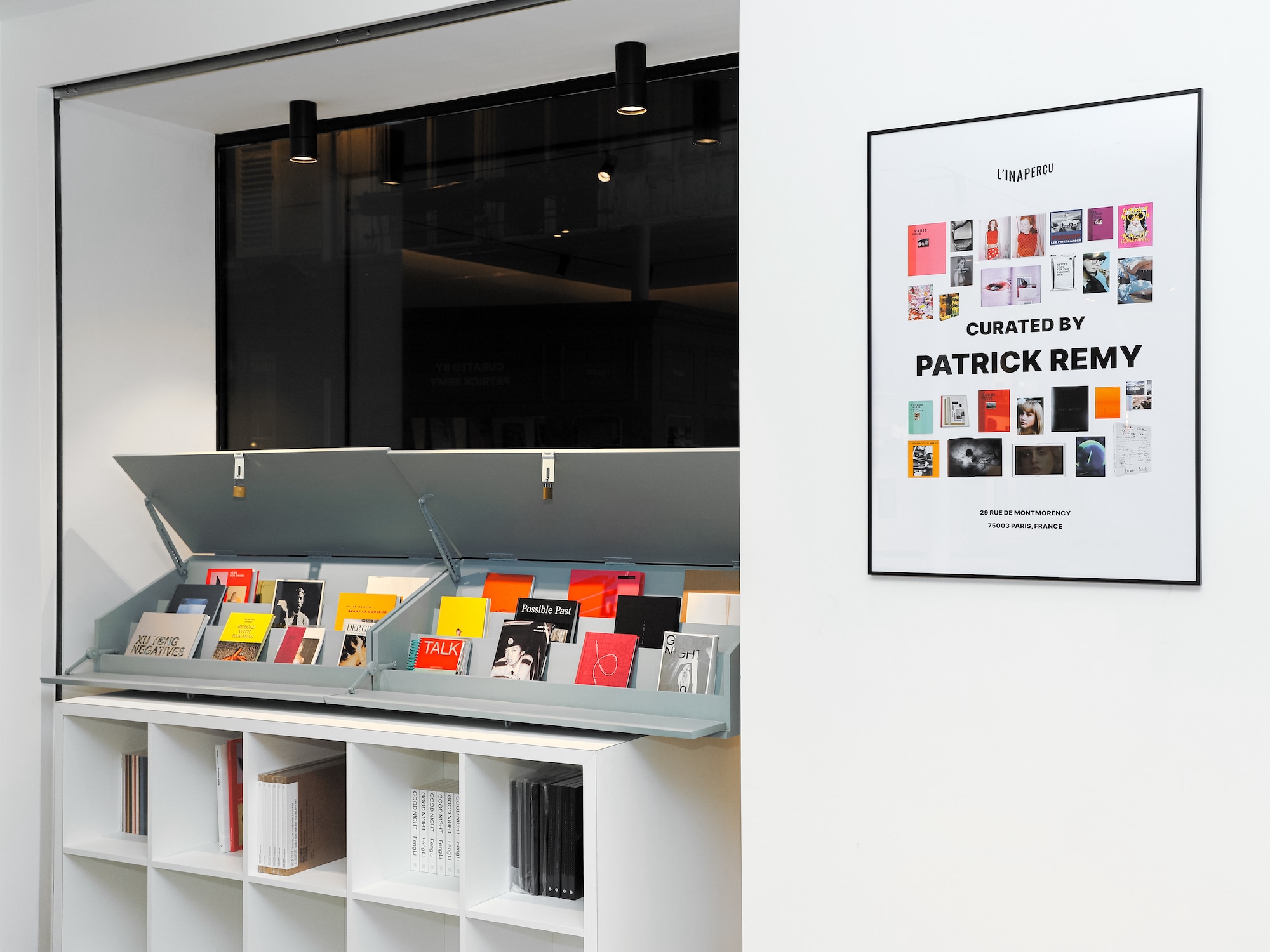
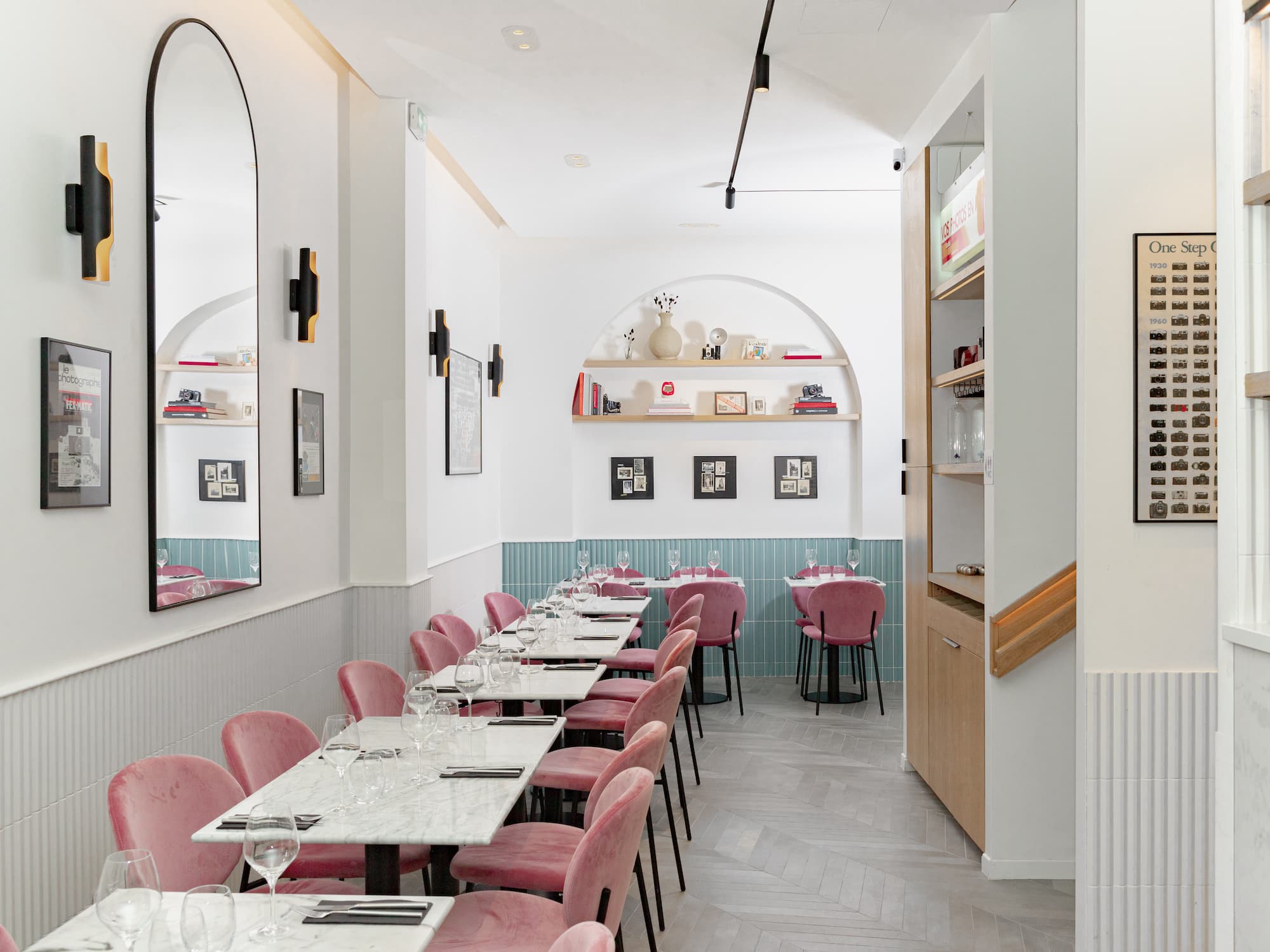
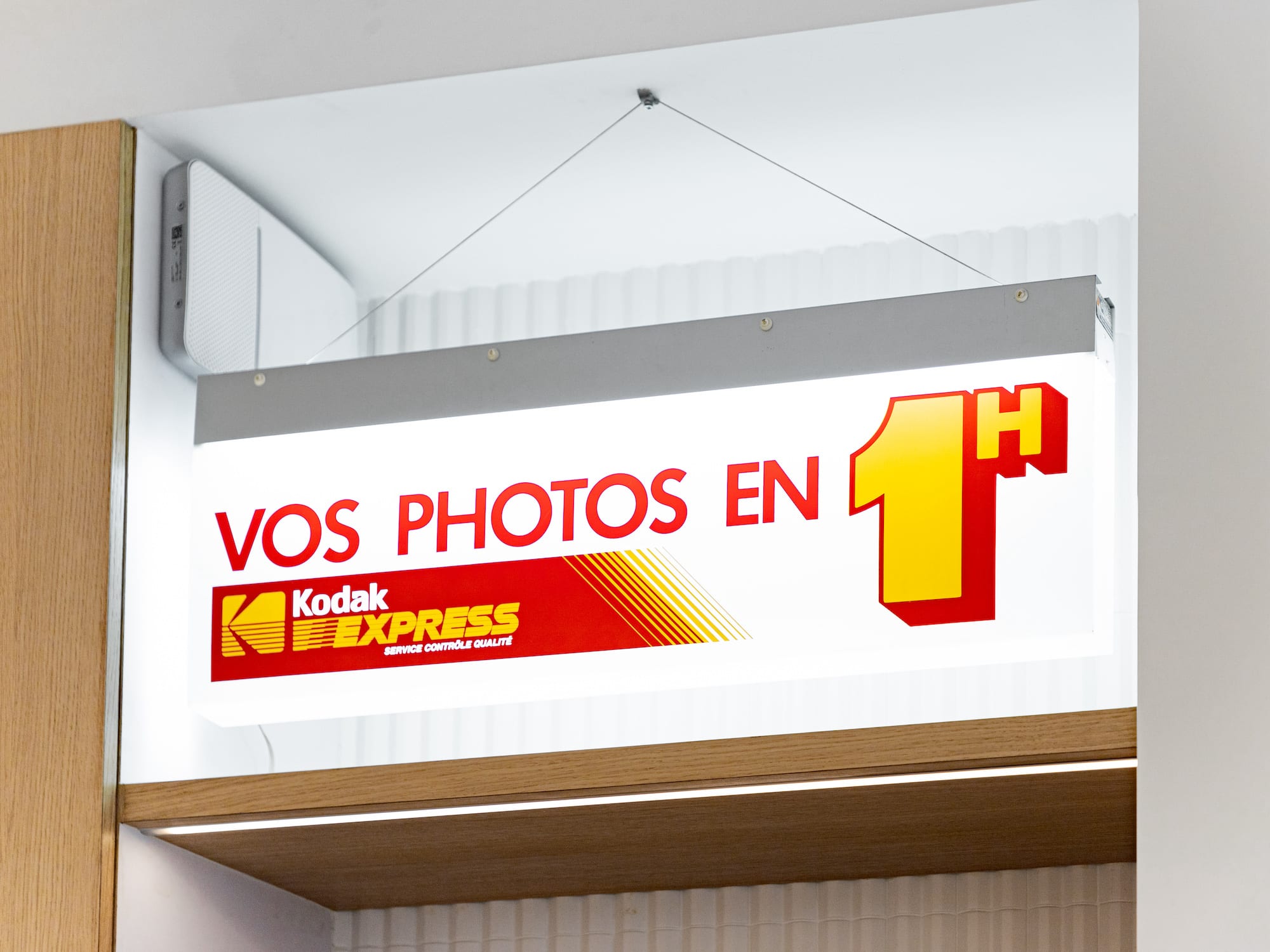
As soon as you walk through the door, it’s like you’re in the literary Paris of the quays of the Seine. Photobooks take up pride of place in the stalls, and a real newsstand features a curated selection of the day. The décor is all celadon blue, the signature color of the place. On the café side, we plunge into vernacular photography of the 1960s. The space is cleverly laid out. The restrooms reproduce the atmosphere of a darkroom, with their red lighting and the photographic bath.
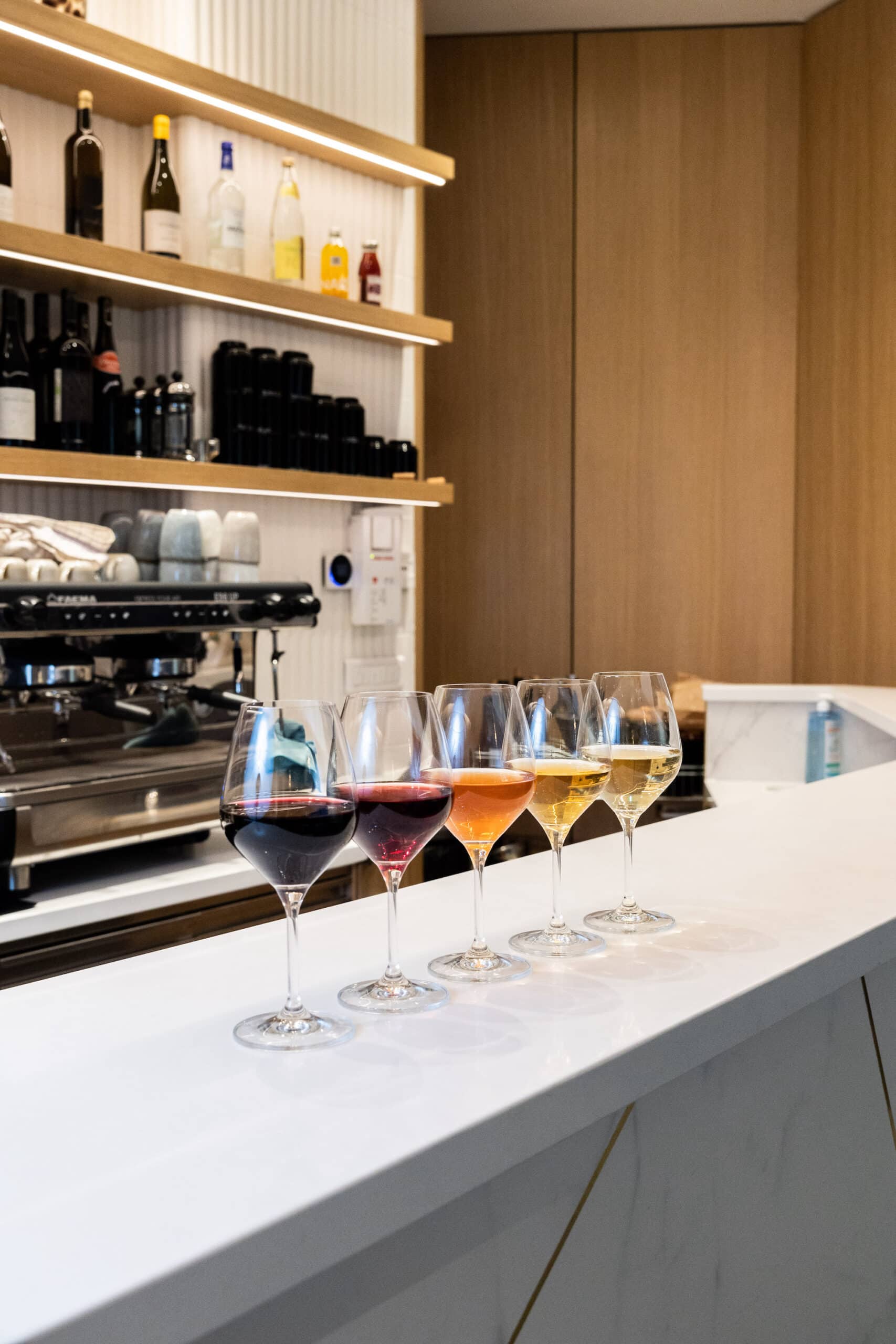
The menu offers original creations that foreground vegetables without being vegetarian: cream of pea soup, red cabbage pickles, smoked duck breast… Each dish is a true work of art: a feast for the eyes and the taste buds.
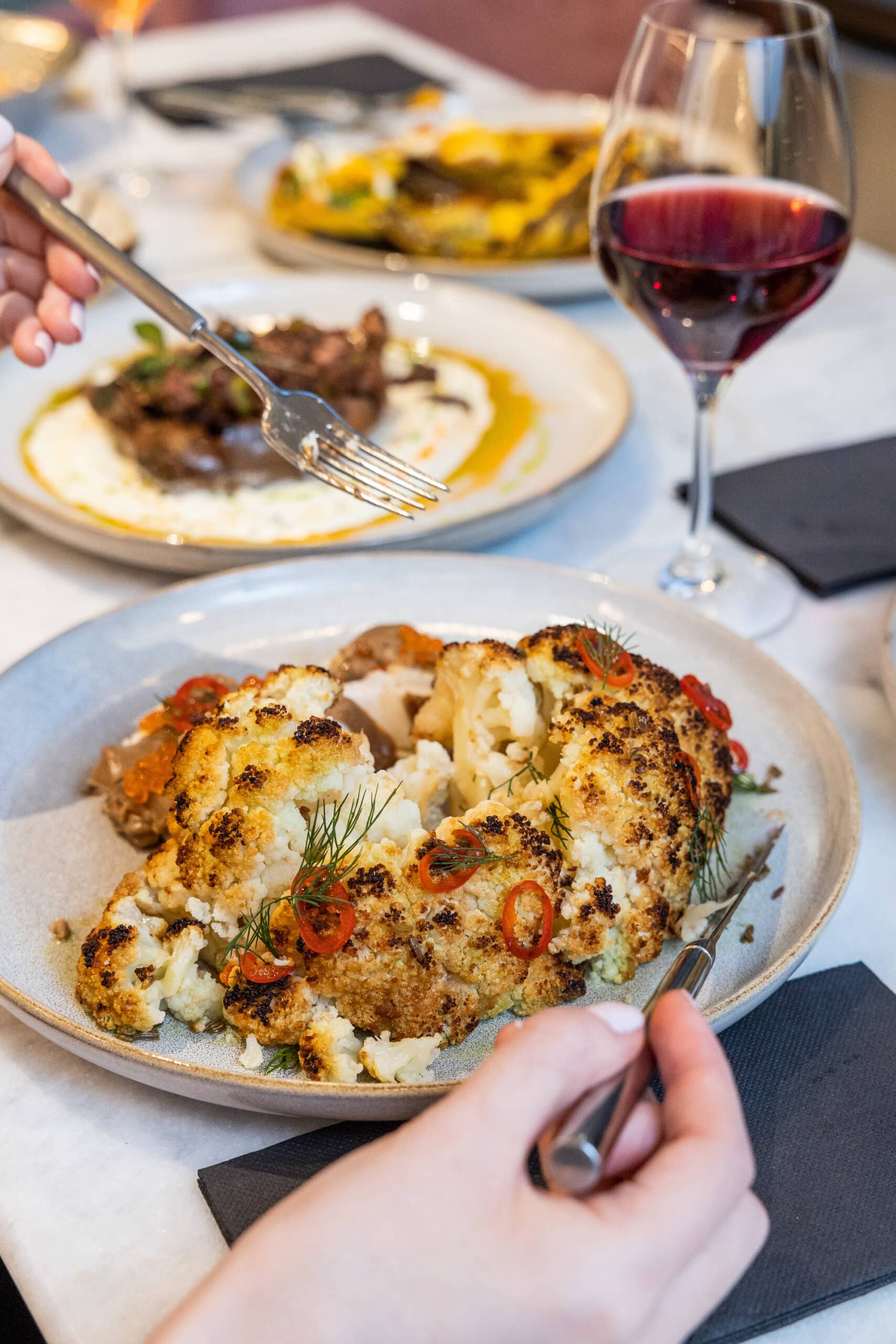
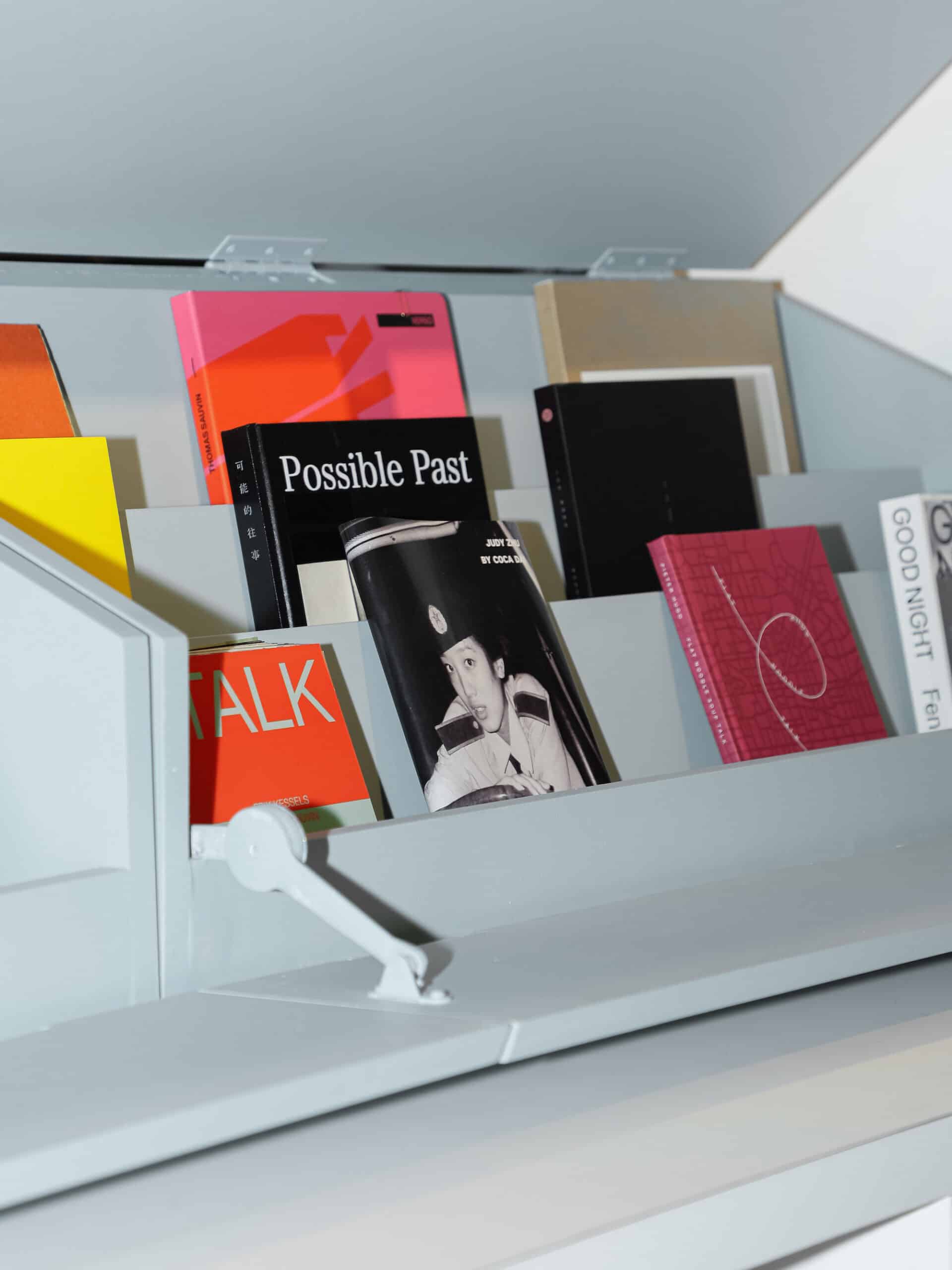
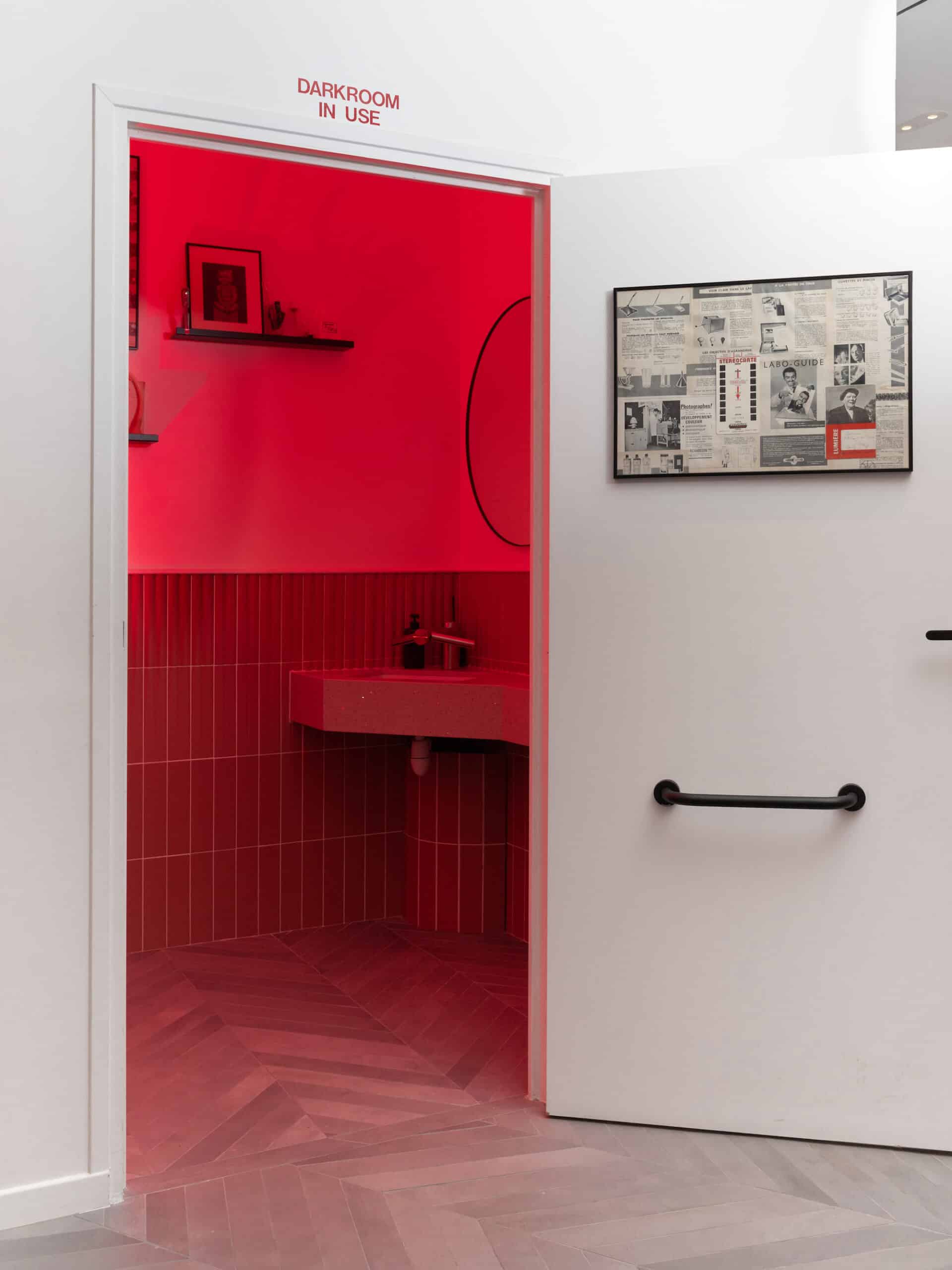
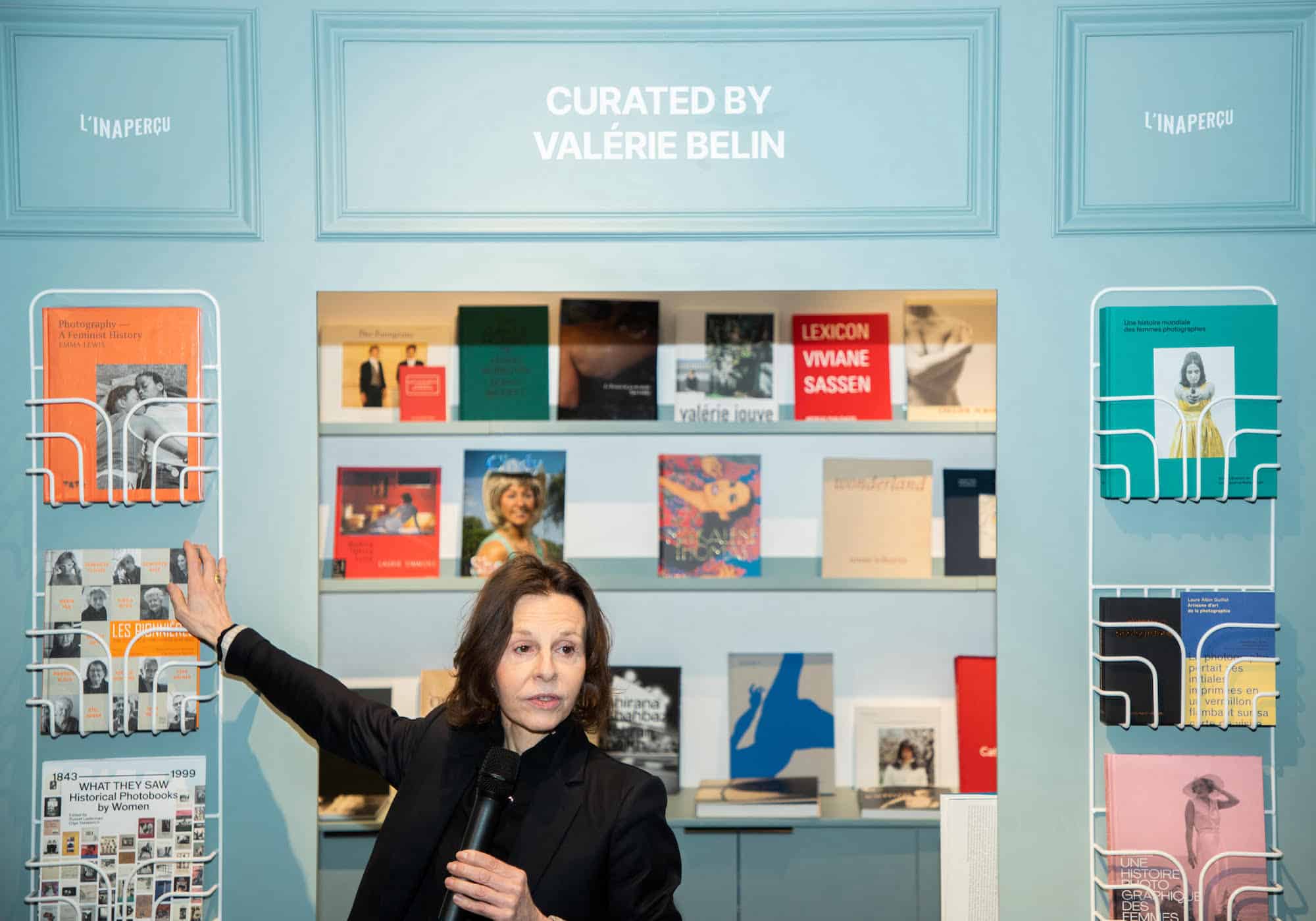
Rare and out-of-print works, collector’s boxes, signed photographic prints… the selection at l’Inaperçu is unprecedented in Paris. The venue adopts a curatorial model, drawing on the French tradition of art photography, publishing houses, and galleries. The latest selection was curated by the photographer Valérie Belin, who handpicked some 60 books celebrating women photographers, including Annie Leibovitz, Sarah Moon, Sabine Weiss, and Tina Barney. Offering carte blanche to the guest photographer, the space is all about idiosyncratic choices. “The more radical the selection, the better,” announces Huang.
Half-bookshop, half-art gallery, l’Inaperçu also hosts cultural events. On April 27, Louis Vuitton held the launch of their latest photography book, Fashion Eye Texas by Sean Thomas. The book is displayed alongside a meticulously picked array of covers, where quality triumphs over quantity. Huang proudly reminds us: “Above all, I’m a collector.”
L’inaperçu, 65 Rue Beaubourg, 75003 Paris. Bookshop open Tuesday to Saturday, 12pm to 7pm. Café and restaurant open Tuesday to Saturday, 12pm to 10.30pm.


Leveraging widely recognized but under-utilized events can help initiatives
that might otherwise get lost in a broad marketing blitz get a foothold.
By Kathleen Willcox
It’s no secret that people love an excuse to open a bottle of the good stuff: New Year’s Eve, anniversaries, birthdays. And if they know that bottle gives back to causes close to their heart? They’re about 70% more likely to whip out their wallet, according to multiple studies.

Many producers and retailers approach their end-of-year marketing plans like William the Conqueror approaching the Battle of Hastings, with a blitz of e-commerce campaigns and event activations — as if their entire bottom line depended on it. Which, in some ways, it does. New Year’s Eve is the biggest day of the year for alcohol stores, with an increase of 159% on December 31, according to marketing firm Womply. December overall, with its range of religious and secular holidays, is the biggest month of the year for alcohol sales, according to data from the Census Bureau.
But what about second-string holidays, such as Halloween? Sales aren’t up as dramatically, but they do rise. A survey of 15,000 California adults for BevMo revealed that 44% of respondents plan to spend $100 plus on alcohol for Halloween, and on Memorial Day in 2019, Americans spent close to $3 billion on alcohol in retail stores alone for the big day, Nielsen reports.
To boost bottom lines, year-round, producers should be reaching out to their base — and beyond — with occasional, strategically planned offers and promotions. We reached out to producers to find out what types of activations and outreach work for them. Read on for a cheat sheet on year-round sales initiatives.
Throw epic annual holiday parties
Certain holidays call for parties. At Napa’s Bouchaine Vineyards, Halloween transforms the winery into an adults-only dance party.
“We definitely get a lot of our younger wine club members out for this, but it’s all ages,” says Bouchaine’s president and winemaker Chris Kajani. “DJ Sal Castaneta — yes, the KTVU weatherman — spins, and the night includes a costume contest, with everything fueled with fun wines and our favorite taco truck.”
Wine club members get a discounted entry at $40, while everyone else pays $60. Typically, about 120 people attend, and Kajani says many people who aren’t signed up for the wine club when they arrive, leave as members. (Club membership currently hovers around 1,500.)
The Booo-chaine Halloween Dance Party is, Kajani explains, a kind of calling card for everything the winery does. Its critically acclaimed premium wines (generally priced between $29-$150) are made with dead-serious intention, but are intended to be consumed with joy and a sense of fun.
“Our wine club does everything from this dance party to blending seminars, falconry demos, Sensory Olympics and grape picking and stomping parties,” he says. “We also love chef-led pairing events. We take both our wine and our fun seriously at Bouchaine.”
The response speaks for itself, with consistent sell-out events that inevitably bring in a new batch of wine club recruits.
Align brand with under-the-radar annual events
Sometimes the opportunity to link an annual event or holiday with a brand is as clear as day.
Quintessential Wines, a fine wine, marketing and sales company based in Napa, is always on the lookout for opportunities like this. This year on the Summer Solstice (June 21), Quintessential will launch its Tropical State of Mind Campaign for Tropical Moscato.

“Summer Solstice is an overlooked holiday, and we want to take advantage of that,” says Louise Jordan, director of communications at Quintessential. “By associating Tropical Moscato with long summer days — on the longest day of the year — we hope to remain top of mind throughout the summer by bringing a tropical feel to summery celebrations.”
The winery is connecting with 10 influencers to promote the campaign, Jordan explains.
“When selecting influencers to connect with Tropical, we utilize a multitude of factors,” Jordan says. “We evaluate their content so that it aligns with brand messaging, as well as general engagement on their feeds. For this campaign, we are targeting wine, cocktail and lifestyle influencers, both paid and organic.”

Paid influencers receive product and payment in exchange for promotions, whereas organic influencers work in exchange for a sample of the product — in this case, a bottle of Tropical Moscato along with a branded package with a pool floatie, cocktail shaker and cocktail recipes.
The social media campaign will also include a sweepstakes and giveaway program at the brand’s handle @tropicalmoscato, in tandem with a program for retail stores (Tropical summer displays) and email blasts advertising a giveaway that includes a Tropical floatie, cocktail set and recipe book.
Leveraging widely recognized but under-utilized holidays also helps initiatives that might otherwise get lost in a broad marketing blitz get a foothold.
Elevate the less-celebrated
There are a host of special days set aside to toast the people who shape and define our loves. Mother’s Day and Father’s Day are days that are (for good reason) relentlessly used as fodder for special sales.

But there are dozens of other special days that could serve as serious — or silly — sales fodder. (Why not offer a special around Hammock Day or National Marshmallow Toasting Day?)
“We are always coming up with creative ways to celebrate every holiday, and we find that having special limited-time product releases and family-friendly public events really work for our demographic,” says Wendy Camacho, chief of customer experience at Keel + Curley Winery in Plant City, Fla. “We release our limited-edition Watermelon Blush, Watermelon Cider and Watermelon Sour Ale in our tasting room on the Fourth of July weekend, and we get a huge response. We do similar seasonal releases all year long.”

Keel + Curley also offers tasting room specials for Teacher Appreciation Week and other weeks that celebrate essential, but less-appreciated workers, and have developed a cult following from those groups of workers as a result, Camacho says.
“We love announcing our limited-time products on Instagram and Facebook, and they get everyone excited to shop online at midnight, or visit our tasting room on launch day,” Camacho adds. “Since creating these limited-releases and building buzz around the midnight sales time, we’ve consistently sold out of every release within a month.”
Focus on unique releases around holidays with a heart
Targeting a very specific demographic and group in both a holiday and cause in one fell swoop is no easy task, but that is just what Crystal Head Vodka is doing. The ultra-premium vodka, created by actor Dan Akroyd and artist John Alexander, has always set itself apart, with its distinct skull vessel, and its production process which entails filtering the product through layers of Herkimer Diamonds.

Crystal Head has also committed itself to supporting the LGBTQ+ community year-round, through partnerships with organizations like Boston Globe Sip the Rainbow and the Human Rights Campaign. The team is stepping it up in June for Pride Month, with a Paint With Pride release, explains Marketing Manager Daniella Vizzari. The limited-edition presentation will feature a colorful, paint-splattered design against a white bottle.
“It will be released globally in select markets,” Vizzari says. “We are working with content creators and bloggers on giveaways throughout the month, and we’ll also be participating in Pride celebrations across the United States, including in Hollywood, Philadelphia and more.”
The Crystal Head team is using the Pride month release to underline its commitment to “diversity, equality, art and expression,” Vizzari explains. “Art is empowerment, inspiring social change and fostering community. The bottle is a piece of artwork and collectible, and we hope it empowers members of the LGTBQ+ community and supporters.”
Previous Pride month releases have sold out, with many preserving the bottle and displaying it on bar shelves, or mantles at home — with Pride.
Market around specific causes
Some wineries have found that aligning themselves with a variety of universally appealing causes can simultaneously highlight a range of deserving nonprofits, but also lift their own sales and find new fans and allies that they might otherwise never discover.
 “Our annual charitable giving campaign, called Frank for a Cause, aims to support deserving charities across the nation,” says Napa’s Frank Family Vineyards founder Leslie Frank. “We often focus on causes that are important to the Frank Family team and to our club members, and we build our campaigns around current events to raise awareness and reach new audiences. From Breast Cancer Awareness Month to Arbor Day, our campaigns connect with consumers who hold these causes dear and let us build new relationships while supporting meaningful change.”

Since launching Frank for a Cause in 2018, the winery has raised more than $125,000 to support seven national nonprofits and numerous local organizations, including Feeding America and The Humane Society of the United States.
Last year’s K9 for Warriors campaign raised $25,000, and the campaign is being extended for 2023. For $85, recipients will get one bottle of 2019 Napa Valley Cabernet Sauvignon, a Frank Family bandanna and a matching Cabernet bottle dog toy; 20% of each package is donated to K9s for Warriors. A little back-of-the envelope map shows that 2022’s initiative sold around 1,470 bottles — a win for Frank Family and K9s for Warriors, which is the nation’s largest provider of service dogs for military veterans.
“At Frank Family, we recognize the opportunity in pairing our wine releases and promotions with causes that have widespread need,” says Frank. “Through this approach, our customers are given the chance to support causes that resonate with them, while enjoying our wines at the same time.”
Can’t argue with the thinking behind that — or the results.
__________________________________________________________________

Kathleen Willcox
Kathleen Willcox writes about wine, food and culture from her home in Saratoga Springs, N.Y. She is keenly interested in sustainability issues, and the business of making ethical drinks and food. Her work appears regularly in Wine Searcher, Wine Enthusiast, Liquor.com and many other publications. Kathleen also co-authored a book called Hudson Valley Wine: A History of Taste & Terroir, which was published in 2017. Follow her wine explorations on Instagram at @kathleenwillcox





