In Interactions with AI, Does Race Matter? | GW Today | The George Washington University

In Interactions with AI, Does Race Matter? | GW Today | The George Washington University

Between human beings, racial prejudices shape all kinds of interactions—from which hairstyles are considered professional to who gets to coach professional sports teams. But as more interactions become partially or wholly digital, and as artificial intelligence becomes a more central part of those digital interactions, how might these prejudices and stereotypes translate into the digital environment? How does perceived race affect human interaction with AI—say, when talking to a consumer-help chatbot with a cartoon human avatar?

An interdisciplinary team led by researchers from the George Washington University is exploring the question, and the answers aren’t necessarily what the layperson might expect. In fact, when interacting with three identical chatbots with different racialized cartoon avatars—one white, one Asian and one Black—consumers actually rated the Black avatar highest on scales of competence, warmth and “humanness.” Customers who interacted with the Black bot also reported higher satisfaction levels, the researchers found.

“We had predicted the opposite, because our predictions were based on humans,” said study co-author Vanessa Perry, associate dean for faculty and research and professor of marketing at the GW School of Business. Perry and Nils Olsen, assistant professor of organizational sciences in the Columbian College of Arts and Sciences, are coauthors of “I’m Only Human?: The Role of Racial Stereotypes, Humanness, and Satisfaction in Transactions with Anthropomorphic Sales Bots,” published this year in the Journal of the Association for Consumer Research. (Their coauthors from other institutions are Nicole Davis of the University of Georgia, Marcus Stewart of Bentley University and Tiffany White of the University of Illinois Urbana-Champaign.)

In the study, participants engaged in a simulated booking of a several-day trip to New York City with the goal of negotiating the best possible price for their stay. The bot they interacted with was functionally identical across all participant groups, but the avatar representing it was stylized with three different color schemes—one suggesting a Black character, one Asian and one white. After the interaction, researchers asked participants about their perceptions of the avatar and how they felt about the negotiation and its outcome.

According to existing stereotype research, Black people are generally perceived as lower in both competence and warmth than white and Asian people. Yet consumers interacting with the bot reported the opposite. Part of that mismatch might be due to an effect known as “expectancy violation,” Perry and Olsen said.

“Stereotypes cause us to form particular expectations, and when some cue or some signal is not consistent with those expectations, then it can cause a more extreme and opposing reaction to the expectation,” Perry explained. “It is still relatively rare to have Black males in positions of negotiation representing corporations—that’s just the demographic reality of that—and there’s some evidence suggesting that when you find people in unexpected roles, then this can cause stereotypes to flip.” Because Black bots are more unusual or unexpected in an AI setting, then, their mere digital presence may increase perceptions of competence and humanness.

[embedded content]

An element of status might also play into this particular expectancy violation. Since this bot represented the owner of a short-term rental property, participants might have inferred that they were speaking with a homeowner. If participants considered Black people less likely to own property, expectancy violation would suggest they might be particularly impressed by this “homeowning” bot.

Olsen and Perry said their next step will be to expand their study of the different demographic factors that could play into AI perception, expanding from race to gender and even educational background. Would consumers be more impressed by a bot avatar wearing a Harvard t-shirt than one rocking state university colors? The field is a rich one, especially as more companies incorporate AI into consumer-facing roles.

While the internet once seemed to provide a level demographic playing field—one in which socioeconomic status, race, gender, age and other areas of bias were not so legible—companies are now “strategically reintroducing” certain demographic characteristics, Olsen pointed out. And the implications of that are still unknown. If consumers tend to trust AI more when associated with a Black character, will companies start to introduce more Black chatbots? If they do, does that have implications for the treatment of Black people? Does satisfaction with a corporate bot translate into respect for a human being who shares its racialized characteristics?

Whatever the case, Olsen and Perry suspect that as bots become more widely used, human interaction—and human decision-making—are likely to become luxurious amenities rather than baseline expectations. And that might be concerning.

“The human is still the last bastion of being able to make very creative, unique judgments that can bring a lot of complex dynamics into play and understand all kinds of social contexts,” Olsen said. And as digital and human spaces become more and more interconnected, “it becomes way, way more important that we continue to have flexible, diverse, dynamic human beings somewhere in that food chain.”


The George Washington University is at the forefront of artificial intelligence research, from professors who explore the technology’s use in the classroom to thinkers examining the promise and challenge of an AI-integrated future. In May, GW’s status as a leader in the field was cemented by its selection as co-lead institution of the National Science Foundation’s $20 million Institute for Trustworthy AI in Law and Society (TRAILS). Follow GW Today for more stories on how this technology of the future is part of the university’s present.

Capturing the Essence: Why Dog Photography With Families Is a Golden

Capturing the Essence: Why Dog Photography With Families Is a Golden

In a world full of a little bit of crazy one thing remains constant – our unwavering love for our furry companions. Dogs hold a special place in our hearts, becoming cherished members of our families. They warm our hearts from being mischievous mutts to regal pedigrees, our four-legged friends bring joy, companionship, and a whole lot of slobbery kisses.

As a photographer, tapping into the gold mine of dog photography with families can be a rewarding, fun, and profitable venture. After all, who can resist capturing the boundless love between a family and their beloved fur baby?

Dogs have an incredible ability to bring out genuine emotions and create lasting memories. Whether it’s a playful romp in the park, a quiet snuggle on the couch, or a delightful moment of chaos during mealtime, dogs effortlessly infuse life into every frame. When you combine these precious moments with the love and laughter of a family, you have a recipe for pure photographic gold.

When a family welcomes a dog into their home, they aren’t just gaining a pet; they are bringing in a new family member. The emotional connection between humans and dogs is unparalleled. It’s a bond that deserves to be celebrated and immortalized in beautiful photographs. As a dog photographer, you have the power to capture those fleeting moments, freezing them in time for families to treasure for generations to come.

Why is dog photography with families such a profitable business? The answer is simple; almost everyone loves their dogs. For many families, their furry companions are their children. Just like parents cherish photographs of their human kids, they want to proudly display images of their fur babies too. Dog photography has evolved from a niche market to a booming industry, fueled by the immense love and pride people have for their canine companions. People love their dogs — period, end of story — and as a photographer, you have the unique ability to capture those treasured memories that families can treasure forever. 

To succeed in this golden opportunity, a professional yet fun approach is key. Set yourself apart by creating a welcoming and relaxed environment during your sessions. Let your clients know that their dogs are not just subjects but stars in their own right. Encourage the whole family to participate, capturing candid interactions and spontaneous laughter. After all, some of the best moments happen when everyone is simply being themselves.

When it comes to dog photography, creativity knows no bounds. Experiment with various settings, props, and lighting techniques to capture the unique personality of each furry friend. From action shots in the great outdoors to intimate portraits in cozy corners, the possibilities are endless. Use your technical skills to compose visually stunning images, but always remember to embrace the playful and lighthearted nature that dogs bring to the table.

Building a profitable business in dog photography requires more than just technical prowess; it demands a genuine passion for both dogs and people. Take the time to connect with your clients, understanding their individual stories and the role their dogs play in their lives. By immersing yourself in their world, you can create photographs that not only capture beautiful moments but also evoke a deep emotional connection. Don’t be intimidated if you have never done this before. For anyone who has photographed family sessions with 2 and 3-year-olds and kept their sanity would do just fine photographing dogs. Just remember dogs do not wear diapers, so you will have to be ready to clean up their messes if they are in a studio, and if you are on location be sure to not leave any surprises for someone else to find. 

In the realm of dog photography, there is a gold mine waiting to be discovered. Families adore their dogs, and they want nothing more than to showcase their furry companions in stunning photographs. As a professional dog photographer, you have the opportunity to turn their heartfelt emotions into a thriving business. So, grab your camera, open your heart, and embark on a journey that celebrates the extraordinary love between families and their dogs. After all, who could resist the allure of capturing that magical bond, one click at a time?

Nearly Two Dozen Exuberant Works by Ukrainian Folk Artist Maria Prymachenko Go On View in the U.K. For the First Time

Nearly Two Dozen Exuberant Works by Ukrainian Folk Artist Maria Prymachenko Go On View in the U.K. For the First Time

“Flowers with birds” (1987). All images © Maria Prymachenko, courtesy of Saatchi Gallery, shared with permission

“Maria was very wise, kind, determined, and open to the world,” says the granddaughter of Ukrainian self-taught artist Maria Prymachenko (1908-1997). “She incorporated her worldview and philosophy into the paintings she created.” Prymachenko’s vibrant and fantastical artworks (previously) combined her inner thoughts with observations of the world around her, depicting symmetrical floral arrangements, wildlife, and everyday scenes. Her focus on the beauty of daily existence takes center stage at Saatchi Gallery in London next month, marking the first time these pieces, which have been carefully preserved by the artist’s family for half a century, have been exhibited in the U.K.

Saatchi partnered with the Prymachenko Family Foundation and the Ukrainian Embassy to organize this special selection of 23 works, many of which were originally intended for a children’s book and often focus on portrayals of the artist or women spinning fiber on a wheel, herding horses, or sitting outside with baby in a buggy. Many are double-sided, like “Beast of Polissia,” which includes a handwritten narrative on the reverse.

Dozens of Prymachenko’s paintings were once held in the Ivankiv Historical and Local History Museum just outside of Kyiv. When Russian forces attacked the village last year, totally destroying the museum, local residents were able to rescue her works from the ensuing fire. The Prymachenko Family Foundation is currently creating a new museum complex on the site of the artist’s house in Bolotnya, the village where she spent her entire life, which will include a residency for contemporary artists. Foundation partner and co-curator Natalia Gnatiuk says, “It will be a place of strength, capable of welcoming guests from around the world after Ukraine’s victory.”

Maria Prymachenko at Saatchi Gallery opens July 13 and runs through August 31.


A bright painting of a stylized lion-like creature.

“Beast of Polissia”

A hand-written note in Ukrainian with two decorative flower motifs.

Reverse of above: “On October 15, 1935, I started painting near the Lavra. In January, I had a surgery. I learned from the newspaper that I received a First Degree Diploma and a thousand karbovanets. The doctors congratulated me and made three more surgeries. In seven months I had a device made for 703 karbovanets. I learned how to use it, and now I wear it. A new device will be made for 1908 karbovanets. I continue to paint. M.P. Beast of Polissia”

A bright painting of a stylized figure riding a horse.

“I herded horses instead of my father. M.P.” (1982)

A bright painting of a stylized vase of flowers.

“Roses to grain growers” (1987)

A bright painting of a stylized woman spinning yarn, and a cat sits on the bench.

“I was spinning on the spinning wheel. M.P.” (1982)

A bright painting of a stylized house and its residents in a Ukrainian village.

Untitled

A bright painting of a stylized house with birds on top of it, and a woman sits outside with her baby in a carriage.

Untitled

A bright painting of a stylized pot of flowers.

“Flowers in pots” (1982)

Do stories and artists like this matter to you? Become a Colossal Member today and support independent arts publishing for as little as $5 per month. The article Nearly Two Dozen Exuberant Works by Ukrainian Folk Artist Maria Prymachenko Go On View in the U.K. For the First Time appeared first on Colossal.

Angelbird CFexpress Type B SE and SX memory cards NEW higher capacities & improved performance

Angelbird CFexpress Type B SE and SX memory cards NEW higher capacities & improved performance
2023 Angelbird Photography CFexpress Type B SE 1 TB SX 330 GB Card Reader 01

Angelbird Technologies has expanded their entry-level CFexpress Type B SE and SX memory card lines with an all-rounder capacity 1 TB SE card capable of 8K+ RAW production and a 330 GB SX card engineered for limitless burst photography. Both cards offer gateway access to industry-leading technology that invites next-generation content creators and professionals to upgrade to CFexpress Type B technology.

1 TB AV PRO CFexpress B SE

AV PRO CFexpress B SE 03 1TB Web 20230508

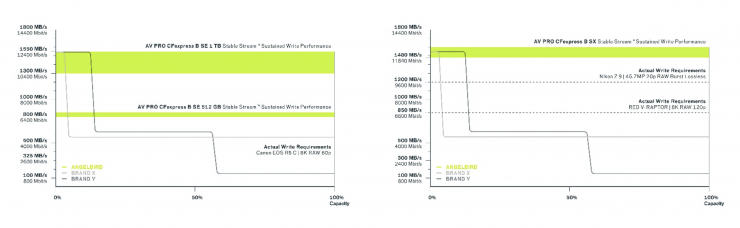
Angelbird’s NEW 1 TB AV PRO CFexpress B SE card is built on advanced technology with performance exceeding the data demands required for recording up to 12K+ RAW. By sustaining high write speeds of 1300 MB/s.

The new higher-capacity AV PRO CFexpress B SE card puts first-class, uninterrupted recording quality into the hands of an exciting new pool of creative talent for even more production possibilities. Visual creators of all levels can capture seamless high bitrate video and detailed images without hesitation of missing the shot due to limited capacity. The 512 GB AV PRO CFexpress B SE card has been firmly established as one of Angelbird’s most popular media cards since its introduction last year. With Stable Stream™ uninterrupted sustained write speed of 800 MB/s, consistent recording performance is maintained throughout the capacity of the card, with no lags or speed throttle. The exceptional recording

AV PRO CFexpress B SX

AV PRO CFexpress B SX 04 330GB Web 20230508 copy

The
NEW AV PRO CFexpress B SX  330 GB
joins the AV PRO CFexpress B SX 160 GB, offering ideal capacities and
critical speed for continuous burst photography and high-res video clips.

Angelbird states the cards are engineered with low latency and a sustained write speed of 1480 MB/s, capable of capturing multiple high-resolution images without hitting buffer limits or experiencing lag. Get extended card endurance for professional nature and events photography with high-speed performance that exceeds data needs of high bitrate video clips and continuous mode photography in 12K+ RAW.

Screen Shot 2023 06 27 at 8 02 34 AM

Stable Stream™ Sustained Speed Performance ensures uninterrupted read/write performance for the entire capacity of the card.

Key features

  • Y2 Processor – Exceptional processing power for RAW video and photo content creation.
  • Advanced Thermal Management – Eliminates potential damage or loss of frames, protecting card and content during a potential camera overheating event triggered by long-duration shooting or continuous burst photography.
  • Minimal Power Drain – Bus-powered components place minimal drain on the camera´s battery supporting improved run time.
  • Power Loss Protection – Signals a safe shutdown to protect against content loss or damage in the event of a sudden power loss.
  • Rock-Solid Build Quality – Protection from moisture, x-ray/magnets, shock, dust, and extreme operating temperatures of -10 °C to 70 °C and
  • storage temperatures of -20 °C to 85 °C.
  • Sticker-Free™ – Smooth sticker-free card surface. 
AV PRO CFexpress B SE 1TB and SX 330GB 01 Web 20230605

Pricing

AV PRO CFexpress B SE 1 TB
299.99 EUR/USD 

AV PRO CFexpress B SX 330 GB
299.99 EUR/USD
*Prices excl. VAT 

Paul McCartney’s rediscovered photos show Beatlemania from the inside

Paul McCartney’s rediscovered photos show Beatlemania from the inside

LONDON (AP) — Is there really a new way to look at The Beatles, one of the most filmed and photographed bands in history?

Yes, says Britain’s National Portrait Gallery, which is providing a fresh perspective with an exhibition of band’s-eye-view images that Paul McCartney captured as the group shot to global fame.

Gallery director Nicholas Cullinan said the exhibit, subtitled “Eyes of the Storm,” is a chance “to see, for the very first time, Beatlemania from the inside out.”

Paul McCartney says artificial intelligence has been used to extract John Lennon’s voice from an old demo to create “the last Beatles record,” decades after the band broke up.

The seed for the exhibit was sown in 2020, that year of lockdown projects, when McCartney dug out 1,000 forgotten photos he’d taken in 1963 and 1964, as the Fab Four went from emerging British celebrities to world megastars. He and his team asked if the National Portrait Gallery was interested in displaying them.

“I think you can probably guess our response,” Cullinan said as he introduced the exhibition to journalists in London on Tuesday.

The show includes 250 photos taken in England, France and the United States that illustrate The Beatles’ journey from cramped dressing rooms in provincial British theaters to stadium shows and luxury hotels.

“It was a crazy whirlwind that we were living through,” McCartney writes in a note present at the start of the exhibit. “We were just wondering at the world, excited about all these little things that were making up our lives.”

Rosie Broadley, who curated the show, said the gallery soon realized the trove “wasn’t just interesting pictures by a famous person.”

“It’s actually telling an important story about cultural history — British cultural history and international cultural history,” she said. “This is a moment when British culture took over the world for a while.”

The display begins in late 1963, shortly after McCartney acquired a Pentax 35mm camera. The early black-and-white images include portraits of The Beatles, their parents, girlfriends, crew and colleagues, including manager Brian Epstein.

Broadley said these images depict “a parochial postwar British celebrity” — concerts in provincial cinemas alongside now-obscure bands like Peter Jay and the Jaywalkers, 16-night variety-style Christmas shows at London’s Finsbury Park Astoria.

Cullinan said the photos convey a “sense of intimacy” missing from professional photos of the band.

“This wasn’t The Beatles being photographed by press photographers of paparazzi but peer-to-peer,” he said. “So there’s a real tenderness and vulnerability to these images.”

In January 1964, McCartney took his camera with the band to Paris, capturing the city at the height of its French New Wave cool. While there, The Beatles learned that “I Want to Hold Your Hand” was a No. 1 hit in the United States.

Within days, they were on a plane to New York, where their Feb. 9 performance on “The Ed Sullivan Show” was watched by 73 million people, and nothing was ever the same again.

The U.S. section of the exhibit shows the band’s increasingly frenetic life. Many of the shots were taken from planes, trains and chauffeur-driven automobiles and show crowds of screaming fans and rows of police. Sometimes, McCartney turned his lens back on the newspaper and magazine photographers looking at him.

One striking shot was taken through the back window of a car as a crowd chased the band down a Manhattan street, a scene echoed in the band’s first feature film, “A Hard Day’s Night,” made later that year.

McCartney also took pictures of strangers – a girl seen through a train window, ground crew at Miami airport goofing around.

The band’s final stop was Miami, where McCartney switched to color film. The results, Broadley said, “look like a Technicolor movie, like an Elvis film.” The photos show John, Paul, George and Ringo swimming, sunbathing, water skiing, even fishing. From a hotel window, McCartney photographed fans writing “I love Paul” in giant letters in the sand.

McCartney, 81, spent hours talking to curators about the photos and his memories as they prepared the exhibit, one of the shows reopening the National Portrait Gallery after a three-year renovation.

The images were preserved for decades on undeveloped negatives or contact sheets, and McCartney had never seen them in large format until the gallery had them printed.

The project was not without risks. McCartney acknowledges he’s not a professional photographer – though his late wife, Linda McCartney, was, as is their daughter Mary McCartney. Some of the photos are blurry or hastily composed. But what they lack in technique they make up for in spontaneity.

Broadley said McCartney “was nervous about showing some of the less formally composed ones or the less in-focus ones.”

“But I think we persuaded him that we liked those because of the story that they tell,” she said. “It’s quite nice to have those ones where they’re sitting around with a cup of tea before the event.”

___

“Paul McCartney Photographs 1963-64: Eyes of the Storm” is on at the National Portrait Gallery in London from Wednesday until Oct. 1.

Inspiring 815: Local painter inspires artists, highlighting Oregon History

Inspiring 815: Local painter inspires artists, highlighting Oregon History


Chloe Metz

OREGON (WREX) — Chloe Metz, an Oregon native, is on a mission to bring Oregon’s rich history to life. She wants to inspire other artists to pursue a full time career in art, is painting murals in the city and plans to have an art demonstration in September at the Oregon Coliseum. 

“We’re starting to celebrate just how amazing this town is,” Metz said. “I feel like Oregon is just starting to blow up with new businesses [and] new attractions. So this is really just celebrating all of the growth that Oregon has right now.”

After leaving Oregon for college, Metz did not anticipate returning to the city she calls home, much less living off of her art full time. 

“Whenever you’re having those lulls in your career, don’t take that as ‘you’re done.’ Just keep pushing through that,” Metz said.

“Keep grinding because this is a career that doesn’t come easily. You’re working all hours of the day [and] people are reaching out to you when you’re on vacations.” 

Now she encourages other artists to chase their dreams, after painting her first mural in the city, being scheduled to paint two more, and having a partnership with the ‘Coliseum of Art, Antiques, and Americana’ (CAAA), being the featured artist of the month, coming in September. 

“When I discovered Chloe’s art [while] coming into Oregon, I [knew] I needed to track this young woman down,” the Executive Director for CAAA, Mike Glenn, said.

“I liked her talent, but it’s so nice to see that that creativity was blossomed in a town like Oregon. [She] is in the school system and inspiring these young people and motivate them. It’s fun to see that to see that she’s doing this full time. I want to help showcase that because then we can inspire other people.”

“I think the first [mural] I did was proving a point to myself that I could do it.” Metz said. 

“It’s scary to do a mural, but I took that risk.” 

If you are interested to learn more about Metz, and her artwork, you may visit her Instagram or her website. If you’re looking to learn more about upcoming events at the CAAA, you may visit their website

Paul McCartney Photographs 1963-64 at the NPG: Beatlemania up close

Paul McCartney Photographs 1963-64 at the NPG: Beatlemania up close

Over 250 Pentax 35mm photographs the Beatles legend took in the four months between November 1963 and February 1964 – just as their star ascended at home and Beatlemania struck America – have been selected for the Paul McCartney Photographs 1963-64 exhibition.

They come from over 1,000 shots unearthed, all but forgotten, from McCartney’s personal archive in 2020. Between them, and the accompanying photo-book 1964: Eyes of the Storm, they provide a wonderfully candid trip inside a phenomenon, mid-explosion.

Taking in the noirish focus and filmic framing of McCartney’s shots of early support acts and his nonchalant, cigarette-drooling self-portraits in hotel mirrors, you can better understand the affinity he’d go on to have with his first wife, the photographer Linda. And there are plentiful insights into the easygoing nature of the Hamburg-hardened Fab Four, found lounging in dressing rooms or guesting on Jukebox Jury largely unfazed by the gathering storm.

Amid plenty of pensive Ringos, awkward Georges and cheery Brian Epsteins, John Lennon is a flitting figure, sometimes serious and bespectacled, sometimes playful, clowning through his pre-show grooming routine or gooning to camera.

imageJohn Lennon in Paris , January 1964″ height=”1629″ width=”2490″ srcset=”https://static.standard.co.uk/2023/06/26/13/%20Paul%20McCartney%20P1964-8_18a.tif?width=320&auto=webp&quality=100&crop=2490%3A1629%2Csmart 320w, https://www.mecreates.com/story/news/wp-content/uploads/2023/06/20Paul20McCartney20P1964-8_18a.jpg 640w, https://static.standard.co.uk/2023/06/26/13/%20Paul%20McCartney%20P1964-8_18a.tif?width=960&auto=webp&quality=100&crop=2490%3A1629%2Csmart 960w” layout=”responsive” class=”i-amphtml-layout-responsive i-amphtml-layout-size-defined” i-amphtml-layout=”responsive”>

John Lennon in Paris , January 1964

/ Paul McCartney

Side-of-stage shots from 1963, taken on McCartney’s Pentax by crew members, offer an electric new angle on their live show and, backstage, moments of largely headwear-based fun emerge: George wearing a stack of top hats, or Ringo and John sporting Napoleonic bicorns.

As the media tumult descends in Paris in 1964 you can see the showmen in them leap to life, while the Paul’s-eye-view of The Beatles’ first visit to the US is a priceless historical document. From inside the chaos we witness hordes of blurry girl fans – some dressed as beauty queens; one, if you look closely enough, holding a chimpanzee – swarming over the roofs and runways of JFK airport or crammed against barriers outside New York’s Plaza Hotel. Portraits of bemused, overrun cops. Fans, through the rear window, chasing the band’s car through Manhattan on foot.

What we’re looking at is the first generation of teenage pop fandom, having cut its teeth howling at Elvis’s every gyration, now losing itself in full-blown hysteria and pushing at its limits, clawing at the boundary between fan and idol. Meanwhile, behind the camera, The Beatles are also fathoming how global superstardom works – or can work – in any sort of un-claustrophobic manner, bewildered by all their dreams coming true overnight.

image‘The crowds chasing us in A Hard Day’s Night were based on moments like this. Taken out of the back of our car on West Fifty-Eight, crossing the Avenue of the Americas.’ New York, February 1964 ” height=”1370″ width=”2000″ srcset=”https://static.standard.co.uk/2023/06/26/14/P1964-10-10_DS_cover%2012.54.10.jpg?width=320&auto=webp&quality=100&crop=2000%3A1370%2Csmart 320w, https://www.mecreates.com/story/news/wp-content/uploads/2023/06/P1964-10-10_DS_cover2012.54.10.jpg 640w, https://static.standard.co.uk/2023/06/26/14/P1964-10-10_DS_cover%2012.54.10.jpg?width=960&auto=webp&quality=100&crop=2000%3A1370%2Csmart 960w” layout=”responsive” class=”i-amphtml-layout-responsive i-amphtml-layout-size-defined” i-amphtml-layout=”responsive”>

‘The crowds chasing us in A Hard Day’s Night were based on moments like this. Taken out of the back of our car on West Fifty-Eight, crossing the Avenue of the Americas.’ New York, February 1964

/ Paul McCartney

As Paul switches his film to colour in Miami, a surreal tone sets in. There’s “shy one” George accepting a cocktail from a bikini-clad waitress in the very image of first-generation rock star luxury – an image the 1970s would solo itself senseless trying to emulate – but with the distant expression all four share as they calmly try to fish, swim or lounge on Miami Beach while police hold back baying hordes. The modern pop dynamic is born in these pictures and, coloured by the seismic cultural impact of the era, it’s both humanising and beautiful to watch.

National Portrait Gallery, June 28 to October 1; npg.org.uk

Take 5: Gradient Ceramics, a Salt Sphere, Designer Sit/Stand Desk + More

Take 5: Gradient Ceramics, a Salt Sphere, Designer Sit/Stand Desk + More

Twice a month we’re inviting one of the Design Milk team members to share five personal favorites – an opportunity for each of us to reveal the sort of designs we use and appreciate in our own lives from a more personal perspective. Editor-in-Chief Caroline Williamson returns this week for our Take 5 series.

I’ve recently come across the porcelain tableware of Simone Doesburg, aka @graceofglaze on Instagram. Doesburg hand makes each piece in her studio in Ultrecht, The Netherlands. The colors and gradient glazes are stunning and have me re-thinking my bland white plates completely. The color pairings are so unique and unexpected but work delightfully well, like Blue + Berry, Purple + Marigold, Soft Pink + Lime, etc. Whether a full set or a few pieces, her work would make for a very aesthetically pleasing table setting.

angled view of modern home office with minimalist desk with brown leather rolling chair

The longer I’ve worked from home since the pandemic began, the more I’ve realized just how bad my home office setup is. I have an old IKEA desk paired with a great task chair I love, but when you are required to sit at your desk for 10+ hours per day, no chair is 100%. Since sit/stand desks have been introduced I haven’t been that excited to add one to my own space as they’ve always looked like they should be in a corporate setup, not my actual living room. And if I’m going to have to look at it all the time, I want it to look good as well. When this Geiger desk popped on my radar, I had to do a deep dive because I could not believe that it was capable of rising mechanically. There are no visible cables, motors, or buttons to tip anyone off to its capabilities and that’s what I love. I’m also in love with the simplicity of the design and just how beautiful it is, which is no surprise since BassamFellows designed it. At $4,995 for the displayed setup (with 2 drawers), it’s a bit outside of my budget but a girl can dream.

down angled view of person looking down at LEGO Pac-Man Arcade built

Perhaps I’m dating myself but when I was really little, I loved playing PAC-MAN at arcades and pizza joints. The game made me equal parts anxious watching the determined ghosts edging towards my chomping mouth and calm as I methodically guided the yellow icon through the halls of the maze. I couldn’t wait to start a new game when the ghosts got me. And since I’m also an AFOL (Adult Fan of LEGOs), per my sister, it seems only natural to join two of my childhood favorites into one nostalgic gem. I’m still baffled by the type of person who can visualize how to assemble tiny bricks together to create an actual design. They’re toys but they’re architectural toys that come together piece by piece much like any type of design would. LEGO designers do not get enough credit but they have my complete respect!

flat display of two-tone ballpoint pens and cases

Now on their 4th collaboration, the Swiss brand Caran d’Ache and Paul Smith recently released six new two-tone 849 ball point pens in new color combinations that will make you want to pick up a pen again. As someone who has spent a lifetime on the hunt for the perfect pen, I can attest to the quality of Caran d’Ache’s writing instruments. Throw in the iconic British designer Sir Paul Smith and it’s a solid collaboration. I haven’t tried this particular pen style – they’re more of an investment piece or great gift idea – but they’d look great on any desk and no doubt make writing longhand that much more desirable. With these new color combinations, it’s very tempting to splurge.

down angled view of maple salt sphere on counter

Lately, I’ve been on the hunt for a salt cellar, something that I can keep out on the counter and grab when I want a pinch of salt or pepper instead of a shake or grind. I saw a photo of it and immediately began to hunt down who made it as I loved the simplicity of it as well as its sculptural appearance. The fluted base seems perfect for pepper, while the magnetic swivel top closes to hold the salt within its perfect sphere. It comes in Walnut but I’m really loving the Maple as it matches my cabinets. They’re $50 which I think is well worth the price considering how beautiful it is as an object.

This post contains affiliate links, so if you make a purchase from an affiliate link, we earn a commission. Thanks for supporting Design Milk!

Caroline Williamson is Editor-in-Chief of Design Milk. She has a BFA in photography from SCAD and can usually be found searching for vintage wares, doing New York Times crossword puzzles in pen, or reworking playlists on Spotify.

PEELSPHERE: Exploring the Potential of Banana Leather

PEELSPHERE: Exploring the Potential of Banana Leather

Food has always been a canvas for creativity and innovation. It’s a medium that allows us to have fun and explore new possibilities. But it’s not just about playfulness; it’s also about making a positive impact on our planet. As designers and consumers, we have a responsibility to prioritize circular economy materials and products in our creations and purchasing decisions. One company that is leading the way in sustainable innovation is PEELSPHERE®, with their groundbreaking use of banana peels and other fruit and vegetable waste to create a durable and versatile leather-like material.

After years of witnessing the staggering amount of food waste generated by the food industry, it’s no surprise that a company like PEELSPHERE® grabbed my attention.

food in banana peels held in swings on structure

Founder, Youyang Song, pushed to develop a unique and innovative material from a closed-looped ecosystem. Their biodegradable material can be molded into a variety of shapes and sizes, making it an excellent alternative to traditional plastics. As a designer, it’s exciting to see companies like PEELSPHERE pushing the boundaries of what’s possible, and I’m hopeful that their faux leather material will inspire many designers to incorporate circular economy materials into their future work as it meets both their aesthetic and functional requirements.

angled view of banana peel boats on slings

Having undergone rigorous testing for strength, durability, and flexibility, it has proven itself worthy of various applications. Resilient against heat and moisture, it opens up possibilities for a wide range of products, including fashion, furniture, and even food design.

metal structure with sling

At Taste:Work:Shop we jumped at the occasion to R&D with PEELSPHERE’s material. Our studio is committed to making a difference by prioritizing circular economy materials when sourcing materials for our designs.

angled down view of bread baguettes on stand

We played off the banana hammock and magazine rack concept. Our first display creates several nooks by sewing sleeves every 10” into the leather-like material. Each sleeve fits snuggly around poplar wood dowels that suspend the whole unit off of a minimalist black metal frame.

down view of bread baguettes in sling

Here we photographed a savory inspired version of a camp style banana boat. Instead of stuffing that banana with chocolate and mini marshmallows before putting it in the fire, we topped our roasted friends with cheesy black beans, hot pickled carrot cabbage slaw, crispy pork belly, and lime zest.

butter in sticks next to cut baguettes

Our second display design makes one larger nook to hold several ficelle breads. And a tray platform for Taste:Work:Shops exclusive flavored butter tubes. We’ve been experimenting with different savory and sweet flavor combos. For this shoot we landed on a Banana Butter and our famous Framboise Butter.

raspberry and butter being spread onto cut baguette

We thoroughly enjoyed working with the PEELSPHERE cloth, appreciating both its tactile qualities and how its material composition directly influenced our designs. We encourage others to experiment and innovate with PEELSPHERE leather, exploring various techniques such as cutting, grommeting, and sewing. We can’t wait to see the incredible results of your creative endeavors!

side by side of PEELSPHERE sheets

Courtesy of PEELSPHERE

Photography by TJ Girard/Taste:Work:Shop, except where noted.

TJ Girard is a sought-after food designer and creative consultant, celebrated for staging theatrical, interactive food + beverage experiences. She now resides in California where her creativity is solar powered! TJ writes the Design Milk column called Taste.

This Norwegian couple’s playful, gender-defying portraits were discovered by chance after their deaths

This Norwegian couple’s playful, gender-defying portraits were discovered by chance after their deaths

Editor’s Note: Untold Art History investigates lesser-known stories in art, spotlighting unsung and pioneering artists you should know, as well as uncovering new insights into influential artworks that radically shift our understanding of them.

At the turn of the 20th century, the studio run by Norwegian photographers Bolette Berg and Marie Høeg had a secret second purpose. During the day, it operated as a conventional atelier where locals in the coastal town of Horten, Norway, could come have their portraits taken for pocket-sized cartes de visite, the era’s tradeable profile pictures. After hours, though, it became a clandestine gathering space for politically-minded women, as equality movements were burning brightly around the country.

Berg and Høeg lived life on their own terms, both as romantic partners in a time of little LGBTQ visibility and as business partners running a studio and publishing company when women were highly restricted in their careers — and beyond. But decades after their deaths in the 1940s, another radical aspect of their lives resurfaced, tucked away in boxes of glass negatives marked “private”: the couple eschewing traditional gender norms in playful portraits they took of themselves and loved ones.

Bolette Berg pictured with a handlebar mustache. Little is known about Berg, and she has received less attention than Høeg, though they were lifelong creative, business and romantic partners.

In the photos, Berg and Høeg dress up in womenswear and menswear, using props and painted backdrops to set their irreverent scenes. In one, Berg dons an oversized fur-lined wool coat, a mustache and spectacles, eyes glimmering with mischief. In another, Høeg and one of Berg’s sisters light cigarettes while sitting in a rowboat; a small dog peeking over the edge.

Bought at auction in the 1970s by the photographer Leif Preus, these personal negatives went unnoticed within his larger collection for years. But since the first exhibition of Berg and Høeg’s work was shown in the mid-1990s, the women have become cult figures in queer art history, and continue to gain wider international acclaim — most recently through the exhibition “Like a Whirlwind” at the major international festival PhotoESPAÑA, on view until August 24 in Madrid.

Berg & Høeg, Marie Høeg dressed as a boy, 1894-1903.

The couple’s self-portraits are striking because they were captured “in a way that seems so modern,” according to curator Kristin Aasbo, who works at the Preus Museum in Horten and has led research and exhibitions on the pair. (The museum, founded from Preus’ collection in 1976, was later acquired by the Norwegian government and now serves as the country’s national photography museum.) She loves their dynamic, apparent even in their solo portraits, when they are “having fun for the person behind the camera,” she said.

One of Aasbo’s favorite images features the couple in their prop boat, with Høeg ‘rowing’ its oars. It’s one of the only known photographs of the couple posing together.

“Both of them have their hands visible, and you can see there’s a ring on each of their fingers,” Aasbo noted. “It’s almost like a wedding photo, so I’m very fond of that.”

Energizing a town

Though much of Berg and Høeg’s lives remain a mystery, a handful of academics and curators have slowly pieced together some details from newspaper clippings and other documents of the era.

Høeg, who was from a family of fishermen, grew up in the small town of Langesund, and began photographing after traveling with her brother to Finland. It’s believed she met Berg, who was studying photography at the time, while in Finland; they relocated to Horten in 1894 to run their studio. Berg, born in Nannestad, was the daughter of a village priest, and one of six sisters — only one of whom ever married.

Høeg also bucked conventions, with her gender non-conforming style and an inherent magnetism, according to Aasbo. “Marie came to (Horten), this sleepy little town, and she just started making things move,” Aasbo said. “She smoked and she wore trousers — she was a very outgoing and outspoken woman.”

Berg & Høeg, In the studio: Marie operating the camera, Bolette photographing the scene, 1894-1903.
Berg & Høeg, Marie Høeg and Bolette Berg's sister Ingeborg, 1894-1903.

At their studio, Berg & Høeg Fotoatelier, Høeg hosted the intentionally enigmatically named “Discussion Club,” where women in the community learned how to discuss politics during the suffrage movement — they were granted full rights to vote in 1913 — as well as meetings for a group called “the Sanitary Ladies,” which focused on environmental causes.

While at work, Berg and Høeg primarily produced the smaller cartes de visite and larger cardboard-mounted cabinet cards that were popular portrait options of the time. But they closed the business and moved to Oslo in 1903, shifting their focus to printing postcards of landscapes and Norwegian art as the postcard market was booming, as well as publishing books on art and society, including career-focused books for women.

Berg & Høeg, Marie Høeg and her brother Karl crossdressing, 1894-1903.

“I see them as businesswomen,” Aasbo explained. “They were conscious about what was in the air at the moment, and then they found their way of life.”

The photographers’ relationship was likely an open secret, according to Aasbo.

“It was quite well known that they were living together as partners, as lovers,” she said. “They lived together their whole lives,” though some may have thought they were simply “best friends forever,” she said with a laugh.

Exactly where the photographers’ negatives came from is another piece of the puzzle Aasbo is hoping to solve. Their whereabouts during the 30 years between their deaths and the auction in which Preus acquired them remains a question mark, though it’s believed Berg and Høeg left the boxes in their farmhouse in Lunner, where they often vacationed, and were only discovered after the home’s sale, she explained.

In a serendipitous moment, the museum acquired hundreds more of their negatives by accident last year, when they were discovered within a collection of work by the Norwegian photographers (and brothers) Thorvald and August Brunskow. And just like those purchased by Preus, among the batch of negatives was a small “private” box, containing more lively and intimate self-portraits. Altogether, there are now around 700 known negatives of Berg & Høeg’s work, some 80 of which chronicled their “private” lives.

Berg & Høeg, Three facettes of Marie Høeg, 1894-1903.

“It was just by chance that we got these,” Aasbo said of the recent acquisition. “It’s almost like there’s something bigger than us that wants us to find more on these ladies.”

The quietly radical images would have likely been controversial during Berg and Høeg’s lifetimes, and are exhibited with that context in mind today. Though some critics online have debated whether the designation “private” meant the photos should have remained out of the public eye, Aasbo has a different interpretation.

“I don’t think that ‘private’ means ‘don’t touch,’ I think that it means that it’s not a part of their business,” she said.

Aasbo is hoping to find more on their lives as their reputation grows. So far, their photographs have only exhibited in Europe, but will debut in the US next year at the gallery Wrightwood 569 in Chicago.

“It would have been wonderful for a diary to be discovered, but I don’t think we’ll find that,” she said “But we have grown so fond of these ladies… They get into your heart.”