With a Focus on Sustainability, the New Louis Roederer Photography Prize Is a ‘Party with a Purpose’

With a Focus on Sustainability, the New Louis Roederer Photography Prize Is a ‘Party with a Purpose’

Magazine editor Darius Sanai is the co-creator of an ambitious young art prize that rewards photographers for their depiction of issues around climate change, as curated by some leading art collectors. Here he gives his thoughts after the second edition of the Louis Roederer Photography Prize for Sustainability

It’s funny what can happen when you have time to think. Early in the pandemic, during a curious period of clear, dry, cool, sunny weather in London, when citizens were allowed to take one walk in the park per day, according to government rules, the idea for the Louis Roederer Photography Prize first emerged.

During some of my walks, grounded in London and wandering around Hyde Park, waving hello at a distance to equally trapped friends—the owner of a bank by that tree, owner of a foundation feeding the ducks—I chatted with a brilliant young executive at the U.K. arm of one of our commercial partners, Champagne Louis Roederer, about a new plan.

With the thinking time afforded by the onset of the pandemic, and burnished with the input of the redoubtable Maryam Eisler, the chief contributing editor at one of the magazines I run, we began discussing the possibility of creating an art prize—but one with a difference, and that would make a difference.

The idea was to bring the themes of support for young artistic photographers, and of raising awareness of key issues in sustainability, together, while also bringing some of the world’s most prominent art collectors and thought-leaders in sustainability into action.

Left to right: Darius Sanai, proprietor of LUX Global Media and the Oxford Review of Books and also works at Condé Nast International; Audrey Bazin, Artistic Director of the Fondation Louis Roederer; Maria Sukkar, co-chair of the TATE Middle East North Africa Acquisitions Committee; Frédéric Rouzaud, owner of Champagne Louis Roederer; Rita Kamale, who accepted the award on behalf of M’hammed Kilito; Nadja Swarovski, member of the Executive board of Swarovski and a significant art collector, founder of the Swarovski Foundation; Brandei Estes, Director, Head of Photography, EMEA at Sotheby’s. Image from 2023

Left to right: Darius Sanai, Audrey Bazin; Maria Sukkar; Frédéric Rouzaud; Rita Kamale, who accepted the award on behalf of M’hammed Kilito; Nadja Swarovski; Brandei Estes, 2023.

There are many art and photographic prizes already, many of which are highly respected and significant. The difference with our rather boutique prize would be that it would be curated, amplified and celebrated by some significant voices in the mainstream art world, including those with major art collections themselves. And we would bring people making a difference in sustainability – not usually associated with the art world – to the party, quite literally, to help promote awareness of the issues.

One of my key takeaways in my day jobs (as well as owning a media company, I work at Condé Nast where I have launched more than 30 titles over the last 20 years, and have a sustainability consultancy) is that we need to get out of our silos. A major art collector is also likely to be a major investor, and all investors are aware, or should be aware, of the issues and challenges around sustainability and related areas. That was a key motivation to create the Prize.

But, while we had the full engagement of the maker of Cristal, which has long pioneered sustainable farming techniques to produce its matchless champagnes, it proved to be a while until we could really get going, due to the length of the pandemic.

But finally, we did. With Maryam Eisler’s vital help, I assembled a roster of talent—the judges, who in turn would appoint nominators, who would choose photographic artists to take part in the competition. We included thought leaders in sustainability into our ecosystem. Champagne house execs planned the launch event to perfection.

Snaking, West Java, Indonesia, 2022

Yasuhiro Ogawa, Snaking, West Java, Indonesia (2022).

Over the 18 months it took to get the first edition of the Prize ready, the planet sent us its reminders. Heat records broken in Europe, repeatedly. The first-ever record of a tropical cyclone being generated in the Mediterranean in summer. Temperatures of over 20C in northern Switzerland in December. The first summer that the Alps had zero recorded snow lying on them (only the fast-melting glaciers).

Fast forward to now, and we have just announced the winner of the second edition of the Prize. I am awed by the enthusiasm and commitment of our judges and nominators. The judging panel includes Maryam Eisler, former chair of the TATE Middle East and North Africa Acquisitions Committee and trustee of the Whitechapel Gallery; Maria Sukkar, co-chair of the TATE Middle East North Africa Acquisitions Committee; Nadja Swarovski, collector and family luminary; Sophie Neuendorf, ArtNet VP of Digital; Azu Nwabogu, Founder and Director of African Artists’Foundation and LagosPhoto Festival; Brandei Estes, Director, Head of Photography, EMEA at Sotheby’s; and Alan Lo, one of the most influential and admirable collectors in Asia and member of the Art Basel’s Global Patron Council.

Our nominators, drawn from around the world, include or have included figures like the peerless artist Shirin Neshat; investor, philanthropist and collector Nachson Mimran; philanthropist Durjoy Rahman; and Photo London founder Fariba Farshad, among many others.

As chair of the judges, once I appoint the other judges, I don’t participate in the voting process unless there is a tie (which there hasn’t been to date) so I can take a step back and revel in the quality of artistry and passion of our entrants. The winner of the first year’s competition, which was put together over nine months when lockdown restrictions were still in place in many places, was the German-Ghanaian photographer Akosua Viktoria Adu-Sanya, with her astonishing portrayals of the effects of global warming, at glacier Santa Inés in Patagonia, taken from on board an expedition ship.

This year’s prize winner, just recently announced, was a Moroccan photographer who was born in what is now Ukraine, M’hammed Kilito. He portrays with great beauty, and subtlety, another pressing environmental issue, the depletion and death of his country’s underground springs, a sustainable source of water for millennia.

Sir Guy Weston, Chairman of the Board of Directors of Wittington Investments and Chairman of the Garfield Weston Foundation; Akosua Viktoria Adu-Sanyah, photographer and winner of the first edition of the Louis Roederer Photography Prize; ; Ina Sarikhani, founder & curator of the Sarikhani Collection of Iranian Art. Image from 2022

Sir Guy Weston; Akosua Viktoria Adu-Sanyah, photographer and winner of the first edition of the Louis Roederer Photography Prize; Ina Sarikhani, 2022,

The top three candidates and the winner each year have their works shown at the private White Box gallery at Nobu Hotel London Portman Square. This year we gave the six shortlisted photographers a big spread in the current issue of LUX magazine, in which William Kentridge has taken over the logo, with the additional kudos of a launch, with our partner Deutsche Bank, at Frieze New York. The winner also receives a cash prize from Louis Roederer.

Physically the climax came during a fascinating evening at the Nobu Hotel, where the awards for the second edition of the Prize were made. We made a magic blend of guests. Investors mingled with collectors. Heads of sustainability for major corporates, not usually associated with art shows, and ecology academics chatted with owners of art foundations and artists.

The delicious champagne and canapés flowed, but this was a party with a purpose. The issues facing our planet are too urgent to ignore. Awareness is the first step to education, which leads to action. We in the content industry have a duty to create the first two and help others execute the latter.

Our judges, who did so much to spread the word among the art collector community around the world, are already making plans for next year’s edition of this prize that punches above its weight.

Darius Sanai is the proprietor of LUX Global Media and also works at Condé Nast International.

Follow Artnet News on Facebook:
Want to stay ahead of the art world? Subscribe to our newsletter to get the breaking news, eye-opening interviews, and incisive critical takes that drive the conversation forward.

Weekly roundup: Student artists with disabilities to be featured at Bowers Museum, teacher hosts summer story time, and more

Weekly roundup: Student artists with disabilities to be featured at Bowers Museum, teacher hosts summer story time, and more
Untitled drawing by tenth-grade student Cindy Rodriguez
Featured drawing by 10th-grade student Cindy Rodriguez

Through the month of July, the Bowers Museum in Santa Ana will be home to artwork designed by student artists with disabilities from the Orange County area.

Created in partnership with the Orange County Department of Education’s OC Arts and Disability, this exhibit was curated as part of the nonprofit’s regional traveling art show known as Arts on the Move. The organization aims to honor creativity, diversity and the potential of the human spirit through the community display.

With close to 80 different creations, pieces by students and adult artists will be showcased from July 12 to July 27 in recognition of Disability Pride Month. The gallery, which is free to the public, will also highlight pieces featuring the American Sign Language and Braille alphabets to encourage education surrounding diverse communication methods.

Arts on the Move Logo

The museum will host an opening reception on July 16 for the artists to celebrate their compositions with their families and teachers. One of the exhibit’s featured images will be a piece called “The Adventure Starts Here” from Edison High School student Bryan Ha, which was chosen as the themed artwork for the OC Arts and Disability Festival in April.

“The Adventure Starts Here” by ninth-grade student Bryan Ha

“We are grateful to Bowers Museum for the opportunity to showcase artists with disabilities and for bringing awareness to our community, especially during Disability Pride Month,” said Marleena Barber, director of Orange County Arts and Disability.

“It means a lot to the artists and their families to be celebrated in a nationally acclaimed museum. Bowers Museum is showing that it values diversity and recognizes that the arts are for all people to participate in, experience and enjoy.”

Here are the other stories we’ve been following this week:

  • Summer might mean time away from educational activities, but for transitional kindergarten teacher Leslee Milch, it’s quite the opposite. For the past 25 years, Milch has hauled her book bag, chair and assortment of snacks to the local park to host an summer story time for her Buena Park School District students.
Teacher Leslee Milch reads to children and families
  • North Orange County native Carla Roque has made her mark throughout the Anaheim Elementary School District after completing mural No. 23 last month at Price Elementary as part of a state-funded mural project.
  • Approximately 63 school districts in California are registered to lobby state government officials, according to a report from online publication Capitol Weekly. OCDE is among the many government entities that contracts with firms to receive updates and provide input on developing legislation and budget proposals in Sacramento.
  • A former Orange Unified student who was reportedly expelled for alleged harassment has taken legal action against the district, claiming discrimination and due process violations, the Orange County Register reported. The district has denied the allegations.

This is the part where we encourage you to keep up with local education news stories by bookmarking the OCDE Newsroomsubscribing for emailed updates and following us on FacebookTwitter and Instagram.

One of the Best Ways to Improve Your Photography

One of the Best Ways to Improve Your Photography

We all practice photography as much as we can, but how often do you consider how you approach your practice? More focused and purposeful practice can yield better results in less time, and one of the best ways to go about that is with a project. This fantastic video essay features an experienced photographer discussing the power of projects and offering some great ideas you can try out yourself. 

Coming to you from Craig Roberts of e6 Vlogs, this awesome video tutorial discusses the power of pointed projects for improving as a photographer. Part of the power of projects is that they challenge you to not just shoot good single photographs, but to establish consistency in the quality of your work. Almost anyone can create a good single image, but it takes true skill to be able to create compelling photos consistently, and a project is one of the best ways to practice this, as it gives you a wealth of data for direct comparison, allowing you to see where things are going well and where you could improve. On top of that, they are simply a lot of fun! Check out the video above for the full rundown from Roberts. 

‘The best of what Texas has to offer’: How the state recognizes artists, poets and musicians

‘The best of what Texas has to offer’: How the state recognizes artists, poets and musicians

Texas is known to be a place rife with political arguments and controversy. As the second most populous state in the country, behind California, it’s natural that there would be a range of viewpoints, often leading to a polarized public. So, it’s nice when we’re able to take a break from those issues to focus on things that there’s more agreement over, like the pleasure of Texas art and music.

For many years, the state has appointed poet laureates, state musicians and state artists. It’s a process that happens every two years as part of the otherwise often blustery legislative session.

Gary Gibbs, executive director for the Texas Commission on the Arts, spoke with the Texas Standard about the history of Texas recognizing state artists and how his agency is involved in the process. Listen to the story above or read the transcript below.

This transcript has been edited lightly for clarity:

Gary Gibbs: The state has recognized poet laureates for many, many years. And the way that worked was like a legislator would have a favorite poet in his community and write a resolution and boom, it happened. So, about 20 years ago, I guess it was now, they standardized the process for electing not only a poet laureate, but a state musician and a state artist in both 2D and 3D. And so that is in statute, and our agency, the Texas Commission on the Arts, is required to facilitate that process every two years.

Texas Standard: You mentioned the different categories now. It looked like it started about in the 1930s, as you said, with the poet laureates and then the musician may have been the last one added. Now we’re at 2D and 3D artists. Does that feel like the right number to you?

Well, in this particular session that just ended, a bill was passed that will add a new category. And so it’s going to add a classical musician category. So we’ll have two categories for musicians: one for classical traditions and one for non-classical traditions. And the reasoning behind that is, as you can imagine, it’s difficult for a classical pianist in Texas, who’s internationally known, to compete with Willie Nelson, just because of the recognition of those different artists.

So talk to me about the process. You mentioned this was standardized in the last 20 years. How do people become nominees for these designations? 

Anyone in the state can nominate someone. You can self-nominate yourself if you’re an artist that feel like you’ve reached that level of distinction. And then we take those lists of nominees, all of them, to a committee of experts in each discipline. And they whittled that big list down to no more than 10 in each category.

And then there’s a committee called the State Artist Selection Committee that’s appointed by the governor, the lieutenant governor and the speaker of the House. And these are primarily laypeople, not experts. They look at those list of 10, and from those 10, they recommend who the state artists should be.

» GET MORE NEWS FROM AROUND THE STATE: Sign up for our weekly ‘Talk of Texas’ newsletter

So what sorts of considerations does the committee take into account? 

They take into account how the artist reflects Texas culture, the level of success that the artist has had, awards that they’ve been given and then also just their own – this is what I like so much about this process, is it’s not arts experts deciding who the state artists are; it’s members of the public, it’s the citizenry that’s deciding – so a lot of it has to do with just which artist appeals to that particular person that’s serving on the committee.

So we’ve been burying the lead a bit here. Can you tell me about the designees for 2023

I can, yeah:

– The state musician is from Austin, and it’s Gary Clark Jr.

– The state poet laureate for 2023 is also from Austin, ire’ne lara silva.

– The state visual artist 2D is from San Elizario, which is on the outskirts of El Paso; his name is Gaspar Enriquez.

– And the state 3D artist is from Lubbock. He’s a ceramicist; his name is James Watkins.

So Texas Standard’s plan is to highlight the work of each of these artists over the next month and then do the same thing in 2024. Why do you think it’s valuable to keep naming state artists?

The arts represent all of the best of what Texas has to offer. And these are talented artists who have had great careers. And this recognition allows the general public to know that the arts contribute not only to our quality of life in the state, but also to the economic vitality that state has, because the arts and culture are big business for this state.

Now these folks don’t get a big chunk of money from Texas or anything like that; it really is a bit of a symbolic designation. Is that right? 

That’s correct. The statute prohibits any kind of remuneration for the position, so it’s an honorary title. They can use it in marketing their work. We also have something called the Texas Touring Roster where artists can be brought into a community for performances and will help pay part of that artist fee and they can be added to the Texas Touring roster if they wish.

What else? Was there anything else that you would like people to know about either this process or just what you guys do in general over there?

Yeah. I would hope that the public recognizes the importance of this program, but also the fact that the state of Texas has an arts agency fully devoted to promoting arts and culture in the state of Texas and that it’s what makes Texas a great place to live and work.

How Kodachrome Film Changed the History of Photography

How Kodachrome Film Changed the History of Photography
Ferry Barber Shop, 1959 © Fred Herzog and Equinox Gallery

In the 1950s and 1960s, Fred Herzog used it to photograph the streets of Vancouver. Raghubir Singh used it to capture life in India in vibrant color. In the 1980s and ’90s, Steve McCurry brought it with him on his travels. At around the same time, Luigi Ghirri was using it to document everyday life in suburban Italy. In this collection of artists, we revisit the emergence of Kodachrome—”King Kodachrome,” as Singh called it—a color reversal film that made history.

Jackpot, 1961 © Fred Herzog and Equinox Gallery

The Vancouver of the 1950s and 1960s has vanished. The wooden houses have been replaced by concrete, and the wide streets have narrowed and filled. But before Vancouver changed, it was photographed in color by Fred Herzog.

A solid decade before Sternfeld, Eggleston, Misrach, and Shore, Herzog’s choice of positive color film was an odd and prophetic one. Until the mid-1970s, black and white was obvious and common choice, but Herzog didn’t fall prey to that pretension. Explore more in the book Fred Herzog / Modern Color by Hatje Cantz.

Raghubir Singh, Ganapati immersion, Chowpatty, Bombay, 1989
Chromogenic print
Photograph copyright © 2017 Succession Raghubir Singh,
Courtesy Howard Greenberg Gallery

In the late 1960s and early 1970s, Raghubir Singh (1942-1999) secured his position as one of the early serious photographers to work in color. At the time, Kodachrome slide film was not generally accepted by his contemporaries in Europe and the United States, but Singh felt it was necessary to his life and purpose as a photographer of India.

Unfortunately, it wouldn’t be available in his home country until trade restrictions were lifted in the early 1990s. In the meantime, Singh relied on magazines overseas, including National Geographic, to provide him with the precious film he had nicknamed “King Kodachrome.”

Boy in mid-flight, Jodhpur, Rajasthan, 2007 © Steve McCurry

In 1978, a 28-year-old Steve McCurry embarked on his first journey to India. At the time, he wasn’t photographing in the vivid color that defined the majority of his career but in black and white. It was the country itself, he suggests, that propelled his transition into Kodachrome. He went through hundreds of rolls in that first visit.

McCurry came to know the cities, the villages, the temples, and the holes in the wall by traveling throughout India by rail, stopping to preserve people and places to which he felt instinctively drawn. He woke before dawn and continued shooting long after the sun went down and his legs grew wary.

Luigi Ghirri
Courtesy the Estate of Luigi Ghirri and MACK

In 1978, Luigi Ghirri self-published Kodachrome, a landmark book republished by MACK on the 20th anniversary of his passing. Known for his wit and avant-garde sensibility, the Italian artist transformed the mundane into the surreal through his creative use of color and cropping. Colazione sull’erba, also published by MACK, focuses on the photographs he made in the suburbs of Modena.

Discover More

A Computational Photography Trick Would Be Great for OM System

A Computational Photography Trick Would Be Great for OM System

They’re the only brand to really embrace it, but OM System really shines when users show what’s possible with the computational photography settings. Sure, there’s something to be said about more pure photography features, but I could shoot film if I really wanted to go that route. In fact, there’s a Hasselblad loaded up with CineStill right next to me. But sometimes, I want an imaging product like what OM System offers. And I honestly think they could take their computational photography even further.

OM System’s Dive Into Computational Photography

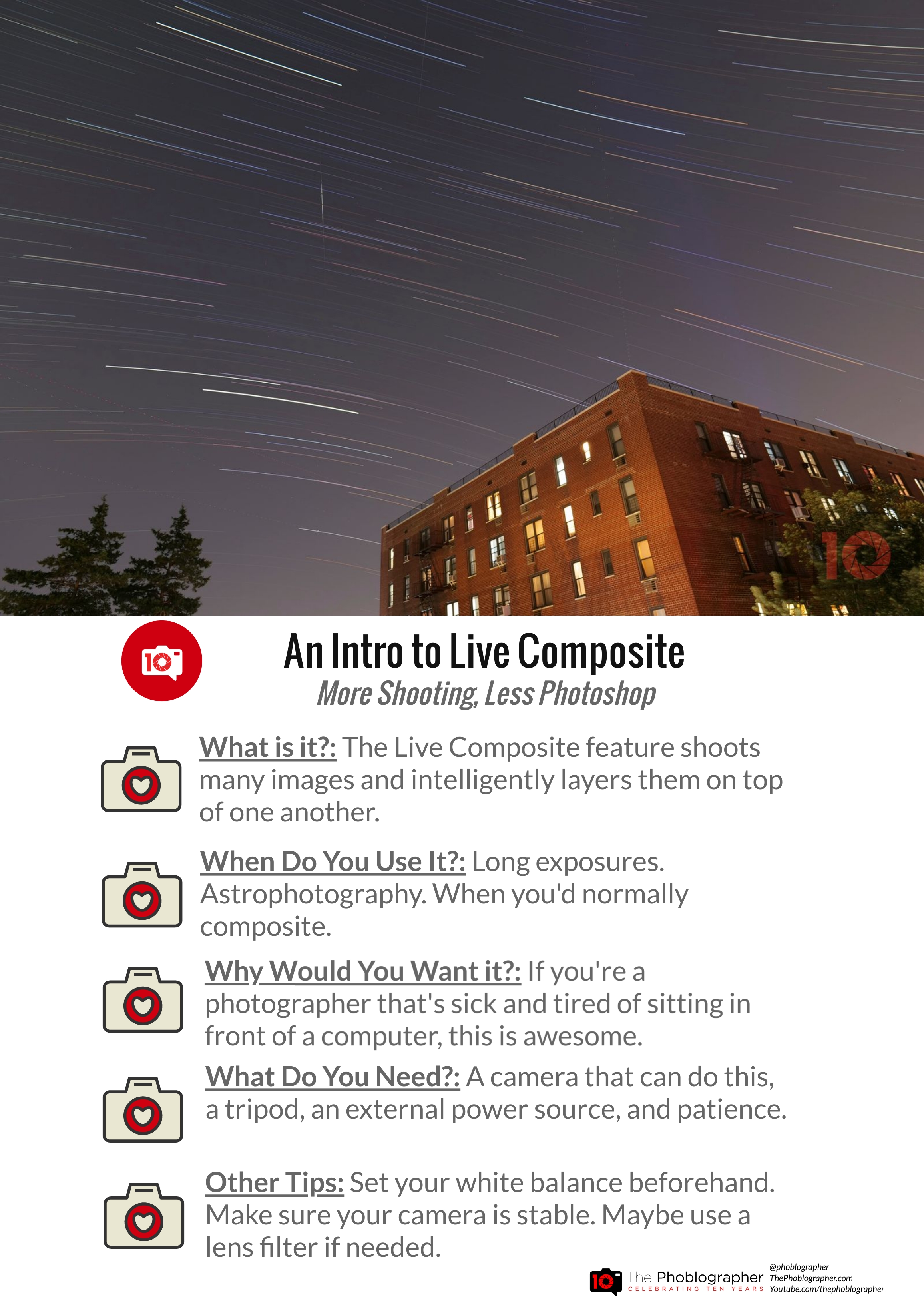
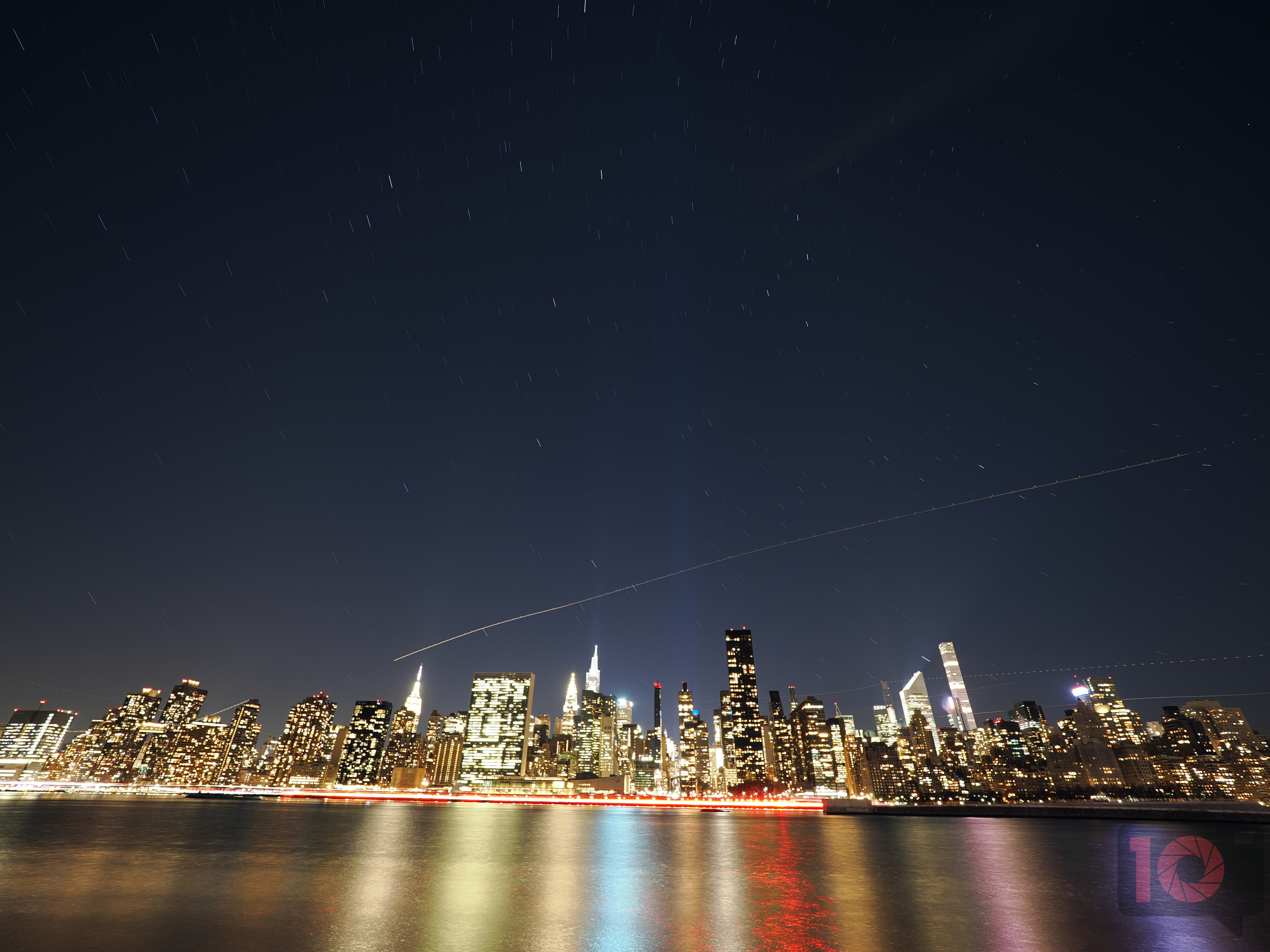
First off, I’m sure some folks aren’t completely aware of OM System’s computational photography. There’s a lot involved here. Beyond standard HDR abilities, there are some cool tricks like focus stacking, live composite, and live ND. All these save you a ton of time in Photoshop or post-production. That’s pretty awesome. The system does things no other camera system is capable of. I know that, after a long day shooting photos, I don’t want to sit down and edit a ton of them. So, knowing that I got the shot done in-camera is wonderful. Combine this with star-rating images to immediately access my favorites and I’m very happy.

But OM System could do something even bigger with computational photography. Specifically, I think they could address a problem that Micro Four Thirds has had for a long time.

Getting Full-Frame Depth of Field With Computational Photography

Let’s put it this way: if your phone’s camera can create artificial bokeh, why can’t Micro Four Thirds cameras do the same via computational photography? Just imagine: their 25mm f1.2 PRO would actually look like a 50mm f1.2 on full-frame. The same goes for their 17mm f1.2 PRO. It could also make a telephoto like their 300mm f4 render like an actual 600mm f4 instead of a 600mm f8. And with a very powerful processor, it could probably be combined with something like Pro Capture Mode and render RAW files as the final images. 

Of course, they’d have to get it just right. Google and Apple have a ton of problems to address with Portrait mode and stuff, but OM System could likely do a significantly better job. And now that they’re no longer tied to their mother company, I think more innovation is possible. OM System could also inject the AI noise algorithms in their software into the camera. Honestly, there’s so much that could be possible with all this. 

I’m also sure OM System would make this only possible with their own lenses. And that’s perfectly fine. Sure, Panasonic has wonderful glass, but it would also probably mean that maybe OM System starts to make fast zoom lenses again. Back in the DSLR days of Four Thirds, they made f2 zoom lenses. 

Now, there’s a reason why I think this should be a computational photography add-on. Micro Four Thirds offers a real advantage when shooting with their lenses. The extra depth of field can make a ton of things easier. Besides this, we’re happy with how small and lightweight the cameras and lenses can be.