In Brief: Crashes at last year’s pace in Aspen;

In Brief: Crashes at last year’s pace in Aspen;

Traffic accidents haven’t increased in Aspen

The pace of automobile accidents in Aspen is tracking about even with last year.

“We usually have between one and five crashes a day depending on the season; for instance, we have had 47 crashes for the month of June but only 22 in May,” said Aspen Police Sgt. Mike Tracey.

The difference between months appears linked the number of people in town during a given time and the season’s activities. 


“The city of Aspen’s leading causes for crashes are impaired driving and distracted driving,” he said. “We suggest avoidance of those problem behaviors along with the general practice of defensive driving.  Simply put: Don’t drink and drive — and pay attention.”

He suggested using public transportation system, cycling and to and from town are great options and help ease the number of vehicles on the roadways.  


“As a community, we strive for extremely safe streets and bicycle/pedestrian byways,” he said. “That community goal is strengthened by this department’s active patrolling and education efforts every day.”

— Julie Bielenberg

David Frederick Riley show at Aspen Grove Fine Art

Aspen Grove Fine Art will host one of their most popular and most collected artists, David Frederick Riley — a Western, wildlife and Native American portrait artist — on Thursday and Friday from 4-8 p.m.

His work takes on a modern look, often in very large scale format, creating in a fresh approach to classic and timeless subject matter, according to the gallery. In this show, he adds musical icons such as Willie Nelson and Johnny Cash.

Telecommunications tower approved for road near Sunlight

Garfield County has approved a limited impact land use change permit allowing construction of a new telecommunications tower off Forest Service Road 300, roughly 1.5 miles west of Sunlight Mountain Ski Resort.

The proposed 70-foot-tall tower provides expanded cellular service into the Four Mile Park area and complies with all Federal Communications Commission regulations, according to the application filed by Vertical Bridge Development LLC. 

T-Mobile is anticipated to be the primary carrier on the tower, according to Garfield County Community Development Principal Planner Glenn Hartmann. The applicant also noted that the tower will accommodate co-location with other telecommunications carriers. 

Hartmann added that the applicant can help ensure that the tower matches the natural surroundings to alleviate any visual impacts.

“There are some opportunities for them to do some painting or making sure the finish of the tower blends in well with the native vegetation and the surrounding area,” he said. 

A 540-foot driveway, which features a steep 15 percent grade in some spots, is being constructed to access the small facility on the 35-foot by 50-foot leased site on a larger residential property. No lighting is anticipated unless it is required by the Federal Aviation Administration. 

Mike Bieniek, zoning director for LCC Telecom Services of Rosemont, Ill., who was speaking on behalf of the applicant, told the Board of County Commissioners that the tower is made from galvanized metal and is nonreflective.

“This should cover the desire to make it blend in. Plus, it’s only 70 feet tall and the surrounding trees are 50 to 70 feet tall,” he said. “It’s not going to be visible.”

Construction is anticipated to begin “as soon as possible,” Bieniek added. The change permit was approved unanimously.

Artists talk about climate change at Anderson Ranch Arts Center

Anderson Ranch Arts Center will present “Critical Dialogue — Art and the Environment: Considering Climate Change” on Monday, July 31, from 10 a.m. to 12:30 p.m.

Artists Alan Michelson and Mary Mattingly will share their journey of confronting climate change in their art with Climate Museum Director Miranda Massie. The round-table format of this program seeks to engage the community in a dialogue about how artists are addressing current challenges in our culture.

Alan Michelson has been a practitioner of a socially engaged, critically aware, site-specific art grounded in local context and informed by the retrieval of repressed histories. Mary Mattingly combines photography, performance, portable architecture and sculptural ecosystems into poetic visions of adaptation and survival, offering specific solutions and architectural prototypes to build upon in pursuit of a better life. Miranda Massie, founder of the Brooklyn-based Climate Museum, a dedicated home for interdisciplinary arts-based climate programming, leads this discussion.

The Critical Dialogue Program at Anderson Ranch seeks to engage the community in discussion about contemporary art and art making. Critical Dialogue programs are open to the public. The $100 fee includes lunch immediately following the program and scholarships are awarded on a space-available basis. Registration is required.

‘Circumstances’: A photography collection from Marco Sanges

‘Circumstances’: A photography collection from Marco Sanges

When photographers take on filmmaking, aesthetics are often regarded with principal importance, while a sequential narrative comes second. As we introduce the celebrated Italian photographer Marco Sanges, I’d like to draw your attention to Circumstances. The unique series of monochrome photographs were initially collated for a picture book of the same title but later morphed into an award-winning movie. 

Although he hails from Ostia, a romantic and historically significant district of Rome, the 52-year-old artist now resides in London. His early prominence as a photographer was buoyed by notable work in the fashion industry, with some of his imaginative shots featured in several magazines and national newspapers. Outside of freelance work, Sanges held longer-term roles working for Vogue Italia and Dolce & Gabbana. 

After two decades of success as a published photographer and enjoying several worldwide exhibitions, Sanges began to work on narrative approaches to his art. The artistic short film Pondering of a Lonely Wonderer arrived on July 26th, 2008, as Sanges’ first directional credit in partnership with Alberto Bona, with whom he also co-directed Pondering of a Lonely Wonderer the following year. 

Between these two projects, Sanges directed a six-minute film to present the photography found in his 2007 book Circumstances. Working again with Bona as his co-writer, Sanges compiled the photographs into an artistic film inspired by the silent movie era of the early 20th century. 

“Greatly attracted to the cinema and in particular the luminous black and white films of the silent era, I create photographs in sequence,” Sanges commented on the project per his website. “Every sequence tells a unique, multi-layered story.”

“In this analogue project, I wanted to capture the power of characters, bigger than life being themselves without any restriction or regulation by the government,” he continued. “Instead, they choose to be free, revealing the various states of consciousness of the character and exploring the dualities between content and absence, space and surface. Be in a scene, as a scene in a film unfolds into a story.”

Circumstances involved a cast of models depicting various characters, including Casanova and the artists Uomo Bombetta and Salvador Dalí, the latter portrayed by Bona. For his directional command and unique conceptual display, Sanges won the ‘Best Art Fim’ award at the Portobello Film and Video Festival in 2008 and the ‘Best Experimental Film’ award at Saint Petersburg International Film Festival in 2009. 

The below collection of photographs taken from Circumstances depicts some scenes and characters conjured by Sanges’ imagination. In the film, the evocative and detached reel is concluded appropriately with a quote by D. H. Lawrence: “I can never decide whether my dreams are the result of my thoughts or my thoughts the result of my dreams.”

Circumstances - Macro SangesCircumstances - Macro Sanges
(Credits: Marco Sanges)
Circumstances - Macro SangesCircumstances - Macro Sanges
(Credits: Marco Sanges)
Circumstances - Macro SangesCircumstances - Macro Sanges
(Credits: Marco Sanges)
Circumstances - Macro SangesCircumstances - Macro Sanges
(Credits: Marco Sanges)
Circumstances - Macro SangesCircumstances - Macro Sanges
(Credits: Marco Sanges)
Circumstances - Macro SangesCircumstances - Macro Sanges
(Credits: Marco Sanges)
Circumstances - Macro SangesCircumstances - Macro Sanges
(Credits: Marco Sanges)
Circumstances - Macro SangesCircumstances - Macro Sanges
(Credits: Marco Sanges)
Circumstances - Macro SangesCircumstances - Macro Sanges
(Credits: Marco Sanges)
Circumstances - Macro SangesCircumstances - Macro Sanges
(Credits: Marco Sanges)

Aiming to Stoke Global Demand for Middle Eastern Art, Christie’s Is Hosting a Major Exhibition of Contemporary Arab Art in London

Aiming to Stoke Global Demand for Middle Eastern Art, Christie’s Is Hosting a Major Exhibition of Contemporary Arab Art in London

Christie’s is stepping up its efforts to cultivate the global market for modern and contemporary Middle Eastern art with a major exhibition of art from the Arab world taking over its London headquarters this summer, ahead of the return of the category’s evening sale in the U.K. capital this fall.

On the heels of successful sales of works by artists from the Arab region in recent auctions in London and New York, the exhibition “Modern and Contemporary Art of the Arab World”—billed as one of the largest of its kind in London—brings together more than 150 works spanning from 1939 to 2023 across different mediums. It aims to not only broaden the audience base, but also to rectify some preconceptions and misunderstandings of the Arab art world by showcasing its diversity and history.

“There are often preconceptions about art from the Arab world that have been shaped by a number of factors. These include somewhat limited exposure to the works on an international platform, along with misconceptions as to the nature of the works themselves,” Ridha Moumni, Christie’s deputy chairman for the Middle East and North Africa, told Artnet News. Moumni, a historian of art and archaeology, curated the exhibition; he conducted research at Harvard University’s Center for Middle Eastern Studies before joining Christie’s in 2021.

Inji Efflatoun

Inji Efflatoun, Dreams of the Detainee (1961), featured in “Kawkaba: Highlights from the Barjeel Art Foundation.” © Image courtesy of Barjeel Art Foundation.

Moumni cited factors including a focus on Eurocentric narratives in the art market, and a perception of underrepresentation of artists and works of art from the Arab world outside of the Middle East and wider Arab diaspora, despite the fact that notable works are already on display in major institutions and galleries in the west.

“This may have perpetuated the notion that Arab art is limited to specific themes and reflective of social stereotypes, especially around female artistic freedom,” he explained.

But by staging the exhibition in London, in partnership with the UAE Ministry of Culture and Youth and the Barjeel Art Foundation, Christie’s hopes to grab the attention of a global audience in the U.K. capital throughout the summer. The show is open to the public at the house’s King Street headquarters, free of charge, through August 23.

The show also addresses a few of these misconceptions. The exhibition is divided into two sections. “Kawkaba: Highlights from the Barjeel Art Foundation” is on loan from the private collection created in 2010 by Sultan Sooud Al-Qassemi. Moumni said this gender-balanced exhibition shines a spotlight on leading Arab female artists, including Etel Adnan, Huguette Caland, and Inji Efflatoun, while also showcasing artists from different geographies, backgrounds, and religions, as well as works reflecting the turbulent times some of the artists lived through.

Ibrahim El Salahi

Ibrahim El-Salahi, The Last Sound (1964), featured in “Kawkaba: Highlights from the Barjeel Art Foundation.” © Image courtesy of Barjeel Art Foundation.

The second part is a selling and loan exhibition focused on the Emirati artist Hassan Sharif, who introduced conceptual art to the region. While many have thought that Arab artists were inspired by the west—and indeed, many Arab artists were exposed to western art—”they reflected the reality of their own region in their work,” Moumni noted. “They also created modern artworks inspired by local, pre-Islamic, Islamic, and Ottoman heritage using innovative techniques.”

In terms of market, modern and contemporary Middle Eastern art is already an established collecting category, and Christie’s brought this category to London, hosting its first standalone evening sale in 2017, after 11 years of sales in Dubai. The audience for this category has been quietly expanding. “We’ve seen new institutions, existing and new collectors buying in our dedicated Middle Eastern art sales,” Moumni said, adding that the category has also been drawing attention from enthusiasts outside the region.

Evening sales of this category in London started off with a bang in 2017, but the sale total gradually declined during the pandemic, with only online sales held in 2020 and 2021. Last November, the live evening sale resumed with an online component. With a total of 26 lots on offer (with three withdrawn and five unsold), the live evening sale achieved a total of £2.2 million ($2.8 million)—a solid result compared with the previous online sales, considering the modest scale.

HASSAN SHARIF

Hassan Sharif, Cloth 2 (2013). Courtesy of Christie’s.

Despite the market correction experienced during the first half of 2023, hopes for Middle Eastern art remain high. At Christie’s 20th/21st-century evening sale in London in June, the 1979-born Ahmed Mater achieved an auction record in his evening sale debut with the house. The photographic print Magnetism (Triptych) (2021), sold for $238,787 with fees, more than three times the fee-free low estimate. In the auction house’s New York sales in May, Etel Adnan’s California (2003) fetched $352,800 including fees, more than five times the low estimate (which did not include fees). It too was the artist’s first 20/21 evening sale with the house, and the painting achieved the third-highest price for the late artist’s work at auction. Another Adnan painting sold at Christie’s London June evening sale for a price well above the presale estimates.

The date and number of lots on offer in Christie’s November sale are yet to be confirmed, but “we are anticipating one of our strongest modern and contemporary Middle Eastern art evening sales, with a number of high-quality works already consigned,” said Moumni.

Follow Artnet News on Facebook:
Want to stay ahead of the art world? Subscribe to our newsletter to get the breaking news, eye-opening interviews, and incisive critical takes that drive the conversation forward.

Woodford Reserve Partners With Photographer Joshua Kissi to Release The Spirit of Style Lifestyle E-Book

Woodford Reserve Partners With Photographer Joshua Kissi to Release The Spirit of Style Lifestyle E-Book

LOUISVILLE, Ky.— Woodford Reserve announces The Spirit of Style, a lifestyle e-book created in collaboration with photographer Joshua Kissi that brings style and bourbon together as one.

The partnership launches Woodford Reserve’s new campaign to showcase substance and style, and represents the starting point of the brand’s move into the lifestyle space.

The e-book invites consumers to experience Woodford Reserve through three areas – cocktails, lifestyle, and the historic distillery, accompanied by exquisite photography from Kissi.

Woodford Reserve is presenting sponsor of the world’s largest fashion show – The Kentucky Derby – and recently partnered with GQ to host a Paris Fashion Week party at L’Avenue.

“Whether it’s fashion and lifestyle photography – or distilling the perfect bottle of Woodford Reserve – good things take time. And when they’ve reached their final form, it was always worth the wait,”   Woodford Reserve’s Master Distiller Elizabeth McCall said.

The Spirit of Style features looks behind the barrel and lens with personal interviews with both McCall and Kissi.

”I am excited to see the worlds of fashion and bourbon combine into one space,” McCall said. “These two are more alike than different, fashion goes beyond what you see and whiskey goes beyond what you taste.”

In addition to gorgeous photography, The Spirit of Style serves as a resource for bartenders seeking unique drinks to create with Woodford Reserve with a variety of cocktail recipes. The e-book allows a new perspective on traditional bourbon cocktails, and consumers are able to follow along step by step to craft new unique Woodford Reserve cocktail recipes at home with easy download.

Kissi is a Ghanaian-American photographer, filmmaker, and storyteller who blends rich textures, vibrant colors, and diverse audiences to tell stories and challenge the world around him, based in Los Angeles. Kissi grew up with a love for the arts once he picked up a camera at the young age of seventeen. Kissi is most known for building creative communities around diverse and stylish representation.

Kissi blends the rich and beautiful worlds of Woodford Reserve and fashion by visually defining what makes exquisite taste. Readers are able to learn about the art of whiskey while staying entertained by beautiful photography and cocktail recipes.

“Every part of us begins with a story and to be able to humanize the process of style through the craftsmanship of Woodford Reserve seemed like the perfect collaboration to bring to life. Every detail. Every garnish. Variation of color. When people look at these photographs I want them to feel connected to how both worlds of spirits and style inspire and influence the other,” said Kissi.

Woodford Reserve’s The Spirit of Style is available for download on WoodfordReserve.com.

About Woodford Reserve

Woodford Reserve, “Presenting Sponsor of the Kentucky Derby,” is crafted at the historic Woodford Reserve Distillery, tucked in the heart of thoroughbred country in Versailles, Kentucky. A National Historic Landmark, the Woodford Reserve Distillery represents craftsmanship with a balance of historic heritage and modern practices. Woodford Reserve is a product of the Brown-Forman Corporation, a premier producer and marketer of fine quality beverage alcohol brands including Jack Daniel’s, Finlandia, Korbel, Tequila Herradura, Old Forester, Sonoma-Cutrer and Chambord.

For More Information:
https://www.woodfordreserve.com/lifestyle/

Europe and the U.S. Will Probably Regulate A.I. Differently. That Will Have Long-term Consequences for the Global Art Market

Europe and the U.S. Will Probably Regulate A.I. Differently. That Will Have Long-term Consequences for the Global Art Market

Every week, Artnet News brings you The Gray Market. The column decodes important stories from the previous week—and offers unparalleled insight into the inner workings of the art industry in the process.

This week, caught in the middle…

An Ocean Between Us

Despite sharp differences of opinion, opponents in the debate about how artificial intelligence might reshape the making and marketing of artwork in the years ahead typically share a core assumption: that people using the technology will be governed by basically the same rules no matter where they are. However, this core assumption is coming untethered from reality due to the starkly contrasting actions taken by U.S. and E.U. regulators this summer. It’s only by taking stock of this divergence that artists, institutions, and other cultural stakeholders can begin to grasp how messy, regionally contingent, and beyond their control A.I.’s effects on art are likely to be.

The allegedly big stateside news about A.I. regulation arrived last Friday. In a meeting with President Joe Biden, executives from seven companies at the vanguard of A.I. development (Amazon, Anthropic, Google, Inflection, Meta, Microsoft, and OpenAI) formally agreed to self-police their algorithms using shared guidelines. The tentpole commitments include subjecting their A.I. products to rigorous safety checks before releasing them to the public; inviting third-party experts to investigate their A.I. products for weaknesses exploitable by black-hat hackers; and embedding watermarks into all content generated by their A.I. products so that the public clearly understands its origins. 

Optimists might say that these American tech giants are wise to get ahead of Congress, which has been ramping up its interest in using the law to rein in A.I. Sue Halpern of the New Yorker noted that three different bipartisan bills targeting three different risks of the tech were introduced in the House of Representatives in June. The first would require government agencies to disclose to users any time A.I. is being used in their communications, as well as to create an appeals process for A.I.-influenced decisions. The second would punish social media platforms for disseminating toxic content produced with A.I. tools. The third would create a bipartisan commission to lead the charge on further regulation of generative A.I. 

Senate majority leader Chuck Schumer has also proposed convening a series of expert panels to give him and his colleagues what Halpern calls “a crash course” in artificial intelligence so that they can proceed intelligently on tech policy for a change. (The U.S.’s top legislators did not exactly swaddle themselves in glory during, say, the Facebook hearings in 2018, or the TikTok hearings earlier this year.)

Members of the European Parliament vote on the Artificial Intelligence Act during a plenary session in Strasbourg, France, on June 14, 2023. (Photo by FREDERICK FLORIN / AFP) (Photo by FREDERICK FLORIN/AFP via Getty Images)

Members of the European Parliament vote on the Artificial Intelligence Act during a plenary session in Strasbourg, France, on June 14, 2023. (Photo by FREDERICK FLORIN / AFP) (Photo by FREDERICK FLORIN/AFP via Getty Images)

But in the race to prevent artificial intelligence from running amok within its home nation, Congress is being lapped by its counterpart in the E.U. Also in June, the European Parliament approved a draft version of the A.I. Act, the latest checkpoint on a more than two-year journey to establish a rugged, far-reaching set of rules to guard against the technology’s scariest possibilities. Unless it is defanged during this final stage—an outcome that is all but unthinkable, it seems—the law is poised to require A.I. developers to publish summaries of the copyrighted material used to train their algorithms; enact a near-total ban on the use of A.I. in facial-recognition systems; and mandate the performance of “risk assessments before putting the tech into everyday use, akin to the drug approval process,” according to the New York Times. While there are several more months of negotiating ahead, the final law could be passed before the end of the year. 

How seismic would the impact of a robust A.I. Act be? In May, Sam Altman, the cofounder and chief executive of DALL-E and ChatGPT maker OpenAI, declared that his company would “cease operating” in the European Union if it “can’t comply” with the bloc’s forthcoming laws. 

That might sound curious given that only a few days earlier Altman urged U.S. lawmakers to regulate the development and use of A.I. during a Senate subcommittee hearing, where he warned (in a quote I have seen reprinted in nearly every article I have read on this subject for two months), “If this technology goes wrong, it can go quite wrong.” But it makes perfect sense given American lawmakers’ history of essentially allowing Silicon Valley to write its own rules. The past few decades have produced a pathetically small number of elected officials willing to risk being accused of stifling innovation stateside. For Altman, then, the odds are favorable that American A.I. regulation will still be hugely deferential to him and other tech execs.

The fanfare around OpenAI and the six other companies’ commitment to self-policing reinforces why he should be confident. Halpern’s New Yorker piece does a strong job of teasing out the many soft spots in their joint pledge. There are no actual penalties waiting for companies that don’t live up to their promises, no guidelines for who the independent experts doing the proposed vulnerability checks will belet alone how they will be chosenand not even any uniform definitions for critical terms governing the clauses of the agreement (think: “safety,” “independent,” or “watermark”), 

In fact, the companies’ shared vow to ensure their A.I. products are safe and secure before their public release borders on comedy given that the septet was invited to the White House in the first place because they have already publicly released several major A.I. products without doing any of that. More importantly, they are clawing back exactly none of those products to run them through the safety and security gauntlet now that they’re on the market. Meta, Halpern notes, even made an open-source version of its chatbot (known as LLaMA2) available at no cost for both research and commercial use—a decision that one computer scientist said was “a bit like giving people a template to build a nuclear bomb.”

High-resolution images generated using Meta’s CM3leon A.I. image generator. Courtesy of Meta.

Degrees of Difficulty

While Altman later downplayed his comments about the prospect of pulling OpenAI out of Europe, according to the Financial Times, that he felt compelled to make those comments in the first place indicates how much more daunting the Artificial Intelligence Act is to A.I. entrepreneurs than any potential American regulations. His reaction also offers a launch point into the friction that could be awaiting an art world largely expecting universal rules to govern the technology’s use going forward. 

If the E.U.’s final legislation stays true to its current form, it is plausible that DALL-E, ChatGPT, and other leading A.I. tools either won’t be available at all to artists and art professionals in the bloc, or else they will only be available (legally, anyway) in versions with severe limitations relative to their full-fledged counterparts in the U.S. In other words, differing regulations could create a technological gulf between the near-future U.S. and E.U. art industries no less severe than the free-speech gulf between the present-day U.S. and Chinese art industries. A potential disconnect between the U.S. and E.U. is only one aspect of the larger problem, too. 

The fracturing may only worsen as other countries hammer out their own sets of A.I. guidelines informed by their own sets of national or regional priorities. For example, China’s law, which is slated to go into effect in August, will require all generative A.I. platforms available to its citizens to adhere to the state’s aggressive censorship policies. The socially conservative streaks of other up-and-coming art markets, like South Korea and Singapore, could have a lesser but non-negligible impact if their legislators choose not to mirror either E.U. or U.S. legal frameworks for the technology, as well.

Of course, these sobering possibilities for global culture hinge on artificial intelligence quickly becoming as central to creativity, business, and life as its strongest backers and most alarmist critics believe it will. I have some doubts about that outcome, as I’ve written before, partly because the E.U. started pursuing serious, thoughtful legislation years before ChatGPT et al achieved escape velocity among a broad public. (Ironically, when the bloc’s legislators began the process, the tech obsession of the day was still NFTs.) 

It’s still plausible that regional restrictions on generative A.I. tools end up as nothing more than a modest inconvenience. After all, it’s not as if China’s blockade of American-developed social media platforms has done much to hinder the Chinese art economy; some would even argue that its business practices are more technologically advanced than the West’s thanks to the 360-degree capabilities of WeChat. To use another example, GDPR created some headaches and added costs for art businesses that wanted to keep communicating with an E.U. audience after the privacy law’s implementation in May 2018, but five years later, my sense is that it’s as distant a memory for the art trade as concerns about Y2K. 

Kevin Abosch, NEVER FEAR ART (2021). Courtesy of the artist and Global Crypto Art DAO.

Kevin Abosch, NEVER FEAR ART (2021). Courtesy of the artist and Global Crypto Art DAO.

Lurking in the shadows of this discussion, as well, is the fact that the art establishment has its own prioritiesand even in recent history, dancing along the bleeding edge of technology has tended not to be one of them. Paintings, drawings, and sculptures still make up the overwhelming majority of the art exhibited and sold around the globe every year. Sure, some of those works have some kind of digitally informed layer to them, but there’s little evidence to suggest that the trade will be kneecapped if artists around the world can’t all use DALL-E to generate images from text prompts, or if galleries and institutions across continents can’t all use ChatGPT to streamline the production of press releases or other marketing materials.

More importantly, stakeholders still primarily make their decisions about what to show, buy, and sell based on in-person meetings, phone calls, emails, and basic e-commerce—methods of consensus-building that have been around for somewhere between roughly 20 and 2.4 million years. We are still ultimately social animals seeking thrills and opportunities. So yes, regionally specific regulations of A.I. may complicate the art business in the years ahead. But where there’s a will, there’s another way.

[The New Yorker, New York Times, Financial Times]

That’s all for this week. ‘Til next time, remember: our differences really are smaller than our similarities, especially when we’re all just fodder for the algorithms anyway.

Follow Artnet News on Facebook:
Want to stay ahead of the art world? Subscribe to our newsletter to get the breaking news, eye-opening interviews, and incisive critical takes that drive the conversation forward.

Putting our paws up for National Dog Photography Day

Putting our paws up for National Dog Photography Day

Putting our paws up for National Dog Photography Day – CBS Pittsburgh


Watch CBS News


We’re showing you how a local woman captures our canines through her camera lens. Jessica Wasik, the owner of Bark and Gold Photography, joined Talk Pittsburgh.

View CBS News In

Be the first to know

Get browser notifications for breaking news, live events, and exclusive reporting.


For wedding photographers it’s all about the turnaround time for pictures

For wedding photographers it’s all about the turnaround time for pictures
(iStock)

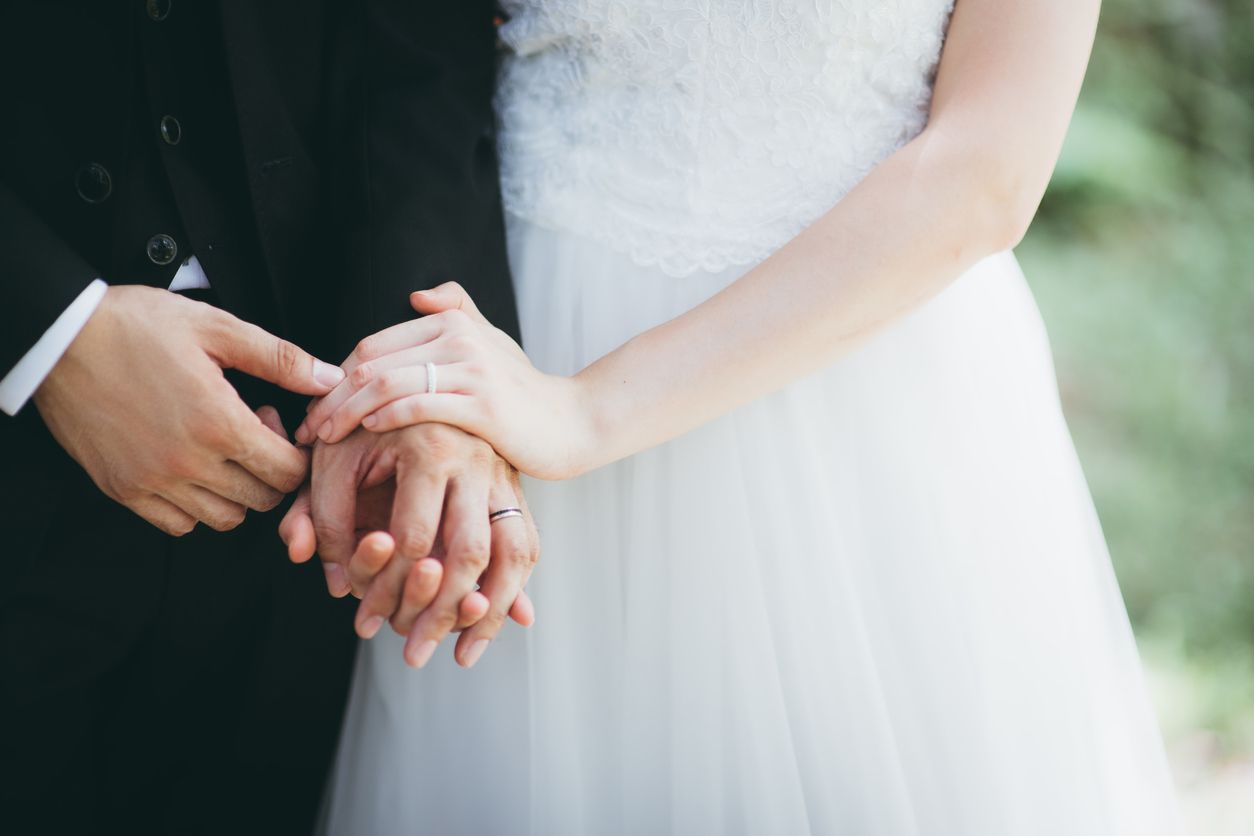
Wedding photographers like Baton Rouge-based Eric Garcia are noticing a shift in their industry, with clients planning smaller events and requesting a faster turnaround on photos. 

These changes are a result of broader cultural shifts thanks to both the pandemic and social media. 

Photographers are increasingly expected to turn in photos in a matter of days or even hours to be ready to post online as soon as the bride and groom say “I do.” The tight turnarounds mean many are now outsourcing aspects of photo editing to meet expedited deadlines. As a result, they’ve also had to raise their rates, which were already going up because of inflation.

Garcia, who started Geauxgarcia Photography eight years ago, is thinking about outsourcing some of his editing work, too, though he hasn’t made the jump yet. He says has had to raise his prices because of growing equipment costs, among other factors. 

“People are choosing to do these smaller ceremonies to make it more special and more intimate for the couple,” Garcia says. “But also to save a little bit of money.”   

According to the Associated Press, wedding photographers across the country are being asked to shoot more elopements and micro weddings—weddings with 50 or fewer guests—and to provide behind-the-scenes videos on top of the regular wedding photos.

Sarah and Peter Olson, a husband-and-wife team who run CityLux Studios in Boston, told AP they’re spending much more time creating social media content than they did in years past, and are hiring an assistant to “specifically grab content we can use for social media and behind-the-scenes type content.” 

They recently started to take videos vertically in short clips so their clients can use them for social media Reels on Instagram.   

The trend of couples working together has also made its way to Baton Rouge, Garcia says, because having two pairs of hands makes the job easier. Other trends include a renewed interest in film photography and an increased reliance on word of mouth from referrals as opposed to traditional advertising. Garcia says that most of the clients he has photographed weddings for have been people he has worked with before in some capacity. 

These trends come as a regular wedding cadence returns, along with higher costs, following the pandemic. According to wedding website The Knot, the national average cost of a wedding in 2022 was $30,000, up $2,000 from 2021. At the same time, the average cost of a wedding photographer in 2022 was $2,600, up just $100 from 2021. 

Read more about the wedding industry trends from the Associated Press, and more about Garcia from a 2019 225 magazine feature. 

Lyra Lee Photography documents family life

Lyra Lee Photography documents family life

Explore 701: Abundant freebies on KX/Co-op Day at …

5 hours ago


.cls-3{fill:#fff;fill-rule:evenodd}

Real Estate with Jeff: July 26 Market Report

5 hours ago


.cls-3{fill:#fff;fill-rule:evenodd}

Grillin’ Time: Kabobs

6 hours ago


.cls-3{fill:#fff;fill-rule:evenodd}

Lyra Lee Photography documents families naturally

6 hours ago


.cls-3{fill:#fff;fill-rule:evenodd}

Smile of the Day: Ayla and Aacen

5 hours ago


.cls-3{fill:#fff;fill-rule:evenodd}

Credit scores determine your purchasing power

1 day ago


.cls-3{fill:#fff;fill-rule:evenodd}

“Rooftop” brings a unique ballet performance to Bismarck

1 day ago


.cls-3{fill:#fff;fill-rule:evenodd}

Smile of the Day: Kris, Jason, and Ingrid

1 day ago


.cls-3{fill:#fff;fill-rule:evenodd}

Tune in Time: More summertime sounds

1 day ago


.cls-3{fill:#fff;fill-rule:evenodd}

Tune in Time reveal 7-25

1 day ago


.cls-3{fill:#fff;fill-rule:evenodd}

Dancin’ Day: Nathalie and Amber learn to tap dance

1 day ago


.cls-3{fill:#fff;fill-rule:evenodd}

Dakota Chappy hits the State Fair stage

1 day ago


.cls-3{fill:#fff;fill-rule:evenodd}

Dakota Zoo News: Raptor Rehabilitation

2 days ago


.cls-3{fill:#fff;fill-rule:evenodd}

How to recognize and avoid a contractor scam

2 days ago


.cls-3{fill:#fff;fill-rule:evenodd}

Studio Entertainment: Cotton Wood

2 days ago


.cls-3{fill:#fff;fill-rule:evenodd}

Cotton Wood returned to the show to play a second …

2 days ago


.cls-3{fill:#fff;fill-rule:evenodd}

Smile of the Day: Dash

2 days ago


.cls-3{fill:#fff;fill-rule:evenodd}

Foster Hope teams up with Mary Mission to help local …

5 days ago


.cls-3{fill:#fff;fill-rule:evenodd}

Bismarck block party brings awareness to local heroes

5 days ago


.cls-3{fill:#fff;fill-rule:evenodd}

Smile of the Day: Lots of smiles today!

5 days ago


.cls-3{fill:#fff;fill-rule:evenodd}