From Dirty Garage to a Modern, Flexible ADU for Guests + Work

From Dirty Garage to a Modern, Flexible ADU for Guests + Work

Amid the ever-increasing housing shortages and escalating costs in urban areas, innovative solutions are emerging that not only tackle these challenges but also align with sustainable practices. One such example is the Carlsbad ADU (Accessory Dwelling Unit) Garage Conversion by Modern Granny Flat – a versatile, eco-friendly, and adaptive space that addresses the need for more housing while offering the homeowner many options for the future.

The Carlsbad ADU/Garage Conversion project stands as a testament to innovation in sustainable housing. Rather than demolishing the old garage and building a new structure, this project embraced the existing one. By converting an existing garage into a flexible living space, the project cuts down on resource consumption, minimizes carbon emissions, and defies the cycle of urban sprawl.

angled interior view of modern kitchen with wood cabinets and white countertops

The project capitalizes on recent legislative changes in California, pertaining to ADUs or Granny Flats. The state’s legislation permits the construction of up to two ADU units on a single-family lot, and encourages homeowners to utilize existing structures creatively.

angled interior view of modern kitchen with wood cabinets and white countertops

What sets this ADU apart is its adaptability. The space has been designed to morph and evolve with the ever-changing needs of its occupants. With a focus on sustainability and flexibility, the ADU features a multifunctional cabinet wall, a garage door that seamlessly expands the living area, and a mezzanine level for added privacy. This allows the space to shift effortlessly from a bedroom to an office, a dining area, or even a yoga studio – all in a single day. By reimagining the concept of living spaces, the Carlsbad ADU/Garage Conversion aligns with the principle that we do not need larger homes, but smarter ones that can evolve smoothly with our lives.

interior view of renovated garage with wall of cabinets including foldout murphy bed and desk

In addition to storage, the bank of cabinets hides a Murphy bed and folding table/workstation that easily transform the space into whatever is needed at the moment.

image

angled interior view of renovated garage with man sitting at foldout desk from wall of cabinets with garage door open

The pitched ceiling makes the space feel larger while also allowing for a mezzanine that could work as additional sleeping quarters, a quiet retreat, or even extra storage.

up view of gabled wood ceiling through rafters

minimalist modern black and white bathroom with hanging plant

angled closeup of simple bathroom counter with round mirror above

interior view of loft spac with pitched ceiling clad in wood beams

interior view of end wall with small window and 2 sconces under pitched roof clad in wood beams

angled roof clad in wood beams

exterior view of renovated garage with center door open revealing flex space

Garage before:

before photo of dirty garage with checkered floor

before photo of cramped attic space

Photography by Rachel Pangi.

Caroline Williamson is Editor-in-Chief of Design Milk. She has a BFA in photography from SCAD and can usually be found searching for vintage wares, doing New York Times crossword puzzles in pen, or reworking playlists on Spotify.

Chinese Massacre memorial sculpture coming to Rock Springs

Chinese Massacre memorial sculpture coming to Rock Springs
Emma Marsing, emarsing@wyoming.com ROCK SPRINGS, WYOMING — In remembrance of the tragedy that struck Rock Springs in 1885, the City of Rock Springs, in conjunction with the Rock Springs Historical Museum, has moved forward with the purchase of a statue to commemorate the lives of the Chinese workers that were injured or passed. Chinese […]

Oklahoma State University Museum of Art presents ‘Leon Polk Smith: Affinities in Art & Design’

Oklahoma State University Museum of Art presents ‘Leon Polk Smith: Affinities in Art & Design’
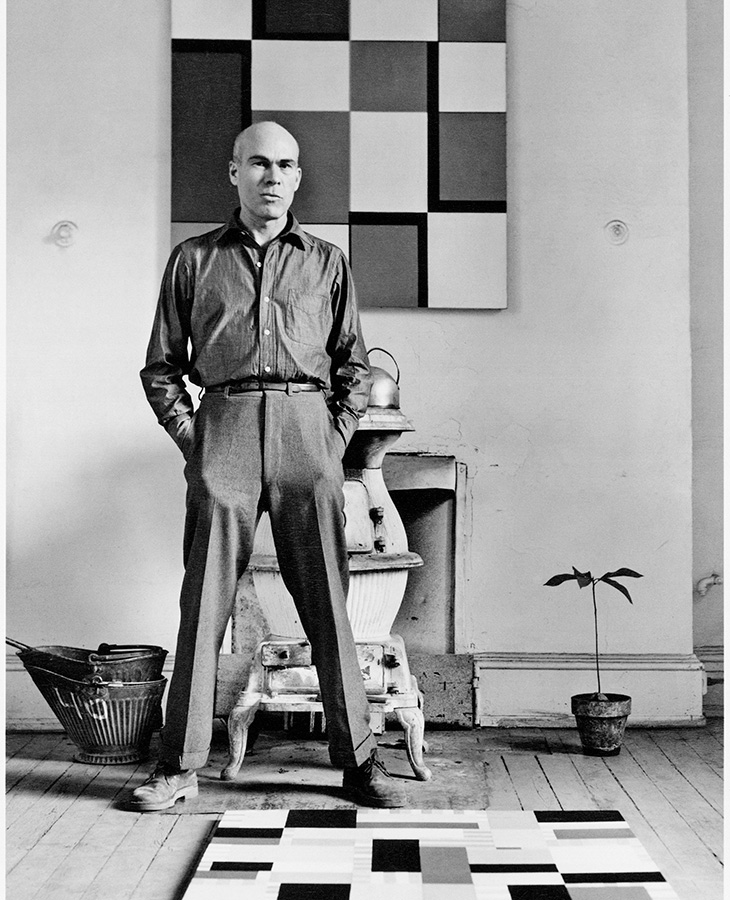
Leon Polk Smith in his Studio, 82 West 12th Street, New York, 1951. Photo by John
Schiff, Courtesy of Lisson Gallery.

Monday, August 28, 2023

Media Contact:
Casey Ihde | OSU Museum of Art Marketing and Communications | 405-744-2783 | casey.pankey@okstate.edu

The Oklahoma State University Museum of Art announces, “Leon Polk Smith: Affinities
in Art & Design,” on view through Jan. 27, 2024. This captivating exhibition explores
the surprising relationships between the art of Leon Polk Smith (1906-1996) and 20th
century industrial design.

The exhibition showcases a selection of works on paper drawn from the museum’s collection
from the Leon Polk Smith Foundation, as well as the George R. Kravis II collection
of fine art and industrial design. Loans of Smith’s large-scale paintings from The
Fred Jones Jr. Museum of Art, Oklahoma City Museum of Art and the Heard Museum, Phoenix,
complete the exhibition to provide a comprehensive survey of Smith’s artistic journey.

The exhibition features art by “a remarkable homegrown artist and from homegrown collections,”
said Arlette Klaric, exhibition curator.

“Only recently has this Oklahoma native begun to gain national recognition as a pioneer
in the mid-century art movement of Hard Edge painting,” Klaric said. “This exhibition
seeks to expand public appreciation of his abstract style by looking at it through
the lenses of industrial design and daily life at the time.”

Looking at contemporary art can be intimidating, especially if seen without context.

“With this exhibition, our goal is to make Leon Polk Smith accessible to the everyday
visitor,” Klaric said. “First, through his personal story, told through sound recordings.
And second, through ties to industrial design, society and culture that offer a readymade
platform of familiar everyday objects and major historic developments experienced
as personal events.”

Five engaging themes — “Stripping Down,” “Nature Revisited,” “Color Explosions,” “Pop Vibes”
and “Paper Revolutions” — guide visitors in looking at Smith’s abstract artistic style,
offering pathways for deeper understanding.

“Our mission is to provide viewers with a unique and enriching experience,” said Vicky
Berry, director of the OSUMA. “By presenting these two collections side by side, we
offer a captivating context that illuminates the complexity of this art form. We believe
it will be a unique opportunity for our visitors and hope to raise awareness about
Smith’s extraordinary contributions to the art world.”

“Leon Polk Smith: Affinities in Art & Design” is on view Aug. 1, 2023, to Jan. 27,
2024, at the OSU Museum of Art in downtown Stillwater. A reception will be held from
5–7 p.m. on Sept. 12, 2023, offering attendees a chance to celebrate and engage with
the artwork. Light refreshments will be provided, creating an enjoyable atmosphere
for all. Learn more at
https://museum.okstate.edu/art/leon-polk-smith.html.

Merging sound and sculpture, this HIFI cabinet uses a tapering design to deliver stunning results for audiophiles

Merging sound and sculpture, this HIFI cabinet uses a tapering design to deliver stunning results for audiophiles
In the world of audio enthusiasts, where the pursuit of pure sound quality reigns supreme, the Three-Eyed Eel (3Eel) emerges as an audacious masterpiece, combining impeccable design with high-fidelity sound reproduction. Crafted with an unwavering dedication to both form and function, the 3Eel stands as an iconic testament to the marriage of aesthetics and audiophile

Marimekko Launches the Rain-Inspired Syksy Glassware Series

Marimekko Launches the Rain-Inspired Syksy Glassware Series

Whenever Finnish design house Marimekko unveils something new, we know it’s going to be good. This month, they’re expanding upon the brand’s table setting category with the addition of the Syksy glass collection. In collaboration with Swedish designer Matti Klenell, the Syksy (autumn) series explores nature and weather phenomena – specifically rain. The theme is a recurring one in Marimekko’s prints, and Klenell has transformed it into a mouth-blown tumbler, goblet, and carafe series.

“Marimekko is a world leading manufacturer of prints in both fashion and interior design, so when being asked to collaborate with this great Finnish institution it felt natural to focus on patterns, and in particular the interaction of two-dimensional ornaments and three-dimensional shape,” shared Klenell. “The Syksy series brings a touch of silent calm, perhaps even a bit of melancholy, that give the items an interesting unique expression.”

The glass collection brings together functional shapes with a drawn pattern inspired by the Nordic autumn rain, displaying interpretations of a gentle drizzle and a drenching downpour. It’s sophisticated and nuanced, with an organic, relief style pattern that’s applied to the glassware in a sketched manner, typical to Klenell’s work. These pieces are as beautiful as they are practical, and can be stacked and mixed with other Marimekko tableware.

black and white textile artwork

Untitled Artwork

“We are expanding our category for table setting with a completely new glass series, which brings a sense of lightness to our already rich assortment. Matti Klenell’s personal touch can be seen in the ability to combine shape and pattern into a functional entity and a part of everyday tableware. The Syksy glass series brings a breath of fresh autumn rain into Marimekko’s world of nuanced print, shape and color,” says Minna Kemell-Kutvonen, Design Director, Home & Print Design at Marimekko.

black and white textile artwork

Untitled Artwork

clear glass goblet on white background

Goblet

clear glass goblet on white background

Goblet

two clear glass tumblers on white background

Tumblers

two clear glass tumblers on white background

Tumblers

clear glass carafe on white background

Carafe

To learn more about the Syksy collection, visit marimekko.com.

Kelly Beall is Director of Branded Content at Design Milk. The Pittsburgh-based writer and designer has had a deep love of art and design for as long as she can remember, from Fashion Plates to MoMA and far beyond. When not searching out the visual arts, she’s likely sharing her favorite finds with others. Kelly can also be found tracking down new music, teaching herself to play the ukulele, or on the couch with her three pets – Bebe, Rainey, and Remy. Find her @designcrush on social.

A Colossal Interview: Chris Pappan On Connecting to His Ancestors, Stereotypes, and the Center for Native Futures

A Colossal Interview: Chris Pappan On Connecting to His Ancestors, Stereotypes, and the Center for Native Futures

“Relatives.” All images © Chris Pappan, shared with permission

For Chris Pappan, distinguishing between the past and present, the present and the future, is irrelevant. Time, for him, is circular and cyclical, an understanding he discusses in a new conversation with Colossal.

Our people believe that our ancestors are always with us and watching over us. I think that’s very important. In a lot of my work, I try to honor our ancestors in that way. I’m always looking at old photographs, and I feel like I’m communicating directly with them. Whether they’re my direct ancestors or indirect ancestors, that’s really special… I don’t want it to stay in the past. It’s about the present and the future, as well.

A citizen of the Kaw (Kanza) Nation and of Osage, Lakota, and European descent, Pappan is invested in honoring his ancestors while emphasizing Native American contemporaneity. He often works on municipal ledger paper and other found substrates to depict people in photorealistic detail, mirroring their faces and forms and creating myriad metaphors for split selves, distortion, and human interaction that transcend time and space.

In this conversation, Pappan discusses his evolution as an artist, the complex nature of Indigenous life in Chicago, and the importance of his new venture, the Center for Native Futures.

Read the interview.


Three distorted portraits on a wall in a Y shape with a blue line running through them

“Howageji Nizhuje Akipé (Where the Rivers Meet)” (2023)

Do stories and artists like this matter to you? Become a Colossal Member today and support independent arts publishing for as little as $5 per month. The article A Colossal Interview: Chris Pappan On Connecting to His Ancestors, Stereotypes, and the Center for Native Futures appeared first on Colossal.

Scientist Turns Plants into Photos by Making Prints Directly onto Leaves

Scientist Turns Plants into Photos by Making Prints Directly onto Leaves
[embedded content]

Ben Krasnow of the YouTube channel Applied Science shows how to make images on living plant leaves in his latest video.

Inspired by a 1976 video created by The Royal Institution, Krasnow takes “photosynthesis photography” to new levels by building his own camera and creating an original photo on a leaf.

Before getting to that level of complexity, it is worth looking at the much more basic versions of making images on plant leaves, also called “chlorophyll prints.” A popular way to make chlorophyll prints is to expose an existing image onto a leaf, treating the leaf itself like photographic paper.

This distinct photographic printing process relies heavily on a plant’s natural biological processes rather than putting artificial or harmful chemicals onto the leaf. By controlling the pattern in which sunlight falls onto a plant leaf, the areas that receive the most light will perform photosynthesis more rapidly. If the plant has excess energy, it will store some of the energy it does not need in the form of a starch granule. During the development process, the starch is stained dark blue, revealing the patterned light that fell on the leaf during the “printing” process.

Krasnow Photosynthesis Photography

Once a leaf has been exposed, it must be developed. The two-step process begins with an eight-minute boiling alcohol bath to remove the chlorophyll from the leaf. Pure ethanol is the recommended option, although it can be challenging to find.

The boiling process heavily dries out the leaf, which makes it crispy. A couple of minutes in water will help rehydrate the leaf before the final step in the development process.

Krasnow Photosynthesis Photography

The next step is when the magic happens. With a rehydrated but now very pale leaf, putting it in an iodine bath exposes the starch granules hidden beneath the leaf’s surface. These granules are organized according to whatever a person used to control how sunlight fell on the leaf.

The iodine solution creates a chemical compound with the starch granules, and as Krasnow notes, the risk of overexposure is minimal with this process, so photographers should just keep a leaf in the iodine solution until it does not get any darker.

Once complete, the chlorophyll print can be dried and preserved. These prints can be surprisingly detailed and offer exceptional resolution, as highlighted by artist Almudena Romero in an article on Lomography.

Krasnow Photosynthesis Photography

These prints are an enjoyable, relatively straightforward project that is safe for all ages. However, Krasnow wanted to take it further and build a camera that projects an original image onto a leaf rather than relying upon an existing print to control the light that strikes the leaf.

He built a massive lens using a large Fresnel element on the front and a single glass lens on the back. The colossal lens brings in considerable light and creates a large image circle through the back. Krasnow says it is an f/0.5 lens, so it is very bright.

Krasnow Photosynthesis Photography

Adjusting the distance between the elements changes the lens’s effective focal length, and he ultimately settled on a lens that is about 100mm. While the homemade lens has some issues with aberrations, it is not problematic for the photosynthesis photography project.

To see more from Ben Krasnow, visit Applied Science on YouTube.


Image credits: Screenshots from Krasnow’s photosynthesis photography video