Stop what you’re doing and check out this new book on NYC’s subway stops

Stop what you’re doing and check out this new book on NYC’s subway stops

A typical subway trip may only take 10 to 20 minutes, but Rita Nannini’s subway journey took 10 years. 

The photographer set out to travel all 665 miles of NYC’s subway tracks, photographing the first and final stops on every single subway line in the subway system. 

First Stop Last Stop, Nannini’s first book, is the tangible culmination of that project, where Nannini explores the varying communities along the NYC subway’s terminal stops and their relationship to public transit.

RECOMMENDED: A massive book market with hundreds of authors is headed to NYC

Church Avenue station
Photograph: Rita Nannini from the book “First Stop Last Stop” published by Workshop Arts.

Nannini got her first break as an environmental portrait photographer in the late ’70s and early ’80s when she lived in the Upper West Side. In those early years of her career, Nannini didn’t use the subway much, as she says it was more dangerous, dirtier and more complicated to ride back then. She never considered the subway a viable subject for her photography until much later, long after she left the city for Princeton, New Jersey. 

“I had heard about this game that people played later on, fast forward to 2011/2012, of teenagers getting on any subway and riding to the end of the line and getting out and exploring the neighborhoods and then getting back on and going home,” says Nannini of her inspiration. “I never used the subway as a way to get around the rest of the city, so I was immediately struck by the visual possibilities.”

Starting in 2013, Nannini made trips to the city to explore and photograph the subway’s terminal stops—you can find the first picture she took for the project in 2013 at Far Rockaway at the end of the A train in the book. But the idea to turn her project into a book didn’t come until after the artist moved back to the city in 2019. She decided the vastness of the project made better sense in a book instead of an exhibition, besides, the start of the pandemic in 2020 had closed all of the city’s galleries.

Coney Island Stillwell Avenue
Photograph: Rita Nannini from the book “First Stop Last Stop” published by Workshop Arts.

“That was a good time to focus on [the book] because you realize how important the subway is to many people, especially during the pandemic, that still had to get to their job,” says Nannini. “So many people could work from home, but the healthcare workers, a lot of people, still had to take the subway. That was actually when I really decided to do a book and to focus solely on that.”

The end result? A visually stunning book, captivating from even before the first photo. The book’s exterior boasts a shiny metallic surface, giving it a true subway feel. On the right side of the book, the pages are color-coded by the MTA’s signature subway line colors. Even the book’s rectangular layout (designed by Caleb Cain Marcus at Luminosity Lab) plays a role, opening up to the dimensions of an actual subway car. 

Once inside the book, you’re instantly greeted by beautiful panoramic images of the red line’s terminal stops—starting with the 1 train, followed by the 3 and so forth. Along the way, the author shares tidbits of information about notable stations and neighborhoods. On the Brooklyn Bridge City Hall page, for example, Nannini mentions that the original City Hall station is now only accessible via private tours.

First Stop Last Stop
Photograph: Rita Nannini from the book “First Stop Last Stop” published by Workshop Arts. The book is designed by Caleb Cain Marcus, Luminosity Lab.
First Stop Last Stop
Photograph: Rita Nannini from the book “First Stop Last Stop” published by Workshop Arts. The book is designed by Caleb Cain Marcus, Luminosity Lab.

Just as the first subway photo Nannini took is included in the book, so is the last one taken in January of 2023. Right before the book went into production, Nannini photographed the hands of a construction worker holding a bouquet of flowers on the A train in Inwood. It’s a real, candid moment that reflects life in NYC, as do the rest of the photographs in the book. 

Nannini captures the everyday New Yorker waiting at the station, sitting in the train, running fruit stands on the sidewalk, spending time with their loved ones. And though there aren’t dates on the photos, it’s relatively easy to pick out what point in time they might have been taken. People wearing masks in empty stations points to the peak of the pandemic around 2020. Puffer jackets and beanies mark the cold winter season. Every photo offers a dynamic look into the life and neighborhoods along the subway’s terminal stops, no matter where they may be.

The book wraps up with “Notes from Underground” by Virginia Hines and an afterword by Nannini.

St. George station
Photograph:: Copyright Rita Nannini from the book “First Stop Last Stop” published by Workshop Arts.

 “The subway is such a beautiful thing in that it connects so many different people from all over the city, from all over the world in a very beautiful way to get to where they have to go,” says Nannini. “It belongs to the people, and it should always be that way. It’s what made New York, New York, that it connected so many neighborhoods and people to jobs and opportunities.”

First Stop Last Stop is now available for purchase online for $45.

Nannini’s photographs of all five Bronx lines will be shown at the Gallery for ARTful Medicine at Montefiore Einstein in the Bronx from October to December 2023.

Eye-opening filings in Lisa Schiff lawsuit reveal dozens of new claims and hundreds of missing works

Eye-opening filings in Lisa Schiff lawsuit reveal dozens of new claims and hundreds of missing works

Documents recently submitted as evidence in two lawsuits filed against the embattled adviser Lisa Schiff and her business SFA Advisory reveal the extent of the inventory of works in her possession—including those that are considered “missing” by the prosecution. They also detail as-yet unreported claims against Schiff from around 40 individuals and businesses, some worth millions of dollars. The documents are dated to 11 August, and came to public attention after they were published today (24 August) by the art market industry newsletter The Baer Faxt.

Schiff is being accused of wrongly diverting money from the sales of clients’ artworks, conversion, fraud and breach of contract, among other crimes. She is also facing allegations that she was running a “Ponzi scheme” to fund her “lavish lifestyle”.

One document lists 894 works in Schiff’s inventory (deemed in her possession), worth more than $3.1m in total. The list has been compiled by the New York appraisers and advisory group Winston Art Group—described, perhaps pointedly, in court documents as a “highly respected art advisory business”.

Among the scores of artists whose works are embroiled in the scandal are major market stars such as Damien Hirst and Michael Armitage. The vast majority of the 894 works are in art storage facilities, such as UOVO in New York, DAX in Massachusetts and Lockson in Seacaucus, New Jersey. A number of design objects not attributed to any artists are also listed as being held in the DAX storage facility.

Among the galleries listed as holding parts of Schiff’s inventory are Bortolami—which has a 2022 painting by the Japanese artist Koichi Sato—Karma and Canada Gallery in New York, and High Art in Paris. The auction house Phillips is also listed as holding some 20 works, probably in its offsite storage facilities. A 2016 sculpture by Jasmine Thomas-Girvan is listed as “repaired by Zwirner”. No spokesperson at any of these galleries was available for comment by the time of publication.

A spokesperson for Phillips said the auction house has provided information to parties involved in the Schiff lawsuits, but did not elaborate. The spokesperson added: “Phillips always maintain the confidentiality of consignors and buyers unless they expressly direct us otherwise or if we are required to provide that information under applicable law.”

Another document states that 108 works considered to be in Schiff’s possession are “missing”, amounting to a total of more than $1.1m in value. This list includes works “with potential third-party claimants”, the document reads. Among these items listed are a Zippo lighter work by Hirst and a canvas by the late Virgil Abloh.

A third document provides a fuller picture of the magnitude of the case against Schiff. While it was known that Schiff’s former client and close friend of many years Candace Barasch was seeking at least $2.5m, plus interest and damages, over a number of art purchases that were not fully completed, the document lists around 50 unsecured claims, some worth almost $1m each. High-profile art business professionals seeking claims include Sotheby’s head of private sales David Schrader, the Stephen Friedman senior director Mira Dimotrova and the artist Seffa Klein, the latter of whom is seeking $506,200. The collector Richard Grossman, who was named in an earlier court hearing, is seeking $2.3m.

According to court documents from May, Schiff is cooperating with federal and state authorities investigating her business dealings, and has been working to liquidate her advisory firm to pay creditors. Schiff’s lawyer John Cahill could not be reached for comment.

A Magical Summer At Sundance Labs

A Magical Summer At Sundance Labs
image

Dear friends —

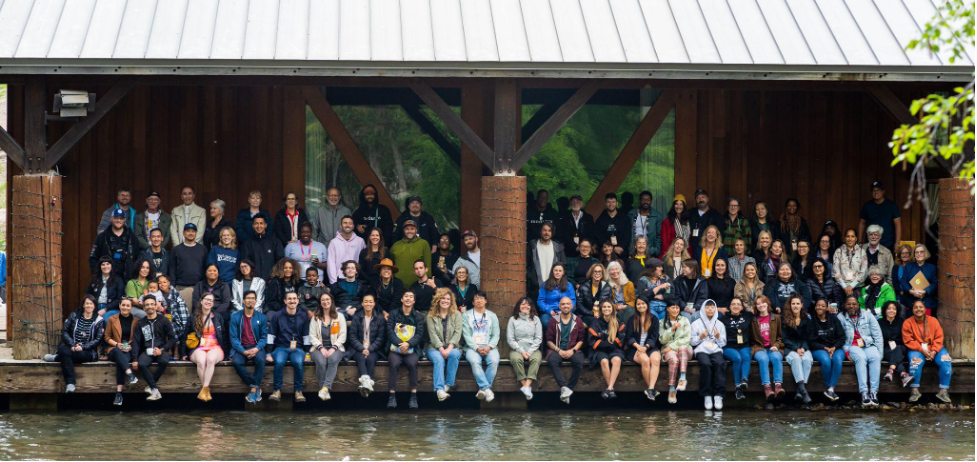
We’ve just completed a magical summer at the Sundance Resort and other beautiful locations, where artists came together to workshop projects and develop brave, risk-taking stories at our signature Sundance Labs. This has always been a part of our year-round work that’s near and dear to my heart, and it felt especially timely this year. 

As we speak, our entire country is having a conversation about the vital role of artists in society, and the right of creatives to earn a living from their work. In the midst of this challenging moment for our industry, it was invigorating and inspiring to feel the boundless creative energy of our Sundance fellows and watch new ideas take root. It brought home an essential truth: Supporting artists — creatively, strategically, and financially through grants — has never been more important. We remain committed to the future of Sundance Labs and are proud to stand in solidarity with the WGA and SAG/AFTRA in building a fairer and more equitable future for artists. 

We got a powerful glimpse of that future beginning with the Native Lab in New Mexico, which brought together five Indigenous artists from the U.S., Canada, and New Zealand to work on their narrative feature and episodic pilot scripts. Through cold reads, one-on-ones with lab advisors, and a workshop with director Joan Tewkesbury, participants focused on writing with authenticity and specificity to tell their stories with their own unique Indigenous voice.

At the closing circle of the Directors Lab, one Fellow summed up an experience shared by many who participated: “I have never felt more alive in my life than during the time I spent here at the lab.” I couldn’t agree more; it was thrilling to experience the intersection of nature and storytelling as we brought eight directors together to workshop their feature projects. Every day was full of creativity, imaginative possibility, and a willingness to try new approaches and push boundaries. It was a special treat to have four alumni — Gina Prince-Bythewood, Rick Famuyiwa, Miguel Arteta, and Ira Sachs — return as advisors, joining Artistic Director Gyula Gazdag and many others who have made a deep commitment to our culture of generosity. We also had a beautiful celebration of Joan Darling and Joan Tewkesbury, who have contributed to our labs for more than 30 years (!) and will continue to support Sundance fellows online.

Next up, we moved into the online Screenwriters Lab, which gave many of our fellows the opportunity to translate their discoveries from the Directors Lab into work on their scripts. Highlights included one-on-one feedback sessions with advisors, an in-depth advisor discussion of unforgettable film endings, and a conversation with Tarell Alvin McCrainey about the writing of the exquisite film Moonlight.

Following the Screenwriters Lab, we hosted five feature documentaries in post-production at the annual Documentary Edit and Story Lab. Artists from the U.S., Jordan, and Palestine set up a makeshift edit room at the Sundance Resort, working intensively with six world-renowned advisors to reimagine and reinvigorate their work. The lab also hosted a track for emerging editors who gained real-world experience working alongside fellows. A few weeks later, the Ignite Lab at MASS MoCA brought together ten filmmakers from ages 18–25 to establish the foundation for what will be a year-long fellowship focused on providing young artists with a robust creative community as they begin their careers.  

We closed out July with our Producers Lab, focusing on holistic producing, sustainability and fostering the essential creative and business partnership between directors and producers. And looking to the Fall, we’re excited to support storytellers at our Episodic Lab and Catalyst. 

There were so many memorable moments this summer — from watching scripts come alive for the first time to sitting with our fellows and advisors as they worked through rough cuts of scenes. It was awe-inspiring to witness fellows from all over the country and all around the globe connect across storytelling forms, backgrounds, identities, and experiences. And, of course, we laughed a lot, connected deeply, and enjoyed a safe space that honors creativity and individual voices. 

Thanks so much to our incredible staff, advisors, fellows, crews, actors, volunteers, funders, and partners for your enduring commitment, and for making Sundance such a special and meaningful place for discovery and community. With each moment of resilience and inspiration, each moment of vulnerability, and each thought-provoking insight, it becomes even clearer that these stories need to be told as part of the cultural conversation — and the fiercely talented, independent artists we support have so much to offer our world.

In gratitude,

Glacial Grandeur Takes Center Stage at The Bolder Lodges, Lysefjord, Norway

Glacial Grandeur Takes Center Stage at The Bolder Lodges, Lysefjord, Norway

Located at the southernmost end of a series of majestic Norwegian fjords and encircled by a mountainous stretch exists a landscape where even the most oversized personality can be made to feel humbled by nature’s grandeur. Lysefjord, renown amongst hikers, campers, kayakers, mountain bikers, and adventurers drawn to its awe-inspiring scenery, was till now mostly off the radar of the design-first traveling set. The Bolder Lodges is a small enclave of architectural cabin-style retreats furnished into a warm womb with a view that may tempt the architectural set to “rough it” within the gentlest of accommodations.

Two cabins shown situated upon large concrete pillars to further near the tree line along a snow-covered mountain landscape.

Each of the four cabins stand upon large concrete pillars to further elevate the structure and view.

Designed by Norwegian architectural firm Snøhetta, four 35m2 cabins – Stylten, Myra, Stjerna, and Eldhuset – are snuggly situated on the mountainside to offer guests exemplary views of Lysefjorden from above the tree line. Sheets of glass maximize the sensation of being part of nature even when safely nestled into the comfortable confines of each structure.

A majestic panoramic view of the nearby fjord located below the series of cabins from the glass facade covered bedroom. Interior is furnished with armchair, bed and pouf.

While the cabins themselves are comfortably cozy in dimension, the architecture’s tall ceilings and large panoramic windows create a “cliff’s edge” effect, inviting the sensation of hanging over a naturally occurring edge.

A majestic panoramic view of the nearby fjord located below the series of cabins from the glass facade covered bedroom, with light blue bedding and off-white blanket.

Black detailing and wood cabinetry appointed modern kitchen with small collection of white natural ceramics staged on top shelf over a kitchen sink.

Dark cozy bedroom with white linens and view of surrounding forest through side windows. Small black sconce to the right of the bed.

Natural materials such as wood, marble, and leather lean toward the darkly minimalistic, accentuated by an earthy palette and organic textures across the built-in bed and bathroom located on the ground floor. Each of the cabin’s upper floors is dedicated to a kitchen and dining area appointed by Vipp.

Overhead shot of off white fabric pouf with two books and a drinking glass set on top of it to the left of a bed.

Side by side photos of The Bolder Lodge interiors; left image shows panoramic view looking out onto the fjord from a slim dining area, the other a dark small kitchen with a circular black kitchen vent and black countertops done by Vipp.

Guests can choose to pre-order provisions to stock their Vipp designed kitchens for in-cabin dining, with a refrigerator, induction cooktop and oven, Nespresso coffee machine, tea kettle and a selection of kitchen utensils provided.

Dining table with Scandinavian modernist design tea kettle, candle holder, mug, creamer and small bowl with two dining chairs face to face with majestic view of the Norwegian fjord waters below.

Clad in untreated red cedar, the cabins’ exteriors reference the surrounding forest and are intended to patina into a natural gray finish as the elements blend the structures into the surrounding landscape. In contrast, oak wood dominates within, but Snøhetta has made sure to avoid uniformity in the layout to give returning guests a unique experience within each cabin structure with every visit.

Snow covered mountains with several of the The Bolder Lodges obfuscated by the trees, with clouds blanketed across the large fjord to the right.

Overhead photo of The Borders Lodge during winter, with the entire roof blanketed in a thick layer of snow.

The site is off the grid except for electricity powering the light and the amenities in the cabins. The naturally sourced spring water from the treatment plant under the parking is cleaner than the water in the local river running over the mountain.

Two Adirondack style wooden chairs situated on a hillside next to one of the cabins of The Bolder Lodges during dusk or dawn.

Silhouette of one of the The Bolder Lodges cabin during a hazy warmly illuminating sunrise with a bridge spanning the fjord in the distant background and the mountains reflected across the water.

Silhouette of one of the The Bolder Lodges cabin during a hazy warmly illuminating sunrise with a bridge spanning the fjord in the distant background and the mountains reflected across the water.

There are also two 22-square-meter SkyLodges with two double bedrooms. Designed in a cube over cube floor plan, architect John Birger Grytdal has created accommodations as close to a tree house experience as one could imagine in Lysefjord.

View of the of the two smaller 22 square meters SkyLodges overhanging the mountainside, captured during a dramatically darkened cloudy sky with the interior of the cabin warmly illuminated.

Side by side photos of The Bolder Lodges' bathroom and interior furnishings, including a small bathroom sink and leather armchair with tilting adjustable floor lamp in black.

It may be a cabin, but you won’t be roughing it. Soft cotton towels and luxury toiletries from Barbor appoint the fully equipped bathroom, complete with warm shower and flush-toilet.

What: The Bolder Lodges
Where: Ryfylkevegen 251, 4110 Forsand, Norway
How much: From $371/night for two occupants; a newly opened Grand Lodge offering two double bedrooms and two bathrooms is available with prices made available upon inquiry.
Highlights: The glacial carved landscape draws thousands of hikers and outdoor adventurers, with numerous trails to explore and 4,444 steps of ascending the world’s longest wooden staircase situated in the nearby village of Flørli. The Pulpit Rock (Preikestolen) in Ryfylke is a popular vantage point made even more famous by Mission: Impossible – Fallout; the view requires a moderately demanding 4–kilometer hike during the warmer months, but a guide is recommended during the winter.
Design draw: Each of the four cabins are dramatically furnished with Scandinavian designs from Vipp and Eikund, the dark interior palette resulting in a stark contrast to the glacial-bright views.
Book it: The Bolder Lodges

Photos courtesy of The Bolder Lodges

Go virtually on vacation with more design destinations right here.

Gregory Han is a Senior Editor at Design Milk. A Los Angeles native with a profound love and curiosity for design, hiking, tide pools, and road trips, a selection of his adventures and musings can be found at gregoryhan.com.

A New USPS Collection Enlarges the World’s Tiniest Lifeforms to the Size of a Postage Stamp

A New USPS Collection Enlarges the World’s Tiniest Lifeforms to the Size of a Postage Stamp

All images courtesy of USPS

One of the newest releases from the U.S. Postal Service features creatures so microscopic they’re too small for even the back of a postage stamp. Released earlier this month, the Life Magnified collection contains 20 of the world’s tiniest living forms, from a cluster of supple red blood cells and a single strand of fibrous hair to the sprawling network of mouse brain neurons. While most stamps shrink a photo or illustration to fit within the confines of the rectangular sticker that’s less than an inch wide, this series enlarges the images to reveal the infinitesimal in striking, vivid detail.

Included in Life Magnified are several scientists and photographers featured on Colossal, including Igor Siwanowicz (previously) and Jason Kirk (previously). Shop the collection at USPS.


A stamp features a blue and orange zebrafish

The collection of life magnified stamps in a stamp book

Do stories and artists like this matter to you? Become a Colossal Member today and support independent arts publishing for as little as $5 per month. The article A New USPS Collection Enlarges the World’s Tiniest Lifeforms to the Size of a Postage Stamp appeared first on Colossal.