WAM artist talk introduces exhibit highlighting local Native artists

WAM artist talk introduces exhibit highlighting local Native artists

When Daniel Pewewardy isn’t working at the Wichita Public Library, he’s busy making memes about manifest destiny, murder and his family’s history. While his meme account is one of the ways he expresses his creativity, he also devotes himself to other artistic work. Best known for his stand-up comedy, Pewewardy also works in filmmaking, and is otherwise involved in the local art community. 

His latest project involves an exhibit at the Wichita Art Museum (WAM) titled “Twice Removed: Native American Life After Relocation” and features work from contemporary Native artists, with a focus on highlighting what life looks like for Native Americans today. The exhibit was introduced to the public in Cessna Gallery as part of WAM Nights, an initiative that features artist talks and performances every Friday evening at the Wichita Art Museum.

“I think what’s really important is just kind of pushing the idea that Native Americans are still here,” Pewewardy said in his presentation. “We’re in the 21st century. We’re not living in teepees.” 

The exhibit includes a video project that Pewewardy collaborated on, photography, several folding chairs, which Pewewardy terms “powwow chairs,” painted with the names of the Kiowa Six, and ledger art. Ledger art is an evolution of traditional paintings from various Great Plains tribes, which were originally done on buffalo hides. In his presentation introducing the exhibit, Pewardy explained the significance of this type of art and why he chose to feature it.

“They wanted to find ways to defeat us, so they just killed our food supply because it was easier. So hides became harder to use to continue our artistic traditions,” Pewewardy, who is Comanche, said. “So, you see Plains natives start using paper and it’s called ledger art.”

Pewewardy also chose ledger art for its accessibility to everyone, regardless of artistic education or experience.

“I wanted to find a medium in the native art world that was contemporary, not necessarily traditional and open to all tribes,” he said.

Multiple Native American artists contributed to the ledger art on display in the exhibit. Pewewardy found these artists with the help of Harvester Arts,a nonprofit community art organization partnered with the Wichita Art Museum to recruit local artists. 

“They really are a conduit for us to the local artists community,” Molly McFerson, the museum’s director of learning, engagements and partnerships said. “They work with so many local artists and we have opportunities here through this community gallery.”

Pewewardy says it is important to support artists like the ones whose ledger art is featured in “Twice Removed”.

“Following the artists, finding their Instagram, looking them up online, buying their art and supporting their art is I think the most important thing anyone can take away from the show is to continue supporting the native community in their artwork,” he said.

“Twice Removed: Native American Life After Relocation” will be at the Wichita Art Museum through November 26. Museum admission is free to the public and featured exhibitions are free to Wichita State students with a student ID.

Moment refreshes popular MagSafe photography case for iPhone 15 series handsets

Moment refreshes popular MagSafe photography case for iPhone 15 series handsets

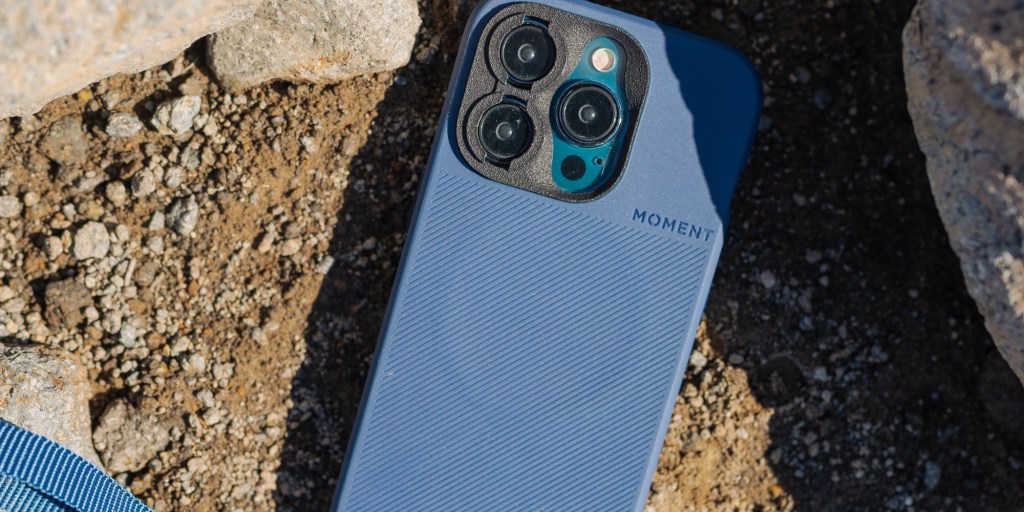
Joining all of the other new iPhone 15 cases that have hit the scene today, one of our favorite manufacturers is back with its latest collection. The Moment iPhone 15 case series continues to deliver some of the best options on the market, especially when it comes to photography-focused offerings.

Check out the new Moment iPhone 15 cases

While other brands are focused on launching an entire suite of new debuts for Apple’s latest, Moment is sticking with just a single new release today. As it does every year, the company is launching a photography-focused upgrade to your new handset that is compatible with its full lineup of accessories.

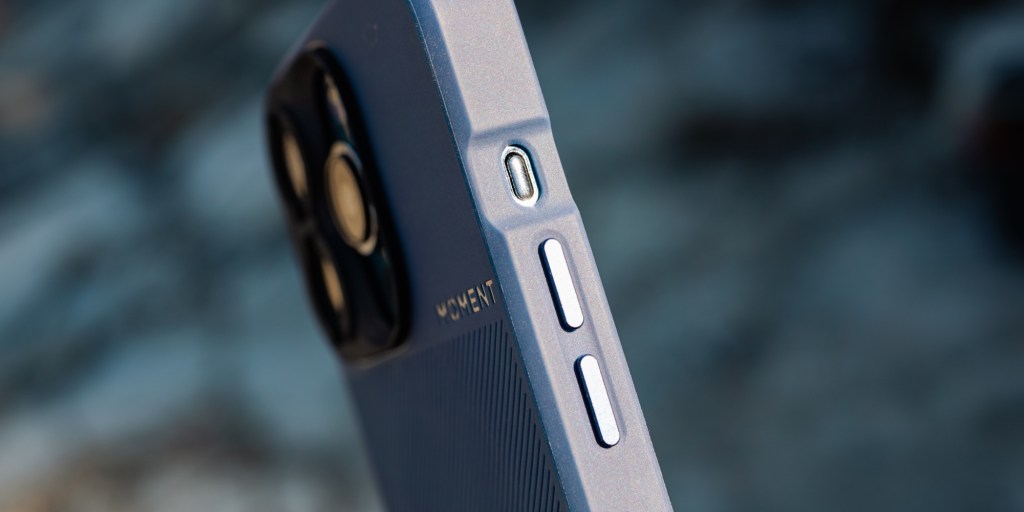
Meet the new Moment iPhone 15 Cases. This cover is largely the same as previous years, with the brand adopting an if it ain’t broke, don’t fix it mentality. In true Moment fashion, the covers have that signature textured backing with a ribbed rail on the outside for some added grip. On top of being designed to protect against 10-foot drops, there’s also the new fourth-generation TPU blend that is optimized for 5G connectivity, with some added polycarbonate to reinforce the whole package.

Moment iPhone 15 casesMoment iPhone 15 cases

But that doesn’t mean that Moment isn’t making any adjustments. In fact, there are quite a few upgrades that really do make this the company’s best case to date and not just a tweaked version for the new smartphone. The new Moment iPhone 15 Cases now all sport anodized metal buttons for an even more premium feel, with that same sentiment carrying over to an extra-soft microfiber lining on the inside to protect your device.

There’s also a thinner (M) Force magnet array that, on top of being slimmer than previous models, is also 15% stronger. It’ll, of course, work with MagSafe charging, but Moment is also backing it with support for the Qi2 wireless standard, as well.

Moment iPhone 15 casesMoment iPhone 15 cases

The new Moment iPhone 15 cases are now going up for pre-order before shipping next week. They’re slated to begin leaving the warehouse on September 22, which is when the new iPhone 15 devices will begin arriving. The covers will sell for $49.99 each and come in several colors.

Today’s reveals of the new Moment iPhone 15 cases arrive just shortly after the company launched its new smartphone lenses. Of course, the new covers are compatible with these accessories, which were designed to pair with Apple’s latest and take full advantage of the refreshed camera array. We fully break down what’s new with the updated T-Series lens collection, which is now beginning to ship, to go alongside the new cases.

To go alongside the cases, Moment also has a new screen protector. The $9.99 offering is just 0.3mm thick and has an oleophobic coating to repel oil and reduce fingerprints.


Subscribe to the 9to5Toys YouTube Channel for all of the latest videos, reviews, and more!

Recent VideosRecent Videos

How a supermodel negotiates the ethics of fashion photography

How a supermodel negotiates the ethics of fashion photography

The history of fashion photography is one of power dynamics: a push and pull of a photographer’s imagination and a model’s desire to complement it. The photographer manipulates the model and vice versa — melding into an image of beauty, ambiguity, aspiration and curiosity at the foundation of how clothes reflect the values of our times.

The 31-year-old model Paloma Elsesser has disrupted that structure. One of the most in-demand models of her generation — a bona fide millennial supermodel — she describes herself as “an agitator.” Walking for brands including Versace, Michael Kors and Eckhaus Latta, she is plus size and mixed race, and her extraordinary appearance has challenged the fashion world’s attachment to the idealized woman.

Remarkably open about her body and a model’s role in the construction of beauty standards, she challenges the assumption that the very business of modeling is to be seen, not heard.

“I have agitated what was once the standard — even what was once the standard for plus-size models,” she said, adding that plus-size models were typically required to be “bombshell and commercial.” Still, she said, “there’s just so much work that needs to be done — fundamentally in fashion, [with people] just having empathy, period.”

Sharp. Witty. Thoughtful. Sign up for the Style Memo newsletter.

Elsesser is once again pushing boundaries with a new book, “Treasure,” documenting in intimate detail breast surgeries she underwent in 2019 and 2023. The project wouldn’t have been possible without its photographer, Zora Sicher, 27, who first photographed Elsesser for i-D Magazine in 2016, “when the female gaze was a very popular term,” Sicher said on a recent phone call with Elsesser. Sicher has been one of Elsesser’s go-to photographers since, especially on collaborative projects such as the model’s plus-size capsule for the influencer-favored brand Miaou.

Both have transcended fashion’s propensity for typecasting, Elsesser in particular; despite ongoing cheers about “body positivity,” plus-size models, a category that usually means a woman who is a Size 12 dress size or higher, are less present on the runway than in recent memory. Fashion search engine Tagwalk reported at the end of the Fall 2023 season that the overall number of plus-size and midsize models on the runway dropped by 24 percent from the previous season.

“Treasure” is an intimate and at times disturbing series of images, documenting pain and blood and scarring. It perhaps gently suggests that empathy can be a way of finding beauty. “I trust her not just on a friend level, not just on an artist level, but on a truly fundamentally moral and ethical level,” Elsesser said of allowing Sicher into the operating room to photograph her sliced nipples and breasts.

Many other models of her set have started clothing or makeup lines. A book documenting two painful plastic surgeries — a breast reduction with the insertion of two implants to maintain the roundness of her breasts in 2019, and the subsequent removal of the implants in 2023 — certainly makes a drastic statement. “People are very uncomfortable stepping outside of who they’re told to be,” Elsesser said. But what motivates Elsesser’s career moves, she said, is the process of negotiating the world of modeling “morally and ethically.”

Not everyone admires that outspokenness, she pointed out, which is part of what makes Elsesser such a significant presence in the modeling world. “Zora and I are so upfront about the way that we see and feel,” she said, adding that she and Sicher enjoy existing “on the edges of our industry.” Both carefully interrogate their projects and collaborators, feeling as if their choices and alignments represent something deeper about who they are.

Considering that, following the #MeToo movement, many magazines stopped working with photographers accused of misconduct and put guardrails in place to ensure models’ safety on set, there is something utopian about the model-photographer relationship between Sicher and Elsesser, which makes the book notable on its own.

But then there are the images themselves. They are not designed as a foil to, say, clinical imagery of surgeries — which is often rife with ethical ambiguities — nor is it just an antidote to the lascivious photography of classic fashion photographers such as Helmut Newton, whose images for Vogue often glamorized plastic surgery as a high-tech form of BDSM. As Elsesser put it, “These aren’t modeling images,” executed with the lighting and angles that would capture a model at her most pristine. Though they are in intriguing conversation with both kinds of photography. (Sicher points out the anonymity of medical textbooks, in which identifying features are generally blocked out, which can feel dehumanizing.)

Instead, these images inspire empathy. Elsesser and Sicher said that was one of the most rewarding parts of taking the images: the conversation that has emerged between each other and their friends around the grades of vanity that cosmetic surgery seems to inspire. Breast implants are remarkably common, Elsesser said, and “they’re appreciated and valued when they’re perfect and they’re done, and it’s pornography and images — if they look natural, or they don’t and they look like a spectacle. But one person vulnerably engaging with that conversation — it’s suddenly uncomfortable. It’s suddenly, ‘You don’t love yourself.’”

Sicher finished Elsesser’s sentence: “Which is sort of what drove me to ask a lot of these questions,” of herself and of Elsesser while capturing the images. “Most of the time, we’re just talking [while taking the photographs]. My approach to photography has always been way more emotional than it is technical.”

For the Love of Dance Photography: Whitney Collins Q&A

For the Love of Dance Photography: Whitney Collins Q&A

Whitney Collins is a fine art dance photographer based in Savannah, Georgia, whose curiosity about photography was kindled when she got married and hired a wedding photographer. Not only was she impressed by the fee the photographer commanded, but she also got the opportunity to take a few shots herself and was immediately hooked. She started her business with a holiday shoot in a local park, but as a former dancer, soon gravitated toward dance photography. That was when her career took off.

She started a Facebook campaign called “For the Love of Dance,” which propelled her business forward. Now, she stays active in her local dance community as a sponsor of local dance events. Collins’ advice to photographers just starting out is to find three people who exemplify your ideal client and give them excellent service and photographs. From there, word will spread.

In the most recent round of The Portrait Masters Awards & Accreditation, Collins was the sole photographer to achieve the coveted Fellow accreditation, the highest level possible. She also had images place in the Black and White and Dance categories. You can see them in the Awards Gallery.

Find more business advice from Collins in the Q&A below, and hear her talk about her business on The Portrait System Podcast with host Nikki Closser.

© Whitney Collins

What has been your biggest breakthrough in business? 

That the actual art is not the most important element of your business. You can be THE BEST artist, but if you don’t know how to run a business, or you don’t believe in your own value, you won’t succeed.  

How did you push past fear when building your business? 

I realized that my fear stemmed from my own limitations and beliefs about myself. I also believe that sometimes you just have to do things scared. You can’t wait until the fear passes to take the next step. Each time you step through the fear, you gain confidence in your ability to do it again. I accepted that fear would always be present when I put myself out there, but that it didn’t have to paralyze me and prevent me from moving forward.  

© Whitney Collins

What has been your biggest accomplishment since starting The Portrait System? 

Being able to leave my teaching job without going into debt. I am currently running a 6-figure dance photography studio and living life on my own terms.  

For someone starting out on their photography journey what advice would you have for them? 

Keep it simple. You don’t need a studio and fancy equipment to get started. It’s so easy to look at where others are in their journey and get impatient, but pace yourself! Like so many others, I started in a spare bedroom, and I worked my way up to industry-standard pricing in a low-risk environment. I had a full-time job, so I was never desperate to make money, and I think that made a huge difference.  

© Whitney Collins

How has The Portrait System changed your life for the better? 

The self-value work has been the most life-changing in all areas of my life! I have always struggled with confidence and self-worth, and if it wasn’t for TPS, I don’t know that I would have believed in myself enough to start my business and leave teaching.  

The Portrait System Podcast helps portrait photographers navigate the world of photography, business, money, and much more. Hosted by Nikki Closser, the podcast is powered by The Portrait System, a comprehensive, online educational platform that teaches all aspects of running a successful portrait photography studio. If you’d like to be a guest on The Portrait System Podcast, send them a voice message. 

The Art of Draping – by Lola Melani

The Art of Draping II – by Lola Melani

The Art of Draping Bundle

Man sentenced to prison for selling fake Native artwork

Man  sentenced to prison for  selling  fake Native artwork

A man was sentenced to prison for selling fake Native artwork in Alaska Aug. 28.

Cristobal “Cris” Magno Rodrigo, 59, from Washington state, was sentenced to two years in federal prison for violating the Indian Arts and Crafts Act.

For years, Rodrigo was selling Philippine-produced products as authentic Alaska Native-produced artwork at a store in Ketchikan, Alaska.

The supplier of the products was Rodrigo Creative Crafts, a company owned by Rodrigo and his wife and located in the Philippines.

The business was created for the sole purpose of producing carvings featuring Alaska Native designs and motifs using Philippine labor, according to court documents. The carvings were shipped to the U.S. and then to Ketchikan, where they were later sold as authentic Alaska Native art.

In 2019 and for part of 2021, the family and their Alaska-based company employees sold over $1 million worth of Philippine-made carvings presented as Alaska Native artwork.

“The Rodrigos sold imported products as Alaska Native made in their Ketchikan, Alaska store,” said Edward Grace, Assistant Director of the U.S. Fish and Wildlife Service Office of Law Enforcement, in a press release on August 30. “This deceptive business practice cheated customers and undermined the economic livelihood of Alaska Native artists. The U.S. Fish and Wildlife Service has a dedicated team of special agents who work on violations of the Indian Arts and Crafts Act. This sentence was the result of the strong collaboration between our special agents, the Indian Arts and Crafts Board, and the U.S. Attorney’s Office.”

Rodrigo was also sentenced to make a $60,000 donation to the Tlingit and Haida Central Counsel Vocational Program, write a letter of apology to be published in the Ketchikan Daily Newspaper, and serve three years of supervised release or parole. His two-year initial confinement is the longest sentence a defendant has received for any Indian Arts and Crafts violation since the truth-in-marketing law became public law in 1990.

There are other defendants in a similar case, with ongoing cases: Glenda Tiglao Rodrigo, 46, and Christian Ryan Tiglao Rodrigo, 24. Rodrigo also hired Alaska Natives at both Ketchikan stores to represent and sell the Philippine-produced artwork as their own authentic Alaska Native artwork. According to the Department of Justice, the Alaska Native workers told customers they were all related family working in the store, and the art was all authentically produced from locally sourced materials and made by Alaska Natives.

“The actions the defendant took to purposefully deceive customers and forge artwork is a cultural affront to Alaska Native artisans who pride themselves on producing these historical works of art, and negatively affects those who make a living practicing the craft,” said U.S. Attorney S. Lane Tucker for the District of Alaska.

The Indian Arts and Crafts Act was signed into law in 1990 and is a truth-in-marketing law aimed to protect authentic American Indian and Alaskan Native artisans and products unique to their culture and traditions. It was passed to deter misrepresentation in the marketing of Indian art and craft products within the United States. Many have advocated for additional measures to prevent fraud or misrepresentation of authentic American Indian and Alaskan Native and American Indian and Alaskan Native-style traditional and contemporary arts and crafts produced after 1934.

Some traditional items frequently copied by non-Indians include jewelry, pottery, baskets, carved stone fetishes, woven rugs, kachina dolls, and clothing.

“The Indian Arts and Crafts Board administers and enforces the Indian Arts and Crafts Act, a truth-in-marketing law,” said Indian Arts and Crafts Board Director Meridith Stanton in a press release. “The Act is intended to rid the Alaska Native and Indian arts and crafts marketplace of fakes and counterfeits in order to protect the economic livelihoods and cultural heritage of Alaska Native and Indian artists and craftspeople and their Tribes and villages, as well as the buying public.”

“Mr. Rodrigo’s sentencing should send a strong message to those who prey upon authentic Alaska Native artists and vulnerable consumers that this destructive conduct will not be tolerated, and Act violators will be held accountable,” Stanton said of Rodrigo’s sentence.

The case was investigated by the U.S. Department of Interior, Fish and Wildlife Service, and Office of Law Enforcement with assistance from the Indian Arts and Crafts Board, U.S. Customs and Border Protections, and the U.S. Dept. of Agriculture.

Currently, the Dept. of Interior is considering adding protected mediums under the Indian Arts and Crafts Act. It recently conducted a meeting with comments from artists and tribal representatives during the Santa Fe Indian Market at the Museum of Contemporary Native Arts.

The DOI is accepting public comments on the adjustments until 11:50 pm Eastern Time on Friday, Sept. 1. 2023, at consultation@bia.gov.

Anyone who suspects a violation of the Indian Arts and Crafts Actcan submit a complaint to the Indian Arts and Crafts Board at doi.gov/iacb/should-i-report-potential-violation, by emailing iacb@ios.doi.gov, or call (888) 278-3253.

Cat Tree House: A Modern Home Designed With a Cat’s Perspective in Mind

Cat Tree House: A Modern Home Designed With a Cat’s Perspective in Mind

Located in the historic and lush city of Kamakura, just an hour outside of Tokyo, stands a pretty unique house, named A Cat Tree House. It’s a feline paradise designed for a couple in their thirties and their two beloved cats. Architect Tan Yamanouchi of AWGL has redefined what it means to design a home by taking inspiration from the clients, the four-legged kind, who don’t speak human language. Since the couple has lived with the two cats for ten years, the architects looked at them as more than just pets, instead as clients that had their own needs.

The cats had three primary requests. First, they wanted the freedom to choose their ideal temperature at any given moment. Cats are known for their sensitivity to temperature differences, and they love to move around to find the perfect spot. Second, they wanted to be close to their human family members but not too close, as they love their independence. Lastly, they desired a multitude of safe spaces to retreat to, adapting as the seasons change.

down corner view looking into modern home with stairs lining the perimeter

With these feline requirements in mind, the architects came up with an ingenious idea: to design the house as a giant cat tree. The entire house is conceived as a large staircase, with an atrium at its center that’s lit by a skylight. Natural light filters through, creating a play of shadows on each step throughout the day. These steps, inspired by the body measurements of the cats, result in a total of 23 different floor levels. The entire house is divided into temperature layers, each providing a unique environment for the cats to explore.

down angled view of modern home with stairs lining the perimeter

The spiral staircase is a cantilever design, reminiscent of the tamasudare, a loosely woven bamboo screen used in traditional Japanese street performances. It not only serves as a functional design element but also adds an artistic touch to the space. It also helps control humidity in the humid Kamakura environment.

interior view of modern living space with 2 butterfly chairs and a stairs leading up to walls of bookshelves.

Each corner of the spiraling structure houses different rooms for the couple and provides comfortable spots for the cats to relax. These rooms also serve as hiding places when unexpected guests arrive, making the house as functional for the felines as it is for its human occupants. The spiral staircase even doubles as a split-level library, with bookshelves hanging from the wall. It’s a haven for the cats to lounge and for humans to enjoy a good read.

angled interior view of modern home with stairs lining perimeter of open living space

modern kitchen view with bar

closeup view of staggered kitchen ceiling following the lines of the stairs above

view from kitchen into open modern living room with stairs rising to walls of shelves

open modern living room with stairs rising to walls of shelves

Windows are strategically placed throughout allowing the cats to enjoy the outside view, while simultaneously providing adorable cat sitings from those passing by in the neighborhood.

view into modern dining room

hallway view looking at four wood stairs up to glass door

angled interior view of modern table with chairs and office behind it

partial view into bedroom through arched doorway

partial view into bathroom through arched doorway

view into modern bathroom with dark moody tiles and walls

exterior view of modern house with dark wood exterior

In Japan, pets, especially cats, hold a special place in people’s hearts. With ten times more pet cats than newborn babies, it’s clear that feline friends are beloved companions. Japan’s aging population has also sparked an increased interest in animal therapy, making homes that consider pets’ needs all the more relevant.

closeup external view of modern home with a planted filled path going beside it

closeup external view of modern home with a planted filled path going beside it

angled view of modern home exterior with dark siding and light wood front door

angled view of modern home exterior with dark siding and light wood front door

Photography by Lamberto Rubino.

Caroline Williamson is Editor-in-Chief of Design Milk. She has a BFA in photography from SCAD and can usually be found searching for vintage wares, doing New York Times crossword puzzles in pen, or reworking playlists on Spotify.