10 Speakers, 20 Sessions, 2 Days: Rocky Nook Unveils Its First Online Photography Conference

10 Speakers, 20 Sessions, 2 Days: Rocky Nook Unveils Its First Online Photography Conference
[embedded content]

For those looking to level up their photography skills, leading photography education book publisher Rocky Nook is hosting its first ever online conference, called The Art and Craft of Photography.

Full disclosure: This sponsored article is brought to you by Rocky Nook.

The conference features two days of sessions presented by the authors of Rocky Nook’s best-selling photography books including Lindsay Adler, Roberto Valenzuela, Joe McNally, Scott Kelby, and more. These photographers, all top-notch teachers, will each present two different educational sessions that explore ways to develop your artistic voice and hone your photographic craft. Become a better photographer with lessons from world-class photographers—and maintain access to the session recordings for 12 months.

The conference is scheduled for November 8–9 from 9 a.m. – 3 p.m. (Pacific Time) and offers an early bird ticket discount of $199 (along with a $50 gift card to Rocky Nook’s bookstore) if you register early.

The Art and Craft of Photography features ten speakers from diverse backgrounds for a total of 20 sessions. If you’re ready to move past the fundamentals and shoot creative and editorial content with your camera, the conference offers two tracks: an “art” series focusing on how to tell your authentic story through your photographic style; and a “craft” series teaching high-level concepts and techniques so you can achieve your vision. This unique approach allows the speakers to pair the “deeper” topics in photography—such as curiosity, imagination, and vision—with the skills, dedication, and inspiration it takes to create great photographs.

The Teachers: Learn from the Professionals

The speakers will help you to awaken your creative spirit, develop your own photographic style, and deepen your understanding of the art and craft of photography.

Learn more about the speaker sessions here.

Why Should You Attend?

Learn the secrets of the great professional photographers and instructors while exploring a wide range of photography topics, including landscape, portrait, lighting, and commercial.

Discover your voice and develop your personal style—and improve your understanding of photography. Awaken your creative mojo and get inspired to go out and shoot!


Full disclosure: This sponsored article was brought to you by Rocky Nook.

Camera Bag: Project Photography and Layering

Camera Bag: Project Photography and Layering

As I prepared the photos for my recent feature on Amtrak’s new ALC-42 locomotives, I realized I didn’t have a good photo of the units at Stanton Creek, Mont. That’s not to say I didn’t have a photo of the flashy new locomotives there — I had a few — but there were some problems with them.

The first time I got the Chargers at Stanton Creek, I had the wrong leader — specifically, I had locomotive 302. The 302 was the first ALC-42 to lead a train in early 2022 on the Empire Builder, but just outside of Seattle it struck a truck at a crossing, damaging the locomotive’s nose cone. When it got back to Chicago, a new nose cone was popped on the locomotive and it was sent back to work. But there’s a big problem with that specific nose cone — it doesn’t have the white stripe all the other ALC-42s have. (Why Amtrak didn’t put the stripe on the replacement cone is beyond me.) I never actually noticed the lack of nose stripe until Matt Donnelly, Amtrak’s brand communications manager, pointed it out to me, and now it’s all I can see when I look at 302. So that photo was out. The second time I shot a Charger at Stanton Creek, I actually had the perfect locomotive for it — “Day 1” heritage unit 301 — but a hazy sky defused the light, so that shot didn’t work either.

I’m generally not that picky. Just the other night, for example, my wife ordered a sausage, pepperoni, pepper, and onion pizza — by no means my favorite, but I ate it nonetheless. But one area when I do get picky is when I’m attacking a photo project, and for the last 18 or so months the ALC-42 locomotives have been a pet project of mine. And when I adopt something as a “project,” I want to shoot it from every possible angle and I want to make those images as perfect as can be.

I was first introduced to the idea of project photography by my dad. When I was younger, I always wanted to see new railroads and different locations. But because I wasn’t paying for gas or doing any of the driving, we usually shot what Dad wanted to shoot, which meant repeat visits to the Rockland Branch (the state-owned former Maine Central branch that was operated by Maine Coast Railroad in the 1990s) or the former Canadian Pacific across western Maine. Both of those were his “projects” and that meant we would make dozens of visits to each during different seasons with different weather trying to get as many unique shots as possible. Dad wasn’t content with getting a few token shots. He wanted to cover those lines like few others had, so if anyone ever said, “Hey, can you put a slide show or article together about [insert railroad/locomotive/region here]?” he could confidently say, “Yes.”

BNSF Railway

When the author began shooting BNSF’s locals in northwest Montana, he knew he needed a shot of the Kalispell Job working the grain elevator in Evergreen, such as in November 2020. 

Of course, Tim Franz didn’t invent the idea of project photography; he was just copying what some of the well-known shooters in our hobby were doing. As Elrond Lawrence pointed out here in Camera Bag back in January (see “Lessons from Stein”), Richard Steinheimer “was a champion of returning to the same place again and again to get the pictures needed to tell a complete story in his projects.” For example, in the 1960s, Southern Pacific’s PA locomotives were a focus of Steinheimer’s, and while the lineside images of smoke-belching Alcos were the heart of that effort, it would have been lacking something had Stein not returned to get images of SP employees keeping those beasts in service at the locomotive facility in Oakland, Calif. Stein often referred to the idea of going back to a subject time and time again as “layering.”

Another photographer who practiced “layering” was John E. Gruber, founder of the Center for Railroad Photography & Art. Gruber photographed countless railroads and places, but it’s his work on a select few subjects — Chicago Union Station; Chicago, North Shore & Milwaukee; Green Bay & Western; and the Rio Grande narrow gauge — for which he’ll be most remembered. In each of those instances, Gruber made multiple visits to the same place getting to know the locations, the angles, the lighting, and — perhaps most importantly — the people who made those railroads work. Those people would not only become invaluable in providing information that could lead to unique images but became subjects of photos themselves, helping tell a complete story.

Over the years, I’ve had a few “projects” of my own. Canadian Pacific across Maine and the Rockland Branch have certainly been interests of mine over the decades, but, of course, that’s mostly piggybacking off what Dad has done. If you want a slide show of the last 30 years on the former MEC between Brunswick and Rockland, don’t ask me, ask him.

The former Great Northern in northwest Montana has been perhaps my biggest personal project, especially the line through Kalispell, part of which was ripped up a few years ago to make way for a trail. Not long after it was announced that about two miles of track through downtown would be ripped up (the surviving rail customers were moved to a taxpayer-funded industrial park east of town), I decided that the rails through Kalispell would be a project and I began shooting Mission Mountain Railroad’s local there as much as I could. At the time, I was working at a newspaper downtown, so running out to nab a few photos every other day was pretty easy. After I had checked off most of the lineside angles, I rode along with the train crew to get images on board and of the employees. I then began to seek access to the industries themselves — a grain elevator and a drywall distributor — to record what those operations were like.

Eventually, I created an in-depth record of the railroad there and began to ease off my efforts. That was, until the final few runs in late 2019, when I again started going out as often as I could to capture the end. Even after the trains stopped running and the rails were ripped up, I’ve gone back to Kalispell to get photos of the trail construction and developments that are springing up alongside it. Even if the trains are gone, there’s still a story to be told and photos to be captured. (For those who are curious, I published a story about that project online. You can check it out at kalispellrailroad.com.)

Another project that had occupied me over the last few years was photographing BNSF’s locals in and out of Whitefish. In some ways, this was a continuation of that Kalispell project because, in 2020, BNSF reclaimed from Watco the branch from Columbia Falls to Kalispell. Besides trying to get the local at some of the more notable locations it passes, I emphasized images of it switching the various industries it serves, from the industrial park in Kalispell to the lumber mill in Columbia Falls. At the end, I wanted to have enough images to put together a complete story, which I did in the April 2022 edition of this magazine. 

Which brings us back to that ALC-42 project I was talking about earlier. Ever since the first run back in early 2022, I knew I wanted to focus some photography efforts on the locomotive’s debut on the Empire Builder. For starters, that meant shooting the locomotives in as many different locations as possible on Marias Pass, arguably one of the most famous locations the train traverses on its daily run from Chicago to Portland, Ore., and Seattle, Wash.

I also tried to shoot the locomotives in different conditions, from bright sunny days to dark winter storms. I wanted down-low angles that emphasized the locomotives themselves and dramatic aerial views that put them in the context of the territory they were operating in. I also wanted images of them with people, so getting a few photos of them at Whitefish (one of the busiest stops on the entire route and a crew change point) was critical. Detail shots were another important consideration.

Some railroad photographers want to try and see as many different railroads and locations as they can. I get that. Part of the fun of this hobby is experiencing new places. But oftentimes, I find the biggest reward photographically is revisiting locations and subjects I’m familiar with over and over again in search of that perfect photo — a photo that can help tell a story. Ultimately, when I look at my photo collection, I really hope I’m able to find deep coverage of a few things, rather than shallow coverage of a lot of things.

Anyway, if you would excuse me, I’ve gotta check the weather for Stanton Creek tomorrow morning… 


How to Photograph Wildflowers in Windy Conditions

How to Photograph Wildflowers in Windy Conditions

Wildflowers can make fantastic subjects or complements to the subject of a landscape image, but when they start thrashing about in a stiff breeze, it can be tricky to still get optimal image quality. If you keep finding your plans foiled by the wind, check out this fantastic video tutorial that features a seasoned landscape photographer sharing some helpful tips for photographing wildflowers in such conditions. 

Coming to you from Michael Shainblum, this great video tutorial offers a wealth of helpful advice for photographing wildflowers, especially in windy conditions. We often talk about the importance of a foreground element in landscape photography, as the use of a wide angle lens without one can lead to an overly empty and flat image. A patch of wildflowers can be a particularly good element, as they are often vibrant and richly textured, and that can balance the similar elements often seen in the midground sky of such an image. And if you bring along a macro lens, you can sometimes get some extra images from the same spot! Check out the video above for the full rundown from Shainblum. 

And if you really want to dive into landscape photography, check out our latest tutorial, “Photographing the World: Japan With Elia Locardi!” 

10 Things Only Photography Snobs Say 🤣

10 Things Only Photography Snobs Say 🤣

Every photographer has just a little bit of snobbery in them at times. Maybe you’re a brand loyalist who swears by your fact that Sony is better than everything else on the market. Others may be proud to call someone an Uncle Bob at a wedding or an event. And yet, there are still photographers who love to call themselves just a natural light photographer. Well, we’re rounding up a few things that only photography snobs say all in good-natured fun. What kind of a photography snob are you? Let’s see!

Before I go on, realize that we’re joining in on the jokes for this one. Yes, an accredited photography publication can do that too.

Digital is Better Than Film

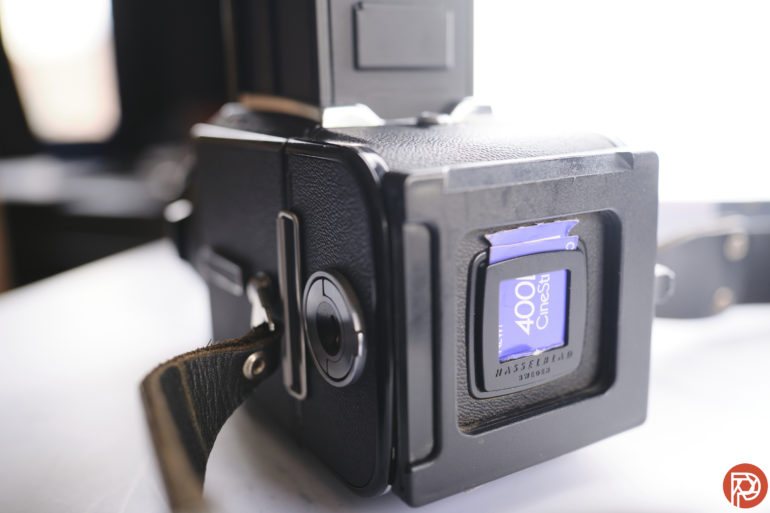
There are tons of photographers out there who’ve shot film and would never want to do it again. But most of the time, they talk about things like development and the whole process being much easier now. I’m sure we can all relate if you’re technically literate enough. Still, though, the generational trauma of feeling like you need to really work for the image hits a lot of us very hard — so we shoot film.

Film is Better Than Digital

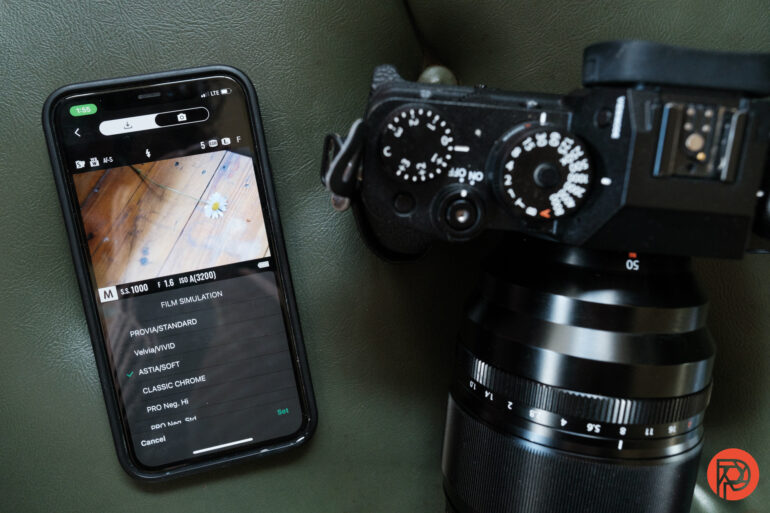
I’m sure that so many people think of this as a fact. I mean, look at how much digital tries to emulate the look of film! You can even put presets and LUTs on cameras to make your photos look like film. Just imagine that — we came all the way from film into digital just to make things look like the way they use to!

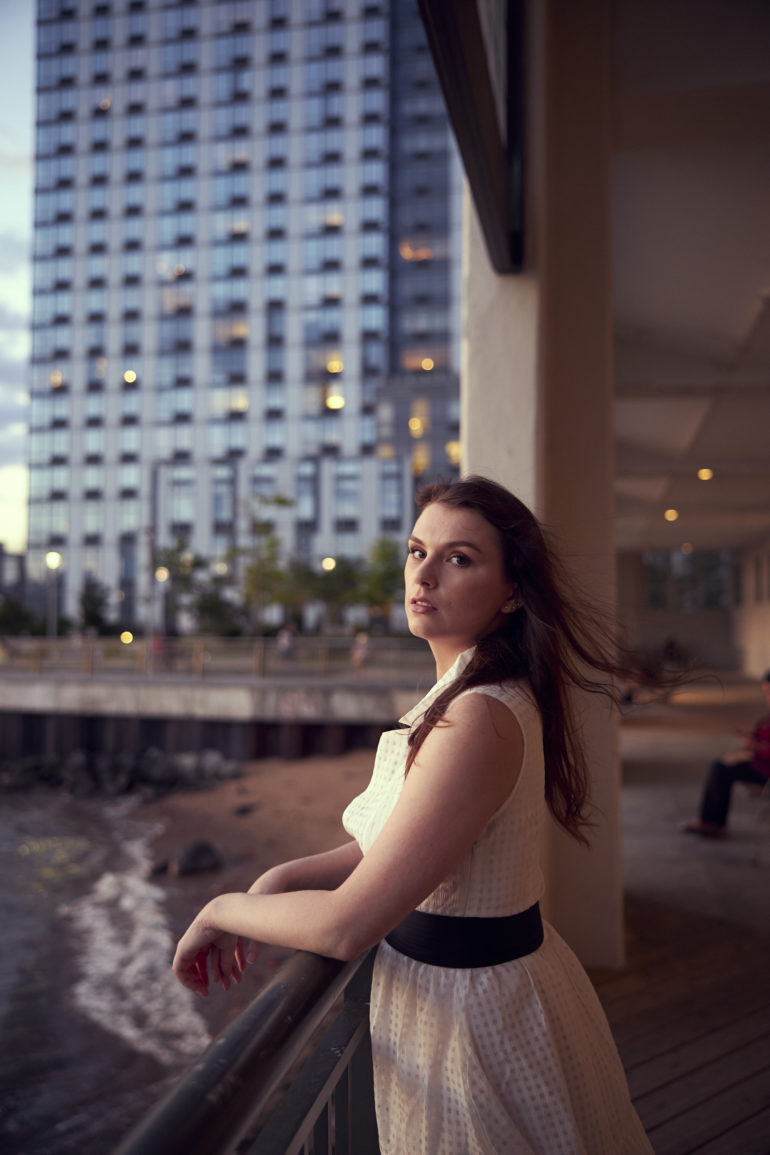
I mean, just look at this photo above. It’s art!

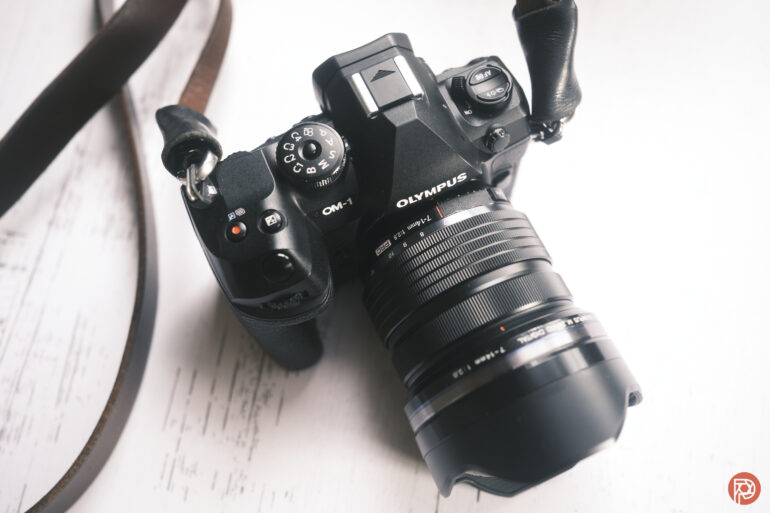
Micro Four Thirds is Crap

This is all about size! Many photographers swear that they’d never shoot Micro Four Thirds without realizing that the size is based on a film standard. In the video world, so many photographers can’t live without Micro Four Thirds. But in stills, we always think that bigger is better. But if that’s the case, why are we all shooting full frame?

I Only Shoot Full Frame

Full-frame cameras are the standard for so many photographers out there. Yet they still don’t realize that it’s not the big one. If you really think that APS-C and Four-Thirds sensors aren’t great because they’re smaller, then imagine what medium format is like! With the innovations that companies like Fujifilm have been making in the segment, it’s hard to not take this question seriously.

I’m a Natural Light Photographer

How do you know that someone is a natural light photographer? They’ll tell you. Otherwise, they’ll just use LEDs and constant lights because they just don’t know how to light.

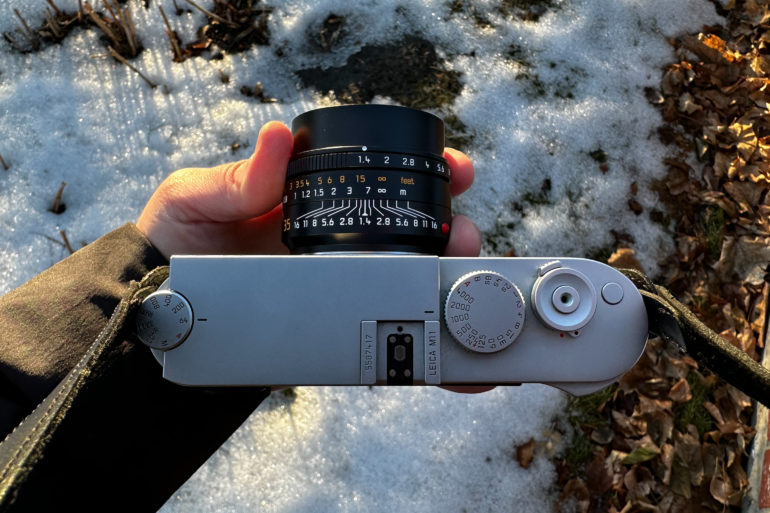
Leica is Only for Rich People

Yes, Leica cameras are only for rich people in a segment of the market that’s become a quasi-luxury hobby while so many other people use only their phones. Just think about why Sony put an auto mode on the Sony a1.

Nothing is as Good as My Camera

It’s often sad when people buy a camera or lens and then proceed to read reviews and watch videos on it just to justify their own purchases to themselves. Something along the lines of “Nothing is as good as my Canon” is often said then. It reeks of desperately wanting to feel like their R5 is so much better than everything else in a market where everyone shares parts, processors, and more.

My Peak Design is Better

Pfft. Really?

Digital is so Overrated

You can attribute this to any member of millennials or Gen X who only owns a few Buy-It-For-Life style coats, Filson bags, and Rolex watches. They want something that lasts and that is older than them.

I’ve Got 15k Instagram Followers. Can I Just Get In?

This is often said by someone who is only a photographer for Instagram followers and calls themselves as such. However, they can’t produce a single invoice showing that they’ve been paid for photographic services.

Sculpture foundry in Kochi customises works for homes

Sculpture foundry in Kochi customises works for homes
Bronze Age is a Kochi-based sculpture foundry that offers a range of sculptures, from replicas of famous works to hand-crafted originals. It also has a range of artifacts, bronzes of Gods and Goddesses, and abstracts in mixed media. Founder Renny Jacob wants to make art more accessible to people and evolve an ecosystem where one can place sculptures in their living space. The gallery is also planning to introduce larger sculptures for outdoor spaces.

Indiana artist sought for official Holcomb portrait

Indiana artist sought for official Holcomb portrait
image

The search for a Hoosier artist to paint the official portrait of Gov. Eric Holcomb has begun.

Indiana State Museum and Historic Sites is accepting applications online through Oct. 23 and will coordinate the selection process, according a news release.

The oil or acrylic painting, about 42-inches-by-32-inches, will be the 55th portrait in the collection managed by the museum organization.

To be considered, artists must be a resident or native of Indiana or a graduate of an Indiana institution of higher learning. Preference will be given to Indiana residents, the news release says.

Artists can apply at www.in.gov/arts/apply.

Applications will be reviewed by a panel that includes representatives from the museum, Indiana Arts Commission, the governor’s office, professional artists and curators.

The selected artist is expected to be announced by Jan. 31. The painting is expected to be complete be late summer and unveiled in Fall 2024. Holcomb will leave office in January 2025.

The artist’s commission will be paid through private funding.

The state’s first official gubernatorial portrait was created in 1869 for then-Gov. Conrad Baker, according to the release.

Sea-Inspired Sculptural Jewelry by Mariko Kusumoto Blossoms from Gossamer Fabrics

Sea-Inspired Sculptural Jewelry by Mariko Kusumoto Blossoms from Gossamer Fabrics

“Gathering Blue.” All images © Mariko Kusumoto, shared with permission

Exquisite bulbs, florets, and playful silhouettes emerge from delicate fiber in the jewelry and sculptures of Mariko Kusumoto (previously). Inspired by the myriad geometries and colors of coral, she creates gauzy, wearable forms from materials like polyester, nylon, and cotton. Some pieces sprawl out with a variety of textures to mimic the sea bed, while necklaces or bracelets incorporate confectionery-like shapes and vessels containing tiny objects.

Kusumoto is currently working on a public art installation that will be installed in Kaohsiung, Taiwan, this November. And beginning in April next year, she will be exhibiting at Legnica Jewelery Festival SILVER in Poland. Find more on the artist’s website, and follow Instagram for updates.


A lightweight bracelet made from airy textile shapes that look like coral.

“Bloom”

A small brooch made from airy textiles.

“Gathering White”

A collection of airy, textile shapes.

“Goody Bag”

A bracelet made of lightweight fabric with little objects inside vessels.

“Skizuku Bracelet”

A lightweight necklace made from airy textile shapes that look like coral.

“Sea Breeze Necklace”

A lightweight brooch made from airy textile shapes that look like coral.

“Seascape Brooch”

A collection of coral-inspired textile shapes.

Detail of “Seabed”

A collection of coral-inspired textile shapes.

Detail of “Seabed”

Do stories and artists like this matter to you? Become a Colossal Member today and support independent arts publishing for as little as $5 per month. The article Sea-Inspired Sculptural Jewelry by Mariko Kusumoto Blossoms from Gossamer Fabrics appeared first on Colossal.

‘It has a price’: war photographer Corinne Dufka on capturing conflict

‘It has a price’: war photographer Corinne Dufka on capturing conflict

When the tears came, they weren’t always for the dead and the unfathomable depths of suffering. They also flowed for the times in between, for the joy and smiles of the unknowing.

As the acclaimed American war photographer Corinne Dufka sorted through the pictures and negatives for her new book, This Is War: Photographs from a Decade of Conflict, covering more than a decade on frontlines from El Salvador to Bosnia and Liberia, she once again looked into the faces she had perhaps only registered briefly years ago.

“I entered into this zone of memory, of trying to understand what I witnessed. That in and of itself is an interesting process because I wept a lot,” she said. “Some of the pictures that were saddest were of times of hope. One of the saddest pictures is in between the first and second wars in Liberia when people are waiting in line to vote, so earnestly and with so much enthusiasm and optimism. They didn’t know that within two years their country would be involved in another horrific conflict.”

This Is War is thankfully spare on dead bodies. They are there but the focus of the book, as with most of Dufka’s work, is on those responsible for the killing or forced to live with its consequences.

In one picture, Dufka captures a child combatant playing with an abandoned toy as he guards a checkpoint in the middle of the embattled Liberian capital, Monrovia, in 1996. A rural Salvadorian woman stands at her window holding a photo of her husband who was one of three men in her village abducted by the army, and tortured and murdered.

El Salvador

In besieged Sarajevo, Dufka turns her camera on the agony of parting with no certainty as to when, or even if, women and children waving from an evacuation bus will see their families again. In Mostar, a Bosnian Croat soldier nonchalantly holds his gun at his side as hundreds of Muslim men are marched down a mountain track to a prison camp in an abandoned factory.

The book’s cover photo is of a pile of machetes discarded at Rwanda’s border as Hutus fled the country following the genocide of 800,000 Tutsis in 1994. A lone child stares at the camera as the adults shuffle past carrying bundles and responsibility for the last great crime against humanity of the 20th century.

Dufka describes her book as a “personal journey to come to terms with these dozen tumultuous years of covering some of the bloodiest and most horrific conflicts of the latter part of the last century in which I saw not only tens of thousands of people who’ve been killed in these outbursts of unspeakable violence but also a dozen or so journalist friends killed”.

Part of that is a reckoning with what she frankly admits is her own dehumanisation. Dufka came to war photography by accident. She was a psychiatric social worker in San Francisco for a decade before heading to El Salvador at the height of its civil war in the mid-1980s, first as a social worker with the Lutheran church and then a human rights investigator tracking the murderous work of the country’s rightwing death squads.

Herbert Anaya, the director of El Salvador’s human rights commission, asked Dufka to set up a photo documentation programme. Two weeks later he was murdered by a death squad. Dufka took the photo of Anaya’s body published in the New York Times the next day. Not long after she went to work for Reuters.

El Salvador’s conflict was rooted in resistance to historic oppression but it had an ideological hue because the guerrillas were Marxist. By the time Dufka arrived in Bosnia in 1992, the old cold war rivalries had given way to ethnic and nationalist conflict that came to define so many of the wars in Europe and Africa in that decade. The scale of human barbarity horrified Dufka but drew her in.

“It’s a theme throughout my life of trying to address dehumanisation that started way back in my family because there was a lot of suffering from blindness, from mental illness, there’s a lot of substance abuse. So I learned to get on with it and then I transferred those skills to my life as a photojournalist,” she said.

Bosnia

In 1997, the International Women’s Media Foundation awarded Dufka its courage in journalism prize. By then she had a reputation among her peers for astonishing bravery in the midst of some of the most brutal conflicts.

In Rwanda, a member of a Hutu death squad put a gun to her head until she talked him down. She captured intense street battles in Monrovia from among the combatants.

Dufka was badly injured when an anti-tank mine exploded under the Reuters armoured car in Bosnia in 1993, turning her camera into shrapnel that smashed into her face. The force of the blast tore the ligaments in her knees and she suffered internal bleeding.

Dufka and her injured colleagues tumbled out of the burning car only to come under Croatian sniper fire before their rescue by British soldiers. Three weeks later she was in Somalia, still walking with a cane.

The role of photographers has come under more scrutiny in recent years, in part because it’s so much easier for anyone to take a picture of individual suffering and have the wider world view it.

“There’s a debate about who should have ownership. Whether, if you’re not from a community or a victim from that population, you have a right to even photograph. There’s a level of sensitivity about showing people in hardship and conflict,” she said.
“War is ugly and war is painful. It’s important that people see the handiwork of those who make and perpetrate and support wars. It’s really a minority of people, usually from political elites, who object.”

Dufka said that only once did someone tell her to stop taking a picture. A man turned on her after a bombing during South Africa’s first free elections in 1994 and kicked her in the face.

“That was the one time. Very often it was the opposite. People welcomed me into their homes, into the hospitals, into their battlefields, into graveyards where burials were taking place,” she said.

Dufka drew satisfaction from the fact that her work and that of other photographers can have real political impact in foreign capitals and influence policies to alleviate suffering if not end conflicts. But she came to understand the price of viewing war through a lens.

“I have to say it’s profoundly dehumanising. You can’t break down every time you see human suffering. You’ve got to keep it together and do your damn job. But that has a price,” she said.

Liberia.

Dufka wasn’t even present at the atrocity that prompted her to give up war photography. She was on a plane flying out of Nairobi in 1998 when al-Qaida blew up the US embassies in Kenya and Tanzania killing 224 people, almost all Africans. She was horrified when she realised she was more upset at missing the opportunity to photograph the carnage than she was about the victims.

“I hadn’t given a thought to the Kenyans and I’d been living in the country for six years. I was so profoundly ashamed of myself. I’d become so dehumanised. I didn’t recognise myself, and that’s why I got out,” she said.

But Dufka didn’t give up on conflict, she changed how she worked with it. In 1999, she moved to Sierra Leone to open a field office for Human Rights Watch documenting its civil war and the terrible crimes against civilians including the cutting off of limbs. The switch to taking testimony and then working as a criminal investigator for the UN war crimes court for Sierra Leone felt like more of a contribution. She also had a daughter, which again shifted her perspective on war, and eventually moved back to the US.

“In those years I never gave myself a break. I went from conflict to conflict to conflict. There are some people who become afflicted with post-traumatic stress. That’s just not the way my personality is wired. I only had one post-traumatic stress incident, right after my daughter was born for about a month with intrusive dreams and thoughts. I achieved more balance in my life now,” she said.

As she was sorting the photographs for the book, Dufka was struck by how many places she worked remain in conflict of some form. Ethiopia was at war again. So was Sudan.

“Sierra Leone, Bosnia, Liberia, they’re still grappling with the legacies of conflict. Endemic corruption and some of the world’s worst socioeconomic indicators,” she said. “I would like this book to generate some reflection about conflict, relapse and risk in recidivism.”

So does she see common features in conflicts as far apart as Central America, Europe and central Africa? “One common thread is a conclusion about human behaviour. There’s nothing that people will not do to each other, and there’s nothing they won’t do for each other. I’m not the first one to say that but it is so clear. I have watched profound brutality and cruelty, and then documented later, as a human rights investigator, the most astounding acts of human generosity and courage to help each other,” she said.

“I also learned that fear is stronger than love and the sort of solidarity that binds communities together. You saw that in Rwanda, in Bosnia, where you have communities turn on each other. It’s manipulated, of course. But fear is a huge motivator.”

  • This Is War: Photographs from a Decade of Conflict is out now