National Assembly Political Photography Award – LCP – The Eye of Photography Magazine

National Assembly Political Photography Award – LCP – The Eye of Photography Magazine

The President of the National Assembly, Yaël Braun-Pivet, and La Chaîne Parlementaire – National Assembly (LCP) are launching the National Assembly Political Photography Award – LCP. Bettina Rheims will be the honorary vice-president of this first edition.

A jury made up of twelve people, including 6 deputies and 6 personalities from the world of photography or the media, will reward, each fall, a remarkable photograph relating to political news and its actors, taken during the ordinary former session. Applications must be sent before October 5.

The photographs from the final round will be exhibited at the National Assembly during the month of November and the winner will receive a prize of 3,000 euros during the Prize award ceremony which will take place at the National Assembly.

Nelson-Atkins Museum of Art hosts featured exhibit by photographer Evelyn Hofer

Nelson-Atkins Museum of Art hosts featured exhibit by photographer Evelyn Hofer

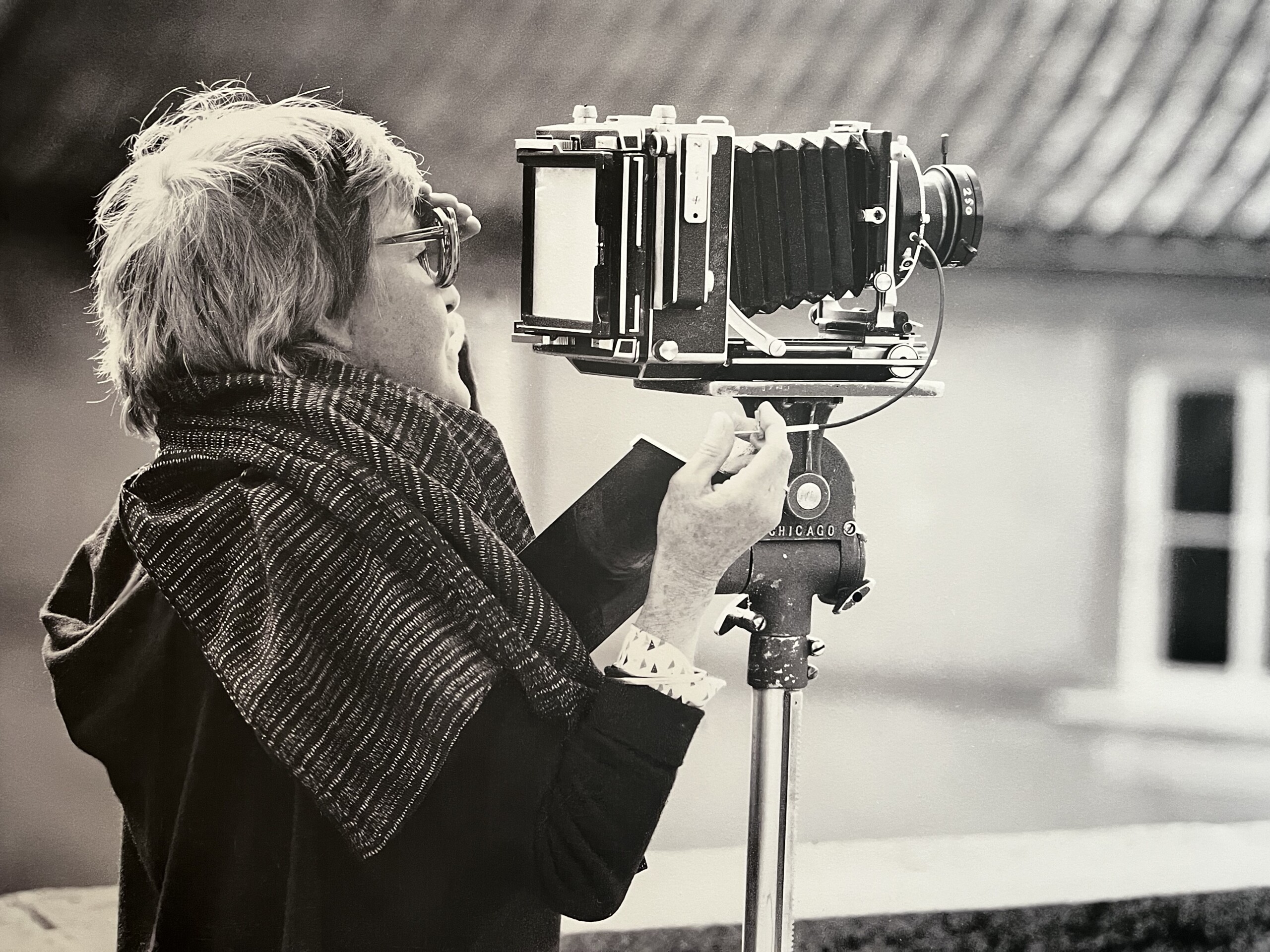
Evelyn Hofer // Photo by Hayden Kalp 

Last saturday, the Nelson-Atkins Museum of Art unveiled the Evelyn Hofer (1922-2009) feature exhibit. Hofer, a photographer, was best known for her gritty, street level photography. Although relatively unknown in the states, her work is celebrated throughout Europe. Her career as a photographer spans several decades, and if a picture says a thousand words, Hofer’s work wrote novels.

During her career, Hofer worked all over the world. Most notably in Italy, France, Ireland, Spain and the United States. Mainly focusing on European and American cityscapes, she worked closely with journalists and published several books of photography from 1959 to 1967. Her style was different from most during the time. While many other street photographers were known for having a more “aggressive” style of photography, Hofer took extra care to ensure that those portrayed gave consent and were posed. She carried around a bigger camera, and took care to do her subjects justice.

Hofer was also among the trailblazers to shoot in color. As color film developed, Hofer kept her same style, portraying everyday people within their environment. While just as impactful as her black and white photography, the color photos Hofer captured only serve to tell a more detailed, honest story.

She had an absolute knack for creating stories within her photos. Hofer often portrayed her impromptu subjects in front of beautiful landmarks, such as a cyclist in front of the Golden Gate Bridge, or a blind shepard in a seemingly endless field. Her skill with balancing subjects and their environments is one of the most striking aspects of her work, especially in her wide shot photos.

While her work was consistent, mainly being shot with the same style and similar cameras, every city that Hofer portrayed had its own unique feel. Whether capturing military chaplains and secretaries in Washington D.C, or rebel youth in Ireland, Hofer had a unique talent for allowing each country and their cities to breathe on their own.

The Evelyn Hofer exhibit contains over 100 photographs, quotes, notes, and journal entries by the photographer. The exhibit will show until mid Feb. and tickets can be bought online on the Nelson-Atkins Museum of Art’s website.

Categories: Art

Henry Diltz: Rock’s ‘accidental photographer’ wins lifetime achievement prize

Henry Diltz: Rock’s ‘accidental photographer’ wins lifetime achievement prize
Henry DiltzHenry Diltz / Paul Zollo

He’s shot more than 250 album covers, was the official photographer at Woodstock, and saw his work appear in Life Magazine. But Henry Diltz considers his career a lucky accident.

“I never went to photo school, I’ve never had a job, I never even thought about it,” he says.

“I just hung out with all my musician friends, taking photos. It’s been a fun, adventurous lifestyle.”

Despite that (or maybe because of it), he’s responsible for some the most iconic images of the 1960s and 70s: David Crosby holding a gun made from the US flag to his head; Joni Mitchell playing lap steel guitar in the middle of a field; The Eagles, high on peyote, posing in the Joshua Tree National Park.

David Crosby poses with a gun, made from a folded-up American flag

Henry Diltz

As a musician himself, Diltz had unrivalled access to some of rock’s biggest names – often contributing backing vocals and banjo parts to their albums when he wasn’t behind the lens.

His ease around people like Neil Young, Debbie Harry and Jimi Hendrix meant he often caught them in private moments, lost in thought, or playing with their pets – and there’s an organic, unposed aesthetic to his work that’s impossible to recreate.

This Wednesday, the 84-year-old will receive the Icon prize at the Abbey Road Music Photography Awards. Over Zoom from his home in Los Angeles, Diltz talked us through some of his favourite images.

The one that started it all: Buffalo Springfield, 1966

Buffalo Springfield by Henry Diltz

Henry Diltz

“In 1969, I was in a band called Modern Folk Quartet playing at the University of Michigan, when someone looked out of the tour bus window and said, ‘Oh look, a second-hand store.’

“We pulled over, walked in and there, next to the door, was a table with little Japanese 35mm cameras. I thought, ‘Yeah, what the heck’, and for the next couple of weeks, as we drove back to LA, we kept taking pictures of the many little adventures that happened.

“When we got home, we said, ‘Well, let’s have a slideshow’. We got all our friends together and when I saw that first slide, 8ft wide, glowing in the dark, it was magic. That’s when I really became a photographer.

“It became a thing. Once a month, we’d get together 20 or 30 hippie friends and have a big slideshow. I’d always try to prepare interesting pictures – an old truck or a flower or an animal. I loved tattoos.

“Then one day, I happen to bump into Stephen Stills and he said, ‘Hey, Buffalo Springfield is going to this folk club by the beach for a soundcheck. You want to come?’

“And I thought ‘Yes, I do’, because I wanted to go photograph people on the beach. I didn’t even go into the soundcheck!

“A half hour later, I walked back to the parking lot and saw a huge two-storey mural of a guy on a bicycle and, as I was framing it up, Buffalo Springfield walked out. I said, ‘Hey, you guys, can you just stand there for a minute?, because I wanted to show the comparison, the perspective, of how tall this mural was.

“Then apparently they did an interview with a magazine and told them about the photo, and they called and offered me $100 for it. That was a big deal: $100 was like a week’s salary, and I’d never made a nickel from taking a picture before that.”

1px transparent line

The first album cover: Crosby, Stills and Nash, 1969

Stephen Nash, Stephen Stills and Graham Crosby by Henry Diltz

Henry Diltz

“I met Stephen Stills in 63. He was a young guy playing solo guitar in a coffee house and he liked my band because we had four-part harmonies.

“Six years later, he’s left Buffalo Springfield, [David] Crosby has been kicked out of The Byrds, and they were singing together at parties. Mama Cass saw them and realised they needed a higher voice, and she also knew that Graham [Nash] wasn’t happy in The Hollies. So she introduced everyone and kind of orchestrated [the band].

“As they were recording the first album, I was down at the studio. They didn’t have a group shot, so we jumped in an old Ford 1950s station wagon that belonged to my friend Gary Burton, and drove around LA.

“When we saw that old house with the couch outside, they jumped out, sat down, and it framed up real nicely.

“But between the time I took the photo and getting it processed, they’d decided on the name Crosby, Stills and Nash. They said, ‘That would make a great cover but, look, we’re sitting in the wrong order: Nash, Stills, Crosby’.

“I said, ‘That’s not a problem. Let’s go back. sit in the right order, bang, bang, bang – five minutes. But when we got there, the house was gone. It had been bulldozed and turned into a parking lot.

“So we had to keep the first one.”

1px transparent line

A portrait of Paul and Linda McCartney: Life magazine, 1971

Paul and Linda McCartney

Henry Diltz

1px transparent line

“I met Linda Eastman in a New York photo lab, getting some films developed, and we got to be friendly over lunch. Then one day, I read that she’d married Paul McCartney. I was like, ‘Wow, go figure!’

“A year later, I got a call from her and she said, ‘Henry, we’re out in Malibu, and we need some pictures for the RAM album’. So I went out and spent the afternoon sitting around the swimming pool, eating lunch, with the little girls Heather and Mary.

“As I was taking pictures, Paul was sitting in a deck chair, plucking on his ukulele. I saw Heather and Mary hold hands and jump into the pool together. Without stopping, Paul started singing, ‘Two little sisters jumping in the pool‘. It was a beautiful little melody and I thought, oh my God, there’s a Beatles song that only I will ever hear.

“Towards the end of the day, Linda told me, ‘We need a nice portrait of the two of us’, so we went over, brought some flowers and took the pictures. Then she said, ‘We need these first thing in the morning because we want to send one to Life magazine’.

“Life magazine was the Holy Grail for photographers, so of course I got there early. This was 1971, before scanning and emailing, so the lady from Life magazine was there, in the living room. She looked through the pictures on a slide board, picked one, put it in her purse, went to the airport and flew to New York with it. And that was the cover.”

1px transparent line

Keith Richards living his best life, 1979

Keith Richards

Henry Diltz

1px transparent line

“I never went on the road with the Rolling Stones but I did go on the road with the New Barbarians, which was Ronnie Wood’s solo group, with Keith on guitar.

“It was like the Stones without Mick [Jagger]. The boss wasn’t there, so everything is allowed. It was wonderful. Every day, we’d fly into another city on one of those big passenger jets with couches and a bar and stuff like that.

“When they landed, eight limos would drive up and surround the aeroplane to take them to the hotel. On this day, Keith came out first and he leant on one of the cars while he was waiting for Ronnie to come out, with a bottle of Jack Daniels still in his hands.

“I went ‘click’ and that was that. It’s not a pose. I didn’t want to change reality. I never said to anyone, ‘Stop doing what you’re doing, stand over here and smile’. I wanted to see these guys doing what they did in real life.”

1px transparent line

The guerilla photoshoot: The Doors, 1970

The album artwork for Morrison Hotel

Henry Diltz

“The Doors had seen the Crosby, Stills and Nash album and loved it, so I went over to their office.

“Jim [Morrison] and Ray Manzarek were there. and I said, ‘OK, have you got a title?’

“‘No, we don’t have a title’.

“‘Do you have an idea for your album cover?’

“‘No. We thought you might.’

“Then Ray said, ‘My wife Dorothy and I were driving through downtown LA the other day and we saw this building that said Morrison Hotel on the window.’

“So we got in a Volkswagen van and drove there. It was a funky old place where winos could sleep it off, you know? But the young guy behind the desk said, ‘No, no, you can’t take any pictures. You have to have the owner’s permission’.

“He was a fairly famous slumlord and they were afraid of him. So we reluctantly stood outside and took some pictures, when suddenly I saw a light go off in the lobby. I peered in the window, and the guy had left the desk.

“I said to the band, ‘Quick! Run in there!’ And they did. There was none of that, ‘You need to move to the left, you guys should trade places’. They just got behind the window. I took one roll of film and got out of there before they could stop us!”

The Abbey Road Photography Awards take place on Thursday, 21 September.

Hui Noʻeau & East Maui Watershed Partnership Present Mālama Wao Akua 2023

Hui Noʻeau & East Maui Watershed Partnership Present Mālama Wao Akua 2023

September 20, 2023, 1:24 PM HST

Hui Mālama Wao Akua (9.8.23) PC: Berkowitz

Hui No‘eau Visual Arts Center in collaboration with East Maui Watershed Partnership hosts the 19th annual Mālama Wao Akua – a juried art exhibition celebrating the native species of Maui Nui. This special exhibition will be on display in the Hui’s gallery space now through Nov. 3. The gallery is open Tuesday through Saturday between 9 a.m. and 4 p.m. with free admission. 

This collaborative exhibition aims to raise awareness about protecting our islands’ unique ecosystems and species. The Hui and EMWP believe artists have a powerful and vital role to play in our local conservation efforts. By providing the public with a creative and intimate way of interacting with Maui’s native species, artists help spark conservation and inspire care for the exceptional environments surrounding us.

This year’s jurors were Kirk Kurokawa, Visual Artist, and Dr. Scott Fisher, Director of ʻĀina Stewardship at Hawaiian Islands Land Trust, who selected works among 254 entries from elementary school, middle school, high school, and adult divisions.  A total of 84 Maui artists are represented in the exhibition, all highlighting and bringing awareness to the native plant and animal species of Maui Nui (Maui, Lāna‘i, Moloka‘i, Kaho‘olawe).  

Hui Mālama Wao Akua (9.8.23) PC: Berkowitz
ARTICLE CONTINUES BELOW AD

The community is invited to learn more about Maui’s conservation efforts from leading experts during the exhibition’s “Talk Story” Thursdays. Talks are free, open to the public, and will take place on the following dates: 

  • Sept. 21 at 5 p.m.: Zach Pezzillo, Technician for Maui Nui Plant Extinction Prevention Program
  • Oct. 12 at 5 p.m.: Michael Walker – State Fire Protection Forester, DLNR/DOFAW
  • Oct. 19 at 5 p.m.: Keahi Bustamente, Maui Nui Program Coordinator for Hawaiʻi Invertebrate Program, DLNR/DOFAW
  • Nov. 2 at 5 p.m.: Dr. Arthur Medeiros, Program Manager for Auwahi Forest Restoration Project

Additionally, each Friday throughout the exhibition from 10 a.m. and 12 p.m., a conservation gallery docent will be on hand to provide an enhanced gallery viewing experience. Visit huinoeau.com or malamawaoakua.org to learn more about exhibition-related events.

Support provided by Hawai‘i Tourism Authority through the Community Enrichment Program.

ADVERTISEMENT

A moment in time: Dalton Junior High students create memories with cyanotype photography

A moment in time: Dalton Junior High students create memories with cyanotype photography

#inform-video-player-1 .inform-embed { margin-top: 10px; margin-bottom: 20px; }

#inform-video-player-2 .inform-embed { margin-top: 10px; margin-bottom: 20px; }

Dalton Junior High School ninth-grader Taylor Nietzsche did not realize how convenient today’s generation has it when it comes to capturing a moment in time with the quick snap of a camera button.

That was until she learned about creating cyanotypes in her Photography I class, a process that captures an object in time through unconventional ways by today’s standards of photography.

The class, taught by art teacher Kristi Harvey, recently had students create their own chemical cyanotype photographs, one of the oldest photographic printing processes in history dating back to 1842 when it was discovered by scientist Sir John Herschel.

“I didn’t know it was photography because you’re not actually taking pictures,” Nietzsche said.

Instead, cyanotype photography, known as a “sun-printing” process, involves using a specialized white paper coated with a solution of iron salts created by combining potassium ferricyanide and ferric ammonium citrate, which becomes sensitive to ultraviolet (UV) light.

An object is placed on the paper and then exposed to sunlight (or a UV lamp). When sunlight hits the paper, the area not covered by an object will react and turn blue, while the area underneath the object will remain white, effectively imprinting its “shadow” on the paper.

The paper is then processed and rinsed in water to stabilize the material and create a deeper shade of blue while the print of the object remains white.

Cyanotypes derive their name from the cyan shade of blue created. Originally popularized as a way to study botany by capturing plants, cyanotype photography was later used by engineers to produce copies of architectural drawings, coining the term “blueprint.”

For the class project, Harvey ordered cyanotype paper that had already had the solution added. Students used anything they had available in their backpacks to create their prints, ranging from hairbrushes and candy wrappers to earphones and charging cases.

Kaylen Chitwood, who used a pack of gum for her print, said the process was fascinating.

“I didn’t realize after the paper had dried, it would completely change colors again,” she said. “It turned a lot darker.”

Mary Sharp and Marley Barmore both said the results were unexpected after using a bracelet, hair bows and pencils for their prints.

“After we came back inside, we submerged them in water to stop the thermal process,” Barmore said. “It was cool to see how it worked.”

“You could see the shadows of the objects (on the paper), which I didn’t expect,” said Sharp. “You could see the reflection of the pencil on the paper in a lighter color. It’s cool because you could see different results with each try if you wanted.”

Harvey, who began her second year as a visual arts teacher for Dalton Public Schools this year, has taught photography classes for seven of her 20 years as a teacher. Harvey also teaches drawing and painting, pottery and ceramics and eighth-grade general visual arts classes. Ninth-grade students are able to receive a high school fine arts credit by taking art classes at the junior high.

Harvey said educating students on different forms of art is essential.

“The purpose of (Photography I) is to educate these students about careers as they start high school,” she said. “Right now, things like technology, cellphones, photographs, social media, kids are exposed to all of these things. What I hope to do is show them that they can look deeper into what they see. Like how to tell a story with the photos (they) take or how to capture a moment in a more aesthetic way.

“I think it engages and creates more visual literacy and allows students to think a little tighter, so to speak. Instead of just that click (of a camera), they’re really analyzing what they’re seeing and doing, so I want them to know about careers that they may not have realized could involve the art of photography specifically.”

Principal Matt Phillips said Harvey and her students are a “great example of what can happen when you combine talented students with amazing teachers.”

“Allowing students to engage in multiple forms of visual art is vital to a well-rounded educational experience,” Phillips said. “Having a quality, engaging art teacher such as Ms. Harvey is a valuable asset to any school staff, and we are thankful for the way she connects with our students and their interests. She makes relationships with her students and uses those relationships to connect them to art that interests them.”

Harvey said her goal is to have students leave the classroom with a new perspective.

“What’s interesting is there are things like this that they never knew about that came before the cellphone in their hand or a DSLR (digital single-lens reflex) camera,” she said. “They have really taken to it well.”

Chitwood said she has a different outlook after the project.

“I didn’t realize there were ways to take pictures other than using a camera,” she said. “It made me respect the people who used this back then.”

Sharp shared similar sentiments.

“It made me realize that I’ve grown up very limited, just taking pictures on my phone and that was all I knew,” she said. “It was so cool to experience this.”

Harvey said the class will revisit cyanotypes later in the semester.

“That way they can apply what they learned the first time around and maybe do things differently.”

#inform-video-player-3 .inform-embed { margin-top: 10px; margin-bottom: 20px; }

Photographer Aileen Elizabeth to debut photo studio in Oberlin

Photographer Aileen Elizabeth to debut photo studio in Oberlin

A Northeast Ohio photographer is creating a home base in Oberlin.

Aileen Smith, 32, a Lorain native who currently lives in Amherst, specializes in couple photography, boudoir, engagement, wedding and maternity.

“When I first started, I wanted to accept any and all projects, but now that I’ve been doing this for a while, I have found what I’m really passionate about,” Smith said. “I’ve been working really hard and it’s nice that it’s paid off in a way that now I can enjoy this studio space and move into the next chapter of my business.”

Smith’ photography business, Aileen Elizabeth Photography, has been shared across streaming platforms and acknowledged by companies such as Walgreens.

Smith said she credits her success and growing clientele to maintaining good energy and building relationships with clients.

“Majority of my clients are referrals,” she said. “When you put your heart into your work, clients will tell their family and friends because they want them to have that same experience.

Photographer Aileen Smith photo studio in downtown Oberlin will function as a creative hub. (Aliah Kimbro — The Morning Journal)

“I think of them as friends and people who I create good relationships with, so by sticking with that and being consistent, speaks volumes about how I like to run my business.”

As her business reaches its seventh year, Smith is opening a new studio inside the Huntington Bank building, 5 S. Main St. in downtown Oberlin

“I would’ve never thought I would be at this point in my business,” she said. “I’m so grateful for where my business is because there was a time I hoped people would book me for their weddings and events, and now I’m almost completely booked for the next year. It’s very cool.”

“I always wanted a studio space, but never felt it was a good time for it; I found this space and just fell in love with everything about it.”

Smith said she plans to open up the space overlooking Oberlin College for other creatives to utilize.

“There aren’t a lot of studios available on the west side, so I know a lot of my photographer friends are looking forward to it,” she said. “I want to do events like photo content days and networking opportunities eventually.”

Smith said she looks forward to creating a presence within Lorain County.

“I’m so excited to be here in Oberlin,” she said. “I’ve shot down here a lot, and I’m looking forward to being here in this close knit, artistic community.”

Art Dealer’s Widow Sells Hampton Home Asking $42M

Art Dealer’s Widow Sells Hampton Home Asking $42M

A year after putting it on the market, the widow of a famed art dealer appears poised to unload her oceanfront home in Southampton.

An anonymous buyer is in contract to purchase the Hamptons estate at 140 Murray Place, which was most recently listed for $41.9 million, Behind the Hedges reported. The purchase price won’t be certain until the sale closes; if the listing price matches the purchase price, the deal works out to just over $5,200 per square foot.

A company tied to Susan Lloyd, the widow of Vienna-born art dealer Frank Lloyd, listed the property last July for $45 million. The company behind the listing purchased the property in 1997 for $6.5 million.

The estate spans more than two and a half acres, banking the ocean. The 8,000-square-foot, six-bedroom house was built in the contemporary style in 1992.

One of the property’s main calling cards is the 190 feet of Atlantic Ocean frontage along the beach, as well as a private boardwalk to provide the path to the beach. The grounds also include a heated pool and a clay tennis court. 

Bespoke Real Estate had the listing.

Frank Lloyd was the co-founder of Marlborough Galleries, but became infamous for his involvement in the Rothko art scandal, which included being convicted of tampering with evidence. Frank died a year after he and his wife purchased the Hamptons property.

Read more

The year’s top deal in the Hamptons was more than double the deal for the Murray Place estate, a January $91.5 million off-market sale in East Hampton.

That deal was followed by Lasata, the name for the East Hampton estate at 121 Further Lane where Jackie Kennedy Onassis’ childhood summer home, sold in August for $52 million. Peloton founder John Foley in the spring sold his estate at 442 Further Lane in East Hampton for $51 million

Holden Walter-Warner

This rare Bob Ross painting could be yours — for close to $10 million

This rare Bob Ross painting could be yours — for close to $10 million

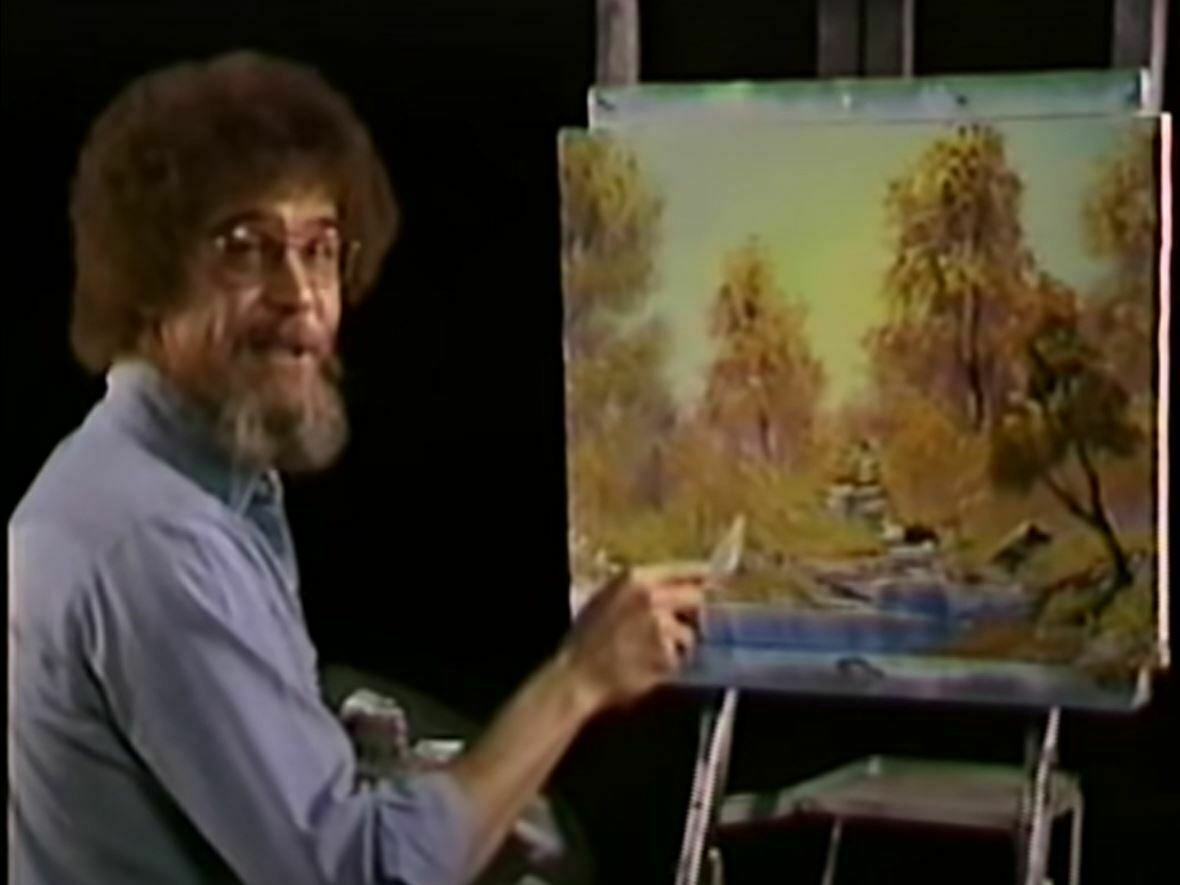
A screenshot from the premiere of The Joy of Painting shows the painter Bob Ross with the work, A Walk in the Woods, which is up for sale.

YouTube/Screenshot by NPR

YouTube/Screenshot by NPR

A painting from the very first episode of Bob Ross’s The Joy of Painting could be yours, but not for cheap.

Titled A Walk in the Woods, the piece is listed at $9.85 million and could be the most expensive and historically resonant Ross piece to ever be sold.

The work depicts a meandering stone path, a cerulean pond and a handful of luminescent trees — all elements that were painted in under 30 minutes during the 1983 premiere of what would become the hit PBS show.

The following 31 seasons (403 episodes) of the Joy of Painting propelled Ross into one of the most recognizable faces in the 20th century art world, not to mention a pop culture icon known for his upbeat attitude and hokey aphorisms.

Before he even picks up a paintbrush in Episode 1, Ross lays out what the audience can expect from the show: simple step-by-step instructions rendered with just a few basic tools and the same paint colors from week to week.

“There’s no secret to this. Anyone can paint,” he says later on, dabbing at the canvas in a shape that will later clarify into a tree. “All you need is a dream in your heart and a little practice.”

Episode One, of the PBS show, “The Joy of Painting”


Bob Ross
YouTube

The painting is signed “Ross” in red on the lower left corner. Whoever buys the painting will receive a written statement from its original owner — a PBS volunteer who bought the painting at a benefit auction.

“I don’t know the exact number that she paid at that point, but knowing what others paid around the same period, I’d assume it was somewhere under $100,” says Ryan Nelson, the owner of Modern Artifact gallery in Minneapolis.

Nelson, whose gallery has become the primary facilitator of the growing Ross market, said he purchased the painting from the PBS volunteer with the intention of selling it, but now isn’t so sure he’s ready to let it go.

“I think that the greatest thing we can do with it is travel it. I’d rather we get this in front of the public,” he said. “But there are definitely offers that I would probably have to take.”

He’s confident he’ll get his asking price, even if most Ross paintings that he’s traded don’t even break the six-figure range.

Part of his confidence comes from the recent cultural resurgence Ross has enjoyed as younger generations discover his appeal through the internet.

That moment could be traced back to 2015, when the streaming service Twitch marathoned old Ross episodes and attracted some 5.6 million viewers.

Today, the official Bob Ross YouTube page boasts over 5.62 million subscribers. Netflix re-launched Ross’s second series, 1991’s Beauty is Everywhere, in 2016, and reruns of The Joy of Painting still appear regularly on public television.

The increase in popularity has come with increased interest in owning a Ross painting. But, as The New York Times put it in a 2019 investigation, the lack of available Ross work is among “the internet’s greatest mysteries.”

Ross once said he painted over 30,000 paintings in his lifetime, and he likely painted 1,143 alone for the filming of the show: An analysis by the website FiveThirtyEight calculated he produced paintings for 381 of the 403 episodes, and his standard process was to make three of the same paintings for each show; one as a template to copy, one on camera and a third after the show for use in instructional materials.

An estimated 1,165 of his pieces are being stored by his surviving company, Bob Ross Inc., which told The New York Times in 2019 that it has no intention of selling off the works, but has since parted with a few to the Smithsonian’s National Museum of American History.

What happened to the rest of the work? Some internet aficionados say that Ross didn’t want his paintings available for sale because it would’ve detracted from the joy he derived from his work. Nelson doesn’t buy that theory.

“He sold them at malls, he gave them away at paintings lessons and so there are a lot of paintings that went out there,” he said. “I believe, sadly, that a lot of those paintings didn’t make it to the popularity that Ross is today.”

But in a way, that’s also how Ross would’ve wanted it, Nelson said. He wasn’t interested in giving his art to well-to-do collector types or seeking fortune alongside his fame.

The one thing that’s clear is that Ross wanted everyone to learn to paint. The rest may have just been a happy accident.