Photographer Kurt Weston Didn’t Let Losing His Vision Stop Him

Photographer Kurt Weston Didn’t Let Losing His Vision Stop Him

“I see the world much like it appears in an impressionist painting, all speckly and blurred with no definition or detail,” says photographer Kurt Weston. “It is as if there was a big glob of Vaseline on my eye.” Kurt is a legally blind photographer that was interested in the art form as a young boy. But a terrible side-effect of some medicine caused him to almost fully lose his eyesight. Still, that hasn’t stopped Kurt from wanting to make photos. With his Sony RX100 II in hand, he’s still shooting.

All images by Kurt Weston. Used with permission. Be sure to also check out his website.

Alpha Vision is presented in partnership with Sony. Sony has made several strides towards helping low vision creators with packages like the Retinal Projection Camera Kit. Other cameras, like the Sony A7R V, Sony A7C II, and Sony A7C R, have extra accessibility features that help someone navigate the menu system and use the camera much easier. This story is part of an initiative to bring the voices and artwork of these photographers to the front. Our Editor in Chief is legally blind, so these stories bring a unique understanding to the type of images these photographers produce.

How Kurt Weston Got Into Photography

As a young boy, Kurt loved looking at Life Magazine and several others. Specifically, he loved portraits. “I would take my favorite photos from these magazines and I created a huge collage on one of the walls in my bedroom,” he tells us. “Those amazing faces would stare at me every day and it was then I knew I would be a photographer.” From there he got into photography via a twin reflex camera.

Throughout high school, he spent lots of time in the darkroom making prints. Eventually, his parents built him one at home.

His artistic talent was something he wanted to go to college for. But his parents dissuaded him. Instead, he went into Fashion Merchandising. After working in clothing for a while, he realized he wouldn’t be happy unless he was a photographer. So he kept at it. Eventually, he received a BA in photography from Columbia College in Chicago (1985). From there, he worked in large commercial studios and for photographer Frank Misek.

“All through my classes at Columbia College and while I worked at (SBD) I continued to photograph portraits of people I would meet at the clubs and alternative venues,” he shares. “The Gay, Punk, New Wave and performance art scenes were profuse in 1980s Chicago. I met many creative people who I collaborated with to photograph stunning portraits.” It eventually lead him to fashion photography.    

Essential Camera Gear

“My go-to point and shoot is the Sony RX100 II Camera with the Carl Zeiss lens,” he tells us. “This camera comes with a 1-inch sensor and is so incredibly compact I can take it everywhere.” But besides this, Kurt shoots a lot of film and vintage camera gear.

From this, he gets photos with richer blacks and tonalities that make for multiple exposures that he really liked. For one project he even used a scanner as a camera. “I would spray the scanner glass with foaming glass cleaner, sometimes incorporating pieces of tinsel and shards of broken glass to replicate the obstructions I experience in my field of vision,” he tells us. “The scanner worked amazingly well for this project, and these images have garnered much attention.” Ultimately, he liked having a wide range of equipment to get the results he delivers.
How Kurt Creates With His Eyesight

Kurt lost his eyesight in a really unfortunate way. “I lost most of my sight due to experimental medication used to treat an AIDS-related condition called CMV Retinitis,” he tells us. “The medication caused Uveitis which is an extreme inflammation of the eyes. Every part of both eyes became damaged – my retinas, my corneas’ and my pupils all terribly damaged.” As a result, he’s totally blind in the left eye and only sees a bit in the right eye. Even what he sees is pretty odd. He sees floaters all the time. In fact, he didn’t even think he’d ever shoot again.

After some time, he realized that with the assistance of low-vision tech he could still photograph. “I began creating fine art photographs which I exhibited in art exhibitions and galleries,” he shares. “I decided at this point to turn my attention to creating autobiographical images to represent my vision loss which became my ‘Blind Vision’ series of self-portraits. I also created a series of touchable photographs which were exhibited at the Berkeley Art Museum in an exhibit called Blind at the Museum.” In this exhibit, folks with perfect eyesight would blindfold themselves and feel the photographs while listening to the audio descriptions of the work. They’ve been exhibited internationally and received quite a bit of acclaim.

After being diagnosed with a rare form of cancer, he was told by a medium that he has to be around nature as much as possible. So he started walking around with his guide dog. From there, he continued to go about photographing in places like the Pacific Northwest. “In many of the images I utilized intentional camera movement, (ICM) which illustrated how I perceived these environments,” he tells us. “The exhibition garnered me the Arts Orange County Outstanding Artist Achievement Award, as well as an interview on CNN. More recently, I have seen ICM’s becoming a widely used technique by sighted photographers – go figure.” It’s been 15 years, and he survived the cancer.

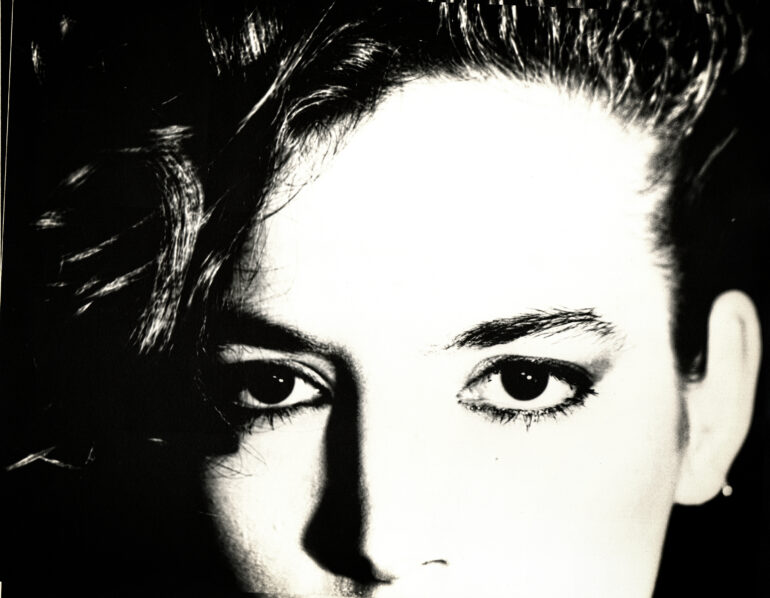
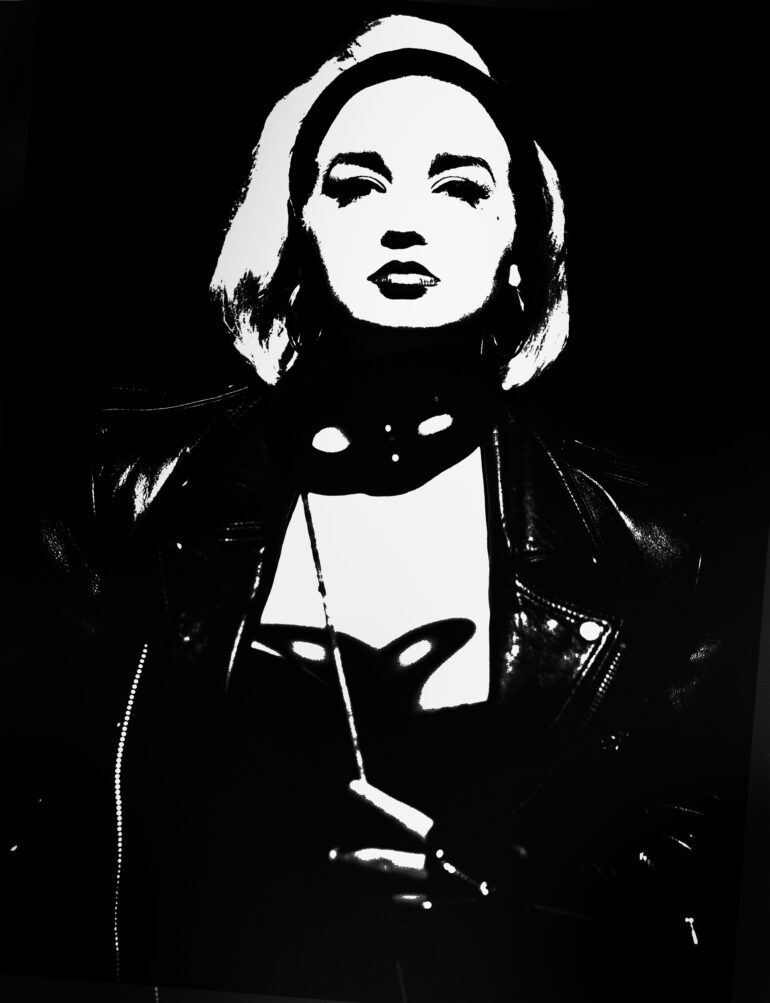
He’s still fascinated by black and white photography. Specifically, he loved the Chiaroscuro style of portraiture. And here he is talking about it:

This Italian term which literally means ‘light-dark’ was made famous by the artist Caravaggio. In my portraits I utilize the distinct tonal contrasts between my luminous subjects and their dark, shadowy backgrounds as well as, the dark environments they are portrayed in. This luminosity, this light emitting from my subject allows me to see the final print more distinctly and creates a very dramatic portrait with the attention specifically on the subject.

On top of all this, Kurt finds inspiration from Film Noir and getting to know his subjects before photographing them.

Thoughts On AI

Of course, one has to be curious of what a legally blind photographer thinks of AI. “As a legally blind person, AI has provided tools which I can utilize in order to be more independent,” he tells us. “But when it comes to creativity and art making, an actual person needs to be the creator. No machine or app can create anything better than what is conceived, imagined and manifested by human consciousness.” Overall, he thinks that it’s the art and the story of the artists that is what’s so incredibly important.

I am confident art generated by human beings will be infinitely more interesting and desirable. Ultimately content providers will realize it’s worth and value over AI generated content. 

Desert Hot Springs artist receives a grant initiative from Creative Corps Inland SoCal

Desert Hot Springs artist receives a grant initiative from Creative Corps Inland SoCal
The city of Desert Hot Springs is congratulating its local artist and resident Bernard Hoyes on receiving the Creative Corps Inland SoCal Grant Initiative. The $4.7 million initiative invited artists, creatives, and engaged community members to submit proposals surrounding several aspects of recovery, encompassing pandemic response, water and energy conservation, disaster resilience, civic engagement, and

Desert Hot Springs artist receives a $4.7 Million Grant initiative from Creative Corps Inland SoCal

Desert Hot Springs artist receives a $4.7 Million Grant initiative from Creative Corps Inland SoCal
The city of Desert Hot Springs is congratulating its local artist and resident Bernard Hoyes on receiving the Creative Corps Inland SoCal $4.7 Million Grant Initiative. The initiative invited artists, creatives, and engaged community members to submit proposals surrounding several aspects of recovery, encompassing pandemic response, water and energy conservation, disaster resilience, civic engagement, and

Sculpture dedication Saturday

Sculpture dedication Saturday
The tradition of an iconic sculpture at the oceanfront Don and Ann Davis Park continues in Newport with the dedication Saturday, Sept. 30, of “Ambassador’s Portal,” by artist Ken McCall.

Van Nuys artist brings museum art exhibit to life with personal tours of the San Fernando Valley

Van Nuys artist brings museum art exhibit to life with personal tours of the San Fernando Valley

One winner will be selected from a raffle each week to go on a tour that explores the rich history and culture of the Valley.

Amanda Palacios Image

Friday, September 29, 2023 12:22AM

Van Nuys artist brings museum exhibit to life with tours of the Valley

VAN NUYS, LOS ANGELES (KABC) — Vincent Hernandez is an artist who is taking his work from the studio to the streets in his 1987 Volvo. Inside his decked-out car, there’s a spinning $1 postcard rack of photographs and vinyl lettering of major cities in the Valley.

The Van Nuys native says he started taking people on personalized tours across the San Fernando Valley in 2019 as part of his school project at the California Institute of the Arts.

“I was just running with it you know and kind of trusting my gut,” said Hernandez. “It could have been the type of project where I took some photographs and did some writing, but for some reason, I felt compelled to drive people around in my car.”

But Hernandez says he never anticipated the valley tours to be transformed into an exhibit. The 24-year-old artist says he is one of 39 artists who will have his project displayed at the Hammer Museum’s free exhibition, “Made in L.A. 2023: Acts of Living” on Oct. 1 in Westwood.

“He told us about the Valley Tours. We were really impressed and thrilled,” said Pablo Jose Ramirez, curator of “Made in L.A. 2023.”

“Vincent’s project is in the exhibition and you can see the map that he created that marks different points of interest in Valley and then, visitors are able to sign up and enter into a raffle to win a tour,” said Diana Nawi, curator of “Made in L.A. 2023.”

Hernandez says the tours run from Oct. 14 to Dec. 30. One winner will be selected from the raffle each week to go on a five-hour tour that ventures from Sylmar all the way down to Studio City.

Hernandez says people will have the opportunity to learn about iconic and historic sites throughout the valley. From the neighborhood tortoise down the street to the Van Nuys Airport and the Great Wall of Los Angeles. That’s just a small glimpse of the places people can expect to see on the tour.

“It’s a real mixture of things like history that’s underneath your nose or the restaurant inside of a corner plaza,” Hernandez said.

And if you’re wondering about the steep price of gas, Hernandez has a stipend from the museum to help him out.

Follow Amanda on social media:

Facebook.com/ABC7Amanda

Twitter.com/ABC7Amanda

Instagram.com/ABC7Amanda

Copyright © 2023 KABC Television, LLC. All rights reserved.

Related Topics

Marvel Comics Spotlights Wyatt Wingfoot And Kushala, The Spirit Rider, In New Native American Heritage Month Variant Covers And Backup Stories

Marvel Comics Spotlights Wyatt Wingfoot And Kushala, The Spirit Rider, In New Native American Heritage Month Variant Covers And Backup Stories

This year, Marvel Comics continues its tradition of assembling an extraordinary array of Indigenous and Native talent to celebrate Native American Heritage Month!

In the same spirit as last year’s MARVEL’S VOICES: HERITAGE one-shot, fans will see new adventures starring their favorite Indigenous and First Nations super heroes and see them take center stage on stunning variant covers this November! GHOST RIDER #20 and SENSATIONAL SHE-HULK #2 will both have thrilling backup stories written and drawn by Indigenous and First Nations creators.

These tales will feature the titular heroes fighting bravely alongside fellow Marvel icons: Kushala, AKA the Spirit Rider, and Wyatt Wingfoot.  These eight-page specials will give readers a chance to discover Kushala and Wyatt Wingfoot’s goals and legacy, all while setting them up for exciting future journeys in the Marvel Universe. In addition, these two extra-sized issues will have Marvel’s Voices Heritage Variant Covers that spotlight these pairings by award-winning Cherokee artist Roy Boney. 

Here’s what fans can look forward to!

GHOST RIDER #20

Novado Gallery presents 2023 Sculpture Invitational Show

Novado Gallery presents 2023 Sculpture Invitational Show
(JERSEY CITY, NJ) — Novado Gallery presents its 2023 Sculpture Invitational Show from Saturday, October 14 to Saturday, November 11, 2023; in conjunction with the 34th Annual Jersey City Art and Studio Tour. Join them for an extraordinary celebration of three-dimensional artistry!

Black Miami artists take center stage

Black Miami artists take center stage

Dozens of artists, writers, curators, scholars, and art collectors came together to celebrate the evolution of the Miami Black arts community Thursday for “Still Here: Generations of Black Miami Artmaking,” the first symposium hosted by the University of Miami’s Center for Global Black Studies, in partnership with Commissioner, an art membership program that supports local contemporary artists in Miami. 

“The goal for this convening is to catalyze scholarship on Black Miami art and artists,” said Donette Francis, a professor of English in the College of Arts and Sciences who also directs the Center for Global Black Studies and opened the event. “It’s about the diverse places they are from, and the generational histories and influences.” 

The event began Thursday at the University’s Lakeside Pavilion and is free for students and faculty and staff members. It continued Friday in the Shalala Student Center. Speakers and presenters include artists and scholars from across the country, who grew up in South Florida, or who continue to produce art locally. Francis and other members of the center hope that the event will help draw attention to the wealth of Black artistic talent and knowledge in the greater Miami area.

Black arts conference

“Black Miami has an aesthetic shaped by the uniqueness of this place,” Francis added. “There’s an ecosystem among Black Miami artists that registers in how they show up for each other, cross reference each other, and live comfortably among each other. For museum audiences and beyond, I unequivocally believe that the best scholarship about Black Miami art begins here.” 

One of the first presenters was Sharony Green, an associate professor of History at the University of Alabama, former journalist and a University of Miami alumna. Green spoke about her new book, which focuses on the end of writer Zora Neale Hurston’s life. It was a time when the esteemed Harlem Renaissance author of “Their Eyes Were Watching God,” was struggling financially and emotionally, so she escaped to Honduras. 

But Green also explained that Hurston often escaped the New York cold to live in South Florida. Still, even as an award-winning writer, Hurston had to clean homes in Miami Beach to pay her bills. 

“Hemingway had Havana and Zora had Honduras and Miami,” said Green, who was born in Coconut Grove, but grew up in the Miami Gardens neighborhood of Carol City. 

In doing her research on Hurston, Green also discovered that while they lived decades apart, the women had many similarities. They were both writers who grew up in segregated communities in Florida. And Green’s grandmother knew some of the same South Florida leaders that Hurston did. 

Many shared experiences among artists surfaced throughout the discussion panels on Thursday. In a session titled “Migration and Memories,” artist Juana Valdes, who immigrated from Cuba and grew up in Miami, spoke alongside artist Morel Doucet, who immigrated from Haiti, and was raised in North Miami. Both artists use ceramics, painting, and mixed media to explore themes of migration, displacement, and climate change in their art. Moderated by Nhadya Lawes, a University of Miami alumna who now works as an arts associate for the Knight Foundation, the artists discussed how they infuse their immigrant experiences into their work. 

“When we came to the U.S., my family struggled trying to find housing in Miami without speaking English. There was also no space for us in a predominantly white Cuban community in Miami,” Valdes said. “So, my art sometimes has a hard time fitting into shows because they don’t represent blackness in typical ways. It’s made to make you be in an uncomfortable place.” 

Despite their hurdles to assimilate to a new country with a new language, many artists including Doucet, mentioned that several other Miami artists served as mentors and helped encourage them to pursue art further. Those include Loni Johnson, an artist and educator who will participate in a Friday panel, and Charles Humes, Jr. last year’s fellow in the Center for Global Black Studies, who is also speaking on Friday. 

“Along my entire early education, there was never the idea for Black representation of a young artist,” Doucet said. “But my mom gave me the space and representation to excel in the arts.”

In later panels, artists T. Elliot Mansa, Sydney Maubert, and Chris Friday talked about how to illustrate the unique experience of growing up Black in Miami. Maubert, who graduated in 2020 from the School of Architecture, grew up in Homestead as the daughter of a Cuban mother and Haitian father. Maubert is now a Strauch fellow at Cornell University. Her murals have been featured at the School of Law, and at Yale University, where she earned a master’s in architecture. 

Roland Woods, Jr. graduated from the University of Miami in 1971, and was one of the senior Black artists at the symposium Thursday. In 1969, Woods and a few of his classmates formed the Black Arts Workshop and would meet in Coconut Grove and teach art to younger students. The organization continued through the late 1980s, but Woods is still an active painter, creating works in the cubist style, with baroque techniques that feature African themes. He was glad to be a part of one of the panels with watercolor painter Jared McGriff. 

“It’s great to highlight the many accomplishments of the Black arts community,” Woods said. 

Friday, who infuses meaningful images of Black life in her art agreed, and noted that simply bringing together so many people invested in the Miami art community was a major step forward. 

“This room is full of people who before I knew them, I knew their work,” Friday said. “And it keeps me motivated and inspired to continue.” 

Franklin Sirmans, director of the Perez Art Museum Miami and a New York native, said the first day of the conference enlightened him about just how much art history there is in Miami. He, along with Francis, and junior Deitrick Knatt, hope that this is the start of many more gatherings. 

“I’m so glad we have this opportunity because it really sets a precedent for what we can do as Black Miami artists,” said Knatt, an aspiring photographer and storytelling artist. “But it’s also a great networking opportunity to meet other artists.”

Friday’s panels will feature Black photography, a discussion on making art public, and another panel on curating Black Miami with Dejha Carrington, a cofounder of Commissioner and Tanya Desdunes, from Diaspora Vibe Cultural Arts Incubator.

Still Here: Generations of Black Miami Artmaking” was sponsored by the Terra Foundation for American Art and the Mellon Foundation.