Preparations begin for 52nd annual Kentuck Festival of the Arts
By Admin in Printmaking
By Admin in Photography
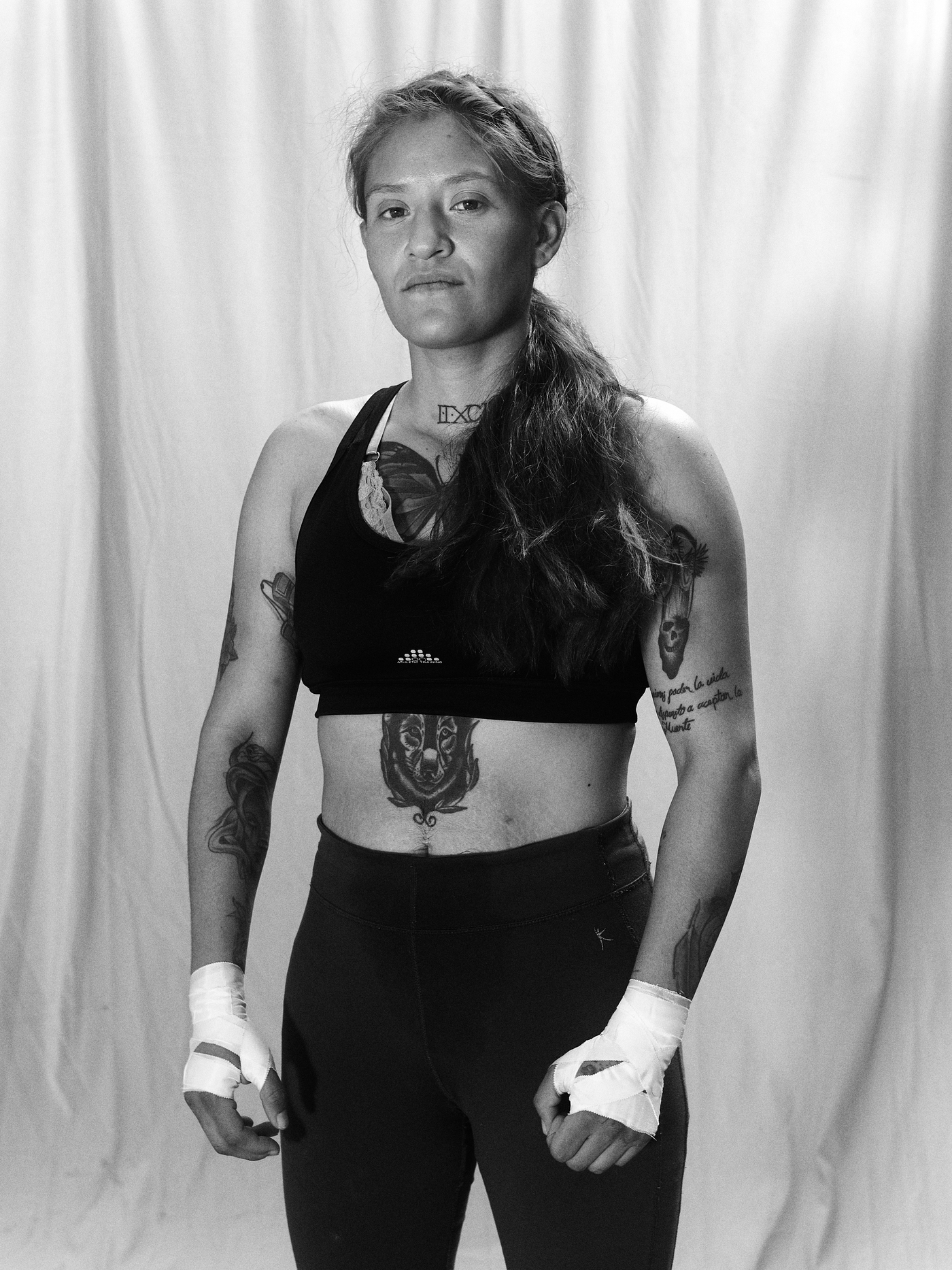
Esmer Falcon. Tepito
David Hanes-González
As a first-generation Mexican American documentary and lifestyle photographer, David Hanes-González uses his camera as a tool to understand and strengthen his roots.
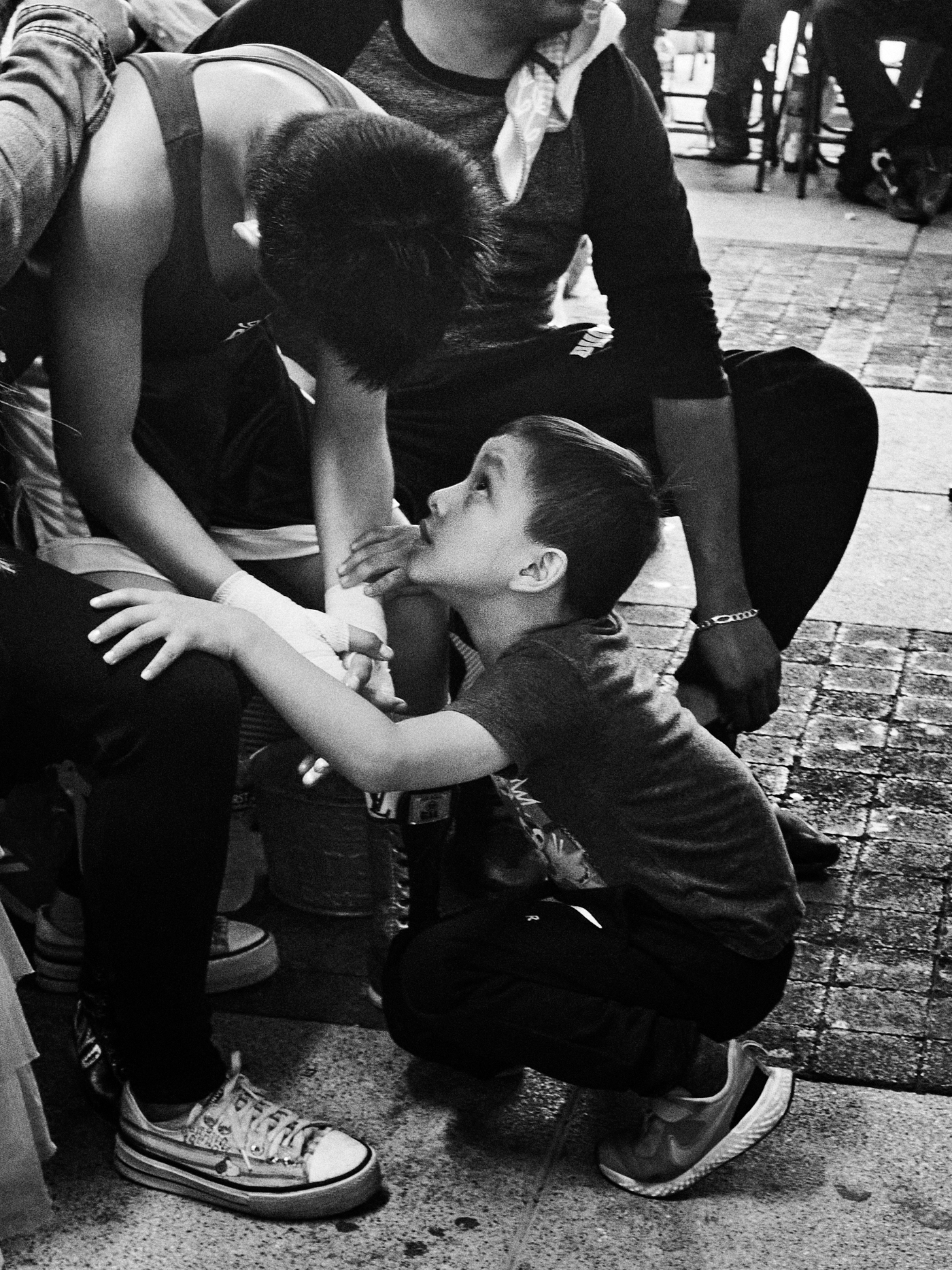
One of those was No Te Dejes, a project that documents the passion and love that goes into the boxing community of Mexico City for two years, a period of time in which David lived in México for the first time.
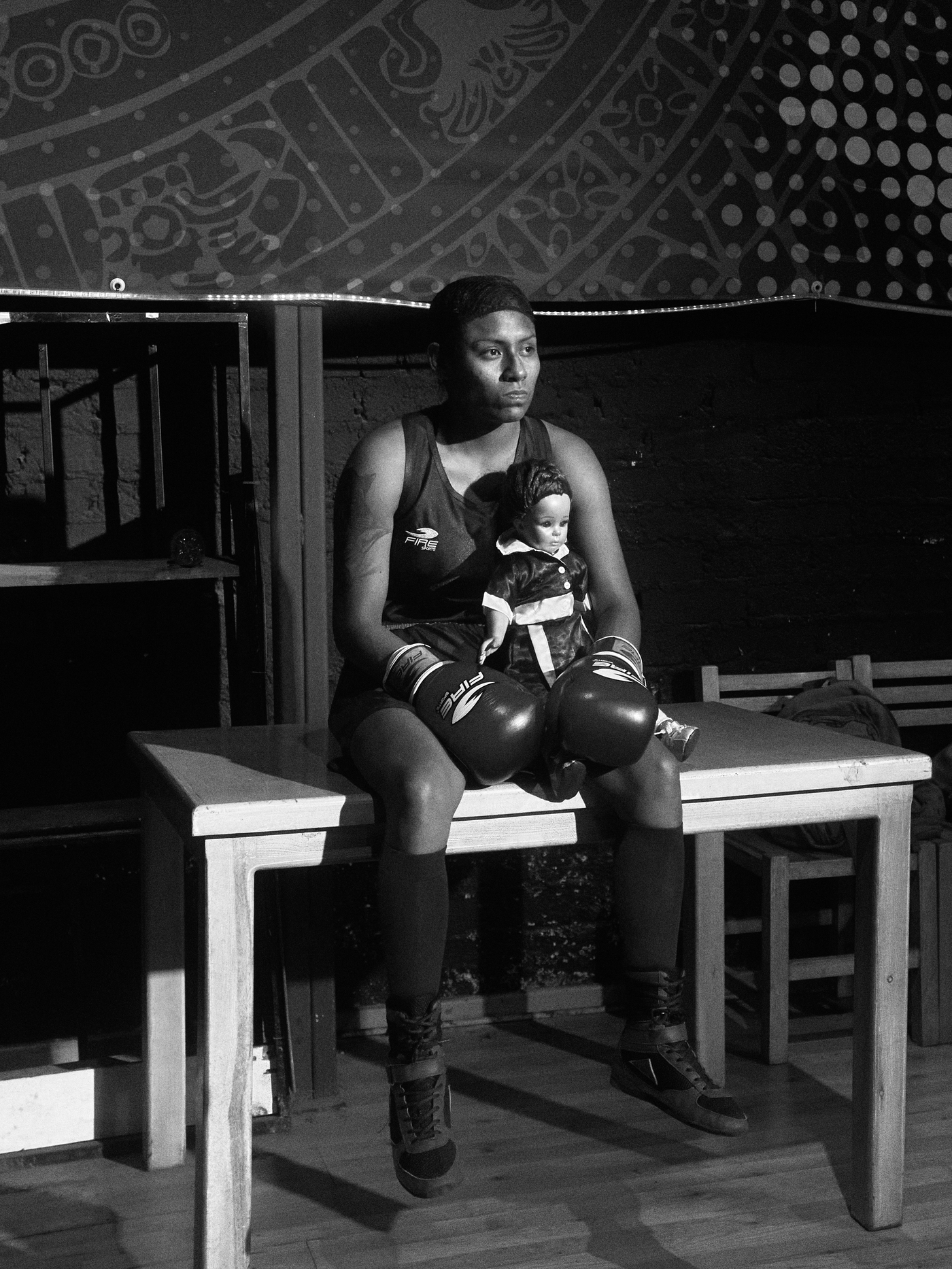
World Boxing Council female super flyweight Lupita Martinez. Gym Los Recios La Merced, Ciudad de México
David Hanes-González
Growing up in Chicago to a Mexican mom from la ciudad de San Luis Potosí, in the state of México, David knew some stories about México. At home, he would go to parties with music from Los Ángeles Azules and Luis Miguel while eating Mexican antojitos.

Sharon Lopez
David Hanes-González
The pride of being Mexican wasn’t always seen in a positive light as a result of the pain and trauma of his maternal family escaping a difficult upbringing. Coming to the United States was a big victory for his mom, her three sisters, brother and his abuelita — an opportunity for a better life. Each day was a fight, a fight for a better future. Like many Chicanos and first generation kids, David struggled with his identity. “I was too Mexican for my American friends and too American for my Mexican friends,” David said. “I never knew where I belonged and struggled classifying my ethnicity on standardized tests in school.”
As an adult, he used his camera to bridge that gap, to understand that part of his identity outside of Chicago as a concert photographer for Tiny Desk’s resident Girl Ultra and Clubz.
Karel Smith Johnson at Gym De Box Horacio Ramirez in Acueducto, Ciudad de México
David Hanes-González
No Te Dejes is a combination of his love of boxing, a sport he was first introduced to in Chicago by his father, who would take him to amateur fights as a teenager and later trained as an adult. Inside the boxing gym was where he was told how relevant boxing was in México and the caliber of the Mexican boxers, de los que no se rinden, those who don’t give up in a fight. A famous fighting style defined by having more heart and always moving forward. “Boxing is deeply intertwined with Mexican culture almost as much as maíz,” he said.

Left: Ixtli Chavez, Tony Vega and Odin Galicia Morales at Gym Pancho Rosales in Transito, Ciudad de México. Right: Jerson Aguilar at Auditorio BB in Hipódromo, Ciudad de México.
David Hanes-González
David lived in Mexico City in 2021, going from gym to gym across La Merced, Tepito, Transito, Tacubaya, Granjas México, San Juan de Aragón, Chimalhuacán and Ecatepec de Morelos, immersing himself in the culture and traditions in México, in the city where his mom was born. It was his first time experiencing México unfiltered, as a way to discover an identity that was previously filtered through the lenses of the U.S.
Daniel Garcia and Diamante Hernandez Sauza at Gym Romanza in Granjas México, Ciudad de México
David Hanes-González
During his time in Mexico, he learned that boxing is not just a sport — boxing is a religion, a lifestyle that unifies boxers often training and fighting for a better future. To step foot in the boxing ring, you must have guts, courage and a warrior’s spirit. For Mexican boxers, boxing is also about honor and national pride. You have to be brave. It is being willing to receive two hooks to give a good one.

Gym Los Recios in La Merced, Ciudad de México.
David Hanes-González
He drew a lot of parallels in his mom and family’s story. When he looked in the eyes of boxer Lupita Martinez — someone who has paved the way for women in the sport in México — he saw strength; the same strength that his mom and grandma had when coming to the United States.
Alan “David Rey” Picasso at Gym Los Recios in La Merced, Ciudad de México.
David Hanes-González

Left: Salvador “El Pelón” Juárez training in Chimalhuacan, Estado de México. Right: “El Pelón” at the Gym Los Recios La Merced, Ciudad de México
David Hanes-González

Felipe De Jesus Mendes and Mateo Rodriguez at Deportivo Maracaná in Tepito, Ciudad de México.
David Hanes-González
A group of boxers, Puñitos de Oro, in Villa Gustavo A. Madero, in Ciudad de México
David Hanes-González
He has taken 25,000 photos and narrowed them down to 28 that capture the soul of Mexican boxing for his photo exhibition in Mexico City from Sept. 23-Oct. 21.
Foro Oceania in Moctezuma 2da Secc., Ciudad de México.
David Hanes-González
With his project No Te Dejes, he wants people to feel the love, faith and resilience displayed in the well-respected Mexican boxing style and also in his Mexican identity. “I’m from a family of fighters and, for the past 2 years, I’ve been able to train and document Mexico’s fighting spirit.”
See more of David’s work online at DavidHanesGonzalez.com or on Instagram, at @davidmfoto.
Leica’s iconic red circle logo may stand alone in the realm of photography as one transcending ordinary branding. Leica’s cameras are more closely associated with an aspirational lifestyle than just gear for capturing photos, with a devoted following willing to invest a sizable sum for their combination of precise optical engineering and minimalist design. And now the German company is focusing its lens toward projecting, rather than capturing, images in our living rooms with the arrival of the Leica Cine 1 laser TV.
First announced at last year’s IFA 2022 in Berlin, Germany, Leica Camera AG’s first laser TV garnered a bit of attention for its combination of 4K triple RGB laser technology, Teutonic modern design, and of course, that small yet conspicuous red circle logo. Unlike the LG Cinebeam with its softly decor-friendly approach, or XGIMI’s lamp-as-projector chameleon approach to projectors, the Leica Cine 1 demands a bit of attention. The projector’s perforated silver aluminum case design aligns with Leica’s past efforts in camera design, but it’s also near impossible not to think of the Bauhaus, Dieter Rams catalog of work, alongside Apple’s original 2009 Mac Pro tower design when looking over the precise surfacing and perforated detailing stretching across the projector’s exterior.
Those perforated plates on the sides aren’t just for looks, but designed to improve the projector’s built-in Dolby Atmos surround sound speakers while also allowing the projector sufficient ventilation. And yes, the Cine 1 is just like a Leica camera, outfitted with their signature optics, a Summicron lens.
Wi-fi 6 and Ethernet connectivity are both supported, alongside ports for two HDMI 2.1 (one designated for eARC Support) and one HDMI 2.0 connection, one USB 2.0 port and another USB 3.0, as well as Google TV and Apple Airplay 2 compatibility. The Leica Cine 1 also features a cool automatic dust cover that opens and closes upon command, protecting its Summicron lens when turned off.
[embedded content]One interesting note is, unlike other ultra-short throw systems, the Leica Cine 1 comes in two fixed projection image size options – one set for a 100-inch image, the other, a 120-inch model (there’s also a third 80-inch model available in other markets outside of the United States) – the projector equivalent of a prime lens on a camera. All Cine 1 models output around 2500 lumens. Consider us curious whether this single image size approach is discernibly improved compared to other 4K UST projectors using this single format approach.
The Leica Cine 1 is available now as a 100-inch laser TV for $8,995 or $9,495 as a larger 120-inch option. If you’re looking for the most optimal experience, Leica sells a matching 100 or 120-inch ALR (Ambient Light Rejection) high-contrast screen to eke out the very best picture from the projector.
This post contains affiliate links, so if you make a purchase from an affiliate link, we earn a commission. Thanks for supporting Design Milk!
Gregory Han is a Senior Editor at Design Milk. A Los Angeles native with a profound love and curiosity for design, hiking, tide pools, and road trips, a selection of his adventures and musings can be found at gregoryhan.com.
Shoreditch Design Triangle was established in 2008 to celebrate the creative industries in East London, and is hosted by the companies who live and work there. “Blending together product launches, exhibitions, installations, workshops, talks, tours, and culinary delights – the event gives visitors the opportunity to spend the day wandering around the East End on foot and still not see everything there is to see,” say the organizers. I did my best…!
Dan Tobin Smith’s Letter C – Collapse (above) is a new piece as part of his ongoing Alphabetical Series. “Inspired by the Bell inequality test, Dirac’s three polarizers experiment with the hidden nature of materials and perception, the sculpture exploits the strange phenomenon of polarization and material,” he says. “The typographical form, concealed in plain sight, is then revealed by the materials’ previously unseen characteristics.”
Inside, a series of tiny models of playgrounds by Tobin’s Optical Arts Studio cast dynamic shadows as they spun alongside films and stills that found typographic forms within the playground structures.
Just down the road Lee Broom, who opened his Shoreditch showroom in 2010, has recently expanded by taking on the space next door. Design Milk has been following his career since day one, so it was wonderful to see this new expansion and to see so many of the pieces launched in Milan ’22.
New for LDF23, was the Chant Chandelier (above) inspired by the glass bricks often used in places of worship built in the 1970s in place of stained glass. Lee also said he designed the light to be looked at from underneath and wanted to evoke the feeling of looking up from a basement through a lightwell in the floor above.
B Corp-certified lighting brand Tala launched the Mantle Portable Lamp (shown above in cobalt blue), which comes apart so the bulb, battery, and interior circuitry can all be replaced. I love the use of portable lights for, not only outdoor spaces, but also indoor nooks where a trailing cable would be problematic.
Shoreditch stalwart SCP worked with Carl Clerkin and friends to bring some much-need levity to proceedings with its tongue-in-cheek Federation of Furniture Fanciers SCPeep Show hosted by the Closed Curtain Club which riffed on Victorian sensibilities around the female form, but applied to furniture and accessories. The Doorknob Feeler Theatre (above) invited visitors to “have a good feel” of this cast aluminum Jasper Morrison FSB Doorknob.
The Confession Bucket by Poppy Booth is made of galvanized steel with confession grill holes and invited visitors to “pull bucket over head and confess, release slowly after use.” Its gentle and silly humor was so very welcome as LDF returns to form after some very serious world events.
On a more sensible note, SCP was also presenting a new collection of WonderGlass pieces by British architect and designer John Pawson including Berg, a glass coffee table that creates mesmerizing shadows underneath.
Carl Clerkin was also presenting Sons of Beasley with designer and colleague Alex Hellum. Alongside a new collection of chairs, there was a fully equipped live workshop where Carl, Alex, and friends were be making things by hand from offcuts, components, and materials donated by local cabinet maker Plykea – makers of door fronts and worktops for IKEA kitchens.
Upstairs SCP was showcasing its new foam-free method of upholstering furniture that comprises all natural materials including burlap, latex, and coconut fibers, recycled wool, latex, needled wool, multi-density wool, feathers, solid beech, birch and poplar plywood, webbing, and metal springs – upholstery foam is horrible for both the environment and the people who make, work with and use it, so this is a really important development.
This approach is now used across all of SCP’s sofas – including the low-lying Peonia by Wilkinson & Riveria, which they describe as a “family and friends sized sitting space.”
Element by Philippe Malouin is a modular “sofa system” that can be arranged perfectly traditionally, or into this playful “enclosed conversation pit” for the “ultimate comfort, conversation, and conviviality.”
If SCP is a Shoreditch Design Triangle stalwart, The Collective is the new kid in town. Designed by Studio Cass, its new Charlotte Road home is housed in a former button factory, and instead of looking like a showroom comprising a series of spaces – a kitchen, a bar, meeting rooms – that enable it to showcase the products, expertise, and quality behind The Collective and its associated brands.
One of those brands is EchoPanel® – acoustic panels made from PET offcuts – and even as the drinks started flowing and the evening’s party moved into full swing, the quality of sound in the space was palpable.
Katie Treggiden is a purpose-driven journalist, author and, podcaster championing a circular approach to design – because Planet Earth needs better stories. She is also the founder and director of Making Design Circular, a program and membership community for designer-makers who want to join the circular economy. With 20 years’ experience in the creative industries, she regularly contributes to publications such as The Guardian, Crafts Magazine and Monocle24 – as well as being Editor at Large for Design Milk. She is currently exploring the question ‘can craft save the world?’ through an emerging body of work that includes her fifth book, Wasted: When Trash Becomes Treasure (Ludion, 2020), and a podcast, Circular with Katie Treggiden.
Estimated read time: 4-5
minutes
SALT LAKE CITY — Dozens of Native American artists will come to Utah’s capital city to showcase a variety of beadwork, paintings, pottery, sculptures, weavings and more this weekend.
It’s the Natural History Museum of Utah’s 10th year hosting the Indigenous Art Market. Over 45 Indigenous creators will sell their wares Saturday and Sunday from 10 a.m. to 5 p.m. All art is purchased directly from the artists, who receive 100% of the sales.
“The Indigenous Art Market at the Natural History Museum of Utah offers a wonderful opportunity to experience and collect genuine Native artwork while engaging with the artists in person,” museum store manager Suzanne Ruhlman said in a statement. “It’s so wonderful to meet the artist and hear the story of the piece you fall in love with.”
This is Shannia Crank’s first time at the market. Although she’s sold at a variety of other markets through her family business Puganini Design, she’s not sure what to expect since this weekend’s market also coincides with an eclipse, which is observed differently among Native American cultures. Crank’s Navajo beliefs, for example, dictate that individuals stay inside, face to the east and pray. She plans on observing those traditions the best she can while not interacting with customers.
Crank, a full-time mom and artist, learned beadwork as a teen through online videos and asking others in her community about their techniques.
“When you do the outline of the beadwork and you start to fill it in, you can see the colors. That’s my favorite part is just looking at the whole aspect of it and finding the different colors that lay together so smoothly,” she said. “What I’ve been taught is you should look for the little easter egg in each piece, because how I’m taught is that when you create something, you’re always supposed to leave either a mistake you made or you’re supposed to make a mistake in your work because nothing’s perfect in life. I thought that was pretty beautiful to learn about; you can’t make anything perfect because it just won’t be perfect and that’s OK.”
Crank is excited to see different perspectives on art and a variety of different traditions, techniques and styles at the market. She said it’s a good opportunity for Native Americans living in urban places like Salt Lake City who don’t always have the opportunity to participate in markets and powwows on reservations.
“It’s important to share the culture and to teach others that we’re still here, we’re still part of America in a big way and we still have our influence and power in ourselves to push through and to allow others to explore our diversity,” she said.
Cherokee painter John Balloue agreed that the market will be an opportunity to see a wide variety of artwork.
“There’s going to be a lot of talented people there and a lot of good things to see and do,” he said. “With Native people, sometimes it’s things that you haven’t seen before or a different way of looking at things. Especially now with contemporary people, it’s a newer way of interpreting traditional ideas and traditional values that we may not have seen before.”
Although he was an artistic child, Balloue didn’t begin painting until after he finished serving in the military during the Vietnam War. Initially the classes he took were for his own pleasure, but he eventually earned a bachelor’s degree in art and started his own business. His art has gone through different phases over the years, but Balloue says his work draws on his own experiences in the Native community as well as places and people he’s met in his own life.
“You go someplace or you see something and as an artist, you go, ‘Wow, I could do my twist on that, or that opens up a part of my brain,'” he said. “I’m a child of the ’60s, so I went through a lot of political type of things, but I wanted to share my work that had a positive affirmation of Native lives and Native people from my perspective.”
The event will also feature performances by Ute/Hopi and Blackfood/Navajo dancers with Buffalo Nation; a collections showcase by the Anthropology Department; Indigenous food offerings; artist talks from Navajo artist and photographer Eugene Taphe and Indigenous painter and organizer Jihan Gearon.
Tickets to the market are included with Museum admission, which is free for University of Utah faculty, staff, and students as well as enrolled members of a federally- or state-recognized tribe and any children in their household. Tribal members must present a tribal enrollment card or tribal ID on-site. More information and museum tickets can be found online.
Sydnee Gonzalez is a multicultural reporter for KSL.com covering the diversity of Utah’s people and communities. Se habla español. You can find Sydnee at @sydnee_gonzalez on Twitter.
By Admin in Art World News
All images © Brian Mock, shared with permission
The nuts and bolts of Brian Mock’s metal menagerie are often just that: nuts and bolts. From his home studio in Aloha, Oregon, Mock transforms small springs, tools, silverware, and other scraps from auto shops and recycling centers into lively animal sculptures. Each work begins with research into a particular species’ comportment, followed by a sketch that eventually, through the help of grinders, cutting discs, and a welder, becomes a lustrous owl, bear, or prowling snow leopard.
Mock works entirely on commission and has quite a few projects in progress, including cowboy boots, a human face, and several dog sculptures. Follow the latest on Instagram.


Do stories and artists like this matter to you? Become a Colossal Member today and support independent arts publishing for as little as $5 per month. The article Spirited Animals Emerge from Salvaged Scrap Metal in Brian Mock’s Sculptures appeared first on Colossal.
By Admin in Photography

There are 75 photographs included in the “Life through the Lens” Norcross Photography Competition Exhibition, but only one image can become the “People’s Choice.”
During the July 4th holiday this summer, the public was invited to take photographs of Norcross, its inhabitants, scenic spots and activities and submit entries for an exhibition that opened on Sept. 14 in four locations. The exhibition will be up through Oct. 29 and has been a part of the Artober events in Norcross.
Javascript is required for you to be able to read premium content. Please enable it in your browser settings.
Milwaukee Art Museum announces new Herzfeld Center for Photography show
Wondering what’s the importance of PDF editing software for photographers? Hop inside this guide to find out!
The loon traveled from Los Angeles to its permanent home in the Twin Cities.
A new beetle species has been named to honor a fellow Husker, bridging the worlds of academia and wildlife conservation.
Silversea, a premier brand in experiential luxury and expedition travel, recently concluded the inaugural season of its first Nova-class ship, Silver Nova,
The Desert Foothills Land Trust (DFLT) is proud to announce a special presentation event featuring acclaimed botanical photographer Jimmy Fike on Saturday, Oct. 12 at 6:30 p.m. at the Sanderson