Tourists eager to do more than sightsee gain new skills and insights from schools’ intensive courses.
Jewelry Class Echoes the Florence of Old


British photographer Alastair Philip Wiper talks Dezeen through eight images from his latest book, Building Stories, including a spooky skiing resort, nuclear missile control centre and Steve Jobs’ childhood home.
Published by the Danish Architectural Press, Building Stories is filled with photographs that contrast with typical architecture imagery.
Wiper‘s aim is to “bring viewers into a fantasy world where their interpretation of the buildings escapes reality”.
“My photography is not about how people interact with architecture, how it blends with the landscape, or how the architect wanted it to look. It’s about stories and fantasies,” the Copenhagen-based photographer told Dezeen.
“I want people to make up their own stories”
As the follow-up to Unintended Beauty, a book that focused on industrial buildings such as factories and power stations, Building Stories features a far more diverse mix of buildings.
Famous works of architecture sit alongside forgotten or ubiquitous structures and spaces.
“I want people to make up their own stories,” Wiper said.
“The pictures might seem completely random – there are nuclear bunkers, car parks and a dead Albanian dictator’s toilet – but I’ve thought carefully about the order. I hope people will wonder what they have to do with each other.”
In a Dezeen exclusive, Wiper reveals the thinking behind eight key photos:

“Apple-2” House used in Atomic Bomb Test at the Nevada National Security Site, Nevada, USA
“This is an iconic building in the nuclear world,” said Wiper.
“Meant to represent an average American house, it is one of the buildings used to test atomic bombs in the 1950s. Now it is a national landmark,” he continued.
“It could be just a ruined house in the middle of nowhere, yet it is so much more – it represents the atomic age.”

Chalet l’Ours II, Avoriaz, France
“I lived in this skiing resort when I was in my early 20s and was fascinated by the architecture,” said Wiper.
“The buildings reminded me of an old horror film from the 1930s. I decided to capture the buildings in the way I saw them in my imagination and emphasise their spooky, cinematic nature.”

The Danish National Archives (Landsarkivet), Copenhagen, Denmark
“The space used to contain the National Archives of Denmark but has now been stripped for redevelopment into apartments and shops,” Wiper said.
“There was so much atmosphere but it was totally dark. I wanted to elevate it, rather than make it look like ruin porn, so I worked with lights and coloured gels. It was like having a playground to myself.”

Silver Legacy Resort Casino, Reno, Nevada, USA
“Because Reno isn’t as obvious as Vegas, that made it more interesting for me to photograph,” Wiper said.
“The hotel where I stayed didn’t look that interesting by day, but at night they lit it up with this garish green light. By capturing it when the sun had just gone down, I could bring out the purple colours in the sky and create this contrast.”
“I found it really futuristic in a retro way, like what people in the 60s thought buildings on the moon would look like in 100 years’ time.”

Underground Nuclear Fallout Shelter, Las Vegas, Nevada, USA
“This is a bunker built by an eccentric billionaire called Jerry Hendersen, a proponent of living underground full-time,” Wiper explained.
“It is built like a real house, but it’s underground and it’s massive. Jerry lived here for five years with his wife Mary until he died in the early 80s. About 10 years ago, it was bought by an organisation called The Church of Perpetual Life, which promotes cryonic preservation.”

Steve Jobs’ Childhood Home, Los Altos, California, USA
“In 1976, together with Steve Wozniak, Steve Jobs built the first 50 Apple 1 computers in this Silicon Valley garage,” Wiper explained.
“I was interested in the contrast between this very normal suburban house and what Apple grew into. The house is on a completely normal street; you would never know that there was something special about it if it wasn’t for the signs saying ‘no trespassing’.”

Launch Control Centre of Titan II Nuclear Missile, Arizona, USA, 2022
“This decommissioned silo, complete with a disarmed intercontinental ballistic missile, is where World War Three could have started,” said Wiper.
“The Titan II nuclear intercontinental ballistic missile carried the most powerful nuclear warhead ever built by the United States. At nine megatons, it was about 600 times more powerful than the bomb dropped on Hiroshima.”
“It was crazy to think that, if the two people sitting here had received an order with some codes, it would have meant the end of the world as they knew it.”

Vitra Schaudepot, Weil am Rhein, Germany
“This building by Herzog & de Meuron is one of the best-known works of architecture in the book,” said Wiper.
“I wanted to give it another twist, an element of the unknown. What is this weird brick building? What is going on behind the door? Is the black sky real?”
“The idea was to remove it from its context so that the viewer has more questions than answers.”


Communiqué officiel de UNIVERSAL MUSIC GROUP N.V.
Addis Abeba – Universal Music Group (UMG), the world leader in music-based entertainment, and Sewasew Multimedia, Ethiopia’s leading music and Entertainment Company, today announced that they have signed the first of its kind distribution agreement for the Ethiopian market.
Under the terms of the agreement, Sewasew Multimedia will be responsible for the digital distribution and marketing of UMG’s extensive catalog of music in Ethiopia. This includes music from UMG’s globally recognized labels, such as Def Jam, Interscope Records, Island Records, Motown Records, Republic Records, and Virgin Records, as well as music from their African divisions, such as Def Jam Africa, Motown Gospel Africa, and Republic Records Africa.
Sewasew Multimedia said the Download Service Provider (DSP) agreement between UMG and Sewasew Multimedia is a significant development for the Ethiopian music industry. It will provide Ethiopian consumers with access to a wider range of music than ever before, and supercharge the reach of Ethiopian artists, bringing their music to a global audience.
“We are excited to partner with Sewasew Multimedia to bring UMG’s music to the Ethiopian market,” said Ulrik Cahn EVP Africa, Middle East and Asia. “UMG has a long and successful presence in Africa, and given Ethiopia’s rich and vibrant music culture, we are excited to work with Sewasew Multimedia to help grow the Ethiopian music industry to its full potential.”
Abraham F., Managing Director, Sewasew Multimedia, on his part said “We are thrilled to partner with UMG, the world leader in music-based entertainment to bring their extensive catalogue of music to the Ethiopian market. This partnership is a testament to Ethiopia’s growing importance in the global music industry, and we are confident that it will be a success for both companies.”
Sub-Saharan Africa was the fastest growing region in 2022 with recorded revenue growth of 34.7%. The agreement is a demonstration of UMG’s commitment to the region, and its wider strategy to increase its presence and accelerate its growth in high potential music markets around the world, according to a media statement from Sewasew Multimedia.
Copyright 2023 Addis Standard. All rights reserved. Distributed by AllAfrica Global Media (allAfrica.com)., source News Service English

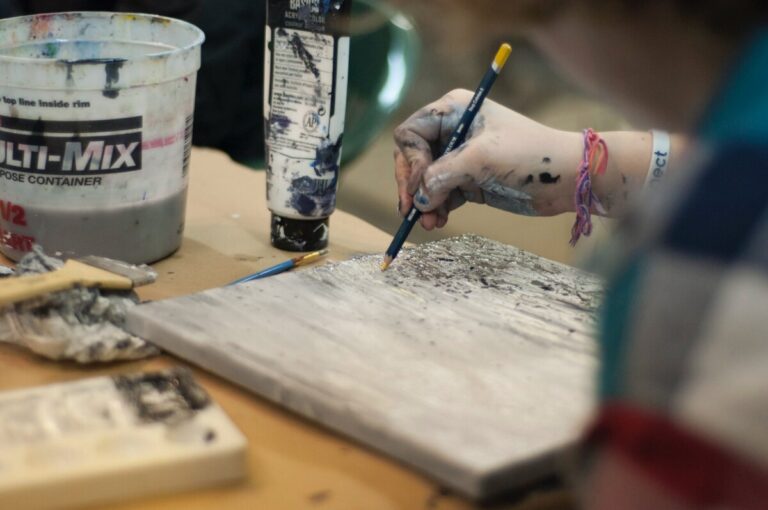
The International Body of Art (IBA), which helps underrepresented artists launch their careers through its public exhibitions programme, has launched a platform to enable funders to sponsor and connect with emerging artists.
It follows research from the IBA that shows that 26% of artists have had to abandon their careers in the arts due to limited financial prospects, and 29% of ethnic minority artists have seen their white peers’ careers progress further than theirs. The research also found that 35% of ethnic minority artists have had to abandon a career in the arts due to having limited financial backing.
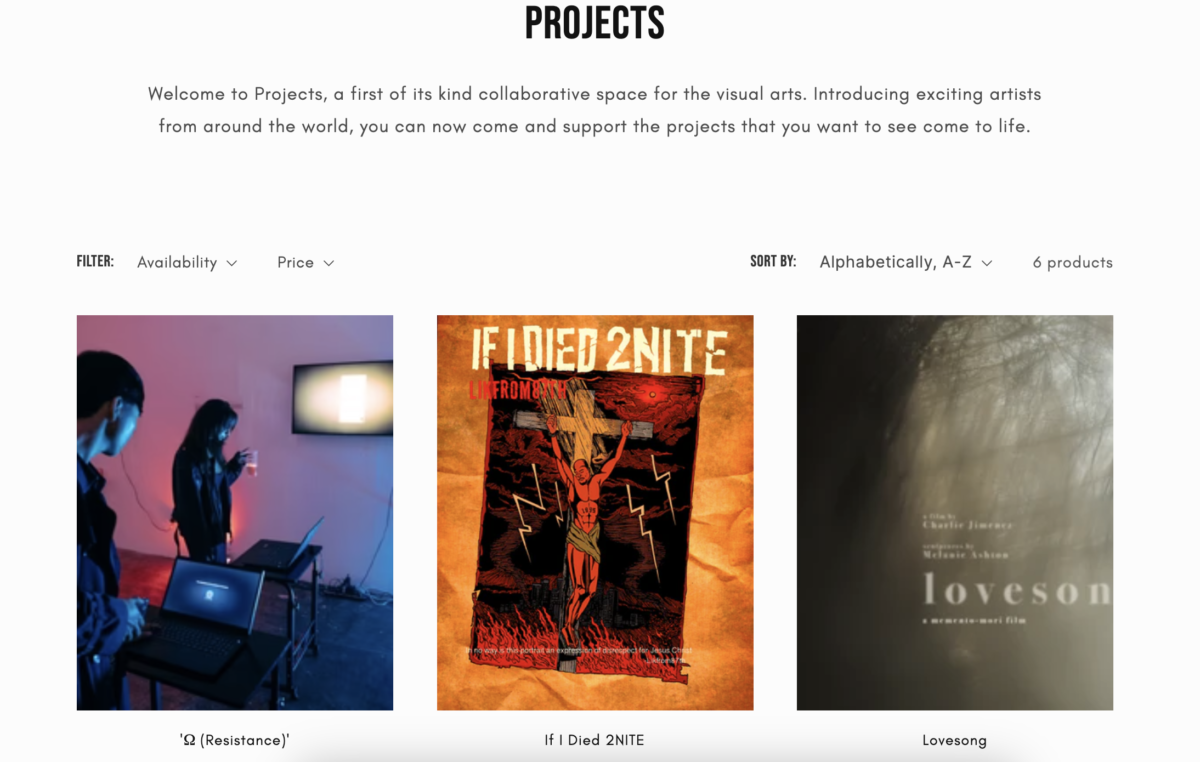
The platform is called ‘Projects‘, and to contribute to a project there are various options of different values, ranging from £5 to £1100. With each contribution, there are different ‘rewards’. These can range from a signed ‘thank you’ note, to private premier invitations, 1-on-1 Q&A calls, or even an extended meditation session with an artist.

The rewards have been created by the artists themselves, with each one tailored to their project. ‘Projects’ aims to allow early-stage art collectors to connect with promising emerging artists to break down the barriers to entry for both artists and art enthusiasts.
April Kelly, IBA’s project manager said:
“In our artist support and exhibition curation, we always ensured that artists felt that they could be experimental, that they could take risks, and that they could be supported in creating honest, passionate, and personal works. After an early exhibition, we experienced artists thanking us for giving them this freedom – it was then that we realised how profound the problems of the art world are.
“Its rigidity does not simply affect access, but it continues to dictate from within the work of artists. The traditional market almost forces artists to keep making the same works that are instantly sellable and recognisable, so it doesn’t actually allow any room for innovation. That’s what we want to be here for.”
IBA CEO Maria Artool commented:
“What truly sets IBA’s Projects platform apart is its focus on community. It’s not just about funding projects for the sake of it; it’s about becoming part of an extraordinarily diverse, open-minded, international, and innovative community that thinks outside the box and challenges barriers.
“While individual projects offer their own set of rewards that align with their artistic goals, the platform as a whole provides a space for art lovers and enthusiasts to actively shape the future of the art world. By selecting which projects should receive funding and be brought to life, backers are invited to play a unique role in defining the future of art. They become an integral part of the artistic process, which is a structure that is the first of its kind in the industry.”


On July 25, 2021, Pedro Huertas, an American doctor trying to cross from Canada into the U.S. at the Highgate Springs border crossing in Vermont, told a border guard he was bringing one $2,000 stone statue with him.
He was lying.
A search of his vehicle revealed nine bubble-wrapped packages of various sizes, one of them long and thin, others small, according to a criminal complaint filed in U.S. court. When border guards asked Huertas what was inside, he and his wife would not respond to their questions.
Three of the statues, U.S. authorities would later learn, were carved from sperm whale teeth and another was made of a walrus tusk. The border guards seized them.
CITES, which restricts the sale of products made from protected species, and other, country-specific laws, make it difficult — and sometimes impossible — to leave Canada with products made from whales, walruses and seals, even if they are carvings made from animals hunted legally by Inuit or from bones that are have sat in the tundra or on the shore for years.

Huertas wanted the statues back, and a few days later, he presented the authorities with documents, including official certificates of authenticity, that purported to show that the items were decades old, a fact which, if true, might have allowed him to keep them and avoid charges.
It was not true. According to an account in the U.S. District Court documents, they were drawn up at Huertas’s request by the art gallery where he had purchased the carvings — Images Boréales, a prominent Inuit art gallery in Old Montreal.
Huertas was charged in the U.S. with knowingly importing parts of an endangered species without the proper permits. The owner and an employee of Images Boréales are also facing charges here in Canada for allegedly falsifying documents and possessing sperm whale teeth.
The laws that Huertas and Images Boréales are accused of breaking exist to prevent the sale and export of endangered species products. They are celebrated by some conservationists even as Inuit artists decry them as too restrictive. Some Inuit-art enthusiasts abroad are willing to go to extreme lengths to acquire pieces made from whale bone and walrus ivory.

At Images Boréales, on St-Paul Street in the heart of Old Montreal, a busy tourist area, carvings of soapstone sit on glass shelves near sculptures made of whale bone and walrus ivory.
But the sale of such items, particularly to Americans and tourists from outside of Canada, is complicated.
Some animal conservationists say that while many Inuit art enthusiasts may find the rules around import onerous or heavy-handed, they are necessary to make sure animals aren’t killed for their tusks and bones.
Barry Kent Mackay, the director of the Animal Alliance of Canada, said treaties like CITES — the Convention on International Trade in Endangered Species of Wild Fauna and Flora — are necessary.
The laws are there to protect animals even if they inconvenience people, “including a carver in the far North, or an art gallery in Montreal or an American who wants an ornament on his coffee table” because they help ensure that animals aren’t being killed gratuitously for the price tag on their body parts.
“The higher the demand, the greater the incentive to remove these animals,” Kent said. “The only way to ensure that the artisans will have something that they can carve is to protect the walrus, prevent it from becoming extinct.”

Featured VideoRuben Anton Komangapik says artists who sculpt whale, walrus, and narwhal bones or ivory pose no threat to those species, and he argues export restrictions on their art are unnecessarily strict.
Working with deliberate precision in his studio in Belleville, Ont., Ruben Anton Komangapik, an Inuk hunter and artist, uses hand tools to carve a trench into a piece of whale bone.
The massive mammal died decades ago. Fresh whale bone is saturated with oil and can’t be carved. Artists often work with bones that have lain on a beach for years, exposed to the elements — sometimes for more than a century — victims of whalers who hunted the animals for their oil.
But Komangapik says he will struggle to sell the finished sculpture that emerges from the whale bone because of the export restrictions.
“It’s really difficult because being an artist, you’re living pretty much on a piece-to-piece situation,” he said.
WATCH | Why work with whale bone?
Theresie Tungilik, an Inuk artist and the president and spokesperson for CARFAC, a union that represents the interests of Canadian artists, has advocated against the Marine Mammal Protection Act (MMPA), a U.S. law that restricts the import of products made from whales, seals and walruses, among other animals.
She recently circulated a petition, signed by other artists, calling for changes to the MMPA to allow Inuit artists to sell their work to the American market. The restrictions hurt Inuit artists’ ability to sell their work and make money, she said.
“We hunt the animal not just for their bones and ivory, we hunt them because we need the food to eat,” she said, “and it’s a big plus when a walrus has a tusk and it can be made into art.”
Komangapik said Inuit carvers sometimes face pressure from artist co-ops to use other materials and avoid using bone or ivory because those items are more difficult to sell.

But that never stopped him. Working with whale bone reminds him of his grandfather, who was also a carver, he said.
“Every time I carve it,” he says, “the smell of it and the touch of it and everything associated, it feels like I’m visiting him.”
Sculptures made of whale bone and walrus ivory have piled up in warehouses in southern Canada, purchased by co-ops that market art carved by artists in the North to worldwide markets.
Since the pieces made from marine mammals usually can’t be exported — they end up on shelves and in storage.
RJ Ramrattan, the general manager at Canadian Arctic Producers (CAP), a co-op that pays Inuit artists for their work, promotes it and sells it worldwide, describes the sale of art made from whale bone and ivory as a “nightmare.”
Some export permits require details about how the animal was killed that are difficult — or impossible — to get for some of the pieces that Inuit artists carve.

For example, in the case of a decades-old sculpture carved from a piece of whale bone that has sat outside since the early 20th century, it would be difficult to prove where and how an animal was killed, and how the artist acquired it — especially if the artist is dead.
“I have many, many clients from the U.S. coming to the galleries,” Ramrattan said. “They love the bone, they love the whale bone, they love the walrus ivory … but they can’t buy it.”
Despite the headaches that often come with trying to sell and export a piece of Inuit art made from bone or ivory, some art dealers see the necessity of the restrictions.
“I understand the idea. The idea is to protect,” said John Houston, owner and director of Houston North Gallery, which sells Inuit art, and an Arctic filmmaker. “If someone says, “Oh wow, I’m going to carve a whole lot of walrus ivory, which means I’m going to go and kill a whole ton of walrus,’ — well, we don’t want that.”
But when a gallery circumvents the export restrictions, it could lead to additional scrutiny of the whole sector, he said, and ultimately hurt the industry.
“What good is going to come with that? Either things stay as they are and someone just gets a fine or quite possibly, [the authorities] end up saying ‘we’re gonna have to tighten this all up.'”

Houston said he would love to have access to the American market, where Inuit-art enthusiasts are willing to pay top dollar for sculptures made of whale bone and walrus ivory. But the roadblocks posed by export restrictions are too restrictive.
Huertas, meanwhile, pleaded guilty in October to a misdemeanor charge of knowingly importing parts of an endangered species into the U.S. and, after a plea deal that kept him out of prison, agreed to pay a $50,000 fine. The court also ordered the forfeiture of the four ivory carvings.
Now, Matthew Namour, the owner of Images Boréales, and one of his employees, Imene Mansour, are scheduled to appear in a Montreal courtroom on Dec. 4 to answer to charges that they breached the Wild Animal and Plant Protection and Regulation of International and Interprovincial Trade Act. They have not yet entered a plea.
Mansour, Namour and the gallery have been charged with possessing sperm whale teeth, which are part of an endangered species, with the intent to sell or distribute them and Mansour and the gallery are accused of presenting false documents to authorities. If guilty, they face a minimum fine of $5,000 or a maximum of six months in jail, or both.
Through a lawyer, they declined to answer questions, saying that it was still early in the proceedings. The criminal complaint against Huertas in the U.S. alleges that Mansour falsified documents on Huertas’s behalf. These allegations remain to be proven in the criminal proceedings in Canada.

Located on the second floor of Zimmerman Library, the Indigenous Nations Library Program is a service point for the University of New Mexico community that empowers Indigenous students.
The space provides a safe learning environment, culturally relevant information services, Indigenous scholarship opportunities and social gatherings, according to the INLP webpage.
Janice Kowemy (Laguna) — who manages the space for INLP — offers research assistance and resources on Indigenous topics.
“INLP is a space where people can feel comfortable and learn about Indigenous scholarship, the issues Indigenous communities face today and also utilize what’s available in our collection for their research, as well as advance their Indigenous studies,” Kowemy said.
Kowemy said that all Indigenous students are eligible for the “Michael and Enokena Olson Memorial Scholarship” which awards two students $250 each semester.
The program’s educational materials are a select assortment from Zimmerman Library’s catalog.
Every month, INLP offers an array of themes related to Indigenous research to highlight different topics – most recently centering harvesting and the World War II code talkers. This is in an effort to focus on resources in bigger collections so students know what is available to them, Kowemy said.
“We have a small section of periodicals of Native American newspapers. We have the back issues of those, like the Cherokee Daily Times, Navajo Times and Jicarilla Apache,” Kowemy said.
INLP also hosts a variety of activities as part of their community outreach, such as poetry slams, making gingerbread houses, cupcake decorating and their Indigenous food series which introduces people to dishes from Indigenous communities.
“I think one of the main things is the student workers here who come from various tribes. They offer a lot of their support and creativity as well. They are also involved on campus so it brings a lot of student groups here to utilize the space,” Kowemy said.
In the program’s space, there are multiple murals created in collaboration with Indigenous artists from the collective Ansulala, Native American Studies students/professional artists and former INLP Outreach Librarian Mary Alice Tsosie (Dine’). The art is meant to symbolize planting seeds of knowledge, according to the INLP webpage.
The hands illustrated throughout are meant to represent “human intervention” as well as the acknowledgment that human beings are a part of the Earth’s sustainability.
Enjoy what you’re reading?
Get content from The Daily Lobo delivered to your inbox
The water designs symbolize all 19 Pueblo Nations in New Mexico, as well as their interconnectedness.
“This is a one of a kind program in a university setting,” Kowemy said. “I’ve gone to various conferences and talked about (the program) and people are interested in starting their own program similar to this at their academic library. We are hoping it will get out there and that people will model what we’ve been doing here.”
Kelsa Mendoza is the copy chief at the Daily Lobo. She can be reached at copychief@dailylobo.com or on Twitter at @kelsar4in.
Kelsa Mendoza is the copy editor at the Daily Lobo. She can be reached atcopychief@dailylobo.comor on Twitter at @kelsar4in.







