In its foundational years, The Block Museum of Art gained a reputation for presenting groundbreaking exhibitions that considered the unique roles prints and printmaking have…
For One and All: Prints from The Block’s Collection 11/9/2023


Owensboro native and award-winning saxophonist Chuck Johnson, who is now based in Los Angeles, will perform in Evansville on November 5.
The Evansville Jazz Society and the University of Evansville will present Johnson on their Jazz Guest Artist Concert Series in the newly renovated Wheeler Concert Hall on November 5 at 4 p.m. Tickets for the performance are $15 for adults, $5 for students, and $10 for members of the Evansville Jazz Society. They can be purchased by calling 812-488-2754.
Johnson has been a band leader and performer for 37+ years.
“His distinctive saxophone voice was established by fusing the hard bop East Coast aesthetic with his unique West Coast musical experiences,” according to a release about the performance. “He is recognized for bringing back the soul that is missing in much of today’s modern mainstream material. Johnson’s vast breadth of knowledge derives from a diversity of experiences throughout the length of his career as a saxophonist and band leader. He strives to introduce, share, and uplift listeners with his joy through a rich and vast repertoire that is a melting pot of straight-ahead jazz, Afro-Cuban, bebop, Latin, swing, bossa nova, blues, and funk.”
Fluent in performing on all the saxophones (soprano, alto, tenor, baritone) and flute, Johnson’s inspiration came from saxophonists in possession of a sonorous sound such as Dexter Gordon, Stanley Turrentine, Grover Washington, Jr., and Cannonball Adderley.
“I love introducing and sharing our great American art form with others,” Johnson said. “That is at the core of what keeps me motivated to put this great music in front of a listening audience.”
Johnson is a 1980 alum of the University of Evansville, saying that is where he was first introduced to the saxophone. He was instrumental in reinstituting the jazz format at radio station WUEV-FM, where he had the objective of introducing both popular and obscure jazz to the audience.
After his UE education, Johnson was brought on board by the Interlochen Center for the Arts in Michigan, where he initiated their first student chapter of The International Association of Jazz Educators. He has since furthered his horizons by completing the Professional Instrumental Program at the Grove School of Music in Los Angeles. He has also been active with the International Association of Jazz Appreciation, served on the board of the Jazz Heritage Foundation, and served on the national alumni board for Interlochen Center for the Arts.
Johnson has appeared in concert with such artists as The Temptations, Four Tops, Buddy Collette, Gerryck King, Bobby Womack, Carl Burnett, James Leary, and Oakdale Saxophone Quartet.

Housed in a 19th-century listed mansion that stretches skyward into spires, the Grisebach auction house gives off the disquieting charm of a German fairytale castle. Outside runs Fasanenstrasse, a leafy street of galleries and skincare boutiques in one of Berlin’s chicest corners. On December 1 2022, Marcin Król, the Polish consul in Berlin, climbed the steps to the building for the evening sale beginning at 6pm. A number of impressive modern artworks were on offer, including a sought-after self-portrait in oil by Max Beckmann. But it was Lot No 31, “Untitled”, a little pink Wassily Kandinsky watercolour from 1928, that had Król’s attention that evening.
Król was not at Grisebach as a buyer. Earlier that day he had sent the auction house a message demanding it stop the sale of the Kandinsky. In the hours since, representatives at Grisebach had reviewed the legal status of the artwork and its right to be sold by Inga Maren Otto, a German billionaire and philanthropist. Their decision was clear. They would proceed.
At 4.40pm, Król took to Twitter, quoting the message he’d sent to Grisebach. “Withdraw[ing] the painting from the auction,” he wrote, “[was] the only correct and moral action in this situation . . . The provenance/history of the painting stated [in the catalogue] is clear . . . the painting has ownership markings indicating its origin from the National Museum in Warsaw. [It has been registered] from the Polish side in Interpol’s database of stolen works of art.” He finished the thread with an update: “The auction house has not yet stopped selling the work. As of 4.50pm.”
Król watched on a TV screen in the corner of an anteroom as the auction began. Lot No 31 eventually appeared on the screen. Flattened by the glowing pixels, the original aqueous colours took on neon tones. There was a faint scribble underneath in Kandinsky’s handwriting. After a flurry of bids, more than doubling the upper reserve price, the hammer came down.

Afterwards, Król posted a photo to Twitter with a solemn summary of what he had witnessed. It read like both the beginning and the end of an art-crime story: “Grisebach sold Kandinsky’s watercolour [“Untitled”] for €310,000. The painting was stolen in 1984 from the National Museum in Warsaw.” Then the Berlin police showed up at the auction house, in response to a report of a stolen artwork being sold on the premises. Król’s message that day was, said Grisebach in a statement issued after the event, the first they’d learnt of the theft.
I heard about the auction of the Kandinsky watercolour some weeks later. I was intrigued by this little work on paper, the size of which is hard to gauge when viewed online. A cluster of geometric shapes and coloured washes not much bigger than a postcard, it’s not a famous piece and was never supposed to be. The personalised dedication at the bottom provides a clue as to its original, more intimate context.
Through Król’s media offensive, I began to imagine the painting in its previous lives. A valued artwork can do this; move through history like a time traveller who has seen it all, changing hands, changing walls, changing in value, picking up a few marks and scuffs, but remaining, on the surface, itself. It’s easy to forget that many of the works of art we see today have somehow weathered revolutions, wars and genocide. During and after the second world war, art collections dispersed like breadcrumbs in the mouths of sparrows. Since that time, art dealers and auction houses have continued to sell these works, right up to the present day, with values soaring.
As I began to trace the Kandinsky’s journey, I discovered the story had deeper roots than even Król had imagined. The watercolour wasn’t stolen once but twice. Having survived the Nazi party’s confiscations of modern art in the 1930s, it languished in a depot in occupied Poland before travelling back and forth across the world via private and public sales as the lines between black market and art market blurred postwar. As the trail grew more convoluted, my questions multiplied. How was it possible, I wondered, that a piece of art that we know was once stolen from a major European museum could now be sold, perfectly legally, by an important German auction house? And who, in the chain of ownership spanning nearly a century, is the rightful owner of Lot No 31?
In his Dessau studio in 1928, Wassily Kandinsky sat before a small sheet of thick paper. He drew in ink, a balance of precisely placed interlocking semicircles, triangles and floating circles, with a more irregular snakelike mark through the centre. Then he dragged his paintbrush across some watercolour pans, applying the colours to the interior of the shapes in blues, yellows and reds, and washing the surround in pink. The watery paint pooled in different areas, variegating the intensity of the colour where it settled. Then it dried, locking the painting into position. At the bottom, in pencil, the artist wrote: “Meinem lieben Otto Ralfs, herzlichsten Glückwunsch, Kandinsky I IV 28” [“To my dear Otto Ralfs, Happy Birthday, Kandinsky, 1 April 28”]. It was a gift, made for his friend and patron on the occasion of his 36th birthday.
Kandinsky’s studio was in a row of identical semi-detached houses located in a pine forest at the edge of town, where artist-professors lived and worked. This was the vision of Walter Gropius, founder of the influential modernist art and design school the Bauhaus, who designed the Dessau “Masters’ Houses” in 1925 to fit his concept of gesamtkunstwerk, or total artwork. Kandinsky lived at No 6, next door to the Swiss-German artist Paul Klee. The day I visited earlier this summer, the sunny weather was heating the pines, filling the air with the same calm, sweet smell that Kandinsky, then in his late fifties, and the younger Klee would have breathed as they sat drinking tea together in the garden.
Inside, the thick, shiny paint was fresh from recent restoration work, distracting the senses from conjuring their presence. The artists’ studios, the largest rooms in their carefully designed houses, shared a wall. From the front, an enormous horizontal window frames the central focus of the house, the parallel studios in which they worked, taught and held salons: Kandinsky on the left, Klee on the right.
Otto Ralfs and his wife Käte bought their first works by Klee when they visited the Bauhaus in Weimar in September 1923. After that, their lives changed completely. The couple didn’t have a lot of money. He worked as an insurance salesman and owned a shop in his hometown, Braunschweig, in northern Germany. She was a paediatric nurse. But they were among the first people to see the value in the art being produced at the Bauhaus. At one point, they had the largest collection of Klees, and the second-largest collection of Kandinskys after Solomon R Guggenheim.

The Ralfses met Kandinsky not long after he arrived from Russia and was living in the attic apartment of another family, with his second wife, Nina Andreevskaya. “They had just three cups, and the vodka was going around in a water glass,” said Käte Ralfs, in an unpublished interview with the art historian Peg Weiss in the 1980s. Otto and Kandinsky agreed on an exchange: Ralfs would send him glasses and pots from his household-goods shop, and Kandinsky would send him artworks. The Ralfses’ collection kept growing. Later, the German artist Kurt Schwitters wrote them a letter: “I hear you are trading art for pots. My wife urgently needs a few . . . ”
“They were the typical modern Weimar-era couple,” said Nina Zimmer, great-grandniece of Käte and Otto and director of the Klee Museum, in Bern. “They had great parties and they used to swap clothes. Käte would wear a suit and Otto a dress and stockings.” Rudolf Zwirner, the German art dealer, remembers this too. “Ralfs always invited people to his modest apartment in Braunschweig’s Schuntersiedlung on Sundays to show his works on paper . . . [He] received people in women’s clothing, but no one took offence. For me it was the first encounter with a transvestite,” he wrote in a 2019 autobiography.
By 1931, the German economy was in crisis and Otto Ralfs was broke, forcing him to sell a few pieces from his collection. Provenance data shows clearly that any works leaving the Ralfs collection legally did so at around this time. Two years later, Otto and Käte looked on as Adolf Hitler stood in front of a large National Socialist demonstration outside the front of the Braunschweig Palace. Before long, the Nazis were confiscating tens of thousands of modern works of art that they considered “degenerate”, among them works by Kandinsky and Klee. Both artists left Germany when the Bauhaus was closed in 1933. The Ralfses were not immediately targeted but had started to look for a safe storage location for their collection. But in their dining room, they left three large Kandinskys hanging, including the important 1910 painting “Composition I”. They only moved them down into their air-raid shelter after the second world war began.
Otto Ralfs spent the war as a lieutenant stationed in Katowice, part of occupied Poland, but for most of his time headed a maintenance unit near the Eastern Front. When he returned on leave to Braunschweig, he and Käte packed up the largest part of their collection into five heavy boxes and organised its transportation to a depot in Katowice. In October 1944, she was visiting him in Katowice when Britain carried out “Operation Hurricane” on Braunschweig, a devastating air raid that destroyed 90 per cent of the medieval city centre, along with much of the Ralfses’ house and the art still stored in the basement. Otto’s famous guest book miraculously survived, along with a few artworks that were stored in a different part of the house.
It isn’t entirely clear what happened to the art kept in the Ralfses’ depot. The Red Army reached Katowice in January 1945 but, before any of the artworks could be confiscated by either the Soviet troops or the soon-to-be founded communist Polish state, the collection had vanished. “The entire warehouse had somehow seeped away into the population” was how Käte put it more than three decades later.
The watercolour by Kandinsky, stored in one of these boxes in a folder along with other works on paper, was just one small sheet among hundreds of artworks by artists including Klee, Otto Dix and Edvard Munch taken from the Katowice depot. The Ralfses would spend the rest of their lives trying to retrieve them.

orota Folga-Januszewska was a curator at the National Museum in Warsaw in 1982. In early summer, she and Irena Jakimowicz, then curator of modern prints and drawings, heard that a few modern pieces by famous western artists had appeared on the market. This was unusual at the time, but the museums had first dibs on the pieces, so they visited the state-owned Desa gallery in Krakow to view them. Lying in a vitrine were four works by Paul Klee and two by Wassily Kandinsky, an untitled drypoint from 1928 and the little pink watercolour, both with dedications to Otto Ralfs.
On a video call, Folga-Januszewska, now a professor at the Academy of Fine Arts in Warsaw, told me she looked into the provenance of the pieces. Her investigations confirmed the obvious: the collection had once belonged to the Ralfses. Folga-Januszewska had heard rumours about where the artworks had come from but the official line was that they had been confiscated by the Nazi party and sold during the time of German occupation. In other words, they were not looted by Poles, nor requisitioned by the Polish state, but bought legitimately at the time. Folga-Januszewska and Jakimowicz submitted their purchase request for the works. The Kandinsky watercolour was bought for 500,000 zlotys (about £11,480 today).
Protests against the state were rife in Poland during this period, with widespread support for the strikes and demonstrations organised by the Solidarność (Solidarity) movement. The National Museum staff in Warsaw were also deeply engaged in Solidarity’s actions, said Folga-Januszewska, organising exhibitions to demonstrate opposition to the communist regime. In late 1982, the museum’s famous director Stanisław Lorentz was ousted after 50 years in the job, on account of his support for the protests. The Ministry of Culture and National Heritage replaced him with Juliusz Bursze, a paintings conservator and head of conservation at the National Museum.
In spring 1984, Folga-Januszewska installed the exhibition Concepts of Space in Contemporary Art at the National Museum. Included in the show, in the section of abstract works aptly titled “The Abandoning of Objects”, was the 1928 watercolour by Kandinsky, two other works by him and three pieces by Paul Klee, which had also belonged to the Ralfses’ collection stored in the Katowice depot.
In an essay in the exhibition catalogue, the curator’s words seem to perfectly describe Kandinsky sitting in his studio in 1928, manifesting his philosophy in abstract form: “Every artist bent over a sheet of paper, over a surface on which an image is to be created, answers anew the same question: how is the three-dimensional space of objects and the four-dimensional space-time of events rendered on a two-dimensional surface? Depicting the world on a surface, the artist transforms multi-dimensionality into two-dimensionality, which gives evidence of the individuality of his intellect and sensitivity.”
Folga-Januszewska left to go on holiday after the opening. When she returned, the Kandinsky watercolour was gone. “The atmosphere was strange,” she said. “As a curator, I wanted to know what had happened, but nobody wanted to talk about it. The Militia didn’t want to hear any questions, nor Juliusz Bursze.” According to the Polish Ministry of Culture, the theft took place on June 14 1984 and was reported to the police on the same day. “It felt to me like an organised event,” said Folga-Januszewska. “It was widely known that the secret police in Poland were smuggling goods back and forth across the border to make money.”
The black market for looted artworks in Poland after the war was enormous, said Nawojka Cieślińska-Lobkowicz, an art historian, critic and provenance expert on looted Polish and Jewish art and libraries. “Many people were leaving Poland in the 1980s. You have to understand the time, then you can see why an art historian, for example, might take a piece of art across the border and sell it in the west. Anyone could have taken the Kandinsky watercolour from the exhibition. It could have been someone who wanted to emigrate,” she said.
The Polish police closed the case on September 24 1984. By December of the same year, the three-dimensional object that was Kandinsky’s watercolour had travelled through space and time across the Iron Curtain to Sotheby’s in London.

s I mapped the journey of the little Kandinsky, a set of imagined characters began to form in my mind, each stealing the artwork from Warsaw and travelling with it, unframed, across one of the most heavily secured borders in history. It is an easy object to smuggle. It slots into a book, in a pocket, in a suitcase. It slips out of sight. Did the same person who stole it take it across the border? Were they in a car? Sometimes it’s a woman, sometimes a man. Sometimes it’s a Polish official, sometimes a secret service informer, sometimes an art historian or a person trying to emigrate. Perhaps it travelled directly to London or maybe it went via Munich.
On December 5 1984, the Kandinsky watercolour was sold at a public auction at Sotheby’s in Bond Street for £34,100. The catalogue from the auction is littered with curious errors. It misspells “Otto Ralff” as a previous owner. It locates him incorrectly in Munich. And it omits any mention of the National Museum of Warsaw or the presence of the museum’s stamp, which was on the back of the artwork. Missing, too, is any mention of the seller, as though the artwork had come through some direct channel from Ralfs. Sotheby’s has a record of the seller’s identity but declined to share it on grounds of client confidentiality when I asked, some 40 years after the sale. In a statement, it said: “Sotheby’s was instrumental in helping establish the Art Loss Register in 1990 and we check all property offered for sale against all available records of lost or stolen art.” It added that the catalogue for the 1984 sale of the Kandinsky, which was not registered as stolen at the time, “did not imply direct provenance from Otto Ralfs”. It was “not able to speculate as to whether the stamp was visible at that time”, as staff from that period no longer work at the auction house.
Charles Hind is chief curator and curator of drawings at the Royal Institute of British Architects. A cataloguer in the British watercolours department at Sotheby’s in the 1980s, he described to me the likely scenario for acceptance of an artwork such as this one. “Whoever the vendor was, maybe they came to the front desk,” he said, “and they must have come up with a story that was convincing but not important enough to merit inclusion in the catalogue. Something like, ‘Oh my mother bought it at a London gallery in the ’50s.’ That was common — and sometimes perfectly true.”
Back then, before the rise of postwar restitution claims in the 1990s and the 1998 Washington Conference Principles on Nazi-Confiscated Art, thorough and accurate provenance research was not so heavily obligated. “It was used to establish the history of an object,” said Hind. “It could add value and be used as a marketing tool, and it could demonstrate that the object had not been hawked around the open market. What the market loved — and still loves — were materials fresh to the market, and provenance was a useful way of proving that.”
Even today, the rules around provenance research for the selling of art are hazy, as the sale of the Kandinsky last year at Grisebach shows. In Germany, since the 2016 Cultural Property Protection Act, auction houses have been legally obliged to carry out thorough provenance research as part of their commercial operation, particularly where the artwork is suspected to have been taken from its owners due to Nazi persecution, between 1933 and 1945. The gaps in the provenance of the Kandinsky watercolour listed in the Grisebach catalogue suggest that, without knowing the facts, this could have been a possibility. But although Grisebach has 40 experts for this purpose, the data published in the auction catalogue for the Kandinsky watercolour was incorrect. It was based on inaccurate data published in the 1994 catalogue raisonné, the definitive list of an artist’s works.

As Hind pointed out, the Sotheby’s staff in 1984 had no such resource at their disposal: “The fact that [they] misread the collector’s name suggests that they didn’t devote a lot of time to it, [but] then again, there were hardly any places you could go at the time to check this. If something was established as stolen, we immediately withdrew it.” In its statement, Sotheby’s said: “Although it is now routine practice to photograph both front and back of works consigned for sale, this was not the case in the 1980s.”
In Hind’s department, the policy was always to open the frame and check the back of the artwork. “If they had, quite possibly alarm bells should have rung. But even if they had seen the stamp, there was no information available at the time about the theft, and relationships across the Iron Curtain in 1984 were very difficult,” he said.
A database of stolen art did exist at that time. And, in November 1985, just under a year after the sale at Sotheby’s, the National Museum in Warsaw contacted the International Foundation of Art Research (IFAR), which duly published a theft alert on the Kandinsky watercolour. In it, the IFAR stated that the museum was aware of the sale at Sotheby’s but had not yet contacted the auction house. It is unclear why this never happened.
The buyer took the watercolour to New York. Whoever it was, the title was not passed on to them at the point of purchase. “In English law, a thief cannot pass on good title,” said Emily Gould, assistant director of the Institute of Art and Law. Despite this, without a claim from the original owners (which, in England, should be made within six years of the sale), buying and selling of the Kandinsky continued through the art market. With every passing year, the ownership of the new buyers starts to gain in legitimacy in various jurisdictions. “Limitation periods [which vary in different territories] are one of the biggest hurdles for claimants for works that were looted during the second world war,” said Gould.
In the 1970s, the art market became a booming global network. Over the next few decades, works were increasingly seen as financial assets, with the prices paid for artists like Kandinsky rising accordingly. In 1931, his oil painting “Deepened Impulse” was listed for sale at 4,000 reichsmarks (£15,800 today) by Otto Ralfs during the collector’s period of insolvency. After Diego Rivera, the Mexican artist, decided he couldn’t afford it, it was bought in the same year by Salomón Hale, a Polish collector living in Mexico. Between 2010 and 2019, the painting was sold three times, finally for almost £6.1mn.

t the end of August this year I called an art dealer in Munich. Galerie Thomas, which specialises in modern and expressionist art, is located in the heart of the city, right next to one of Germany’s biggest museums of modern art, the Pinakothek der Moderne. In 1988, it became the next brief stop for the Kandinsky watercolour, which had travelled through London and New York. Like everyone else, the gallery was reluctant to name names. “It was a New York dealer, with a good eye and good works . . . now deceased,” said Silke Thomas, the daughter of the gallery’s founder. Galerie Thomas exhibited the watercolour in a show of miniature artworks. The watercolour was on the front cover of the matchbox-sized catalogue. “It was such a gem we didn’t have it for long,” she said.
Thomas did not appear to see why anything about the sale of an artwork like this should be problematic. “We buy artworks and sell them on,” she explained. In German civil law, good title can be acquired by the buyer even if the seller does not own the work, unless the buyer is negligently ignoring their suspicion that the seller does not legally own it. In addition, there is no legal obligation to investigate the title of the seller. I asked if there was proof that the work was bought by the previous owner, and by Galerie Thomas, in good faith. She said the fact that it had been sold by Sotheby’s was effectively a guarantee. In Germany, auction houses are legally accorded an “auction privilege” by which rightful ownership, or “title”, is automatically conferred from seller to buyer if a sale takes place in a public auction. This law does not apply in the UK.
Neither Thomas nor Ralph Melcher, the gallery’s provenance researcher who was sitting in on our call, said they knew about the IFAR’s 1985 stolen-art alert. “Nobody was aware the work was stolen,” Thomas said. “Not Sotheby’s, not the dealer, not us, not Vivian Barnett, who wrote the catalogue raisonné. It’s not clear that it was stolen. It went through public auction.” I asked if they had seen the stamp by the National Museum in Warsaw on the back of the watercolour. Thomas said that they didn’t have any record of the stamp in their archived notes, so they probably didn’t notice it. “Everyone was doing as good a job as they could with what they had at the time,” she said.
The last owner of the little Kandinsky is known publicly. The billionaire Inga Maren Otto bought it from Galerie Thomas in 1988. She is the widow of Werner Otto, an entrepreneur who founded a mail-order empire in postwar Germany. Otto kept it in her collection for the next 34 years, until last year. In that time, the artwork’s legal status underwent its final transformation. Through the mere passing of time, the slate was wiped clean. Despite the historical, mass-scale plundering of cultural-heritage objects in and outside of its borders, in German law after 10 years the owner of a moveable item acquires the property if it was owned in good faith. The statute of limitations for claims for restitution of property is 30 years. By the time Otto consigned the work to Grisebach in 2022, she owned it fair and square.
Otto Ralf’s art collection was never far from his mind. “I think about it every day,” he wrote in a letter to the art dealer Ferdinand Möller in 1946. In 1955, Otto died in a car crash, which Käte survived. Afterwards, she continued trying to retrieve their stolen artworks, at one point hiring an art detective to whom she offered a 50 per cent finder’s fee to recover the collection. It was no use. She got stomach ulcers and tried to let go, but every now and then, she saw her artworks appear in galleries and auction houses in Germany, Switzerland and the Netherlands. “Die trauernde Braut” (“Mourning Bride”) by Otto Dix turned up at Galerie Nierendorf in Berlin, but when Käte Ralfs tried to confront the owner, he refused to tell her where he’d got it from. It was sold at Sotheby’s in 2008 for $62,500, with no mention in the provenance that it had once belonged to Otto and Käte Ralfs and came from the depot in Katowice, despite it being published on the German Lost Art Database, which has been publicly available since 2007.
Sotheby’s said the catalogue raisonné for Dix’s works features a series of six watercolours of grieving or mourning widows. “Only one of the six works has the specific title “Die trauernde Braut”, the work Sotheby’s sold in 2008, but, as you can see, the six watercolours are all variations on the same theme. Based on the fact the works are a series and incredibly similar in appearance, and that there is no image [on the German Lost Art Database] of the Dix registered as a loss to Otto and Käte Ralfs, Sotheby’s cannot identify the work we sold in 2008 as the same work registered with the German Lost Art Foundation.”
Käte had no money to push aggressively with lawsuits and, at the time, it was unclear what was legally possible. Even if she could have sued the dealers and auction houses selling her artworks, so much evidence had been destroyed in the Braunschweig bombings. Sometimes she caught a glimpse of the works still in Poland, where, it seemed, the majority of the collection hid. In the early 1950s, two Polish professors based in Krakow, Kazimierz Wojtanowicz and Włodzimierz Hodys, tried to sell works by Paul Klee from the Katowice depot in Germany. Klee died in 1940, so they contacted his son Felix for an appraisal of the works. They told him there was a box of Klees sold “under the table” and they had bought some with dedications to Otto Ralfs for themselves. Felix Klee informed Käte Ralfs, but when she contacted the professors, they denied owning the works.
The list of artworks belonging to the Ralfses’ collection — both those that stayed in Braunschweig and those transported and stored in the depot — is almost impossible to track down, but it was made available to me from the family archive. Many of the works on this list are also named on the German Lost Art Database website. In the case of Kandinsky, who died in 1944 near Paris, his untitled works, such as the pink watercolour, are listed as “a folder of watercolours and drawings”. Klee, who gave titles to his works and created small print-runs of his prints, is much easier to trace.
On May 30 2019, Grisebach sold a Klee drawing from 1927, “Two Souls Up”, at a public auction. The artwork, previously acquired in the mid to late 1950s by a collector in Basel, is listed in the Lost Art Database as belonging to Otto and Käte Ralfs. It is also on the private list of looted artworks that were housed in the depot. Diandra Donecker, director at Grisebach, informed me that the auction house “does not consider the Ralfs’ provenance in itself to be problematic or to hinder trade. The mere entry of a search report for a work of art in Lost Art Database in no way renders a work of art unsellable. It is the circumstances in detail, which must be precisely examined and evaluated by an art dealer, that then determine the further course of action in accordance with the law.” The law is on their side.
Today, artworks from the Katowice depot can be seen in countless private and museum collections across the world, including the Stedelijk Museum in Amsterdam, The Metropolitan Museum of Art in New York, the Los Angeles County Museum of Art and the Kunstmuseum in Basel. The National Museum in Warsaw still owns nine works from the Otto and Käte Ralfs collection, including a pen drawing by Klee, dedicated to Käte Ralfs on her birthday in July 1928. Many other artworks on the depot list are lost entirely for now.
In the aftermath of the Kandinsky watercolour auction at Grisebach, the auction house reassessed what seemed to be its legal certainty about the transaction. It announced it would suspend processing the sale “to obtain a binding clarification”. Since then, the buyer, who remains anonymous, has pulled out. Grisebach did not respond to requests for comment.
The legal clarification is ongoing and, since there is no court hearing registered, this is happening behind closed doors, like almost all art-market disputes. What has come to light is that the Polish Ministry of Culture and National Heritage is not involved in this clarification process. In a statement it said: “[D]espite EU and international obligations, to date the results of the investigation of [the] German authorities dealing with the case of the stolen Kandinsky watercolour have not been made available to [us].” It restated its position regarding the artwork’s legal status. With the ownership stamp still on the back, it said, “no civilised law can legalise such theft”.
Käte Ralfs died in 1995. The Ralfses’ heirs continue to live with remnants of the lost art and the evidence, built up over decades, of the family’s efforts to retrieve it. Artworks still pop up at auction, always several anonymous buyers and sellers removed from the looted collection. In the chain of provenance, a gap exists. For the Ralfses and family, that gap is profound. Artworks, for collectors like them, are personal, taken in as part of the family and remembered, long after the statutes of limitations are up. They can’t let go. And why should they?
Imogen Savage is a writer based in Berlin
Follow @FTMag to find out about our latest stories first

In its upcoming art exhibit, Southern Missouri Arts Connection (SMAC) will be featuring the work of 14 area photographers in The Art of Photography. The exhibit will run from November 3-25 at the SMAC Art Center gallery on historic Downing Street in Hollister. The opening reception will be held in conjunction with the First Friday Art Walk on Friday, November 3, from 6-9 p.m. Both the exhibit and reception are free and open to the public. Attendees may view the exhibit, tour the private studios and enjoy complimentary refreshments. The Vintage Paris Coffee kiosk will also be on site.
“This is our first fine art photography show ever,” SMAC President Tenille Blair- Neff said, “And we are excited to be bringing to the community a new way to view photography as a powerful art medium with endless possibilities.” The images selected for this show range from classic to innovative techniques, and thought-provoking to obscure with hidden meaning subject matter.
In addition, each month during their exhibits, SMAC highlights one of the many local non-profit organizations that serves the area. This month SMAC is drawing attention to The Child Abuse Prevention and Elimination Foundation (CAPE),which assists child abuse survivors and their families in receiving therapeutic counseling by providing financial grants.
Southern Missouri Arts Connection (SMAC), a 501C3 non-profit local center of creativity, art education, innovation, and community partnership, strives to improve the quality of life in southern Missouri by connecting individuals with the arts, for the benefit of all.
###
This press release is from the Southern Missouri Arts Connection (SMAC).


Tonight is First Friday in Wichita and it is the first of two First Fridays for the holiday season. Now is the chance to buy art as gifts for the holidays, add to your collection, or begin a new collection all together.
Art House 310 features the works of Alexandria Olthoff and Josh Johnico. Olthoff’s work involves mixed media pet portraits and various other animals, while Johnico, of Choctaw and Hopi heritage, paints native art to keep Native American history alive.
Mulberry Art Gallery features “The Color Walls: Peeling Back the Layers”, an “exhibit of vulnerable unique moments of expression”, with paintings by Brittany Stewart and photographs by Alan Garrett.
Harvester Arts will host Trish Higgins Fine Art and the exhibit “Mostly Small Works”. The exhibit features work by Aaron Brown, Bob Burdette, Sid Garrison, Ann Resnick, and Debra Smith. But be aware—this is a daytime show that runs from 1-5pm today and again 1-5pm this Saturday.
And Reuben Saunders Gallery opens tonight with “Big Ideas, Small Wonders” a group show with 32 artists participating. The artists have created “small and affordable masterpieces.” Some of the artists included are: James Borger, Bruce VanOsdel, Marc Bosworth, Dallas Dodge, Marko Fields, Rebecca Hoyer, Jim Simpson, Mike Miller, Kathleen Shanahan, Michael Jilg, Katrina Swanson, and many more.
Get out and get with it as works from each of these shows is sure to go quickly.
Stay safe, and I’ll see you tonight.


Glass Imaging uses artificial intelligence to “extract the full image quality potential from hardware on current and future smartphone cameras by reversing lens aberrations and sensor imperfections.”
The company has put its impressive AI technology to work with the new iPhone 15 Pro Max smartphone, showing dramatic improvements from the flagship phone’s 5x zoom lens.
The iPhone 15 Pro Max’s telephoto lens sports a unique tetraprism design and offers a 120mm equivalent focal length and f/2.8 aperture. The camera and lens combo is impressive from a technical perspective. However, the real-world results leave a bit to be desired.


“The full potential of this hardware is limited as the accompanying software from Apple doesn’t extract all the detail this lens can capture,” Glass Imaging claims.
In a journal entry, Glass compares the iPhone 15 Pro Max’s default processing against its advanced GlassAI processing. The results demonstrate a significant overall image quality improvement, including better detail, clarity, and color accuracy.
Glass says that while Apple’s hardware is impressive, the iPhone’s native software “occasionally falls short of harnessing the full capabilities of the hardware,” potentially resulting in compromised image quality. Despite dedicating significant resources to its image signal processing and image processing algorithms, Glass argues that “there’s significant room for improvement.”

So, what is Glass doing, and how does its AI processing improve image quality? In its own words, “Glass Imaging harnesses the power of artificial intelligence to get the most from the raw image burst data — the unprocessed sensor information captured during a shot. This AI-centric approach allows for intelligent decisions on image enhancement, going beyond the limitations of traditional handcrafted algorithms.”
At the heart of the company’s approach is neural network training. “At our labs, for each camera on that phone (wide, ultra-wide, tele, selfie), we train a custom Neural Network for low light, bright light, and super res (zoom),” Ziv Attar, Glass’s CEO tells PetaPixel.

“After training, we port these networks to the device’s chipset and optimize for speed and power consumption. Our neural networks take in a burst of RAW images and outputs a full processed image. Our Neural networks are trained to characterize the optical aberrations of each lens at any location on the sensor and are capable of correcting these aberrations,” Attar continues.
The entire training process takes “a few days.”
While the company cannot fully detail its “unique way” of “teaching” its AI to reverse lens aberrations (since it is a proprietary technology that the company is actively marketing to smartphone makers) Attar promises that GlassAI’s results are “more true and noise free compared to traditional processing approaches,” such as those that Apple is utilizing.

“The data (photons) are there but iPhone and other phones must apply very aggressive color denoise in order to remove color noise which is very disturbing. When they do that, they desaturate colors on fine details,” Attar explains.
“You don’t see this in big cameras as it’s mostly a problem of tiny pixels that are noisy and suffer from signal cross contamination between neighboring pixels that are of different color,” he continues. “Our networks are able to look at a large area and understand what pixels lie on what thread or object and handle the color noise removal in a much smarter way.”
The result is more accurate color information in the output image. Attar says that original iPhone images in Glass’s examples appear less colorful in part because default image processing mixes up small, colorful pixels with neighboring pixels when performing denoising.

Glass AI is “fundamentally improving reconstruction of existing data that exists on the sensor,” and is not performing any sort of synthesis of new information or creating “fake” data.
If this AI processing approach delivers such impressive results — as it does — then it should be a pretty easy sell. Is there any downside?
Attar says “there is no downside,” but admits that training high-quality neural networks is extremely challenging. Further, there are relatively high processing demands to handle the neural networks, which technology has only been able to achieve in the “the last year or so,” in his words.
“There were neural processors on Android and Apple devices for a few years now but they were not capable of handling pixel level operations and were only used for semantics and global operations like automatic white balance, automatic exposure, etc.,” Attar explains.

Further, the neural network processing requires time to execute its operations, even on swift, powerful mobile devices like the iPhone 15 Pro Max. However, the processing is pretty quick. A 12-megapixel image captured by the Pro Max’s telephoto camera takes about half a second, says Attar, and he says that the standard iPhone processing of a 12-megapixel file “takes longer than that.” So, practically speaking, processing time shouldn’t be a major inhibitor.
The user also doesn’t need to wait for the processing to complete to continue to shoot. However, it does take some time to see the final output file: the initial image on the screen is a low-quality version. However, even while processing occurs, Attar says the photographer can continue shooting.

He also says that despite the higher image quality, the image files are smaller because they have less noise, and noise makes files more challenging to compress. So, again, what is the cost here?
“The only cost is you need to develop tools to train these networks: large labs, robotic equipment, tons of software that controls the training procedure,” Attar says. While that all sounds expensive, it seems feasible for large companies to achieve.


“We are working to sell our software to phone makers around the world. The product is an SW library that includes custom-trained Neural Networks for each camera on a phone (selfie, wide, ultra-wide, tele…). Our solution will be in some phone models in 2024,” says Attar.
The company will also consider an iPhone app to allow end users to achieve impressive results. However, it will not be available “very soon,” if it ever hits the market. The company’s primary focus is selling its core technology services to manufacturers so that its AI can be implemented natively.
Image and caption credits: Glass Imaging

This Friday —that is, tomorrow— the International Photography Hall of Fame and Museum will honor its 2023 class of Photography Hall of Fame Inductees and Awardees in a virtual ceremony at 6p.m. CST. An annual occurrence since the IPHF first opened its doors fifty-eight years ago, these awards are given to photographers and industry visionaries for their artistry, innovation, and contributions to photography both as an art and as a science.
Significant innovators in their respective fields —according to not only to the IPHF (and common sense) — are none other than Nan Goldin, Vivian Maier, and Bea Nettles, in addition to Matika Wilbur, honored with the IPHF Visionary Awards as women photographers.
Frankly, as a street photographer who also happens to be part of an, ahem, certain subculture, the most shocking thing about this year’s honorees is the fact that it took so long for the IPHF to recognize their work.
We’re talking about Vivian Maier, one of the most prolific street photographers of the twentieth century, whose work we’ve been able to see thanks to serendipity and good luck. We’re talking about Nan Goldin, whose work within the LGBT community shed light on both its happiness and its tragedies; her opus The Ballad of Sexual Dependency, captured moments of love and loss in the post-Stonewall era; sex, drug use, dance clubs, domestic violence, AIDS and more are portrayed candidly and powerfully in this must-see piece.
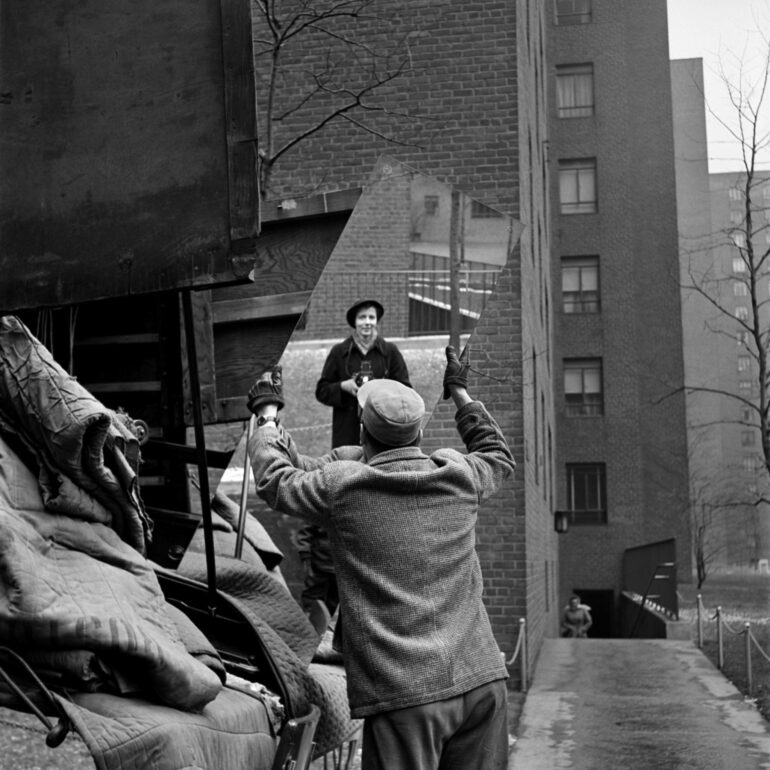
Vivian Maier was an American street photographer whose massive, unseen body of work came to light when it was purchased at an auction in Chicago, in 2007.
Born in New York City, she spent some of her youth in France and then worked in Chicago as a nanny and caregiver for most of her life. In her spare time, however, Maier ventured into the art of photography. Consistently taking photographs over the course of five decades, she would ultimately leave behind over 100,000 negatives.
Nancy Goldin, is an American photographer and activist whose work has explored LGBT subcultures, the HIV/AIDS crisis, the opioid epidemic and various moments of intimacy, as stated before.
She’s a founding member of the advocacy group P.A.I.N —Prescription Addiction Intervention Now— and she lives and works in New York City.

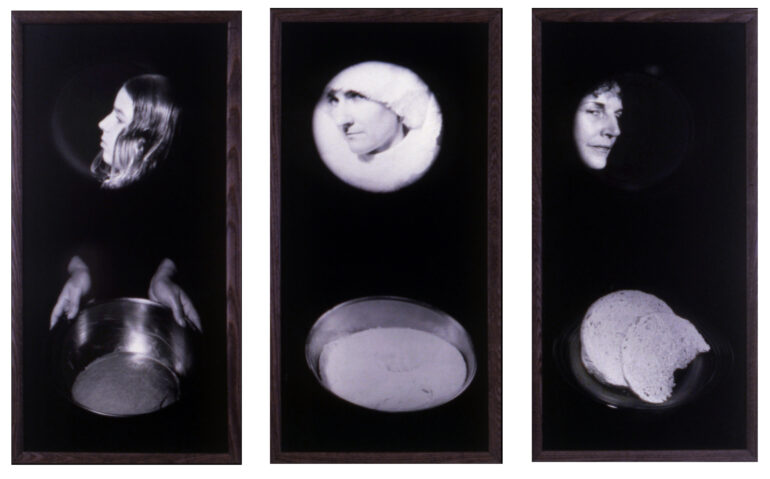
Bea Nettles explores the narrative potential of photography through constructed images often made with alternative photographic processes. Combining craft and photography, Nettles’s work makes use of wide-ranging tools and materials, including fabric and stitching, instamatic cameras, the book format, manually applied color, and hand‐coated photographic emulsions. Her imagery evokes metaphors that reference key stages in the lives of women, often with autobiographic undertones, and her key motifs draw upon mythology, family, motherhood, place, landscape, dreams, aging, and the passage of time.
Matika Wilbur is a critically acclaimed social documentarian and photographer from the Swinomish and Tulalip peoples of coastal Washington. Project 562, a crowd-funded initiative to visit, engage, and photograph people from over 562 sovereign Tribal Nations in North America, is her fourth major creative venture elevating Native American identity and culture. She co-hosts the All My Relations podcast with Dr. Adrienne Keene as a platform that invites guests to delve into subjects facing Native peoples today and explore the connections between land, non-human relatives, and one another.