Delaware Division of the Arts presents “Encaustic Constructions” by Ron Meick

Delaware Division of the Arts presents “Encaustic Constructions” by Ron Meick


Delaware Division of the Arts presents “Encaustic Constructions” by Ron Meick – Opens November 3 – State of Delaware News


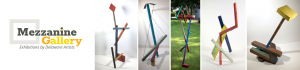


Wilmington, Del. (November 1, 2023) – The Delaware Division of the Arts’ Mezzanine Gallery presents 2023 Established Fellow Ron Meicks’s exhibition, “Encaustic Constructions,” on view between November 3-24, 2023. Guests are invited to attend a Meet-the-Artist Reception on Friday, November 3 from 5:00-7:00 p.m.

Meick’s latest series of artworks, abstract wooden sculptures called “constructions,” are painted with encaustic (wax) pigments. The work is informed by both Russian constructivist art of the 1920s and the natural world. “I was a beekeeper for over ten years, which is how I got interested in encaustic sculpture/painting,” finding that the accumulation of wax provided him with “an enticing material.”

Meick creates wooden constructions that range in size from miniscule (8 inches) to monumental, some as tall as 6 feet. After they’re built, he paints them with a veneer of hot encaustic paint composed of beeswax, damar resin and infused with pigments. This wax application softens the hard-edge structures and presents color references to connection points, elements in the composition, ending points, weighting of mass, balance, and reflection of color. The counterpoint of color and space increase the layers of meaning and emotional content.

His recent work is strongly guided by contemporary current events or relevant political issues.  The war in Ukraine, a country “being dismantled by destruction,” is the visual basis for this latest sculptural series.  Meick finds his biggest challenge to be “making objects that are relevant in concept, visual, and emotional terms.” As well, he finds challenges in “the physical effort of making objects.”

Originally born in Sidney, Nebraska, Ron Meick received his BFA in sculpture from Rhode Island School of Design. Ron Meick is currently an artist with the Washington Printmakers Gallery, Washington, DC, and in October 2023 he had a solo show featuring large scale prints. He has also shown his work throughout the U.S. and is in many private collections along with The Library of Congress. He currently resides and works in Arden, Delaware.

The Mezzanine Gallery, open weekdays from 8:00 a.m. to 4:30 p.m., is located on the second floor of the Carvel State Office Building, 820 N. French Street, Wilmington.

###

Contact: Andrew Truscott, Program Officer, Marketing and Communications

302-577-8280, andrew.truscott@delaware.gov

The Delaware Division of the Arts, a branch of the Delaware Department of State, is dedicated to cultivating and supporting the arts to enhance the quality of life for all Delawareans. Together with its advisory body, the Delaware State Arts Council, the Division administers grants and programs that support arts programming, educate the public, increase awareness of the arts, and integrate the arts into all facets of Delaware life. For more information about the Delaware Division of the Arts, visit arts.delaware.gov or call 302-577-8278.

image_printPrint

Related Topics:  , , , ,

Graphic that represents delaware news on a mobile phone

Keep up to date by receiving a daily digest email, around noon, of current news release posts from state agencies on news.delaware.gov.

Here you can subscribe to future news updates.

Wilmington, Del. (November 1, 2023) – The Delaware Division of the Arts’ Mezzanine Gallery presents 2023 Established Fellow Ron Meicks’s exhibition, “Encaustic Constructions,” on view between November 3-24, 2023. Guests are invited to attend a Meet-the-Artist Reception on Friday, November 3 from 5:00-7:00 p.m.

Meick’s latest series of artworks, abstract wooden sculptures called “constructions,” are painted with encaustic (wax) pigments. The work is informed by both Russian constructivist art of the 1920s and the natural world. “I was a beekeeper for over ten years, which is how I got interested in encaustic sculpture/painting,” finding that the accumulation of wax provided him with “an enticing material.”

Meick creates wooden constructions that range in size from miniscule (8 inches) to monumental, some as tall as 6 feet. After they’re built, he paints them with a veneer of hot encaustic paint composed of beeswax, damar resin and infused with pigments. This wax application softens the hard-edge structures and presents color references to connection points, elements in the composition, ending points, weighting of mass, balance, and reflection of color. The counterpoint of color and space increase the layers of meaning and emotional content.

His recent work is strongly guided by contemporary current events or relevant political issues.  The war in Ukraine, a country “being dismantled by destruction,” is the visual basis for this latest sculptural series.  Meick finds his biggest challenge to be “making objects that are relevant in concept, visual, and emotional terms.” As well, he finds challenges in “the physical effort of making objects.”

Originally born in Sidney, Nebraska, Ron Meick received his BFA in sculpture from Rhode Island School of Design. Ron Meick is currently an artist with the Washington Printmakers Gallery, Washington, DC, and in October 2023 he had a solo show featuring large scale prints. He has also shown his work throughout the U.S. and is in many private collections along with The Library of Congress. He currently resides and works in Arden, Delaware.

The Mezzanine Gallery, open weekdays from 8:00 a.m. to 4:30 p.m., is located on the second floor of the Carvel State Office Building, 820 N. French Street, Wilmington.

###

Contact: Andrew Truscott, Program Officer, Marketing and Communications

302-577-8280, andrew.truscott@delaware.gov

The Delaware Division of the Arts, a branch of the Delaware Department of State, is dedicated to cultivating and supporting the arts to enhance the quality of life for all Delawareans. Together with its advisory body, the Delaware State Arts Council, the Division administers grants and programs that support arts programming, educate the public, increase awareness of the arts, and integrate the arts into all facets of Delaware life. For more information about the Delaware Division of the Arts, visit arts.delaware.gov or call 302-577-8278.

image_printPrint

Related Topics:  , , , ,

Graphic that represents delaware news on a mobile phone

Keep up to date by receiving a daily digest email, around noon, of current news release posts from state agencies on news.delaware.gov.

Here you can subscribe to future news updates.

A Forgotten Vault Where Michelangelo Hid and Sketched For Months Opens for the First Time

A Forgotten Vault Where Michelangelo Hid and Sketched For Months Opens for the First Time

All images courtesy of the Bargello Museums, Florence

In 1530, Michelangelo went into hiding after receiving a death sentence from Pope Clement VII. The iconic Renaissance artist had been caught in the political strife of his patrons, the Medici family, who had just returned to Florence after being overthrown by a populist revolt in 1527. During their exile, Michelangelo worked with the short-lived republican government to help secure the city’s defense walls and so became an enemy of his powerful supporters.

It is believed he spent two months stowed away in a tiny vault stretching just 32 feet long and 6.5 feet wide, with 8-foot ceilings at their highest points and a single window to the street, before the pope rescinded the sentence. Tucked into the Medici Chapels in the Basilica of San Lorenzo, the claustrophobic room also became a canvas for the artist, who’s thought to have sketched dozens of drawings on the walls. Using carbonized wood and red chalk, the artist rendered several figurative works, including the head of the ancient Laocoön sculpture and iterations of his own masterpieces, including his Leda and the Swan painting and iterations of his David statue.

The drawings were hidden until 1975 when the then-director of the Medici Chapels, Paolo Dal Poggetto, was trying to find a new space for the museum exit. A trapdoor under a cabinet led to the room, which was filthy from housing slack coal for two decades. When the walls were finally stripped of two layers of plaster, the museum discovered the artworks.

Given its small dimensions, the space has previously been restricted to visitors for fear of damaging the drawings, although on November 15, it will open to the public for the first time. The decision comes after security renovations that will allow four visitors inside at a time, with only 100 tickets available per week through March 30, 2024. (via The History Blog)


figurative charcoal drawings cover the beige walls of a room

figurative charcoal drawings cover the beige walls of a room

figurative charcoal drawings cover the beige walls of a room

figurative charcoal drawings cover the beige walls of a room

Do stories and artists like this matter to you? Become a Colossal Member today and support independent arts publishing for as little as $5 per month. The article A Forgotten Vault Where Michelangelo Hid and Sketched For Months Opens for the First Time appeared first on Colossal.

Dealing With Rain in Landscape Photography

Dealing With Rain in Landscape Photography

Few people enjoy getting soaked in the rain, and as such, it can be tempting to avoid even heading out when the drops start flying. Nonetheless, if you are willing to brave the inclement weather, it can make for some interesting landscape images. This great video follows an experienced landscape photographer as he deals with heavy rain and tries to make worthwhile images. 

Coming to you from Thomas Heaton, this fun video follows him as he tries to create images in heavy rain. No doubt, rain is not particularly much fun, but if you are willing to bundle up and take extra steps to protect yourself and your gear, you can be rewarded with interesting shots that show off a lot of drama. Besides the intriguing look of moody clouds and flying rain, these shots can be attention-grabbing simply because viewers are so used to seeing landscape photos with glowing sun arcing across the frame, so seeing something so unusual instantly helps one stand out from the crowd. So, next time the rain falls, consider taking a shot or two (just stay safe and avoid any lightning). Check out the video above for the full rundown from Heaton. 

And if you really want to dive into landscape photography, check out our latest tutorial, “Photographing the World: Japan With Elia Locardi!” 

Christopher Gentner’s Mock Collection Shines Within Kelly Wearstler’s Digital Gallery

Christopher Gentner’s Mock Collection Shines Within Kelly Wearstler’s Digital Gallery

Multi-hyphenate artist Christopher Gentner – a formally trained metalsmith responsible for re-creating Frank Lloyd Wright’s Robie House gates – employs his expertise and Chicago-based studio in an exclusive collaboration with Kelly Wearstler to debut Mock, his first collection for her digital Gallery.

Mock represents the amalgam of Gentner’s prowess as a sculptor, proprietary parts, and Wearstler’s aesthetic dexterity. With a structural composition that harkens to post-modern architecture, the three-piece series comprises a cocktail table, side table, and bench rooted in the language of sculpture with rich surface qualities that rival patina.

Table placed by windows.

Side table placed by windows.

Angled view of bench in studio.

Bench elevation in studio.

Bench detail in studio.

To produce each piece a steel base is heated to 600 degrees Fahrenheit, which allows it to accept molten pewter at the same temperature, and manipulated using a large torch and metal rods to apply the finish. Gravity moves the liquid pewter throughout the sculpted alloy landscape as it cools to form a mercurial texture. While the shapes remain the same for each piece, the surfaces are unique expressions of the creation process at the moment of its making.

Table profile in studio.

Table detail in studio.

Metal texture detail.

Intersecting masses detail.

For fine artists like Gentner, design is often an affliction. “It’s almost like these ideas start bubbling up, they pester me and are a bit consuming. It’s not the romantic notion of creativity. It’s a bit compulsive. The more I make the more ideas start coming to me,” says Gentner of his creative process. “When I feel like a piece is really successful, it contains this power, a vibration created by dynamism.”

Collaboration branding detail.

Angled view of side table in studio.

Profile of side table in studio.

Profile of side table in studio.

Curved detail of side table.

Collaboration word mark.

To learn more about the Mock collection or to purchase, visit kellywearstler.com.

Photography by Mark Durling.

With professional degrees in architecture and journalism, Joseph has a desire to make living beautifully accessible. His work seeks to enrich the lives of others with visual communication and storytelling through design. A regular contributor to titles under the SANDOW Design Group, including Luxe and Metropolis, Joseph serves the Design Milk team as their Managing Editor. When not practicing, he teaches visual communication, theory, and design. The New York-based writer has also contributed to exhibitions hosted by the AIA New York’s Center for Architecture and Architectural Digest, and recently published essays and collage illustrations with Proseterity, a literary publication.

Annex Studio & Gallery / Birdseye

Annex Studio & Gallery / Birdseye

Annex Studio & Gallery / Birdseye

Annex Studio & Gallery / Birdseye - Exterior PhotographyAnnex Studio & Gallery / Birdseye - Exterior Photography, FacadeAnnex Studio & Gallery / Birdseye - Interior Photography, WindowsAnnex Studio & Gallery / Birdseye - Interior Photography, Windows, TableAnnex Studio & Gallery / Birdseye - More Images+ 12

Annex Studio & Gallery / Birdseye - Exterior Photography
© Michael Moran Photography

Text description provided by the architects. The Annex is a studio and gallery space showcasing the art of Vermont stone sculptor Richard Erdman. Erdman’s upbringing in the picturesque mountains of Southern Vermont’s Marble region inspired his love for stone. The three-sided glass-walled studio embodies Erdman’s passion for organically presenting his work among nature. The space was designed collaboratively with the artist in the spirit of Donald Judd’s Chianti in Marfa, Texas, where Judd “considered the space around a piece intrinsic to its proper appreciation and felt the artist should be deeply involved in the design of the space showcasing their work.” 

Annex Studio & Gallery / Birdseye - Exterior Photography
© Michael Moran Photography
Annex Studio & Gallery / Birdseye - Exterior Photography, Facade
© Michael Moran Photography

Built on a 20-acre working horse farm, Annex is positioned orthogonal to the surrounding buildings and bookends the farmyard in the northwest corner of the site. The building overlooks rolling horse pastures toward distant mountains which provide a bucolic backdrop to the sculptures. A crushed stone plinth around the building terminates into either a concrete infinity edge or a Corten rim and is captured by a black wooden guardrail that mimics the adjacent paddock fencing. The building is equally inspired by the agrarian landscape and the artist’s sculptural language.

Annex Studio & Gallery / Birdseye - Image 16 of 17
Plan – Site

The gallery is defined by a cantilevered, corrugated Corten steel shed akin to the metal-clad structures around the farm. This rectilinear form transitions to a curved office volume that reflects the sinuousness of the artist’s work. The program includes a flexible space for floor and podium display of large sculptures, shelves for maquette models, an outdoor sculpture garden, and a gallerist office. A moveable worktable is used for crafting clay models. A hydraulic loading door and jib crane aid in the installation and removal of sculptures.

Annex Studio & Gallery / Birdseye - Exterior Photography
© Michael Moran Photography

The interior spaces are minimal and open. Structural steel members are exposed above the main studio. A monumental steel shelving display is integrated into the space and window composition. The interior wall and ceiling finishes are black to contrast with the marble sculptures. Custom metal pivot doors open into the white plaster gallerist space. A custom wood cabinet provides storage and a maquette display. A polished concrete floor adds to the durability, functionality, and overall minimalistic aesthetic. Ecological sensitivity is an important consideration in the project.

Annex Studio & Gallery / Birdseye - Interior Photography, Windows
© Michael Moran Photography
Annex Studio & Gallery / Birdseye - Interior Photography, Windows, Table
© Michael Moran Photography
Annex Studio & Gallery / Birdseye - Image 17 of 17
Plan – Ground floor
Annex Studio & Gallery / Birdseye - Interior Photography, Living Room, Windows
© Michael Moran Photography

The building is all-electric, forgoing any use of fossil fuels on-site and using a ground-mounted PV array. Heating and cooling are provided by an electric heat pump system. Ventilation is provided by large doors and operable windows. Natural plaster and Swedish pine tar finishes contribute to healthy indoor air quality. Generous daylighting is supplemented by LED fixtures that are purposeful to the sculptures. The permeable stone surface surrounding the building helps capture runoff and mitigate erosion through the site.

Annex Studio & Gallery / Birdseye - Exterior Photography, Facade
© Michael Moran Photography

An Eye for Big Moments, Matt Hahn is a Blossoming Golf Photography Star

An Eye for Big Moments, Matt Hahn is a Blossoming Golf Photography Star

In the pursuit of happiness, Matt Hahn has been lucky enough to travel all over planet golf.

Without knowing it, you’ve probably seen Hahn’s work in print, online, or on TV. He had all the tools for a big Wall Street job but a chance opportunity to start photographing golf courses and golf events has segued into a full-on new career path. From credit and currency to clicks of a camera, Hahn’s career pivot has brought him to plenty of cool places.

With no signs of slowing down.

“This year has been wild,” Hahn says, “with where I’ve been, and the places I’ve seen.”

Planting the photography seed

Hahn, 28, was a baseball player growing up but admits he got burnt out with how much baseball he played. The summers before both his sophomore and junior years of high school he had a game every day – sometimes two. He started playing golf at a local par-3 course with a few of his friends and joined his school’s golf team in his junior year. He played all winter on frozen greens and got better and better. He says he dropped about 20 shots off his average score between his junior and senior years.

(Jeff Marsh)

(Jeff Marsh)

Hahn likely could have gone to a D-II or D-III school to play golf, but he wanted a full-package college experience and not just sports. He decided on the University of Delaware, and as a low single-digit handicap he joined the club golf team there where he eventually became president. He did drone and GoPro content to help promote the club on social media.

Because of the success at Delaware, he eventually became the president of the National Collegiate Club Golf Association (now owned by the PGA of America) where he was the face of the organization that boasted more than 13,000 members.

After graduating with a degree in finance and economics, Hahn was quickly hired by Topgolf where he worked for nearly five years in a wide range of business functions.


Matt Hahn’s 3 Tips for Great Golf Photos

1. Good light is the king.

“If you’re somewhere and have the ability to go out at sunrise and sunset to capture images, that’s what you need to take advantage of: good light. It’s the most important thing for capturing great images on course.”

(Matt Hahn Photography)

(Matt Hahn Photography)

2. Get a new perspective.

“If you’re going to a spot where it’s heavily photographed, try to move yourself around and get a different perspective. If I see a group of people standing in one spot at a major event, that’s typically a sign for me that I need to head in the opposite direction. Bringing different perspectives will help your work standout from the crowd.”

3. Use your phone’s grid.

“Turn the grid on for your phone’s camera. Next time you’re taking a photo on-course, try putting the subject of the photo in each of the nine quadrants. The best composition for a photo often has the subject out of center frame, and this will help you experiment with different compositions and images. ”


While working at Topgolf, he travelled to some cool places and would often extend his work trips to check out new courses. His full-on photography career started thanks to PGA TOUR player Zac Blair and his annual event called “The Ringer.” Hahn got into that event via a social-media connection and headed to the 2019 edition at North Carolina’s Dormie Club. At the event Hahn was paired with the Chief Marketing Officer of the Dormie Network, a collection of private clubs with a singular membership fee structure.

“I sent a Dropbox (link) of stuff that I took and (the CMO) was like, ‘You’re pretty good at this. Do you ever think of getting paid for this?’” Hahn says with a laugh.

He was hired by the Dormie Network to shoot a couple properties and that was client No. 1. Client No. 2 was the PGA of America, as it had Hahn shoot the new campus at PGA Frisco.

“The Dormie stuff I was doing was […] marketing-collateral style images. What helped me from the start is that I had a bit of an eye for more than a typical golf-course photo and that got me to build out a bit of a portfolio,” Hahn says. “There was a different value proposition to bring me out because you’re not just getting photos of the course, you’d get images of the whole experience.”

Capturing golf’s biggest moments

Through the uncertain time at the beginning of the COVID-19 pandemic, Hahn got furloughed at Topgolf and built more of a portfolio of photography, so much so that by the spring of 2021 he saw a seven or eight-month schedule of jobs ahead of him. He posted on social. He networked. Things kept happening, and he decided to leave Topgolf in June 2021.

(Matt Hahn Photography)

(Matt Hahn Photography)

“This jump was a risk, but it was a calculated risk. I had already run the numbers with my finance background,” Hahn says, smiling. “I had a plan and knew it was going to work out.

“The new world for me was on December 31 of 2021. In 2022, you had to start all over again.”

Hahn, however, had a “great” year in 2022. He’s now done plenty more brand shoots, destination shoots, and tournament shoots. Hahn shot the PGA Championships at Southern Hills and this year at Oak Hill, as well as some work for the United States Golf Association, including tee-to-green drone flyover videos of Pebble Beach which appeared on the broadcast of the 2023 U.S. Women’s Open.

(Matt Hahn Photography)

(Matt Hahn Photography)

(Matt Hahn Photography)

(Matt Hahn Photography)

(Matt Hahn Photography)

(Matt Hahn Photography)

(Matt Hahn Photography)

(Matt Hahn Photography)

All that momentum carried over into 2023 and now he has an eye on the future. He shot two of the four men’s majors along with the U.S. Women’s Open and Ryder Cup – “I want to make sure I’m part of that crew for the foreseeable future. You get like 15 majors worth of emotions in that first morning session,” Hahn says about the biennial event – and is eager to get more into shooting women’s golf, especially with the Solheim Cup returning to the United States next year, and the other two men’s majors.

“The majors and the Ryder Cup . . . it’s a whole different animal. There are so many different things to focus in on. The crowds. The players. The bags. The details. That lends to the fun of shooting those,” Hahn says.

“You could capture a moment that becomes very significant to the history of the game, and you brought it to life on people’s screens.”

Matt Hahn

When Hahn caught the golf bug in high school and progressively became more of a golf junkie, he didn’t plan on it becoming a career in the way that is has. But he’s never been happier – or more creatively fulfilled.

“If you would go back and tell high school or college me that I’d be doing what I was today, I’d never believe it,” Hahn says. “To have the opportunity to bring the places and moments to life in the game that I’ve seen is a really special opportunity . . . one that I don’ take for granted.”

(Matt Hahn Photography)

(Matt Hahn Photography)

A Montauk Bungalow With a Palette That Mirrors the Beachfront

A Montauk Bungalow With a Palette That Mirrors the Beachfront

Captain Balfour is the newest addition to the McKinley Bungalows collection, located in Montauk, New York, designed by Studio Robert McKinley. Spanning 3,800 square feet, the property melds the practice’s signature style, which has influenced East End interiors with a luxurious yet livable approach.

The bungalow’s design is deeply rooted in its environment. Drawing inspiration from Montauk’s natural beauty, the interiors showcase a palette of whites, creams, and earthy tones that mirror the beachfront. Accentuated by white-washed wood paneling, the decor is a blend of vintage and contemporary, harmonizing vintage teak furniture with modern fixtures. Lighting, particularly Akari and rattan variants, sets a calm and inviting mood throughout the property.

Exterior-wise, the house showcases warm silvered cedar and mahogany finishes, reminiscent of the traditional cedar-clad homes of the northeast. Inside, a significant transformation has taken place. Apart from a few original walls, everything has been reimagined. The spacious kitchen now flaunts rough sawn oak cabinets by Reform, travertine countertops, state-of-the-art Gaggenau appliances, and expansive windows by Marvin that provide scenic views.

Collaborating once again with Heath Ceramics, the studio has introduced unique tile designs in hues of seaweed greens, warm whites, taupes, and browns. These tiles, complemented by travertine countertops, are used extensively throughout the bathrooms. Enhancing the home’s global appeal, Beni Rugs has provided custom Moroccan rugs, handwoven in Marrakech, combining modern aesthetics with age-old weaving techniques.

Kitchen area with barstools

Kitchen area with barstools

Kitchen area with barstools

Main living area with vintage and contemporary furniture

Main living area with vintage and contemporary furniture

Lounge sofa nook with Noguchi pendant

Lounge sofa nook with Noguchi pendant

Double lounge chair in master bedroom

Double lounge chair in master bedroom

Double vanity within master bedroom

Bathtub in master bath

Guest bedroom with abundant light

Guest bedroom with abundant light

Guest bedroom with abundant light

Nook with custom sofa in dark neutral room

Nook with custom sofa in dark neutral room

Exterior facade of Captain Balfour

Exterior facade and pool of Captain Balfour

Pool house overlooking pool and ocean view

Photography by Glen Allsop.

Leo Lei translates his passion for minimalism into his daily-updated blog Leibal. In addition, you can find uniquely designed minimalist objects and furniture at the Leibal Store.