The Resilience Of Luxury Brands To Be Tested In 2024

The Resilience Of Luxury Brands To Be Tested In 2024
image

Against a backdrop where the global luxury market will grow between 8% and 10% across all categories, the personal luxury segment’s growth is more muted, projected to advance by only 4% in 2023 at current exchange rates, according to the latest Bain-Altagamma luxury market study.

The total luxury market will reach $1.65 trillion (€1,508 billion) this year, including automobiles, experiences, wines and spirits, home furnishings and art. Personal luxury goods will account for 24% of the market and close the year with about $400 billion (€362 billion) in revenues. This segment includes clothing, fashion accessories, beauty, jewelry and watches.

Summing up the year that almost was, report co-author Claudia D’Arpizio said in a statement, “This is a defining moment for brands, and the winners will separate themselves through resilience, relevance, and renewal—the basics of the new value-centered luxury equation.”

Yet, looking forward to 2024, D’Arpizio signals cautious optimism for the personal luxury goods sector, which may well slow from its 4% rate of growth this year to something less next, noting “fragile consumer confidence, macroeconomic tensions in China and spare signs of recovery in the U.S.”

And along with those headwinds is the possibility of even more from the “disruptive changes in the global sociopolitical situation,” a diplomatic way of saying the world hangs in the balance.

Solid Fundamentals

While emphasizing the luxury industry’s strong fundamentals that provide “unparalleled resilience” for luxury brands, co-author Federica Levato acknowledged in a call that there were many bumps along the road, specifically luxury consumers’ uncertainty in the face of a potential economic slowdown.

They are already delaying discretionary purchases, even as their income and wealth remain solid.

“There are soft aspects in their willingness to buy, which is equally relevant to the hard data about the number of people able to spend on these items,” she said, adding that the engine for growth over the long term is the “increasing convergence between products and experiences.”

“Convergence among luxury markets will unleash further expansion in the intermediate term and going forward,” she said and described the convergence as personal luxury brands offering more experiences in-store, opening restaurants, hotels and other experiential venues and romancing goods brands beyond the thing itself to the feelings and experiences owning and wearing it gives.

Conversely, experiential brands are also expanding into products and retail, yielding “relevance over different episodes of the customers’ lives.”

Despite the existential talk of convergence, the data reveals a growing polarization in the market that will separate the winners from the losers in the coming year.

This year, there will be fewer winners and more losers than last year, when 95% of companies enjoyed growth. In 2023, some 65% to 70% of brands will post positive results, yet looking back at the global recession of 2008-2009, the percentage of luxury brand winners dropped to 35%.

Hopefully, things won’t get so bad as during that previous crisis, but there appears to be more divergence than convergence in the data.

From Things To Experiences

A widening divide is evident in consumers’ preferences toward more experiences, specifically luxury hospitality, cruises and fine dining, as people are now free to travel. This category will advance 15% year-over-year.

In addition, more luxury consumers are partaking in what Bain defines as “experience-based goods,” specifically fine art, luxury cars, private jets and yachts, fine wines and spirits and gourmet food. These experienced-based goods will advance 10% this year over last, leaving luxury products to pick up the pieces.

Luxury products will grow a mere 3% this year. That includes personal luxury goods and high-end furniture/homeware, which will be lucky if it is flat over last year. This trend is credited to “normalization” as discretionary spending “rebalances toward lived-in experiences.”

Generational Differences

Having successfully transitioned from the Baby Boomer generation (born 1946-1964) to the younger GenXers (1965-1980) and Millennials (1981-1996), now luxury brands must pivot toward GenZ (born after 1997).

In 2016, Boomers accounted for nearly one-third of personal luxury good sales, GenX for 38% and Millennials for 27%. In 2023, Boomers’ share has dropped to 11% and GenXers to 24%, while Millennials are at 45% and GenZ has sprung to a 20% share market.

By 2030, Millennials will dominate (50% to 55%) and GenZ will hold 25% to 30% share, yet they will represent different sources of power for luxury brands in the near term.

Being older, GenX and Millennials will have the spending power, with Bain-Altagamma predicting that there will be six-to-eight times more “high-income” members of these generations over the next two years.

The younger GenZers’ power will be realized through their influence, being at the forefront of cultural and societal change and inspiring value shifts across older generations. “Luxury brands need to target them to reach their parents or older brothers and sisters,” Levato said.

Distinctive to the younger generation is their quest for meaning to define what matters most and a shift toward more “purposeful” purchases, emphasizing “lived experiences” and concern for the environment.

Yet, being only 25 years and younger, they are in the process of defining meaning and purpose in their own lives, so where luxury fits in their lifestyle is still being shaped. Millennials and GenXers are further along that journey.

Income/Wealth Inequality

With older consumers having the wealth and income on which luxury brands’ revenues depend and younger consumers being influencers-in-chief for future growth, it presents a dichotomy for brands, especially as luxury goods prices have increased dramatically during the post-pandemic period.

The U.K.-based data analytics firm Edited found luxury prices are up 25% since 2019, making luxury goods increasingly unattainable for the so-called “aspirational” consumers or HENRYs (high-earners-not-rich-yet), a vital segment on which luxury brands have long relied upon for growth.

While the Luxury Institute and Bernstein analyst Luca Solca estimates that the top high-net-worth five-percenters account for 40% of the luxury industry’s revenues, the other 60% comes from those under that line.

“As wealth inequality increases globally, luxury brands are doubling down on an ever smaller slice of their clientele,” the New York Times reported as it observed luxury prices have gotten so high, “who can sustain this market?”

Luxury brands face a dilemma: whether to broaden their reach by expanding their entry-level offerings or lean into the true-luxury consumers who can afford their most exclusive products.

“There is always this paradox of growth for the industry because some of these brands are double-digit billion dollar businesses and need to grow by expanding the customer base,” Levato said. “But what is happening this year is that the core customer base is not growing, so brands must focus on their top spenders and key customers.”

Most recently, China has been the market the mega-luxury brands have tapped to expand their base, but in 2023, there has been a rebalancing of geographic distribution with the industry much less reliant on Chinese consumers.

In 2019, the Chinese accounted for one-third of personal luxury goods revenues; they will drop to between one-fifth to one-fourth in 2023. On the other hand, Americans have grown their share, from 22% in 2019 to between 29% to 31% in 2023. And that presents another challenge for luxury brands.

U.S. A Bellwether of Outlier?

The U.S. luxury market has progressively slowed down throughout 2023. This is especially problematic since Bain-Altagamma estimates about 50% of the world’s ultra-high-net-worth individuals live in the Americas.

The year will close with the Americas down 8%, making it the only geographic market experiencing a decline. And with Europe enjoying a 7% growth spurt in 2023, partly driven by Americans spending overseas, the Americas will relinquish its position as the world’s largest luxury market to Europe, $111 billion in revenues to Europe’s $112 billion.

Yet American consumers still account for the largest share of luxury spending worldwide (29% to 31%), and that’s the biggest challenge for luxury brands in 2024.

“The U.S. is rapidly falling into a luxury recession, if it isn’t already there,” shared Chandler Mount, founder of the Affluent Consumer Research Company (ACRC), a firm with which I am affiliated.

The ACRC’s latest survey of U.S. affluent luxury consumers (average income, about $400k) finds their financial confidence has dropped from an index of 64.2 points in June, the highest it’s been all year, to 55.6 points in October, its lowest. And the index measuring future luxury spending declined from 58.3 points in June to 49.7 points.

“This is telling me that the growth in luxury spending is likely to stop in the near term, but I’m not sure yet if it will turn into a decline,” he added.

Across the 22 luxury goods and services/experiential categories included in the survey, all but one – premium airline cabin seating – showed a downward shift in purchase incidence over the last three months.

Particularly hard hit were luxury brand fashion accessories and leather goods, down from 21% purchase incidence in July to 11% in October and luxury brand fashion apparel, off from 25% to 19%.

“We are heading into a period of lower spending due to the perception that it’s becoming more expensive to live well,” Mount observed.

If that is happening here, it stands to reason that it will spread because the uncertainty affecting U.S. luxury consumers is also affecting others.

“Wars and rumors of war, plus the resulting humanitarian crisis, make people scared and not want to spend. ‘Politics’ is taking center stage over ‘Policy’, causing uncertainty about wealth creation and its sustainability,” Mount said. “And then there’s inflation and rising cost of living affecting a wider swath of upper-income people, impacting their discretionary spending power.”

The Bain-Altagamma report provocatively asks, “2023: Are we in a defining moment in luxury market history?” to which the only answer is “Yes.”

7 best camera gear for smartphone photography in UAE, for 2023

7 best camera gear for smartphone photography in UAE, for 2023
With just a few additional accessories, your smartphone videography and photography can go from amateur to professional.
Image Credit: Shutterstock

If you’re an amateur photographer or a social content creator, you likely started out by just using the camera on your smartphone

It’s no wonder why – we’re living in an age of mobile photography. Many smartphones today feature top-of-the-range cameras and vivid OLED (organic light emitting diode) screens that bring visuals to life. And just as important, they’re less expensive than high-end mirrorless cameras or DSLRs used by professionals.

But whether you’re making content for home videos, social media or work, using the right gear can help elevate the quality of your work.

How can I improve my mobile photography?

image

In-built grids and guides can help you improve your image or video’s composition, so don’t hesitate to use them, advises our expert.
Image Credit: Unsplash/Sonnie Hiles

We spoke with Ahmed Ramzan, a senior visual journalist at Gulf News, who frequently uses his smartphone for street photography. He said: “There is always room for improvement in any technology, be it a mobile camera or a DSLR or mirrorless cameras. Mobile cameras, in particular, still lack good low-light performance.”

Ramzan advised looking for the best available light, whether in the day time or evening, before setting up your camera position, in order “to get better color, contrast and sharpness in pictures and videos”.

Since smartphone cameras are also equipped with useful features like grid lines, you can use a fundamental photography rule – the rule of thirds – to create better pictures. This grid guide helps you place your subject in the left or right third of an image, leaving the other two thirds more open. Ramzan said: “Use grid lines for controlled, good composition and well-balanced pictures and videos.”

However, he cautions that it’s important to manage your expectations when using a smartphone camera. He said: “Know the limitations of your device and shoot accordingly. Always remember that it is a mobile with a small camera sensor. Don’t expect [the same] results you’d get from a professional camera.”

Editor’s tip
Take advantage of discounts on electronics on Amazon right now – many are up to 50 per cent off as part of the White Friday Sale.

Based on our expert’s feedback, we curated the best camera gear for your smartphone, to take mobile photography to the next level. Get discounts on a number of these options, and subscribe to Amazon Prime for free, fast delivery.

1. Best Lens Kit: Excefore Phone Camera Lens Kit (4-in-1) 

Pros

  • Four types of lenses
  • Easy to use
  • Compatible with all phones
  • Comes in a travel case

Cons

  • Telephoto lens clip may not be strong enough, say reviewers

Let’s face it – a smartphone camera lens can only capture so much. To expand its capabilities, use Excefore’s lens kit, which includes a 22X telephoto lens, a 205° fisheye lens, a HD 0.67X super wide-angle lens, and a 4K 25X macro lens. All the lenses are safely secured in a travel case, and come with all the requisite attachments – for instance, a flexible clamp, a phone clip, an eyecup, and a metal tripod – to improve the way you shoot, right out of the box. Ramzan said a set of lenses “for zoom, wide and macro photography” are a must. Reviewers say the lenses expand the viewing angle without distortion, and allow them to capture the most intricate details via macrophotography. However, some found that the lens clip isn’t strong enough to hold the slightly heavy telephoto lens, so it keeps slipping from its place.

Bonus: Redeem 20 per cent discount when using Mastercard, when you spend a minimum of Dh100, by entering the code ‘MC20’ at checkout.

Warranty: Amazon offers one-year extended warranty for Dh12 and two-year extended warranty for Dh17.

2. Best Tripod: UGREEN Selfie Stick Tripod 

The best shooting moments can be ruined by shaky hands or a sudden gust of wind – something that’s easily solved by a tripod. Ramzan’s pick is from UGREEN – a 152cm, extendable tripod with a Bluetooth remote shutter. He advised: “Always carry a portable tripod for long exposure and night photography, or if you are a solo photographer and want to add yourself in your videos.” Compatible with most iPhones and Android smartphones, UGREEN’s tripod is made with a sturdy aluminium-alloy material that prevents the device from tipping over. You can use the remote control at a distance of up to 10m, and rotate the angle of the phone holder by up to 203° for the perfect shooting angle.

Bonus: Redeem 20 per cent discount when using Mastercard, when you spend a minimum of Dh100, by entering the code ‘MC20’ at checkout.

3. Best Light: Aputure MC Video Light 

Pros

  • Small, lightweight
  • Choose from hundreds of adjustment levels
  • Links with other Aputure lights

Cons

  • Smartphone app is not very user-friendly

Most night photography suffers because of the lack of light. But what if you could add more light to your image, and control just how much of it you need? Aputure’s light includes full colour, saturation and intensity (HIS) control – it has 360 levels of colour and 100 levels of saturation adjustment, so you can choose exactly how you’d like to illuminate your photo or video. Ramzan said: “A small portable light adds punch in your photography and videography.” Aputure’s light fits the bill – it’s as small as a credit card, weighing just 130g, but has strong built-in magnets that you can attach to your phone, car or any other surface in seconds. If you purchase several of these, you can also link them together and manage them via your smartphone.

Bonus: Redeem 20 per cent discount when using Mastercard, when you spend a minimum of Dh100, by entering the code ‘MC20’ at checkout.

Warranty: Amazon offers one-year extended warranty for Dh29 and two-year extended warranty for Dh41.

4. Best Wireless Mic: DJI Mic 

Pros

  • Suited for two people
  • Wireless
  • Good sound quality
  • Easy to use

Cons

  • Expensive

You can use a lavalier microphone, like everyone tends to do on TikTok, or you can upgrade to a wireless mic system. The DJI Mic is perfect if you’re regularly shooting videos and conducting interviews, or need to mic up two people at the same time. Its case includes two transmitters and a receiver, which work at a maximum range of 250m, so it’s great for livestreaming, vlogging or outdoor recording. Its 8GB internal storage can handle up to 14 hours of audio, and the transmitters have a battery life of up to 5.5 hours, which increases to 15 hours with the charging case. Audio quality can make or break your video, so it’s wise to invest in a solid mic system that ensures excellent sound quality and has a discrete look.

Bonus: Redeem 20 per cent discount when using Mastercard, when you spend a minimum of Dh100, by entering the code ‘MC20’ at checkout.

Warranty: Amazon offers one-year extended warranty for Dh97 and two-year extended warranty for Dh138.

5. Best On-Phone Mic: Joby Wavo 

Pros

  • Multifunctional device
  • Excellent sound quality
  • Works well outdoors

Cons

  • Remote is glitchy, say reviewers

If you’re looking for a cheaper option that doesn’t compromise on quality, check out the Joby Wavo. Incredibly compact, yet effective, this mic clips right onto your smartphone and uses in-built audio technology to focus on the vlogger’s voice, while minimising the noise of the environment. It comes with TRS and TRRS cables, so you can use it on a DSLR, a smartphone, and even a Gorillapod. Reviewers say its windguard is effective outdoors and it picks up sound really well, but caution that the capture remote that comes with the Gorillapod sometimes doesn’t work.

Bonus: Redeem 20 per cent discount when using Mastercard, when you spend a minimum of Dh100, by entering the code ‘MC20’ at checkout.

Warranty: Amazon offers one-year extended warranty for Dh18 and two-year extended warranty for Dh25.

6. Best Video Cage: Zeadio Smartphone Video Cage Rig 

If you’ve bought an on-phone mic or an LED light attachment, but don’t know where to put it, Zeadio’s video cage is the solution. This rig gives you a convenient way to attach accessories in an easy-to-move system. It comes with three standard hot-shoe mounts, so you can add multiple lights, a mic and other attachments. The cage can be mounted on a tripod, stabiliser, dolly or slider. You can grip the cage with the side handles, or use the removable selfie handle, for one-hand shooting. Zeadio also provides a wireless remote shutter so you can click pictures or shoot videos when you’re facing the phone camera.

7. Best Power Bank: Belkin Boostcharge Plus 

Pros

  • Comes with built-in cables
  • Booster power for speedy charge
  • Has a separate charging port

Cons

  • Battery takes time to recharge, say reviewers

A power bank ensures that your smartphone doesn’t run out of power in the middle of an epic shot. Ramzan’s pick is Belkin, which is light, compact and able to charge two devices at the same time. It can power an iPhone for up to 31 hours, and the device’s own 10,000mAh battery lets you know when it needs to be recharged, via an LED light indicator. The power bank comes equipped with a lightning cable and USB-C cable, which fold into the device when not in use – so you never have to worry about losing cables again. While most reviewers enjoy its travel-friendly appeal, a few said it takes over two hours for the power bank to recharge.

Our recommendations are independently chosen by Gulf News editors. If you decide to shop through links on our website, we may earn an affiliate commission, as we are part of Amazon Services LLC Associates Program.

How Lee Miller’s photography addresses gender bias

How Lee Miller’s photography addresses gender bias

Before photojournalist Lee Miller even held a camera in her hands, she was being picked up by the waist by an American media titan. In a chance meeting, she’d stepped out in front of a car on a busy Manhattan street, but by sheer luck, Condé Nast grabbed her before she could be run over. That inadvertently launched her modelling career, and she was soon gracing the cover of Vogue. The editor-in-chief thought she was the perfect reflection of a “modern girl”, a description she consistently over-delivered on as she broke out of modelling and into the art world.

While Miller was embraced by New York’s photographers, she was dropped as quickly as she was discovered. Kotex had used a picture of her, without her permission, to advertise their menstrual pads. The fashion world had dubbed her the perfect modern woman but effectively ended her career over the incident. She dabbled in fashion for a while longer, mainly drawing outfits, but soon found she was drawn to photography.

Part of Miller’s feminist appeal was her boldness, and in the face of industry sexism that drove her out of modelling, she simply set out to Paris and said: “I would rather take a picture than be one.” In France, she quickly fell in with the Surrealist crowd, apprenticing under Man Ray. He famously didn’t take on students, but Miller rocked up anyway, instructing him she was his new student, and that was it. Ray became a collaborator, lover, and muse all in one – working together so often that her photographs are often wrongly credited to him.

Alongside Ray, Miller stumbled on solarisation – a photographic technique that inverts light. It was a total accident. A mouse had run over her foot, and she’d rushed to switch a light on as a photo developed. It became a visual stamp of the couple, seen in Miller’s portraits of Dorothy Hill and Meret Oppenheim. Despite making massive waves in French Surrealist circles, befriending Pablo Picasso and Paul Éluard, she abandoned it all in 1942.

In another fearless career pivot, she became a wartime correspondent for Condé Nast publications. Armed with the support of Vogue’s Audrey Withers, Miller approached the military policies that discriminated against women with total disregard. Her entire focus was documenting the atrocities of war, which she did with an unflinching eye. Miller recorded the first use of napalm at St. Malo, the corpses of Nazi officers, and children living in poverty.

Confronted with these various horrors, she drew on her Surrealist background to poignantly document the deepest recesses of human brutality. In one of the most iconic and literally surreal images to come out of this period, fellow photographer David E. Scherman took a picture of her in Adolf Hitler’s bathtub – on the day he committed suicide.

[embedded content]

Related Topics

The ambassador and the artist: How real life Austin ‘Argo’ couple cultivated life abroad

The ambassador and the artist: How real life Austin ‘Argo’ couple cultivated life abroad

Get unlimited access with a subscription

Essential Digital

$1 for 6 months*

Subscribe Now

What’s included

  • Unlimited access to and our apps.
  • The eNewspaper: a digital replica of the newspaper.

Sunday Plus

92¢ per week

Subscribe Now

What’s included

  • 92¢ per week for the first 6 months*
  • All the features of Essential Digital
  • Sunday print delivery of
  • USA TODAY Crossword

Daily Plus

$3 per week

Subscribe Now

What’s included

  • $2.99 per week for the first 6 months*
  • All the features of Essential Digital
  • Sunday – Friday print delivery of
  • USA TODAY Crossword

Bold Photography Can Help a Room’s Design Tell a Story

Bold Photography Can Help a Room’s Design Tell a Story

How to Buy

There are myriad spots to source fine art photography and prices are hugely varied and cater to most budgets. However, making choices can be overwhelming for novice collectors.

Helen Armon-Jones, of the Art Buyer, a Surrey, U.K.-based gallery and art consultancy, said, to begin with, “consider whether you’re looking for contemporary, living photographer’s work, or whether you’re keen to invest in a notable photographer’s work on the secondary market, for example, at auction or through an art dealer.”

The price range can vary enormously, depending on the notoriety of the photographic artist and, for example, the edition size, Armon-Jones said. Most photographers will create a limited edition of a single print so that each print retains its value. Typically, the lower the number in an edition, the higher the cost.

For contemporary artists, Armon-Jones recommended exploring fairs like the London Art Fair, which runs in January, for its “wonderful selection” of photography from multiple galleries and dealers; Proud Galleries in London’s Charing Cross, a go-to spot for photography fans with its rich selection of 20th-century pop culture-centered works, including portraits of famous bands and musicians; and the Michael Hoppen Gallery, which specializes in photography and showcases new and interesting artists alongside masters from the 19th, 20th and 21st century. She also recommended Black Box Projects, which specializes in contemporary photography and contemporary art using photographic materials.

Claire McCaslin-Brown, director of the London-based McCaslin-Brown art advisory, recommended Photo London, an annual fair held in May at London’s Somerset House, which brings together 125 exhibitors from 56 countries; Paris Photo, an annual fair held in Paris; and Photofairs, a new contemporary art fair in New York dedicated to photo-based artworks.

ArtStar, a New York-based online platform, offers limited-edition fine art prints, curated around a particular style: bold colors, ice cream tones, and a vintage aesthetic. Wall vs Me is an online platform with exciting photography that can be printed onto both canvas and Fuji Crystal Archive paper and includes framing options. Lumas offers hand-signed limited editions, including high-priced unique pieces at galleries and less valuable high-circulation prints from museum stores in different size options. Partnership Editions is an online art selling platform which has a small range of limited-edition photographic prints that mainly focus on nature and travel themes.

Indigenous glass artist opens immersive exhibit in OKC during Native American Heritage Month

Indigenous glass artist opens immersive exhibit in OKC during Native American Heritage Month

Get unlimited access with a subscription

Essential Digital

$1 for 6 months*

Subscribe Now

What’s included

  • Unlimited access to and our apps.
  • The eNewspaper: a digital replica of the newspaper.

Sunday Plus

92¢ per week

Subscribe Now

What’s included

  • 92¢ per week for the first 12 months*
  • All the features of Essential Digital
  • Sunday print delivery of
  • USA TODAY Crossword

Daily Plus

$3 per week

Subscribe Now

What’s included

  • $2.99 per week for the first 12 months*
  • All the features of Essential Digital
  • Sunday – Friday print delivery of
  • USA TODAY Crossword

Photographer Lukasz Spychala Makes Beautiful Magic (NSFW)

Photographer Lukasz Spychala Makes Beautiful Magic (NSFW)

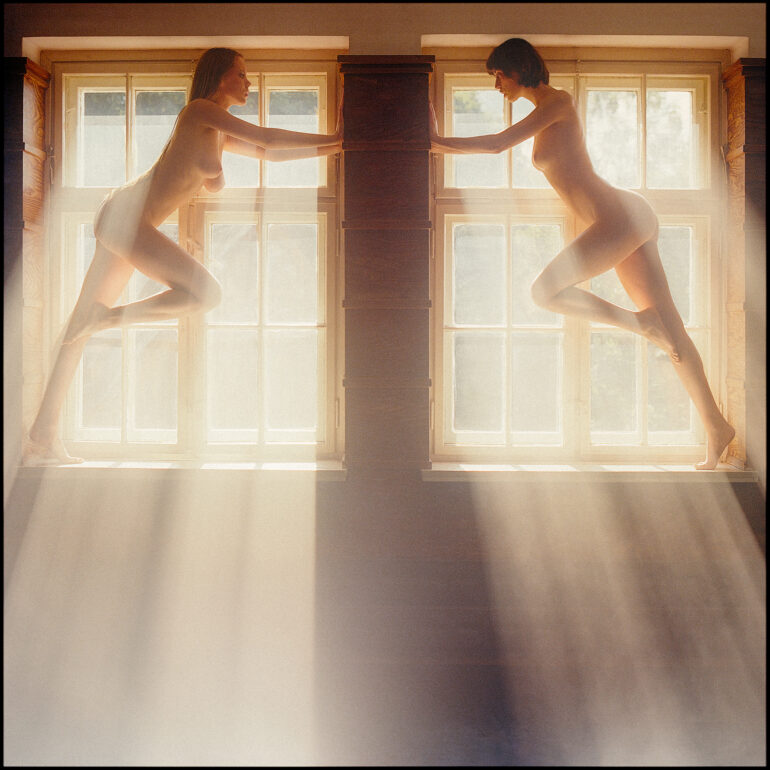
“I try to get out of my comfort zone all the time, and I get inspiration from pretty much everything – from a book I read, from a walk, from a random conversation, a mural, or maybe even more from what feelings something triggered in me and how I can tell others about it through my point of view. I am mostly inspired by places,” says photographer Lukasz Spychala to the Phoblographer in an interview. We’ve featured Lukasz before in an interview, but we’re so in love with his work and how he’s evolved as a photographer that we needed to give him the spotlight again. And when he walks around, he pays a lot of attention to his surroundings, the memories they evoke, the emotions in him, etc. This is the type of inner connectivity that so many photographers yearn for when they’re in a creative slump.

All images by Lukasz Spychala. Used with permission. Visit his website and Instagram page to see more of his workWant to have your work featured? Click here!

“My photography is a sincere journey into myself, constant research and experimentation.”

Lukasz Spychala

Lukasz, in many ways, sounds like what many photographers want to be. He strives to make new things. “Maybe it’s unrealistic these days, but I try to create something new so that I can look at myself in the mirror and call myself a true creator, not a reproducer,” he says, in words that sound all too familiar to all of us. “On the other hand, I try not to be inspired and look at the photos of others around me who are taking pictures. I believe that they can very quickly get stuck in our subconscious and make us try to reproduce them, even involuntarily.” So what does he do? He looks at the photography books of various historical photographers instead. Additionally, he takes in paintings and the mise en scene within them all.

Beyond that, he’s inspired by the models that he photographs. He feeds off of the person, their energy, how they’re affected by the location, the idea, etc.

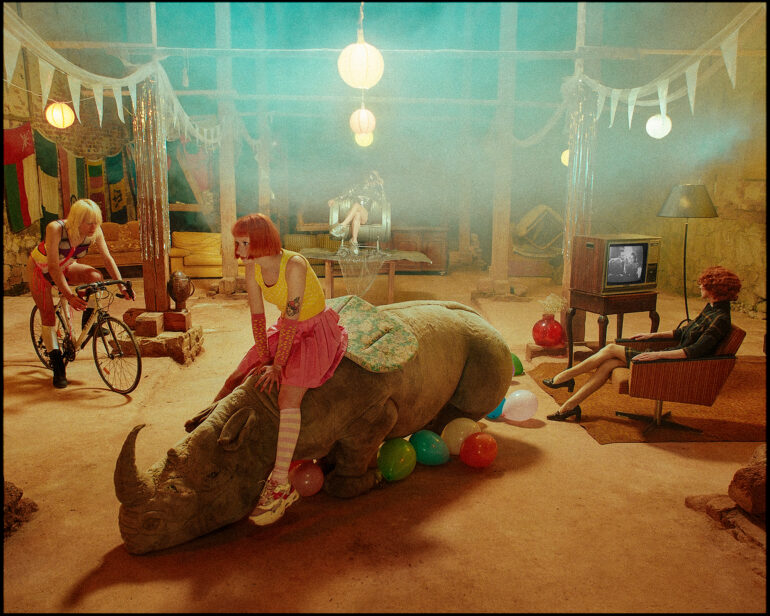
He’s constantly trying to raise the bar for himself, too. He references his “Multiverse” series as a reference to his practices here. “This series takes us on a journey through time and space, revealing the remarkable intergenerational differences that have arisen as a result of rapid technological development,” he tells us, in a very beautiful and thought-provoking way. “For this shoot, I set the scene and provided each character with his or her separate zone in which they function on a daily basis. Each actor symbolizes a different generation of people.” He continued to explain the series to us.

The woman, with curly hair, symbolizes the oldest generation that grew up without the virtual world. There is also an athlete in the photos, symbolizing the generation that has experienced both the analog and digital worlds. In addition to this figure, we also find a red-haired girl symbolizing the youngest generation that was born in the era of the digital revolution. Also appearing in the frames is a mysterious silver figure symbolizing the technology that more or less runs through each generation.

Although we all currently live at the same time, it feels as if we are functioning in completely different dimensions. The “Multiverse” series, therefore, encourages us to reflect on the impact of technology on our lives and encourages us to seek a point of balance between the real and virtual worlds.

Lukasz Spychala

There’s often a lot of work involved for Lukasz and his images. It involved stylists, lighting, set designers, etc. And he shoots analog, so it’s not like this is all done in Photoshop. He tells us that much of this can be very exhausting because of the setup, cleaning, modifications of set design, environmental conditions, etc. “When I press the shutter button, it brings me joy beyond description,” he says. “In turn, watching the developing negative gives me inner peace and a sense that I am trying to grow in my greatest passion.”

With all this said, Lukasz is a true photographer in the sense of the word. And to that end, he finds AI imagery to be just another tool. In his eyes, it’s a big paradigm shift similar to the switch from analog to digital. However, he doesn’t consider AI imagery to be real photography, and instead just a separate category of the visual arts.

So what separates him? “When photographing, I have a certain vision,” Lukasz shares. “I shape my entire photo plan tangibly with my hands or with a message to the model. For me, creating photos with AI is similar, which starts at the level of someone else’s idea.” He explains that there needs to be a creative vision first — and the the actualization of the final product is just achieved in different ways. And overall, he’s not drawn to working with AI.

Workshop participants learn how to craft wreaths with native flora

Workshop participants learn how to craft wreaths with native flora

Participants explored the art of wreath making while learning more about Hawaii Island’s native plants during a workshop Saturday in Hilo.

The Big Island Invasive Species Council and the Department of Forestry and Wildlife hosted a two-hour workshop to show people how to make wreaths with native plants while also teaching about the significance of those plants.

ADVERTISING

BIISC and DOFAW spent about four hours cutting and picking all the native plants used during the workshop from a forest on the slopes of Mauna Loa. Since the class couldn’t go to the forest together, instructors described how to identify and pick the plants correctly with a permit.

“The workshop originally started in 2015 as a way to educate people on rapid ohia death and how we can use other native plants to make a beautiful wreath for the holidays,” said Molly Murphy, invasive plant prevention coordinator with BIISC. “Before making the wreaths, we also go over different native plants, how to get a permit to pick plants, how to pick sustainably and how to enter forest with love and peace in your heart.”

After learning about the cultural importance of native plants and how to pick sustainably, participants started the creative process by cutting ti leaves and wrapping them around the wreath.

After pinning the leaves together in a circle and making a rope to hang the wreath, they then chose plants such as, uluhe, ohia ha and ama‘u, to create a design for each wreath.

Chelsea Ferrera joined her mother, Judith, for the class and was excited to make a wreath while spending quality time with her mom.

“I’ve never made a wreath before and I didn’t think I would be able to make it look this good, but these plants are perfect,” Chelsea Ferrera said. “This was really fun to do together.”

While everyone used the same plants, each wreath was unique as the creativity flowed differently from each student.

“This is always a great activity for people to learn and the holidays are a great time to do this high quality outreach and make a difference,” Murphy said. “I think people get more from learning what they can do versus what they can’t do.”

BIISC is also hosting its first series of Christmas tree planting classes next month for free, however, both classes are sold out.

According to Murphy, many invasive species have been brought to Hawaii on imported Christmas trees, so BIISC is taking the time to teach participants how to pot their own Mexican cypress as an alternative.

BIISC is consistently hosting classes, workshops and hands-on activities throughout the year to help educate the community on the importance of protecting the island from invasive species.

More information on BIISC and its programs can be found at biisc.org, or on its social media pages.

Email Kelsey Walling at kwalling@hawaiitribune-herald.com