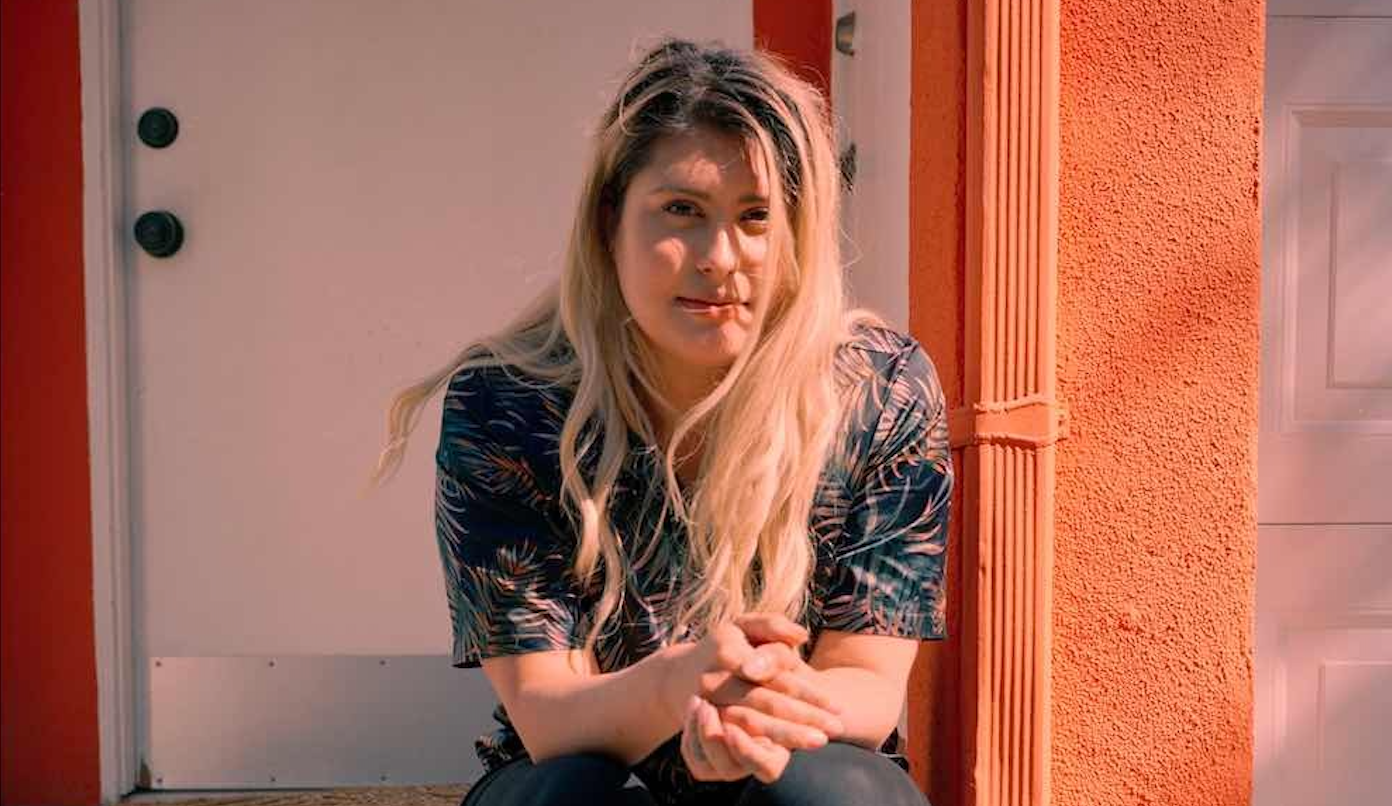
Finding Something New To Photograph in the Everyday

Finding Something New To Photograph in the Everyday

Ernst Haas said: “I am not interested in shooting new things. I am interested to see things new.”

We pass by the familiar daily We become complacent and think that it’s not worth taking a photo of, but to find the new in the same old things takes work.

We get so caught up in trying to create the next big thing, but it’s all been done before. We just need to see things in a different “light.” Creativity comes from looking for something different in the everyday, not shooting what has already been shot. Most of us are guilty of seeing an incredible photo on Instagram and wanting to recreate it. Sometimes, we seek it out and shoot it, but what makes ours different from all the other recreations? It becomes exhausting to chase the next Instagram trend, so why not find something new in the everyday? 

Capturing a photo of something that we see daily and having the viewer stop to look and enjoy the photo is invigorating and much more challenging than trying to recreate something already shot.

When I feel uninspired, I like to take my camera and go to a part of town that I haven’t been to in a while or maybe don’t know at all and get inspired by my surroundings, photographing things I see all the time, but at a different angle or slightly off composition to spark some creativity. I recommend this to anyone looking to break out of a rut. Who knows, maybe your shot of the mundane will be one of your greatest pieces of all.

Vancouver Indigenous Fashion Week blends traditional and modern designs at runway shows and an artisan market till November 23

Vancouver Indigenous Fashion Week blends traditional and modern designs at runway shows and an artisan market till November 23
image

VANCOUVER INDIGENOUS FASHION WEEK is on all week, with an event that brings together contemporary fashion and Indigenous tradition in striking new ways.

Now in its fourth annual iteration, the showcase prioritizes celebration and reconciliation with 32 Indigenous designers from across Turtle Island, plus an artisan market with up to 50 vendors. Runway shows take place at the Queen Elizabeth Theatre, each with a different theme, including All My Relations, Indigenous Futures, and Spirit of the West Coast.

All My Relations on November 21 melds traditional practices with contemporary aesthetics in an all-out fashion showdown. November 22 has sovereignty advocacy in store at Indigenous Futures, and on November 23, Spirit of the West Coast puts a local spin on designs, highlighting the land and people of the West Coast. The Supernatural Kiki Ball hosted by Van Vogue Jam closes out the week on November 25, in a celebratory homage to the natural world.

This year, there’s also a special emphasis on artists from the Northwest Territories. Four designers from the region are represented on the runway, and 11 others are selling their creations at the artisan market.

On the runway at All My Relations, Dene clothing designer Cheryl Fennell presents her collection Drums in My Heart. Born in Yellowknife, Northwest Territories, Fennell crafts works using hide, beads, fish skin, and fur that are inspired by early memories of drum beats, and her lived experiences across the Northwest Territories, Nunavut, and Greenland.

At Spirit of the West Coast, Musqueam mother-daughter duo Debra and Aleen Sparrow meld Coast Salish weaving with contemporary fashion in an homage to their heritage. An acclaimed local designer, weaver, and jewellery-maker, Debra recently collaborated as a design consultant on the new Vancouver Art Gallery building, which will have a copper veil-clad exterior that resembles Coast Salish weaving.

At the market in the Queen Elizabeth Theatre’s lobby, Anishinaabe artist and fashion designer Lesley Hampton showcases her self-titled, size-inclusive high quality fashion brand LESLEY HAMPTON. The curve model and representation advocate from northern Ontario’s Temagami First Nation creates an incredibly wide range of clothing and accessories—think everything from evening wear to athleisure. Her designs, which push to decolonize Eurocentric standards, are also set to appear on the runway in All My Relations.

Elsewhere at the market, Gatineau, Quebec-based MINI TIPI specializes in eco-friendly wool blend fabrics woven with authentic Indigenous art, across cozy blankets, ponchos, shawls, and bags. Langley-based Sweetgrass Soaps, meanwhile, have new holiday offerings, including a red-and-green Have Yourself a Rezzy Little Christmas soap made with with natural ginger and black tea, and Lumps of Coal stocking stuffers created with activated charcoal and scented with an Alpine & Eucalyptus fragrance.

In ’Divergence of Birds,‘ Artist Highlights Species Under Threat

In ’Divergence of Birds,‘ Artist Highlights Species Under Threat

With her latest project, conceptual artist and photographer Carolyn Monastra has been traveling to places where birds are in danger of habitat loss. She hopes to spur viewers to take action around climate change.

With a passing glance, the Canada jay overlooking Peyto Lake in the Rocky Mountains of Alberta, Canada, appears to be completely real—but if you hold your gaze, an unnatural outline becomes clearer, and you realize you’re looking at a facsimile. The photo below is part of a project called The Divergence of Birds, in which artist Carolyn Monastra, FCRH ’88, photographs paper cutouts of birds in their native habitats—a nod to a future in which the real birds may be forced out of those current homes.

“Canada Jay” in evergreen tree overlooking a glacial lake

“Canada Jay” in evergreen tree overlooking a glacial lake

Monastra said that the idea for the project came out of reading a 2014 National Audubon Society climate report that found that 314 North American bird species will lose more than half of their climatic range by 2080—a number that increased to 389 species in a 2019 report.

Monastra, who also teaches photography at Nassau Community College, plans to photograph cutouts of each of those 389 birds for the project. Where she cannot travel to the actual habitats to shoot photos, she said, she will recreate the environment, and she’ll gradually document all the photos on the project website, along with some behind-the-scenes photos and videos of her process.

“I want people to understand that they’re cutouts from the time they come to it,” she said, “using that as a way to get them to pay attention to the birds in my photographs, see what’s happening to them, and then go outside and get engaged.”

“American Robin” with empty nest

“American Robin” with empty nest

“Brown Thrasher” in a magnolia tree

“Brown Thrasher” in a magnolia tree

“Great Black-backed” Gull flying over sand dunes

“Great Black-backed” Gull flying over sand dunes

Committing to Photography and Finding Inspiration

In the 1980s, Monastra majored in English at Fordham College at Rose Hill, where she was a member of the honors program, but she also took several photography classes at the Lincoln Center campus. One of her photography professors, Joseph Lawton, saw her talent behind the camera and encouraged her to pursue an M.F.A. after she graduated in 1988.

After several postgraduation years serving in the Jesuit Volunteer Corps in Santa Monica, California, and exploring a career in social work, Monastra followed Lawton’s advice. She enrolled in the M.F.A. program in photography at Yale Universityto “finally commit to being a photographer,” she said.

Once she had her master’s, she began teaching, and she has held several high school and college jobs, including a year as a photography instructor at Fordham. She has been teaching full time at Nassau Community College since 2005, all the while pursuing her own projects outside the classroom, like lovely, dark and deep, in which she turned to “the fragmentary space of dreams and my experiences with the environment to discover and create mystery in the natural world,” and The Witness Tree, which immediately preceded The Divergence of Birds and also dealt with climate change, in that case through a series of landscape images showing the effects of climate disasters.

Monastra first saw the Audubon Climate Report while working on The Witness Tree, and the wheels for a bird-centered project began turning. She thought about her own history with the animals, and she began buying books for research—books that would ultimately provide a more material kind of inspiration.

“I was really interested in how birds build their nests,” she said. “I’d never really been a birder until I started this project, but my mom always had bird feeders, so we always had birds around. I was buying all these secondhand bird books to learn about birds building their nests, and then I just started cutting them out.”

She also was reading Philip K. Dick’s science fiction novel Do Androids Dream of Electric Sheep? around that time, and she said that the dystopian world of the book, in which electric versions of animals are so realistic that no one can tell the difference between them and the real thing, resonated with her.

“That little part also made me think about this idea of facsimile and simulacra, and how sometimes we’re fooled by that. And in a future warming world, if we don’t protect what we have, that’s all we’ll have left.”

“Sharp-shinned Hawk” sitting on a rock with view of cityscape

“Sharp-shinned Hawk” sitting on a rock with view of cityscape

“Yellow-billed Loon” swimming on a lake

“Yellow-billed Loon” swimming on a lake

“Rose-breasted Grosbeak” in forsythia bush

“Rose-breasted Grosbeak” in forsythia bush

An Artist’s Responsibility

In addition to updating the project website on a rolling basis, Monastra has been thinking about ways to bring the project to a wider audience in various settings. In October, she had a residency at NYC Audubon’s environmental center on Governors Island, where she used the images for banners she could string throughout the center.

And much like a Postcards to Politicians project she created for The Witness Tree, in which she encouraged people to handmake postcards from her collaged images and send them to politicians to push for climate action, she would like to engage communities with The Divergence of Birds directly.

“Adopt a Bird will be something similar, using recycled materials,” she said of her next planned public project. “I’ll have all the pictures of the birds in people’s area, wherever it happens to be. There will be a pledge they’ll make, as they adopt that bird, to promote climate change legislation.”

Beyond hands-on, collaborative art, she hopes that the photos will not only get viewers interested in birds but also spur them to take action around climate change in other ways. That is, she feels, one of her guiding forces as an artist.

“I think artists do have a responsibility to use their gift to talk about these issues,” she said. “Whether it’s climate change or social justice or anything else, I think we have the ability to translate numbers and statistics into something that can move people.”

“Common Redpoll” in winter landscape

“Common Redpoll” in winter landscape

“Pine Siskin” in evergreen tree

“Pine Siskin” in evergreen tree

“Canyon Towhee” in desert landscape

“Canyon Towhee” in desert landscape

“Northern Saw-whet Owl” at dusk

“Northern Saw-whet Owl” at dusk

Spirit Song festival showcasing Indigenous music and art kicks off in St. John’s

Spirit Song festival showcasing Indigenous music and art kicks off in St. John’s
A group of people dancing on a stage.
Fans and dancers take the stage alongside performers during last year’s Spirit Song Festival in St. John’s. (Submitted by Daniel Smith)

First Light’s Spirit Song Festival is back for its 11th year beginning on Tuesday, showcasing Indigenous music, art and more from across Canada.

The festival runs from Tuesday to Sunday in St. John’s, and will feature over 60 Indigenous creatives from across the country. It started as a small event in St. John’s a decade ago, but Elder Emma Reelis of Happy Valley-Goose Bay said it’s great to see how it has grown over the years.

“Every year it gets bigger and bigger,” Reelis told CBC News Tuesday.

“I’m just really pleased, you know, that we are here today after 11 years,” added Charlotte Winters-Fost of Hopedale. “There’s been a lot of growth, and I’m really looking forward to hearing many of the talented Indigenous artists that we have.”

The festivities will begin on Tuesday evening with the opening ceremonies, featuring performances from Kilatuiup Spnguninga and the St. John’s Mi’kmaq Women’s Circle.

The event will bring Indigenous people from all over North America together, which Elder Majorie Muise said is always a highlight for her.

WATCH | 16-year-old Fred Fost, the grandson of Charlotte Winters-Fost, spoke with CBC Radio about what it will be like to perform at the festival:

He attended the Spirit Song Festival as a kid. Now he’s making his DJ debut

1 day ago

Duration 4:41

Featured VideoFred Fost, 16, is performing for the first time at Spirit Song Festival in St. John’s. He is among the youngest performers this year, but he’s no stranger to the festival, which celebrates Indigenous cultures. He’s been attending the festival since he was a young boy. Fost came on CBC’s First Light Fridays to talk with Amanda Gear.

“Tonight is going to be a celebration mostly of our own communities coming together. Our local communities, so that’s going to be really awesome,” Muise said. “And throughout the festival is going to be like a celebration of contemporary and traditional.”

Many events are open to all ages, which Reelis says is part of what defines the festival. She says events like Spirit Song are key in connecting youth with Indigenous culture.

“I think our youth is our today, and our future. I think we need to … get them more involved in things like this to learn more about the culture. Because it sort of went to the wayside with residential [schools] and the Sixties Scoop,” she said.

“A lot of the culture was lost, and I think through Spirit Song it’s all coming back.”

A schedule of events can be found on the Spirit Song Festival Facebook page.

Download our free CBC News app to sign up for push alerts for CBC Newfoundland and Labrador.

Holiday markets around Colorado offer a way to celebrate and support local artisans. Here’s where you can find them this year

Holiday markets around Colorado offer a way to celebrate and support local artisans. Here’s where you can find them this year

Thousands of Coloradans flock to one of the state’s numerous Christmas markets every year to meet Santa, shop for one-of-a-kind gifts handcrafted by local artisans, feast on delectable treats and enjoy the best in live music.

Here is a rundown of locations throughout the state where you can enjoy seasonal entertainment and shopping.

Please note that specific markets can be closed or have limited hours around Thanksgiving and Christmas holidays.


Cherry Creek Holiday Market

Nov. 16 – Dec. 24

The Holiday Market on Fillmore Plaza includes more than 300 local merchants, and the first-ever Cherry Creek North pop-up holiday bar, the Mistletoe Lounge. The Million Light Plug-in event lights up the entire 16-block region. Another new initiative this year is a collaboration with Giving Machines, which are charitable vending machines that collect donations for two global and five local charities. Closed on Nov. 20, Nov. 27 and Dec. 4. 

Click here for more information.

Denver’s Christkindl Market

Nov. 18 – Dec. 23

This genuine German-style Christmas market is held at Denver Civic Center Park and features local and European artisans, food sellers, and performers. The Denver Christkindlmarket is produced by the German American Chamber of Commerce – Colorado Chapter (GACC-CO).

Click here for more information.

Golden’s Holiday Art Market

Nov. 19 – Dec. 29

Golden’s Foothills Art Center 48th Holiday Art Market lets visitors see over 3,000 one-of-a-kind creations from Colorado artisans. High-quality ceramics, jewelry, glass, fiber, leather, metal, wood, edibles, ornaments, and greeting cards are just a few of the artisanal goods offered.

Member preview: Thursday, Nov. 30, noon to 7 p.m.

Public opening: Friday, Dec. 1, 10 a.m. – 5 p.m.

Click here for more information.

Market in Arvada’s historic Downtown

Weekends Nov. 25 – Dec. 18

This year, Olde Town Arvada  is decorated with German Christmas Market-style huts to create a holiday wonderland. The market opens on Friday, Nov. 24, and runs every weekend until Saturday, Dec. 23. Each weekend has new vendors!

Click here for more information.

Arvada Center’s Holiday Pottery Sale

Nov. 30 – Dec. 17

The annual Holiday Pottery Sale features a wide variety of sculptural and functional pottery made by students and instructors in the ceramics teaching studio at the Arvada Center. The sale supports both the studio’s operations and the artists who created the items.

Sale hours: Monday through Saturday, 10 a.m. to 8 p.m.; Sunday. 1 to 5 p.m.

Click here for more information.

Arvada Center’s Fine Art Market 

Nov. 30 – Dec. 17

Get your holiday shopping done and support local Colorado artists by purchasing unique works of art like jewelry, ceramics, decorations, paintings, greeting cards, and more at the Arvada Center Fine Art Market. Proceeds support artists and the Arvada Center Galleries. Free admission and open to the public.

Sale hours: Wednesdays and Thursdays noon – 7:30 p.m.; Fridays and Saturdays 10 a.m. – 7:30 p.m.; Sundays 1 p.m. – 5 p.m.

Click here for more information.

Westminster’s Orchard Town Center Holiday Handmade Market

Weekends Dec. 8 – 24

The Orchard’s Holiday Craft Market by Denver Makers Market features handmade goods. Three weekends of indoor shopping from chosen handcrafted craftspeople, fine artists, and artisan producers. Discover their method and find your own unique item. Located inside at the corner of 146th and Orchard Parkway, across the street from Lululemon.

Sale hours: Fridays, 4 – 8 p.m.; Saturdays, 11 a.m. – 6 p.m.; Sundays 11 a.m. – 4 p.m.

Click here for more information.

Telluride Arts Holiday Bazaar

Dec. 1 – 3

Since 1973, Telluride residents have gathered for the annual Telluride Arts Holiday Bazaar, where vendors sell a wide range of high-quality handcrafted items such as jewelry made by local artisans, organic body care products, gourmet foods, pottery, clothing, and more. The Bazaar is a three-day event in the heart of Telluride.

Click here for more information.

Lyons Holiday Artisan Market

Dec. 2 – 3

A decades-long tradition in Lyons returns again this year, hosted at Lyons Elementary School from 10 a.m. to 4 p.m., artisan craft artisans will sell their handmade goods. Local artisans display their work at this craft fair for visitors and locals. The event has about 60 innovative vendors and Santa Claus visits daily. 

Click here for more information.

Georgetown Christmas Market

Dec. 3 – 4

The 63rd edition of this outdoor European Christmas market draws craftspeople from around the world. Get roasted chestnuts at Strousse Park, view the Santa Lucia Children’s Procession and speak with St. Nicholas as he walks down the street. Join the carolers if you can.

Click here for more information.

Durango Farmers Market Holiday Market

Dec. 9

The Durango Farmers Market Holiday Market Dec. 9 9 a.m – 2 p.m. at  La Plata County Fair Grounds. Find unusual and excellent gifts for relatives and friends while picking up December fresh foods and holiday cooking ingredients. 

Click here for more information.

Cripple Creek Gold Camp Christmas

Nov. 11 – Dec. 14

Cripple Creek and Victor have A Whoville Christmas in the Gold Camps

Dec. 9 from 9 a.m. -3 p.m. Annual Gold Camp Christmas Craft Fair, June Hack Community Center, Parks & Recreation.

Click here for more information.

A Circular Path: A Conversation with Indigenous Program Alum Alexandra Lazarowich

A Circular Path: A Conversation with Indigenous Program Alum Alexandra Lazarowich
image

You talked about your rom-com and how you are still working on getting it out there. With working on it through the Lab, what were some opportunities that came out of that, from both working on that script, but then also the cohort that you had, and some of the folks that were involved?

What’s really great about the lab is everyone gets to connect with their mentors, but also connect with other people in the room. Tommy and I had known each other loosely before we were in a cohort together, but he was able to read my work, I was able to read his work and through that process,Tommy has put out the good word for me with the people that he’s working with. That sort of friendship building, but also interconnection, is really important, especially in the industry. I feel like that’s been one of the really cool things that has come out of the cohort. 

I think a lot of the time, there’s an expectation that you’re going to be plucked from obscurity by some network executive or some talent agent, or something like that, but I feel like often it’s people who like you, like your work, and think that you have talent. They put your name forward to somebody who’s looking for somebody to work on a TV show, to be a writer, to be a director, and that’s where a lot of the opportunities have come out of.

My rom-com worked as a very good spec script for me. To try to get more work in the industry as a writer, and also just trying to get more work as someone who’s a writer and director. So I think the opportunities have been twofold. But I really think what’s special are the friendships that we build and the connections you build within your own cohort — and then through just knowing other people who’ve also been in Sundance.

Was there any sort of before and after, with the Native Lab in terms of how you approach your own work as an artist?

I think [the lab] gave me more confidence to see myself as a writer. Because writing is very difficult and I admire people who love it and enjoy it. But it’s hard, and you’re trying to get ideas out… andalso be authentic to the stories that you’re telling. So I definitely think my writing skills have grown exponentially since the lab. And, from all the wonderful mentors I had and also through the process of securing work, being a writer on a TV show has also grown my skill set exponentially. All of them are little building blocks that help you to be better at your job. 

Looking back it feels just like yesterday, but also a million years ago when I was in the lab. I learned so much from the mentors, I learned so much from the other fellows in the lab, and I was able to take what I’ve learned and apply that to the work that I’m doing now for other people.

Is there a dream project you have that you would want to work on either from a directorial view, or writing, or both?

I would really like to have somebody fund my rom-com. I think this has been a lot of Indigenous folks’ experiences; it’s a long game of getting your work made and you have to stick to your beliefs, and really believe strongly in the work that you’re making, and that it’s important. So I think for me there are a couple of dream projects. Specifically, I would really like to make this rom-com. I’m still surprised no one has made a rom-com about Indigenous folks… I feel like there’s still such a gap missing. There’re a lot of historical films being made about Indigenous folks, but where are the fun comedies that are one off films? And where are the stupid Christmas movies that represent our experience and that share the larger modern interpretation of what it means to be Indigenous and what Indigenous Christmas looks like? What Thanksgiving looks like?

Those are the types of films that I want to make and I really want to see. I’m excited because it feels like the tide is turning a little bit. I think, with the success of Fancy Dance and Reservation Dogs, people can see the talent out there and are interested in these stories… So much groundwork has been laid by a lot of people to get us here.

Celebrate Indigenous Power With Our Playlist of Queer Artists

Celebrate Indigenous Power With Our Playlist of Queer Artists
image

There are many ways to make sure that queer Indigenous voices are heard. Music is just one of them. From indie rock to hip-hop, stretching from folk all the way to dubstep-tinged pop, a diverse cohort of LGBTQ+ Indigenous artists are representing the struggles, joys and complexities of their communities. They’re also just making damn good music. That’s why Them lifestyle editor Quispe López and I curated this playlist that’s perfect to bump during Indigenous People’s Month or any time of year.

Kicking off the playlist is Black Belt Eagle Scout, the musical moniker of singer-songwriter Katherine Paul. Her dulcet but melancholy track “Indians Never Die,” off her 2018 debut album Mother of My Children, was inspired by the Dakota Access Pipeline protests at Standing Rock. In a press statement accompanying the song, Paul made a powerful statement about the meaning of its title: “Imagine hearing on the news that the government doesn’t support you as a human being and never has […] Indigenous people are the protectors of this land. Indians never die because this is our land that we will forever protect in the present and the afterlife.” The poignant indie folk song meditates on that message with soothing vocals and somber guitar lines.

Elsewhere on the list, Colombian-Canadian Afro-Indigenous singer-songwriter Lido Pimienta delivers Latin alt-pop stylings on the undulating “Eso Que Tu Haces.” On the heartbreaking track, Pimienta sings in Spanish about coming to terms with a one-sided love while finding compassion for herself. Australian musician Mo’Ju also brings us a blues-inspired heavy hitter with their track “Native Tongue” off their 2018 album of the same name. The haunting track features The Pasefika Vitoria Choir with a gorgeous acapella melody that pairs perfectly with the soulful lead vocals.

But perhaps my favorite track on the list is from the Indigenous Mexican MC and vocalist Frosty. Her ’90s hip hop-inspired track “Not Exotic,” off her album All Frost No Ice, absolutely floored me. Frosty bravely and unabashedly leans into feelings of anger and rage, while waxing poetic about her Indigenous pride. Over a foreboding, bassy beat she raps, “Don’t call me exotic’ motherfucker / I’m Indigenous / and even in your most evolved state you couldn’t get with this.” I can’t wait to hear more from this self-proclaimed “rapatista” (rapper/zapatista) in the future.

Why Did The Crown Invent a Fake Royal Photographer?

Why Did <i>The Crown</i> Invent a Fake Royal Photographer?

The second episode of The Crown season six, “Two Photographs,” begins with interviews with two photographers: Mario Brenna, a real Italian paparazzi, and Duncan Muir, a royal photographer. Both Brenna and Muir talk about their roles and their work, and the episode juxtaposes Brenna’s paparazzi shot of Princess Diana and Dodi Al Fayed kissing on the Jonikal, Mohamed Al Fayed’s yacht, with Muir’s photoshoot of Prince Charles and his sons, Prince William and Prince Harry, at Balmoral.

Muir, who is played by Scottish actor Forbes Masson, introduces himself as follows: “My name is Duncan Muir. I’m 57 years old. I’m a professional photographer working out of Ballater, near Aberdeen in Scotland. My bread-and-butter work is traditional portraiture: Weddings, graduations, that sort of thing. But my passion, and what I’m best known for, is photographs of the royal family. Where the Queen goes, I go.”

Only problem? No photographer named Duncan Muir really existed. So while Brenna definitely took the snap of Diana and Dodi, to our knowledge, Duncan Muir did not exist. Rather, it seems as if Muir is based on other photographers of the era.

Charles, William, and Harry were photographed by Tim Graham at Balmoral in August 1997.

Tim Graham//Getty Images

The aforementioned Balmoral photoshoot that the fictional Muir takes in the show was, in reality, taken by Tim Graham, an established royal photographer. (There’s a C-SPAN interview with Graham from 1989 that is similar in tone to the faux interview in The Crown with Muir.) Other royal photographers of the era that Muir could be based on include Kent Gavin, Anwar Hussein, Tim Rooke, and Jayne Fincher.

Headshot of Emily Burack

Emily Burack (she/her) is the news writer for Town & Country, where she covers entertainment, culture, the royals, and a range of other subjects. Before joining T&C, she was the deputy managing editor at Hey Alma, a Jewish culture site. Follow her @emburack on Twitter and Instagram

Seattle Museum Month Returns to Offer Art, Culture, and Major Savings for February Hotel Guests

Seattle Museum Month Returns to Offer Art, Culture, and Major Savings for February Hotel Guests

The annual program is back in 2024 with half-off at more than 25 diverse museums

SEATTLEAccording to a recent survey by Destination Analysts, one in three American travelers is driven to travel for museums, cultural institutions, and historical attractions, making Seattle Museum Month the ideal program for travelers to take advantage of in February. From February 1-29, guests staying in one of more than 70 downtown Seattle hotels will receive a Seattle Museum Month pass for up to four people, granting half-off admission at all participating venues. That includes fascinating cultural exhibits at The Museum of Flight, Seattle Art Museum, and Chihuly Garden and Glass, as well as the Seattle Aquarium, Woodland Park Zoo, Museum of Pop Culture, and many others. To see the full list of participants, visit seattlemuseummonth.com 

“Palihotel Seattle is delighted to participate in Seattle Museum Month again in 2024,” said Derek Onisk, Director of Sales at Palihotel Seattle. “As a neighborhood hotel located just steps away from Seattle Art Museum, Seattle Aquarium and Olympic Sculpture Park, our guests will have the opportunity to explore Museum Month from a convenient home base. Visiting Seattle’s unique museums and cultural institutions gives you a true sense of what makes the downtown Seattle community so vibrant.” 

New displays and exhibits include Seattle Art Museum’s Calder: In Motion, The Shirley Family Collection exhibition. This collection traces Alexander Calder’s revolutionary career, highlighting his most important themes, styles, and materials from the 1920s through the 1970s. Calder’s dynamic abstract mobiles mingle with an array of his stationary stabiles of various scales, the first comprehensive public display of 48 seminal works generously donated by Jon and Kim Shirley. 

“We are thrilled to invite visitors to experience the dynamic genius of Alexander Calder,” says José Carlos Diaz, the exhibition’s curator and the Susan Brotman Deputy Director for Art at the Seattle Art Museum. “This exhibition is a rare opportunity to see this recently gifted collection all together in public for the first time, and we believe it offers something for everyone, whether it’s your first encounter with Calder’s iconic mobiles and other works or whether you’re already a fan.” 

Also new is Roots of Wisdom: Native Knowledge. Shared Science. at the Museum of History & Industry, wherein stories from four Indigenous communities demonstrate how traditional knowledge and cutting-edge science can be blended to provide complementary solutions to contemporary concerns.  

“Seattle Museum Month is a celebration of our vibrant cultural landscape, offering visitors a unique opportunity to explore the rich history and diverse experiences our museums have to offer,” said MOHAI Executive Director Leonard Garfield. “At MOHAI, we are excited to showcase our engaging exhibits and immersive experiences that bring the stories of Seattle to life. We invite visitors to join us this month and discover the treasures that make our city’s museums truly exceptional.” 

With half-off admission costs at these venues, visitors who make the most of the Seattle Museum Month offer can essentially recoup the cost of their hotel stay, making for a more affordable, culturally rich vacation. Guests simply stay at a participating hotel and request an official Seattle Museum Month guest pass for use at any of the below museums to redeem the discounts.   

Participating area museums for Seattle Museum Month: 

  1. Bainbridge Island Museum of Art* 
  1. Bainbridge Island Historical Museum*  
  1. Bellevue Arts Museum 
  1. Bill & Melinda Gates Foundation Discovery Center* 
  1. Burke Museum 
  1. Center for Wooden Boats* 
  1. Chihuly Garden and Glass 
  1. Frye Art Museum* 
  1. Henry Art Gallery* 
  1. Kids Discovery Museum 
  1. Klondike Gold Rush National Historical Park* 
  1. Museum of Glass 
  1. Museum of History & Industry 
  1. Museum of Pop Culture 
  1. National Nordic Museum 
  1. Olympic Sculpture Park* 
  1. Pacific Bonsai Museum* 
  1. Pacific Science Cener 
  1. Seattle Aquarium 
  1. Seattle Art Museum 
  1. Seattle Asian Art Museum 
  1. Seattle Children’s Museum 
  1. Seattle Pinball Museum 
  1. The Museum of Flight 
  1. USS Turner Joy 
  1. Wing Luke Museum 
  1. Woodland Park Zoo 

* = free admission year-round 

“Seattle Museum Month offers a perfect opportunity for a cultural getaway on a budget,” said Visit Seattle’s Senior Director of Cultural Tourism, Tracey Wickersham. “Whether you are traveling with a family, a group of friends or a romantic getaway partner, there’s nothing like filling your February days in Seattle with exploration through fun, engaging and thought-provoking exhibitions, especially with a cozy hotel to return to.” 


Media images are available here. 


About Visit Seattle
Visit Seattle has served as the official destination marketing organization (DMO) for Seattle and King County for more than 50 years. A 501(c)(6) organization, Visit Seattle enhances the economic prosperity of the region through global destination branding along with competitive programs and campaigns in leisure travel marketing, convention sales and overseas tourism development. Visit visitseattle.org.    

About Seattle Museum Month
Seattle Museum Month is produced by Visit Seattle and funded by the Seattle Tourism Improvement Area (STIA); a dedicated marketing fund assessed from guests at several downtown Seattle hotels. The program was created to encourage travelers to visit Seattle in February and celebrate the remarkable collection of unique museums in the region.