Focusing on the “Belt and Road”, 2023 “SHOW JIANGSU” Photography Project Successfully Concluded

Focusing on the “Belt and Road”, 2023 “SHOW JIANGSU” Photography Project Successfully Concluded

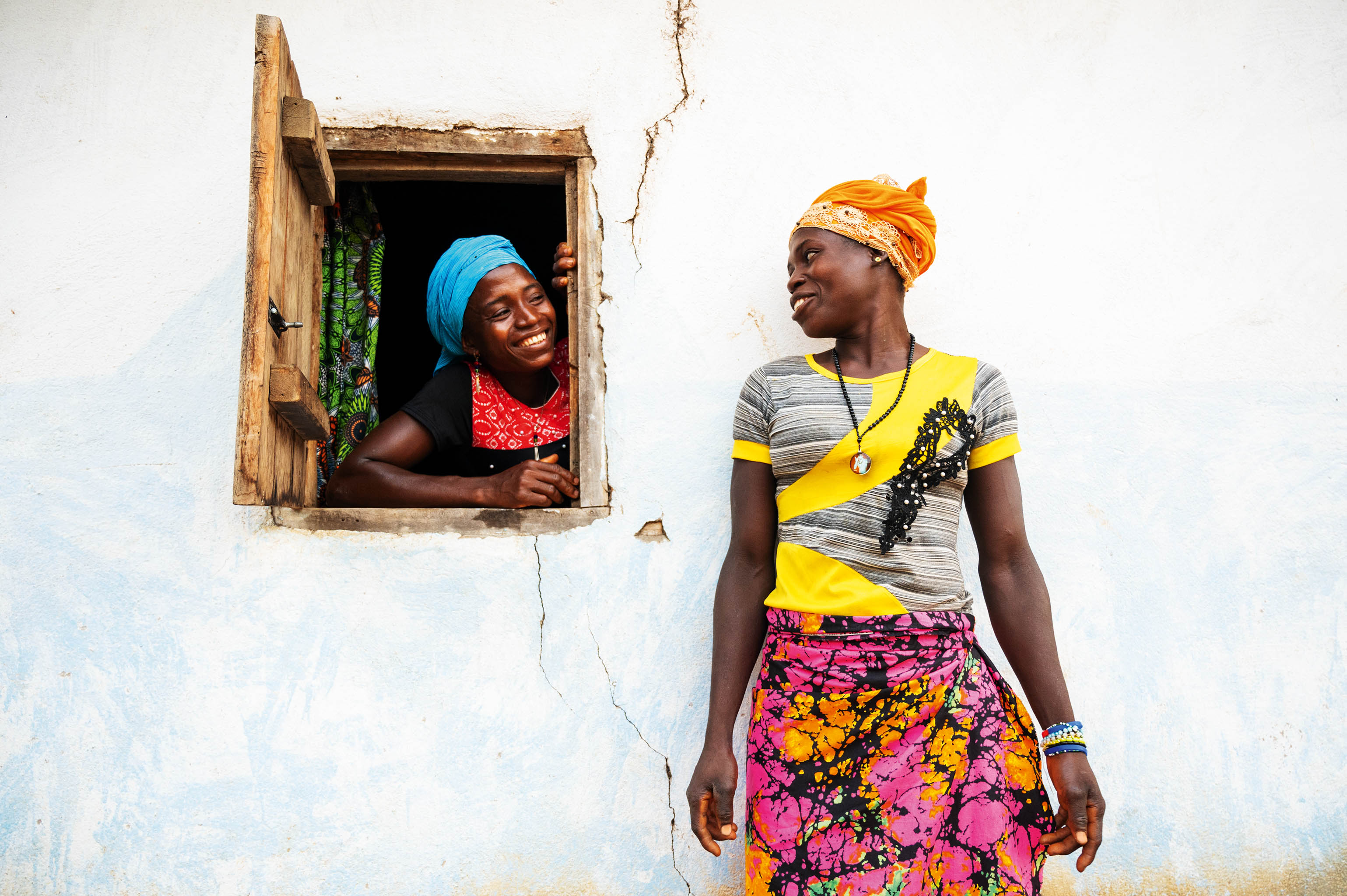
NANJING, China, Dec. 8, 2023 /PRNewswire/ — On November 13, the “Belt and Road Initiative, China and the World” 2023 “SHOW JIANGSU” Photography Project, jointly organized by the Information Office of Jiangsu Provincial People’s Government, the Foreign Affairs Office of Jiangsu Provincial People’s Government, and Xinhua News Agency’s News and Information Center, was officially launched at the Oriental Metropolitan Museum in Nanjing. Media reporters and photographers from various countries and regions along the “Belt and Road Initiative (BRI)” were invited to participate. From Nov 13 to 16, they have explored four cities – Nanjing, Changzhou, Huai’an, and Yancheng in Jiangsu Province, capturing the unique perspectives and documenting Jiangsu’s role in promoting open development, expanding new spaces for domestic and international openness, and experiencing the vigorous pulse of high-quality development at the intersection of the BRI. It aims to further share the “Jiangsu Chapter” of China’s story with the global community.

This year marks the 10th anniversary of the BRI. Situated at the intersection of the BRI, Jiangsu leverages its geographical advantage to facilitate both eastward and westward openings, becoming a crucial window for “Two-Way Opening” in the new development pattern.

2023 “SHOW JIANGSU” Photography Project, focusing on international dialogue under the theme of BRI, is set to explore industrial development, cultural heritage, and people’s lives. Through captivating images, the project aims to portray the modern landscapes of Jiangsu, showcasing its role in building an open province and contributing to the mutual learning and connection of civilizations along the BRI.

“SHOW JIANGSU” Photography Project, which began in 2018, has been held continuously for six years. It has invited more than 30 international media reporters and photographers to explore Jiangsu. The works have been featured in major international media outlets, including The Wall Street Journal, The Washington Post, The Guardian, and the Financial Times, with over 600 related articles, reaching nearly 200 million audiences globally.

With refreshing autumn winds and picturesque scenery, the time is right for capturing the beauty of Jiangsu. The 2023 “SHOW JIANGSU” picture scroll showcasing Jiangsu’s poetic landscapes, rich cultural atmosphere, and harmonious urban development is now unfolding.

Image Links: https://iop.asianetnews.net/view-attachment?attach-id=443689

SOURCE Information Office of Jiangsu Provincial People’s Government

New photography exhibit explores history of Rosenwald schools; direct air capture coming to La.

New photography exhibit explores history of Rosenwald schools; direct air capture coming to La.
image

The Museum of the Southern Jewish Experience in New Orleans has a new photo exhibit that tells the story of Rosenwald schools, a joint project started by Jewish philanthropist Julius Rosenwald and Black educator and activist Booker T. Washington in the early 1900s. Together, they built schoolhouses for Black children throughout the South, which for many, provided their first educational opportunity.

Andrew Feiler traveled throughout the region collecting stories and taking photos of the more than 100 Rosenwald schools that remain. Most buildings have long been abandoned, while others have seen new life. He joins us for more on the schools and stories he captured on his journey.

To combat climate change, Louisiana has been at the center of a movement to capture carbon produced by industrial plants and store it underground. Now, the urgent need to lower planet-warming emissions also has companies looking to vacuum carbon dioxide directly out of the air in a process known as direct air capture. A project proposed in southwest Louisiana would be one of the first in the country to do that.

The Coastal Desk’s Halle Parker spoke with Floodlight investigative reporter Pam Radtke to learn more about the $600 million project and the national push to capture carbon.

Today’s episode of Louisiana Considered was hosted by Alana Schreiber. Our assistant producer is Aubry Procell and our engineer is Garrett Pittman. 

You can listen to Louisiana Considered Monday through Friday at 12 and 7 p.m. It’s available on Spotify, Google Play, and wherever you get your podcasts. 

Louisiana Considered wants to hear from you! Please fill out our pitch line to let us know what kinds of story ideas you have for our show. And while you’re at it, fill out our listener survey! We want to keep bringing you the kinds of conversations you’d like to listen to.

Louisiana Considered is made possible with support from our listeners. Thank you!

Presenting: The Winners of the 2023 L A M P Competition

Presenting: The Winners of the 2023 L A M P Competition

As the exclusive media partner for the L A M P 2023 International Lighting Design Competition, we’re excited to announce this year’s winning designs! This year’s contest garnered submissions from 110+ cities from 40+ countries, and the designers and their work were juried by Rakuma, Atelier Areti, and the L A M P co-founding partners. The winners of each overall category (Student, Professional, and Manufactured), as well as the winners of each subcategory, are listed below. Congratulations to all!

Student Overall / Floor: Inside by Shevtsova Anastasia (Moscow, Russian Federation)

The floor lamp “Inside” invites you on a journey through the world of sensations and immerses you in a flow of thoughts, detached from everyday life. It is about internal dialogue, the depth of relationships with oneself and the surrounding world, and personal space.

table lamp on desk

Student Portable: Taut by Lieyah Dagan (Los Angeles, California)

Taut is a lamp designed to be played with and changed. Its two-part design features a flexible flat sheet that can be inserted into a pronged base in different ways to create a variety of lamp shade forms and lighting effects. The shade is held in place through tension, making it easy to customize.

two people adjusting pendant lamp

Student Pendant/Sconce (tie): Hortus by Ka Wai Yuen (Hong Kong)

This innovative DIY design set offers fresh opportunities for users to nurture, engage, and revive their intimacy. The lampshade’s wooden structure, free of glue, allows users to weave rattan-shaped fabric onto the frame, creating personalized lampshades. The kit includes flower and bird- shaped magnets and cards, enabling users to infuse sentiments and memories, and fostering shared experiences with their partners.

pendant lamp over black console

Student Pendant/Sconce (tie): Material Objects: PS/PND by Rachel McGovern (Los Angeles, California)

The PS/PND pendant showcases the common yet structurally supportive perforated sheet in collaboration with electrical braided sleeving. Used for general wire management, bundling and identification. The braided sleeving is now used to deform a single LED strip to create a dynamic weaving of light, color and pattern.

white portable lamp

Student Portable (tie): – Mellow by María del Mar González (Almería, Spain)

Mellow is a small portable outdoor lamp designed for a dinner with family or friends in a garden, park or beach. Since the light is emitted around but not upwards, it allows to illuminate the table and the environment without invading the visual field while having a relaxed conversation.

table lamps on white desk

Student Portable (tie): Lume by Chris Jing (China)

Lume is a family of lamps to elevate the coffee-drinking experience. Lume gives people a relaxing mood, sitting quietly beside that cup of coffee. Lume Outdoor is used within coffee stores, and Lume Home is a premium collectible to bring the coffee experience home. They share the exact same lighting unit. The design challenges are incorporating LEDs into a small space and achieving convenient recharging purposes.

white pendant lamp with star patterns

Student Outdoor: Starfall by Haoda Ma (Los Angeles, California)

Starfall pendant works with wind to create memorable starry night effects. The inner perforated brass tube projects starry light effects onto the outer recycled polyethylene tube. The inner tube is fixed in place, while the outer tube hangs from the top of the light fixture and moves subtly and elegantly with the breeze. The subtle movement in the outer tube allows the star projection to flow, creating a magical and transforming starry night, while the downlight provides a steady light source for general usage.

white sculptural lamp

Professional Overall: Minima by PatkauProducts: John Patkau, Zachary Morris (Vancouver, Canada)

The name Minima tells the story of the surface. We developed it through many experiments of stretching, bending, restraining, pulling, warping, and frequently destroying various materials. The complex form that emerged is the minimum 3D surface between 2D curves. It is internally static, manufacturable, and visually dynamic.

minimalist slanted table lamp

Professional Table: Spire by Aris Rubio / Aris Studio) (Banyoles / Spain)

Spire’s design moves away from the traditional ecological product and seeks new alternatives to over-exploited materials such as wood. It is designed to simplify processes and can be made from different materials, such as recycled aluminium, which is presented in indefinitely reusable tubes to reduce the carbon footprint.

pendant lamp next to table with orange soda

Professional Pendant/Sconce: Trapeze by Eric Kirwin (Toronto, Canada)

Trapeze is a fixture that captures suspense. A dance between the pull of the anchor, and the push of the body delivers a sense of kinetic wonder and visual gratification. A moment of tension delivers a composition of stillness and precarity. Physical properties are carefully juggled to capture a precise relationship between gravity, resistance, and resolution.

white sculptural lamp

Professional Floor (tie): Minima by PatkauProducts: John Patkau, Zachary Morris (Vancouver, Canada)

three white sculptural floor lamps

Professional Floor (tie): SONIAH by Victoria Yakusha / Faina Design (Kyiv, Ukraine)

SONIAH from Ukrainian ‘soniah’ means a sunflower. Highly appreciated on Ukrainian land from where comes the author of the collection, a sunflower serves as the main symbol rebirthed in the form of the objects. Primitive Soniah floor lamps stem from the ground stretching their tall sculptural stalks up to the sky.

two white and wood table lamps on black desk next to window

Professional Portable (tie): Cosmos by Myrto Grigori (New York City, NYC)

Cosmos lamps serve as an evocative representation of the theory that the universe is shaped like a donut or a torus. The central axis and two vortices on either end constantly cycle energy and information, while anything introduced into the vortex will continuously cycle around the torus in an endless loop.

blue and red table lamp

Professional Portable (tie): Hero by Gabriele Cappelletti (Carimate, Italy)

Hero is a portable lamp designed for kids. One of the primary goals of the Hero lamp is to ignite child’s imagination. By resembling the shape of a superhero, the lamp becomes a source of inspiration, encouraging kids to create their own stories and adventures. Hero is designed to be more than just a lamp; it’s meant to be a source of comfort and security for children.

grey table lamp with transparent disc

Manufactured Overall / Table: Spegla Mirror Lamp by Jochen Lavéno Mangelsdorff (Stockholm, Sweden)

The two-sided Spegla Mirror Lamp is based on a specific mirror glass that is not completely opaque. The result is an interior object that acts as a mirror when the lamp behind the circular glass sheet isn’t lit.

woman next to three pendant lights

Manufactured Pendant/Sconce: X lamp by Hassene Jeljeli, JK lighting, JK design SARL (Tunis, Tunisia)

X lamp is the result of a project to create a square monolithic lamp by assembling parts from a single material. The collection consists of three table lamps and three smaller pendant lamps, with the aim of producing as minimal waste as possible. The heart of these lamps is made of Tunisian plywood, a very banal material in Tunisia, and the idea was to ennoble it. The light is diffused upwards and spreads warmly through the translucent marble.

textile lamp on brown table

Acoustic: Illumiknotti by Alicia Tam Wei (New York, NYC)

“ILLUMIKNOTTI” seamlessly intertwines form, function, style and sustainability. Warm globes of light are wrapped within soft, inviting knotted forms. Offered in both pendant and table lamp styles, the knit forms are based on mathematical concepts such as torus knots and Borromean rings. Produced using a machine-knit technique, our designs harness mathematics to push the boundaries of conventional production methods to create sound-absorbing soft sculptures with embedded lighting elements.

tabe lamp on wooden shelf

People’s Choice Manufactured (tie): Helios by Studio Zoran Strijbosch (Amsterdam, The Netherlands)

Drawing from ancient concepts, “Helios” pays homage to light’s circular dance. This design invites interaction, allowing you to play with light’s intensity by moving the sphere. Just as Helios shaped the sun’s path, you become the one who controls the brightness, creating a captivating dance of light.

hand turning on blue faucet lamp

People’s Choice Manufactured (tie): Faucet by Blanca Codina (Barcelona, Spain)

The Faucet Lamp pours light instead of water. This luminous object preserves the curved silhouette of a faucet employing it for a different purpose. Functioning as a lamp further allows the faucet-shaped item to be displaced from its usual location in the kitchen or bathroom to other rooms in the home space. This lamp is part of a series of explorations into how existing forms can be employed for different functions, aiming to create new conversations around everyday objects.

wooden table lamp on night stand

People’s Choice Professional: PlankNPlay by Thalis Nicolaou Studio (Nicosia, Cyprus)

Plank N’ Play is an innovative flat-pack lamp that seamlessly merges form and function. Our primary goal was to reimagine lighting design, focusing on sustainability and user engagement. Plank N’ Play challenges convention by harmonizing a natural wood receiver with a contemporary painted-finish base, highlighting material contrast.

hand holding a blue table lamp next to a book and cup and mug

People’s Choice Student: Pepper by Alessa Joanna Grotz and Franziska Antonia Hammer / STUDIO LESSONI (Germany)

Pepper is designed with the intention of creating a portable luminaire that allows atmospheric and functional light. The user is able to adjust the lighting situation by rotating the shell for direct or indirect lighting and the possibility to dim mechanically. The luminaire wraps the room into a soft light by indirect wallwashing, but also offers the option for a direct reading light, which makes it the perfect bedroom lighting.

Please follow @lampthecompetition on Instagram and sign up to receive updates and information about the 2024 competition!

As the Senior Contributing Editor, Vy Yang is obsessed with discovering ways to live well + with intention through design. She’s probably sharing what she finds over on Instagram stories. You can also find her at vytranyang.com.

Google won’t say how (or if) it will enforce watermarks for gAI photography

Google won’t say how (or if) it will enforce watermarks for gAI photography

At Google I/O 2023, the company had much to say about generative AI. For example, we saw Google’s chatbot, Bard, roll out to more countries/languages and learned how the tool can now integrate with other Google services, such as Maps and Sheets. Google also announced a new “Help me write” tool in Gmail, which does exactly what you’d expect. One of the more controversial announcements, though, was Magic Editor, a new system that can create generative AI images using photos you’ve already captured.

Only a few days after I/O, we published an opinion piece about the problems we saw with Magic Editor. Essentially, the tool begs the question: What even is a photo? If a photograph is a captured moment of reality, isn’t manipulating that moment to reflect a wholly different reality a substantial ethical problem? In other words, if you take a photo of your family on a cloudy day and alter it with Magic Editor to incorporate a sunny sky instead, doesn’t that change a core aspect of the memory that photo reflects? Where is the line for this manipulation?

Generative AI is changing how we capture memories. We need a way to know an image has been altered.

This is a significant dilemma we face in the developing AI age. Thankfully, we were happy to hear Google is taking the issue seriously. On stage, Google emphasized its focus on keeping generative AI tools safe and ethical. More recently, it’s incorporated guardrails into Magic Editor that prevent you from editing faces and people, for example.

The company has also, on numerous occasions, committed to watermarking media that includes generative AI elements so anyone can see if it’s wholly real or not. A few weeks ago, we went looking for this watermark — but we couldn’t find it. This led us to message Google directly.

What we asked Google and how it responded

Google Logo as seen at Google Store Mountain View

C. Scott Brown / Android Authority

At the beginning of November, we contacted a Google PR representative working within the Google Photos division. We asked them for explicit instructions on finding the watermark associated with photos manipulated using Magic Editor, Magic Eraser, and similar Google tools.

In a reply only a few hours later, the PR rep told us that the metadata is based on standards from the International Press Telecommunications Council (IPTC). To see this information, you need to use a web-based tool provided by the IPTC. The free service requires you to provide an image’s URL, upload a photo, or provide a website’s URL to pull a list of images located there. We tried this by uploading a photo captured by a Pixel 8 Pro and then manipulated by Magic Editor. Sure enough, we could see that information listed:

Google Generative AI Images Watermark Metadata from IPTC

For the record, we also uploaded the original image and found it lacked the “AI-Generated with Google” tag. This proves the IPTC can distinguish a photo that incorporates Magic Editor-style AI-generated elements from one with just AI-based editing tweaks, such as those made by the Pixel 8 Pro for clarity, color, focus, etc.

While this system works, it’s not very convenient. How many people know this site even exists? Shouldn’t this information be clearly listed inside Google Photos itself? Why can’t I just right-click on a photo in Chrome and see this information? Keep these questions in mind as we move to the second question we asked Google.

Google does not have a dead-simple system for watermarking AI images or checking the watermark of an existing image.

In our original email, we also asked Google about its policies related to generative AI images from its partners. For example, will an Android manufacturer need to abide by specific rules for its own AI systems to continue using Google Play Services? Will these partners also be required to provide a similar watermark for AI media? Rumors suggest Samsung has AI systems in the works for the Galaxy S24 series, so this will become important quite soon.

Google’s response to this question was to link us to its AI-generated content policy and a blog post from October about AI. You can feel free to read both articles, but I’ll save you some time: There is nothing on either page about mandating watermarks for AI-generated imagery and AI-altered photography created by Google’s partners. However, Google does have a different page outlining its policies on deceptive behavior, which includes a section about manipulated media (note: not specifically AI-generated). Here’s a relevant bit:

Apps that manipulate or alter media, beyond conventional and editorially acceptable adjustments for clarity or quality, must prominently disclose or watermark altered media when it may not be clear to the average person that the media has been altered.

The interesting bit there is “…prominently disclose or watermark altered media.” I’m not a lawyer, but it would seem to me that Google is violating its own policy by burying its watermark behind the IPTC Photo Metadata tool.

Unanswered follow-up

After receiving these answers from Google, we issued a follow-up email with a new question. Here it is, verbatim:

Will there be updates to existing Google products to allow users to see the relevant AI metadata without needing to visit a third-party site? This seems like a lot of extra steps to find out if an image is AI-generated, and I expect most users won’t do it, which will give more room for the spread of misinformation. As an example of what I mean, will there eventually be relevant metadata shown in Google Photos directly? A right-click within Chrome?

The Google PR rep did not respond to this email. We followed up with a reminder but still heard nothing back. Since then, we haven’t seen any new information about Google’s watermarking policies for AI content nor any updates to Google services that would make it easier to see the company’s own watermark.

Generative AI images: What we think Google should do

google pixel 8 pro photos magic editor

Rita El Khoury / Android Authority

The way we see it, there are three things Google needs to change here.

The first is obvious. Google needs to make it easier for the average person to find out whether or not an image has been created or manipulated using generative AI. There shouldn’t be any need for a third-party tool, especially one like the IPTC’s that so few people would know about. Furthermore, this watermark needs to be secure. I have no expertise in the matter, but it would seem that it wouldn’t be too difficult for someone to wipe the “AI-Generated with Google” tag from a piece of media to fake out the verification. This could, theoretically, lead to a spread of misinformation.

Google needs a strict watermarking policy for itself and its partners, and it needs to enforce those policies rigidly.

Secondly, Google must force its partners to follow these same watermarking policies. With how massive Google is in multiple industries, it is uniquely situated to police thousands of other companies and millions of developers by simply mandating they follow watermarking rules.

Finally, Google must enforce these hypothetical policies with an iron fist. Considering it has no publicly available mandate specifically related to AI-generated media watermarking — and it is very likely in violation of its own existing policies for manipulated media — it would seem we have a Wild West situation on our hands at the moment. If Google is lenient now, it will be much harder to be strict and rein everyone in later.

Google can start right now with Android and Chrome

Android 14 logo on Samsung Galaxy S23 Ultra

Damien Wilde / Android Authority

Because of how prominent and influential Google is, it has a responsibility to do whatever it can to prevent AI-generated media from getting out of control. As the saying goes, getting the toothpaste back into the tube is difficult. There are no better places to start with preventative measures than Android and Chrome, the world’s largest mobile operating system and the world’s most popular internet browser, respectively. With over three billion active Android devices globally and a similar number of Chrome users, no other company holds as much sway as Google in this regard.

We are not the only ones who think this, either. Judd Heape, a VP at Qualcomm, had this to say when we asked about Truepic, a Qualcomm partner company working to bring transparency to the world of AI:

Qualcomm as a whole isn’t saying ‘OEMs, you must [use Truepic]’, but this is something that will protect the end-user. And you know who’d be good at doing this is Google. As a part of Android, they’ve mandated things. They can mandate in their testing. They’ve mandated things in the past for teens…doing beautification of photos, you can turn that feature off. Something like that can be done here too with C2PA. But let’s see, I think in the next few years we’ll see how that plays out.

We agree with Mr. Heape’s thoughts here, but we feel the idea of waiting for “the next few years” is not at all feasible. Things are moving way too fast for that. Just look at ChatGPT — it is only one year old. In one year, it has dramatically altered not just the tech industry but the entire world. We don’t have the luxury of time to suss out what to do about generative AI — we need action now.

Still, we are encouraged by Google’s start here. Even the small gesture of adding a watermark to Magic Editor/Eraser photos is more than a lot of other companies would do without regulations forcing them to. But a mostly hidden watermark isn’t nearly enough, and Google can’t sit idle if its own partners don’t follow similar rules.

What do you think? Answer the poll below and tell us in the comments why you chose your answer.

Is watermarking AI-generated media an important safeguard?

0 votes

Creative writing portfolios and photography displayed during Life Thro

Creative writing portfolios and photography displayed during Life Thro

The Earle N. Wright Community Room was filled with the buzz of conversations and excitement
for those exhibiting their creative writing portfolios and photography during the
annual Life Through Word and Lens event held Thursday on Cowley College’s main campus
in Arkansas City. 

Life Through Word and Lens is a collaboration between creative writing and mass communication
programs. The event exhibited portfolios of work students have completed during the
semester. 

According to Meg Smith, director of mass communications, more than 20 works of art
were sold to supportive and generous family, friends, and community members.

“The students in the digital photography class wanted to display their work in the
Wright Room instead of the Life Through Word and Lens Gallery this year,” Smith said.
“It worked out well as they gathered in the open community room well past the intended
close of the show.” 

This annual event allows the community to view, discuss, and support student endeavors
across disciplines, including film, photography, and writing. 

“It was another fun and successful evening,” Smith said.

Participants from digital photography were Jonica Cruz, Tynell French, Britt Hunter,
Aigiza Nasyrova, Anna Sade, and Cadence Shivey.

Rama Peroo | Director of Institutional Communication
Cowley College
125 S. 2nd Street
Arkansas City, KS 67005
rama.peroo@cowley.edu

Masconomet Regional School District to Host Temporary Photography Exhibit “Evidence and Artifact: Documenting the Holocaust Through Images

Masconomet Regional School District to Host Temporary Photography Exhibit “Evidence and Artifact: Documenting the Holocaust Through Images

For immediate release

BOXFORD – Superintendent Michael Harvey and Social Studies Department Head Eva Urban Hughes would like to share that Masconomet Regional School District is hosting a temporary photography exhibit titled “Evidence and Artifact: Documenting the Holocaust Through Images” by artist Richard Wiesel.  

MRSD, in collaboration with the Salem State Center for Holocaust and Genocide Studies, will be holding the exhibit at Masconomet Regional High School, 20 Endicott Rd., through the month of December and is open to students, staff and the community. 

The exhibit will display 10 objects that were recovered after the liberation of the women’s concentration camps in Germany, Ravensbrück and Sachsenhausen. The objects tell the various stories of the atrocity and horror of the camps, but also highlight the resilience and humanity of those who were imprisoned there. Each object is carefully contextualized, allowing the viewer to contemplate and reflect on the Holocaust, while building upon the historical perspective on the issues of genocide.  

Salem State will also be conducting workshops around the images for junior high school students who are studying World War II and the Holocaust, and for those taking World War II electives.  

The artist Richard Wiesel is from Australia and is a distant relative of Elie Wiesel, the renowned author of the memoir “Night,” which depicts his own experiences at concentration camps during the Holocaust. However, the two have never met.  

Richard Wiesel has an extensive background in marketing and the film industry, and has recently been exploring the use of images in storytelling. 

For more information about Wiesel and his work click here

This exhibit and experience are funded by the Massachusetts Department of Elementary and Secondary Education Genocide Grant, awarded to the Masconomet Social Studies Department last year.  

“I would like to thank Richard Wiesel for helping us put together this exhibit for our community to learn about and remember those affected by the Holocaust,” said Superintendent Harvey. “I would also like to thank Salem State for collaborating with us on this project, as well as DESE for grant funding which allowed us to host and open this exhibit. A special thank you to thank Eva Urban Hughes, for bringing the exhibit and the genocide education grant to Masconomet. This exhibit is a reminder of those who sacrificed so much and the determination of the men and women who were there.” 

### 

The Cavernous Bat Trang Pottery Museum Swells Upward Like a Hand-Thrown Ceramic Vessel

The Cavernous Bat Trang Pottery Museum Swells Upward Like a Hand-Thrown Ceramic Vessel

All images © 1+1>2

The historic village of Bat Trang in northern Vietnam has been a hub for ceramic production since the 11th century. Home to vast reserves of white clay, the town’s economy is still deeply rooted in creating and selling various functional and decorative objects, while becoming increasingly popular for tourism.

In homage to the village’s enduring traditions, the architects of 1+1>2 studio designed the Bat Trang Pottery Museum, a spacious, four-story venue devoted to sharing the history of the region and offering a space where local artisans can showcase their works. Constructed with fiber-reinforced concrete, the building swells upward in tiers to evoke the shape of vessels thrown on a potter’s wheel, while the terracotta color references the earthen material and bricks used in kilns.

Comprised of seven segments, the museum is a multi-use space. Exhibitions, festivals, and studios occupy much of the building with a restaurant and auditorium on the fourth floor. Lush with potted plants, the rooftop features a workshop, play area, and space for people to gather in the open air.

Find more about the project on the studio’s website. (via designboom)


a terracotta building with tiers and rooftop garden

a rooftop garden

a cavernous building with a skylight and tiered ceiling

a rooftop garden

left: a tiered cavernous building. right: a rooftop garden

an aerial view of a curvy rooftop garden in the middle of buildings

Do stories and artists like this matter to you? Become a Colossal Member today and support independent arts publishing for as little as $5 per month. The article The Cavernous Bat Trang Pottery Museum Swells Upward Like a Hand-Thrown Ceramic Vessel appeared first on Colossal.

Call for entries: National Geographic Traveller (UK) Photography Competition 2024 is now open

Call for entries: National Geographic Traveller (UK) Photography Competition 2024 is now open
Photo Competition 2024

natgeotv.com/uk/competitions

LONDON (8 December 2023) — National Geographic Traveller (UK)’s Photography Competition 2024 is now open for entries.

Highlighting the best in travel photography, this highly regarded annual competition, celebrating its 12th year, is open to entrants from across the UK and Ireland. Photographers of all levels are invited to submit travel images taken during the past year in any of the six categories.

Pat Riddell, editor of National Geographic Traveller (UK), said: “From spectacular landscape shots taken high above from a drone to close-ups of some of nature’s most intriguing wildlife, the National Geographic Traveller (UK) Photography Competition has amazed us every year with the quality and creativity of the winning entries.

“This year, I’m sure, will be no different as thousands of photographers compete for the chance to be published in National Geographic Traveller (UK) and demonstrate to the judges that they’ve got that all-important attention to detail, curiosity about the world around us and technical ability to get the shot that nobody else can.”

One grand prize winner and all six category winners will receive a year-long subscription to National Geographic Traveller (UK) and tickets to a full suite of Masterclasses travel photography panel discussions in 2024. Selected entrants will also be included as part of a national press and media campaign and featured on nationalgeographic.com

Entrants can submit travel imagery in any of six categories: Food & travel, Urban environments, People, Landscape, Wildlife and Portfolio. Full descriptions of the categories and detailed entry criteria is available online, along with a digital platform through which entries can be submitted.

Entries should be submitted before midnight on 25 February 2024. The winners will be announced in early June 2024 and will be published in the Jul/Aug 2024 issue of National Geographic Traveller (UK).

The judging panel, featuring high-profile photographers, brand ambassadors and photography editors, will be announced in September.

Enter here: natgeotv.com/uk/competitions

————–

The closing date is 25 February 2024 at 23.59 GMT.

National Geographic Traveller (UK) has a cover price of £5.25, is available via subscription and on newsstands and is published 10 times a year. Visit nationalgeographic.com/travel for more information.

Current subscription offer: Get three issues of National Geographic Traveller (UK) and one issue of Food by National Geographic Traveller (UK) for just £10: subscriptions.natgeotraveller.co.uk

Website: News, features and more.
nationalgeographic.com/travel

Find us on Facebook: facebook.com/NatGeoTravelUK

X (Twitter): twitter.com/NatGeoTravelUK

Instagram: instagram.com/NatGeoTravelUK

The National Geographic Traveller (UK) digital edition is available for Apple, Android and Kindle devices: ngtr.uk/NGTdigital

###

Notes

National Geographic Traveller (UK) is published under licence by APL Media Limited, from National Geographic Partners LLC in Washington, DC. The travel and lifestyle magazine launched in December 2010, and is packed full of you-are-there photography, authentic travel experiences and inspiring narratives. nationalgeographic.com/travel

Nat Geo Media is a worldwide digital, social and print publisher, operating in more than 170 countries, with several print and digital products and more than half a billion followers on social media. Our mission is to inspire curious fans of all ages through bold and innovative storytelling about people, places and projects that shape our world, and enable our fans to connect, explore, engage with and care about the world.

For more information, visit nationalgeographic.com, find us on the National Geographic app or visit us on Facebook, X (Twitter), Instagram, YouTube, LinkedIn, Pinterest and TikTok

CONTACT:

For editorial enquiries:
Tel: +44 (0) 20 7253 9906
editorial@natgeotraveller.co.uk

Pat Riddell, editor
Tel: +44 (0) 20 7253 9906
pat.riddell@natgeotraveller.co.uk

Maria Pieri, editorial director
Tel: +44 (0) 20 7253 9906
maria.pieri@natgeotraveller.co.uk

Matthew Jackson, managing director
Tel: +44 (0) 20 7253 9909
matthew.jackson@natgeotraveller.co.uk

Anthony Leyens, CEO
Tel: +44 (0) 20 7253 9909
anthony.leyens@natgeotraveller.co.uk

F5: Anand Sheth Shares a Thoughtful Gathering Structure, Asian Embroidery + More

F5: Anand Sheth Shares a Thoughtful Gathering Structure, Asian Embroidery + More

Anand Sheth is the man creating a sense of discovery through the design process at Studio Anand Sheth, which opened its doors in 2021. The San Francisco-based architecture and interiors firm practices holistic design that’s strong in concept and artful in point of view. From arts-driven hospitality spaces to gathering-focused residences to localized workplace environments, Anand’s work is resourceful and inventive, reframing our perspective by focusing on changemaking. The result is that each project adds energy to – and shifts the dynamics of – our every day.

“The architectural process has been a part of my entire life. My dad is a construction manager, and a former engineer, and I was surrounded by dozens of copies of old school blueprints at home,” Anand shared. “One of the tasks that folks in the industry will know well is “clouding changes” on multiple copies of drawings – and that’s something I helped him do when I was a kid. Not sure if that was my “hobby,” but I definitely enjoyed spending time doing it.”

He continued: “Design, as opposed to the process of architecture, came to me in waves afterward. I recall sketching floor plans of homes for my childhood friends based on their personalities – indoor pools for the athletes, an entire floor of guest rooms for the social ones, etc. As a teenager, I observed the diverse built environment between South LA and the beach cities. And my career in design formally began after I graduated high school and moved to San Francisco to study architecture.”

Anand Sheth Photo: Steph Pann

Anand’s process is cohesive and very communicative, beginning with hand sketches, architectural drawings, and diagrammatic design representations. These phases work together to establish the intent of each project and fuel it to the finish line. It’s through a clarified aesthetic vision and what his clients value individually that allows the individual narratives to emerge.

That narrative is hugely important to Anand, and leads to what he might do professionally in a parallel life. “I would be a writer. I like to see my architectural work as narrative-rich, and I’m often searching for the “story” behind the spaces and objects I encounter. But there’s something very satisfying about literal storytelling. It’s hard work, and I hope I get there one day, to achieve a direct connection with the reader.”

Anand has created numerous hospitality spaces, including Bar Part Time, Hi Felicia, Sluts the Wine Bar, and Popi’s Oysterette, and several private residences in the Bay Area and Los Angeles. Throughout his career, Anand has strived to balance architecture with service, having served as the Design Lead for GROUND, the non-profit urban platform for activating formerly vacant lots and buildings to restore Black use, an artist-in-residence with Ruth Asawa School of the Arts, and a mentor through CCA and NOMA’s Project Pipeline.

We’re happy to have Anand Sheth join us for today’s Friday Five!

geometric architectural sculpture

Photo courtesy Jose Castellar

1. “La Folie” by Tarek Shamma

I’m uncharacteristically satisfied, and mildly obsessed, with “La Folie,” a gathering structure designed by Tarek Shamma in Melides, Portugal, for his client Christian Louboutin. It’s inspired by dozens of art and cultural themes including James Turrell, Rajasthani stepwells, the Jantar Mantar observatory in Jaipur, Carlo Scarpa, and more. Perhaps my favorite aspect is the radically honest name, La Folie, or The Folly, “because it’s just for fun.”

side-by-side images of two people posing for a photo

Photo courtesy Karu Research

2. Contemporary South Asian Embroidery

Emily Bode popularized eastern embroideries in contemporary western menswear, and deserves credit for that, but it’s abundantly clear that she’s tapped into a craft that is centuries old, sacred, and not coincidentally ancestral to her Indian-American spouse. I’m thrilled to see how many South Asian fashion companies are coming online in recent years, focusing on intricate narrative-rich embroidery that transcends boundaries. Fashion brands like Karu Research, Adish, Aomi, Harago, Two Point Studio, Rastah, Darwaza, Wunderhaus, and Johargram. I’m lucky to own some pieces from this emerging movement of designers and they are some of my favorite things to wear.

six images of people and everyday objects

Photos courtesy Miguel Adrover’s Instagram

3. Miguel Adrover’s Instagram

I have no idea how or when I stumbled upon the Instagram page for fashion designer Miguel Adrover, but it hasn’t disappointed. The artist’s compelling and confronting self-portraits amaze me – his proportions, age, and fearless costuming are superb. He’s been ahead of his time since he rose to fame in the aughts. Adrover has an urgency to his aesthetic that is impossible to unsee.

neutral toned tile sculptre resembling a fireplace and mantle

Photo courtesy Jeff Martin

4. “Sarcophagus” Ceramic Sculptures by Jeff Martin

Jeff Martin Joinery has recently produced a series of ceramic sculptures featuring an evocative dimensional tile that appears almost soft, like extruded dough. He’s calling everything “sarcophagus“ (table, console, etc.) and I’m impressed by the volumes and colors that seem to pull together architecture, textiles, ceramics, and viennoiserie.

four depictions of children experiencing difference emotions

Photo courtesy Mooni

5. Ángela Leyva’s Portraits

I first discovered Ángela Leyva’s portraits this spring at Salon Acme, the art fair in Mexico City. Their work scares me, honestly. I’m frightened to see beyond the familiar lines and curves of the human face and into the abject psyche, but not necessarily the psyche of the subject – it’s reflecting onto me as if I’m the only one with this visual perspective. I find myself considering what’s hidden in plain sight. It’s a smash hit and I purchased a piece for my San Francisco flat this year.

Work by Anand Sheth:

Bar Part Time is a visionary wine bar in the Mission District of San Francisco. Three friends and wine nerds ganged together to create something special – a vinyl-driven community dance hall, natural wine dive bar with an eclectic aesthetic honoring all the places and people they love. Together, we took over an abandoned dive bar where we all spent our early 20’s; strategically repairing what worked and replacing what didn’t.

Studio Anand Sheth assembled a team of favorites, including millworker extraordinaire Brandt Hewitt (Medium Small) and go-to hospitality contractor Cookline Construction. We sourced vintage light fixtures from eBay and Stuff (a vintage store around the corner), power-clashed patterns in the flooring and restrooms, and enlisted Meryl Pataky to create the perfectly nostalgic neon pieces above the bar and in the window.

outdoor space with light wood dining table and bench

Photo: Michael Irwin

Studio Anand Sheth teamed up with Bay Area-based landscape architect Dune Hai to create a resourceful and color-driven garden as an extension of this Los Angeles couple’s first home. The result is an outdoor living room concept that came to life as if it always existed within the tranquil hills of Eagle Rock.

Inspired by the forms of the Burle Max rooftops in Brazil, they carved curves into linear cedar elements to allow earth and plantings to take up more space. Now, living greens – from Fan Palms to Monkey Flower to Silver Feather Grass – thrive between the outdoor “rooms” for living, dining, warming, and (eventually) soaking.

front of a commercial space with cement planters, seating, and two coffee tables

Photo: Nicholas Ruiz

The firm’s design of Retool’s Mission District headquarters encourages observation, personal connection, and reflection. Consideration of the potential internal happenings inspired the space’s design foundation: a new perspective of “the workplace,” company culture, and – most importantly – its people.

We transformed 72,000 square feet of commercial office space across four floors of a historic industrial building. Careful design decisions tie the four-floor design program together with purpose and ease — art from architectural artists like Rowan Bouroullec, Natascha Madeiski, Sohan Murthy and Tauba Aerbach fill the walls. All conference rooms feature a painted wainscot application using Farrow and Ball colors that coordinate with Maharam Fabrics upholstery. We added accessories like accent pillows, rugs, coasters, planters, and Japanese toolboxes to complete the space.

interior office space reusing unexpected materials

Photo: Joseph Kramm

The New York iteration of Retool’s workplace design features a palette of wall finishes from repeat vendors and Abnormal Anonymous, smartly reused furniture, and strategic lighting upgrades throughout. The firm broke the typical formal office reception in favor of welcoming guests and employees into a working lounge, outfitted with a second custom neon sign by NY-based Ali Feeney over brand-reminiscent wallpaper. The lunchroom and meeting rooms adopted a unique painted wainscot approach, a favorite for accenting spaces with exposed ceilings, and acoustic materials integrated into ceilings, walls, lighting, and custom curtains.

commercial space with black and white patterned countertops and azure blue tiled sides

Photo: Nicholas Ruiz

Stepping inside Popi’s Oysterette evokes a family dinner setting that’s right on the Northern California coastline – think crashing waves, shimmering reflected daylight, twilight, and sandy boulders traversed in dress shoes. Founders of the popular Tacolicious restaurants spun off to create a jewel-box seafood restaurant for Top Chef alum and local “Seafood Queen” Melissa Perfit (Bar Crudo, Sister) – the buzzy corner spot slings the best oysters, seafood, and crisp wines the region has to offer.

Studio Anand Sheth developed a deep and strategic palette of seaside-inspired elements. A custom blue terrazzo by Concrete Collaborative clads dining counters providing a vibrant backdrop to the Oysterette’s offerings, while stacked azure zellige tiles create a grid of natural texture. Sconce lighting from Cedar and Moss are the pearls, too on-the-nose? The restroom is wrapped in Douglas fir panels that reference the exposed ceiling structure and new furnishings, and ceramic tiles from Zia and fluid wallpaper depicting swimmers. Hand-painted signage by Manny Fabregas adorns the exterior and hearkens back to the historic fish markets of the Marina District. The resulting experience is playful, direct, and memorable.

Kelly Beall is Director of Branded Content at Design Milk. The Pittsburgh-based writer and designer has had a deep love of art and design for as long as she can remember, from Fashion Plates to MoMA and far beyond. When not searching out the visual arts, she’s likely sharing her favorite finds with others. Kelly can also be found tracking down new music, teaching herself to play the ukulele, or on the couch with her three pets – Bebe, Rainey, and Remy. Find her @designcrush on social.

Snag Your Own 4K Photography Drone for $120 Off and Take Some Seriously Fantastic Footage

Snag Your Own 4K Photography Drone for $120 Off and Take Some Seriously Fantastic Footage

The Ninja Dragons Blade X 4K Dual-Camera Drone is simple to use for all ages and skill levels.

Ever wish you had a photography drone to take great images with high above the ground? It’s true that some can be prohibitively expensive. But they aren’t all unaffordable. The Ninja Dragons Blade X 4K Dual-Camera Drone is an affordable option that lets you watch images in real time as you take to the skies and use its remote control to snap photos with 120-150m control distance. It has a 360-degree flight angle to get a great view of your surroundings for fanastic photos. And best of all, it’s just $80 right now at StackSocial. That’s a savings of 60% and $120 off its normal price of $200.

Ninja Dragons Blade X 4K Dual-Camera Drone | $80 | StackSocial

That’s a small price to pay for this remote controlled drone that uses one-click take-off and landing tech so you get foolproof photos every time. It also uses an electronic stabilization system so it can level out on its own and you can get some seriously great footage and images, no matter how good of a flyer you are. If this all sounds great to you, you’re going to want to lock in your drone ASAP, because there’s no way this deal will last long.

Advertisement