Global art market returns to pre-Covid levels, says expert


The late French American photographer Vivian Maier, who rose to fame posthumously after her archive was serendipitously rediscovered in the late 2000s, will have her first major exhibition in New York next year at Fotografiska. This iteration of the traveling show will emphasise the “New York dimension of her work”, highlighting the place where Maier “defined her visual language”, the curator, Anne Morin, tells The Art Newspaper.
The exhibition made its debut at the Musée du Luxembourg in 2021 and travelled to the Royal Museums in Turin and the Ground Seesaw Seongsu Gallery in Seoul in 2022. In New York, it will bring together around 200 works, beginning with Maier’s self-portraits and street scenes and ending with a section of works that verge on abstraction.
Maier, who died in 2009, aged 83, was a prolific photographer who took more than 150,000 photographs in her lifetime, primarily of street scenes and architecture in New York, Chicago and Los Angeles. She never exhibited her work and rarely developed her negatives, most of which were acquired in a storage locker auction in Chicago in 2007 by the former storage hunter John Maloof, who chronicled his discovery in the 2013 Oscar-nominated documentary Finding Vivian Maier.

Vivian Maier, Grenoble, France, 1959 Courtesy Fotografiska
The exhibition includes various works from the Maloof collection dating from the 1950s to the mid-1980s, like Super 8 films and soundtracks, vintage and modern prints, and objects that belonged to Maier, including the emblematic hat she is seen wearing in many of her self-portraits and her Rollei and Leica cameras. A highlight is a section devoted to kineticism, which explores the relationship between cinema and photography in Maier’s work.
“Maier could foresee what was going to happen in the next fraction of a second. In this sense, she was ahead of [Henri] Cartier-Bresson’s concept of the decisive moment,” Morin says. “For her, photography was a room of one’s own, to quote Virginia Woolf. It’s where she was free. Her language is free, too, because she was self-taught and subject to no conditions, or no submission to an editor, for example.”
Maier immigrated to New York aged 25 and worked in a sweatshop before primarily working as a nanny for families in New York and Chicago. She suffered from mental illness and was extremely reclusive and frequently transient. Many details about Maier’s personal life remain unknown and have been interpreted through a collection of interviews with her past employers, her trove of images and other ephemera she obsessively collected throughout her life.

Vivian Maier, Central Park, New York, NY, September 26, 1959, 1959 Courtesy Fotografiska
The Fotografiska exhibition will avoid “imposing an overexposed interpretation of her character”, Morin says. Maier had no known heirs, and her legacy has been embroiled in legal disputes over ownership and copyright infringement issues. As part of his mission to expose Maier’s work to the world, Maloof began working with the dealer Howard Greenberg in 2011, but the duo were met with an inheritance claim in 2014 that prohibited the work from being printed, exhibited or sold for the next two years. The case was eventually settled out of court, with a royalty agreement in place. Greenberg subsequently organised an exhibition at his New York gallery in 2018.
Morin adds that Maier is “a photographer who carries within her thousands of faces of other women photographers, as well as amateur photographers”. The exhibition will “bring up from the depths of history a work that was destined to go unnoticed, and which carries within it a whole lot of forgotten people, people who haven’t had the chance to be revealed”.
Morin is the director of diChroma Photography, which has organised the traveling exhibition in collaboration with Maloof and Greenberg, the Réunion des Musées Nationaux Grand Palais and Women in Motion, a Kering programme that supports scholarship on women’s contributions to photography.


Hickory Daily Record senior photojournalist Robert C. Reed is retiring this month, marking the end of a 48-year career of chronicling the Catawba Valley.
Reed started at the Record in 1975 while he was still a student at Hickory High School.
Reflecting on his long career, Reed said the thing he will miss the opportunity the job gave him to meet people. He said he was shy at the beginning of his Record tenure and did not know how to talk to people. The job soon cured him of that.
Reed said the biggest story of his career was the 2010 murder of 10-year-old Zahra Baker and subsequent legal proceedings against Zahra’s stepmother Elisa, who pleaded guilty to the murder.
The case received international attention, giving Reed’s images of the case the largest audience he ever had.
At the same time, that side of the job – as Reed puts it, “the blood and guts, car wrecks, shootings, stabbings, murder in general, people being animals instead of human beings” – is the type of thing he won’t miss once he lays down the camera.
“The no. 1 thing I’m going to not miss is having to stick my camera lens in the face of grieving parents, which literally will sometimes bring you to tears and it has with me,” Reed said. “It’s the human side of me but I’m lucky I can hide behind a camera.”
At the same time, Reed has also focused much of his attention on capturing the small moments that define life in Hickory and the surrounding area.
“That’s the fun part of this job catching people kind of off guard, catching them in a natural moment where they weren’t really planning on having their photo shot that day but I caught ‘em,” Reed said. “I’ve got a bad tendency to always photograph first and ask questions later, which has led to some really great images and has also led to me getting chewed out.”
Reed has spent the last few months compiling a collection of such photos in advance of his retirement. These images cover a range of scenes of life in the area, and include a firefighter putting out a blaze in a vacant building, a mother and daughter trick or treating, and a Lenoir-Rhyne quarterback throwing a pass.
These are Reed’s parting shots.


Vivo’s X series of flagships often fall under the radar in mainstream tech press, partly because the phones come so late in the year—usually mid-December, when much of the Western media are already in holiday mode—and mainly because Vivo, unlike fellow Chinese brands Oppo and Xiaomi, does not hold lavish launch events in Europe or Asian metropolises.
But within the Android phone nerd circles, particularly those who are into mobile photography, the X series has become one of the most anticipated releases of the year. That’s because Vivo’s last few X flagship phones had a strong case for being the best camera phone on the market when they launched. And the just-launched X100 Pro is no exception.
In fact, I’m going to remove the word “arguably” for the X100 Pro in one particular category: in portrait photography, the X100 Pro is the best performer of any smartphone right now, period.
The X100 Pro sports a 50-megapixel Periscope zoom lens and Zeiss’ APO “floating design” with a new Vario-Apo-Sonnar elements. What does that mean in plain English? The lens can shift forward and backward so it can get focus on subjects at various distances. Vivo also gave the camera a fast f/2.5 aperture and a relatively large 1/2-inch sensor. The result is the most capable zoom lens hardware in a phone.
The Vivo X100 Pro.
Ben Sin
But that’s not all, Vivo also has a really good software algorithm—one that I’ve praised for the last few years—that always fine tunes HDR for balanced dynamic range. There’s also a vintage filter that makes photos look less digital and feel more like an analog film camera.
Here are 100mm portraits I’ve snapped over the past few weeks of using the phone. The zoom lens is so good, producing shots that look organic and lively with natural-looking bokeh, that it has inspired me to become an amateur street photographer of sorts, snapping at least a few hundred photos a day.
A collage of three separate portraits captured by the X100 Pro’s telephoto portrait lens.
Ben Sin
Vivo’s zoom lens can produce cleaner, noise-free images than most other smartphone zoom cameras. The difference is very noticeable in low-light conditions. The below photos of the cats are impressively noise-free for low-light zoom photos snapped with a phone.
A collage of three separate shots captured by the Vivo X100 Pro’s telephoto lens
Ben Sin
I’m particularly blown away by this shot below of the espresso machine. Notice there’s subtle background and foreground bokeh (depth-of-field blur), giving the image depth that smartphone shots usually lack.
Two Vivo X100 Pro portrait shots.
Ben Sin
Outside of the zoom lens, the X100 Pro also has a capable 1-inch main camera but this is nothing new, it’s similar to last year’s excellent X90 Pro Plus.
A standard main camera image snapped with the Vivo X100 Pro
Ben Sin
The rest of the phone is also very similar to last year’s X90, with a similar design language with a curved 120Hz OLED screen. There is a new chip powering the phone, the MediaTek Dimensity 9300 which is a flagship chip, but not quite as efficient as rival the Qualcomm Snapdragon 8 Gen 3.
Vivo X100 Pro
ben sin
Vivo X100 Pro display
Ben Sin
The Dimensity chip is powerful enough to handle most daily tasks, but battery life doesn’t seem to last as long as Snapdragon-powered phones, and the X100 Pro runs warmer than usual. Not a huge deal, by the way, just a minor shortcoming.
The X100 Pro really isn’t too special in areas of processing power or display or user interface. What sets it apart is the camera system, especially the zoom lens. It’s so good, it makes me want to stop and snap photos of my surroundings.

Brodbeck & de Barbuat’s 2021 work, The 1000 Lives of Isis, commissioned by the Centre National des Arts Plastiques and the Jeu de Paume, and supported by the French Ministry of Culture, featured a digitally synthesized image of Isis. The series portrayed a young woman with a strikingly lifelike appearance. In their latest project, the duo continue to “explore new ways of practicing photography and how new technologies become embedded in the medium’s history.”
They note that, since its inception, photography has flirted with reality, yet it offers only a representation of the real. The early, nineteenth-century staged compositions are a case in point: for example Julia Margaret Cameron’s allegories, currently on view at the Jeu de Paume (until January 28, 2024), or the images manipulated by various twentieth-century dictatorships to expunge disgraced figures. The advent of editing tools in the 2000s facilitated these practices, making them commonplace.
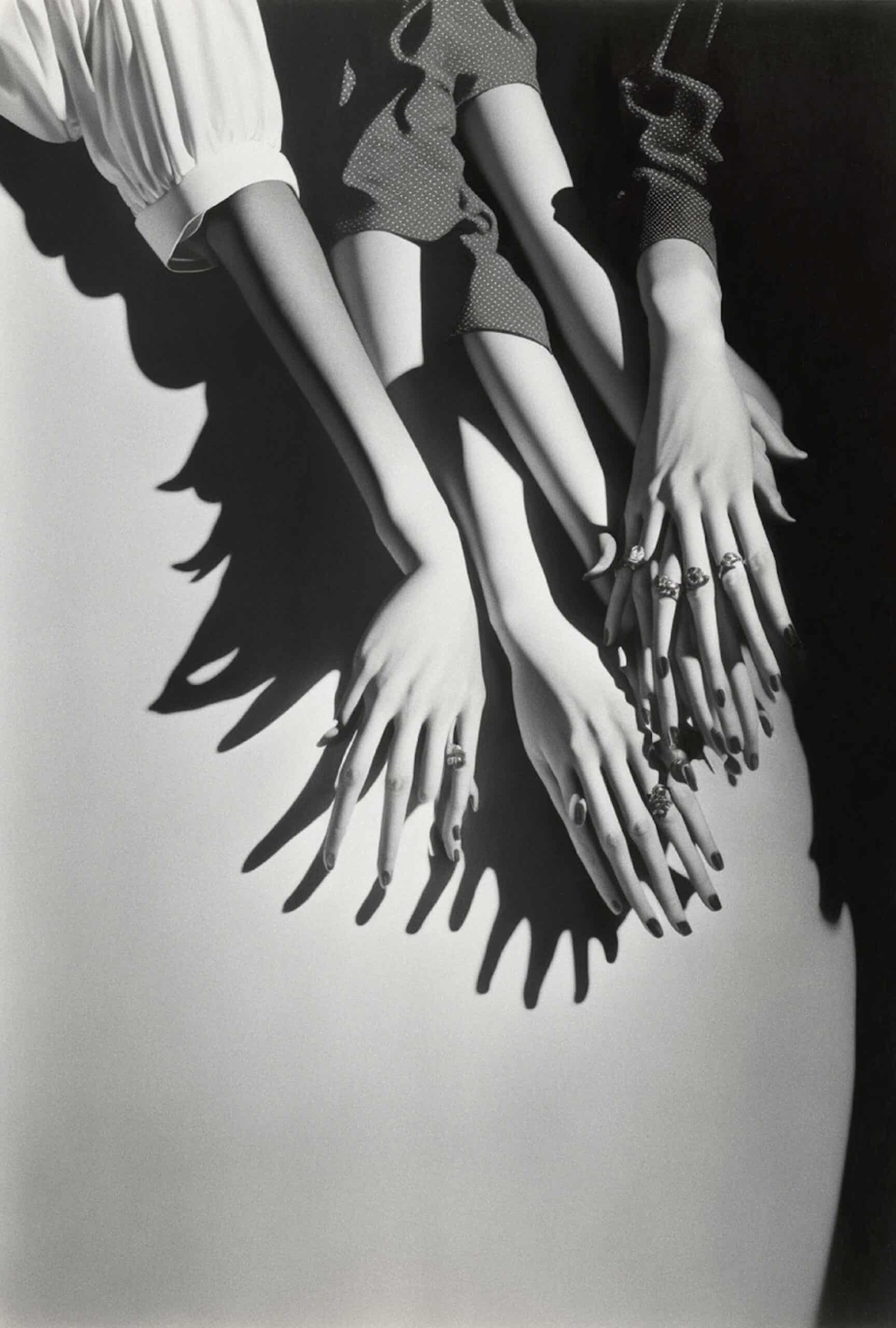
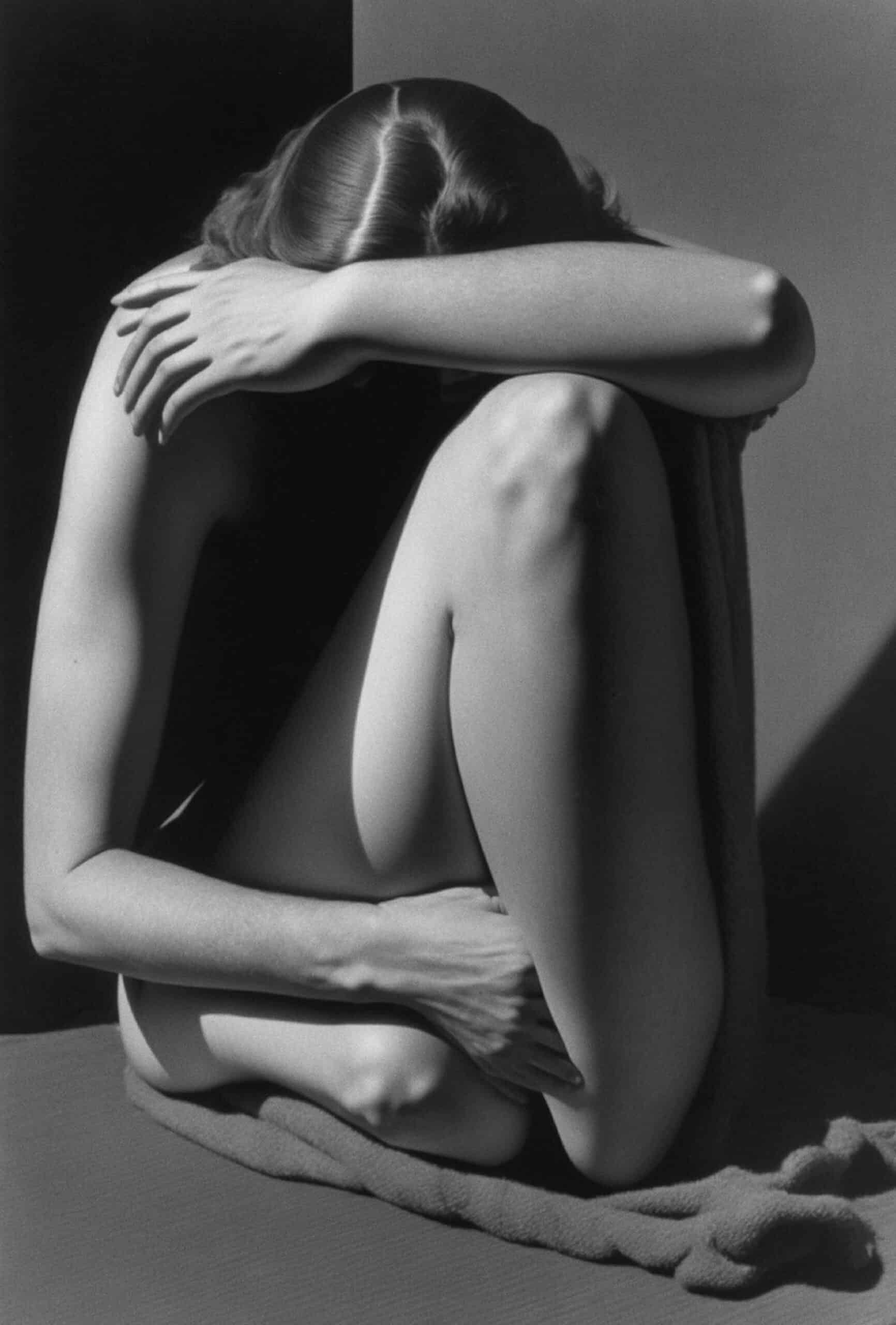

Brodbeck & de Barbuat’s 2022 series, launched before the widespread adoption of user-friendly AI applications, pursues a distinct goal. Subtitled Study in Artificial Intelligence and the Mechanisms of Memory, the series reflects a concerted effort “to engage in a dialogue with the machine,” as the duo sought to comprehend how AI interprets and responds to specific prompts.
The AI-generated outcomes are the product of an extensive database of images: “Initially, we wanted to test these tools’ capabilities, discovering that they could recreate nineteenth-century images using only a date and the specific technique, without referencing the original photographer.”
The clever idea was to choose iconic images embedded in collective memory. These serve as benchmarks for evaluating the results: “We went into the details, describing the scene in the image, sometimes specifying the date of creation so that the result is consistent with the original. For example, for Robert Capa’s Falling Soldier, if you don’t specify the date, you get a Vietnam War GI.”
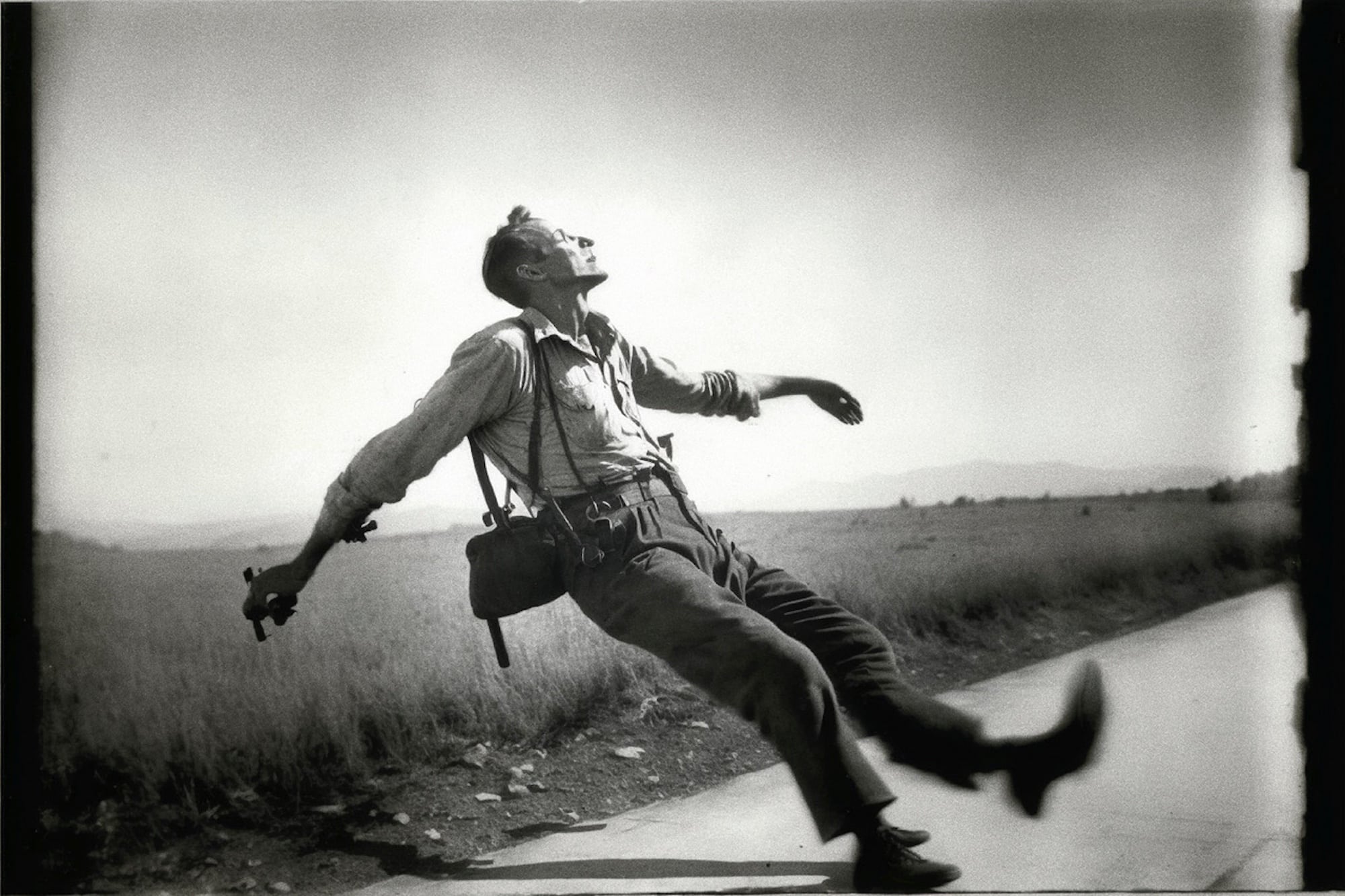
The strength of the series lies in the editing, an essential, fundamental step in any photographer’s craft. “We chose to preserve the errors and accidents as they are quite telling.” Take for instance Helmut Newton’s photograph of a woman diving into a pool. “Since nudity is taboo for AI, we are offered a clothed version, elongated like a model, but whose body is no longer human.”
Some recreations are remarkably realistic, like the rendition of John Lennon and Yoko Ono based on Annie Leibovitz’s work, albeit with the machine “clothing” the singer and partially undressing his companion. In Marc Riboud’s The Eiffel Tower Painter, the monument is anomalously duplicated. As for the body of Charis in Edward Weston’s iconic nude, it is recreated with imperfections yet retains a superficial likeness.
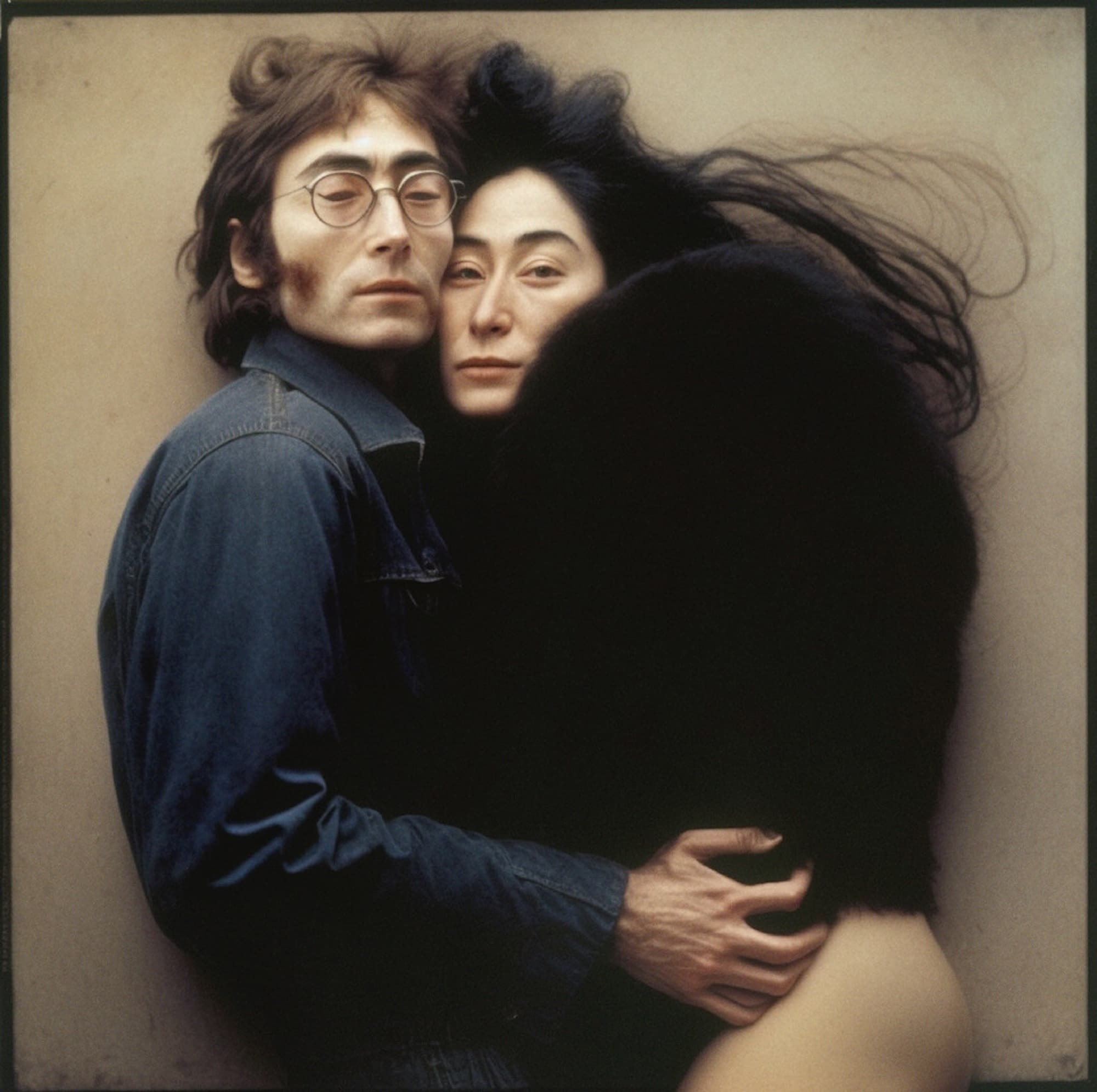
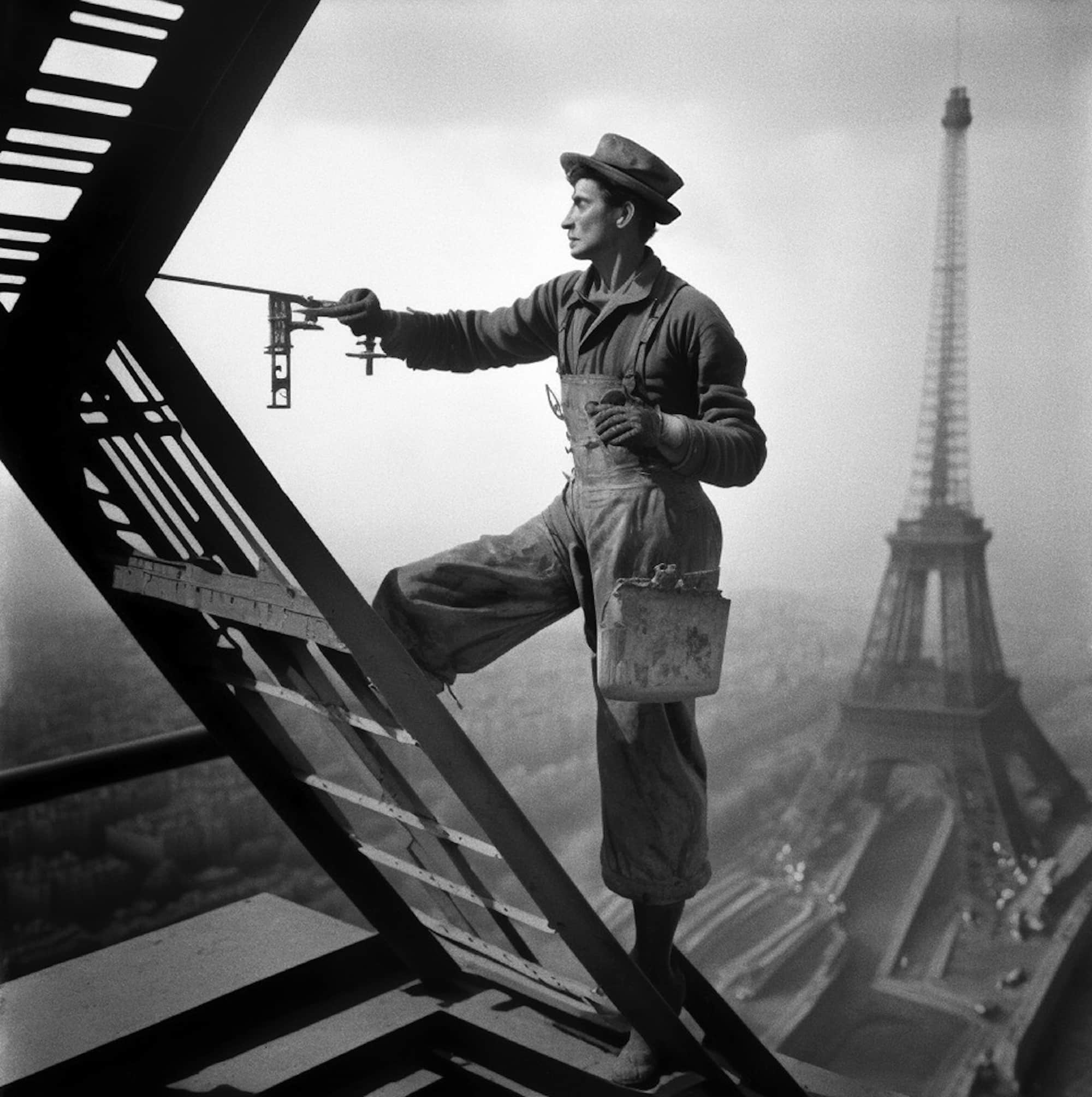
Beyond the anecdotal bugs, what is interesting is how these images challenge us as humans. Looking at these avatars, we can sometimes spot the defects immediately, as with the unnaturally smooth face of Dorothea Lange’s Migrant Mother, and other times only upon closer inspection. This forces us to acknowledge our own cognitive shortcomings. Although we believe we know these iconic images well, our recollection often proves to be inaccurate. “How can our memory be so imprecise, yet so trusted?” ponder the artists. This series thus offers a disquieting experience, confronting us not just with the limitations of AI, but also with our own perceptual frailties.
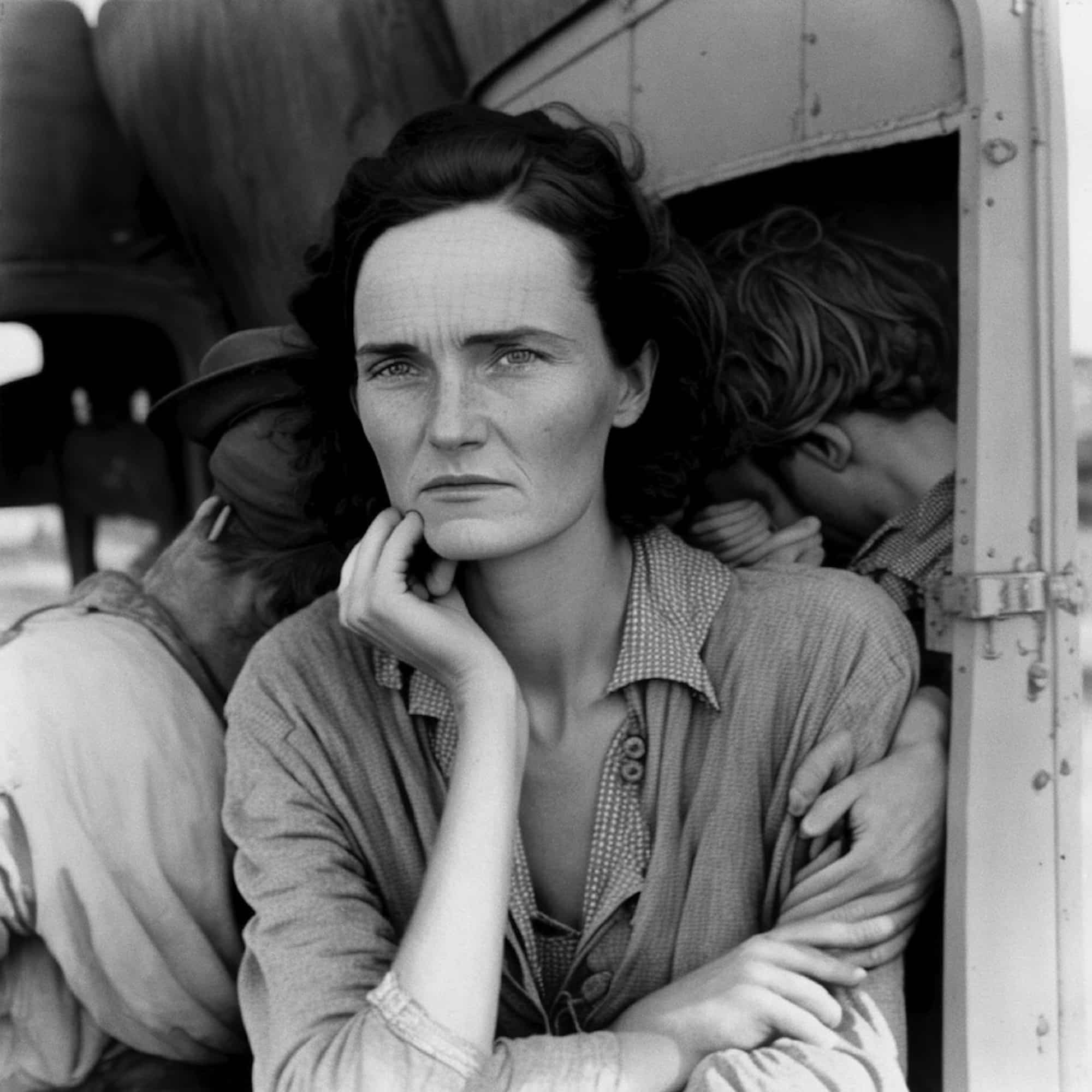
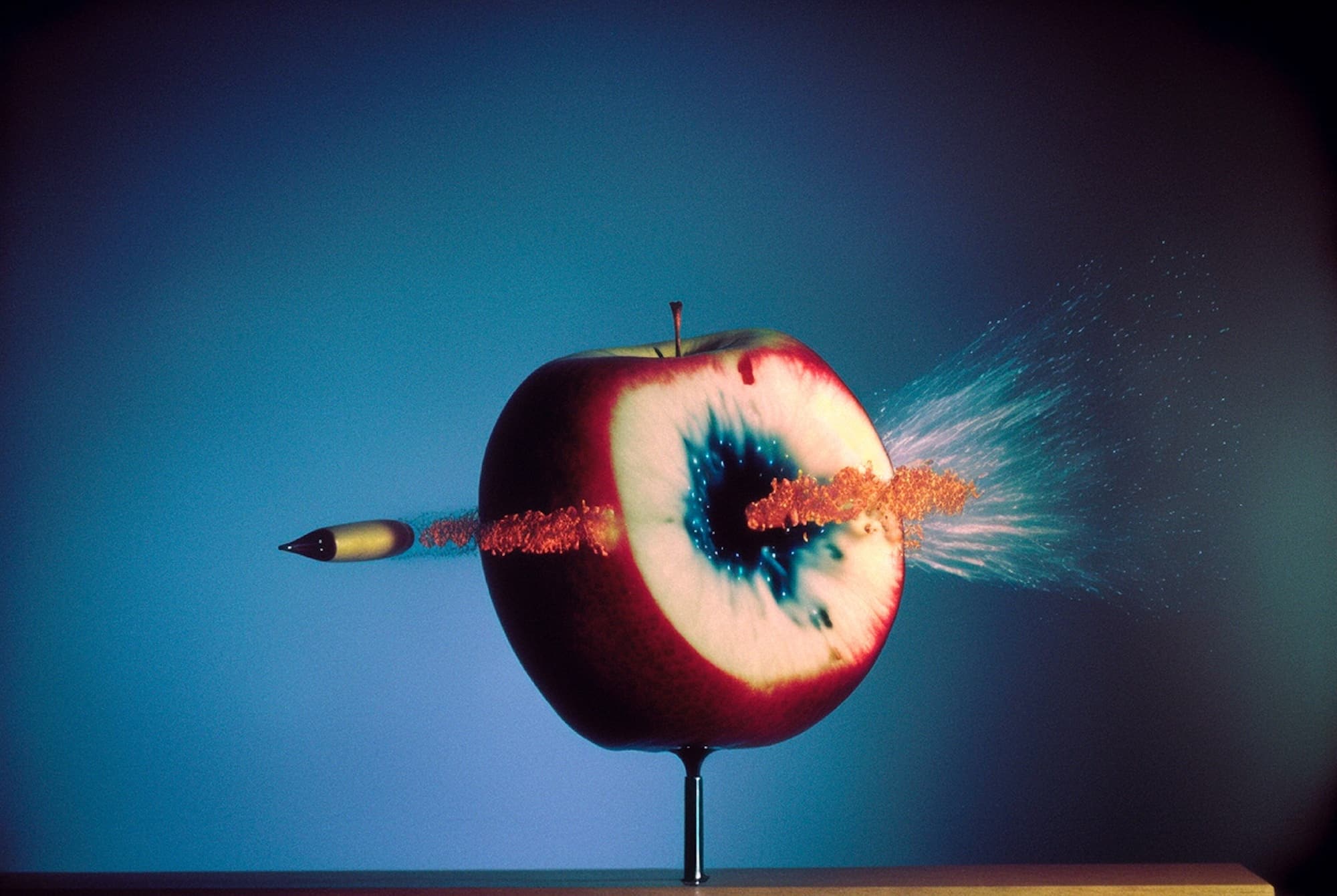
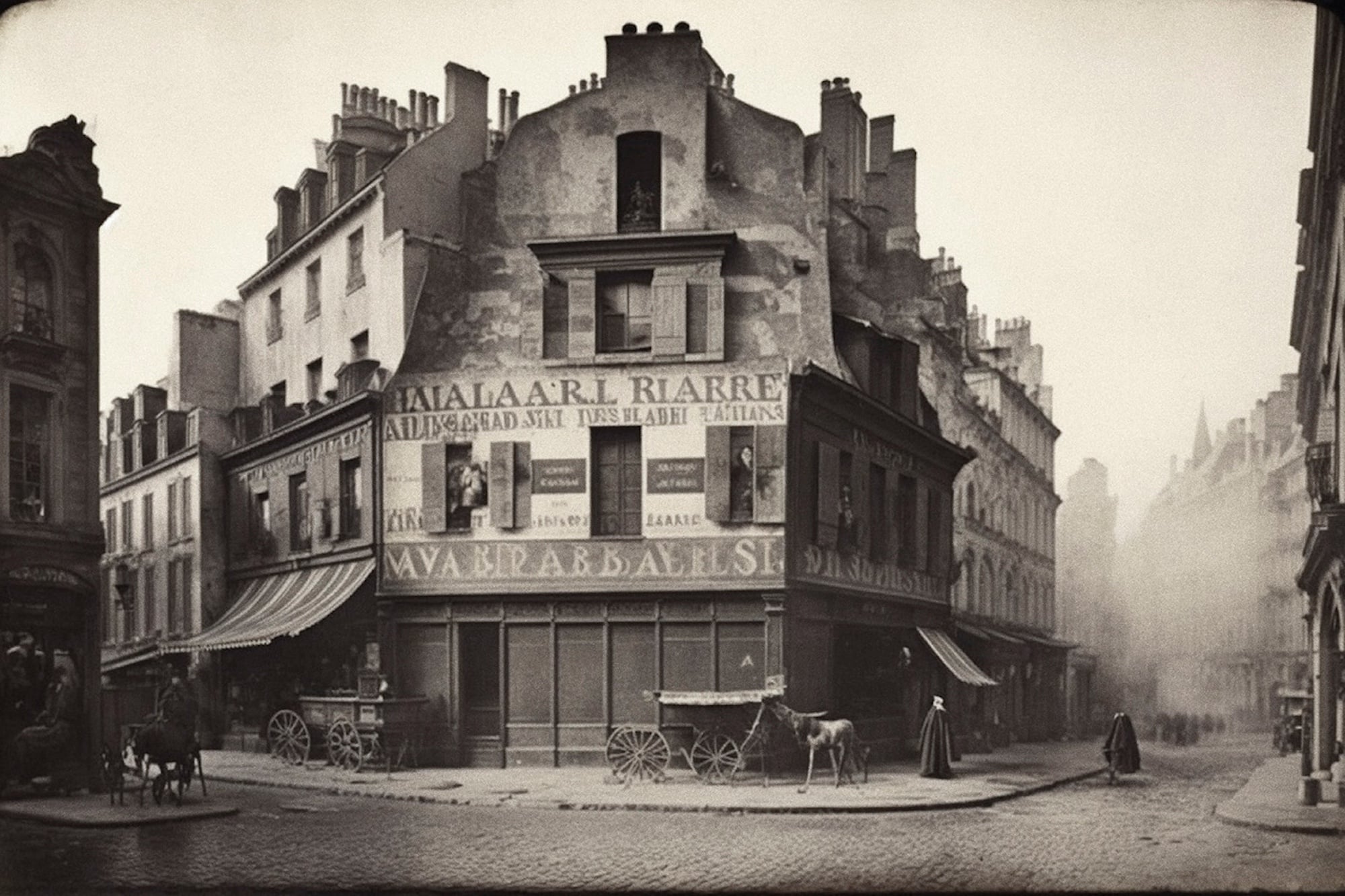
Brodbeck & de Barbuat, Une histoire parallèle: Étude sur l’intelligence artificielle et les mécanismes du souvenir. Galerie Papillon, 13, rue Chapon, 75003 Paris. Until janvier 13, 2024.

In the realm of motorsports, filled with roaring engines and soaring adrenaline levels, there’s a magnetic force that transcends the mere mechanics of racing. Beyond the chequered flags and burning rubber, there’s a fascinating psychology at play, and smart marketers are tapping into it to drive brand affinity. Experiential marketing leveraging motorsports is essentially a world where the thrill of the sport meets the art of emotional connection, which is translated into brand loyalty by marketers.


Unsplash/Representative Image
Have you ever wondered why the deafening roar of engines, the squealing tires and the adrenaline-pumping speed of motorsports resonate so deeply with audiences? It’s not just about the physical spectacle; it’s about the emotions they evoke. Motorsports, in all its high-octane glory, taps into our primal instincts – the need for speed, the thrill of competition and the triumph of pushing limits. And it’s this emotional rollercoaster that smart marketers are leveraging to create lasting brand connections through experiential marketing.
At the heart of motorsports marketing is the understanding that fans aren’t just spectators; they are participants in an emotional journey. Brands that recognize this fact find themselves able to skillfully tap into it and devise strategies curated around it. It’s about weaving narratives that go beyond horsepower and lap times. It’s about experiencing something akin to what professional racers or adventure seekers feel – the desire for victory, the pursuit of excellence and the thrill of the unknown.
This can’t be better described than the Ultimate Desert Challenge (UDC), a high-endurance desert offroading competition that strives to give both experienced and aspiring offroaders an equal chance to win.

Unsplash/Representative Image
In the fast-paced world of motorsports, every pit stop is a strategic move and the same applies to marketing. The art of emotional connection involves strategic ‘pit stops’ where brands engage with their audience authentically. Whether it’s through behind-the-scenes glimpses, personal experience stories or interactive fan experiences, these pit stops are crucial in building a lasting connection that goes beyond a simple transaction.
It was quite the power play to incorporate cutting-edge technology to create a truly unique simulator at the international stage of EICMA, the Milan Motorcycle Show. Maxperience provided people with an authentic experience of riding a power bike through LED consoles, for Hero MotoCorp.
Sponsorship and partnership in motorsports is a powerful tool for building brand affinity. It’s more than just putting logos on a racing car; it’s about becoming an integral part of the motorsports narrative. Brands that understand this forge partnerships that extend beyond the racetrack. From immersive fan experiences to collaborative content creation, sponsorship becomes a shared journey, making the brand an inseparable part of the motorsports culture.
For instance, enduro racing is still finding its audience in the country, so by hosting the CEAT Enduro Training Tracks Programme, the first-of-its-kind event, CEAT and Maxperience will forever be associated with the advent of the format in India.
Unsplash/Representative Image
In the digital age, the roar of the crowd has shifted from the stands to the realm of social media. Conversations around motorsports now unfold in real-time on digital platforms. Smart marketers leverage this by actively participating in the discourse, amplifying fan experiences and creating shareable content that builds up the excitement before the event and sustains it after. It’s not just about the event day; it’s about a continuous engagement that keeps the engines of affinity running.
Building brand affinity is an ongoing journey where each event, each engagement, contributes to a broader narrative. The chequered flag isn’t the end; it’s a signal for the next lap in the race for consumers’ loyalty. Experiential marketing is not just about selling a product; it’s about selling a feeling. It’s about creating an emotional connection that withstands the test of time and the speed of innovation.
The author is co-founder and CEO, Maxperience. The views expressed are his own.

Copyright 2023 BBC. All rights reserved. The BBC is not responsible for the content of external sites. Read about our approach to external linking.
Beta Terms By using the Beta Site, you agree that such use is at your own risk and you know that the Beta Site may include known or unknown bugs or errors, that we have no obligation to make this Beta Site available with or without charge for any period of time, nor to make it available at all, and that nothing in these Beta Terms or your use of the Beta Site creates any employment relationship between you and us. The Beta Site is provided on an “as is” and “as available” basis and we make no warranty to you of any kind, express or implied.
In case of conflict between these Beta Terms and the BBC Terms of Use these Beta Terms shall prevail.





