Photographer to Share 100 Images of Elephants & Whales in 2024

Photographer to Share 100 Images of Elephants & Whales in 2024

Chris Fallows - 100 Days of Sentience

Renowned South African wildlife photographer Chris Fallows is known for his artistic images that capture the spirit of the animal kingdom. And in 2024, he’ll be celebrating two of its most majestic animals—the elephant and the whale. Over the course of 100 days, he’ll be sharing one inspiring photo daily that highlights the power, beauty, and spirit of these giant animals.

Starting on January 1, Fallows will publish one new image of either a whale or an elephant on his Instagram account in a project called 100 Days of Sentience. Each photo will be accompanied by a caption that explains a bit more about the photo and what Fallows was experiencing when he took it. He hopes that viewers will understand the connections these gentle giants can build and, perhaps, evaluate how they can be helped through conservation and protection.

We had the pleasure of speaking with Fallows about the project, as he generously provided My Modern Met with a preview of the images people can expect throughout the project. Read on for our exclusive interview, and then go over and follow him on Instagram to be part of 100 Days of Sentience starting on January 1.

Elephant in Kenya

Elephant in Kenya

How did the idea for 100 Days of Sentience come about?

When I am immersed in nature, be it with my wife Monique on our boat bobbing the ocean or on foot in the bush, I find incredible peace and grounding. Yet it seems all around us, there is turmoil, various tragic wars, and an ever-increasing pace of life dominated by the desire to have more while not considering the consequences of our actions.

I believe many have lost the ability to live in the moment. This feeling of being present is none more evident than when I am with the two largest creatures of ocean and earth, the whales and elephants.

While I am so lucky to have spent thousands of days in their respective companies, others don’t have this opportunity. As such, I wished to showcase some of my works with these sentient giants for people to look at and hopefully transport themselves to the moment I took the photograph.

I want people to immerse themselves, to hear the whales’ exhalation, to see water cascading off the huge fluke, and feel the touch of the whales’ breath on their skin. Likewise with the elephants, to gaze up at these giants, to imagine their quiet padded foot stroke, the loving embrace of a mother’s trunk around her kin, and feel the gentle rumblings of their communication with each other.

It is perhaps ironic that of all the animals I have been so lucky to work with over the past three decades, it is in the company of the two largest that I feel most at peace. This is my simple attempt over the course of 100 days to allow others to feel this sense of sentience through my lens.

Whale Fluke by Chris Fallows

Whale Fluke by Chris Fallows

Elephant in Kenya

Elephant in Kenya

What was your selection process for the images?

While I have chosen works that I believe artistically do justice to the magnificence of both whales and elephants, my primary criteria was to select a collection of my fine art photographs that had a strong sense of allowing the viewer to be there in the moment with me.

As such, I wanted each photograph to be a reflection of the emotion and mood, a wash of calmness, a stroke of humility, and a call for everyone to simply find their space in nature.

Chris Fallows - 100 Days of Sentience

Chris Fallows - 100 Days of Sentience

Elephant in Kenya

Elephant in Kenya

What are the main characteristics that strike you when you’ve observed elephants and whales?

An awareness, caring, and a gentleness that certainly aren’t signs of weakness. These are our planet’s giants, capable of incredible acts of strength, yet they tolerate me in their space despite all of what my kind has done to them.

How do you hope that your artistry can have an impact on these animals and our environment?

I hope that when viewers of my work look at these giants they are not only awed by their presence but also by their ability to be present.

As a direct personal impact to how my artworks help, all the sales of my Limited Edition Artworks go towards buying land in Southern Africa for the protection and rehabilitation of habitats, as well as supporting selected non-profits doing incredible work to protect our planet.

Whale Fluke by Chris Fallows

Whale Fluke by Chris Fallows

Elephant in Kenya

Elephant in Kenya

I’m sure there are a lot of incredible backstories behind these images. Is there one, in particular, that you’d like to share?

There are many indeed, and throughout my 100-day-long daily Instagram posts, I will share many, but my one work called Matriarch, taken in 2019 in Kenya, has a powerful story.

This photograph is of one of the few truly huge female tuskers left on our planet. Her tusks have been her burden, for she is the most sought-after target for the poacher or trophy hunter’s gun as a result of them.

I would often try to find her in the huge expanse of one of Kenya’s national parks as her ivory was so spectacular and obviously made for impactful imagery, but what I learned with each new encounter was that her ivory was just a small part of what made her truly special.

She was the matriarch of her herd, a herd that’s destiny was shaped by her decisions. Each time she encountered me over the course of several years, she would leave her herd, walk over to where I often lay on the ground photographing her, and reach her trunk out to smell me while maintaining an upright and dominant posture.

In effect, each time she was setting her boundaries, saying I know you are there, I accept you, but this is my boundary, and don’t cross it because that will threaten my family. I am humbled by this huge, completely wild elephant’s acceptance and tolerance of me. However, I am inspired by her courage, strength, and leadership.

Elephant in Kenya

Elephant in Kenya

Chris Fallows - 100 Days of Sentience

Chris Fallows - 100 Days of Sentience

What do you hope that people take away from the work?

I cannot and refuse to believe that had others been exposed to these animals as I have, that they could ever have raised a weapon to kill one. I also believe that once people are exposed to these iconic animals, they will dig deeper and learn more about them, understanding the key roles each plays within its respective ecosystem and the contribution they make to a healthy planet.

If an observer of my work can reflect on the virtues of the great whales and elephants and then look at our own, I believe that hopefully, in some way, my work can help bridge the divide between sharing or conquering our planet.

Chris Fallows - 100 Days of Sentience

Chris Fallows - 100 Days of Sentience

Elephant in Kenya

Elephant in Kenya

What are your plans for 2024?

In January 2024, we unveil a 25-meter-long display of my photographic artwork at Dubai International Airport called The 11th Hour that draws attention to many of our planet’s most iconic natural inhabitants that we have lost or are losing. Equally, the exhibition celebrates a few of the icons we have saved through brave and timeous intervention, and hopefully, this inspires more action.

For much of the rest of the year, we will be in remote wildernesses chasing sunrises and horizons, trying to capture spectacular photographs of our planet’s natural icons.

Chris Fallows: Website | Instagram | Facebook

My Modern Met granted permission to feature photos by Chris Fallows. 

Related Articles:

Striking Humpback Whale Photos Celebrate the “Ballerinas of the Sea”

Brave Photographer Captures Great White Shark Leaping 12 Feet Above the Ocean

Never-Before-Seen Photos From Top Wildlife Photographer Reveal the Fragile Beauty of Nature

Photographer Showcases the Majestic Beauty of Elephants To Help in Their Conservation [Interview]

Holiday Gift Ideas for Photographers and Videographers for Under $30

Holiday Gift Ideas for Photographers and Videographers for Under $30

Perhaps spending $100 on gifts for your photographer friends was a bit much. It’s OK. We’ve got you. Or rather, UK-based photographer and YouTuber, Jay Ducker, has got you. Here are a few useful tools for under $30 (with one exception).

While Ducker’s video bills the items as mostly under $50, it seems for folks in the United States that all of these items fall under $30, and all of them are quite useful. Not all of them are the sexiest photo gear. I mean, I appreciate a good step-up ring to help me affix my expensive 82mm filters to everything, but I’m not sure how I’d feel about one in my stocking on Christmas day.

There are some real gems in the pile though. The SmallRig AAK2213C Multi-Tool with Screw Storage was something I didn’t know I needed until I saw it in Ducker’s video, where he explains the myriad uses for such a tool.

If you need some screws to use the tool’s included screw holders, there’s always an assorted bag of mounting screws you can buy just to make sure I have what I need in critical moments. Side note: Should you have a photographer friend who loses mounting screws as much as I do, that bag also comes in under the $30 mark.

Ducker also recommends a combo battery-and-memory card case from K&F Concept that seems so obvious when you see it. I’m still using SD card cases and throwing loose batteries into a bag, and so having everything in one place seems like a good idea.

There are a few other recommendations in Ducker’s video, but the last one, the Nitecore Air Blower, seems like a worthy successor to the time-honored Rocket Blower. It’s not cheap, but Ducker makes a good case for why it’s worth the money.

Check out the full details on the giftable items in Ducker’s video above.

Hungarian photographers share impressions of China

Hungarian photographers share impressions of China

People attend a sharing session “China Through the Eyes of Hungarian Photographers” at Robert Capa Contemporary Photography Center in Budapest, Hungary, on Dec. 14, 2023. A group of Hungarian photographers shared their beyond-expectation trips in China when attending a session in Budapest’s Robert Capa Contemporary Photography Center on Thursday evening. (Photo by Attila Volgyi/Xinhua)

BUDAPEST, Dec. 15 (Xinhua) — A group of Hungarian photographers shared their beyond-expectation trips in China when attending a session in Budapest’s Robert Capa Contemporary Photography Center on Thursday evening.

The sharing session “China Through the Eyes of Hungarian Photographers” is jointly organized by the China Cultural Center in Budapest, the Association of Hungarian Photographers (MFSZ), the Robert Capa Contemporary Photography Center, and the Wink International Cultural Arts and Sports Association.

“I hope this event will help more people understand China, to make the friendship between Hungarian and Chinese people stronger, and further develop the cultural connections as well,” Jin Hao, director of the China Cultural Center in Budapest, said in his opening remarks.

Recalling their visit to China in September, MFSZ President Zsolt Hamarits expressed overwhelming awe at the sheer richness of Chinese culture. “I arrived in a dream world. I’m still dreaming about this journey. It’s hard to put into words how amazing it felt,” he told Xinhua.

He said that if he could, he would return to China “tomorrow.”

Former President of MFSZ Zsolt Olaf Szamody, a seasoned visitor to China, reminisced about his initial encounter with China in 2008 when he participated in the Pingyao International Photography Festival.

“At that time, China was exotic and strange for me,” he said. “But now, everybody knows that China alone in the world is capable of such a spectacular and special development, be it the architecture or the public transport, or the communication.”

The recent trip to Suzhou, a city in eastern China, was his first to China after the pandemic. He marveled at the vibrant social life and the bustling economy in Suzhou, signifying the resilience of the region.

Chinese photographer Wei Xiang, a council member of the MFSZ, has been organizing activities bridging Hungary and China since 2013. His initiatives include visits of Hungarian photographers to China.

“Perceptions of China in Hungary often rely on local media reports, which may carry biases, creating skepticism among Hungarians,” he told Xinhua. “One photographer, initially hesitant about the trip to China due to concerns about food and accommodation, later found immense joy upon arrival.”

He said he believed in the power of personal experiences and photographic works to authentically introduce China to Hungary.

Hungarian photographers’ sharing session on Thursday kicked off a series of “Chinese Stories” lectures organized by the China Cultural Center in Budapest.

The Hungarian photographers’ works reflecting their 8-day visit to China will be shown to the public during the “Silk Road’s Reflection” exhibition in 2024.

image

Zsolt Olaf Szamody (2nd R, Rear), former president of the Association of Hungarian Photographers, shares his trips in China during a sharing session “China Through the Eyes of Hungarian Photographers” at Robert Capa Contemporary Photography Center in Budapest, Hungary, on Dec. 14, 2023. A group of Hungarian photographers shared their beyond-expectation trips in China when attending a session in Budapest’s Robert Capa Contemporary Photography Center on Thursday evening. (Photo by Attila Volgyi/Xinhua)

image

People attend a sharing session “China Through the Eyes of Hungarian Photographers” at Robert Capa Contemporary Photography Center in Budapest, Hungary, on Dec. 14, 2023. A group of Hungarian photographers shared their beyond-expectation trips in China when attending a session in Budapest’s Robert Capa Contemporary Photography Center on Thursday evening. (Photo by Attila Volgyi/Xinhua)

image

Zsolt Hamarits (R, Rear), president of the Association of Hungarian Photographers, speaks during a sharing session “China Through the Eyes of Hungarian Photographers” at Robert Capa Contemporary Photography Center in Budapest, Hungary, on Dec. 14, 2023. A group of Hungarian photographers shared their beyond-expectation trips in China when attending a session in Budapest’s Robert Capa Contemporary Photography Center on Thursday evening. (Xinhua/Chen Hao)

image

People attend a sharing session “China Through the Eyes of Hungarian Photographers” at Robert Capa Contemporary Photography Center in Budapest, Hungary, on Dec. 14, 2023. A group of Hungarian photographers shared their beyond-expectation trips in China when attending a session in Budapest’s Robert Capa Contemporary Photography Center on Thursday evening. (Xinhua/Chen Hao)

Regina photographer given nine months in jail for sexually assaulting model

Regina photographer given nine months in jail for sexually assaulting model

“Having considered all of the factors, I have determined that a sentence of actual jail must be imposed,” Judge Doug Kovatch said.

Article content

A judge has decided that a Regina photographer who was convicted of sexually assaulting a model during a nude photo shoot should serve jail time for that offence.

Brent O. Nerenberg was convicted in July, and on Friday, Regina Provincial Court Judge Doug Kovatch delivered his sentencing decision.

Article content

Nerenberg, 53, was given nine months in custody, to be served at the Regina Provincial Correctional Centre.

Advertisement 2

Story continues below

This advertisement has not loaded yet, but your article continues below.

Article content

The judge’s trial decision, rendered this past summer, outlines the incident.

It describes how in the fall of 2020 the complainant, who cannot be named due to a publication ban protecting her identity, responded to a Facebook advertisement made by Nerenberg.

Nerenberg was looking for models, and it was arranged she would meet him at his home studio. A photo shoot was scheduled for October 2020, and it was agreed nude photos would be taken.

During this photo shoot, she testified Nerenberg touched her breasts multiple times and at one point she said he “grabbed and felt” them.

She also said he’d asked her to use sex toys on herself, to which she said no. She testified that he grabbed a sex toy and used it on her.

Crown prosecutor Loren Klein had argued the offence exhibited a power imbalance and an exploitation of trust, asking for a sentence of 18 months in jail followed by two months of probation, according to the summary of arguments delivered by Kovatch Friday.

The defence, on the other hand, suggested a conditional sentence to be served in the community, arguing no breach of trust or power imbalance, the judge relayed.

Article content

Advertisement 3

Story continues below

This advertisement has not loaded yet, but your article continues below.

Article content

“Having considered all of the factors, I have determined that a sentence of actual jail must be imposed,” Kovatch said.

The complainant wasn’t “lured” to Nerenberg’s business, she went there of her own volition, the judge said, but he went on to say that the complainant agreed to put herself in a vulnerable, trusting position.

Related Stories

  1. Brent Nerenberg, a Regina photographer, was found guilty of sexually assaulting a model during a shoot.

    Regina photographer sexually assaulted model, judge finds

  2. Brent Nerenberg, a Regina photographer, was found guilty of sexually assaulting a model during a shoot.

    Regina police to review sexual assault cases as part of pilot project

He said the photographer exploited her vulnerability and breached the trust.

Kovatch said he believed that it would be an error to “overemphasize” Nerenberg’s personal circumstances and deliver a community-based sentence.

He found there was “considerable planning” involved in the incident and that Nerenberg is “highly morally culpable.”

“The court is required to make a statement that the accused’s conduct was very wrong and unacceptable.”

“When an individual uses sexual violence against another person, it must be punished,” he said.

However, Kovatch felt the Crown’s suggestion of 18 months was too long.

Advertisement 4

Story continues below

This advertisement has not loaded yet, but your article continues below.

Article content

The judge declined to impose a discretionary firearms ban, noting “no weapon was used here,” but he ordered that Nerenberg submit a DNA sample for forensic purposes.

Additionally, the photographer was ordered to pay a surcharge of $100 before the proceeding ended.

“Mr. Nerenberg, come with me, OK?” a sheriff then said to the convicted man.

“You have to go with him,” said a woman, who had been sitting with Nerenberg throughout the proceeding.

With that, he was led out of the room.

bharder@postmedia.com

Bookmark our website and support our journalism: Don’t miss the news you need to know — add LeaderPost.com and The StarPhoenix.com to your bookmarks and sign up for our newsletters here.

Article content

This Week in Flyers

Capturing life beyond news: ARLnow’s Jay Westcott transitions from news photography to artistic pursuits

Capturing life beyond news: ARLnow’s Jay Westcott transitions from news photography to artistic pursuits
Jay Westcott (courtesy of Jay Westcott)

(Updated at 2:25 p.m.) ARLnow’s staff photographer, Jay Westcott, is officially stepping away from the news industry — but he isn’t putting his camera aside just yet.

At 51, Westcott is shifting his focus from the fast-paced world of daily news photography to focus on the sides of photography that align with his other passions, including portraiture, storytelling and music.

“I’m looking forward to just concentrating on the things that I’m really good at,” he told ARLnow.

Growing up in Battle Creek, Michigan, roughly two hours west of Detroit, Westcott displayed a passion for photography from a young age, often using his dad’s camera to shoot yearbook pictures in high school. It wasn’t until after high school when he joined the U.S. Navy that Westcott’s passion for the visual medium began to flourish.

Four years after he joined the service when Westcott was aboard the USS Roosevelt, a Navy photographer reignited his interest in camera work.

“He had this really cool camera… and I just loved what he was able to do with that, the pictures he could get from that, and he convinced me to buy a camera,” Westcott said.

He wrote to his mother, asking her to mail his dad’s camera and bought a 35mm Canon autofocus SLR. In the years that followed, he documented life aboard the ship and the countries he visited around the Mediterranean, including Rhodes, Greece, and Venice, Italy.

Westcott, who is also a guitarist, remembers the day he decided he would leave the Navy and pursue photography. While browsing Guitar World magazine in his bunk one day, he came across a photograph by the renowned Seattle-based American photographer Charles Peterson, who was promoting his new book “Touch Me I’m Sick.”

“Instead of being one of the guys in the photos in the magazine, I wanted to be the guy taking the picture,” Westcott said.

King Baby Man Child (by Jay Westcott)

In 1996, Westcott was honorably discharged from the Navy and headed to Virginia Beach, where he met his now ex-wife and sold cars for several years before moving to Northern Virginia.

In the summer of 2000, at age 28, Westcott enrolled at Northern Virginia Community College and then transferred a year later to George Mason University to study photography. About a year into his tenure at George Mason, and disillusioned with the program, Westcott applied and was accepted on a scholarship to The Corcoran College of Art and Design (now a part of George Washington University) in D.C.

“I went there for three years and loved every second of it,” he said.

Westcott’s first big break was a paid internship at the Scripps-Howard news service in D.C., which operated for 96 years from 1917 to 2013. What launched his career, however, was a chance sighting of of an armored truck robbery near McPherson Square Park, where he saw a man wielding a shotgun.

“So, I go out, and I take a couple of pictures and then go down to the street and take a few more pictures,” he said. “The guy gets hauled away in an ambulance while he was handcuffed.”

The pictures Westcott took that day got picked up by the Washington Post, which offered Westcott a full-time staff job shortly after.

“I felt I started at the top,” he said.

After his tenure at the Post, Westcott, whose work has been nationally recognized, would spend the next 15 years working with top national news outlets, such as Politico, The New York Times, Reuters, The Associated Press and Bloomberg before joining ARLnow in 2019.

“ARLnow has been a great place to be,” Westcott said. “I’ve been very fortunate to have an amazing boss in Scott [Brodbeck]. He’s the kindest, most understanding employer I’ve ever worked for.”

From his coverage of the pandemic to breaking news and day-to-day events, Westcott says he feels that his contributions at ARLnow have genuinely portrayed what living in Arlington is like.

“I feel like somebody could take away and get a feel for what Arlington was truly like by looking through my pictures. And it’s a vibrant, beautiful, crazy place,” he said.

But after a 20-plus career in the field, Westcott says it’s finally time to move on.

In addition to his straight news assignments, Westcott also said he had several opportunities to freelance for several bands, such as The Devil Makes Three, The Dropkick Murphys, Candlebox, The Violent Femmes and Blues Traveler, and create content for their websites, press kits and social media.

Some of his best work and favorite memories came from working with musicians, says Westcott, who now plans to focus on photographing bands on tour.

“I love documenting the musicians. Not just the performances, but the in-between moments,” he said. “This is where my work is going.”

The band Candlebox performing along the Mississippi River (photo by Jay Westcott)

Westcott says he will miss capturing historic moments, such as images outside the White House following the death of Osama Bin Laden.

“It’s been 20 years of amazing moments I’ve been able to capture. I worked my tail off to be able to do it,” he said.

Reflecting on the news business, Westcott says his departure comes as the news industry is getting more competitive and he is having a harder time keeping up. The landscape is also changing, he said, noting the loss of more than 2,400 newspapers since he graduated college.

Andrew Beaujon, one of Jay’s former colleagues at TBD.com and the current senior editor at Washingtonian Magazine, said that the journalism world will feel the absence of Westcott’s work. But Beaujon also noted he’s happy his friend can leave the industry on his own terms.

“I think that that’s really worth celebrating,” he said. “Jay doesn’t owe journalism anything… He’s put in the time. He’s always given it his all.”

When asked what it truly takes to be at the top, Westcott said it’s about understanding when a moment is special or historic.

“[American photographer] Eddie Adams would say, to paraphrase, ‘For any given news event, there might be one picture remembered for it, and your job is photojournalist is to get that picture and beat everybody else there,” Westcott said.

Looking back, however, Westcott said if he could do it all over again, he would.

“I think meditation and mindfulness and reading Buddhist philosophy has taught me to appreciate the present,” he said.
“And so, I don’t focus on the past, but I’m grateful for it, warts and all.”

Mastering the five elements of proper exposure

Mastering the five elements of proper exposure

The traditional understanding of photography’s exposure triangle, encompassing Aperture, Shutter Speed, and ISO, is being reevaluated in the digital age.

Joe Edelman, a renowned photographer and educator, has pioneered a fresh perspective that aligns more closely with the nuances of digital photography. Expanding upon Edelman’s groundbreaking concept, I have integrated two additional critical elements: the light-to-subject distance and the power of the light. This enhanced framework offers a more comprehensive and practical approach to achieving the perfect exposure in a digital context. Here’s an introduction to this new, evolved concept.

Choose your Shutter Speed with PURPOSE and your Aperture with FEELING. Then, adjust the BRIGHTNESS with ISO.

Joe Edelman

Becoming a pro in photography means understanding the basics of exposure. Knowing how to work with these things can change how awesome your photos turn out. It’s not just about randomly picking camera settings; you must know why you use them. When you line up what you want your shot to say with how you set up your camera, that’s when the magic happens.

So, let’s get into why shutter speed, aperture, and ISO matter so much and how to choose the settings that’ll make your photos truly shine. We’ll also chat about two elements that get less attention: how far your subject is from the light and how intense that light is.

Shutter speed with purpose

Shutter speed determines the time the camera’s shutter remains open, influencing the representation of motion in your photographs. Consider the purpose of your shot: Are you freezing action or conveying motion? Opt for a faster shutter speed to freeze fast-moving subjects or precisely capture a decisive moment. On the other hand, if you intend to convey a sense of movement or capture long exposure shots, choose a slower shutter speed. You can communicate the desired message through your images by aligning the shutter speed with your purpose.

exposure long icicles
©Lauri Novak

Aperture with feeling

The aperture controls the amount of light entering the camera and impacts the depth of field. However, the aperture also plays a significant role in conveying meaning in your photographs. Consider the story or emotion you want to convey through your image. A wider aperture (smaller f-number) with a shallow depth of field can isolate your subject, drawing attention and creating a sense of intimacy. It can be particularly effective in portraits or when you want to emphasize a specific element.

Conversely, a narrower aperture (larger f-number) with a greater depth of field can capture intricate details and provide context, making it suitable for landscape or architectural photography. By choosing the aperture that aligns with the meaning you want to convey, you can enhance the visual impact of your photographs.

challenges and themes
©Lauri Novak

ISO with light

ISO sensitivity determines how your camera captures light and is closely tied to the available lighting conditions. Consider the lighting situation you are in. A higher ISO setting is beneficial in low light environments or situations requiring a faster shutter speed.

However, higher ISO values can introduce digital noise, impacting image quality. A lower ISO setting is ideal for maintaining optimal image quality in well-lit scenarios. Adjusting the ISO according to the lighting conditions allows you to effectively manage light and achieve the desired exposure.

Two missing elements for proper exposure (Flash photography)

Two critical factors that play a pivotal role in achieving the perfect exposure in flash photography are the light-to-subject distance and the intensity of the light source. These elements are instrumental in shaping the quality and quantity of light falling on your subject.

Remember that these two factors are present in natural light photography also, using the sun and clouds. 

Light-to-subject distance

Light-to-subject distance refers to the precise placement of your light source concerning your subject. When employing light modifiers such as a softbox, the position of the light relative to the subject can significantly impact the final result. Moving the light closer to the subject effectively enlarges the light source, resulting in a softer, more diffused illumination that gently wraps around your subject.

Conversely, positioning the light farther away will cover a larger area but may produce harsher shadows and less flattering light. Therefore, understanding how to manipulate this distance is crucial for achieving the desired lighting effect.

The power of the light

Additionally, the power of the light source is a vital consideration, mainly when working with battery-operated lights. Managing the power output correctly is essential to avoid prematurely draining the batteries.

For example, when using speedlights, it’s prudent to begin at a lower power setting, such as 1/4 power, and then make adjustments based on your specific lighting needs. This conserves battery life and provides a more versatile range of lighting options, allowing you to fine-tune the exposure precisely to your liking.

looking at lights
©Julie Powell

Mastering flawless exposure: Applying these key principles

To streamline your photography process and focus more on creativity than technicalities during a photoshoot, you can lock down four elements of proper exposure. This approach involves a series of deliberate choices:

Light-to-subject distance and light power

Begin by positioning your light source, ideally at a 45-degree angle above the subject and a few feet away. This placement ensures catchlights are visible in the subject’s eyes, similar to how sunlight would create them. Start with the light set to a quarter power to extend battery life.

Shutter speed for ambient light

Since you’re using a flash, it will freeze the action, so the shutter speed primarily affects the ambient light in the background. Incorporating natural light, a slower shutter speed can help properly expose the background. A starting point of 1/160 seconds is recommended.

ISO for light sensitivity

Set your ISO to control the sensitivity to light. Begin with the lowest ISO, typically around 100, and adjust as needed.

Aperture for depth and feel

Choose your aperture based on the desired depth and feel of the image. Starting with an f/4 aperture is a good rule of thumb. Adjust it to achieve the desired exposure.

For precise adjustments, use a light meter. Input your ISO and shutter settings, then fire the flash. The light meter will suggest the appropriate aperture for correct exposure. With these settings, you can easily identify which variable to tweak (light power or ISO) if the exposure is off. This allows you to adjust your setup without getting bogged down in technicalities.

By applying these fundamental principles, photographers can achieve flawless exposure with ease. The approach minimizes technical complexity, allowing for a focus on creative aspects.

Optimal positioning of the light source, efficient power settings, balanced shutter speed, and initial low ISO settings lay the groundwork for final adjustments, ensuring that each shot attains perfect exposure, bridging the gap between technical precision and creative expression in photography.

Watch the video below for more of Joe Edelman’s exposure tips in action:

[embedded content]

Photography as an act of trust

Photography as an act of trust

I had only been with the Monitor for four months when a summer deluge descended on Vermont – the state I call home and a place rarely considered newsworthy by the rest of the world. That first night of flooding, I hunkered down, heeding warnings to stay off the roads, and felt grateful to live on high ground. I woke the next day to images of water rising in Montpelier, our tiny state capital, where I used to commute to work. 

I wanted to document the response to the flooding, how neighbors were helping neighbors. So I drove to Montpelier, making detours when I hit washed-out roads. When I finally got there, it was eerie. Sirens blared. Kids splashed in murky puddles. 

Riley Robinson/Staff

RICHMOND, VT.: A farm submerged by floods, July 11.

It was weird to see my favorite quiet places suddenly the focus of national attention. It refreshed my empathy for the people in front of my lens. I now carry this feeling with me whenever I am welcomed, cameras and all, into someone else’s home or their favorite quiet place. This could be anywhere from a Mohawk school in Akwesasne, which spans the United States-Canada border; to a church in Middletown, Ohio; to grasslands in Bear Butte, South Dakota. It is an act of trust from the people we photograph. Each time, it’s an honor.

Riley Robinson/Staff

CALEDONIA, VT.: Competitors at the Caledonia County Fair, Aug. 24.

Riley Robinson/Staff

BEAR BUTTE, S.D.: Madonna Thunder Hawk, May 30.

Riley Robinson/Staff

MIDDLETOWN, OHIO: Pastors in the Middletown Ministerial Alliance, April 29.

Riley Robinson/Staff

HERMOSA, S.D.: High school bulldoggers, May 29.

Riley Robinson/Staff

AKWESASNE MOHAWK TERRITORY: A teacher and student planting seeds, May 18.

Israeli police officers beat, injured Anadolu photographer Mustafa Alkharouf in Jerusalem – Committee to Protect Journalists

Israeli police officers beat, injured Anadolu photographer Mustafa Alkharouf in Jerusalem – Committee to Protect Journalists
image

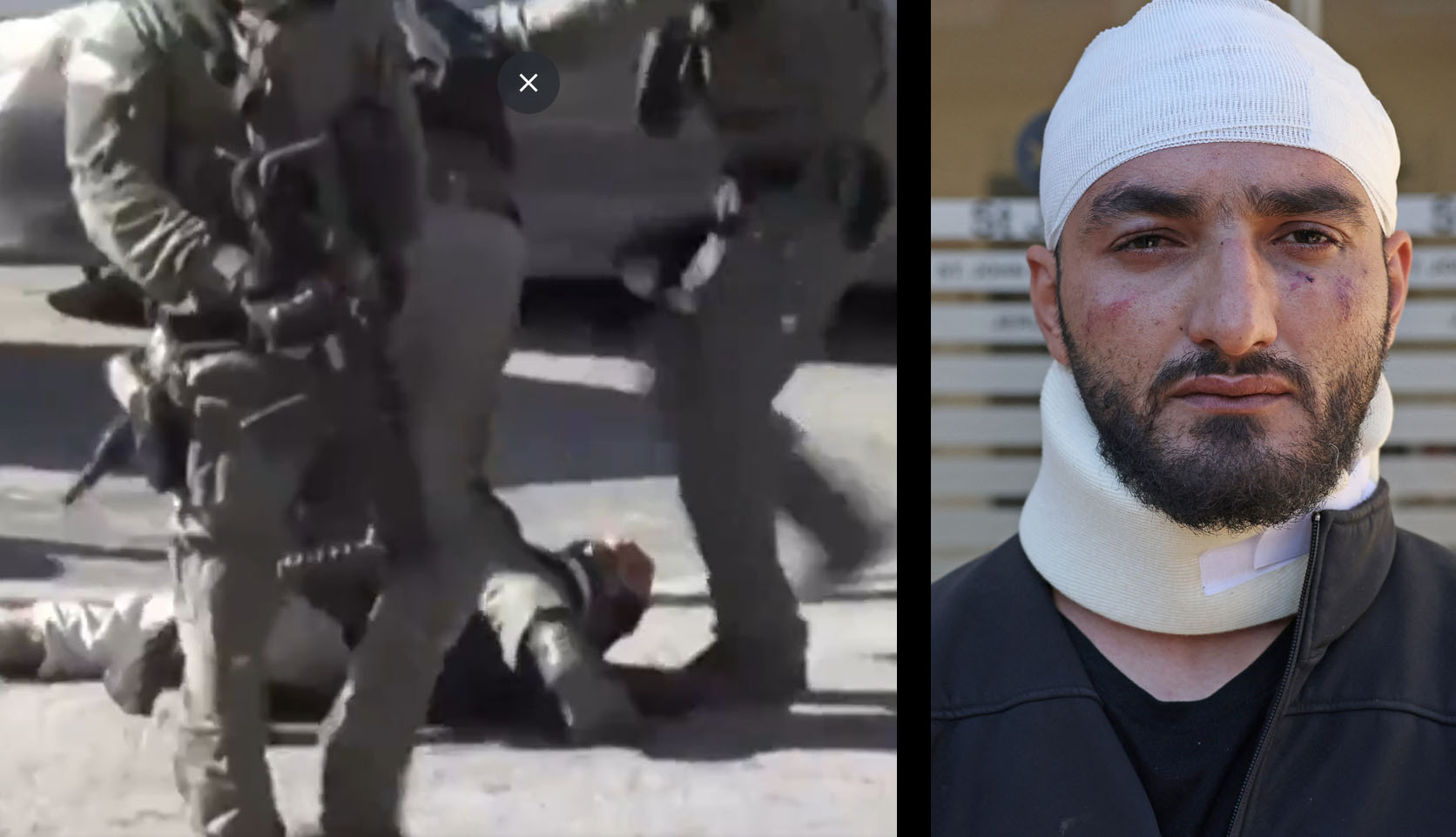
Washington, D.C., December 15, 2023—The Committee to Protect Journalists is deeply shocked by reports and footage of Israeli security forces severely beating Anadolu Agency photojournalist Mustafa Alkharouf and calls for transparency and timeliness by Israeli authorities as they investigate and hold those involved in attacking the journalist to account.

Alkharouf, a photojournalist with Turkish state-owned Anadolu Agency, was covering Friday prayers near Al-Aqsa Mosque in East Jerusalem on December 15 when a group of Israeli Border Police officers attacked him, according to Anadolu Agency, footage shared by The Union of Journalists in Israel, and news reports.

The officers initially brandished their weapons at Alkharouf, punched him, and then threw him to the ground, kicking him. Alkharouf sustained severe blows, resulting in injuries to his face and body, and was subsequently transported by ambulance to Makassed Hospital in East Jerusalem.

Israeli police also attacked camera operator Faiz Abu Ramila, who was with Alkharouf. CPJ was unable to immediately confirm details surrounding the attack. CPJ’s WhatsApp messages to Faiz did not immediately receive a response.

The Israeli soldiers obstructed the work of nearby press crews, preventing them from reaching Alkharouf to check on his condition after he was evacuated from the scene for medical treatment, according to Wafa.

“The physical attack on Mustafa Alkharouf is not a singular incident. It belongs to a pattern of physical attacks, assaults, and threats by Israeli soldiers and settlers on journalists reporting from the West Bank and Israel that have dramatically increased since October 7,” said CPJ Program Director Carlos Martínez de la Serna, from New York. “CPJ calls on Israeli authorities to immediately cease attacking journalists, hold accountable those involved in these attacks, and provide much-needed protection to journalists reporting in Israel and the West Bank.”

Since the start of the October 7 war, Israeli soldiers and settlers have assaulted and threatened Palestinian and international journalists reporting in Israel and the West Bank. These incidents included attacks on journalists from BBC Arabic, Sky News Arabia, the German public broadcaster ARD, Al-Jazeera English, The New Arab, and RT Arabic.

CPJ’s email to the Israeli Police did not immediately receive a response. Israeli police have launched an investigation into Alkharouf’s beating and suspended the officers involved, according to its post on X, Anadolu, and other news reports.