“Students of all levels are invited to explore the beauty of the 500-year-old process of creating images with copper, acid, and ink on Asian and Western papers.”
Printmaking Classes Return to Mendocino College


The renowned British photographer and iconic contributor to Depeche Mode, Brian Griffin He passed away at the age of 75 on January 29 while he was sleeping. The news has left the music industry in mourning.
Originally from Birmingham, Griffin He began his career in industrial jobs before discovering his passion for photography, initially as a hobby which eventually became his profession with which he contributed significantly to the British pop scene of the 80s.
Throughout his career, Griffin He left an indelible mark by working with artists such as Siouxsie Sioux, Kate Bush, Ultravox, REM, Billy Idol, Iggy Pop, Ringo Starr, Queen and Peter Gabriel. However, it was his collaboration with Depeche Mode the one that catapulted him to fame, for his work on the covers of the band’s first five albums.
In 1989, Guardian named him “photographer of the decade”, while in 1990 the photography used in A Broken Frame was recognized as Photography of the decade by the magazine timeto consolidate his successful career.
Although he abandoned photography in the 1990s, he returned to the workforce in the early 2000s to direct notable projects, including a notable documentary for Sir Paul MCCARTNEY.
The news of his death has generated a wave of condolences from the music industry. DJ Kenny reminded Griffin as the “incredible photographer behind Depeche’s first five album covers”, while Bill Brewster praised him as a source of inspiration.
Sorry to hear about the death of Brian Griffin. When I interviewed fellow snapper Peter Ashworth, he said he was a source of inspiration: He’s a stunning photographer I learned how to light by seeing Brian’s pictures and thinking, “These excite me.” pic.twitter.com/Xc4NUHInjf
— Bill Brewster (@djhistory) January 30, 2024
Rough Trade highlighted her “unique creative vision,” and the photographer Linda Wisdom remembered him as a “lovely human being and legendary photographer.”
We are saddened to hear about the passing of Brian Griffin, the photographer behind the iconic album art for Depeche Mode, Echo and the Bunnymen and more.
A uniquely talented artist whose creative vision upended the world of music photography and videography. pic.twitter.com/CxFffVzcvV
— Rough Trade (@RoughTrade) January 30, 2024

Street art is a unique and colorful art form and can be found in all kinds of nooks and crannies in cities all over the world. Capturing art in the streets in photographs can be tricky because these urban art pieces are in public spaces, that are busy and usually filled with a decent amount of traffic. Sometimes you include the people and sometimes, you don’t.


A Maverick Eye: The Street Photography of John Deakin is, by all means, a vintage photo book at this point since it came out in 2002. And in many of my studies of street photography, I’ve never really encountered his work or his name before. I don’t remember how I inherited this book — perhaps I picked it up while walking around Park Slope, Brooklyn with my then-girlfriend as folks tend to leave stuff on their stoops for people to just take. And as it is, it’s not even necessarily a book that I’d buy.
Right off the bat, I needed to do research on who John Deakin was. Lots of places online speak of his street photography. But his most fascinating work to me is his double exposures. And his work (what you can find of it) for Vogue is far better — though it can also be argued that he worked with a different caliber of talent than people on the streets. As it is, too, his Soho photography isn’t even in this book. All of this doesn’t make it worth the $93, and I’m glad I didn’t pay for it.
The book is 99% perfect in terms of layout and trying to do justice to the photos presented within. There is an introductory text that gives sufficient background on John and the sections within the book. This text, which is a healthy 30 or so pages, is worth reading. But I skimmed through it and found quite a bit of wit and fascinating quotes worth re-reading and sharing with friends and family.
The book only splits prints down the middle of the book fold fewer times than I can count on my hands. And visually speaking, I think that’s wonderful with the real estate space available.
Because it has a more sheen finish, I recommend reading this book in soft light and propped up to soften the reflections. Ideally, I’d do it on a cloudy day with southern light coming in from a window.
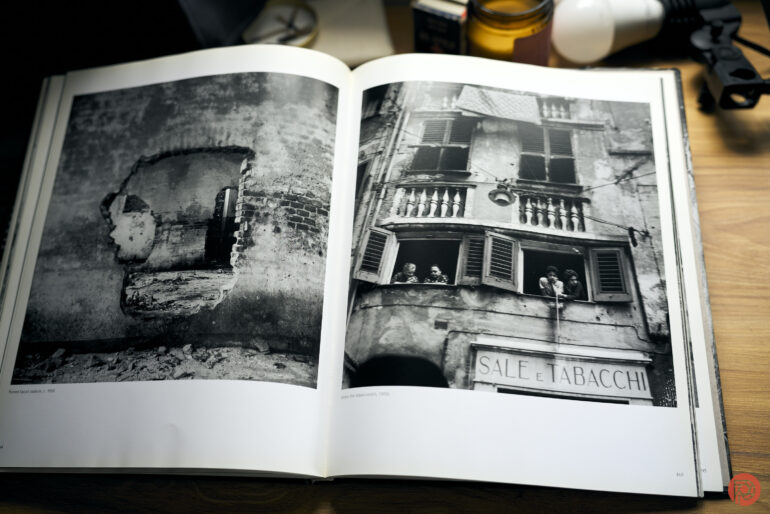
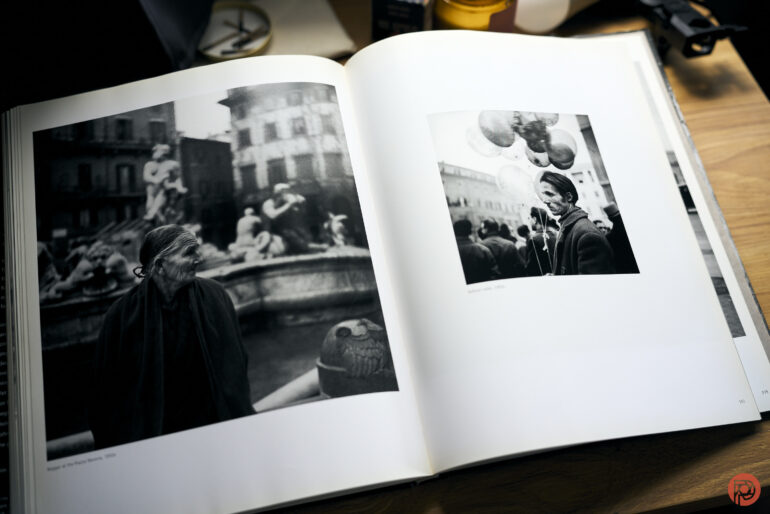
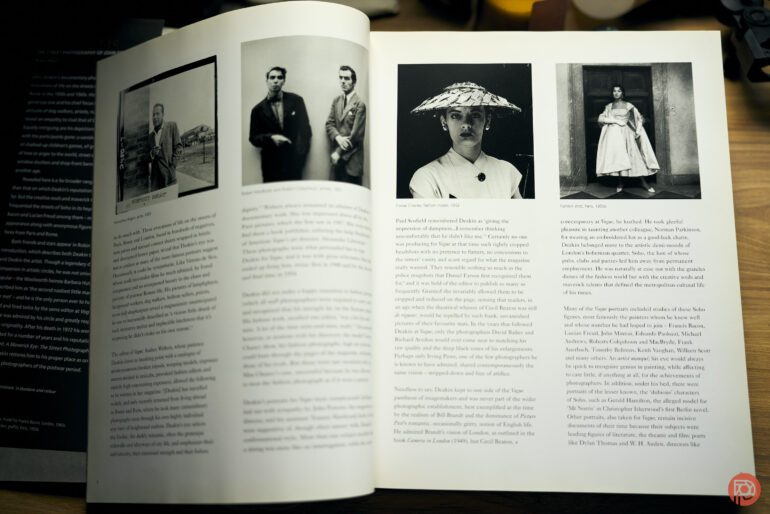

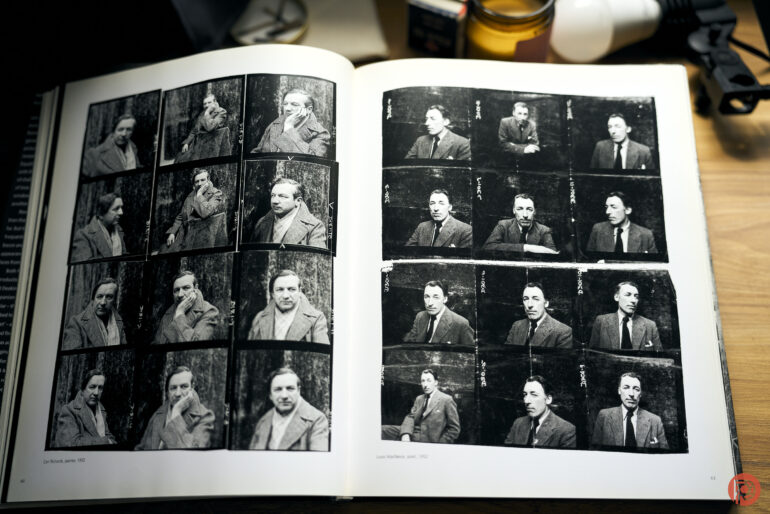

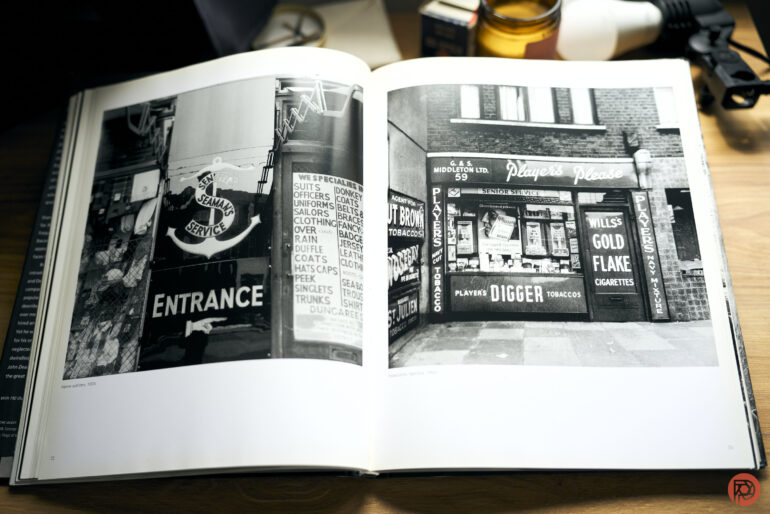
John’s photos are fascinating and inspiring in some cases. You can pour over the photos and wonder what he was thinking about in the images. In several others, it’s pretty clear. I’m specifically speaking to the street portraits — which have a timeless beauty to them. Others, such as his cityscapes, leave me wondering why these photographs were chosen to be in the book in the first place. This perplexes me even more as when I did online research, I found a bunch of his work that was positively incredible. But within this book, I feel like we’re only seeing his rejects. In the context of looking at his contact sheets, I think that’s very cool and on point with current trends.
Specifically, the book still leaves me wanting more and not in a good way. John’s photos of Paris are curious as they show off tidbits of the city that you wouldn’t think about or see otherwise. It’s when the book gets to covering the work he did in Rome and London that things become more visually fascinating.
For the time period, these photos are pretty mediocre. But the print quality in and of themselves are very nice to look at aesthetically. Conceptually, several of the photos fall completely flat. And if they were ever presented on a projection screen with someone talking about them, the audience would slowly start to leave or get very bored.
Overall, I don’t think that this photo book does justice to John and the work of his that I’ve found online. Skip this one, if you ever have an opportunity to check it out.


SUNNYVALE, Calif. — Hal Buell, who led The Associated Press’ photo operations from the darkroom era into the age of digital photography over a four-decade career with the news organization that included 12 Pulitzer Prizes and running some of the defining images of the Vietnam War, has died. He was 92.
Buell died Monday in Sunnyvale, California, where his daughter lived, after battling pneumonia, his daughter Barbara Buell said in an email.
“He was a great father, friend, mentor, and driver of important transitions in visual media during his long AP career,” his daughter said. “When asked by the numerous doctors, PT, and medical personnel he met over the last six months what he had done during his working life, he always said the same thing: ‘I had the greatest job in the whole world.’ ”
Colleagues described Buell as a “visionary” who encouraged photographers to try new ways of covering hard news. As the editor in charge of AP’s photo operations from the late 1960s to the 1990s, he supervised a staff that won 12 Pulitzer Prizes on his watch and worked in 33 countries, with legendary AP photographers including Eddie Adams, Horst Faas and Nick Ut.
“Hal pushed us an extra step,” Adams said in an internal AP newsletter at the time of Buell’s retirement in 1997. “The AP had always been cautious, or seemed to be, about covering hard news. But that was the very thing Buell encouraged.”
Buell made the crucial decision in 1972 to run Ut’s photo of a naked young girl fleeing her village after being torched by napalm dropped by South Vietnamese Air Force aircraft. The image of Kim Phuc became one of the most haunting images of the Vietnam War and came to define for many all that was misguided about the war.
After the image was transmitted from Saigon to AP headquarters in New York, Buell examined it closely and discussed it with other editors for about 10 minutes before deciding to run it, he recalled during a 2016 interview.
“We didn’t have any objection to the picture because it was not prurient. Yes, nudity but not prurient in any sense of the word,” Buell said. “It was the horror of war. It was innocence caught in the crossfire, and it went right out, and of course it became a lasting icon of that war, of any war, of all wars.”
Ut told AP by phone Tuesday that he last spoke with Buell several weeks ago.
“I’m very sad,” Ut said. “I called him all the time. I loved him so much.”
Santiago Lyon, a former vice president and director of photography at AP, called Buell “a giant in the field of news agency photojournalism.”
“A generous, warm, and affable man, he always made time for photographers,” Lyon said. “He will be missed.”
Buell joined The AP in the Tokyo bureau on a part-time basis after graduating from Northwestern University in 1954 with bachelor’s and master’s degrees in journalism. He was serving with the Army at the time, working on the military newspaper, Stars and Stripes.
Out of the Army two years later, he joined AP’s Chicago bureau as a radio writer, and a year later, in 1957, was promoted to the photo desk in AP’s New York office.
Buell returned to Tokyo at the end of the decade to be supervisory photo editor for Asia and came back to New York in 1963 to be AP’s photo projects editor. He became executive news photo editor in 1968, and in 1977 he was named assistant general manager for news photos.
During his decades with AP, technology in news photography took astonishing leaps, going from six hours to six minutes to snap, process and transmit a color photo. Buell implemented the transition from a chemical darkroom where film was developed to digital transmission and digital news cameras. He also helped create AP’s digital photo archive in 1997.
“In the ‘80s, when we went from black-and-white to all color, we were doing a good job to send two or three color pictures a day. Now we send 300,” Buell said in the 1997 AP newsletter.
Former AP CEO Lou Boccardi said in a statement that Buell drove this remarkable period of innovation and transition, but he never forgot, nor did he let his staff forget, that capturing “the” image that told the story was where it all had to start.
“Fortunately for us, and for news photography, his vision and energy empowered and inspired AP Photos for decades,” Boccardi said.
After retiring in 1997, Buell wrote books about photography, including “From Hell to Hollywood: The Incredible Journey of AP Photographer Nick Ut;” “Uncommon Valor, Common Virtue: Iwo Jima and the Photograph That Captured America;” and “The Kennedy Brothers: A Legacy in Photographs.” He was the author of more than a dozen other books, produced film documentaries for the History Channel and lectured across the United States.
Buell is survived by his daughter, Barbara Buell, and her husband, Thomas Radcliffe, as well as two grandchildren and a great-grandson. His wife, Angela, died in 2000, and his longtime partner, Claudia DiMartino, died in October.
___
Associated Press writers Mike Schneider in Orlando, Florida, Lisa Baumann in Bellingham, Washington, and the AP Corporate Archives contributed to this report.

SUNNYVALE, Calif. — Hal Buell, who led The Associated Press’ photo operations from the darkroom era into the age of digital photography over a four-decade career with the news organization that included 12 Pulitzer Prizes and running some of the defining images of the Vietnam War, has died. He was 92.
Buell died Monday in Sunnyvale, California, where his daughter lived, after battling pneumonia, his daughter Barbara Buell said in an email.
“He was a great father, friend, mentor, and driver of important transitions in visual media during his long AP career,” his daughter said. “When asked by the numerous doctors, PT, and medical personnel he met over the last six months what he had done during his working life, he always said the same thing: ‘I had the greatest job in the whole world.’ ”
Colleagues described Buell as a “visionary” who encouraged photographers to try new ways of covering hard news. As the editor in charge of AP’s photo operations from the late 1960s to the 1990s, he supervised a staff that won 12 Pulitzer Prizes on his watch and worked in 33 countries, with legendary AP photographers including Eddie Adams, Horst Faas and Nick Ut.
“Hal pushed us an extra step,” Adams said in an internal AP newsletter at the time of Buell’s retirement in 1997. “The AP had always been cautious, or seemed to be, about covering hard news. But that was the very thing Buell encouraged.”
Buell made the crucial decision in 1972 to run Ut’s photo of a naked young girl fleeing her village after being torched by napalm dropped by South Vietnamese Air Force aircraft. The image of Kim Phuc became one of the most haunting images of the Vietnam War and came to define for many all that was misguided about the war.
After the image was transmitted from Saigon to AP headquarters in New York, Buell examined it closely and discussed it with other editors for about 10 minutes before deciding to run it, he recalled during a 2016 interview.
“We didn’t have any objection to the picture because it was not prurient. Yes, nudity but not prurient in any sense of the word,” Buell said. “It was the horror of war. It was innocence caught in the crossfire, and it went right out, and of course it became a lasting icon of that war, of any war, of all wars.”
Santiago Lyon, a former vice president and director of photography at AP, called Buell “a giant in the field of news agency photojournalism.”
“A generous, warm, and affable man, he always made time for photographers,” Lyon said. “He will be missed.”
Buell joined The AP in the Tokyo bureau on a part-time basis after graduating from Northwestern University in 1954 with bachelor’s and master’s degrees in journalism. He was serving with the Army at the time, working on the military newspaper, Stars and Stripes.
Out of the Army two years later, he joined AP’s Chicago bureau as a radio writer, and a year later, in 1957, was promoted to the photo desk in AP’s New York office.
Buell returned to Tokyo at the end of the decade to be supervisory photo editor for Asia and came back to New York in 1963 to be AP’s photo projects editor. He became executive news photo editor in 1968, and in 1977 he was named assistant general manager for news photos.
During his decades with AP, technology in news photography took astonishing leaps, going from six hours to six minutes to snap, process and transmit a color photo. Buell implemented the transition from a chemical darkroom where film was developed to digital transmission and digital news cameras. He also helped create AP’s digital photo archive in 1997.
“In the ’80s, when we went from black-and-white to all color, we were doing a good job to send two or three color pictures a day. Now we send 300,” Buell said in the 1997 AP newsletter.
After retiring in 1997, Buell wrote books about photography, including “From Hell to Hollywood: The Incredible Journey of AP Photographer Nick Ut;” “Uncommon Valor, Common Virtue: Iwo Jima and the Photograph That Captured America;” and “The Kennedy Brothers: A Legacy in Photographs.” He was the author of more than a dozen other books, produced film documentaries for the History Channel and lectured across the United States.
Buell is survived by his daughter, Barbara Buell, and her husband, Thomas Radcliffe, as well as two grandchildren and a great-grandson. His wife, Angela, died in 2000, and his longtime partner, Claudia DiMartino, died in October.





