Artistic Odyssey: A Global Tour of Art and Photography Exhibitions in 2024

Artistic Odyssey: A Global Tour of Art and Photography Exhibitions in 2024

Artistic Odyssey: A Global Tour of Art and Photography Exhibitions in 2024

The art world kicks off the year 2024 with an impressive array of exhibitions that span the globe, capturing the essence of human existence in myriad forms. This newsletter provides a panoramic view of exhibitions that celebrate diversity, resilience, and the indomitable spirit of creativity.

Grace Weaver’s Cubist Collage

In Paris, Grace Weaver’s new exhibition breathes life into colourful, cubist-inspired collages of women in Morocco. Her artwork is a vibrant reflection of the ordinary aspects of daily life, encapsulating the spirit of the country and its people. These intricate compositions redefine the way we perceive the simplicity of everyday life.

Step into the world of Lee Miller in Brighton, where an exhibition celebrates her life as a model, muse, and photojournalist. The display, which includes her clothing and photography, offers a holistic view of her creative journey and her significant contribution to the realm of visual storytelling.

Seth Becker’s Homage to Innocence

New York hosts Seth Becker’s exhibition, a series of small oil paintings that embody boyhood and innocence. Inspired by a Czech poem, Becker’s work is a poignant reminder of the ephemeral nature of youth, preserving these fleeting moments in vivid oil strokes.

In Lyon, the street photography of the late Elliott Erwitt is commemorated with a retrospective. Known for his black and white images, Erwitt’s work captures moments of humor and emotion, providing a sharp commentary on the human condition. This exhibition is a tribute to a master who could find poetry in the mundane.

Grace Wales Bonner: A Sonic Journey

At the MoMA, Grace Wales Bonner curates an exhibition that explores sound and movement within the African diaspora. This innovative exhibition expands the boundaries of conventional art displays and offers a sensory exploration into the realm of sonic aesthetics.

From the vintage prints of Lisa Fonssagrives-Penn in Paris to Gerhard Richter’s paintings and photographs in Switzerland, from the global café culture documented by Milan’s Galleria Campari to tactile drawings in Queens Museum by Emilie Gossiaux, the art world is abuzz with a multitude of exhibitions that capture the essence of human experience. The year 2024 promises a global artistic odyssey that transcends geographical and cultural boundaries, offering a rich tapestry of creative expressions.

A Thinking Photographer’s Conversation on Nudity as Art

A Thinking Photographer’s Conversation on Nudity as Art

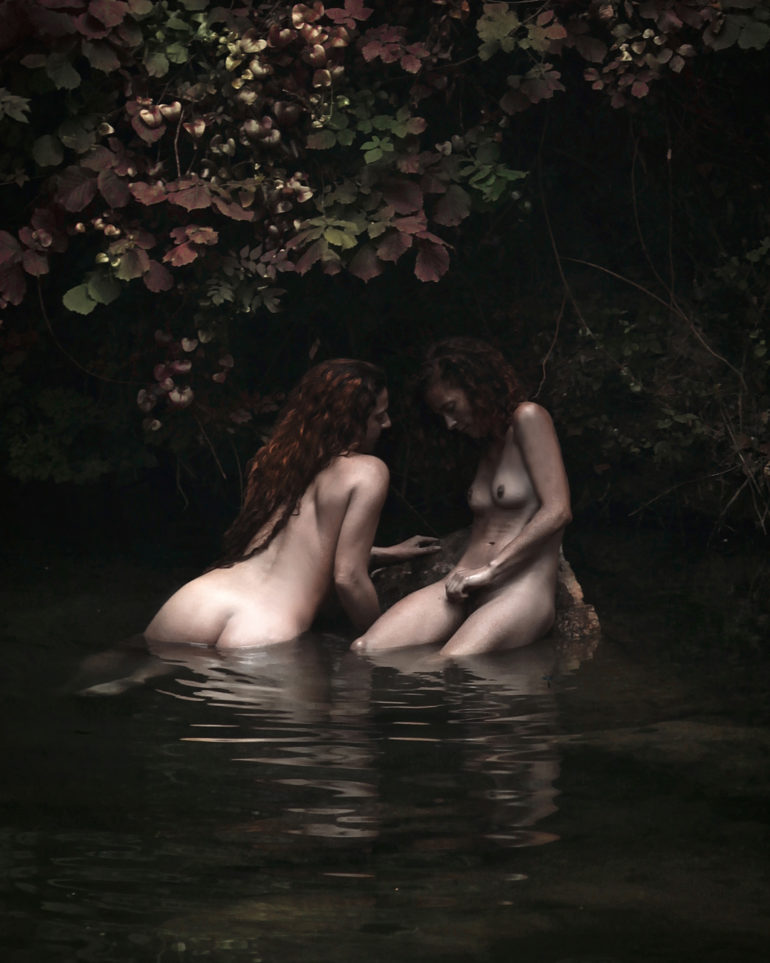
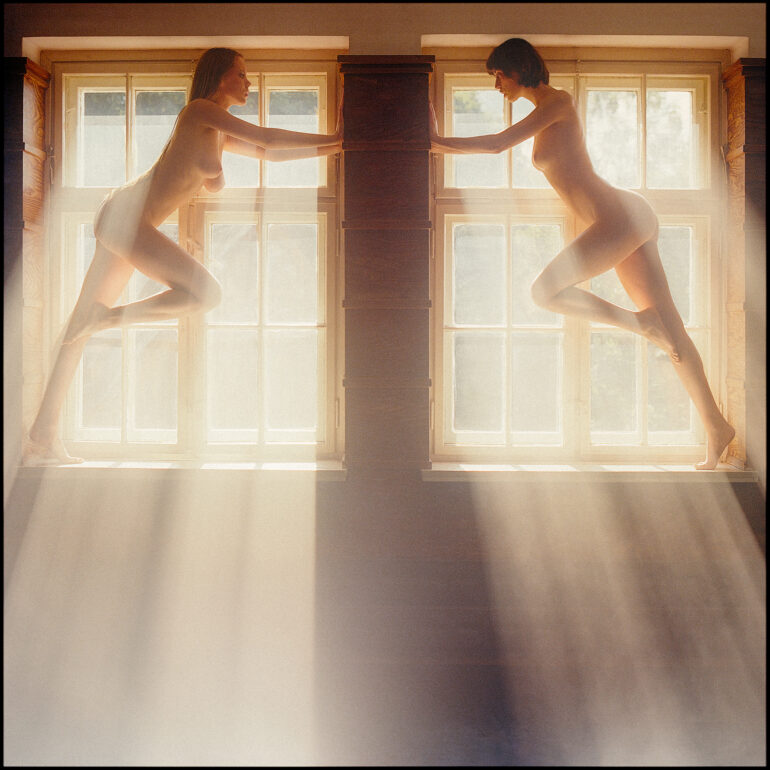
There’s a problem within various photography communities, and misinformation is being put forth to game the photography world. It has to do with nudity. The running joke is that in order to get prominence on social media, you just have to shoot with Kodak Portra, have a nude woman, and overexpose the photograph by a bit. This joke is a take on the deplorable example that the collective sets forth for photographers. In our 15 years, the Phoblographer has released articles on and profiled several photographers who do different takes on nudity. They all have something in common: several layers of artistic expression without the primary intent of commercialization. And if you reread and interpret that sentence for what it is, you’ll understand where I’m coming from.

What is Art? Content is Not Art

I’m a former mod for the R/Polaroid subreddit, and often, I kept quiet on several things. One of the problems that irked me the most is the proliferation of OnlyFans creators and social media content creators looking to gamify a system to become more famous. I’ve vocally dissented about this before. But what several of them are doing isn’t art. And it’s very evident. Instead, they’re creating content that appeals to several markets so that they can reel in followers, likes, clicks, etc. It’s kind of like how Stuff Magazine will write articles about the best cameras while no one on staff has ever touched one.

That’s one of the big differences here: there is art and content. Content is designed to be temporary and is primarily designed with the idea of bringing in money. Art is designed with the idea of self-expression first, and money might come later. The two can surely coexist in balance. Publications like the NYTimes make content on social media to promote their articles on the website, which are more like their art pieces. We see art in museums — in contrast, we scroll past content in a way that we scrolled through television channels aimlessly in the 2000s and 1990s.

That, of course, doesn’t mean that there isn’t paid art. Annie Leibovitz and Mark Seliger make some incredible paid art that has continued to be celebrated for a long time. Like those spoofing the magician David Blain, early YouTube videos can be considered art. Those pieces were created with full artistic expression.

It’s in strong contrast to posting a nude selfie shot on Instax film or even just a photo of a nude woman by the seashore. We can often look at a photograph and try to figure out what the intent was. That’s separate from interpretation. But several artists don’t want to talk about their intent — yet in 2024, it’s more important than ever. I encountered this with photographer Muriel Hasburn at her ICP opening. Considering the scope of her work, however, it’s easy to understand that she might not be able to fully connect with what she was feeling.

Algorithmic Rewards

The photographs being posted on social media platforms are often rewarded by the algorithms simply because of upvoting done by the community. But again, it’s content. And the content being made is appealing to human needs and wants. Sometimes there’s even sarcastic commentary made on the images. All of this helps them rise to the top of the algorithm.

It’s a problem in various places. It’s rampant in Facebook groups, Instagram, Behance, Flickr, and Reddit. More recently, it’s also come back to Tumblr (again) — but even they’re taking measures to curb it.

But again, this isn’t artistic expression. It’s content designed to game an algorithm. There aren’t organic layers to the finalized piece.

How Photographers Are Doing Nudity Right

To help people understand what we’re talking about, we’re going to link to various interviews we’ve done and talk about why each of them are putting art at the forefront.

Lukasz Spychala

Bodies

Lukasz doesn’t always use nudity in his images. However, he talks about how there are several layers in his photographs and representations. He even actively discusses metaphors. Lukasz has done this more than once with us too.

Nicholas Freeman

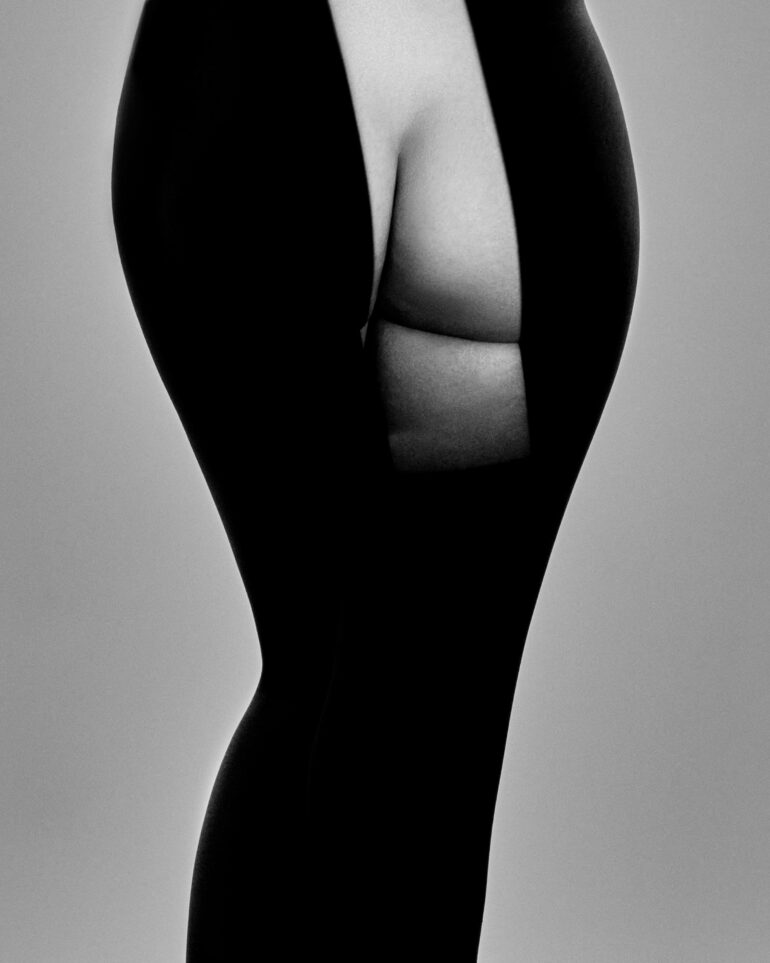
Nicholas Freeman has done fantastic work. Our readers commented on this article, discussing how artistic the work is. Further, some stated that lots of other work out there looks like a Gynecological examination. Nick uses spotlight effects, shadows, and the nature of black and white to make silhouettes.

Henriette Sabroe Ebbesen

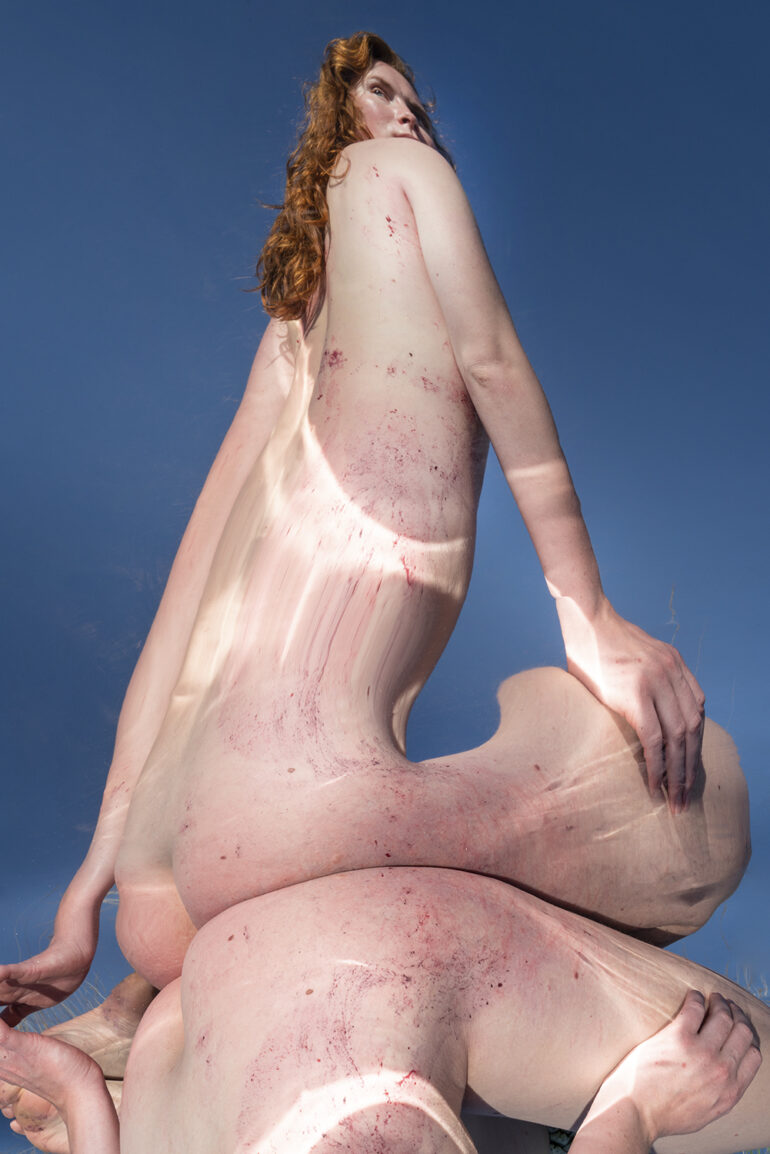
Henriette Sabroe Ebbesen uses mirrors, unique perspectives, painterly effects, and nature to create nude photographs that we’d never see created by an AI algorithm or even doing particularly well on social media platforms dominated by the male gaze.

Daniel Moreno

Daniel Moreno creates bodyscapes, which are photographs designed to mimic the look of traditional landscapes but use the human body. It’s an incredibly abstract process.

Charlotte Bories

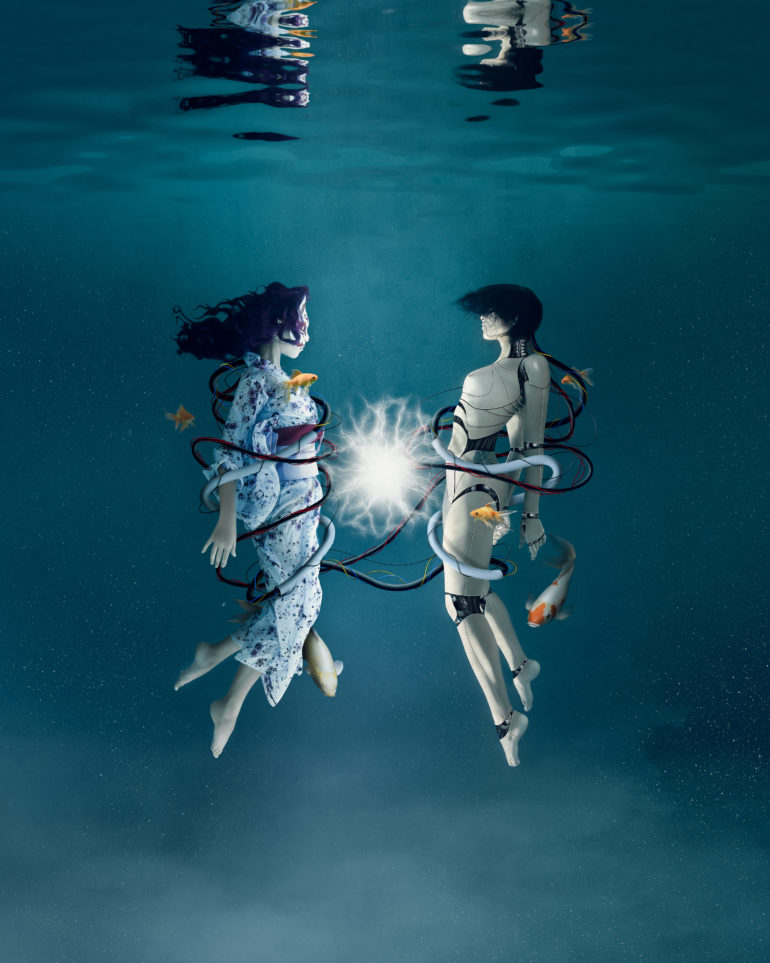
Charlotte creates literally entire underwater fantasy scenes with prop styling, specific lighting, carefully selected colors, etc. Often there is nudity, but you can tell that the image wouldn’t work without it.

Nina Ahmadi

Nina Ahmadi in her own words, uses nudity to express the chaos she feels about her body, gender identity, and her Afro-Cuban heritage. There are several ways that these images could’ve been done, but the artistic intent of nudity comes through for sure.

Anna Laza

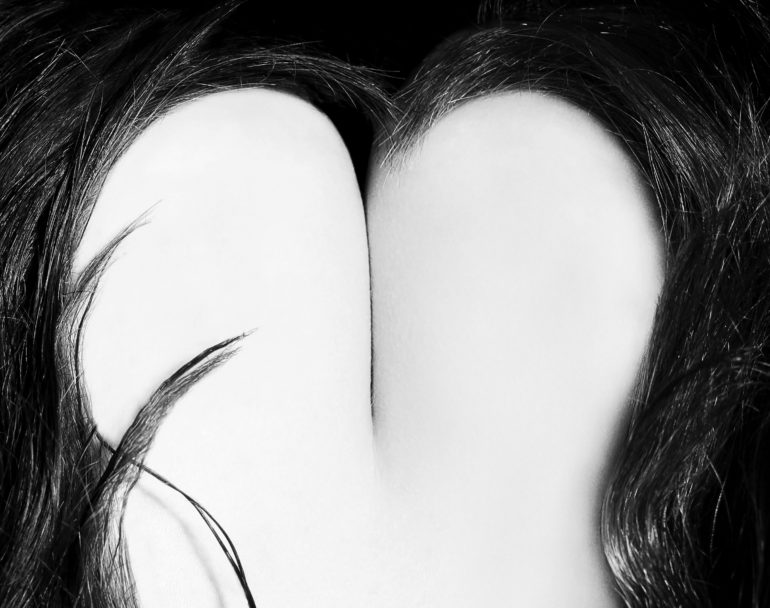
Anna Laza makes incredible bodyscape images in black and white. Sometimes they involve the hair, while at other times, it’s just skin and a background of some sort. They remind us of lots of drone photographs done in black and white.

Natalia Kovachevski

Natalia expressed to us that she’s inspired by the way that women were depicted in history. “Several artists from different periods of art history inspire me, but I’m especially drawn to mythological scenes representing women,” she tells us. “I question the ways in which women are depicted throughout art history. I am also passionate about discovering the visions of female artists–Angelica Kauffmann, Artemisia Gentileschi, Rosalba Carriera, and Sofonisba Anguissola among them.”

Stunning photographs capture starlings migrating through Europe

Stunning photographs capture starlings migrating through Europe

Editor’s Note: Call to Earth is a CNN editorial series committed to reporting on the environmental challenges facing our planet, together with the solutions. Rolex’s Perpetual Planet initiative has partnered with CNN to drive awareness and education around key sustainability issues and to inspire positive action.


CNN
 — 

Swooping up from the reeds and wetlands of southern Denmark, a storm of starlings rains across the horizon. The cluster of birds looks like droplets of ink across a parchment canvas, sprayed across a dusky sky where they dive and twirl in unison. The birds fold like waves on a shoreline, contorting into abstract formations that loom across the marshes.

The phenomenon, known as a starling murmuration in English or “black sun” in Danish, lasts just minutes, or even seconds. But it left a lasting impression on Danish photographer Søren Solkær, who first witnessed the spectacle when he was 10 years old.

“At the time it was by far the wildest thing I had ever seen,” Solkær recalled.

Over the next 40 years, Solkær built a career as a portrait photographer, traveling the globe to snap iconic images of the world’s biggest rockstars — Amy Winehouse, Metallica, Paul McCartney, and Led Zeppelin, to name a few. But during a retrospective of his career in 2017, Solkær was inspired to try something new.

“The first thing that came to mind was starling murmurations … this big piece of calligraphy in the sky,” he told CNN. He began photographing the birds near his childhood home in southern Denmark, before following various flocks across Europe, from Ireland to Italy, on their migration trail.

Solkær’s latest photobook, “Starling,” published last month, charts this migration journey, and with it, he hopes to inspire a closer relationship with nature.

“One reason why it keeps captivating me is that every time it happens, it’s new, it’s unique. The shapes that appear in the sky happen only once in the history of the world,” he said. “I think that’s a very good reason to photograph them and to try to capture and share them with others.”

A sunset spectacle

Solkær first published images of starlings in his 2020 photobook “Black Sun,” describing it as “an investigation of where I come from, and dealing with those childhood memories.” After several seasons of photographing the birds near the Wadden Sea in Denmark and neighboring nations, Solkær decided to expand the scope of the project and follow the birds as they migrated across the continent.

European starlings can migrate as far north as the Arctic Circle in summer, and in winter, as far south as North Africa. It’s during these migrations that the murmurations are most common, although the exact reason behind them remains a mystery: a widely accepted theory is that starlings gather in these dense aerial formations before sunset to make themselves appear larger to predators. But scientists also suspect it may be to attract other starlings to the roost and generate warmth in the cold winters.

Hundreds, thousands, and even millions of starlings flock together in the murmurations, moving as one organism.

Using Instagram hashtags to locate where the murmurations were happening, Solkær chose his destinations based on the size of the flock and the presence of predators, like peregrine falcons, as the starlings make the most “beautiful, graphic shapes” when they are under attack. But even with the best-laid plans, nature is unpredictable.

“It’s so ephemeral: you can get five good pictures in half a minute, but then nothing for the next six weeks,” said Solkær. “It doesn’t happen every night. The really amazing formations normally happen once or twice during a winter.”

One of the largest winter populations settle in Rome, Italy. The urban landscape, as well as the southern evening light, provided a sharp contrast to Solkær’s work in the Danish marshes.

“It’s the same phenomenon but the light is much more golden, the sky’s very beautiful,” explained Solkær. While many of his previous shots of the murmurations used a monochrome aesthetic, he started to play with color, as well as including architecture in some images.

Rome also provided the perfect backdrop for Solkær to explore the relationship between wild and urban environments, through the city’s difficult relationship with the starlings.

In Rome, Solkær included architecture in his compositions.

“Rome spends a lot of money trying to scare the birds and get them out of the city, because they make a big mess,” he said, adding that the city hired a falconer to scare off the starlings.

Starlings have been a fixture in Rome since antiquity, though. “They used to think that the shapes and behavior of the starlings was the gods trying to communicate with humans,” explained Solkær. Diviners would read the auspicious signs, or bad omens, which influenced political decisions. Solkær draws on this history of mysticism, capturing a sense of awe with fantastical formations framed above the spires of ancient architecture against a backdrop of cotton-candy pastel clouds.

“It’s a very different experience from standing in a field in the middle of nowhere. But I think it’s equally magical — it even seems more surreal when you’re in the city, and watching the same thing happening. It doesn’t fit in so well, and that’s also what’s causing the big struggle between the city of Rome and the birds,” said Solkær.

From macro to micro

While starlings are often thought of as a common bird in Europe and North America, their numbers have been in decline for decades — falling 53% between 1995 and 2018 – and in the UK they are on the Red List of threatened species.

“There are a lot less birds now than they used to be,” Solkær said, pointing to the increasing use of land for agriculture, which has reduced the available food.

After the success of “Black Sun,” many biologists and ornithologists reached out to Solkær — inspiring him to not just look at starlings from a distance, but up close, too.

In collaboration with the University of Copenhagen, he produced two series of images shot through microscopes.

“They have really beautiful metallic feathers when you’re up close,” said Solkær. “I’ve tried to go from the big, macro world that I’ve seen in the sky, to seeing if I could find some of the same universal patterns if I went really, really close.”

One ornithologist — an octogenarian professor at the Museum of Natural History — provided Solkær with a taxidermized starling from the museum’s collection for him to photograph.

“I could see from the little tag attached to its leg that it had died in 1918 from flying into a lighthouse, (but it still) looked perfect,” said Solkær.

He photographed the bird under light and electron microscopes, magnifying the starling up to 12,000 times. The detailed images show the dense yet delicate feather strands, resembling map contours, palm fronds, and tree trunks, providing a striking contrast to his open-sky shots of the murmurations.

“The closer I went, the bigger it looked — like mountains and river deltas,” said Solkær.

A starling feather, photographed under a microscope, by Søren Solkær

The project has piqued Solkær’s interest in other conservation photography projects. He’s now embarking on a project about dragon blood trees, a rare species endemic to the island of Socotra, in the Indian Ocean, as well as a book about spirituality and nature in Bhutan, in South Asia.

“At this point, at least for me, it makes no sense to focus on rock stars,” he said. “I think it’s very necessary to communicate these stories now, and inspire a closer connection to nature.”

When it comes to birds, Solkær is considering other species for potential projects: dunlins, for example, a gray bird with a white underside that performs a similar aerial dance to starlings; or lurid green budgies in Australia, that contrast starkly with the red rocks of the outback and the stretching blue sky.

“I don’t think I will do another starling book,” said Solkær. But he pauses, catching himself: “Actually, I think in 10 days, I will go to Sardinia to photograph starlings. So who knows?”

Videos courtesy of Søren Solkær.

Gearhart photographer shows work at Seaside Public Library

Gearhart photographer shows work at Seaside Public Library


Gerth photo

Photographs by Dan Gerth are now on view at the Seaside Public Library.


SEASIDE — Prints by Dan Gerth, a photographer based in Gearhart, are now on view in the foyer and community room at the Seaside Public Library.

Gerth photographs using analog and digital cameras, including with 35mm, pinhole, medium and large format field cameras. His work is an eclectic mix of North Coast scenes, with an emphasis on landscapes.

He has shown at Trail’s End Art Association in Gearhart and at the LightBox Photographic Gallery in Astoria.

This collection is on view through Feb. 27. For more information, visit www.seasidelibrary.org.