Josef Koudelka Chaos is The Best Black and White Photo Book

Josef Koudelka Chaos is The Best Black and White Photo Book

I don’t honestly remember how I ended up getting Chaos by Josef Koudelka that was revised by Robert Delpire; but I’m glad that I did. Admittedly, even as someone who used to work at Magnum, I never knew who Josef Koudelka was. But I’m elated that my first introduction to his work is through this book instead of meandering on a website or social media page. In fact, Josef Koudelka Chaos is perhaps the greatest black and white photography book that I’ve ever seen because it treats his images with the respect they deserve by dedicating a ton of real estate space to the work. This book truly feels like one made by a photographer and not a book publisher.

When you look at the book itself, you’ll notice that it’s wider than it is taller. Surely, it doesn’t follow the typical conventional book format. And that’s because the prints are designed to treat the images with reverance worthy an omnipotent being. Cultists who love panoramic photography are bound to gather lovingly hand-in-hand with black and white photography and documenary photography lovers to celebrate and honor the one true Josef Koudelka. I own and am pitched a ton of photography books, but none have struck me like this.

Let me first start of with saying that because I’d never heard of this photographer and the unconventional shape of the book, I was ready to write it off. But that would’ve been a great injustice and truly judging the book by its cover. It’s only when you dive deep into the pages past the first few photos that you really are given a special treat. The consistency throughout the book is just the cherry on top of the sundae.

Josef is a Magnum photographer with a fascinating story; but we’ll let Magnum tell that one.

The Brilliance of Josef Koudelka Chaos

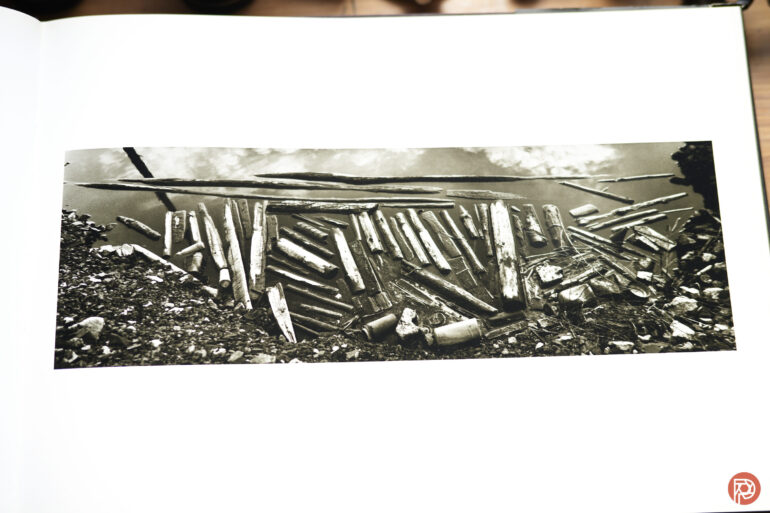
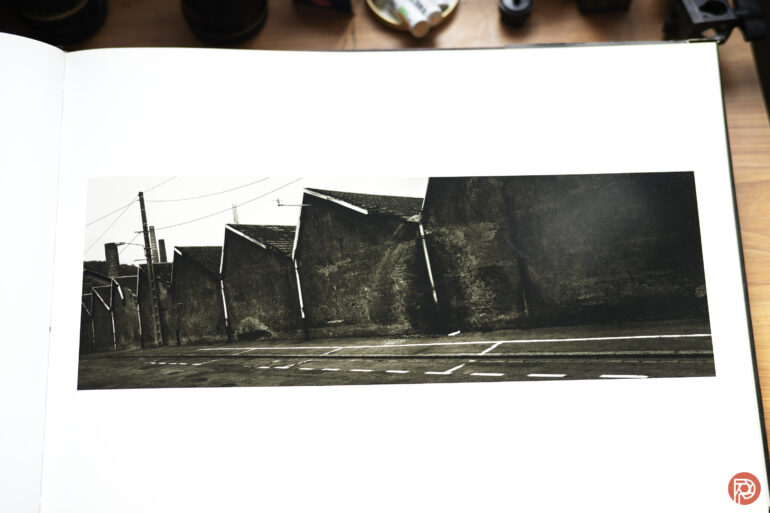
What you should know about Josef Koudelka Chaos is that it’s a book of all black and white panoramic images. I was previously ready to call them landscape — but instead they’re straight up panoramic. These images are shot both vertically and horizontally; and that adds a layer of depth to the images that I haven’t ever seen before done in a book.

First off, very few images are broken down by the middle crease. However, unlike my complaints about it with several other books, it’s done very well here because of the relative thinness of the book. So you rarely ever feel like a page bending a bit is ruining the photograph.

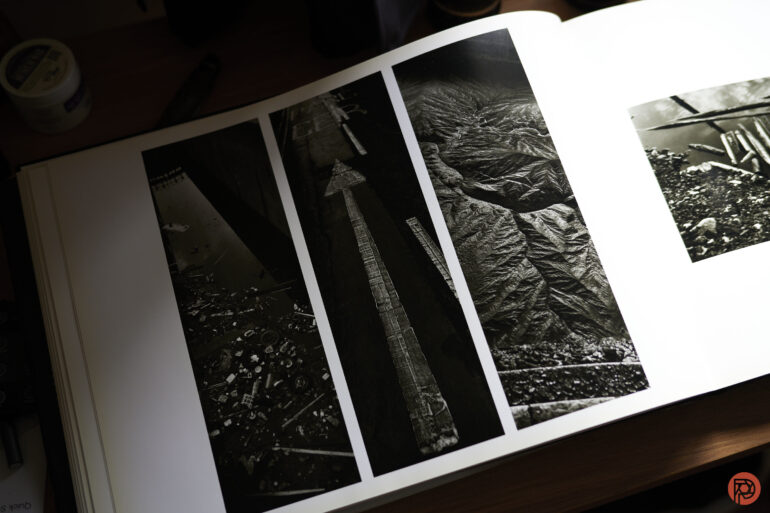
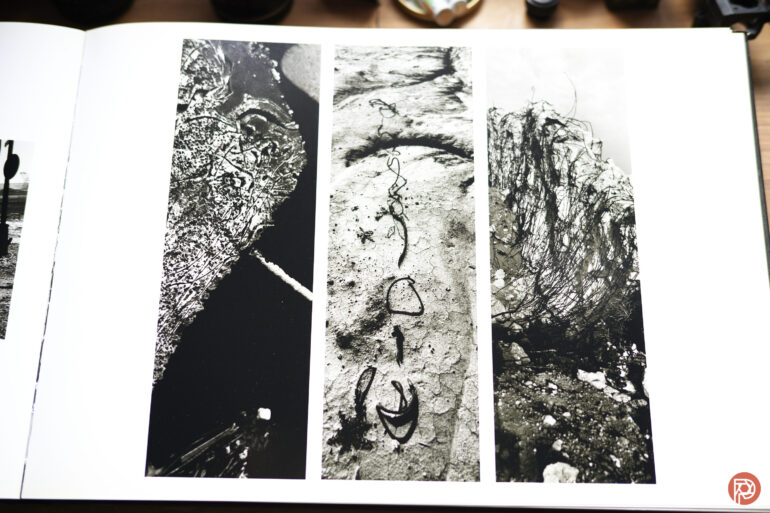
The landscape oriented photos have their own pages dedicated to them unless they’re split across both pages. In contrast, the vertical images are often all placed by one anohter. Because of how they’re placed, your eyes need to sit there and really concentrate on each photo instead of moving from left to right. Your eyes instead focus on the left to right side of the left side, middle, and then the right side. When you look at all three images together, they form giant, unconventional compositions that are both fascinating and worthy of lectures professing their brilliance.
Who Should Buy it?

Photographers that have thoughts against the wars going on will also really appreciate these photographs. While none of the images are graphic, they surely depict scenes that make you think. Those who adore urban geometry and analog film photography will be elated to page through thie book.


Rating: 5 out of 5.

Josef Koudelka Chaos receives five out of five stars and our Editpr’s Choice award. It is absolutely the most brillian photography book that I’ve seen in a long time. Want one? Check it out on Amazon.

The Greatest Black and White Photography Book I’ve Ever Seen
The landscape oriented photos have their own pages dedicated to them unless they’re split across both pages. In contrast, the vertical images are often all placed by one anohter. Because of how they’re placed, your eyes need to sit there and really concentrate on each photo instead of moving from left to right. Your eyes instead focus on the left to right side of the left side, middle, and then the right side. When you look at all three images together, they form giant, unconventional compositions that are both fascinating and worthy of lectures professing their brilliance.
“It’s awesome. It’s also terrible, and that’s what I love about AI photography”

“It’s awesome. It’s also terrible, and that’s what I love about AI photography”

About Benedict Brain

Benedict Brain with camera

(Image credit: Marcus Hawkins)

Benedict Brain is a UK-based photographer, journalist and artist. He is an Associate of the Royal Photographic Society and sits on the society’s Distinctions Advisory Panel. He is also a past editor of Digital Camera Magazine, and the author of You Will be Able to Take Great Photos by The End of This Book.

In the heart of Tokyo, a flamboyant dancer emerges. Gracefully poised, a flamingo glides across the tarmac, its vibrant plumage a mesmerizing spectacle. Nature’s artistry meets the city’s vibrant energy, captivating all who witness this enchanting ballet.

OK, I’ll admit it, that intro was created by ChatGPT with a few simple prompts. And, believe it or not, the image has a sprinkling of AI dust too. I did not actually witness a dancing flamingo on the streets of Tokyo – I created it with the Generate Fill feature in Photoshop.

Using one of my recent travel photographs, I selected an area in the middle of the frame, adding the words ‘photo-realistic dancing flamingo’ in the Generate Fill prompt window. 15 seconds later, Photoshop had scoured Adobe Stock’s archive using AI algorithms to provide me with three versions and the option to try more. It’s awesome. It’s also terrible, and that’s what I love about it.

This version showcases a strange three-and-a-half-legged and two-headed flamingo-like creature. It’s a peculiar amalgamation of many flamingo images from the Adobe Stock library, reconfigured to fulfil my ‘dancing’ prompt and assimilate it into the scene. In some aspects, it has done an excellent job – it has matched the lighting surprisingly well, for example – but it’s the strange, sculptural distortions that I find most alluring. The new configurations of flamingos, re-imagined in some dystopian evolutionary nightmare, are both disturbing and beautiful in equal measure.

There is so much creative potential here. With time (and probably quite quickly), AI will improve, learn and produce more convincing results. In the meantime, I’m intrigued and inspired to explore this further. I’ll no doubt dabble in Midjourney, DALL-E, and anything else I can get my hands on. The technology raises many questions for photographers and artists – but for now I’m more excited than worried by the creative possibilities. We shall see.

• Other articles in the Art of Seeing series

Read more:

Introducing AI image generation into my photography workflow opens up a whole new world of possibilities
The 50 best photographers ever
100 best photography quotes from famous photographers
The best coffee-table books on photography

ACSC’s Artist of the Month uses skill to highlight Native American people

ACSC’s Artist of the Month uses skill to highlight Native American people

LAURINBURG — The Arts Council of Scotland County (ACSC) has a new endeavor for the new year. They have decided to showcase a different local artist every month.

The intent is to support local artists and allow citizens to experience art from a variety of genres.

The series opened Thursday featuring artist Marcus Dunn. Dunn, a Pembroke native who is part Tuscaroran, is a painter whose works focus primarily on Native American life and people. He describes his style as realism with a little abstract. His work is haunting and poignant as he specifically uses it to illustrate the effects of forced assimilation on Native youth. It’s a story he doesn’t want people to forget.

“The 20th century Indian boarding schools resulted in Native youth being forcibly removed from their people and their culture. They were put in a foreign situation and displaced of their identities all in the name of cultural assimilation,” he said.

Dunn started drawing as a young boy. He credits his older brother, who used to love drawing, and comic books for his initial interest in art. As he got older, he was also inspired by renowned artists like Da Vinci and Michelangelo. He took up painting when he was in art school.

His art education includes Skowhegan School of Sculpture and Painting, a B.F.A. in Studio Art from the Institute of American Indian Arts, and an M.F.A. in painting from the Savannah College of Art and Design.

In addition to painting, Dunn also teaches Art at Richmond Community College.

Anyone interested in being featured as Artist of the Month should contact the Arts Council of Scotland County at 910-277-3599.

“We want to include many genres of art. We’d love to have sculptors, quilters, pottery, etc. The artist can sell pieces. It’s good exposure for them,” Director Olivia Fitzgerald said.

For future Artist of the Month info, check the website scotlandsacs.org or Facebook.

Artist call for SCC East Park Sculpture

Artist call for SCC East Park Sculpture
Sampson Community College is inviting artists to submit proposals for a temporary public art sculpture at Sampson East Park. The college encourages artists to participate by submitting proposals…

A 2,700-Pound Concorde Sculpture Soars Above the Peninsula Hotel London

A 2,700-Pound Concorde Sculpture Soars Above the Peninsula Hotel London

The new Peninsula Hotel London is likely to become a popular destination of jet setters, which may partially explain why there’s now a 2,700-pound scale sculpture model of the Concorde hanging overhead inside Brooklands, their rooftop dining destination inside the classic-era British aviation and motorsport inspired space.

Dining room of the Brooklands restaurant with large polished aluminum sculpture of the Concorde jet plane secured above across the ceiling.

Detail of large polished aluminum sculpture of the Concorde jet plane secured above across the ceiling secured by cables.

Created by industrial design firm Discommon, the sleek aerodynamic silhouette of the Concorde was installed to become the centerpiece and focal point of the luxury hotel’s restaurant, an “homage to British aviation and cars” that required several feats of engineering. The challenges faced were not only in piecing together the sculpture comprising a dizzying 11,420 components, but perhaps more so in getting a gargantuan, fully machined aluminum object overhead and safely secured.

Photo of the interior of the large polished aluminum sculpture of the Concorde jet plane, revealing over 3,000 brackets and 8,000 bolts.

Discommon founder Neil Ferrier affectionately calls the project “the world’s most accurate jigsaw puzzle,” as the speedform silhouette is pieced together with 400 custom machined panels secured by over 3,000 brackets and 8,000 bolts that fit together with the utmost precision. Over the span of three years in design and development, Discommon considered every painstaking detail, taking on various roles and responsibilities from engineering to manufacturing to final install.

Two men from assembly team inspecting over 3,000 brackets and 8,000 bolts from underneath the 2,700-lbs Concorde aluminum model.

“This was a hugely complicated feat of design, engineering, problem solving and manufacturing that demanded nothing short of our best,” notes Ferrier, “Over the past three years this passion project has presented us with the opportunity to push the boundaries of design and deliver a culmination of creativity, engineering expertise and design intricacy that we are truly proud of. We are honored to present our ode to British aviation in flight at the monumental Peninsula Hotel.”

Three of the Discommon team standing underneath the installed Concorde aluminum model

While a hypersonic jaunt across the Atlantic to London, or anywhere by Concorde, is out of the picture (the jet’s last retiring flight was in 2003), Discommon does offer a Concorde-inspired duo of commemorative designs – a poster print of their 3D model, alongside a walnut speedform sculpture of the jet.

Gregory Han is a Senior Editor at Design Milk. A Los Angeles native with a profound love and curiosity for design, hiking, tide pools, and road trips, a selection of his adventures and musings can be found at gregoryhan.com.

GMA Gallery hosts Evelyn Mercer photography exhibit

GMA Gallery hosts Evelyn Mercer photography exhibit

#inform-video-player-1 .inform-embed { margin-top: 10px; margin-bottom: 20px; }

#inform-video-player-2 .inform-embed { margin-top: 10px; margin-bottom: 20px; }

TIFTON — Abraham Baldwin Agricultural College’s Georgia Museum of Agriculture will host “Lost To The Ages,” a visual portfolio of rural Georgia from photographer Evelyn Mercer.

GMA curator Polly Huff said that the exhibition will have a soft opening on Saturday, Jan. 13, and will run through May 24.

Mercer is a native Floridian whose love of outdoor scenery and wildlife photography career began over 40 years ago. Her extensive travels throughout the country have expanded her photography and promoted her work professionally in various art shows and literary publications.

Huff said the GMA exhibited Mercer’s Red Wolf photography and some of her photography twice already as a part of the joint exhibitions “Wild at Heart” and “Back Roads of Georgia.” This time, Mercer gets a one-woman show that will celebrate her preservation photography.

“A good photograph shows you a person or a place,” Huff said. “A great photograph allows you to learn more about them. Evelyn Mercer’s photos do just that. Her shots dive into the souls of the very pieces she photographs, as she seeks to preserve them for future generations through her lens.”

The exhibition includes over 30 images taken by Mercer of places, objects, and structures that are about to disappear due to age and deterioration. Visitors will get to explore churches, houses, plantations, barns, commissaries, train stations, grist mills, wagons, old trucks, and gas pumps, all thoughtfully captured “for the ages” through Mercer’s lens.

An interactive corner will feature a large backdrop panel of one of Mercer’s photos, where visitors to the exhibit can take their own photographs.

All of the photographs in this exhibition will be available for sale.

Mercer will be at the GMA Gallery for an artist reception, casual artist talk, and guided gallery tours from 11 a.m. to 2 p.m. on Saturday, April 6 during the GMA’s Folklife Festival. Admission to this event is included with the Folklife Festival ticket that day.

Exhibit hours are 9 a.m. – 3 p.m. Tuesday through Friday, and 9 a.m. – 4 p.m. on Saturdays and admission is free with a valid GMA Season Pass or included with a daily GMA admission wristband. Season passes and daily admission can be purchased at the GMA Country Store.

For more information on this and future exhibitions, interested persons can contact Huff at phuff@abac.edu.

#inform-video-player-3 .inform-embed { margin-top: 10px; margin-bottom: 20px; }

Photos taken by renowned nature photographer on display in new exhibit at local museum

Photos taken by renowned nature photographer on display in new exhibit at local museum

IDAHO FALLS — Community members are invited to walk through the newest exhibit on display at The Art Museum of Eastern Idaho.

The exhibit, known as “Thomas D. Mangelsen: A Life in the Wild,” is sponsored by Green Kids Club and is produced by David J. Wagner, LLC. It features forty classic photographs taken by the renowned nature photographer. Mangelsen’s work will be on display from Jan. 12 to March 30. Chloe O’Laughlin, a spokeswoman for the art museum, said this is his “legacy exhibit.”

“He’s been a photographer for 40 (plus) years but these are specifically the shots that are either the most well-known to the public or the most personal for him,” O’Laughlin explained. “They are giant photos. The photos you can find online of his stuff don’t even do it justice when you get to actually see them in person. The detail is unreal.”

She said the photos include shots of grizzly bears, eagles and moose in Yellowstone, as well as shots from his African journeys of cheetahs, jaguars, tigers and a gorilla.

“There’s a lot of variety in this exhibit of his career but also what he’s done for the areas he’s been to,” O’Laughlin mentioned. “There’s a very detailed description for each photo as well.”

On top of the exhibit, the art museum is holding a “Whiskey, Wine & Wildlife” meet and greet event Jan. 20 from 7 to 9 p.m. The event is sponsored by “Bruce Miller: Naturally Wild Photography.” There will be a selection of Mangelsen’s books available for community members to have signed, and local bar XVIII will cater the wine and whiskey tasting and refreshments.

“It’s going to be a stellar event,” O’Laughlin said. “It’s really rare for people to be able to get in contact with someone who is so well-known in the photography industry and the conservation industry as well.”

Whiskey wine and wildlife
“Whiskey, Wine & Wildlife” will take place Jan. 20 from 7 to 9 p.m. | Courtesy The Art Museum of Eastern Idaho

She added, “It’s going to be a fascinating night to see him retell his stories of how he’s waited hours in the snow to get this particular shot or how he had to hike this many miles to find this family of cheetahs. It’s going to be exciting.”

Tickets for the “Whiskey, Wine & Wildlife” are $80 for members and $100 for non-members. Spots are limited and people are encouraged to buy tickets early. Meet and greet tickets can be purchased here. For more information on hours and admission prices to the exhibit, click here.

Along with “Thomas D. Mangelsen: A Life in the Wild” exhibit, two additional exhibits are also on display in the studio galleries and corridor. There is The Art of Jason Wunderlich, who is a watercolor painter, and TAM’s Museum Artists Group Show which features sculptures, oil, watercolor and graphite work, which are all for sale.