Photographer fined after Fatboy Slim nearly hit by drone

Photographer fined after Fatboy Slim nearly hit by drone

At a recent Fatboy Slim set on Brighton Beach, it seems one photographer’s Weapon of Choice was a nifty drone, after he nearly mistakenly hit the DJ with it as it came crashing down onto the stage.

Speaking to Brighton Magistrates Court on 4th January, 39-year-old Giles Dalby claimed that there was no malicious intent, only a desire to capture some “cinematic” shots of Fatboy Slim’s set.

“I did not intend to put anyone in danger,” he pleaded. “I wanted to create a slow, cinematic appearance.”

However, the amateur photographer got his controls mixed up, resulting in him steering the drone directly on stage, nearly crashing into DJ Norman Cook mid-set.

“I crashed trying to leave the area, looking to back out for an overview of the scene and finish with a wide view. It was an honest mistake that I will ensure will never repeat itself,” he continued. “There was no malicious intent. I switched it into sport mode which deactivates the downward sensor so I could come quickly up and out, but I accidentally went forward and down.”

The act was a breach of the Air Navigation Order 2016. Dalby was served a fine of £891, charged with negligently allowing a mini drone put Cook and the 8,500 punters attending Brighton’s Big Beach Boutique at risk.

Prosecutor Megan Attree said: “At quarter to ten, the security were alerted that a drone had crashed into the stage, narrowly missing the crowd and the headline act. There was flight recording data on the drone, and it identified that the defendant had ignored multiple warnings.”

“The defendant had placed the drone into sport mode, in which obstacle avoiding doesn’t work, which increases the dangers. The footage shows a near-miss collision with the crowd and performer. There was no damage or injury, but the risk was very real and very present,” she concluded.

The unharmed Fatboy Slim is set to embark on his Fatboy Slim Loves Summer Tour this June, starting out at Dublin’s Fairview Park on the 14th before hitting Cornwall’s Eden Sessions, Manchester’s Castlefield Bowl, and Glasgow’s SWG3 Outdoors, and a handful of other outdoor venues.

Find tickets for Fatboy Slim gigs (watch for drones) at Fatboy Slim’s website.

logo

Get the latest news, reviews and tutorials to your inbox.

Subscribe

Photographer Recreates Simpsons Characters Using Latest AI Technology

Photographer Recreates Simpsons Characters Using Latest AI Technology
The Simpsons AI
Left to right: Moe Szyslak, Marge Simpson, and Bart Simpson.

A photographer and graphics designer created a set of mindblowing AI images of The Simpsons using the very latest text-to-image technology.

Milie, known as Princess Prompt online, tells PetaPixel that she used the latest artificial intelligence technology — including Midjourney v6 and an upscaler — to create AI versions of The Simpsons characters

“I wanted to test the new features of the latest version of Midjourney,” Milie explains. “I decided to start with The Simpsons’ characters because I’m a fan and especially because they all have a very defined look with very light colors and accessories that are their own.”

Methodology

Milie looked for a screenshot for each of the characters she wanted to recreate, she would then use that image as a prompt using the “image weight” parameters. Afterward, she described the screenshot to Midjourney as “precisely and concisely” as possible.

Ned Flanders AI
Ned Flanders
Groundskeeper Willy AI
Groundskeeper Willie
Patty and Selma AI
Patty and Selma

“The challenge of this exercise was to give a human look to The Simpsons‘ characters: I didn’t want them to have yellow skin, I wanted us to be able to see them as people we could meet in everyday life,” Milie says.

After Milie had the overall aesthetic defined, she used the same basic prompt for each character and modified the specific details.

“Once all the characters were generated, I sent them to the Magnific.ai artificial intelligence to add detail such as skin texture, hair, wrinkles, etc,” she says.

“I generated all the characters in a week, mainly at night and I didn’t really put any pressure on myself because it was above all an exercise to have fun. Midjourney has this addictive aspect which means that you can spend a lot of time there just for the pleasure of seeing the images that are generated. ”

Homer Simpson AI
Homer Simpson
Nelson Muntz AI
Nelson Muntz
Principal Skinner AI
Principal Skinner
Waylon Smithers AI
Waylon Smithers

“Some characters were very easy to generate and others took me a lot more time. For example, the character of Smithers: the difficulty was to find the word that exactly defines his haircut so that it would look similar,” she adds.

Milie notes that if she used “Marge Simpson” in a prompt to Midjourney, it would give her “cartoonish” results. So, she wrote around it and instead described the Simpsons’ matriarch as “a mature woman with a curly blue beehive-style haircut” to better obtain an image that looked more like a human.

Marge Simpson AI
Marge Simpson
Otto Mann AI
Otto Mann
Lunchlady Doris AI
Lunchlady Doris
Moe Szyslak AI
Moe Szyslak

“In my opinion, what takes the most time is the choice of the final images, you have to sort things out, and it’s sometimes complicated because artificial intelligence offers us hundreds of images in just a few minutes,” she adds.

“In these cases, you have to show discipline to stick to the aesthetic and the idea that you initially set out to achieve.”

Incredible Results

Milie’s eye-catching AI images provoked a huge response on Facebook where they garnered almost 100,000 reactions.

“The reactions reveal the curiosity, disbelief, disdain, and sometimes fear that generative artificial intelligence arouses,” Milie notes. “The figures also confirm the deep attachment that people have for The Simpsons.”

Edna Krabappel AI
Edna Krabappel
Barney Gumble AI
Barney Gumble
Millhouse Van Houten AI
Millhouse Van Houten
Lisa Simpson AI
Lisa Simpson

Milie is also thoroughly impressed with the newest Midjourney: telling PetaPixel that the results are “much more precise and faithful to the initial prompt.”

Ralph Wiggum AI
Ralph Wiggum
Mr. Burns AI
Mr. Burns
Bart Simpson AI
Bart Simpson
Santa's Little Helper AI
Santa’s Little Helper

Milie says she has been practicing “artistic photography” for nearly 20 years and enjoys shooting costumed studio portraiture which she retouches and gets creative with on the computer.

“New tools and new forms of creation in whatever form have always attracted me and aroused my curiosity. So, last summer when generative artificial intelligence emerged among the general public, I was immediately captivated and amazed by the possibilities that opened up to me,” she says.

“I started by using Disco Diffusion, then Stable Diffusion. I also tested Dall-E, but my preference and my favorite remains Midjourney for its ability to produce ultra-rich and detailed images.”

Martin Prince AI
Martin Prince
Chief Clancy Wiggum AI
Chief Clancy Wiggum
Sherri and Terri AI
Sherri and Terri

“Ultimately my goal is to succeed in mixing my personal creation with artificial intelligence, or even to train my own artificial intelligence for example with the local version of Stable Diffusion,” she adds.

To see Milie’s photography work, head to her website and Instagram. For her experiments in AI, check out her Facebook Page.


Image credits: Princess Prompt

Photographer expands to new studio

Photographer expands to new studio
imageimage

Deanna Michele has opened a new studio in the former Keir Building

Deanna Michele calls herself the “small town girl who dreams big.” She began her artistic career attending culinary school but soon discovered a love for photography that took her in a new direction. Recently, she moved her studio into a new, larger space on the second floor of the former Keir Building which has been fully renovated by Zack and Marissa King.

“I really got into photography after my daughter was born and have been doing it full time since then,” Deanna said. “I opened a studio a few buildings over, but I had outgrown it. Marissa brought up the opportunity to move here and I jumped on it. I have been friends with Zack and Marissa for a while and they were going to let me make this my own.”

According to Deanna, the other space has several other artists, not all photographers where they shared a bathroom, plus the space was much smaller than what she is working with in the new location. The new studio is bright and airy with large windows facing Walnut Street. A small bassinet sits under one window and a bed takes up the center wall of the studio.

“I currently have about 200 clients a year, so I was at the point I needed a bigger space,” Deanna said. “My specialty is newborn, maternity, families welcoming new babies and weddings. But I also do boudoir shoots which are my main focus.”

Deanna Michele’s new studio interior is bright and airy

Deanna and her husband, Jonathan, married in March 2021, welcoming a son on Christmas morning of that year. She says their daughter is “strong willed and loves horseback riding.” Deanna loves to travel with Italy and Ireland both on her bucket list. Calling her boudoir shoots “Wild Scarlett’s Boudoir,” Deanna believes these types of photo shoots help women reclaim their inner beauty, allowing them to shine.

imageimage

“I’m pretty sure I’ve developed an addiction to working with Deana because she makes me feel so incredibly amazing every time,” T.P. commented in a testimonial on Deanna’s website. “I was so worried before I did my first shoot a little more than a year ago because I didn’t know how I’d look on camera or how to pose. Deanna is so amazing helping you with posing and giving you direction. She makes you feel so comfortable, and you walk out feeling like a complete and total boss. It’s difficult not to get hooked on that empowering feeling, no matter what I’m going through. Personally, Deanna always brightens my day.”

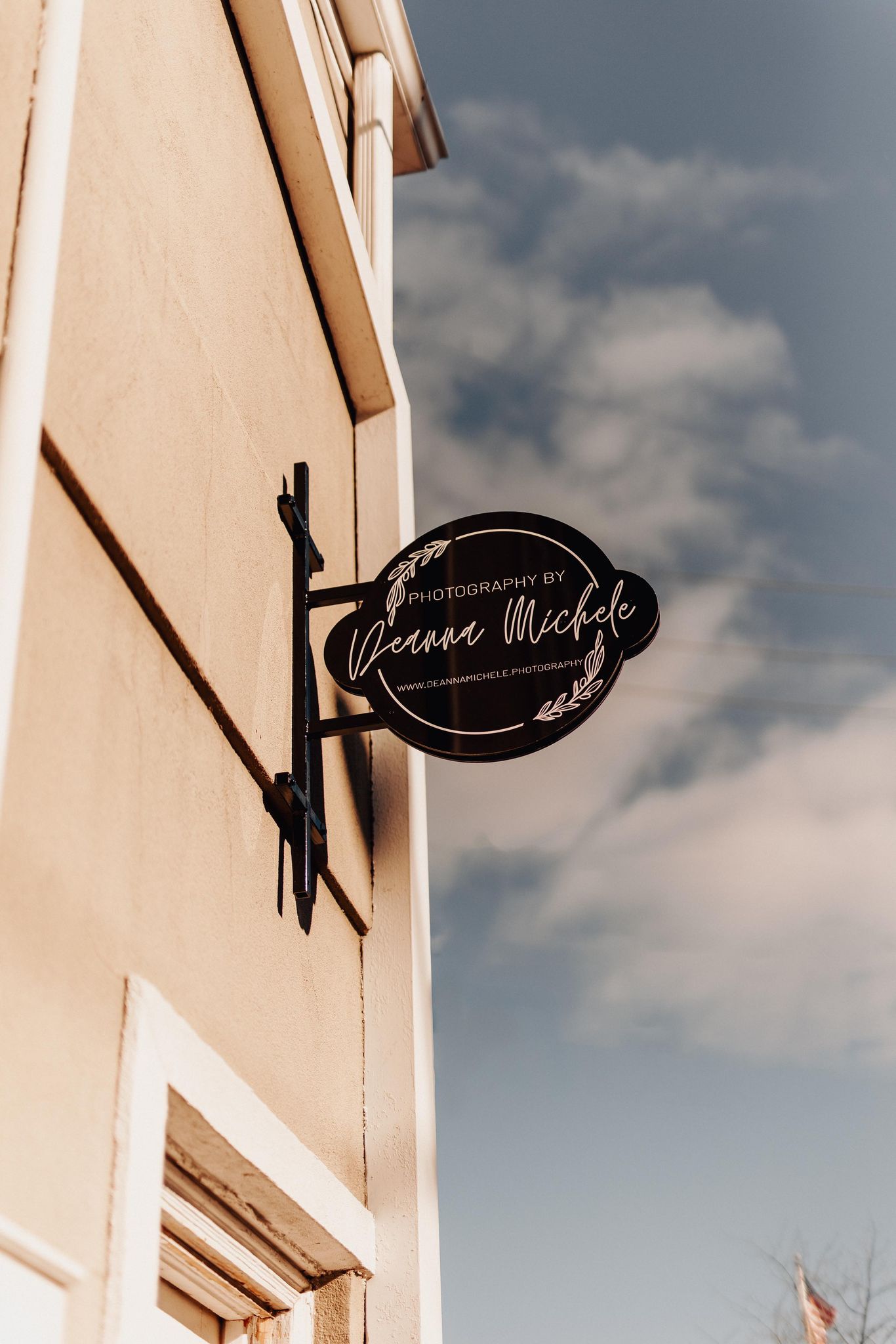
Appointments can be made by visiting https://deannamichele.photography/. The new studio is located at 27 South Walnut Street, with access to the studio on Southeast Front Street across from the First Presbyterian Church. A sign for the studio is located above the door.

RELATED STORIES:

Share this Post

Maven color-coded filter system expands to help photographers tell them what they are shooting with

Maven color-coded filter system expands to help photographers tell them what they are shooting with

Maven launches wave 2 of its award-winning color-coded lens filter system on Kickstarter, which has already raised US$250,000!

After its first successful Kickstarter Maven has cemented its place in the lens filter market, vying to be in the conversation with the other best filters for photography. The unique color-coded design has revolutionized filter aesthetics, but it’s not just the looks that stand out, the updated filter performance is highly impressive. 

The color coded filter system explained (Image credit: Maven)

The Kickstarter campaign includes various forms of traditional filters and introduces us to a newly developed Dark-CPL. This is a combination of a neutral density filter and a circular polarizer, eliminating the need to carry more filters for those who often shoot with both. This would be particularly useful for those shooting scenes with water, such as waterfalls or seascapes. The color-coded system signifies which stop ND filter is included. Most importantly, Maven states that the Dark-CPL design “reduces vignetting, especially on very wide-angle lens focal lengths, such as 16mm.”

Maven has also redesigned a new variable polarizing filter system to focus on the best mirrorless cameras, in response to the market movement. Through vigorous testing, it established that mirrorless cameras respond better to LPL (Linear Polarizer) filters, and when used in conjunction with a CPL (Circular Polarizer) it provided little to no color shift, establishing a new variable system.

The quick release filter case by Maven (Image credit: Maven)

Smaller graduated ND filters have also been developed, along with updated ‘solid’ ND filters offering 2, 4, 15, 18, and 20-stop options! These ND filters have “AGC Japanese optical glass, 16 layers of MRC coatings, hydrophobic nano resistance & Tier 1 Color Performance.” These qualities make shooting time-lapses and long exposures more achievable, even in the midday sun. 

Other new filters included in the Kickstarter include the Maven IR 720 infrared filter, the Starry Focus filter which aids astrophotographers in manually focusing perfectly on stars with indicators on the filter, and lens flare filters which provide an anamorphic cinema look when capturing lights in a scene.

Maven has given further development to the lens/ filter cap with a complete redesign, changing the magnetic strength and adding an ease-of-use feature that enables you to remove it with a large lens hood attached.  

The new lens/ filter cap design (Image credit: Maven)

Lens filters may have been considered to have reached their technological limit, many years ago, but Maven continues to push the capabilities and offer a fresh new take on these already established systems. Ease-of-use features such as magnetic mounts, quick-release cases, and color/ shape filter design provide a lower entry point for beginners and take a lot of the extra (more complicated) steps out of shooting with filter systems. 

The Maven Kickstarter is now live and has already reached its goal. Don’t let that stop you, however, as there are usually some great backer rewards and early bird deals.

Note: As with all crowdfunding projects, there is no guarantee that the final product will match the early depictions in the campaign – or that the final product will be completed or delivered at all. DCW does not endorse this or any other crowdfunding campaign. 

You may also be interested in our guides to the best ND filter, the best variable ND filters, and the best ND grad filters

A’ Design Award Announces Its 2023 World Design Rankings

A’ Design Award Announces Its 2023 World Design Rankings

The results are in! The A’ Design Award & Competition has announced its 2023 World Design Rankings (WDR), which ranks all the countries based on the number of designers that have garnered an A’ Design Award. Surprisingly, the rankings have not changed since 2022. China captured the coveted #1 spot out of 114 countries ranked, followed by the United States and Japan. However, across the board, the number of awards have grown across the top 10 countries, showing an increase in interest in the competition.

If you’re a designer looking to get their ideas out on the world stage and represent your country, the A’ Design Award & Competition gives you a platform to do just that. While some designers submit a prototype or a completed project, even if you have just a concept, you can share your design and get invaluable feedback from the international jury panel of esteemed design industry leaders. There are over 100 categories to submit your designs, from Architecture to Fashion, Furniture to Packaging, Lighting to Toys. If you’re deemed a winner, the prize package is significant, as it includes ample press coverage, the opportunity to sell your design, and more. To learn more about the A’ Design Award & Competition and submit your designs, visit adesignaward.com.

Need some inspiration? Take a look at a few of our favorite winning designs below:

two cats climbing on furniture

Photo: Carolina Schwalb

Mocats Multifunctional Cat Furniture by La Jato del Gato

a necklace on the decolletage of a person

Insinuations Art to Wear Jewellery Collection by Barbara D’Ambra

terracotta metal planters

Shadows Of The Sky Flower Troughs by Zsolt Szalai

pizza oven that looks like a disco ball

Disco Oven Pizza Oven by Mark Cresswell

green transparent sofa

Spark Sofa by Wang Jun

bench seating with cushion next to window

Relax Chaise Lounge by Charlotte Abrahamsson Kwetczer

transparent furniture

Lens Series Furniture by Eva Liu

gradient chair with extended table

Phantom Chair by Jun Wang

bench with integrated planter for tree

Greenery Bench by Shibing Yang

curved chair shaped like a water ripple

Water Ripples Chair by Kuo-Hsiang Kuo

As the Senior Contributing Editor, Vy Yang is obsessed with discovering ways to live well + with intention through design. She’s probably sharing what she finds over on Instagram stories. You can also find her at vytranyang.com.

36 Of My Favorite Dog Photos I Took In 2023

36 Of My Favorite Dog Photos I Took In 2023

Moderator, BoredPanda staff

Gabrielė, or, as other people like to call her, Gab, Gabi, Gabert or Gabe, is a senior community manager at Bored Panda. Despite all the names above you can also call her a Viking since she has acquired a BA in Scandinavian Studies (feel free to send her a message in Norwegian). After the bachelor, this Viking wanted to conquer more lands—that is why she flew to Belgium and finished a MA in Cultural Studies. Gabrielė is a true culture enthusiast. Besides work, she is learning how to play a guitar and enjoys going to movies, art exhibitions and concerts.

Read more »

Ryan Villamael’s Cascading Floral Sculptures Reconsider Maps and Identity

Ryan Villamael’s Cascading Floral Sculptures Reconsider Maps and Identity

“Locus Amoenus.” All images courtesy of Silverlens, Manila/New York, shared with permission

Gathered in bunches and trailing like vines, Ryan Villamael’s paper-cut sculptures cascade through niches of interiors, history, and identity. Utilizing maps to create overgrowths of leaves, the artist addresses complex relationships between cartography and culture.

Based in Los Baños, Laguna, in the Philippines, Villamael focuses his practice on tangled narratives within himself and the country. Because his father had to leave home as an overseas worker, the young artist grew up without his presence. This physical disconnect was challenging and catalyzed Villamael’s fascination with cartography. He explains, “Looking at maps was my way of connecting with him, of tracing the paths he might have traveled.”


Old maps fashioned into leaf shapes hang in bunches along a stairway

“Locus Amoenus” at Ateneo Art Gallery, Manila

This fixation has carefully cultivated itself ever since, as the artist sees the geographic representations as a way to uncover familial paths and collective memory. However, at odds with this sentiment of reclaiming personal history, Villamael also alludes to the presence of authoritative geopolitical ambitions that perpetuate partial truths. He tells Colossal:

So much of my work, I realize in hindsight, is about a kind of mourning. To be Filipino, I feel, is to be constantly in mourning—for the heritage that was taken from our nation by colonialism, for the memories we discard so systematically as a way of survival, for the historic structures in Manila that are constantly demolished… That does something to a nation’s psyche, and it’s something I feel deeply.

Such longing for ancestral truth beyond the stain of colonialism is evident in the artist’s work, as meticulous cutting, folding, overlapping, and puncturing alters the printed surfaces. Originally working with paper out of financial necessity, the humble material eventually became Villamael’s avenue for the tactile transformation and reclamation of cartographic records.

From the expansive nature of the material to the concept of stitching together ideas of home, the nuances of breadth and space guide his work. Quelled inside glass cloches and proliferating across gallery ceilings, floral motifs and sinuous vines carry a consuming desire for the recapitulation of history.

Villamael has two shows opening this month: a solo exhibit at Silverlens Gallery in Manila and an installation at the Esplanade in Singapore. Follow his Instagram to keep up with his work.


Old maps fashioned into leaf shapes hang in bunches

Detail of “Locus Amoenus”

Old maps fashioned into leaf shapes hang in bunches along a stairway

Detail of “Locus Amoenus”

Old maps fashioned into leaf shapes

Detail of “Locus Amoenus”

Old maps fashioned into leaf shapes hang in bunches along a stairway

“Locus Amoenus” at Ateneo Art Gallery, Manila

Leaves and plants made from paper, encased within a glass box.

Left: “Pulô series X.” Right: “Pulô series IX”

Leaves and plants made from paper, encased within a glass bell jar.

“Pulô series III”

Leaves and plants made from paper, encased within a glass bell jar.

Left: From “Kadō Series.” Right: detail of “Kadō Series 2”

Leaves and plants made from paper, encased within a glass bell jar.

“Kadō, Series 1”

Do stories and artists like this matter to you? Become a Colossal Member today and support independent arts publishing for as little as $5 per month. The article Ryan Villamael’s Cascading Floral Sculptures Reconsider Maps and Identity appeared first on Colossal.

Can You Make a New House Key From a Photograph?

Can You Make a New House Key From a Photograph?

I was checking out Reddit’s lifeprotips subreddit and read what seemed like an amazing life hack: A Redditor advised keeping photographs of your physical keys in your phone’s digital wallet. That way, if you lose a key, a locksmith can cut you a duplicate based on the picture alone. The idea that you can get keys made from a picture is basically the flip side of the warnings you sometimes read in articles with headlines like “Here’s Why You Shouldn’t Post Pictures of Your House Key Online.” So does this work? Is this a new hack that will prevent you from locking yourself out again? Can thieves really duplicate your keys from an Instagram post? Yes and no. Making a key from a photo is theoretically possible, but it’s difficult enough in practice that it’s not something worth being concerned about.

“If you were to show a photo of a key to a locksmith, and if it was a pretty standard key—like a QuickSet or something like that—he could probably use his experience and expertise to determine how long the cuts in that key are,” said Owen Hunter, who worked as a locksmith for both commercial and private clients in Burbank, CA for several years. “But the photo would have to be exactly the size of the key—like a perfect one-to-one photograph—to make a useable copy.”

The difficulty of taking perfectly sized photographs of your keys

According to Hunter, even the slightest angle or discrepancy in size would make it extremely difficult for a locksmith to make a duplicate based on your picture. “You would need to take a photo of the key at an almost perfectly perpendicular angle. It would probably only be possible to do if you had a nice lighting table and [a] down-shooter or something.” In other words: A snapshot from your iPhone wouldn’t work.

Sources on the internet sometimes suggest that taking a photo of your key on a piece of a graph paper will help translate the dimensions, but that wouldn’t be too helpful according to Hunter. “That might make it about 3% easier,” he said.

The above “it-will-never-work” advice applies to the most common, cheapest, commercially available kinds of locks. Higher end locks would likely prove more difficulty, and car keys would be impossible. “I do not know of a way to make car keys based on a photograph. Because there’s so many different kinds, and there’s usually electronics and key fobs involved,” Hunter said. 

The difficulty of finding a locksmith that will take your key-photo-challenge seriously

Maybe you could overcome the technical hurdle of exactly matching the dimensions of a key you no longer have through photographic skills or painstakingly matching the shadows and angles with drafting software, but even if you did, you’d end up facing an even more difficult obstacle: finding a locksmith who would take you seriously. Someone has to make the key for you, and according to Hunter, most locksmiths wouldn’t do it.

“A locksmith would want to know what the hell your problem is,” Hunter explained. “You could be bringing in a photo of anyone’s key. It could be a big security issue that a reputable locksmith isn’t going to want to get involved with… on behalf of every locksmith ever, just bring in your key. Don’t bring a photo; it’s not helpful.”

Three reasonable ways to safeguard against losing your keys

If you must have a version of your keys saved on your phone, there is a much better method than keeping a .jpg in your iWallet. “If you really want a digital backup, you could bring your original key to a locksmith, and they can get a reading on the key’s code and give you its PIN. If you have those two things, then you can just call up a locksmith and tell them to cut a new key for you,” Hunter said.

Another solution: Bring in the lock itself. If you can get into your house, most locks can be removed fairly easily with a screwdriver or a drill, then you can bring the entire mechanism into a locksmith who can make you a new key for your old lock.

The best solution for key losers is the most mundane, but it’s almost comically simple: Use the time you were going to spend taking a perfect photo of your keys to go the hardware store. Spend six bucks to make a couple extra copies of your house key, and keep them somewhere safe. Maybe stash one in the back of your closet and give one to your neighbor Gary. I promise this will be much easier than following the advice of people on the internet.

South Downs: Winter woodland scene wins photo competition

South Downs: Winter woodland scene wins photo competition

Copyright 2024 BBC. All rights reserved.  The BBC is not responsible for the content of external sites. Read about our approach to external linking.

Beta Terms By using the Beta Site, you agree that such use is at your own risk and you know that the Beta Site may include known or unknown bugs or errors, that we have no obligation to make this Beta Site available with or without charge for any period of time, nor to make it available at all, and that nothing in these Beta Terms or your use of the Beta Site creates any employment relationship between you and us. The Beta Site is provided on an “as is” and “as available” basis and we make no warranty to you of any kind, express or implied.

In case of conflict between these Beta Terms and the BBC Terms of Use these Beta Terms shall prevail.