How to Cure Sadness About Your Photography: Look at Prints!

How to Cure Sadness About Your Photography: Look at Prints!

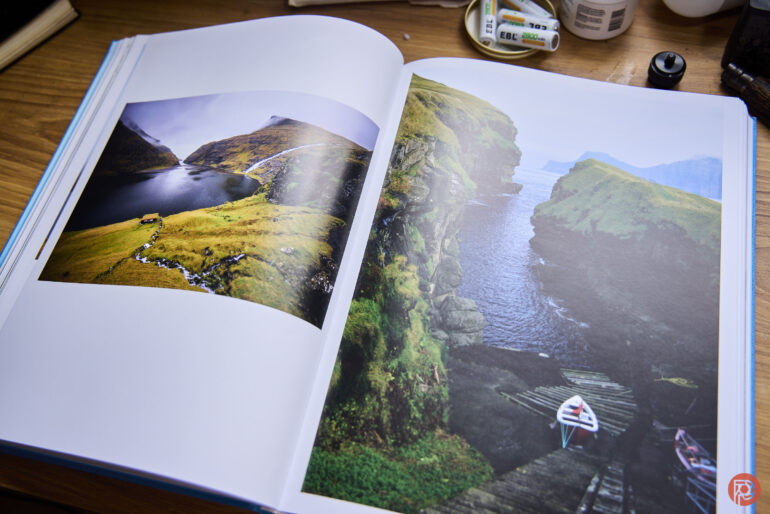
I think that one of the biggest things that boosts my love of photography consistently is looking at prints. I’m not talking about scrolling away on Instagram — but instead moving away from the device that’s supposed to do everything for us. There’s a specific rewiring of my brain that acknowledges that the prints are just the print. They’re the knife you need when your Swiss Army Knife isn’t up to the task. And most importantly, they remove the distractions that you’d otherwise get.

When I pick up a photography book, there are no notifications of emails, texts from friends or family, reminders to water my plants, etc. Instead, it’s all about the book and I. There, I’m holding a book that’s designed to show me prints instead of a tablet or phone designed to do a ton of different things in a good enough way. To that end, it reminds me to have more respect for the still image.

But there’s a lot that goes into looking at prints.

  • I need to be in the right light that makes the art on the pages look the best they can be.
  • I need to be comfortable
  • There needs to be time where I tell my brain that I’m not going to give into anything else
  • I specifically make this time dedicated to myself and falling in love with my craft all over again.

This is an intellectual conversation that I have with myself and that’s critically missing from photography these days. With looking at prints in something like a dedicated photo book, we’re not double-tapping or saving the photos. Instead, we’re sitting there and soaking them in. I wouldn’t dare to fold a corner of the page of something so meticuously outlaid. Instead, I know that the prints will always be there when I open the book again. This means that I treat the images with far more respect. The act of looking through a photo book is to page through image carefully and not just scroll past them quickly on a screen. It’s the near equivalent of sitting in a theater to watch a movie while turning off all distractions vs watching netflix at home. The theatrical experience of feeling the sound on you when Batman beats down some thugs is iconic. And with photo books, you get to have more of a sensory perception of the photographs.

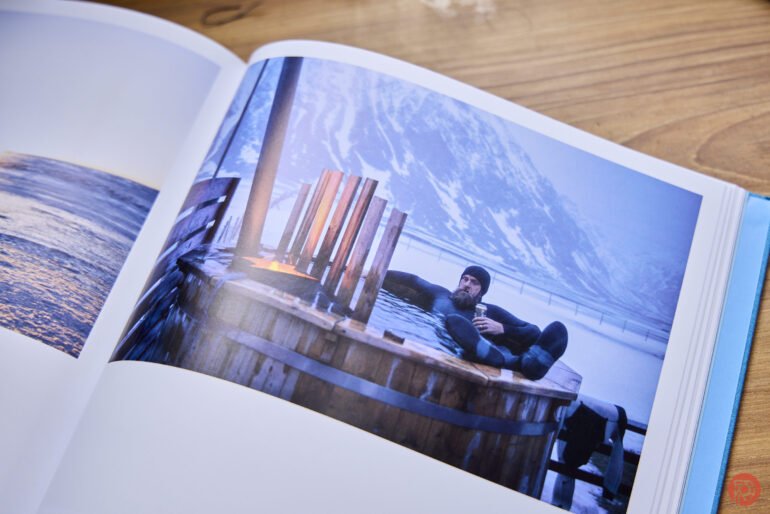
You’re seeing the images in a completely different way. There is no brightness screen, so you have to move and interact with the book and the prints in the same way that you would when using a prime lens vs a zoom.

You’re holding the book, so you need to get comfortable or have a nice table to look at them on.

You’re paging through the images — this is often a two handed affair instead of just using a single thumb. No, your entire hand goes into this process.

You’re hearing the sound of the pages turn and the book spine crack more and more.

Yes, you’re slowing down. And in the most ideal of times and aspects, you’re surrendering yourself to the experience in a way that’s similar to letting music overtake your body.

Looking at prints and going through images is an intense way to experience love of photography; and I encourage every photographer to start printing their work and getting to museums or reading photo books when they can.

Boundary Photographer

Boundary Photographer

Menu


Sun, 7 Jan 2024

Menu

Boundary Photographer

image

In Berlin series, 1984-2004

The Chiaramonte family hailed from the Sicilian town of Gela, on the southernmost tip of Italy and the most central area of the Mediterranean, but Giovanni grew up in the ambit of Milan, where from early on he dedicated himself to photography, both as an art with its intricate history and as a practice with its power to transform what it captures. He studied the work of a wide range of photographers, Luigi Ghirri among them, writing about them and publishing their work in a series for Ultreya. His interests were wide-ranging, including not only the work of Italian contemporaries but also that of others, such as the Russian photographer and filmmaker Andrei Tarkovsky. Over half a century he built a corpus of images that touch on limits: borderlands, shorelines, international shipping lanes, and migration, doing so not only with an eye for their violence and scale but also with delicacy and respect. In Palermo, he tracked almost osmotic changes in population and the granular transformation inside existing buildings that chiefly North-African arrivals wrought within the old city...

Included Tags:

We photographers keep digging ourselves deeper into a hole with non-destructive editing

We photographers keep digging ourselves deeper into a hole with non-destructive editing

Non-destructive editing is just like the most perfect thing ever, right? It means that you can undo and redo every edit you made to your photos, long after you’ve closed the file. It means it doesn’t matter what order you carry out your edits since they all work in parallel, and you can even make ‘virtual’ copies of the same photo to try out different edits, without creating duplicate image files.

Some of the best photo editing software is non-destructive, and we even regard that as a positive. Which, in the short term, it is.

Adobe Lightroom is the champion of non-destructive editing, but other programs offer it too, such as Capture One, DxO PhotoLab and ON1 Photo RAW. This is the ‘new’ way of editing photos. Everything is undoable and re-doable, and you can work on raw files alongside JPEGs and TIFFs completely seamlessly, with no separate initial raw processing phase.

It’s such a change from the old days. Programs like Photoshop and Affinity Photo offer non-destructive editing in their own way, but as a kind of half way house where not every action can be re-edited and where it does make a difference what order you do them in.

We still need programs like Photoshop and Affinity Photo for more advanced effects, compositing and layered illustrations, but increasingly a non-destructive tool like Lightroom does most if not all of the things that photographers need.

So what’s the problem?

I’m quite pleased with this edit. But it’s not actually a real image file, as it exists ony within Lightroom’s meta-universe. (Image credit: Rod Lawton)

Why non-destructive editing is a long-term liability

If you want to use the unique tools and features in Adobe Photoshop or Affinity Photo, you need to save images in their bespoke file formats. It’s the same with non-destructive editors like Lightroom, but a lot less obvious.

Lightroom, Capture One, DxO PhotoLab and other non-destructive programs never modify the original image. That is a big plus point. But your edits still have to be stored somewhere, and this will either be in ‘sidecar’ metadata files alongside the image or in a central catalog database. 

There’s always the chance that your original images and their processing metadata may get separated, in which case all your edits will be lost. If you lose your Lightroom catalog, that could be tens of thousands of edits. But that’s just a remote possibility. There’s a bigger issue.

This processing metadata is unique to each application. Adobe Camera Raw and Lightroom can understand the same processing instructions, but that’s because they use the same tools. No other program will be able to apply the same edits. Adjustments you make in Capture One will be invisible/unreadable to DxO PhotoLab and edits you make in PhotoLab won’t be visible to Lightroom. 

Adobe Photoshop and Affinity Photo have their own non-destructive editing workflows, and these depend on proprietary formats and ‘virtual’ adjustments too. (Image credit: Adobe)

Just as Photoshop and Affinity Photo use bespoke file formats, non-destructive editors use bespoke processing metadata to store your edits, whether it’s as sidecar files or in a catalog.

If you need to share an edited image you can simply export it as a processed JPEG or TIFF file, of course – no problem there. But unless you do that with every image (that would be SO time consuming and wasteful) the reality is that we just keep on accumulating edits and adjustments – many of which we’ve taken a good deal of time over – that are locked into a specific application or image catalog. Our non-destructive edits don’t exist as actual images, but purely as virtual renderings in a particular application.

The longer this goes on, the deeper the hole. How do you stop using Lightroom, for example, if you’ve got ten thousand edited images in your catalog? Or twenty thousand, or thirty thousand? You either export them as generic processed image files that other software can work with (how many Gigabytes will THAT be?) or you just sigh, shrug and carry on digging.

Lightroom is a great place to try out tools and adjustments in a reversible way, but it’s easy to und up in a loop of endless experimentation without actually finishing anything. (Image credit: Rod Lawton)

So what’s the answer?

Yes, well, perhaps there isn’t one. Non-destructive editing is just so darned convenient that we would probably all prefer to carry on with it even if we realize we’re digging a big hole for ourselves.

All I can offer is this. Stop trying to keep your options open indefinitely. That’s the seductive danger of non-destructive editing. It stops us ‘finishing’ anything. If you carry out a series of edits you’re satisfied with, my suggestion would be to export them as JPEGs and TIFFs and draw a line under that job. You can remove your Lightroom edits or leave them, but at least all your valuable editing work now exists outside of Lightroom.

Photography isn’t just about choice. We’re surrounded by choice, often paralysed by it. Photography is also about decisions, and the danger of non-destructive editing is that we postpone those creative decisions indefinitely or leave our images floating in some kind of unfinished limbo state.

Photos of 2023 by Daily Inter Lake photographer Casey Kreider

Photos of 2023 by Daily Inter Lake photographer Casey Kreider

Look back through a selection of photos from 2023 by Daily Inter Lake photographer Casey Kreider.

  image  Kristina Ramirez and Jesse Good watch as the sun peeks out from a layer of clouds before dipping below the horizon at Foys Lake on Friday, Dec. 22. (Casey Kreider/Daily Inter Lake)
 Casey Kreider 
 
 
  image  Two bull elk stand in a snowy field apart from the rest of the herd near Highway 206 on Friday, Dec. 1. (Casey Kreider/Daily Inter Lake)
 Casey Kreider 
 
 
  image  Steve Frank fly fishes in the Flathead River on Wednesday, Oct. 4. (Casey Kreider/Daily Inter Lake)
 Casey Kreider 
 
 
  image  Grizzlies’ Junior Bergen (5) celebrates after a 35-28 overtime win over Furman in an FCS Playoff game against Furman at Washington-Grizzly Stadium on Friday, Dec. 8. (Casey Kreider/Daily Inter Lake)
 Casey Kreider 
  image  The sun sets over Glacier Bank Park as the Range Riders face the Idaho Falls Chukars in their last home game of the 2023 season on Wednesday, Sept. 6. (Casey Kreider/Daily Inter Lake)
 Casey Kreider 


  image  Grizzlies quarterback Clifton McDowell (17) scores a touchdown on a 20-yard run in the second quarter against Delaware at Washington-Grizzly Stadium on Saturday, Dec. 2. (Casey Kreider/Daily Inter Lake)
 Casey Kreider 
 
 
  image  Grizzlies wide receiver Keelan White (6) catches a 31-yard reception in the second quarter against North Dakota State in the FCS semifinals at Washington-Grizzly Stadium on Saturday, Dec. 16. (Casey Kreider/Daily Inter Lake)
 Casey Kreider 
 
 
  image  A great horned owl perches in a tree near Egan Slough on Sunday, Feb. 12. (Casey Kreider/Daily Inter Lake)
 Casey Kreider 
 
 
  image  A moose grazes in the brush along the Iceberg Lake Trail in Many Glacier on Sunday, June 18. (Casey Kreider/Daily Inter Lake)
 Casey Kreider 
 
 
  image  Two anglers haul their ice fishing gear across the frozen surface of Flathead Lake near Somers on Thursday, Feb. 9. (Casey Kreider/Daily Inter Lake)
 Casey Kreider 
 
 
  image  Participants race down Sugar Hill during the Barstool Ski Races at Cabin Fever Days in Martin City on Saturday, Feb. 11. (Casey Kreider/Daily Inter Lake)
 Casey Kreider 
 
 
  image  Participants race down Sugar Hill during the Barstool Ski Races at Cabin Fever Days in Martin City on Saturday, Feb. 11. (Casey Kreider/Daily Inter Lake)
 Casey Kreider 
 
 
  image  Glacier quarterback Jackson Presley (12) completes a 14-yard touchdown pass to tight end Van Scholten (14) in the second quarter against Helena Capital at Legends Stadium on Friday, Sept. 29. (Casey Kreider/Daily Inter Lake)
 Casey Kreider 
 
 
  image  Law enforcement personnel take a suspect into custody after an assault with a weapon call turned into an armed standoff between Second and Third Avenue West North in Kalispell on Tuesday, April 11. (Casey Kreider/Daily Inter Lake)
 Casey Kreider 
 
 
  image  A competitor crashes into the water at Whitefish Mountain Resort’s pond skim on Saturday, April 8. (Casey Kreider/Daily Inter Lake)
 Casey Kreider 
 
 
  image  A moose grazes in a marsh along Highway 89 near Browning on Sunday, June 18. (Casey Kreider/Daily Inter Lake)
 Casey Kreider 
 
 
  image  Shown is part of a 14.4 acre parcel of BNSF Railway land and a section of the Great Northern Historical Trail west of Meridian Road in Kalispell on Tuesday, April 25. Kalispell City Council recently gave the go-ahead to purchase the tract of land to extend the Parkline Trail. (Casey Kreider/Daily Inter Lake)
 Casey Kreider 
 
 
  image  Nick Kardelis bowls a frame at Glacier Lanes in Columbia Falls on Friday, Nov. 24. (Casey Kreider/Daily Inter Lake)
 Casey Kreider 
 
 
  image  Glacier wide receiver Kole Johnson (4) holds on to a 33-yard reception in the second quarter against Bozeman in the Class AA state championship at Van Winkle Stadium on Friday, Nov. 17. (Casey Kreider/Daily Inter Lake)
 Casey Kreider 
 
 
  image  Glacier starting pitcher Nick Zegna (38) delivers in the first inning against the Missoula Paddleheads at Glacier Bank Park on Thursday, Aug. 24. (Casey Kreider/Daily Inter Lake)
 Casey Kreider 
 
 
  image  A kayaker navigates a section of the Wild Mile along the Swan River during the Expert Slalom event at the 48th annual Bigfork Whitewater Festival on Saturday, May 27. (Casey Kreider/Daily Inter Lake)
 Casey Kreider 
 
 
  image  A kayaker navigates a section of the Wild Mile along the Swan River during the Expert Slalom event at the 48th annual Bigfork Whitewater Festival on Saturday, May 27. (Casey Kreider/Daily Inter Lake)
 Casey Kreider 
 
 
  image  Visitors pay their respects at The Wall That Heals at the Glacier High School soccer fields on Thursday, June 22. (Casey Kreider/Daily Inter Lake)
 
 
  image  A Marine bugler plays Taps at dusk at The Wall That Heals at the Glacier High School soccer fields on Thursday, June 22. (Casey Kreider/Daily Inter Lake)
 Casey Kreider 
 
 
  image  Former NFL and Flathead Braves quarterback Brock Osweiler speaks with campers at the start of a pair of free football camps hosted by Osweiler at Legends Stadium in Kalispell on Saturday, July 1. (Casey Kreider/Daily Inter Lake)
 Casey Kreider 
 
 
  image  Duke Tomlinson holds his 15-month-old son Rusty on his shoulders before the start of the St. Patrick’s Day Parade in Kalispell on Friday, March 17. (Casey Kreider/Daily Inter Lake)
 Casey Kreider 
 
 
  image  Panoramic view of Iceberg Lake and the Ptarmigan Wall in Many Glacier on Sunday, June 18. (Casey Kreider/Daily Inter Lake)
 
 
  image  Columbia Falls’ Max Everett (13) scores on a header in the second half against Bigfork at Carlyle Johnson Park in Bigfork on Tuesday, Sept. 5. (Casey Kreider/Daily Inter Lake)
 Casey Kreider 
 
 
  image  Columbia Falls’ Josie Harris (12) scores a goal past Bigfork keeper Irelynd Vigil (0) in the first half at Carlyle Johnson Park in Bigfork on Tuesday, Sept. 5. (Casey Kreider/Daily Inter Lake)
 Casey Kreider 
 
 
  image  Glacier running back Kash Goicoechea (6) scores a touchdown on a run in the first quarter against Helena at Legends Stadium on Friday, Sept. 15. (Casey Kreider/Daily Inter Lake)
 Casey Kreider 
 
 
  image  Golden retrievers and their owners gather at Haymoon Resort in Whitefish for GoldenStock Montana to support Montana Precious Gold, Golden Retriever Rescue of Montana on Saturday, Sept. 16. (Casey Kreider/Daily Inter Lake)
 Casey Kreider 
 
 
  image  Paint splatter flies as a player gets hit during a game of five-on-five at Montana Action Paintball near Kila on Saturday, Sept. 23. (Casey Kreider/Daily Inter Lake)
 Casey Kreider 
 
 
  image  The Bravettes celebrate after Avery Chouinard’s (13) game-winning three-pointer as time expired against Missoula Hellgate in the Western AA Divisional Championship at Flathead High School on Saturday, March 4. (Casey Kreider/Daily Inter Lake)
 Casey Kreider 
 
 
  image  Gil Parent, from Milbank, South Dakota, navigates through the barbed wire crawl obstacle at the Spartan Races in Bigfork on Saturday, May 6. (Casey Kreider/Daily Inter Lake)
 Casey Kreider 
 
 
  image  Elmer King, of Bird-In-Hand, Pennsylvania, who placed first in the Ultra 50K race, crawls through a water obstacle at the Spartan Races in Bigfork on Saturday, May 6. (Casey Kreider/Daily Inter Lake)
 Casey Kreider 
 
 
  image  Grizzlies defender Sawyer Racanelli (9) blocks a punt in the first quarter against Delaware on Saturday, Dec. 2. (Casey Kreider/Daily Inter Lake)
 Casey Kreider 
 
 
  image  Attendees gather and hold candles while members of the Flathead High School Choir sing at the Christmas Blue Light Tree Lighting ceremony outside the Flathead County Justice Center in Kalispell on Thursday, Dec. 7. The event is held to support the families of fallen officers and to honor the officers, highway patrol, firefighters, first responders and all those who serve and protect. (Casey Kreider/Daily Inter Lake)
 Casey Kreider 
 
 
  image  Grizzlies wide receiver Keelan White (6) catches the game-winning 13-yard touchdown reception in overtime of an FCS Playoff game against Furman at Washington-Grizzly Stadium on Friday, Dec. 8. (Casey Kreider/Daily Inter Lake)
 Casey Kreider 
 
 
  image  Grizzlies wide receiver Keelan White (6) catches a tipped pass in the end zone for a two-point conversion in overtime against North Dakota State in the FCS semifinals at Washington-Grizzly Stadium on Saturday, Dec. 16. (Casey Kreider/Daily Inter Lake)
 Casey Kreider 
 
 
  image  Seven sets of twins enrolled at Cayuse Prairie School on Tuesday, Jan. 24. Bottom row, left to right, Rylan and Ethan Harmon; Ingrid and Annika Scott; and Stephanie and Alex Gurtscheff. Back row, left to right, Jason and Jack Jessop; Charlie and Evan Dowell; Lily and Jack Ringhofer; Teaghan and Quora Roe; and Timber and Madisyn Williams. (Casey Kreider/Daily Inter Lake)
 Casey Kreider 
 
 
  image  Law enforcement investigate a vehicle along Appleway Drive near the scene of an alleged shooting at a hotel on U.S. Highway 2 West in Kalispell on Tuesday, Feb. 7. (Casey Kreider/Daily Inter Lake)
 Casey Kreider 
 
 
  image  Glacier’s Noah Dowler (44) throws down a dunk in the second quarter against Flathead during crosstown basketball at Glacier High School on Friday, Jan. 20. (Casey Kreider/Daily Inter Lake)
 Casey Kreider 
 
 
  image  Tayton Hardman leaps off a bridge into the Flathead River with his friend Fischer Lee in Evergreen on Tuesday, July 25. (Casey Kreider/Daily Inter Lake)
 Casey Kreider 
 
 
  image  Bailey Roberts practices her casting technique in the Flathead River on Thursday, April 6. (Casey Kreider/Daily Inter Lake)
 Casey Kreider 
 
 
  image  A farmer cultivates a field in Lower Valley on Tuesday, May 16. (Casey Kreider/Daily Inter Lake)
 Casey Kreider 
 
 
  image  Carol and John Free dance to the German music played by The Bavarian Echoes at The Great Northwest Oktoberfest in Whitefish on Saturday, Oct. 7. (Casey Kreider/Daily Inter Lake)
 Casey Kreider 


The big picture: Sage Sohier capturing playfulness in 1980s America

The big picture: Sage Sohier capturing playfulness in 1980s America
image

As a young photographer in the early 1980s, what she calls the “pre-digital, largely un-air-conditioned era, when people fled the heat of their houses to hang out in their yards and on the street”, Sage Sohier would drive around near where she lived in New England, or on trips to southern states, in search of what she thought of as Americans “in their environment”. During lockdown, she went back through those negatives and contact sheets and discovered many images that she had never printed. The best of these are collected in a new book, Passing Time.

In her introduction to that book, Sohier remarks on the “kind of relaxed sensuality” revealed in those pictures: “Time moved more slowly, restlessness led to spontaneous play. Young people back then were fit and lean from running around outside with their friends and neighbours.”

This picture, taken on the street in small town Florida in 1981, is the opening image in Passing Time, and establishes not only that playful mood, but also a quickened intensity of looking that many of the photographs possess. The girl and the cat seem like fellow travellers in Sohier’s project; at street level, in a playground of their own devising among the trucks of grownup life. “I was obsessed with making the best complex pictures that I could,” Sohier writes of her younger self. “It was exciting when I came upon an interesting situation, and I loved the challenge of collaborating with strangers until something compelling emerged … Meeting people (in order to photograph them) was thrilling, and it changed me.”

You can sense some of that thrill here, preserved across the years; the girl’s eyes seem to look down the road, not only at the possibilities of that summer afternoon, but at all the afternoons stretching out ahead, until that moment was rediscovered in Sohier’s files.