Thrill of the chase: Storm photographer captures her passion on the road

Thrill of the chase: Storm photographer captures her passion on the road

Most people head for cover during storms, but Rio Rico-based storm photographer Lori Grace Bailey heads toward them. 

“I enjoy the rush. The thrill of the chase, as they say. It’s not the kill, it’s the thrill of the chase,” she said.


San Xavier

Lightning striking behind San Xavier Del Bac Mission south of Tucson


Amado

A photo of a lightning storm captured on Elephant Head Road near Amado.


Rio Rico

A monsoon storm over Rio Rico.


Elephant Head

Lightning strikes the peak of Elephant Head in “The Six Year Strike.”


Box

Lori captured lightning striking near Box Canyon, east of Green Valley.


.center-container {
display: flex;
justify-content: center;
align-items: center;
}

.link-button {
border-radius: 5px;
border-color: #333;
background-color: #ceb5a7;
color: #333;
width: 50%;
max-width: 175px;
margin: 5px;
cursor: pointer;
}

.button-text {
font-family: “Open Sans”, Helvetica, Arial, sans-serif;
color: #000000;
font-size: 14px;
line-height: 1.42857143;
}

Eleonora Prignano Makes Her Photographs With a Fascinating Tool

Eleonora Prignano Makes Her Photographs With a Fascinating Tool

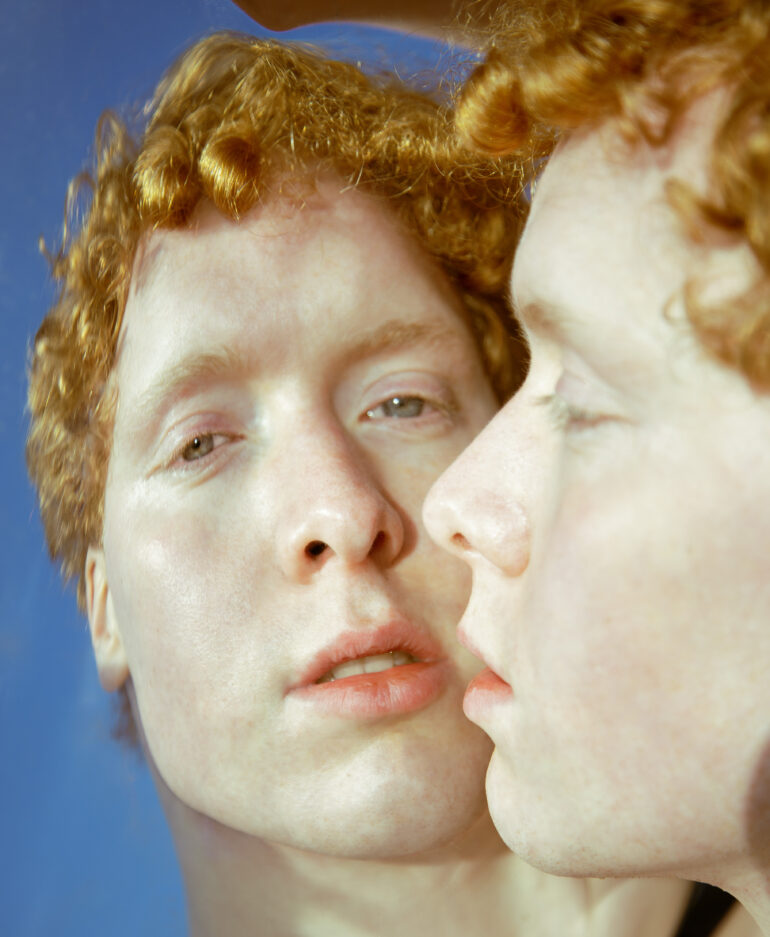
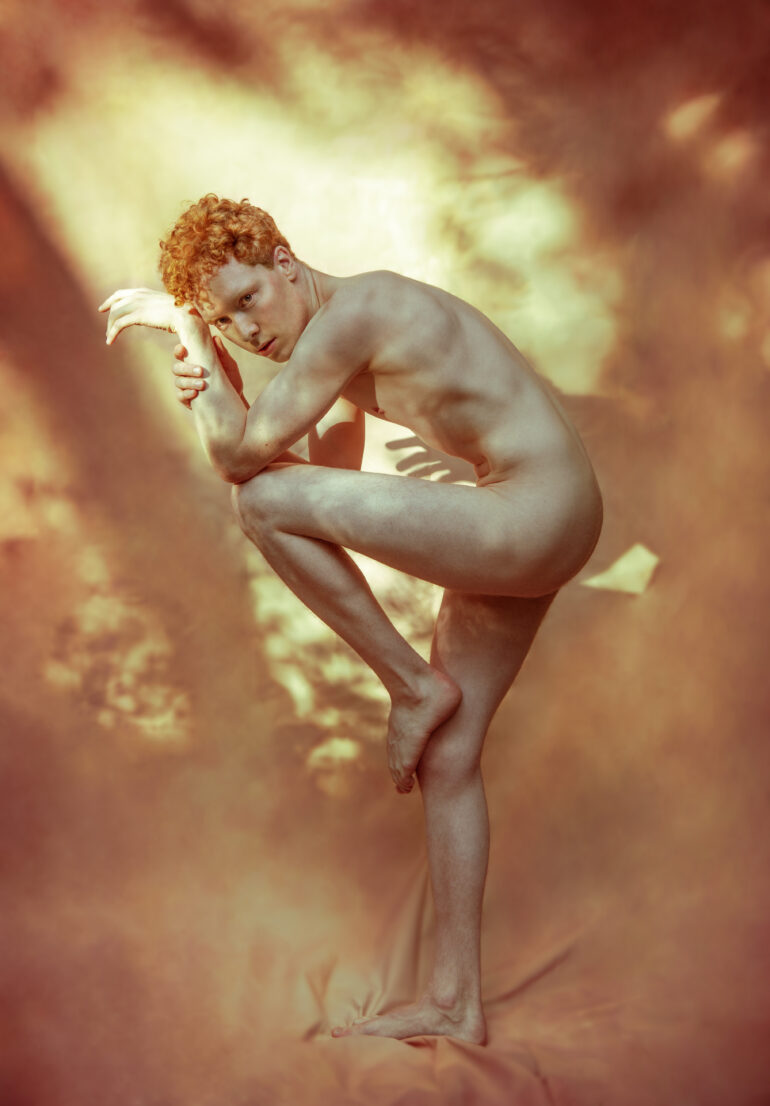
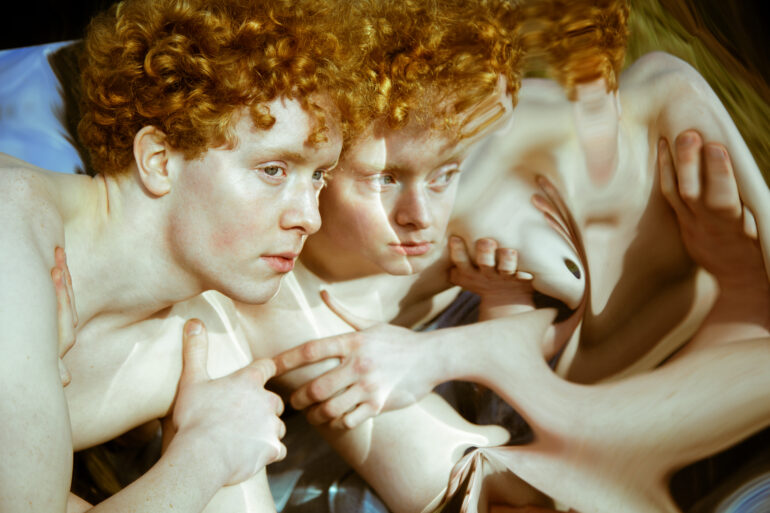
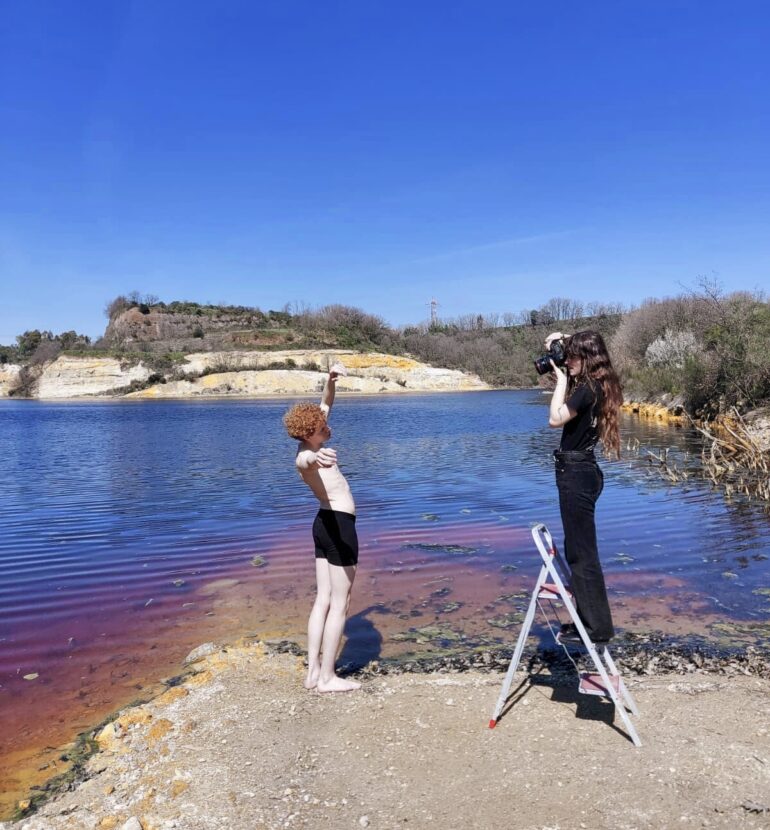
When you look at photographs by Eleonora Prignano, it’s easy to sit there and contemplate the execution, use of warm colors, and what she had planned in her mind. Things about her work remind us of Henriette Sabroe Ebbesen — and then it hits us. Eleonora is working with reflections and distortions in ways that we’re not really used to seeing. “Something I’ ve always been fascinated about since I started shooting human subjects, is their peculiarities, not only in their looks, but also their psyche and more specifically, the complex nature of our identity,” she tells the Phoblographer. “The way we tend to perceive ourselves and the huge gap in between that perception and reality.” From there, her photographs become a dive into a maze of mirrors and light — consistently warping our reality.

All images by Eleonorma Prignano. Used with permission. For more, please check out her website, PhotoVogue, and Instagram.

The Artist that is Eleonora Prignano

Eleonora started out in photography when she was very young. She took a liking to his images — none of them were professional, really. Instead, Eleonora found passion in them and thought them to be sensational and particular. “I still remember the thought that initially struck me, the idea of literally sharing what his eyes had seen, and with that, the interpretation that he gave of that common reality which somehow seemed to be so different from mine, and yet that I found so deeply touching and stunning,” she tells us. “I guess from there, in my mind, all I wanted to do was make people feel what I felt during the creation of a shot, possibly amazed them as my uncle did with me…so when I was a teenager I would steal my dad’s compact camera and spend my time in the garden or in the grove near my parents’ house and shoot lots of photos, observing for endless hours the countless details that Nature had to offer.” To this day, nature still seems to be a common element in Eleonora’s photographs. She eventually got her own camera at age 14 and experimented with different techniques and all.

Eventually, a friend of her at the IED University of Italy invited her to do a photography course — where she discovered just how fun it can to be photograph humans with your own creative mindset.

“And yeah, I think that was quite of a big turning point for me, photographically talking…cause I never stopped.”

Her photographs aren’t made with anything special, per se. Eleonora uses a Canon 6D — a camera we reviewed over a decade ago. “…I really can’t wait to be financially able to make an upgrade on my choice, as it has some limitations I’m pretty tired of, especially related to the autofocus, but overall it’s a very nice camera, not too heavy to carry around,” she shares. “In addition to that I often use a 24-105mm lens from Canon, which is a very versatile lens, especially if you often shoot outdoors like me. I also use a 100mm Canon lens, which is great for close ups and gives an incredibly intense touch to the shot.” Next, she wants a fisheye lens — which would be fascinating to use with the mirrors that are key to some of her portraits.

While her gear is simple, Eleonora uses it to craft her creative vision in a very beautiful way.

The Creative Vision

Of course, her passion is photographing humans. But she doesn’t just do that. She combined elements of nature, which she used to photograph a lot gorwing up. And then Eleonora blends in the ingenous use of mirrors. The results are photographs worth staring at in a way synonamous to how a dog stares lovingly at its human.

“One of my favorite projects about this specific matter is the ‘introspection’ series, where I shot some subjects using a deformed mirror trying not only to compose a strong or a beautiful image but also to communicate the struggle between two factions of ourselves,” Eleonora shares with us. “I like to use the reflections of mirrors to tell this message because in my vision they are a perfect metaphor to describe the almost ‘imperceptible from the outside’ difference in between what we think we are (or what we want/scared to be) and what others sees of us, which although might not necessarily correspond to reality…sometimes we live illusions.” In her mind, we lie to ourselves, and not often consciously. The mirror helps become a metaphor for that.

She’s actively developing this project, and at the moment it’s not even clearly labelled on her website. The subject is incredibly imporant to her on a deeply personal level as she struggled with her own identity growing up.

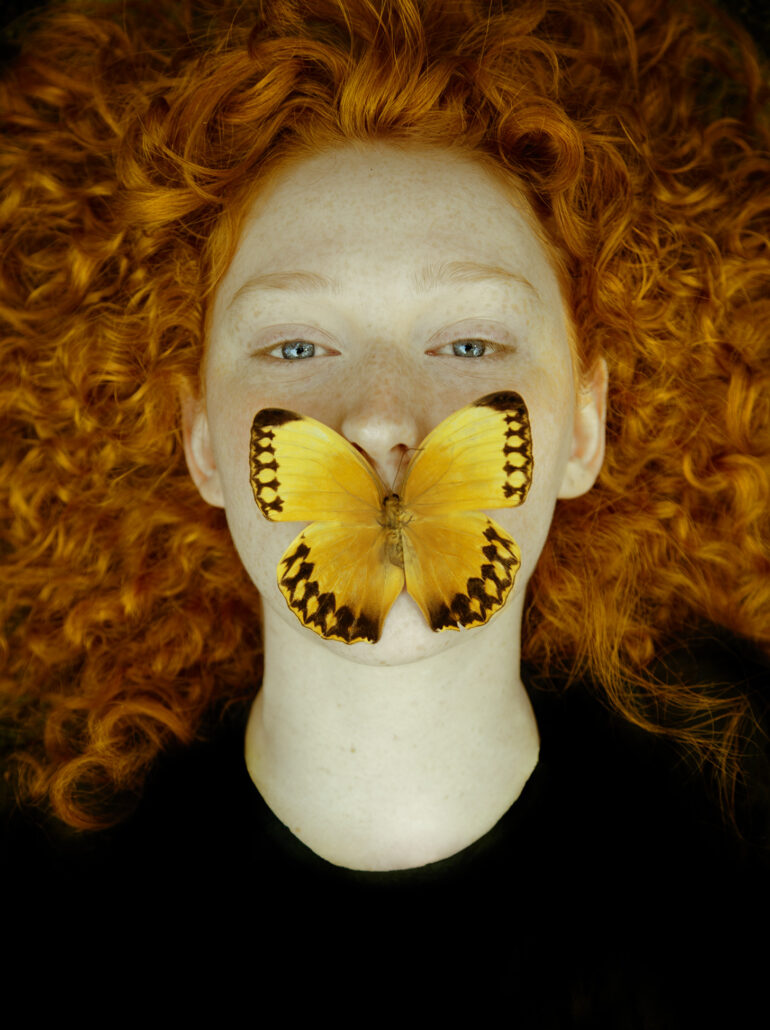
Part of her creative process is giving life to her fantasties through her photographs. Specifically, she tells us that she’s in love with “ginger heads” and nature.

Having red hair is a quite of an uncommon connoted in people nowadays, and since I was very young I thought of it as a very extraordinary trait of beauty; so when I had the chance to shoot my first ginger model I was thrilled, and what was even more unexpected and hilarious is that after the first ginger head I received a whole bunch of requests of people with natural red hair that wanted to shoot with me. But yeah, my point is: I believe it’s essential to pursue our personal meaning of beauty, no matter what the standards are, no matter what society says, because Beauty is what inspires Art, and Art is one of the most important things that makes us Human, and what’ s better than being free to be and express ourselves through Art?

Eleonora Prignano

Thoughts on AI Imagery

Considering her affinity for humans and nature alike, she has quite a many thoughts on AI imagery. And she staunchly believes it not to be photography. “…what makes me angry, is the idea of people, also quite notorious artists and photographer, big respectable photography magazines (like Photovogue), referring to AI images as AI photography,” she expresses to us. “It is NOT the same thing at all. And as a photographer I find insulting even thinking of trying to compare the two things, putting them under the same label.”

In her mind, it’s a struggle to understand how the two things are even remotely related when they’re completely different. To her, it’s like comparing a painting to photography. Eleonora cites that the definition of photography is painting with light. To that end, she reminds us all that we don’t do that with our laptop. While programs like photoshop are used in digital photography, there’s a different level of honesty around it because it’s based on the work that one creates.

She can go on and on about it. And from an Editorial perspective, we’ve never seen an AI recreate any sort of images that look like hers.

Authenticity Statement

The Phoblographer works with human photographers to verify that they’ve actually created their work through shoots. These are done by providing us assets such as BTS captures, screenshots of post-production, extra photos from the shoot, etc. We do this to help our readers realize that this is authentically human work. Here’s what this photographer provided for us.

“Creative Visions” – Shutterbugs Photography Group Exhibit and Opening Reception

“Creative Visions” – Shutterbugs Photography Group Exhibit and Opening Reception

The reception for the Shutterbugs photography group show titled “Creative Visions” will take place at the Ridgefield Library on Saturday, January 6th between 2 – 4 pm. This exhibition, which will be on view January 3rd-31st, showcases the artwork of Shutterbug photographers, who have taken pictures on field trips from a wide variety of sites and locations or from their own practice over this past year.

R

Submitted by Ridgefield Library

PHOTOS: Capturing the world through a fresh lens

PHOTOS: Capturing the world through a fresh lens

MITCHELL — Captured by the talented young photographers of Mitchell High School’s first semester photography class, this gallery showcases a selection of the best works.

Abe Gunnare

Abe Gunnare, Hairy Berry .jpg

Photos from the Mitchell High School fall semester photography class.

Abe Gunnare

Abe Gunnare, Looking Beyond .jpg

Photos from the Mitchell High School fall semester photography class.

Abe Gunnare

Abe Gunnare, The Under-Belly of America .jpg

Photos from the Mitchell High School fall semester photography class.

Abe Gunnare

Ayda Gulledge

Ayda Gulledge.jpg

Photos from the Mitchell High School fall semester photography class.

Ayda Gulledge

Ky Magstadt

Ky Magstadt - Untitled.JPG

Photos from the Mitchell High School fall semester photography class.

Ky Magstadt

Lilly Young

Lilly Young, A Dogs Eye View.jpg

Photos from the Mitchell High School fall semester photography class.

Lilly Young

Lilly Young, Honey! I shrunk a student!.jpg

Photos from the Mitchell High School fall semester photography class.

Lilly Young

Lilly Young, always flowing.jpeg

Photos from the Mitchell High School fall semester photography class.

Lilly Young

Lilly Young, Morning Mist.jpg

Photos from the Mitchell High School fall semester photography class.

Lilly Young

ADVERTISEMENT

Max Bruguier

Max Bruguier, The Looking Glass.jpg

Photos from the Mitchell High School fall semester photography class.

Max Bruguier

Max Bruguier, Underneath.jpg

Photos from the Mitchell High School fall semester photography class.

Max Bruguier

Max Bruguier, Through the Portal.jpg

Photos from the Mitchell High School fall semester photography class.

Max Bruguier

Presten Schelske

Presten Schelske, Sunset Cruise.jpg

Photos from the Mitchell High School fall semester photography class.

Presten Schelske

Solangely Rivera

Solangely Rivera - Euphoric View.jpg

Photos from the Mitchell High School fall semester photography class.

Solangely Rivera

Solangely Rivera - Monarch Mortality.jpeg

Photos from the Mitchell High School fall semester photography class.

Solangely Rivera

Solangely Rivera - Tree of Hope.jpg

Photos from the Mitchell High School fall semester photography class.

Solangely Rivera

Taylor Mika

Taylor Mika, Little World.jpg

Photos from the Mitchell High School fall semester photography class.

Taylor Mika

Adam Thury joined the Mitchell Republic in March of 2022. He was born and raised in Mitchell, S.D., and graduated from Mitchell High School in 2015. He always had an eye for photography but started honing his skills mid-2014. He has worked on growing his knowledge of photography by shooting for local events. He can be reached at athury@mitchellrepublic.com and found on Instagram at https://www.instagram.com/adamthury.

Thousands of Classic Films, Books, Illustrations, and Just Entered the Public Domain

Thousands of Classic Films, Books, Illustrations, and Just Entered the Public Domain

The cover of ‘Millions of Cats’ (1928), written and illustrated by Wanda Gág

From familiar classics to obscure treasures, a trove of literature, art, film, and music has just become easier to access. On January 1, thousands of books, films, plays, artworks, sound recordings, and more entered the public domain, which means they may be used freely without compensating or needing to obtain permission from the owner.

Most notable on the list this year are the very first adventures of Disney icon Mickey Mouse—and Minnie!—in Steamboat Willie and the silent version of Plane Crazy. These pieces in particular have stirred a lot of interest: in 1984, their copyright term was 54 years, but Disney pushed for an additional 20 years—derisively called the “Mickey Mouse Protection Act” by scholars—which brings us to its release in 2024.


A still of Mickey Mouse from 'Steamboat Willie' showing him at the wheel of a ship.

‘Steamboat Willie’ (1928)

Some other phenomenal additions to the public domain this year include the perennial favorite picture book Millions of Cats by Wanda Gág, which has the distinction of being the earliest American children’s book still in print. Literary heavyweights like W.E.B. Du Bois’s Dark Princess, Virginia Woolf’s Orlando, Bertolt Brecht’s The Threepenny Opera, and D.H. Lawrence’s Lady Chatterley’s Lover—among many others—are joined by two of the first “all-talking” films ever released, Lights of New York and In Old Arizona.

And don’t forget about some of our favorite children’s book characters, like Peter Pan and the Darling children, who first appeared in a play in 1904, then in book form in 1911, in J.M. Barrie’s Peter Pan; or the Boy Who Wouldn’t Grow Up—now in the public domain because it wasn’t “published” for copyright in the U.S. until 1928. And, of course, there’s Christopher Robin and his friends in the Seven Acre Wood. E.H. Sheperd’s quintessential illustrations in A.A. Milne’s The House at Pooh Corner introduced us to Tigger.

Explore an in-depth list and stories behind more of these works by Jennifer Jenkins, director of Duke University’s Center for the Study of the Public Domain.


A poster for Charlie Chaplin's film 'The Circus.'

Poster for ‘The Circus’ (1928) directed by Charlie Chaplin

Two images side-by-side. The left shows a black-and-white poster for the film 'Lights of New York.' The right-hand image shows the first-edition cover of the book 'Dark Princess' by W.E.B. Du Bois.

Left: Poster for ‘Lights of New York’ (1928). Right: First edition of ‘Dark Princess’  (1928) by W.E.B. Du Bois

An illustration of Tigger falling out of a tree and about to be caught by Christopher Robin, Poo, Piglet, Eeyore, and a squirrel.

E.H. Sheperd, “Tiggers Can’t Climb Trees” (1928) for ‘House at Pooh Corner’ (1928) by A.A. Milne

Frontispiece of 'Peter Pan; or the Boy Who Wouldn't Grow Up' (1911) by J.M. Barrie, illustrated by Francis Donkin Bedford.

Frontispiece of ‘Peter Pan; or the Boy Who Wouldn’t Grow Up’ (1911) by J.M. Barrie, illustrated by Francis Donkin Bedford

Do stories and artists like this matter to you? Become a Colossal Member today and support independent arts publishing for as little as $5 per month. The article Thousands of Classic Films, Books, Illustrations, and Just Entered the Public Domain appeared first on Colossal.

2024 New Year’s Resolutions Photographer’s Will Definitely Keep

2024 New Year’s Resolutions Photographer’s Will Definitely Keep

As photographers flip their calendars over to 2024, waving goodbye to a year of great gear and hopefully even better photos, it is time for shutterbugs to usher in the New Year with top-notch — and totally realistic — New Year’s resolutions.

This Year is Finally the Year for an Updated Website

“I will update my photography website this year,” says one photographer, who has said the same thing for the past six years but recently had to ask Zenfolio to unarchive a couple of image galleries that went offline due to inactivity.

“For some reason, two of my galleries were archived. That makes no sense. I definitely added new photos to those pages recently,” the photographer says before realizing that the pages haven’t been touched since 2014.

“Hmm. Well, anyways, this year is the year,” they say sheepishly.

3-2-1 Backup in 2024

The 3-2-1 backup strategy is the best way to ensure that files are safe, even if something horrible happens. Three copies of data on two different storage devices and at least one copy of photos in another location. Easy.

“Oh yeah, I’m going to get my backup strategy in order this year,” a frantic photographer explains while looking wide-eyed at a desk covered in scattered hard drives, including some that, somehow, feature FireWire ports.

New Year's Resolutions 2024
Credit: Synology

When asked where all their photos are stored, the photographer says, “You’re looking at them, pal,” gesturing to the rat’s nest of chaos. “The images are one spilled coffee away from total loss, probably. But I’ll deal with it this year.”

“And I definitely won’t get overwhelmed this time.” Hopefully, they will check out PetaPixel‘s Photo Backup Guide to help reduce the stress of file organization.

The Year of Organization

Similarly, another photographer says their New Year’s Resolution is finally organizing all their old photo and video files.

“They’re sort of all over the place,” says the optimistic photographer who wishes to remain anonymous. “In 2010, I labeled my files based on location. In 2013, after doing nothing the prior two years, I went with a new date structure. And off and on, I’ve sort of organized files by subject. However, most of the time, I do nothing and don’t touch my files.”

With tens of thousands of files floating precariously in a disorganized mess of nested folders, the photographer may have some duplicate files needlessly occupying storage space. When 2025 rolls around, the frazzled photog certainly won’t have added a few thousand more unlabeled files to their library.

“Nope, definitely not. I’m going to get it under control,” they say.

“My sanity depends on it.”

New Year's Resolutions 2024

‘I’ll Use Lens Caps in 2024,” Promises a Lazy Photographer

“Everybody loses lens caps from time to time,” one photographer explains while opening a new package of unbranded lens caps purchased from Amazon to replace the ones they lost in 2023. “Right?”

Wrong.

“But, this year, I’m going to put lens caps back on my lenses before tossing them in my bag,” the photographer promises.

When asked how many they’ve lost over the years, the photographer replies, “Uh, well, I don’t know… a few, I guess.”

A check through a decade’s worth of Amazon purchases reveals the truth. It’s dozens. They have somehow lost dozens of lens caps, front and rear alike.

New Year's Resolutions 2024

Trying New Photo Styles

A popular New Year’s Resolution for photographers is to embark on a quest to tackle a new project, perhaps a “take a photo every day” or “try a new lens” challenge.

“I’ve always thought portraits are so cool, but I’ve never really taken any,” a landscape photographer says. “So last year, I said I’d take at least one new portrait every week.”

“I made it to February,” they say, with false confidence that this year will be different.

Another photographer did a 52-week photo challenge, where each week they needed to shoot in a different location, use various techniques, and photograph new subjects. “I did it for a few weeks before going back to shooting only the stuff I like.”

“But, you know, I got many new photos of birds, so 2023 was a total win. I never used the wide-angle lenses I spent thousands of dollars on, but whatever.”

Never Leave Your Camera Behind in 2024

“I can’t even imagine how many photos I missed last year because I left my camera at home instead of bringing it with me when I went out,” explains a disappointed photographer. “But this year, I will take my camera everywhere!”

When asked if they took their camera with them during their New Year’s Day errands, the photographer got red in the face and refused to answer the question. They walked away when asked if they had missed any good photo opportunities because of leaving their camera at home.

‘I’m Going to Share Only My Best Photos This Year,’ Promises Instagram Addict

For some, they aim to share more of their work in 2024 and finally publish all the photos they capture online. One photographer hopes to improve in the opposite way and share fewer images.

“Last year, I think I put about 800 photos on my Instagram,” the prolific photographer explains.

“In hindsight, I guess maybe only a dozen of them were really good. A lot of them were just sort of the same thing from eight barely different angles.”

“But this year, I will definitely share only my best stuff. Quality over quantity, you know?” the photographer says, nodding.

They shared 25 photos of the same three fireworks early on January 1. New habits take time, after all.

Not Buying New Gear

When asked how much they spent on new equipment last year, a gear-obsessed photographer who aims to overcome Gear Acquisition Syndrome, better known as G.A.S., checks their lengthy bank statements.

“Hmm, looks like about $10,000. No, wait, $12,000.”

And did they use the new equipment to take better photos?

New Year's Resolutions 2024
Credits: Photo licensed via Depositphotos.

Sucking air in through their teeth, the photographer finally replies, “Well, not exactly. I didn’t really need an f/1.4 lens since I mostly shot at f/2 anyway. And I don’t really use the fastest shooting speeds on my new professional camera or, frankly, do anything differently with it than I did on my old DSLR.”

“But I think all the new gear does make me a better photographer. People think I’m a pro when I’m out with all my new stuff. I feel powerful and cool. Still, though, this year, I think I’d like to spend less money on new gear and focus on getting better with the equipment I’ve already got,” they explain.

The photographer was last seen browsing Adorama, reading the latest camera rumors, and checking their bank account, muttering, “I’ve got enough for that.”


Editor’s Note: For those who may not have caught on, this story is satire.

Images of the Past: The photographer’s vantage point

Images of the Past: The photographer’s vantage point
image

For the past few months, Images of the Past has shared a fascinating assortment of photos of Bloomfield from 1876. All were sold, if not made, by 19th century Bloomfield photographer T.A. Dunlap. Many of the photos were taken from atop the 1875 Bloomfield public school (above), which itself was the subject of this Dunlap stereo view made in 1876. This school was replaced by the old elementary school on the same site in 1903.

One of the striking stereo photos made from the schoolhouse bell tower was this image (below) of the courtyard before the one-block-square was cleared of many trees in November 1876 for construction to begin on the Davis County Courthouse the following year. This is the only pre-courthouse view of the public square I am aware of, but my guess is that there are others. This photo was from the late Doran Goode’s collection.  

                               — Rudy Evans | revans1953@gmail.com

Pioneers of Aerial Photography » Explorersweb

Pioneers of Aerial Photography » Explorersweb

Before epic drone shots and NASA satellite images, aerial photography was experimental. Here, we look at some of the earliest methods and pioneers.

French art balloon

An illustration of Nadar taking photos from his balloon. Photo: Honore Daumier/Brooklyn Museum

Balloons

In the 1850s, Nadar, an eccentric Frenchman, decided he wanted to capture an image of Paris from the air. In 1858, he got into a balloon and rose 80m above Petit-Bicêtre, just outside Paris.

Nadar took a picture with a camera that used the collodion wet process. It requires a darkroom environment that Nadar had to create in his balloon’s basket. He was successful, but unfortunately, the photo later disappeared from history. Nevertheless, Nadar may have taken the first-ever aerial photograph.

In 1860, just two years after Nadar’s pioneering feat, James Wallace Black snapped the first successful aerial photograph in the United States aboard a hot air balloon called The Queen of the Air.

Boston aerial photo

1860 aerial photo of Boston. Photo: James Wallace Black

Black had previously attempted a flight over Rhode Island but couldn’t produce a clear photograph. After his failed attempts, he finally took an image of Boston. He called the photo “Boston, as the eagle and the wild goose see it.”

Black inspired subsequent photographers and reconnaissance tactics during the Civil War.

first surviving aerial photo of the British Isles, a view of part of London.

In 1882, Cecil Shadbolt took the first surviving aerial photo of the British Isles, a view of part of London. He used a hot-air balloon.

Kites

In the 1880s, English meteorologist E.D. Archibald and French photographer Arthur Batut attached cameras to kites in England and France respectively.

At the turn of the century, American photographer George Lawrence used this same method to show the devastation of San Francisco after the 1906 earthquake and subsequent fire. He used around 17 kites to lift his camera over 600m into the air. This was perhaps the earliest example of disaster photography. Photos like these helped shape public opinion, evoking sympathy and understanding of distant events.

aerial photo of ruined city

Devastation in San Francisco after an earthquake and a fire. Photo: George Lawrence

Pigeons

Pigeons have carried messages for centuries. But in 1907, Julius Neubronner decided to use his pigeons (which usually delivered medications to his patients) to take pictures from the air.

Neubronner created a little harness and attached a tiny 70mm camera to a pigeon. The camera was on a timer.

Early in the 20th century, the German army used the same method for wartime reconnaissance, forming the Bavarian Pigeon Corps.

Planes and rockets

Some inventors and photographers thought of using rockets. The first designs appeared in 1888 by Amedee Denisse. Alfred Nobel (of Nobel Prize fame) took the first picture using a rocket.

In 1903, German pioneer Alfred Maul created a picture-taking rocket that soared almost 800m, propelled by gunpowder.

The first official aerial photograph from a plane was in 1908. Wilbur Wright flew a plane in Le Mans, France while photographer L.P. Bonvillain took a photo.

During the First World War, planes on both sides fought and did reconnaissance missions. By the end of the war, they had taken more than 500,000 photos.

Space photography

This first photo taken from space was in 1946. Soldiers at New Mexico’s White Sands Missile Range attached a camera to a V-2 rocket, which reached a height of 105km.

earth from space

First photo of Earth from space. Photo: White Sands Missile Range/Applied Physics Laboratory

A Modern California ADU With a Unique Curved Wall of Windows

A Modern California ADU With a Unique Curved Wall of Windows

Located in Carpinteria, California, a small corner of a backyard has been transformed into a unique ADU (Accessory Dwelling Unit) by Obreval and Catch Architecture. ADU Carpinteria is not just another dwelling, it’s an innovative modern house designed for sustainable, compact living. And while most ADU units are boxes, this one carries on California’s tradition of redefining the boundaries between indoor and outdoor spaces with a curved wall of windows that forms a circular patio in front. The window feature helps flood the interior with natural light, while creating an open and airy space that defies the constraints of its 550-square-foot size.

Inside, one is greeted by the warmth of exposed wood beams. This marriage of rustic charm and modern aesthetics creates a cozy environment that encourages you to relax and unwind. The ADU’s exposed beams not only add character but also connect you to the natural world outside, blurring the lines between the structure and the surrounding environment.

angled interior view of small house with semi-circular bank of windows facing outside

interior view of small modern home with dining area, wood ceiling, and rounded glass windows

Crafted with sustainability in mind, this ADU boasts energy-efficient features, eco-friendly materials, and a design promoting natural ventilation to make it as environmentally conscious as it is beautiful.

interior view from small modern bedroom with TV unit operating as room divider

interior view from small modern bedroom with TV unit operating as room divider

exterior front view of small accessory dwelling unit with curved wall of windows

exterior front view of small accessory dwelling unit with curved wall of windows and door open

The pièce de résistance is the centrally located fire pit within the circular patio. As the sun sets, this gathering point transforms into a place to socialize, unwind, and connect. When the fire is burning, it casts a warm glow throughout the entire space.

Evening exterior front view of small accessory dwelling unit with curved wall of windows and fire pit burning

interior evening view of small modern house with sofa looking out curved wall of windows to fire pit outside

evening interior view of small modern dining area

schematic plans for tiny house

Photography by Pablo Zarama.

Caroline Williamson is Editor-in-Chief of Design Milk. She has a BFA in photography from SCAD and can usually be found searching for vintage wares, doing New York Times crossword puzzles in pen, or reworking playlists on Spotify.