‘Surreal moments’: Alberta photographer captures stunning shots during Iceland volcanic eruption

‘Surreal moments’: Alberta photographer captures stunning shots during Iceland volcanic eruption

Being in the right place at the right time helped an Alberta photographer capture some surreal snaps during a volcanic eruption in Iceland.

Kristopher Andres, from Banff, was in Iceland helping run a photography workshop.

Andres, along with another leader and the 12 workshop participants were woken up early in the morning on Feb. 8 when their beds started to shake.

“I was trying to fall back to sleep at 5:30 a.m. and shortly after that, the alarms started sounding.”

The photographers were forced to immediately evacuate the hotel near the Blue Lagoon.

“As we walked out of the hotel, it was just a huge orange glow in the distance,” said Andres. “As soon as we came around the first corner from the hotel, we were met by a big 80-foot, maybe 150-foot lava fountain.”

(Courtesy: Kristopher Andres/@Kristopherandres)

“It was just blistering watching these things. It was just so intense on how big mountains were and when you realize they’re actually about two kilometres away from us, it was even more unrealistic.”

The workshop evacuated to another hotel before they got an opportunity that was not advertised in the trip’s brochure.

“As soon as we got the clear, we shot over to our location that we thought would be best for the photography points and we shot for the next four hours.”

Police and local news crews were also stationed at the group’s location.

The group was aware of the possibility of a volcanic eruption. Two days prior they had heard the sirens being tested for an emergency response.

“When those sirens fired, it’s that unique feeling of, ‘Is this real? Is this really happening?’ So I called out all there and I’m like, ‘… is this for real?’”

(Courtesy: Kristopher Andres/@Kristopherandres)

The photos the group took will be around for a while, and they got an experience that will be hard to beat.

“It was just one of those surreal moments,” he said.

“How do you replicate this? How do you ever get another chance at a moment like this? So you just make the most of it.”

(Courtesy: Kristopher Andres/@Kristopherandres)

Andres had been to Iceland several times and said he figured the timing was going to work out for a volcanic eruption at some point.

Exploring Macro Photography at Home  

Exploring Macro Photography at Home  

Macro photography offers a unique lens through which photographers can explore the minutiae of the world around them, turning the ordinary into the extraordinary. This technique is particularly compelling because it allows for the exploration of texture, color, and detail in subjects that might otherwise be overlooked, all without the need to even leave your home.

Coming to you from Andrew Lanxon Photography, this educational video showcases how macro photography can transform everyday household objects into captivating subjects. Lanxon emphasizes the versatility of macro photography, not limited by outdoor conditions, by focusing on items within the comfort of his home. This approach not only highlights the accessibility of macro photography but also demonstrates its significant overlap with product photography. Lanxon’s methodical exploration of capturing intricate details on everyday objects, like boots and headphones, using simple yet effective lighting techniques, underscores the importance of macro skills in enhancing product photography’s visual appeal.

Furthermore, Lanxon’s video serves as a practical guide to employing macro photography for creative product imagery, emphasizing the importance of lighting and composition. The use of a single light source to sculpt the subject with light and shadow is particularly insightful, showcasing how minimal equipment can yield professional results. His emphasis on the simplicity and ease of these techniques offers encouragement to photographers at any skill level as well. Check out the video above for the full rundown from Lanxon.

If you would like to continue learning about macro photography, be sure to check out “Mastering Macro Photography: The Complete Shooting and Editing Tutorial With Andres Moline!”

The Best Black Photographers to Watch in 2024

The Best Black Photographers to Watch in 2024
Spread the love

Many of us are thankful for the work of photographers like Gordon Parks and Jamel Shabazz for being pioneers in more than just one way. Without the work of these incredible artists, many photographers today probably would have never picked up a camera. For over 14 years, the Phoblographer has done some of the most work around inclusivity within photography publications. We don’t only feature black photographers during Black History Month — we do it all year around. This year, we’re doing an unsponsored partnership with VSCO: the platform that gives photographers the tools and community the modern web lacks. Here are the best Black Photographers that you should watch in 2024.

Editor’s Note: This is an unsponsored collaboration of the Best Black Photographers to Watch in 2024 is done with VSCO: the company making the community and tools for those who identify as photographers first. This article was put together between Phoblographer Editor-in-Chief Chris Gampat and VSCO Senior Manager of Integrated Marketing Ashley Robinson. The lead image is by Nwabisa Salukazana and was used with permission in our original interview.


The Best Black Photographers to Watch in 2024 were selected by us and are folks with work that we adore and believe in.

Romain Maya

Blending fun ideas with wild actions together, Romain is surely one of the best black photographers we’ve seen in a while. We’re also really loving the use of light in the images.

Follow them on VSCO

Wulf Bradley

Looking for a sense of calm beauty? Look no further than Wulf!

Follow them on VSCO.

Adaeze Okaro

Dive into Adaeze’s work and you’ll find buried treasure amongst the web — which can sometimes feel like a creative desert.

Follow them on VSCO.

Christopher Michael

Dem tonez, right? There’s plenty of them in Christopher’s work.

Follow them on VSCO.

Shamaal Bloodman

If you’re into the idea of lots of warmth in your images, you’ll like what Shamaal has.

Follow them on VSCO.

John Baloy

John’s photographs feel like moments that you haven’t seen before.

Follow them on VSCO.

Ruby Okoro

Combine effective use of color with curious framing and fun ideas and you’ve got the work of Ruby.

Follow them on VSCO.

Brandon Thomas Brown

You need to dive into Brandon’s work to understand and feel each image’s beauty.

Follow them on VSCO.

Ubani Chidindu

Jag’s portraits feel like they’re channeling the vibes we get from both Vogue and the Fader at the same time.

Follow them on VSCO.

Vanessa Mwingira

There’s a sense of both classic cool and modern takes in this Comfort Inn.

Follow them on VSCO.

Philip Boakye

From the use of flash in portraits to the creative colors in the scenes, there’s a lot to love here.

Follow them on VSCO.

Nate King

Some of Nate’s images really make you sit and stare while marveling at their simplicity. He’s surely one of the best black photographers of 2024 in our book.

Follow them on VSCO.

Jordé

We’re smitten with the idea of conceptual portraiture; and there’s lots of it here.

Follow them on VSCO.

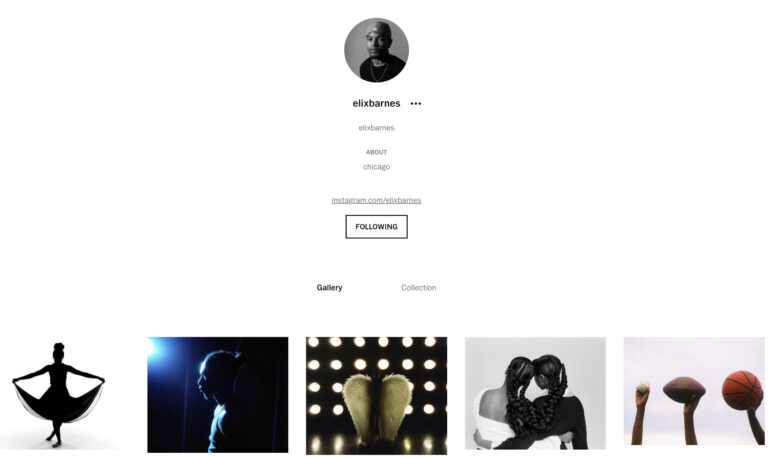
Elijah Barnes

Elijah gives us a look at contemporary life that many fashion photographers of the past would adore. Dive in and study Elijah’s photos and you’ll find traces of not only the best black photographers, but David Seidner and more.

Follow them on VSCO.

Nwabisa Salukazana

Finding good conceptual portrait photographers is one of our favorite things to do. Not much Photoshop is used here; and so Nwabisa is surely one of the best black photographers we’ve seen recently.

Follow them on VSCO. And be sure to check out our interview with Nwabisa.

Rhulani Anthony Bila

Follow them on VSCO.

Majira Mchana

Majira uses color in a way that so many old-school photographers would be proud of.

Follow them on VSCO.

Everyday People Stories

Here, you’ll find various portraits showing off a lot about various people; and the portraits are all fascinating.

Follow them on VSCO.

Chauncey Magnum

There’s a sense of wild, fun-loving energy in Chauncey’s photographs.

Follow them on VSCO.

Sheridon & Stephnie

Some of Stephnie and Sheridon’s images make us stare and wonder how they were made. Check them out, you’ll see.

Follow them on VSCO.

Kwaku Yeboah Sarkodie

Wait until you see Kwaku’s fashion work. He’s surely one of the best black photographers we’ve found recently.

Follow them on VSCO.

Travis X

There’s simply too much to talk about with Travis’s work and all the creative effects he uses.

Follow them on VSCO.

‘Football’ Documents North Africa and the Middle East’s Love for the Beautiful Game

‘Football’ Documents North Africa and the Middle East’s Love for the Beautiful Game
image

Football has always been the biggest sport within North Africa and across the Middle East (MENA). But in 2022, both regions wrote a triumphant page in the history books as Qatar hosted the FIFA World Cup and Morocco finished in the semi-finals — the first Arab nation to do so. A new book shines a light on the passion that MENA nations have for the Beautiful Game.

Published by MIDDLE EAST ARCHIVE and designed by Lack of Guidance co-founder Akaar, Football transcends the limitations of sport to explore how the game has become an essential aspect of the region’s cultural identity.

The book contains photographs that were taken between the late 1980s up until 2023, from Algeria, Morocco, Tunisia, Egypt and the UAE, to Syria, Lebanon, Turkey, Oman, Palestine, Iran, Saudi Arabia and Kurdistan. Photographers include Abbas, Nikos Economopoulos, Karim Sahib, Jinane Ennasri, Marco Di Lauro, Alex Webb, and Salah Malkawi.

Football is a linen-bound book that spans 126 pages in both English and Arabic. The book is available to purchase for $50 USD online and at select retailers, such as Printed Matter in New York.


Read Full Article

At SFMOMA, Zanele Muholi Documents South African Queer Life with Intense Feeling

At SFMOMA, Zanele Muholi Documents South African Queer Life with Intense Feeling

Muholi is drawn to patterns made by embracing bodies and entwined limbs. Their portrait of queer couple Musa Ngubane and Mabongi Ndlovu shows a hug in which hands and arms seem almost preternaturally connected. The shot of Katlego Mashiloane and Nosipho Lavuta bent over, bathing together, makes the pair’s backs look as though they are merging together into one.

This sense of cohesion makes these images feel so intimate, emotionally raw and powerful. Eye Me can at times be an overwhelming experience for the intensity and quantity of emotions that permeate from virtually every shot in the show.

A black-and-white self-portrait of the artist with elaborate fabric framing their face.
Zanele Muholi, ‘Somnyama Ngonyama II,’ Oslo, 2015. (Courtesy of the artist and Yancey Richardson, New York; © Zanele Muholi)

The largest gallery in Eye Me is reserved for work from Muholi’s magisterial series “Somnyama Ngonyama,” in which they took 365 self-portraits as a vast array of alter egos in locations around the world, from Kyoto to Charlottesville to Nuoro, Italy. Striking in their intricacy (see the dozens of combs carefully arrayed in Muholi’s hair for “Qiniso”) as well as provocative (for “Faniswa,” Muholi painted a uterus on their shoulder), the photographs show the artist often adopting postures of coiled power and great intensity.

For the exhibit, SFMOMA reproduced several of the images from this series to mural size, and the effect is electrifying. In a piece like “Manzi I,” the larger size gives audiences the chance to fully appreciate Muholi’s intricate interplay of textures and masterful arrangement of tones, and their facial expression of wariness, fatigue and resistance hits all the harder.

Revitalizing Your Photography With Minimalism  

Revitalizing Your Photography With Minimalism  

Exploring familiar landscapes with a fresh perspective is a challenge many photographers face, particularly when seeking to maintain creativity and inspiration in their work. This issue is particularly relevant for those who frequently revisit the same locations, where finding new angles and approaches can significantly enhance the photographic experience and outcome.

Coming to you from Ben Harvey Photography, this insightful video looks into how Harvey confronts the monotony of photographing the same places by adopting a minimalist approach, limiting his gear to just one camera and one lens. Harvey’s decision to simplify his photographic process is not just about making life more difficult for himself; rather, it’s a strategic choice to gain clarity and focus. This method encourages photographers to deeply engage with their environment, forcing them to look beyond the obvious shots and discover unique compositions and lighting conditions that they might otherwise overlook. Harvey’s experiment with minimalism, particularly in the stunning landscapes of Sussex, serves as a powerful reminder of the impact that constraints can have on creativity.

Moreover, Harvey introduces the concept of the “Prime Challenge,” a series aimed at pushing the boundaries of what can be achieved with a single focal length. This approach not only tests a photographer’s skill and adaptability but also highlights the importance of creativity within limitations. Additionally, Harvey shares a novel, streamlined method for carrying and accessing his camera, emphasizing efficiency and mobility in the field. This advice is particularly valuable for photographers looking to reduce the physical burden of their gear while maximizing their ability to capture fleeting moments. Harvey’s reflections, coupled with practical tips on gear and timing, offer invaluable insights for photographers of all levels seeking to rejuvenate their passion and technique. Check out the video above for the full rundown.

Trentham to share black bear photography with LeConte Photographic Society

Trentham to share black bear photography with LeConte Photographic Society

SEVIERVILLE — The LeConte Photographic Society in Sevierville will host Roger Trentham for a photo program on Saturday, Feb. 24, at the King Family Library in Sevierville at 10 a.m. in the Burchfield Room. This is a free program and open to the public.

Join Trentham for a photographic journey of discovery into the world of black bears. Discuss what we think we know and what we certainly do not know about the complex relationships of black bears of the Smoky Mountains.

Panasonic Lumix G9II review

Panasonic Lumix G9II review

Panasonic Lumix G9II: Specs

Sensor: 25.2MP Live MOS Micro Four Thirds
Image stabilization: up to 8-stop IBIS
Autofocus: Hybrid AF
Viewfinder: OLED EVF, 3.68M dots  
Display: 3-inch Vari-Angle LCD touchscreen, 1.84M dots
ISO: ISO100 – 25,600
Max video resolution: 5.8K/30p
Ports: USB type-C, HDMI, 3.5 microphone jack, headphone,
remote, hot-shoe
Storage: 2 x UHS-II
Wireless: Wi-Fi 5GHz, Bluetooth 5.0
Shutter speed: 1/32,000
Shooting speed: 14 fps mechanical; 75 fps electronic
Battery life (CIPA): 370 shots
Size/weight: 5.29 x 4.03 x 3.55 inches; 1.45 lbs

The Panasonic Lumix G9II is a powerful advanced mirrorless camera, aimed at enthusiasts and professionals, whose priority is photography. Just like its predecessor, the original Lumix G9, the G9II is billed by Panasonic as its “flagship model for still images.”

As a G-Series camera, the G9II uses a Micro Four Thirds (MFT) sensor, which has had its resolution boosted by around 5MP versus the original model, now sitting at 25.2MP. The design has been revised and the camera shares a body and layout with its powerful, video-oriented bigger sibling, the Panasonic Lumix S5IIX. And just like the S5IIX, the G9II gets Panasonic’s latest hybrid phase and contrast detection autofocusing system — a step up over the contrast-only auto detection in the original G9.

Costing almost $1,900 in body-only form, the G9II is competing with some serious competition in the upper-enthusiast market, namely the Canon EOS R7, Sony A6700, Fujifilm X-T5 and OM System OM-1. Does the Lumix G9II have what it takes to compete with some of the best mirrorless cameras around? Find out in our Panasonic Lumix G9II review.

Panasonic Lumix G9II review: Price and availability

The Lumix G9II was released in September 2023 and costs $1,899 / £1,699 body-only. In the U.S. and U.K. the camera is available as a kit with a Leica 12-60mm lens for $2,499 / £2,249. In the U.K. there’s also an intermediate kit which features a non-Leica 12-60mm lens for £1,899.

Even for a flagship mirrorless camera aimed at serious enthusiasts, the G9II is priced quite high, retailing slightly cheaper than the Micro Four Thirds OM-1, but much pricier than the EOS R7, a6700 and X-T5, all three of which feature larger APS-C sensors. Its price actually pushes the G9II towards the territory of pro-oriented cameras like the Fujifilm X-H2S, Sony A7 IV and Canon EOS R6 Mark II.

We tested the G9II using the Leica 12-60mm lens. It’s likely that many buyers of the G9II will be existing Lumix G users, and will already own lenses. If you’re new to the system, though, and need a first lens, the Leica is the one to go for, and its extra price shouldn’t deter pros or serious enthusiasts. This lens produces lovely, sharp images and features a bright f/2.8-f/4 maximum aperture (versus the f/3.5-f/5.6 of the non-Leica lens). Both 12-60mm lenses give you an expansive zoom range, though, with a field of view equating to 24-120mm on a full frame camera.

It’s worth pointing out that the Lumix native lens range is decent — there are around 40 in total (combined MFT and full frame). However, the number of “affordable” lenses is quite small compared to Fuji and Sony. This may be a consideration if you are planning on moving to Lumix for the first time. Third party AF lenses are readily available for Lumix cameras.

Panasonic Lumix G9II review: Design

The Lumix G9II shares much of its design with the full frame Lumix S5II. Subsequently, the G9II has lost the rounded shoulders and bulbous, DSLR-esque design of the original G9, in favor of a sleeker, squarer aesthetic. 

The Lumix G9 II shares its overall design with the Lumis S5 II and S5 IIX (pictured left). (Image credit: Tom’s Guide)

Spanning the top plate are two main dials for drive and mode. This represents an extra dial versus the G9 but comes at the expense of its top digital display. There’s a large front grip with a finger recess, as on the S5II, making the G9II comfortable to hold, even with larger lenses. The G9II also shares the S5II’s 3-inch 1.84M dot vari-angle LCD and high-res 3.68M dot 120Hz OLED EVF. Both are bright and vivid, and can have their brightness, contrast and tints fine tuned for accuracy. 

(Image credit: Tom’s Guide)

Build quality is fantastic, with plenty of metal used throughout. Dials turn with a satisfying thunk, although the plastic rear dial around the D-pad feels a little cheap. Most of the buttons have good haptic feedback, except the shutter button, which is a little mushy for my liking. As with the S5II, the plastic hatch over the SD ports is spring loaded and closes firmly, while the accessory ports are covered by two rubber flaps that are fiddly to close.

(Image credit: Tom’s Guide)

The G9II is a heavy camera at 1.45lbs (658g) without a lens. Thanks to that large grip, the weight doesn’t make it a difficult camera to handle, but a comfortable strap is advisable if shooting with the G9II around your neck or wrist all day.

(Image credit: Tom’s Guide)

Connectivity options are ample. There’s a remote shutter port, two UHS-II SD slots, headphone and mic ports, a USB-C port and a full HDMI Type-A port, just like the S5II. On top, there’s a multi-accessory hot shoe.

The G9II is weather sealed, which came in useful for my AF testing shots below, taken in driving rain. After 15 minutes, the camera was mud-splattered with rainwater dripping from the body and lens: no problem at all.

Panasonic Lumix G9II review: Controls

The G9II mirrors the S5II’s controls and layout, too (apologies if this starts to feel like Groundhog Day). That’s a very good thing.

The camera is very well laid out, with virtually every shooting parameter, control or Fn button at easy reach with your right hand only. The only controls you need your left hand for are the drive dial, viewfinder toggle and the playback button, meaning your left hand is almost always free to keep the camera stable or operate the lens controls or focus ring. It also means there’s no awkward stretching or pivoting of the camera required to access a button on the left with your right hand. A lot of thought has gone into the G9II’s user interface, and I love it.

(Image credit: Tom’s Guide)

The G9II’s menu is expansive but easy to navigate, even for newcomers to the system. It may not be as user friendly as Canon’s menu, but if you’re coming from the convoluted menus of Fuji or Nikon, it’s a joy.

(Image credit: Tom’s Guide)

A lot of thought has gone into the G9II’s user interface, and I love it.

One issue I noted with the S5II, again present on the G9II, is input lag with certain functions. Flick the power switch, for example, and you’re sometimes waiting up to 5 seconds for the camera to power on. There’s similar lag with the playback button. It’s a quirk that you quickly get used to, but frustrating all the same.

Panasonic Lumix G9II review: Autofocus performance

The Lumix G9II features Panasonic’s latest autofocusing system, combining both phase and contrast detection. This is the same system as found in and introduced by (you guessed it) the S5II. The G9II also features Panasonic’s latest detection modes, including human (eye/face), animal (eye/body), car and motorcycle detection. In my S5II review, I criticised the infancy of the AF system, which at the time featured very few detection modes versus the competition. That’s no longer the case.

Even in low light, the Lumix G9 II was able to detect and track Luna the greyhound’s eye. (Image credit: Tom’s Guide)

The G9II’s autofocus is extremely capable. Even in low light, human face and eye detection and continuous tracking works very well, detecting and locking onto eyes. In the portrait shot of my partner in the section below, the camera easily found and focused on her eye, even in the challenging lighting conditions.

The same is true for animal detection and tracking. In the low light photo of one of my greyhounds, Luna, above, you can see that her eye is in sharp focus.

When shooting fast-moving subjects, the autofocus tracking is not quite as effective, but still performed very well. I tested the high speed continuous AF tracking with my other greyhound, Nutty, running at full tilt, so around 40-45mph. 

The G9II was able to detect and track Nutty throughout the frame. More often than not, the focus lagged behind the dog, resulting in unusable photos. Some shots tracked her body but couldn’t detect or hold her eye, meaning only her body or back legs were in focus. From several hundred high speed shots, there were around 7 or 8 usable photos with Nutty’s face and eyes in acceptable focus. 

That may not seem great initially, but it’s actually pretty good. Both of my dogs present a serious challenge for AF systems, as they’re extremely quick and both have black eyes and fur that make it difficult for cameras to detect their eyes. Most mid-range enthusiast cameras I test achieve a similar usable photo rate, but only when my dogs are running much slower.

The strong AF performance makes the G9II a great choice for sports or wildlife photographers. Hopefully Panasonic adds in more detection algorithms down the line — bird detection, for instance — to bring the AF fully up to par with Canon.

Panasonic Lumix G9II review: Image performance

As a flagship stills camera, what matters most about the G9II is the photos it takes. And the Lumix G9II shoots beautiful stills. The 25.2MP micro-four-thirds sensor is packing a lot of resolution into a small space, delivering fantastic-looking, sharp images at lower ISO values. Colors are vibrant (especially in the Vivid colour profile) but natural feeling, as you can see in the image of the polar bears below.

The Lumix G9 II delivers vibrant but natural feeling colors, as you can see in this image of two polar bear statues. This image was taken in the camera’s Vivid profile. (Image credit: Tom’s Guide)

The G9II’s shooting rate is blistering for a sub-$2,000 camera. Using e-shutter, the G9II can shoot 60fps in AF-C mode and 75fps in AF-S. It can also shoot up to 200 JPEGs and 170 RAW files in continuous drive — that means you can shoot for around 20 seconds continuously if you drop down the rate to 10fps. Well, I say “drop down”, but for context 10fps is where the Sony A7 IV tops out entirely. Buffers filled, there’s obviously some processing time required as the camera writes everything to cards, but you can keep shooting while it’s doing so. It’s very impressive, and another boon for wildlife and sports photographers.

The natural limitations of the MFT sensor start to become apparent at ISO1600 and above, where you’ll see noticeable image noise in RAW stills. Thankfully, up to ISO6400, this is mostly smoothed out by noise suppression in out of camera JPEGs without degrading them to a noticeable extent for standard viewing, although RAW files will likely need some noise reduction in post. As you can see in the two images of my partner below, shot at ISO1600, there is visible noise on her face and in the sky above her head in the exported RAW file on the left. In the out of camera JPEG on the right, the noise has mostly been smoothed out by the camera, with little sharpness lost in her face or in the background.

Noise becomes more problematic above ISO6400, where RAW files start to get very noisy and out of camera JPEGs suffer a decline in sharpness as the camera has to apply lots of smoothing noise suppression. In the images below shot at ISO 12,800, you can see how destructive image noise has become. In the image on the left, which is an export of the RAW file (with the exposure lifted to reveal shadow detail), the noise is utterly ruinous. In the right-hand shot, which is the out of camera JPEG, the image is blurred by noise suppression to the point of being unusable.

This is not unexpected from a sensor of this size. Smaller sensors generally deliver noisier images at high ISO values, so this is just a limitation you need to factor in when considering this camera. If low light performance is of paramount concern to you, an MFT sensor probably isn’t what you should be looking at in the first place — you’d be better off with a full frame camera like the Panasonic Lumix S5IIX or the Nikon Z f.

Personally, I try to avoid ISO12,800 even on larger APS-C sensors, anyway, so I don’t see this as too much of an issue. If you will be shooting in low light with this camera, then investing in an ultra fast f/1.8 lens is still probably a good idea, to make sure you can keep that ISO down.

Thankfully, you’ll also have the G9II’s fantastic (up-to) 8-stop IBIS in your arsenal. The image below was shot handheld at 1 second shutter, without any camera shake or motion blur. This will allow you to drop your shutter and avoid high ISO values.

As you can see in the image above, the G9II captures a wide dynamic range. The left image is the out of camera JPEG, which has rendered dark shadows and a dark sky. The right image is an export of the original RAW file, with the exposure boosted in post to reveal shadow details. As you can see, the G9II captured plenty of shadow details in the dark foreground, the dark grey tones of the sky, all the way up to the bright highlights of the building lighting. 

There are a range of colour profiles to choose from, although less than you’ll find from rivals, giving you fewer creative options out of camera than rivals like the Fujifilm X-T5. That being said, this is a camera aimed at serious enthusiasts and even pros, for whom natural, true-to-life colors will matter more than creative profiles.

(Image credit: Tom’s Guide)

As a black and white shooter in my personal photography, though, I do appreciate the G9II’s numerous monochrome profiles — there are 5 in total, including a Leica monochrome filter to replicate the German manufacturer’s aesthetic. 

Panasonic Lumix G9II review: Video performance

The Lumix G9II is, according to Panasonic, a stills-oriented camera. Nevertheless, as we’ve come to expect from Lumix cameras these days, it packs some pretty heavy video specs that put similarly priced rivals to shame. In fact, if Panasonic told me this was a video-oriented hybrid, I wouldn’t question it.

The G9II shoots up to 5.8K/30p or 5.7K/60p MOV files in camera, with 5.7K/30p ProRes available when shooting to SSD. Cinema 4K and standard 4K are available at 60p in 4:2:2, and there are a range of bitrates and both All-I or Long-GOP compression types on offer, giving video shooters plenty of flexibility to balance and tailor quality and workflow requirements. It even comes with a trademark video camera feature: a full HDMI port.

The G9II’s fantastic IBIS is naturally a major boon for video, allowing smooth handheld footage, especially when paired with an OIS lens, making panning shots much smoother. Combine all of this with Panasonic’s latest AF and despite ostensibly being a still camera, the G9II is a more compelling package for video than most out there save the S5II. That includes Panasonic’s own video oriented Lumix GH6, which features the manufacturer’s old AF system (although does have a CFExpress port).

Panasonic Lumix G9II review: Battery life and overheating

The Lumix G9II features the same battery as found in the S5II, rated at 370 shots without any power saving modes enabled. In today’s market, that figure looks decidedly puny: the EOS R6 Mark II, Fujifilm X-T5 and Fujifilm X-S20, for example, are all rated at well over 700 shots. In power saving mode with the EVF disabled, Panasonic claims that the G9II will shoot 1,300 photos, which is great. However, given this is a flagship camera, it would’ve been nice to see Panasonic invest in some better battery technology to help the G9II keep shooting all day without having to disable displays. As it is, you’ll want at least one, maybe two spare batteries for a full day of professional work.

In video testing, the G9II averaged around 90 to 100 minutes continuous shooting at 4K/60p before succumbing to a flat battery. That’s around the same as an action camera. Impressively, it managed that without ever overheating, indoors without the benefit of windchill. This was a pleasant surprise, especially given the G9II lacks the cooling fans of the S5II.

Panasonic Lumix G9II review: Verdict

The Lumix G9II is an incredible mirrorless camera. It’s built like a tank, thoughtfully laid out, features fantastic AF and IBIS systems, takes wonderful stills and is a more-than-capable video tool, too. If you’re into wildlife and sports photography, the G9II’s combination of blistering shooting rate and intelligent hybrid AF make it nigh-on impossible to beat for this money.

The MFT format sensor has natural limitations in terms of image noise, but this isn’t a huge issue unless you’re frequently and deliberately shooting at high ISO, which most photographers tend to avoid anyway. It’s also a reasonable assumption given the price and market position of the G9II that prospective buyers (a chunk of whom will already be using the MFT format) will understand this limitation and will have the knowledge to mitigate it entirely.

My only real gripe with the Lumix G9II is its battery, which is a little weak in today’s market, especially for a flagship camera aimed at serious enthusiasts and professionals. That said, spare batteries aren’t exactly expensive, so as long as you buy the G9II knowing what to expect, it’s a very easy camera to recommend.