Canon Announces World Unseen Photography Exhibition with Powerful Film Series

Canon Announces World Unseen Photography Exhibition with Powerful Film Series

Canon Europe today released a video series to showcase its upcoming immersive exhibition – a photography exhibition you don’t need to see. World Unseen will be held at Somerset House, London between 5-7th April, in partnership with the Royal National Institute of Blind People (RNIB).

Developed in collaboration with leading creative agency VML UK, the World Unseen campaign will today see four films go live across the Canon website with social teasers on Meta platforms and Canon’s owned channels ahead of the exhibition itself.

The series dives into the personal stories of visually impaired individuals – including expectant mother, Karen Trippass, British disability activist, Lucy Edwards, North America’s only blind conservationist, Lawrence Gunther, and British Champion Skier, Menna Fitzpatrick.

image

Through conversations with renowned photojournalists and an ultrasound practitioner, the films follow a blind mother-to-be as she feels the outlines of her baby scan, while others feel imagery through detailed braille descriptions and life-like textures. The work demonstrates the power of imagery to transform our world, capturing the raw emotion and impact of individuals experiencing photography in this tactile way.

The films are powerful demonstrations of the inclusive imagery on show at the World Unseen exhibition in April. The experience has been designed for and with blind and partially sighted people, using elevated prints, immersive audio descriptions, and braille – to ensure as many people as possible can appreciate it.

image

Sighted people, too, will gain a better appreciation of the partially sighted experience. Each image will be obscured in ways that simulate different types of visual impairment, from glaucoma to diabetic retinopathy. While it raises awareness of the importance of accessibility in arts and cultural spaces, it also draws attention to how inclusive design makes experiences better for everyone.

Through its proprietary PRISMAElevate XL software and Arizona printer series, Canon has been making arts more accessible for blind and partially sighted people for many years, supporting many art galleries and museums globally with tactile printing and braille signage. However, this event marks Canon’s first completely accessible, immersive experience.

“Photography is an incredibly powerful medium that can push the imagination and we want this experience to be accessible to everyone. This exhibition was created with blind and partially sighted people in mind to share imagery and the stories behind them in an entirely new way. With Canon’s elevated print technology, we hope all visitors will feel a deeper connection to the emotions and stories that imaging can bring to life,” says Pete Morris, brand and sponsorship senior manager, Canon EMEA.

The exhibition will feature works from world-renowned photographers and Canon ambassadors, including multi-award-winning South African photojournalist Brent Stirton and renowned Brazilian Photojournalist, Sebastião Salgado.

image

San Sharma, creative director at VML UK added, “World Unseen makes photography more accessible and immersive for everyone. And, in doing so, it changes the way sighted people understand the visual impairment experience. It’s a privilege to work on a creative idea that means so much to so many people, and I hope it inspires others to be more inclusive in their work too.”

VML UK has worked closely with Canon Europe and RNIB to ensure all elements of the World Unseen campaign meet accessibility standards, including website pages, video audio descriptors and the exhibition experience.

Dave Williams, inclusive design ambassador at RNIB, concluded, “The World Unseen exhibition opens up the world of photography and enables more blind and partially sighted people to experience the emotive stories, and physical touch, of these iconic images. As a braille user, it’s fantastic to be working with Canon to raise awareness of the possibilities of textured print and to see in action how technology can make art more accessible for people with sight loss.”

Salman Khoshroo’s Busts Challenge the Conventions of Polymer

Salman Khoshroo’s Busts Challenge the Conventions of Polymer

“PHS-06” (2023). All images © Salman Khoshroo, shared with permission

In a recent progression of work, Iranian artist Salman Khoshroo (previously) pushes the boundaries of polymer. Thick globs of the industrial material are mixed into a gummy consistency in hues of tinted primary colors mixed with black and white. In an impressively captivating balance of tousled dabs and methodical dollops, Khoshroo sculpts gestural busts, evoking human essence with a minimal number of strokes.

The Polymer Series came into existence from an ongoing investigation of different materials and their artistic potential. Elaborating on this process of exploration, the artist shares, “I search for materials with interesting behaviors that embody a certain kind of empathetic physical feel. This material is very gestural on its own: The pieces dance and wrestle with this sticky substance to shape it into its final human forms.”

For more work, see Khoshroo’s website and follow his Instagram.


A bust fashioned from a gum-like substance, depicting a human head in hues of red, white, and black.

“PHS-05” (2023)

A bust fashioned from a gum-like substance, depicting a human head in hues of blue, white, red, and yellow.

“PHS-01” (2023)

A bust fashioned from a gum-like substance, depicting a human head in hues of black

“PHS-07” (2023)

A bust fashioned from a gum-like substance, depicting a human head in hues of LIGHT PINK

“PHS-04” (2023)

A bust fashioned from a gum-like substance, depicting a human head in hues of royal blue

“PHS-02” (2023)

A bust fashioned from a gum-like substance, depicting a human head in hues of red, white, and blue.

“PHS-03” (2023)

Do stories and artists like this matter to you? Become a Colossal Member today and support independent arts publishing for as little as $5 per month. The article Salman Khoshroo’s Busts Challenge the Conventions of Polymer appeared first on Colossal.

Wall Art Market Report : Exponential Growth by Market Size, Share, Trends and Analysis to 2031

Wall Art Market Report : Exponential Growth by Market Size, Share, Trends and Analysis to 2031

The market for wall art is expanding rapidly, even in emerging economies where home accessories and other related goods are finding great success on the market. Due to the expansion of the real estate sector in major cities and the shift from traditional to urban living, the impact of this aspect on the wall art market is anticipated to grow during the projected period.

[embedded content]

Allied Market Research recently published a report, titled, “Wall Art Market by Type (Modern, Abstract, Others), by Price Point (Premium, Mass), by Sales Channel (Auction Houses, Specialty Stores, E-commerce, Others): Global Opportunity Analysis and Industry Forecast, 2021-2031.”

As per the report, the global wall art industry was estimated at $20.40billion in 2021, and is set to reach $34.77 billion by 2031, growing at a CAGR of 5.6% from 2022 to 2031. The report offers a detailed analysis of changing market trends, top segments, key investment pockets, value chains, regional landscapes, and competitive scenarios.

📚 𝗗𝗼𝘄𝗻𝗹𝗼𝗮𝗱 𝗦𝗮𝗺𝗽𝗹𝗲 𝐏𝐃𝐅 𝐨𝐟 𝐓𝐡𝐢𝐬 𝐑𝐞𝐩𝐨𝐫𝐭 at www.alliedmarketresearch.com/request…mple/17281

Rise in disposable income, increase in the global population, and thriving real estate sector drive the growth of the global wall art market. A massive increment in the number of households due to urbanization will promote global market growth trends.

Growing demand for modern and abstract wall art across the commercial and residential sectors is predicted to create new growth opportunities for the global market. However, fluctuations in raw material costs can put brakes on the global market expansion.

The market will expand due to the home decor sector’s quick development and expansion in developing economies. Since manufacturers are concentrating on creating innovative wall paintings and drawings, the wall art market demand for abstract and modern wall art from the residential and commercial sectors is rising.

This is projected to have an impact on the wall art market growth over the course of the forecast period. One of the factors propelling the wall art market’s growth over the forecast period is the movement of people from rural to urban areas, where they are embracing the modern lifestyle.

But the market’s expansion is being constrained by shifting raw material prices.

The global wall art market is segmented into type, price point, sales channel, and region. By type, the market is divided into modern, abstract, and others.

Among these, the abstract segment occupied the major wall art market share of the market in 2021, and is projected to maintain its dominance during the forecast period. Modern art that does not depict imagery from the real world is called abstract art.

Even though it features color, lines, and shapes, neither of them is intended to resemble actual objects or live beings. The abstract concepts and ideas frequently had an impact on the works of art.

As a result, abstract wall art is greatly demanded by consumers.

Enquiry Before Buying : www.alliedmarketresearch.com/-enquiry/17281

According to the estimate for the global market for wall art, North America held the largest share of the market in 2021 and is expected to keep doing so in the near future. The increase in consumer spending on high-end home design and décor items and the rise in living standards are driving the growth of wall art market in North America region.

Sales in this area are further boosted by a well-developed retail infrastructure and celebrity brand endorsements. Additionally, the U.S. is anticipated to expand at the greatest CAGR because of its fast-developing infrastructure and alterations in consumer behavior brought on by an increase in disposable income.

The COVID-19 epidemic had an adverse effect on the global market for wall art. The pandemic’s disruption of the supply chain, shortage of raw material availability, and restrictions on the transit of commodities had an effect on the market for wall art.

Additionally, delays and disruptions at national borders have made it difficult to export and supply wall art around the globe.

One of the reasons affecting the sales of wall art is the expanding social media. The majority of Americans have acknowledged that they get more of their decorating ideas from publications, the houses of their friends and family, television shops,.

The manufacturers are also increasing their social media presence in an effort to increase customer awareness of new product introductions and drive sales. Due to the growing numbers of millennials and generation X, the effective marketing strategies are also very common in the nation.

Buy Now This Report at : www.alliedmarketresearch.com/checkou…d20fae8542

𝐓𝐡𝐞 𝐦𝐚𝐣𝐨𝐫 𝐩𝐥𝐚𝐲𝐞𝐫𝐬 𝐚𝐧𝐚𝐥𝐲𝐳𝐞𝐝 𝐟𝐨𝐫 𝐠𝐥𝐨𝐛𝐚𝐥 𝐰𝐚𝐥𝐥 𝐚𝐫𝐭 𝐢𝐧𝐝𝐮𝐬𝐭𝐫𝐲 𝐚𝐫𝐞
• Etsy, Society 6,
• Saatchi art,
• 1000 Museums,
• Paintru,
• Artfinder,
• Redbubble,
• Schoolhouse,
• Urban Outfitters,
• Rifle Paperco,
• One Kings Lane,
• Big Wall Decor,
• Wayfair,
• Z Gallerie, and
• Art.com.

𝐊𝐄𝐘 𝐅𝐈�.𝐃𝐈�.𝐆𝐒 𝐎𝐅 𝐒𝐓𝐔𝐃𝐘
• By type, the abstract segment was the highest revenue contributor to the market, with $9,798.2 million in 2021, and is estimated to reach $16,480.3 million by 2031, with a CAGR of 5.5%.
• Depending on price point, the mass segment was the highest revenue contributor to the market, with $12,294.9 million in 2021, and is estimated to reach $20,385.1 million by 2031, with a CAGR of 5.4%.
• As per sales channel, the specialty stores segment was the highest revenue contributor to the market, with $9,845.1 million in 2021, and is estimated to reach $16,401.8 million by 2031, with a CAGR of 5.4%.
• Region wise, North America was the highest revenue contributor, accounting for $7,895.3 million in 2021, and is estimated to reach $12,621.8 million by 2031, with a CAGR of 5.0%.

𝐀𝐧𝐚𝐥𝐲𝐬𝐭 𝐑𝐞𝐯𝐢𝐞𝐰
According to CXOs of leading companies, rising interest in giving homes and offices an aesthetic look, increasing demand for wall art from the construction industry to provide furnished and ready-to-live homes, increasing applications of décor in spas, salons, restaurants, and other establishments, rising preferences for the use of customized decorative products, and increasing demand for specific design of decoration are some of the significant and essential factors that will likely accelerate the growth of the wall art market. On the other hand, growing adoption of smartphones and internet portals, together with the prevalence of better sales channels, would further contribute by producing enormous chances that will led to the rise of the wall art market during the forecast period.

Another major driver of the demand for wall art is rising consumer disposable income. High-paying customers rarely give such purchases for their homes much thought.

The changing tastes and preferences of customers as well as their changing lifestyles are contributing to this rise in demand for wall art. Additionally, the real estate market in developed nations like the U.S., Germany, the UK, and France, among others, has seen a considerable uptick in recent years, which is fueling demand for home lifestyle items like wall art.

Another element boosting demand for wall art is GDP growth in developed nations.

News From

Allied Market Research
Category: Market Research Publishers and Retailers Profile: Allied Market Research is a global market research and business consulting wing of Allied Analytics LLP based in Portland, Oregon. Allied Market Research provides global enterprises as well as medium and small businesses with unmatched quality of “Market Research Reports” and “Business Intelligence Solutions”. AMR has a targeted view to provide business insights and consulting to assist its clients to make strategic business decisions and achieve sustainable growth in their respective market dom

For more information:

Flossmoor trustees approve new sculpture for Ballantrae Park

Flossmoor trustees approve new sculpture for Ballantrae Park
Flossmoor trustees accepted a gift sculpture into the village’s permanent collection and opted to place it in Ballantrae Park, fulfilling a request from Ballantrae neighborhood residents.  Residents have been lobbying for new artwork in the park since two sculptures by artist Terry Karpowicz, “Mount” and “Totem,” were removed. The two[Read More…]

Iconic Photographs Capturing Early 20th-Century Nightlife Go on View

Iconic Photographs Capturing Early 20th-Century Nightlife Go on View

“Nightlife,” a new exhibition at New York’s Marlborough gallery, brings together the works of six photographers known for chronicling the nocturnal goings-on of European and American cities in the early 20th century, including Berenice Abbot, Brassaï, Bill Brandt, Weegee, Helmut Newton, and Irving Penn.

Each of these photographers approached their subject from a different angle. In the 1920s, French-Hungarian photographer Brassaï spent his evenings walking past Parisian bars and brothels, armed with his camera and 24 glass plate negatives. His images variously captured the intimacies, excesses, and joys of night-crawlers, and were celebrated upon the release of his 1933 book, Paris de nuit. Henry Miller dubbed him “the eye of Paris.”

Inspired by Brassaï, Brandt did the same for 1930s London, where he documented the nightly festivities of both the upper and lower classes. His own photography book, A Night in London, published in 1938, offered a glimpse into the prewar night life and labors of British folk across social classes.

Bill Brandt, In the Public Bar at Charlie Brown’s, Limehouse (ca. 1942). © Bill Brandt / Bill Brandt Archive. Photo courtesy of Marlborough New York.

Many of the photographs in “Nightlife” were made possible by the invention and commercialization of the flashbulb, which for the first time in history allowed photographers to take pictures in the absence of natural or artificial light. Prior to the flashbulb, visual documentation of nightlife had fallen to draftsmen to record these environments in sketches.

Photographers Penn and Newton, however, worked in far more controlled settings. Both were active in the field of fashion photography and vastly expanded its scope. Penn’s minimalist portraits hinted at nocturnal trends and styles. Meanwhile, German-Australian photographer Newton favored private as opposed to public scenes. His first two photography books, 1976’s White Women and 1978’s Sleepless Nights, are filled with intimate and erotic pictures of fully or partially nude women posing in bedroomsa reflection of changing gender norms as well as a commentary on the male gaze that turns observers into voyeurs.

Helmut Newton, Security, New York III (1976). © Helmut Newton Foundation. Photo courtesy of Marlborough New York.

Then there’s Abbott and Weegee, two New York-based photographers who used the same documentary style to depict the Big Apple from opposite perspectives. Abbott’s images of 1930s New York see her hovering in the sky, presenting skylines, squares, and neighborhoods as they developed over time. The city is in the making and unless this transition is crystalized now in permanent form, it will be forever lost,” she once said. “The camera alone can catch the swift surfaces of the cities today and speaks a language intelligible to all.”

Conversely, Weegee stayed on the ground, listening in on police radio broadcasts so he could capture inner-city mishaps such as crime scenes and brawls in the moment. “What I did,” he said, “anybody else can do.” Though ostensibly a press photographer, Weegee’s dynamic frames appealed to the fine art world: his work was first exhibited at the Museum of Modern Art in 1943, included the show “Action Photography,” and later compiled in his first photography volume, 1945’s Naked City.

See more images from the show below.

Berenice Abbott, New York at Night (1932). © Berenice Abbott/Getty Images. Photo courtesy of Marlborough New York.

Weegee, Lovers at the Palace Theatre (1945). Photo courtesy of Howard Greenberg Gallery © Weegee Archive/International Center of Photography.

Brassaï, Le bal des Quatres Saisons (1932). © ESTATE BRASSAÏ – RMN-Grand Palais. Photo courtesy of Marlborough New York.

Bill Brandt, Hermitage Stairs, Wapping (1930s). © Bill Brandt / Bill Brandt Archive. Photo courtesy of Marlborough New York.

Irving Penn, Girl Behind Bottle (Jean Patchett), New York, 1949 (1978). © Helmut Newton Foundation. Photo courtesy of Marlborough New York.

Weegee, Woman at a bar (1940s). Photo courtesy of Howard Greenberg Gallery © Weegee Archive/International Center of Photography.

Nightlife” is on view at Marlborough gallery, 545 West 25th Street, New York, March 7 through April 20.

Follow Artnet News on Facebook:
Want to stay ahead of the art world? Subscribe to our newsletter to get the breaking news, eye-opening interviews, and incisive critical takes that drive the conversation forward.

Photography 101: A Guide to Taking Better Photos

Photography 101: A Guide to Taking Better Photos
This article is written by a student writer from the Her Campus at Toronto MU chapter.

Photography is, in my opinion, one of the best ways to capture art. With quick access to smartphones and digital cameras, taking photos has never been easier — but the question is, how do you go about taking a good photo? 

This guide will serve as a foolproof manual for improving your photography skills. Whether you’re capturing your day-to-day life, documenting memories with friends, or working on your Instagram feed, these eight tips will help you with getting that perfect shot. 

So, grab your camera or phone and get ready to snap away!

Tip #1: Understand composition

We’ve all heard the phrase “a picture is worth a thousand words,” but what can we do so that someone says that about your photo?

You’ve got to start with composition, which is arranging the objects in a photo so it’s pleasing to look at within the frame. First, identify your focal point, the part of the image you’re immediately drawn to. Then, you can use the rule of thirds to position your focal point in the left or right third of the image while leaving the other two-thirds open.

In your phone’s camera settings, you can turn the grid on to assist you with applying these techniques.

This is a photo I took using the rule of thirds.

Tip #2: Play around with exposure

Exposure is the amount of light that reaches the frame of your camera. Essentially, it determines how bright or dark your photo will be.

According to Adobe, “When you take a picture, you press the shutter button to open a camera’s aperture, and light streams in, triggering a response from a sensor. Exposure is the amount of light that reaches your camera’s sensor, creating visual data over a period of time.”

Mastering exposure plays a big part in improving your photography skills, as it can impact both the mood and clarity of your photos.

This is a photo I took where I lowered the exposure in order to capture the sunset in its truest colours.
[embedded content]

Tip #3: Utilize leading lines

Incorporating the compositional technique of leading lines is one of my favourite things to capture in photography. These lines, which can be either natural or human-made, are meant to lead the viewer’s eye to the focal point of the photo.

Leading lines are also a great way to add depth to your images and can be found on a winding path, a row of street lamps, a city skyline, and so on.

This is a photo I took using the streetlights and the bridge to follow the leading lines technique.

Tip #4: Explore different angles

It’s all about perspective! Experimenting with different perspectives is bound to add some creativity to your photos. Angles in photography can make or break a photo as they help to transform mundane scenes into beautiful artwork.

High, low, and wide angles are just a few different perspectives to try out. For example, if you’re trying out street photography, try getting your camera as close to the ground as possible and shoot upwards. For other angles, using a tripod is a good way to capture if you’re having difficulty with it.

[embedded content]

Tip #5: Have good lighting

You need to have enough light for your focal point to be visible. If it’s too dark, your camera will have problems capturing the scene. Natural lighting is great for high-quality images.

I prefer to shoot in the morning, in overcast weather, or at golden hour, the last hour before sunset and the first hour after sunrise, because of the softer colours the camera picks up on, rather than broad daylight and the darkness at blue hour (just before sunrise and after sunset) and nighttime.

This is a photo I took in overcast weather.

Now, if you’re ever photographing indoors or when it’s dark, lighting equipment is a solution to these problems. It’s also important to note that if there’s too much light in your shots, you might see unwanted shadows in your images.

This is a photo I took during golden hour.

Tip #6: The more shots, the better

I can’t stress this enough — take more than one photo! Even if you think you got the perfect shot, snap a few more, just to be safe.

Try different angles and poses and/or switch up your camera settings, anything so you end up with a variety of pictures. It’s always better to have 20 photos to choose from than one because it’ll give you the chance to pick the perfect picture. Also, spontaneous moments come across as more genuine and authentic than posed photos!

Tip #7: Know your camera settings

If you’re shooting on a DSLR, take the time to understand ISO, shutter speed and aperture, as well as the different shooting modes (I really enjoy taking photos on aperture priority).

If you want to level up your photography game, you’ll have to eventually make the switch from shooting on automatic to manual – you’ll have much more creative liberty then! 

Tip #8: Editing can make all the difference

The power of post-processing is really all that. Editing allows you to refine and enhance your photographs in the best way possible. You can edit your photos in the built-in editing software on phones and laptops, but to take things a step further, the Adobe Lightroom mobile app is free and allows you to use most of the editing tools without having to pay.

By editing your photos, you can play around with cropping, colour correction and grading, and even touch-ups! Also, it’s best to use a light hand in the beginning, you don’t want to go overboard with changing the appearance of your photo and be left with a final product you’re unhappy with. Let the photo itself do most of the talking, and try tweaking the brightness and contrast at first (this is called colour correction).

Keeping these tips in mind, you’re bound to take some great photos. Remember, practice is key!

Chelsea Hotel’s Cast of Characters, Captured by Its Resident Photographer

Chelsea Hotel’s Cast of Characters, Captured by Its Resident Photographer

Plus: a chef’s guesthouse in Bali, art that explores girlhood — and more recommendations from T Magazine.

Step by Step

Left, a woman in jeans and a red turtleneck shirt looks to the side while leaning against a mantle. Right, a hair bow and beauty products are collaged on a green background.
Left: Alison Loehnis, the President of Yoox Net-a-Porter. Right, clockwise from top left: Jennifer Behr Velvet Bow Barrette, $128, jenniferbehr.com; NARS Laguna Bronzing Powder, $40, narscosmetics.com; Augustinus Bader the Cream, $300, net-a-porter.com; Sisley Paris Black Rose Cream Mask, $200, net-a-porter.com; Macrene Actives High Performance Tinted Moisturizer, $165, net-a-porter.com; Oribe Intense Conditioner for Moisture & Control, $52, oribe.com; Frédéric Malle Carnal Flower Eau de Parfum, $380, net-a-porter.com; and Sisley Paris Nutritive Lip Balm, $100, sisley-paris.com.Left: courtesy of Net-a-Porter. Right: courtesy of the brands

In the morning I tend to wash my face before I get in the shower. I usually use the Dr. Barbara Sturm Enzyme Cleanser; it’s lightweight so is great for travel and comes in a powder form you mix with water. I’m a longtime user of Biologique Recherche and swear by Lotion P50. On my eyes I use the Tata Harper Elixir Vitae Eye Serum, which is firming and lifting. My moisturizer depends on the season: When it’s cold I’ll use Augustinus Bader the Cream. If it’s humid I’ll use the Light Cream. About a year ago, I discovered this desert island product, which is Natura Bissé Diamond Cocoon Sheer Eye cream — it’s a tinted eye cream that makes you look rested. After the shower, I use the Augustinus Bader Body Lotion. When I need it, I’ll use either Biologique Recherche Masque Vernix, which is a bit rich, or Auteur’s retinol serum. For flights, I always take the Omorovicza Queen of Hungary Evening Mist with me — the flight attendants will usually ask for a spray. Sisley has this Black Rose Cream Mask that’s always in my travel bag, too.

For makeup, I love Hourglass Veil Hydrating Skin Tint or Macrene Actives Tinted Moisturizer. If it’s humid, I use the Westman Atelier Vital Pressed Skincare setting powder. It leaves no chalky finish whatsoever. I’m an eye person — I love the Hourglass Voyeur Waterproof Liquid Liner for the top lid and, on the bottom, I’ll use Sisley Phyto-Kohl Perfect pencils. For mascara I use Tom Ford Extreme Mascara. NARS Laguna Bronzing Powder, to me, is just perfect. Sisley also has two products that I’m obsessed with, one is the Nutritive Lip Balm and the other is their Phyto-Lip Twist in nude. At night, I’ll go more pronounced on the eyeliner and apply much more mascara. I might use a Charlotte Tilbury Lip Cheat pencil.

Hair-wise, I use Olaplex No. 4P Blonde Enhancer Toning Shampoo. If you have dark hair with highlights, it’s the one thing that counters warmth supersuccessfully. For conditioner, I’ll either use Oribe Intense Conditioner for Moisture & Control or Davines Love Smoothing Conditioner, which is a brand I adore. I use a GHD dryer and a Mason Pearson hairbrush. I also have a Dyson Airwrap that I use just to make sure that I don’t have so much heat on my hair. Oribe has this great product called Imperial Blowout, and I use K18 to repair damage. My style tends to be very pared back, but I absolutely love Jennifer Behr hair accessories — I have her bows in a whole bunch of colors, and I’ll wear one in a low ponytail or a little tortoiseshell clip.

I’ve been a Diptyque customer for a long time. The one that I came upon a few years ago and haven’t left is Eucalyptus. You don’t smell it everywhere, and I adore it. I have a really strong sense of smell. My dad worked in the fragrance business and I remember reading about Carnal Flower from Frédéric Malle when it launched, and they described it as this tuberose with a hint of eucalyptus. I bought it without smelling it and I’ve worn it ever since.

This interview has been edited and condensed.


Stay Here

Left: the pool at Shelter Island, a new eight-room guesthouse in Bali from the American chef Will Goldfarb and his wife, Maria. Right: bunk beds in the family room at Shelter Island.Martin Westlake

The pastry chef Will Goldfarb studied with Ferran Adrià, the chef of El Bulli in Spain, before opening his own restaurant, Room4Dessert, in New York’s NoLIta in the mid-aughts. It was well- known for its eight-course dessert menus (the New Yorker writer Bill Buford described it as “dessert as performance art”). But two years into the project, Goldfarb closed his pioneering restaurant and eventually relocated to the island of Bali. In 2014, he reopened Room4Dessert just outside of Ubud. Its dining experience has always been immersive — during a meal, guests move between the property’s orchard, medicinal herb gardens and a multiroom restaurant with a terrace — but as of this month, visitors can spend the night at Goldfarb’s new eight-room guesthouse, Shelter Island, which he and his wife, Maria, transformed from an abandoned Balinese homestay, upcycling as many materials as they could. Rooms are decorated with locally made paintings, and an umbrella-lined pool is bordered by gardens with fragrant frangipani trees and a traditional shrine. The restaurant, which is next to the guesthouse, serves a seven-course meal preceded by seven snacks — which might include a creamy ricotta-stuffed squash blossom drizzled with a black shallot sauce — and followed by seven petits fours. Once you’ve had your fill of food, there are trails to follow through the nearby rice fields, and cooking, permaculture and ceramics workshops at Goldfarb’s academy. Rooms from $75 a night (including breakfast); room4dessert.com.

We are having trouble retrieving the article content.

Please enable JavaScript in your browser settings.


Thank you for your patience while we verify access. If you are in Reader mode please exit and log into your Times account, or subscribe for all of The Times.


Thank you for your patience while we verify access.

Already a subscriber? Log in.

Want all of The Times? Subscribe.

Leica SL3 Review

Leica SL3 Review

Introduction

The Leica SL3 (Type 5404) is a 35mm full-frame interchangeable lens mirrorless camera designed to appeal to both stills photographers and videographers.

It features a a 60.3 megapixel CMOS sensor with no optical low pass filter, the latest-generation Maestro IV image processor, C8K/30p, C4K/60p and 1080/120p video recording, a new hybrid phase, object and contrast detection AF system with intelligent subject recognition including animals, and continuous shooting up to 15fps.

This new model for 2024 also offers an expanded sensitivity range of ISO 50-100,000, extended battery life, a 5.76m-dot OLED electronic viewfinder with 120fps refresh rate and 0.76x magnification, a tilting 3.2”, 2.33m-dot touchscreen LCD screen, and a 1.28” top display LCD.

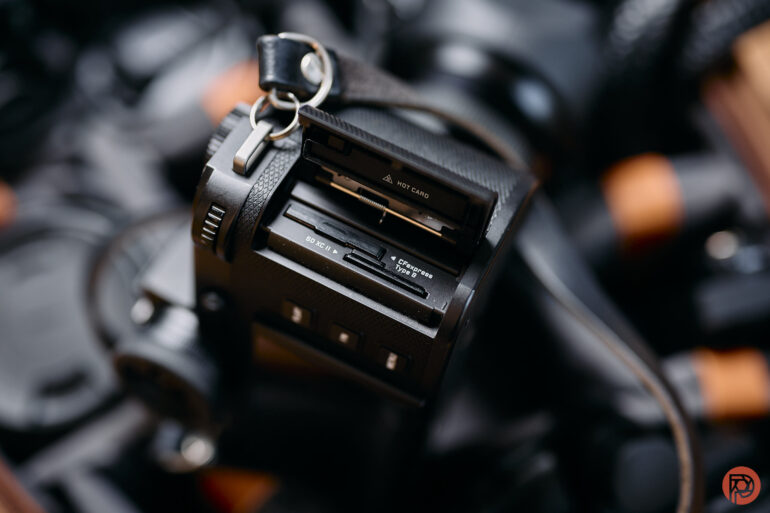
It additionally offers an IP54-rated weather-sealed magnesium-alloy construction, in-body image stabilisation worth up to 5 stops of compensation, wi-fi, Bluetooth and GPS connectivity, and dual UHS-II SD and CFexpress type B memory card slots.

The recommended retail price of the Leica SL3 is £5,920 in the UK and it is available in black. It is designed and made in Germany.

Ease of Use

Leica SL3

The Leica SL3 uses exactly the same 60 megapixel full-frame BSI (BackSide-Illuminated) CMOS sensor that was initially developed for the flagship M11 rangefinder camera, which offers a 21% increase on the resolution offered by 2019’s 47.3 megapixel SL2 model.

In conjunction with the latest generation Maestro IV image processor, this allows the Sl3 to output 14-bit RAW files with a claimed dynamic range of up to 15 stops, provide an extensive ISO range of 50-100,000, and shoot 60 megapixel images at 5fps with continuous AF/AE.

It also has a special IR + UV cut filter in front of the sensor which corrects even the most oblique rays of incident light and a new colour filter array that offers more natural colour reproduction than previous SL-system cameras.

Whilst 60 megapixels will undoubtedly be a big draw for potential owners of this camera, Leica have also sensibly provided two smaller 36 and 18 megapixel modes which help avoid some of the processing and storage challenges of the the 60 megapixel mode while also boosting the burst shooting buffer times.

Leica SL3

So the SL3 can be set to record 60, 36 or 18 megapixel DNG Raw images with 14-bit color and 15-stop dynamic range using the full sensor area, something that Leica have dubbed “Triple Resolution Technology”.

Auto-focusing on this new SL-series camera has taken a big leap forwards, as it now incorporates a hybrid AF system that includes phase detection as well as contrast detection pixels., providing higher speed and greater precision when focusing and tracking objects.

Interestingly, it additionally employs Panasonic’s object-based depth from defocus system to build up a depth map of the scene to further enhance the AF.

The AF Modes include Spot / Field / Multi-Field / Zone / Tracking /Eye-, Face-Body-Detection / Eye-, Face-, Body-, Animal-Detection – we’re still not sure why animal detection isn’t separate?

Leica SL3

In another first for the SL-series, the SL3 benefits greatly from the addition of intelligent subject recognition. It’s a pretty simple system by modern standards that only recognises the eyes, faces and bodies of people plus animals, but at least it’s a good start that works well in practice.

Leica camera have never been particularly renowned for their blistering continuous shooting rates, and the SL3 is certainly no exception to that rule.

While on paper it offers up to 15fps bursts, the reality is that the focus and exposure are locked at the first frame until you drop down to a rather more pedestrian 5fps, which is rather disappointing when some similarly priced mirrorless cameras can shoot at similar speed with AF/AE.

The buffer is 90 shots at 5fps for DNG RAW, though, so you can at least shoot for a long time before that rate slows down.

Leica SL3

The SL3 has both a mechanical shutter that provides speeds between 60min to 1/8000sec and an electronic shutter that runs from 60sec to 1/16000sec, with a Hybrid option also available that automatically switches between them. Flash synchronization is available up to 1/200sec.

It’s important to note that this camera does not have the special multishot mode found on the previous SL2 and SL2-S models, which was undoubtedly a great feature for detail-hungry still-life and landscape photographers.

Leica told us that the new sensor makes it difficult to support this feature, and it will only be implemented if customer feedback demands it via a possible future firmware update – so start petitioning them now!

This isn’t just a camera for stills, as Leica have included 8K video recording for the second time ever on any of their models, following on from last year’s Q3 camera.

Leica SL3

DCI 8K recording is supported at up to 30p with 4:2:0 10-bit color when recording internally or at 8-bit when recording externally via the full-size HDMI 2.1 Type A port.

If you only need 4K recording, that’s provided at up to 60p with 4:2:2 10-bit color internally or externally, while Full HD runs up to 120p for slow motion playback.

Other key video features include ProRes recording at 1080/60p, Leica’s L-Log profile, LUT compatibility, a 3.5mm stereo jack microphone socket and a dedicated timecode interface.

The 40MB/s wireless data transfer is up to 10x faster than the previous SL2, which doesn’t sound particularly astonishing until you realise that a full resolution 60-megapixel DNG file can be transferred to the Leica FOTOS app in a mere 2 seconds!

Leica SL3

If you prefer a wired connection, there’s a new Leica cable available that’s 3x faster than the previous version, which means that it takes less than 1 second to transfer a 60mp DNG file.

Commendably you can also now use any USB-C cable with Android and newer iOS devices – you don’t need to use the Leica one – but make sure to use a USB 3 version.

The new USB-C port can be used to charge the camera via a powerbank, useful for extending the battery life when out and about. Talking of which, the SL3 uses a new battery, the 2200mAh BP-SCL6, which has a CIPA-rated lifespan of 260 shots per charge.

The SL3 is also still compatible with the BP-SCL4 battery that was used in the SL2, although the camera doesn’t support higher burst shooting rates than 2fps and video recording is limited to full HD.

Leica SL3

The excellent electronic viewfinder is exactly the same as the one found on the previous SL2, with 5.76 megapixels of resolution, 0.76x magnification and either a battery-conserving 60fps or a smooth 120fps refresh rate for more realistic motion rendering.

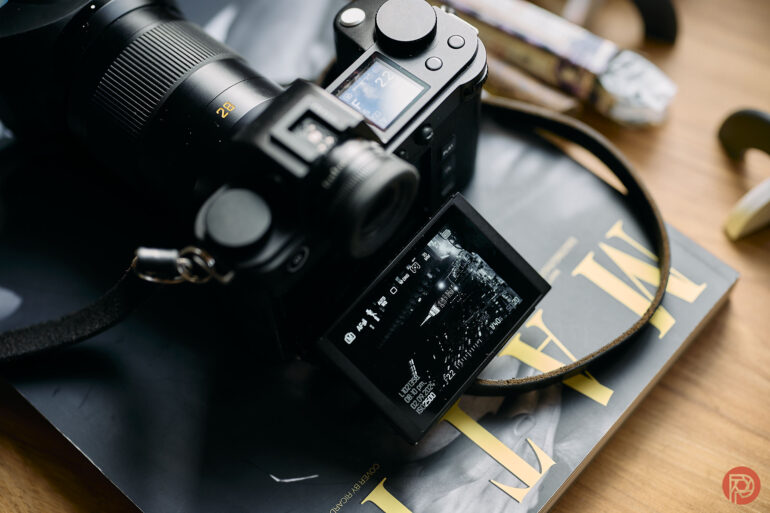
Another important feature that first made it’s debut on the Q3 but which we’ve not seen before on an SL-series Leica camera is the newly tilting 3-inch LCD touchscreen.

This can now be moved both upwards and downwards to suit working from a variety of shooting positions, rather than fixed in place as on the previous SL models, which makes waist-level and overhead shooting much easier.

The resolution has also been increased slightly from 2.1M dots on the SL2 to 2.33M dots on the SL3.

The new screen does rather spoil the otherwise refined aesthetics of the SL3, however, as it juts out from the rear of the camera, interrupting the smooth lines. Still, this is first and foremost a photographic tool, rather than an expensive ornament, so we can perhaps overlook this slight faux-pas on Leica’s part.

Leica SL3

It has also necessitated a restructuring of the controls on the rear of the camera. Instead of the vertical row of three buttons to the left of the LCD screen, as per the SL2, the Play, Function and Menu buttons have been moved to the right of the screen.

A new Leica Look makes its debut on the SL3 – Leica Eternal (ETN) – which joins the 5 other existing Looks and provides more contrast and saturation. You can see examples of them all in the Image Quality section.

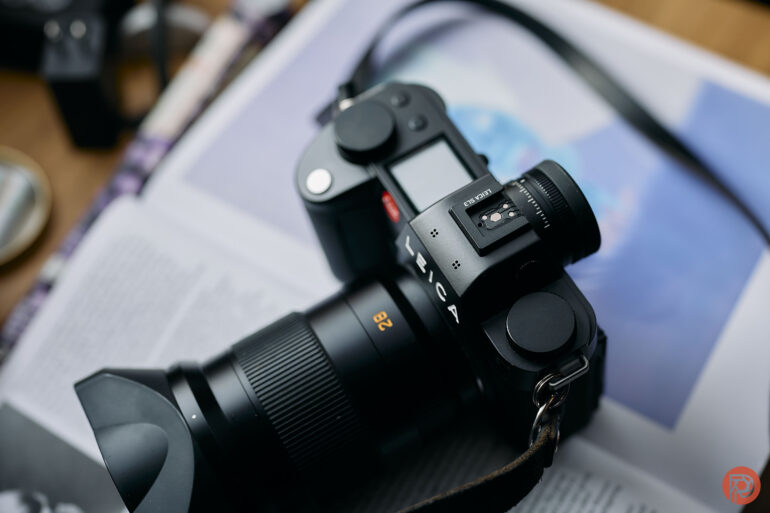
The Leica SL3 is another incredibly solid, black-bodied camera that is hand-made in Wetzlar, Germany. This new version is a little lighter and more compact than its predecessors, though, weighing in at 769g without a battery versus 838g for the SL2, and measuring 5.2mm narrower and 3.0mm shorter than the SL2.

It’s equipped with Leica’s L-mount, which enables around 150 different lenses to be utilised, if you invest in specific adapters. Leica have 15 lenses L-mount lenses ranging from from 14mm to 560mm, with 84 native lenses available in the L-mount alliance from the likes of Sigma and Panasonic.

Leica SL3

It has to be said upfront that the SL3 is not the most portable option ever. This is partly because it’s been fashioned from two solid pieces of aluminium with a central magnesium alloy portion sandwiched in its midst – so we were very thankful for the padded strap that’s supplied in the box.

While the rock-solid build quality is very reassuring, it’s not the ideal travel camera for lugging around for an entire day on a city break, especially with a bag full of L-mount lenses as well.

We’re told that the SL3 is both dust and water resistant to the extent of being IP54 rated, so it can apparently withstand water spray from every direction but falls short of being fully waterproof.

The SL3 has a -10 to +40 temperature guarantee, but Leica told us that it can work in much colder/hotter temps too (-40 to +70).

Leica SL3

Though we’ve questioned the sheer heft of the camera, the robustness of the build quality is so reassuringly solid that, providing the internal electronics hold up, the SL3 could surely last years of use – which we’d certainly want it to at this price.

The handgrip is big enough to wrap four fingers around, while your thumb automatically brushes up against the control dial – or as Leica refers to it, ‘click wheel’ – which is peeking out at the back.

If you’re looking for a shooting mode dial, then you may be somewhat confused, because the SL3 doesn’t have one. Instead you have to press the click wheel in and then scroll through the usual PASM options to change the shooting mode.

The fact that the SL3 features a large postage stamp sized top-plate status display window is a real plus in operation. It’s really helpful in not being distracted by having to otherwise refer back to the larger screen at the rear of the camera, and thus take your eye off your subject for even longer.

Leica SL3

Over on the left of the top-plate sees the addition of a second unmarked control dial which by default sets the ISO speed, making it even easier than before to control the key exposure settings.

One of the other big changes on this now model compared with its predecessor is the adoption of a push-button On/Off control in place of the SL2’s more conventional switch.

Not only do you now push a button to turn the camera on rather than move a switch, it also has a two-part operation when the camera is on, where a long press turns it off and a short-press activates the standby mode, speeding up access to the camera without adversely affecting the battery life.

There’s also a status ring around the power button which is illuminated blue to indicate that the camera is turned on and flashes green when the battery is being recharged. Rather cleverly, when you hold the camera up to your eye, the illuminated ring is automatically turned off so that it doesn’t distract you in any way.

Leica SL3

The SL3 is a very customisable camera, with no fewer than 8 software buttons, 6 hardware buttons and 3 dials that can be configured to suit your particular way of working, not to mention the 6 user profiles for stills and 6 more for video that are available.

Cleverly, a red color code for photo and yellow for video is used throughout the interface to clearly delineate each shooting mode.

Leica make the bold claim that you can setup the camera and never have to use the main menu, something that we found to be mostly true once you’ve initially setup the camera and ironed out any operational kinks.

Leica have spent the last 2 years working on a new digital UI which makes its debut on the SL3. Focusing on the essential elements, there are now 5 menu items rather than 6 and 8 status screen/control center tiles rather than 12, with a size adjustment increase by 15%, all in response to customer feedback.

The digital interface has also seen a complete icon redesign, with a brand new family of clearer “Leicons” intended to be clearer and more cohesive than the previous icon set. Leica say that every icon and every layout has been refined to enhance the overall user experience.

Leica SL3

Further usability improvements include a multiple delete option, the ability to customize on-screen icons during live view, new Quickaccess functions during live view so that you don’t need to go into the menu, optimized touch control with gestures, and a UI that automatically tilts from landscape to portrait when you change the orientation of the camera.

Leica have also signalled that the new UI will be rolled out on future cameras and other Leica divisions, although previously released cameras probably won’t benefit from it as that would require a brand new firmware version.

New accessories include a hand-grip with leather wrist-strap (Multifunctional Handgrip HG-SCL7), an Elk leather carrying strap that’s easier to use than Peak Design, a dual battery charger equipped with USB-C, and a DC coupler which can be inserted into the camera’s battery slot to ensure a continuous power supply via USB-C.

Image Quality

All of the sample images in this review were taken using the 60 megapixel JPEG setting, which results in an average image size of around 31Mb.

The SL3 camera produces noise-free JPEG images from ISO 50 all the way up to ISO 3200, with significant noise first appearing at ISO 6400. The faster settings of 12,500 and 25,000 display quite a lot of noise, but they’re still fine to use for making smaller prints and web images. You should avoid using the fastest ISO 50,000 and 100,000 settings if possible.

The range of Film Styles and Leica Looks is a little limited in number, but does allow you to apply effects in-camera for JPEGs and Raw files (Leica Looks only).

This camera proved to very capable in low-light, with the maximum shutter speed of 30 seconds and the Bulb mode allowing you to capture enough light in all situations.

Noise

There are 12 ISO settings available on the Leica SL3 running from ISO 50-100,000. Here are some 100% crops which show the noise levels for each ISO setting, with JPEG on the left and RAW on the right.

JPEG RAW

ISO 50

ISO 50

iso100.jpg iso100raw.jpg

ISO 100

ISO 100

iso100.jpg iso100raw.jpg

ISO 200

ISO 200

iso200.jpg iso200raw.jpg

ISO 400

ISO 400

iso400.jpg iso400raw.jpg

ISO 800

ISO 800

iso800.jpg iso800raw.jpg

ISO 1600

ISO 1600

iso1600.jpg iso1600raw.jpg

ISO 3200

ISO 3200

iso3200.jpg iso3200raw.jpg

ISO 6400

ISO 6400

iso6400.jpg iso6400raw.jpg

ISO 12500

ISO 12500

iso12500.jpg iso12500raw.jpg

ISO 25000

ISO 25000

iso25000.jpg iso25000raw.jpg

ISO 50000

ISO 50000

iso50000.jpg iso50000raw.jpg

ISO 100000

ISO 100000

iso50000.jpg iso50000raw.jpg

Film Styles

The Leica SL3 offers five different Film Styles that are applied to JPEGs only.

night.jpg

Standard

night.jpg

Vivid

night.jpg

Natural

night.jpg

Monochrome

night.jpg

Monochrome High Contrast

Leica Looks

The Leica SL3 offers six different optional Leica Looks that are applied to both JPEG and Raw files. Note that you need to transfer them to the camera via the Leica Fotos app in order to use them.

night.jpg

Eternal

night.jpg

Contemporary

night.jpg

Classic

night.jpg

Blue

night.jpg

Selenium

night.jpg

Sepia

Sample Images

This is a selection of sample images from the Leica SL3 camera, which were all taken using the 60 megapixel JPEG setting. The thumbnails below link to the full-sized versions, which have not been altered in any way.

Sample RAW Images

The Leica SL3 enables users to capture RAW and JPEG format files. We’ve provided some Leica RAW (DNG) samples for you to download (thumbnail images shown below are not 100% representative).

Sample Movies & Video

This is a sample 8K movie at the quality setting of 8192×4320 pixels at 30 frames per second. Please note that this 10 second movie is 380Mb in size.

This is a sample 8K movie at the quality setting of 8192×4320 pixels at 30 frames per second. Please note that this 16 second movie is 610Mb in size.

This is a sample 4K movie at the quality setting of 3840×2160 pixels at 60 frames per second. Please note that this 16 second movie is 804Mb in size.

This is a sample 4K movie at the quality setting of 3840×2160 pixels at 60 frames per second. Please note that this 21 second movie is 1.06Gb in size.

This is a sample 4K movie at the quality setting of 3840×2160 pixels at 60 frames per second. Please note that this 12 second movie is 602Mb in size.

Product Images

Leica SL3
Leica SL3
Leica SL3
Leica SL3
Leica SL3
Leica SL3
Leica SL3
Leica SL3
Leica SL3
Leica SL3
Leica SL3
Leica SL3
Leica SL3
Leica SL3
Leica SL3
Leica SL3
Leica SL3
Leica SL3
Leica SL3
Leica SL3
Leica SL3
Leica SL3
Leica SL3
Leica SL3
Leica SL3
Leica SL3
Leica SL3
Leica SL3
Leica SL3
Leica SL3
Leica SL3
Leica SL3
Leica SL3
Leica SL3
Leica SL3
Leica SL3
Leica SL3
Leica SL3
Leica SL3
Leica SL3
Leica SL3
Leica SL3
Leica SL3
Leica SL3
Leica SL3
Leica SL3
Leica SL3
Leica SL3
Leica SL3
Leica SL3
Leica SL3
Leica SL3
Leica SL3
Leica SL3
Leica SL3
Leica SL3

Conclusion

The new SL3 inherits all of the significant improvements that Leica recently made on the Q3 model – 60 megapixel sensor, Maestro IV image processor, 8K video and hybrid auto-focus system – and additionally benefits from a major refresh of the user interface, making it more powerful and even easier to use than its predecessor.

The 60 megapixel resolution and 8K video will surely garner most of the headlines, but the incorporation of a tilting LCD screen, more refined UI and especially the vastly improved hybrid auto-focus system are for us even more important factors in the evolution of the SL-system.

Business-wise, the traditional M cameras still represent the biggest portion of Leica’s turnover, then the compact Q-series models, and finally the mirrorless SL, so it will be interesting to see if the new SL3 can increase both the SL-system’s share amongst Leica customers and Leica’s wider standing within the full-frame mirrorless market.

It certainly deserves to make an impact on both, being powerful and competent enough to compete with its main rivals, yet still refreshingly pared-back and easy to understand in an era of ever more complex products.

It perhaps goes without saying that Leica have once again lavished a frankly frightening attention to detail on the SL3, which boasts the usual impeccable build quality and a handmade in Germany origin that goes some way to justifying its price-tag. Commendably, Leica have also chosen to not increase the launch price of the SL3 over the SL2.

The Leica SL3 is a premium take on a 35mm full-frame interchangeable lens camera that delivers premium results with the absolute minimum of fuss – it’s undeniably very “Leica”, but in the best possible way…

4.5 stars

Ratings (out of 5)
Design 4
Features 4.5
Ease-of-use 4.5
Image quality 4
Value for money 4.5

Main Rivals

Listed below are some of the rivals of the Leica SL3.

The EOS R5 has been the hottest full-frame camera on the block ever since Canon pre-announced it back at the start of 2020, thanks to its headline grabbing twin features of a 45 megapixel sensor and 8K video recording. We’ve seen it a few times since then, but now we can finally bring you our final Canon R5 review, complete with full-size sample photos and videos!

The Fujifilm GFX 100 II is a 100-megapixel, 8K video, 8-stop IBIS, 8fps continuous shooting, medium-format monster that is light enough to use all day, indoors and out. Find out just how good it is by reading our in-depth Fujifilm GFX 100 II review, complete with a gallery of full-size sample JPEG / Raw images and videos…

The new Fuji GFX 50S II is the most affordable medium-format ever released – it’s so cheap that it competes with high-end 35mm full-frame cameras like the Sony Alpha 7R IV, Canon EOS R5 and Nikon Z7 II. But surely there’s a catch – is it just too affordable for its own good? Find out now by reading our in-depth Fujifilm GFX 50S II review, complete with full-size sample photos and videos…

The Leica SL2 is a new mirrorless camera for professionals, offering a 47 megapixel full-frame sensor, 4K/60p video recording, 20fps burst shooting, a class-leading EVF, fast auto-focusing and a 3.2-inch touchscreen. Read our in-depth Leica SL2 review now to find out what this £5,300 / $5,995 camera is capable of…

The Leica SL2-S is an impeccably built full-frame mirrorless camera, offering a 24.6 megapixel BSI sensor, DCI 4K/60p video recording, 25fps burst shooting, a class-leading EVF, IBIS worth 5.5 stops, ISO 100,000 and dual UHS-II SD memory card slots. Read our in-depth Leica SL2S review to find out what this £3,975 / $4,895 camera is capable of…

As the spiritual successor to the popular D850 DSLR, the new Z8 full-frame mirrorless camera could turn out to be one of the most important products that Nikon have ever released. Read our in-depth Nikon Z8 review, complete with full-size sample photos and videos, to find out more about this mirrorless marvel…

The Nikon Z9 is a professional level, full-frame mirrorless camera for photographers and videographers that features a 45 megapixel stacked BSI sensor, 8K/30p and 4K/120p video recording, 30fps burst shooting and a dual-grip design. Read our in-depth Nikon Z9 review complete with full-size sample photos and videos to find out just what this flagship camera is capable of…

Panasonic have enjoyed a lot of success with their Micro Four Thirds camera range, and now they’ve turned their attention to the full-frame market with the release of the exciting new Lumix S1R. This is a 47 megapixel full-frame mirrorless camera with 187 megapixel high resolution mode, class leading electronic viewfinder, 6-stop IBIS, and a robust weatherproof body. Read our in-depth Panasonic S1R review now to find out more about this impressive camera…

The Sony A7R V full-frame camera is a hybrid powerhouse that in some ways outperforms even the flagship Alpha 1 model. Can this exciting camera really meet the needs of all kinds of photographers? Read our in-depth Sony A7R V review to find out…

Your Comments

Please enable JavaScript to view the comments powered by Disqus.

Leica SL3 Review: The Best Battery Life for Real Photographers

Leica SL3 Review: The Best Battery Life for Real Photographers
Spread the love

“It looks like I was photoshopped in,” said my buddy Alex told me when looking at the images shot by the SL3. The thing is though that the images were still on the camera and hadn’t even been brought into post-production. The Leica SL3 is a camera that has a lot of what I’ve been waiting for. If you’re a high megapixel shooter who wants good autofocus and reliablity, then it’s here. If you want solid low light autofocus on people of color, then this is the camera to consider. And if you want a camera that’s for photographers first, then you really want to pay attention to this.

The Big Picture

It’s packed away in a box right now heading back to Leica — and it’s honestly hard to imagine the rest of the year without the Leica SL3 in my hands. There’s a lot to really like about it. Leica has truly been listening to their customers and the market while incorporating feedback into the camera’s design. It’s smaller and lighter than the previous version — yet they also packed an extra dial onto the top of the camera. This makes it feel a bit more retro while also keeping the very modern and sleek look. Additionally, they gave the camera a tilting touchscreen. Yes, the menu is now touch capable. Plus, they improved the grip, gave it an incredible imaging sensor that rivals the Sony a7r V, majorly improved the autofocus, and built in some of the best battery life I’ve ever experienced. It’s hard to say no to the Leica SL3.

There are a few qualms I’ve got with the camera, but they’re almost negligible. The only big one is that I truly wanted the shutter to come down over the sensor to protect it when changing lenses. But Leica said that it wasn’t possible with the sensor’s design — and when you see what the sensor can output, you can probably believe that. A few functions can’t be done with older batteries; which I really wish wasn’t an issue. I can’t recall this being a problem when Canon switched their batteries. Like Canon, Leica kept the battery size from their older SL cameras. Unlike Canon, the older batteries don’t let you do some of the newer functions like faster shooting frame-rates and all. If you’re buying an SL3, then you’re getting a new batterty. But it also means that you’re bound to have them mixed with your older ones.

Still, overall, the Leica SL3 feels like a camera where photographers are put front and center. Sure, there are video features, but not a whole lot of emphasis was put on that. Instead, Leica focused on the things that matter more.


Rating: 5 out of 5.

The Leica SL3 deserves our Editor’s Choice award and five out of five stars. So trust us, it’s getting it. Want one? They’re going to cost $6,995.

Perfect For

  • People who actually consider themselves photographers first before any other variant of creator.
  • L-mount shooters
  • Strobists: the sharpness combined with Leica’s Apochromatic lenses is unlike anything else.
  • Street photographers: the autofocus works well
  • Wildlife photographers: you can go birding with this camera from what Leica tells us. We have to do further testing on that though. But it worked when photographing animals.
  • Portrait photographers: Lots of beautiful details and colors from this sensor.
  • Photojournalists: It’s a body that will be very reliable no matter what, and the battery life will keep on working
  • Event photographers: You can switch autofocus to different subjects fairly quickly.
  • Photographers photographing people of color in low light: This camera can pick up people of color in very low light much better than other brands can.

Pros

  • The single fastest autofocus of the 60MP sensor I’ve ever seen. This puts the Sony a7r V and the Sony a7cR to shame.
  • Beautiful ergonomics
  • They made it lighter while still making it feel solid
  • I actually like this grip
  • The screen actually feels nice
  • IP 54 durability rating; this is probably the toughest camera on the market with interchangeable lenses.
  • The new touchscreen menu is almost perfect
  • The sharpness with Leica Apochromatic lenses is excellent and with the resolution from this camera, the quality rivals that of Canon L and Sony G-Master lenses.
  • The new phase detection autofocus is good even in low light; it tracks people of color almost as good as Nikon cameras do.
  • Native ISO at 100 and 320
  • The battery life using the new quick power-off is the single best of any camera manufacturer out there.

Cons

  • I wish the shutter came down over the sensor
  • Some functions won’t be available if you use the older battery. For example, it can’t shoot more than 2fps with the older battery and retain autofocus.
  • No option to have the camera write to the SD card first instead of the CFe card. But we’re told this is being considered for a firmware update.
  • I truly wish that when dropping the megapixel count, I could get increased variables with the drive move. For example, getting 9 fps with AF tracking at 14 or 12 bit RAW would be awesome when dropped down to the Medium DNG setting.

Gear Used

We borrowed the Leica SL3 from Leica. It was used with the Lumix 85mm f1.8, 50mm f1.8, Leica 28mm f2 Apochromatic, Sigma 24-70mm f2.8, several lens filters, and Profoto lights. We own all the lenses and accessories.

Innovations

You could consider this an innovative camera if you’re considering that this this the first camera with a 60MP sensor that has an IP durability rating. It also has the fastest autofocus of a sensor with this many megapixels. But perhaps the most innovative thing is the quick power mode. It puts the camera to sleep; and I was able to power it off of a single charge for a week. It’s pretty insane, and nothing else has battery power like this.

Hardware

When Leica originally briefed me on the Leica SL3, I was a bit disappointed that the camera would be smaller and lighter than the SL2-s — which is my main driver. But when I held the camera, I remembered that Leicas truly need to be experienced to be understood. We’re a very visual culture that doesn’t do well with the inclusiveness of the other senses. So for this, I want to channel the words of poet R.H. Sin. He says that fighting for someone won’t make a difference if that individual doesn’t appreciate you; and to not waste your time on someone who obviously wants someone else. When I look around the entire rest of the photo industry, I see brands that target their prodcuts to content creators and stop focusing on what photographers want — I even feel this way about Fujifilm, too! But in contrast, Leica is a brand that literally brought back the Leica M6 in 2022.

By all means, I think that Leica wants photographers. And that’s felt throughout the hardware of the Leica SL3. It’s smaller and lighter, but still feels solid. The company now gives photographers three dials to choose from to control exposure settings — and they’re placed in a way that’s akin to many retro cameras. The LCD screen is also much more useful now that it tilts. The camera still bears the lots of programmable buttons to get you to exactly what you need. Overall, there isn’t much to complain about.

You’re also getting a camera with an IP 54 durability rating. During my time with the Leica SL3, it didn’t rain and the weather was pretty mild no thanks to major corporations. But the durability is rated to be the same as the Leica SL2s, which has survived some absolute hell.

Focusing

I truly thought that it would’ve been a year or two more until 60MP sensors were able to focus quickly. However, the Leica SL3 has the single fastest autofocusing 60MP sensor I’ve ever seen. Indeed, it puts Sony to shame — but lags behind Nikon a bit when focusing on people of color in low light.

The only time that it slows down is when the camera’s exposure preview settings are messed with. However, it’s only minorly changed. This camera also autofocuses well in very low light — so much so that I never thought that we’d get a Leica that did just this well.

Of course, this is a Leica. You’ll want to know how it is for street photography, right? Well, for reference I tend to move towards someone as they’re moving towards me while I’m shooting. I also shoot wide open for tests like this. The Leica SL3 was able to nail autofocus at 2fps and in the multi-field focusing mode. Of course I also shot at a high ISO and a fast shutter speed. This way, I was able to get some of my favorite images for this review. So can the SL3 do street photography? Yes. Can Sony do this better at the same megapixel count? No. Leica hasn’t knocked this out of the park; they’re in a completely different playing field to begin with.

Here’s the incredible thing too: autofocus on POCs in low light is also pretty darn good. It’s not quite Nikon-level, but it’s better than Canon and Sony. Panasonic and Leica lenses track just fine. But in our tests, Sigma’s 24-70mm exhibited autofocus that felt like Stone Age technology that was mistreated by a museum intern. Honestly, I feel like photographers defend Sigma lenses in a similar way to how abused people defend their abusers. It’s almost like they’re waiting for their #metoo moment.

In continuous focus mode, Leica has this thing where you can press the joystick in to lock onto a specific subject. It’s very nice and works well most of the time when you don’t want to change subject in people detection.

My only complaint: I really wish I could apply people detection to all the autofocus modes like multi-area.

A huge thank you goes out to Jamel Shabazz for letting me shadow him on a shoot with this camera. Thanks to Alex Simmons for posing for me too.

Ease of Use

So far, I like the touch menu, but even this needs improvement. You still really need to use the joystick, menu button, or the dials and Leica could’ve taken this much further. You can’t get to exactly where you need to get to in two taps; which is something Canon had figured out a long time ago.

Part of what makes this camera so great of a shooting experience is that Leica kept the top LCD screen. I often don’t want to look at the back screen because it saves battery power, so I set the camera to EVF extended while using the top LCD. In addition to this, Leica added a new auto power off function that saves a lot of battery. Just by quickly pressing the power button, it powers the camera down. That means you can shoot for so much longer on one charge. I went for a whole week without charging. I haven’t been able to do that with a camera since the Canon 5D Mk II came out.

The auto power off setting has to be the greatest thing that they’ve ever done for battery life and power management. You can go pretty much more than a single day on a single charge and not worry about the camera otherwise.

The image stabilization is also quite powerful. In really low light, I shot at ISO 100 and 1/25th of a second with a flash to get a great portrait. But I could also handhold the camera to around 2 seconds and get photos that didn’t have camera-shake. It’s tough to do, but it’s possible.

Something that causes a lot of first-world sadness is that Leica couldn’t make the shutter come down to protect the sensor when turning the camera off. And yes, I did get photos where I found sensor dust later on. The company has a sensor cleaning function, but sometimes that isn’t enough.

Look: we’ve become a generation so good at pretending to be happy that we‘ve lost the desire to create true happiness. With the SL3, we’re so close to getting the absolute perfect image in-camera; yet this one thing fully prevents it from happening. If I’m paying this much, I don’t want to be stoic and persevere through it: I want to know that work I’ve done on myself as a photographer to make great images in-camera won’t be sabotaged by an issue like sensor dust.

One other thing I miss: being able to quickly flick the joystick upward to rate an image. Instead, I need to press a button or use the touchscreen. In-camera image rating has become very important these days.

Metering

If you’re a street photographer, landscape photographer, or shoot a lot of film, then you probably worry about metering. In Sunny 16 tests, the Leica SL3 seemed to abide more or less by what science tells you is the correct way to meter.

Leica SL3 Image Quality

Before we go on, I’m convinced that this sensor might be the same as the Sony a7r V’s even though the Leica focuses much faster. That has to do with the fact that the native dual ISOs are 100 and 320 — which both sensors have. So if you shoot at film ISOs or lower ISOs most of the time, you’ll be very happy.

At the time of my testing, the Leica SL3 doesn’t have official and full support in Capture One or even in Lightroom. So at the moment, the colors are a bit odd. However, that doesn’t mean that they’re bad. They’re just not really like I expect them to be from Leica. At times I really want more vivid skin details, but that’s not happening right now. It will change when we update this review.

What I’m very excited about is the fact that the dual native ISO settings for this camera are ISO 100 and 320. That means it’s really designed for low-ISO work. This, perhaps more than anything, really excites me. I shoot like I shoot film and I don’t often let the ISO go where it wants. Instead, I tend to shoot at film ISOs. That makes the low ISO output so much more attractive for me.

Still, that’s only the RAW files. The JPEG output is simply stunning. And this is a camera that fills me with so much joy because there’s also access to Leica Looks – but at the time of initial testing, they’re not available to me. The other day, I was speaking with one of site’s more budding staff members. She explained to me that she was out shooting all day and then came home exhausted. We started talking about how we don’t want to edit and instead, just have the photos be what they are right out of camera in the first place. She agreed, and has started to find ways to do that recently in order to save energy, time, and give herself more of the recharge she needs to be able to handle her days. Leica looks in the SL3 would allow for this. My colleague shoots on Sony, and the fact that this isn’t available is truly starting to annoy her.

At ISO 6400, there is a whole lot of image noise in the shadows. However, if these images are only staying online, they’re perfectly fine. Even 12,500 looks great. I sometimes also saw a bit of detail loss, but it’s not anything to cry home about.

Image Samples from the Leica SL3

The Phoblographer has been huge on transparency with our audience since day one. Nothing from this review is sponsored. Further, many folks will post reviews and show lots of editing in the photos. The problem then becomes that anyone and everyone can do the same thing. They’re not showing what the lens can do. So, we have a section in our Extra Image Samples area to show edited and unedited photos. From this, you can decide for yourself.

Some of these images were edited using the Phoblographer’s Lightroom presets, which you can purchase in our store.

Unedited

Edited

Leica SL3 Tech Specs

  • 60MP full-frame sensor with 36MP Medium DNG and 18MP small DNG settings
  • 769 grams without battery
  • 104mm height
  • 141mm width
  • Leica Looks
  • ISO range from 50 to 100,000
  • Hybrid AF with Phase detection and contrast
  • Maestro IV
  • SDHC and CF express type B slots
  • HDMI 2.1
  • 8GB of buffer
  • USB-C 3.1
  • IP 54 certification
  • 5.76MP viewfinder with up to 120 frames a second
  • 3.2 inch touchscreen with 2.3 million dots
  • $6,995 price point
Leica SL3 Review: The Best Battery Life for Real Photographers
It’s packed away in a box right now heading back to Leica — and it’s honestly hard to imagine the rest of the year without the Leica SL3 in my hands. There’s a lot to really like about it. Leica has truly been listening to their customers and the market while incorporating feedback into the camera’s design. It’s smaller and lighter than the previous version — yet they also packed an extra dial onto the top of the camera. This makes it feel a bit more retro while also keeping the very modern and sleek look. Additionally, they gave the camera a tilting touchscreen. Yes, the menu is now touch capable. Plus, they improved the grip, gave it an incredible imaging sensor that rivals the Sony a7r V, majorly improved the autofocus, and built in some of the best battery life I’ve ever experienced. It’s hard to say no to the Leica SL3.

There are a few qualms I’ve got with the camera, but they’re almost negligible. The only big one is that I truly wanted the shutter to come down over the sensor to protect it when changing lenses. But Leica said that it wasn’t possible with the sensor’s design — and when you see what the sensor can output, you can probably believe that. A few functions can’t be done with older batteries; which I really wish wasn’t an issue. I can’t recall this being a problem when Canon switched their batteries. Like Canon, Leica kept the battery size from their older SL cameras. Unlike Canon, the older batteries don’t let you do some of the newer functions like faster shooting frame-rates and all. If you’re buying an SL3, then you’re getting a new batterty. But it also means that you’re bound to have them mixed with your older ones.

Still, overall, the Leica SL3 feels like a camera where photographers are put front and center. Sure, there are video features, but not a whole lot of emphasis was put on that. Instead, Leica focused on the things that matter more.