Cincinnati Photographer Romain Mayambi Captures the Beauty of Movement in Unconventional Places

Cincinnati Photographer Romain Mayambi Captures the Beauty of Movement in Unconventional Places

This story is featured in CityBeat’s March 6 print edition.

It’s late January at a coffee shop in Clifton, and I’m waiting for Romain Mayambi. The Cincinnati-based photographer, originally from the Democratic Republic of the Congo, is on his way to becoming a self-taught great, and has agreed to tell me his story. I pull up his website again while I wait.

As a gray dusk falls outside, I scroll through a warm and bright assembly of portraits, athletes and funky editorial. I am one of tens of thousands following Mayambi’s colorful, high-energy work via Instagram. His visual storytelling has captured everything from street-style fashion to athletes in action. What started as a random hobby has turned into a skilled art form, connecting people, places and communities frame by frame.

Mayambi walks in right on time, wearing a bomber jacket and a friendly smile. He’s just come from editing the latest in his series of “athletes in unconventional spaces.” Mayambi works as a risk analyst full time, so photography is like a second job. But he doesn’t seem tired. He’s as bright and energetic as his photos. We find a table and take a seat.  

Maybe it was fate

Mayambi has been taking photographs since he was a freshman in college studying finance at the University of Cincinnati. He’s curious and observant. That, combined with his love of fashion, made him an avid people watcher and a natural behind the lens.

“I wanted to be able to capture those moments and those people,” Mayambi says. So he picked up a camera. “It honestly just sparked out of nowhere.”

The way Mayambi tells it, becoming a photographer was borderline fate, the trajectory of which began when he was 14. Mayambi’s family wanted to move from the Democratic Republic of the Congo to the U.S. They had no specific destination in mind, but a family friend suggested Cincinnati.

“Sometimes I think it’s kind of random. Like, Cincinnati of all places?” Mayambi says. “Everything happens for a reason. We were meant to come to Cincinnati and put our roots here.”

A few weeks after their move, Mayambi’s mother enrolled him and his siblings at Aiken High School. The staff and the students made the transition easy. He felt welcome at his new school, comfortable even. He made friends and found a community. Mayambi attributes some of his sense of home here to the way he was treated in high school. Without that experience, maybe it would have been harder to find the confidence to pick up a camera.  

“Do you ever have moments where you try to imagine what things would be like if they went differently?” Mayambi asks. “Like, if we moved to California or something, maybe I wouldn’t have done photography.”

His first subjects were fellow UC students, whose personal style caught his eye and imagination. Mayambi — who is very well dressed — had an eye for fashion even as a freshman, and decided to photograph the people around him.

“At first I was about to start walking up to them with my iPhone,” he laughs. “But my friends are like, ‘that’s kind of weird.’”

Determined to take the more professional approach, Mayambi borrowed a camera from his brother and started shooting. He learned to approach strangers and initiate conversations out of nowhere. He prioritized comfort and professionalism. 

“Through that I was able to meet super cool people who are friends with me to this day,”  Mayambi says.

Mayambi didn’t have mentors or teachers to show him the ropes. He learned through experimentation and YouTube videos. Being self-taught in this way allowed him to develop a unique style from the ground up. Certain elements of the art were more intimidating than others — like lighting, which he put off learning for the first few years. “I didn’t know where to start,” he says. But the interest always overcame the intimidation. 

“When I love something I kind of get obsessed,” Mayambi says. “That’s all I’ll do. I’ll just be in my room watching YouTube videos about lighting.”

It’s all about the people

Community is key to how Mayambi approaches his photography. Many shoots are a collaborative effort, with friends assisting and models sharing ideas throughout the process. His series “Your Flower” highlights people in the city who are actively creating community spaces, events and opportunities to connect. Mayambi gives each person flowers, takes their portrait and asks them questions about community, collaboration and art. The project is part showcase, part gratitude.

“I feel like we have a lot of amazing people in this city who make these moves,” Mayambi says. “I want to show appreciation.”

Mayambi is a very affable person, easy to talk to and be around. That comes through in his photographs. Subjects seem at ease and fully present, almost certainly as a result of Mayambi’s genuine, friendly demeanor.  Each model’s personality shines through the picture, making for photographs that feel alive and distinctive.

Curiosity also plays a part. Mayambi has a practice of incorporating interviews into his projects, as with the “Your Flower” series. For another series, he’s talking to photographers across the U.S., “diving deep into what it’s like being a photographer.” This video project is meant to dig into the nitty gritty of life behind the camera, to fill in the information that was missing when he started. There are plenty of videos that recommend cameras or talk about lighting rigs. But when it comes to understanding what it means to people to work in photography, and what it takes to stick with it, Mayambi says there’s not a lot of content. 

Now that his audience is growing and he’s becoming more established, Mayambi often gets messages from people asking how and where to start as a photographer. He hopes that these videos will become a resource to share. And he wants to know the answers, too.

“I’m doing it for myself as well, because I’m curious,” he says. “I’m always fascinated by the mind when it comes to creativity.”

Mayambi continues to connect with other artists and collaborators across the country. It seems like his current trajectory could take him to other cities with bigger populations and more opportunities. But a move like that is not on his radar. Instead, much like the subjects of his “Your Flowers” series, Mayambi is committed to putting Cincinnati on the map as a hub of arts and culture.

“This is my home. This is my favorite place to be,” he says. “I’ve learned everything that I know now from here.”

Athletes anywhere and everywhere

Last year, Mayambi shared what would become the first photos in an ongoing series of athletes performing in unexpected places. Two jiu-jitsu fighters stand poised on a red mat in the middle of an empty baseball field. Their movements are mirrored by their shadows. Clouds of the freshly tilled dirt rise from their bare feet. A bright white sun hovers above as one flips the other over his shoulder. 

A few weeks later, Mayambi shared part two: boxers in front of Union Terminal. Instead of fighting in a ring (where one might argue they belong), the men face off on bright green grass with Cincinnati’s historic landmark as their backdrop.

The series continues to unfold, gaining more traction and attention with every new installment. A football player prepares to throw the ball down a lane at Madison Bowl. Track athletes sprint through Household Books. Two masked figures fence in Clifton Market. Each photograph celebrates athletic prowess and strong bodies in their element but out of place. 

At the same time, the series reads as a subtle homage to the city that Mayambi calls home. Half of these locations are familiar places, buildings and overpasses one drives by regularly. These are the spots that catch Mayambi’s eye as he goes about his life in Southwest Ohio.

In fact, the entire series started because of a particularly stunning baseball field. Mayambi and his dad were on their way to visit his older brother in Dayton.

“[I was] just sitting by the window,  just staring outside, and I saw this dirt that was perfectly tilled,” he says. “I’m like, oh my god. That dirt looks so pretty!”

He was drawn to the setting before the rest of the idea fell into place. Mayambi started thinking about what he would do with a field like that if he used it in a shoot. His vision? Two fighters going at it. 

“I thought about like, who do I want the fighters to be?” he says. “And for some reason I’m like, oh, jiu-jitsu fighters would be perfect.”

He immediately posted a call for jiu-jitsu fighters on Instagram. A friend connected him to their brother, a jiu-jitsu fighter, who had another friend that was into the idea too.

The day after Mayambi found his fighters, he was driving home and felt that familiar tug of fate again.  

“Guess what I saw,” he says, wide eyed. “A baseball field with tilled dirt, like literally right next to my house. Immediately I was like ok, found a spot.”

Mayambi does not have a master plan for the athletes series, but he does have a running list of great ideas. Sometimes a location just speaks to him, and he mulls it over until he can decide which athlete would work best there. He also keeps notes on all the different types of athletes he’d like to shoot. And athletes reach out to him, too. He’s even had Olympians show interest, although distance and budget prevent him from taking up certain collaborations.

Mayambi himself is not much of an athlete. (When I ask, he laughs and says “I’ve been busted!”) This opens the door for deeper collaboration. The athletes in his series know their bodies and their sport, so they can contribute ideas that Mayambi may not anticipate.

“It feels like a collective project,” he says. “It’s a 50/50 thing. I’m like, ‘I’ll leave the technical to you guys, and I will capture you guys.’”

Perhaps this collaborative spirit is part of what inspires the remarkable dedication in each athlete at the shoots. Mayambi says they all show up determined to get it right, and they maintain that spirit even when their photoshoot lasts for an hour and a half in the sun. 

Positive feedback and enthusiastic support continue to pour in for this series. The athletes, Mayambi’s community of followers, and even random onlookers all seem invested in the project, interested to see where it will go next. By connecting photography, athletic performance, familiar landmarks, and public spaces, Mayambi maintains that thread of curiosity and community that runs through most of his work.

“People are sitting there watching it, enjoying it,” he says of passers-by. “And people feel a part of it.”

And again, Mayambi himself gets to satiate curiosity. His life as an artist and a risk analyst doesn’t have him crossing paths with athletes out in the wild. Through this series, he gets to learn something new.

“It’s a different world for me,” he says. “Doing this project allows me to bring it into my world and also get into their world.”

When Mayambi first laid eyes on that neatly groomed baseball field, he didn’t have a story in mind to tell. But as the series continues to grow into itself, something coherent is starting to unfold. It’s a commentary on belonging, and how societal expectations can hinder a person’s ability to feel at home somewhere. 

“It just ties back to kind of like the way life is set up,” Mayambi says. “Like these certain expectations in people’s lives. Like ‘Oh, you don’t belong in these places. Only people who look like this belong here.’”

By placing divers in lecture halls and wrestlers on rooftops, Mayambi isn’t just creating engaging art. He’s rewriting the rules. 

“I can place these athletes in these spaces even though they don’t belong there,” he says. “I feel like it translates really well with that story where it’s like, we can do whatever we want.” 

As of now, there’s no clear end game to the athletes series. The ideas are too plentiful, and Mayambi is following the momentum. Eventually he plans to showcase the series in an exhibition, and possibly a book. But for now, he says, “I’m kind of just going with the flow.”

Follow Romain Mayambi’s work on Instagram at @romainmaya.

Study Reveals The World’s Best Wildlife Photography Destinations

Study Reveals The World’s Best Wildlife Photography Destinations

Study Reveals World's Best Wildlife Photography Destinations & Singapore Is Among Them

Kruger National Park in South Africa. Image credit: Fokke Baarssen/ Shutterstock

A recent study by Cape Town-based travel portal Go2Africa has identified Kenya as the best destination for wildlife spotting and photography in the world. Singapore and India also made it to the top ten list, ranking third and ninth, respectively, for wildlife photography opportunities in Asia.

Canada closely follows Kenya in second place, with Australia taking the fourth spot in the list of best wildlife destinations spotting in the world. Botswana and Tanzania secure the fifth and sixth positions, while Lithuania ranks seventh. Namibia and South Africa round out the top ten, holding the eighth and tenth spots, respectively.

Kenya to India: Top destinations for wildlife photography

Top countries for game spotting Go2Africa
Top countries for wildlife photography. Image credit: Go2Africa

The study, which analysed around 70 million images on Flickr, highlights the top ten destinations with the highest number of wildlife photographs. The results reveal that half of the images originate from African countries such as Kenya, Botswana, Tanzania, Namibia, and South Africa, with the highest count recorded at Kruger National Park, totalling 40,965 photos.

Kenya emerges as a wildlife haven, boasting over 25,000 species of animals, 7,000 species of plants, and 2,000 fungi and bacteria. With excellent chances of spotting the iconic ‘Big 5’ lions, leopards, elephants, African buffalo, and rhinoceroses Kenya draws wildlife enthusiasts from across the globe.

While North America, Oceania, and Europe each have one country in the top ten list, Asia is represented by two countries, Singapore and India.

Best wildlife destinations in the world
Sungei Buloh Wetland Reserve, Singapore. Image credit: Danny/ Shutterstock

Singapore, famed for its dense rainforests, offers ample opportunities to spot wildlife such as monkeys, birds, monitor lizards, otters, and crocodiles in their natural habitats. Some of the best wildlife photography spots in the city-state include Bukit Timah Nature Reserve, Sungei Buloh Wetland Reserve, Pulau Ubin, Punggol Waterway Park, and Coney Island.

Related Stories

Kaziranga National Park
Kaziranga National Park, Assam, India. Image credit: Rofeeq.birdinghimalayas/ Shutterstock

India, celebrated for its diverse landscape, boasts numerous wildlife destinations ideal for game spotting. From the majestic Bengal tiger to Asian elephants and Asiatic wild dogs, India’s national parks and reserves offer unparalleled opportunities for wildlife photography. Whether it’s Hemis National Park in Jammu and Kashmir, Kaziranga National Park in Assam, Keoladeo National Park in Rajasthan, or Satpura National Park in Madhya Pradesh, India beckons wildlife enthusiasts with its rich biodiversity.

For further insights into the study, visit Go2Africa.

(Feature image credit: Fokke Baarssen/ Shutterstock)

Related: Discover Singapore’s Rich Culture, Vibrant Heritage, and Diverse Wildlife with Capella Curates

Written By

Pyusha Chatterjee

Pyusha Chatterjee

A journalist, Pyusha has previously worked with media organisations including The New Indian Express and Hindustan Times. A solo traveller by choice, she loves exploring life more than anything else, after food of course. When she isn’t gardening, writing, reading, cooking or singing out loud, you can spot her watching films and series, debating with ..Read More

The Food Photographers Van Gogh Would Be Proud of

The Food Photographers Van Gogh Would Be Proud of
Spread the love

“So, lately we have been creating some still life concepts that are less literal interpretations of food and, instead, take more of a more fine art or painterly approach,” says photographer Iri Greco (She/Her/Hers) to the Phoblographer in an interview. Iri and Jim Fryer (He/Him/His) are the brains and the heart of Brakethrough Media in NYC. The work they’re doing can be described as Van Gogh playing with food and a camera. “When I was studying art, one of the first assignments we had was to draw a pepper on a table. No context needed.” Iri tells us that she wanted to revisit that energy. 

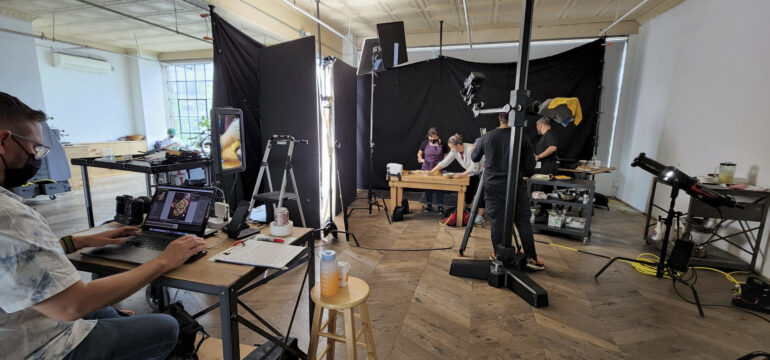
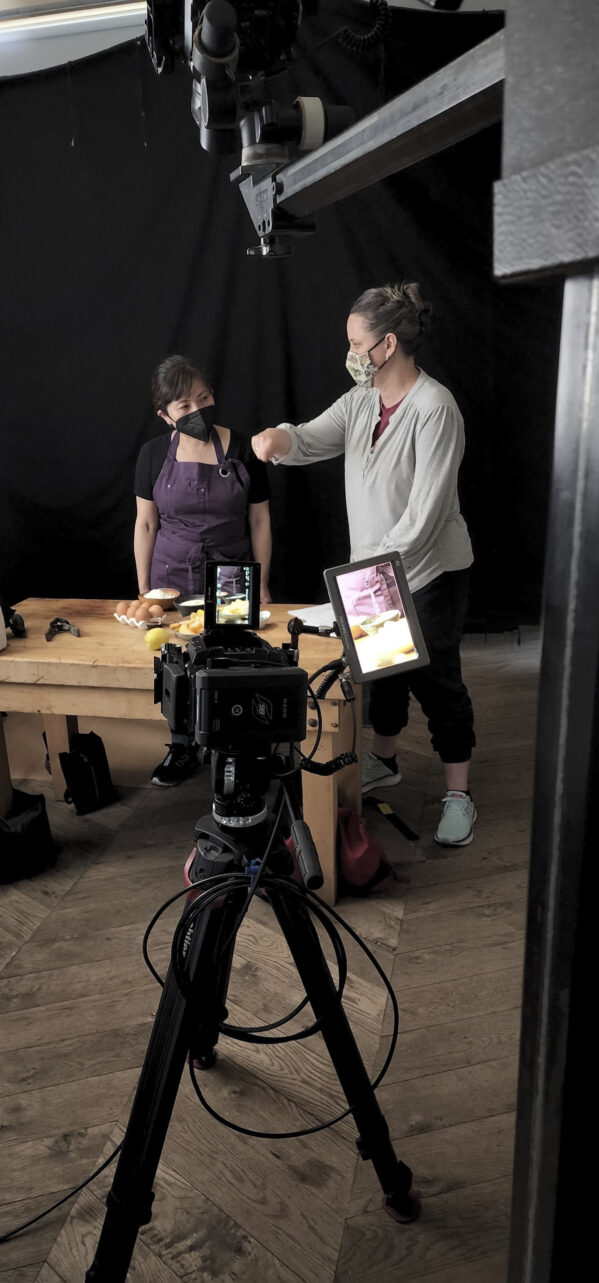
All images by BRAKETHROUGH MEDIA via Iri Greco and Jim Fryer. Used with permission. Follow them on Instagram @brakethrough_media and check out their website.

Those Behind The Lens

Iri and Jim both honed their photographic identities differenlt. He’s a former athlete and Iri labels herself as a “recovering chef and artist.” Both of her parents were art collectors and bohemian with pop working in film and theater while mom owned her own picture framing company. As a photographer, it’s easy to be envious of folks like this.

Iri took up painting, printmaking, and film photography in high school. she wanted to become a cinematographer and throughout college, was a cook in restaurants. Her creativity pivoted accordingly until she stepped behind the camera again.

“Jim and I both met as video producers in 2009, and once we decided to add photography to our work, we had to teach ourselves the craft,” she tells us. “I had the eye for it, but it was the technical aspect – and the digital one – I had to tackle.” To achieve their final photographs, they use Canon gear. The Canon EOS R5, 28-70mm f2, and various adapted EF lenses are their mainstays. To light their images, they use Profoto D1s and tons of modifiers.

Both Iri and Jim learned photography as documentary shooters — so they both state that they prefer ambient and natural lighting. Beyond the lighting though, there’s also their set design skills and their ability to Maguyver things. “I think Jim and I are pretty adept at creating utility in the objects around us; we’ve used a coffee table book to flag light, aluminum foil for a reflector…I’ve currently been playing with those sheets of silver bubble wrap that came in an Amazon package!”

Brakethrough Media on Making Delicious Food Photography

The images that Iri and Jim make remind us of Van Gogh and several other oil paintings throughout history. Their work is far different from Michael Scott Phillips and Karyn Easton — two other photographers we’ve interviewed taking inspiration from oil paintings. With that said, much of Brakethrough’s work feels as if there is a lot of pre-production.

Iri was very passionate about oil painting when she was younger. “I spent a lot of time in art museums and galleries growing up in New York; and when I traveled abroad, I was always seeking it out, soaking it in,” she tells us. “I don’t think you ever lose that knowledge or experience – it gets transplanted deep into your DNA and sense memory.” She’s formerly a chef, food stylist, and culinary producer who is now a photographer.

Across all those positions, food was either art, craft, activity, or necessity. I definitely used my artistic sensibility in my work but it was also practical: food is meant to be consumed. It is so ingrained in me to envisage foodstuffs as cooking – sometimes I forget to look at the ingredients as objets d’art in and of themselves.

Iri Greco, Brakethrough media

It’s easy to be smitten and awestruck by the work these folks are making. Though at the same time, it’s not often seen out there in food marketing and all. Brakethrough media typically shoots commercial and editorial food photography — which tends to lean more towards practicality than anything else. However, food has a very long history in fine art. Yet, it’s never sold this way. Few brands are doing it with social media campaigns advertising food and instead, it’s more present in fashion and beauty.

“…I think there is a lack of imagination and, more accurately, a lack of trust in the audience to be able to interpret what they see and make that connection with the intended commercial product,” Iri believes. “Why not make short art films or fine art photography for foodstuffs? Isn’t that as sensual and emotionally driven as cologne?” Iri thinks so — and so do I as I write this article thinking about the halva in my fridge.

Food can be one of the most erotic and memorable experiences we have.

Iri Greco, Brakethrough media

Making Photos that AI Can’t

Of course, the duo makes images that AI doesn’t make — and that’s one of the reasons why we’re so fascinated by them. Part of why their images stand out is because of them creating a humanizing element and connection. “We gravitate in general towards work that feels like the person / people that created it put something of themselves into it; that it would not be the same work if produced by someone else,” Iri shares. “I guess that’s what separates photographers (or any artist or craftsperson) with their own unique voice from generic ones?” In contrast, they see AI as very generic.

To them, it feels vapid and vacant. Art is the expression

AUTHENTICITY STATEMENT

The Phoblographer works with human photographers to verify that they’ve actually created their work through shoots. These are done by providing us assets such as BTS captures, screenshots of post-production, extra photos from the shoot, etc. We do this to help our readers realize that this is authentically human work. Here’s what this photographer provided for us.

Local photographer offering photoshoot in support of Palestine – WNKY News 40 Television

Local photographer offering photoshoot in support of Palestine – WNKY News 40 Television
Share This Story

BOWLING GREEN, Ky. – Austin Anthony is a local photographer who specializes in landscape photography as well as headshots.

To help those in Palestine who are in need, he’s decided to auction off a photoshoot.

This is just one of many items that will be available in this auction, including some Joe Downing works, Palestinian-related items and 4 tickets to a Tennessee Titans game.

For Austin, this photoshoot means so much more than just helping out a family that might need pictures.

“It’s such a tragic situation. It is hard to feel like there’s anything that you can do from Kentucky to help. So this is the least that I could do is to try to raise some money for the people there in hopes that aid can reach them,” he says.

To learn more about this auction, you can visit @BGKYforPalestine on Instagram or Austin’s website: austinanthony.com

Barbara Scoles’ Wildlife Photography Captures Nature’s Essence at …

Barbara Scoles’ Wildlife Photography Captures Nature’s Essence at …
image

Photography enthusiasts and nature lovers are in for a treat as Barbara Scoles’ captivating wildlife photography is currently on display at the Klamath County Museum’s Modoc Gallery. Running through March and April, the exhibit showcases Scoles’ remarkable journey from a globetrotting professional to a passionate photographer of landscapes and wildlife, capturing everything from the minutiae of insect life to the grandeur of large mammals.

Advertisment

From Global Travels to Local Marvels

Barbara Scoles embarked on her photography journey while traveling to several foreign countries during her professional career. These experiences ignited her interest in capturing the world through her lens, gradually focusing on the natural beauty surrounding her. Scoles’ exhibit at the Modoc Gallery is a testament to her evolution as a photographer, where her dedication to showcasing the intricate beauty of landscapes and wildlife comes to life. Her work, ranging from close-ups of insects to majestic shots of birds and large mammals, invites viewers to appreciate the natural world through her eyes.

Exhibit Highlights and Inspirations

Advertisment

The exhibit, which spans March and April, offers a rare glimpse into Scoles’ diverse portfolio. Visitors to the Modoc Gallery will find themselves immersed in a world where nature’s beauty is paramount, and every photograph tells a story. Scoles’ ability to capture the essence of her subjects is evident in each piece, reflecting her deep respect and fascination with the natural world. This exhibit not only highlights her talent but also serves as an inspiration for aspiring photographers and nature enthusiasts alike.

A Reflection on Nature and Photography

Barbara Scoles’ wildlife photography exhibit at the Klamath County Museum’s Modoc Gallery is more than just a display of photographs; it is an invitation to explore the natural world through a unique lens. Her work encourages viewers to take a moment to appreciate the beauty and diversity of wildlife, fostering a deeper connection with nature. As the exhibit continues to attract visitors, it stands as a poignant reminder of the power of photography to capture and preserve the fleeting moments of natural beauty that surround us.

Saudi Photographer Raed Al-Maliki Captures International Acclaim w…

Saudi Photographer Raed Al-Maliki Captures International Acclaim w…
image

Raed Abdullah Al-Maliki, a native of Taif, Saudi Arabia, has transformed his passion for photography into international recognition, with his latest achievement spotlighting the iconic domes of the Grand Mosque during the Hajj season. Al-Maliki, who juggles his passion alongside his role at the Ministry of Education, has become a noteworthy figure in the realm of photography, earning accolades for his exceptional ability to capture moments that resonate globally.

Advertisment

Early Beginnings and the Journey to Recognition

Al-Maliki’s journey into the world of photography began at a young age, capturing family events and gradually earning the title of the family’s go-to photographer. His academic background, a bachelor’s degree in physical education from Umm Al-Qura University, might seem unrelated at first glance, but it instilled in him a discipline that he applies to his photography. Over the years, Al-Maliki’s dedication to his craft saw him join prestigious photography clubs and organizations, such as the International Federation of Photographic Art and the Photographic Society of America, where he has left a significant mark.

Award-Winning Shot: A Closer Look

Advertisment

The photograph that has brought Al-Maliki recent acclaim features the domes atop the Grand Mosque, captured during a rare moment when the mosque was nearly empty on the Day of Arafah, a pivotal moment during the Hajj season. This remarkable shot, taken from a helicopter amidst challenging conditions, not only showcases Al-Maliki’s technical skill but also his ability to convey a profound message through imagery. His achievements in various local and international competitions underscore his evolving talent and relentless pursuit of excellence. This particular image has garnered multiple awards, including gold, silver, and bronze medals, alongside honorary distinctions across several countries.

Technological Advancements and Future Aspirations

Al-Maliki emphasizes the role of technological advancements in photography, particularly highlighting the impact of artificial intelligence in cameras that has simplified capturing complex shots. However, he firmly believes that the essence of photography lies in the idea and message behind the image, regardless of the equipment used. Looking ahead, Al-Maliki is determined to continue representing Saudi Arabia on the international stage, inspired by the vision of Crown Prince Mohammed bin Salman. He aspires to explore new angles and subjects that have not been previously highlighted, aiming to leave a lasting impression on viewers worldwide.

As we reflect on Al-Maliki’s journey and achievements, it’s clear that his success is not merely a result of his technical prowess but also his deep understanding of photography as a form of communication. His work, especially the acclaimed shot of the Grand Mosque domes, serves as a reminder of photography’s power to capture moments that transcend cultural and geographical boundaries, inviting viewers to see the world through a different lens.

Wildlife photography exhibit now at Modoc Gallery

Wildlife photography exhibit now at Modoc Gallery

#inform-video-player-1 .inform-embed { margin-top: 10px; margin-bottom: 20px; }

#inform-video-player-2 .inform-embed { margin-top: 10px; margin-bottom: 20px; }

Photography by Barbara Scoles of Klamath Falls is on display in the Klamath County Museum’s Modoc Gallery during March and April.

Scoles became interested in photography while traveling to several foreign countries during her professional life. Eventually she began to focus her attention on landscapes and wildlife, including everything from insects to birds and large mammals.

This page requires Javascript.

Javascript is required for you to be able to read premium content. Please enable it in your browser settings.

#inform-video-player-3 .inform-embed { margin-top: 10px; margin-bottom: 20px; }

Snapshot Heroes: How Pet Photography Boosts Adoption Rates at TAPS…

Snapshot Heroes: How Pet Photography Boosts Adoption Rates at TAPS…
image

In an era where digital content reigns supreme, Tazewell Animal Protective Society (TAPS) in Pekin finds a novel approach to combat the declining interest in animal adoption. Through the lens of Cheryl Linton, a devoted pet photographer, these animals are given a second chance at finding a forever home. Linton’s passion for animal welfare and her decade-long commitment to volunteering at local shelters have culminated in a unique partnership with TAPS, showcasing the impact of professional pet photography on adoption rates.

Advertisment

Turning Passion into Purpose

Cheryl Linton’s journey into the world of pet photography began with her innate desire to work with and help animals. Upon volunteering at TAPS, her hidden talent quickly became the shelter’s most sought-after asset. Over the years, Linton has honed her skills, using various techniques to capture the essence and beauty of each animal, making them irresistible to potential adopters. Her dedication is evident in her approach, “It means a lot to me. I feel like I’m doing a great job, and hearing I came down because I saw this photo of this dog,” Linton shared, highlighting the direct correlation between her photographs and increased adoption interest.

A Shelter’s Struggle and Strategy

Advertisment

Despite TAPS’ commitment to providing a safe haven for animals, the shelter faces challenges in maintaining low occupancy rates. With 155 animals still seeking homes and 24 of them hitting the 100-day mark, the urgency for innovative solutions is palpable. Liam Donahue, a TAPS spokesperson, expressed concern over animals with extended stays, emphasizing the need for greater exposure. An upcoming open house event on March 9 aims to attract more adopters, but it’s Linton’s compelling photography that continues to make a significant difference in the meantime. “Having [the dogs] get nice quality photos where you can capture the essence of their beauty, it helps them to increase exposure and get potential applications,” said Donahue.

Impact Beyond the Frame

The collaboration between TAPS and Linton underscores the power of leveraging talents for social good. By presenting the animals in a new light, Linton not only highlights their individual personalities but also raises awareness about the importance of adoption. This story mirrors the efforts of other volunteer photographers around the country, such as Rachael Rodgers, who utilizes her platform to promote pet adoption. Similar initiatives have proven successful in connecting animals with loving families, demonstrating the effectiveness of visual storytelling in animal welfare.

As TAPS and Cheryl Linton continue their partnership, the impact of their work extends beyond the immediate benefits for the shelter’s animals. It serves as a testament to the community’s potential to come together in support of a common cause. Through creativity, compassion, and collaboration, they are setting a precedent for how small acts of kindness can lead to significant changes, offering hope not only to the animals in need but also to those seeking to make a difference in their local communities.

Sanctuary in the Wild: Christina McFaul’s Photography Book Launch …

Sanctuary in the Wild: Christina McFaul’s Photography Book Launch …
image

Mark your calendars for an unforgettable evening on March 16, 2024, as the San Diego Botanic Gardens transforms into an artistic haven from 5 P.M. to 8:30 P.M. This event celebrates the launch of ‘Sanctuary in the Wild,’ a compelling photography book by local artist Christina McFaul, accompanied by an exhibition displaying the allure of nature through her lens and those of her mentees.

Advertisment

Immersive Art and Nature Experience

Guests at the event will be treated to an immersive experience, blending the serenity of the Botanic Gardens with the profound beauty captured in McFaul’s photography. The evening is not just a book launch; it’s a journey into the wilderness, as seen through the adventurous eyes of two young brothers. These narratives, depicted in stunning black-and-white imagery, invite attendees to explore their own connections with the natural world. The exhibition also highlights the promising work of young photographers mentored by Christina, offering a glimpse into the future of the craft.

A Pledge to Conservation

Advertisment

In a heartfelt commitment to preserving the beauty of our wildlands, Christina McFaul has pledged to donate 10% of all proceeds from the evening to a nonprofit organization dedicated to conservation efforts. This gesture underscores the event’s dual purpose: to celebrate the intersection of art and nature, and to contribute actively towards the protection and restoration of our environment. Attendees will not only enjoy an evening of art and inspiration but also support a vital cause.

About Christina McFaul

Christina McFaul’s passion for photography is deeply rooted in her childhood experiences growing up amidst the natural splendor of the Santa Monica Mountains. Her work is a tribute to the wild, capturing its essence and advocating for its preservation. Through her lens, Christina seeks to inspire a wider appreciation for our natural world and emphasize the importance of our role in its conservation. Sanctuary in the Wild is not just a photography book; it’s a call to action, encouraging us to see, respect, and protect the beauty that surrounds us.

This one-of-a-kind event promises to be an evening of reflection, inspiration, and commitment to the environment. By blending the worlds of art and conservation, Christina McFaul invites us to reconsider our relationship with nature and the importance of its preservation. Let this exhibition be a reminder of the sanctuary that the wild offers and the role each of us plays in ensuring its future.

Nikon’s Z9 is headed for the moon

Nikon’s Z9 is headed for the moon

6 March 2024

The Nikon Z9 is going to the moon.

NASA has selected the Z9 for the upcoming Artemis III mission which will be used by the crew returning to the surface of the Moon in 2026 (or thereabouts).

As you might expect, the Z9’s the astronauts will take to the moon won’t be your run-of-the-mill cameras you can buy down the road.

Image: Nikon
Image: Nikon

In fact, Nikon’s engineers are working closely with NASA to develop solutions to make the Z9’s more reliable, including the redesign of various circuits and control sequences within the camera to withstand the vast amounts of radiation found on the moon.

In addition, the research also extends to expanding noise reduction to lower shutter speeds to account for the effects of constant bombardment of cosmic radiation that the crew and gear encounter. Additional modifications include shutter shield optimisation, and enhanced HDR functionality.

Additionally, the camera will need to be used by astronauts during extravehicular activities (EVA), instances when the crew will be in space or on moonwalks.

In order for astronauts to use the Z9 when wearing the thick gloves of a spacesuit, a custom grip is being developed which includes common controls such as a shutter release, playback, still/video capture switching and more.

To protect the camera, lens and housing during EVA, a special “thermal blanket” will also be created, which is similar to those currently used during exterior spacewalks by International Space Station astronauts.

Further, a selection of NIKKOR Z lenses will also be used for the mission, and those that will be actively used on the Moon will be modified to withstand the harsh lunar environment.

As NASA notes, it’s a huge leap forward from when Apollo astronauts used viewfinderless large-format film cameras that were attached to their spacesuits at chest level.

The crew’s historic expedition will be the first human landing on the lunar surface since 1972, and this mission will also mark the first time a woman will walk on the Moon.

During the 30-day mission, the crew will enter lunar orbit, after which two astronauts will land on the lunar surface in the lunar module (SpaceX’s Starship Human Landing System).

After spending approximately seven days on the lunar surface conducting research and multiple moonwalks, they will return to the Orion spacecraft to join the other two crew members and return to Earth.

You can read more about the mission here