The Fascinating History of Tintype Photography

The Fascinating History of Tintype Photography
A group sits at a tintype photo booth at a county fair in a photo from 1903.
County fair, tintype booth of Miss. F.B. Johnston, May 1903. Photo, 1903. | Credit: Library of Congress

Long before film rolls and megapixels, photographs were made using metal plates covered in photosensitive chemicals. One of the most iconic and influential of these early photo technologies are tintypes.

As a recent blog post at the Library of Congress explains, tintypes are a variation of the wet collodion process, which was pioneered by Frederick Scott Archer in 1851. Archer never patented his process, which enabled tintypes to become extremely widespread but didn’t provide him with any financial security. Unfortunately, he died impoverished, though his contribution significantly advanced photography.

A decorative paper with orange details frames a tintype photograph of two women sitting on a cliff.
Mrs. W.R. Cody and Jessie Cody Osborn standing atop Sunset Rock, Lookout Mountain, Tennessee. Tintype, 1888. | Library of Congress

The process of creating tintypes begins with coating a thin piece of dark or lacquered metal, commonly iron, with a light-sensitive liquid. Once the image is captured, it is finished off with a varnish to protect it from oxidation and maintain its stability. These images were often housed in albums or paper sleeves, which served as a means to record important details such as the location, subjects, and date. The paper mat also allowed tintypes to become excellent souvenirs, with vendors crafting branded paper mats.

A tintype photographer at the World's Fair in 1941.
Tintype photographer at the World’s Fair at Tunbridge, Vermont. Photo by Jack Delano, Sept. 1941. | Library of Congress

Tintypes had a few advantages over other image-making processes of the time, which is what made them so popular. First, tintypes result in a positive image, though with a reversed image. Second, the tintype method allowed photographers to make images in a matter of minutes, much more efficient than previous photography methods.

The faster exposure time was especially beneficial for portraits, as subjects didn’t have to hold still for nearly as long. All of these factors meant that prints could quickly be handed off to patrons, which is part of what made them a suitable choice for carnivals, fairs, and tourist locations even after the method’s popularity waned among dedicated photography studios after the 1860s.

A man sits in a studio with two mirrors, creating five versions of himself.
Unidentified man in a studio photograph seated before two mirrors placed at right angles to provide five images. Created between 1866 and 1899. | Library of Congress

Despite immense advances in photography, tintype photography continues to thrive even today in the hands of passionate and innovative photographers. These days, photographers typically use aluminum plates instead of iron, though the rest of the traditional process remains much the same. Photographers continue to push the boundaries of this method, with one even capturing a tintype via a drone. Others have built their businesses around this historic analog method, proving that tintype photography is not just a relic of the past.

An elaborate gold frame surrounds a tintype photograph of a soldier holding a photo of his brother.
Freeman Mason of Company K, 17th Vermont Infantry holding a tintype of his brother, Michael Mason, killed at Savage’s Station, Virginia, in 1862. | Library of Congress
A tintype photograph captures a man paddling a canoe.
Man paddling a canoe. Created between 1890 and 1910. | Library of Congress

3 Questions You Should Ask Yourself Before Making Photography Your

3 Questions You Should Ask Yourself Before Making Photography Your

So you’ve fallen in love with photography and you’re trying to decide if your new passion could become a career. Well, here are a few questions to ask yourself before you take the leap.

The other day, I was listening to the new Turner Classic Movies podcast, Talking Pictures, hosted by Ben Mankiewicz, and his guest for the day, Alexander Payne, the director of films such as The Holdovers, Sideways, The Descendants, About Schmidt, and Election. Asked about how he went about becoming a director, Payne mentioned that when you decide to become a film director, you are not so much choosing a career as a lifestyle. You’re not only acknowledging that you enjoy being on set, working with actors, telling other people what to do, etc., but you are also choosing to live a life where there are long periods of time without work, where you are often only going to be judged by the success or failure of your latest project, and where your daily existence is a juggling act between artistic passion and practical compromise. In other words, it’s not just the physical doing of the job one must consider. It’s the totality of the life that comes along with that decision.

While Payne was discussing life as a filmmaker, many of the same considerations apply to photographers, musicians, actors, and other artists who want to make their passion into their source of income. As someone who has worked professionally as an artist for the majority of my life, I’ve had to deal with these questions more frequently than I care to remember. So, I thought I would share a few with those of you who might be on the cusp of deciding your next steps.

Can You Be Happy Doing Any Other Career?

Seriously. Like any other career. I’m not here to tell you whether or not going full time as a photographer is the right thing for you to do. I don’t know your situation. But I can tell you one universal truth that holds true regardless of your skill level, ambition, or acclaim. There are way easier ways to make a living than being a professional artist.

Over the decades, I’ve worked pretty much every day job known to man, mostly as a way to make ends meet while I was training as an artist. But I have officially held some of the worst, most soul-crushing forms of employment you can imagine. When I had those day jobs, I couldn’t wait for the moment I could rid myself of them and make my living with my passion. Eventually, I was in a position to do so, and I did. And I couldn’t be happier with my decision.  


But that’s not to say that my current happiness hasn’t come without a price. Say what I will about life in a cubicle, but at least I always knew where my next meal was coming from. When I wanted to take a risk financially and load up a credit card, the worst-case scenario would be that I would have to peel off a few duckets from upcoming paychecks to gradually chip away at the debt. Things like being able to consistently afford high-quality health insurance are easy to take for granted until your head is barely above water between gigs and you suddenly find yourself in need of unexpected health services. Spare money to go on vacation? Maybe if I’m having an amazing year. But most years, the only time I get on a plane is when it’s being covered by a client, and the only relaxation I’ll get at the destination is during the trips to and from the airport.

I’m not complaining. I chose this. But I point those examples out to dissuade you from the notion that a career as a photographer is a quick path to easy riches or consistent comfort. If you are fortunate enough to reach great heights, you can certainly manage a well-lived life. But, if you’re looking at a career primarily as a way to provide stability for you and your family, there are a million and one other options that might be better choices. There’s nothing wrong with just keeping photography as a passion that you pursue on the side while maintaining a day job. And depending on your responsibilities in life beyond photography, deciding on another course of action may be the smart move.

Me? I was not so smart. I’ve had more than one career in life. More than two. More than three. And, in each of them, I’ve been able to reach a position where I could achieve some level of stability. It’s not like I haven’t had the opportunity to live among the swells and go to work every day in a three-piece suit with a briefcase, have an overflowing 401K, do the type of work that lets you retire at 62, and spend the rest of your life relaxing on cruise ships docked in the French Riviera.

But, even when I had those jobs and the financial stability that went along with them, I was miserable. This is an incredibly privileged thing to say, but, aside from the obvious need to feed myself, the money genuinely didn’t mean anything to me. The only thing that mattered to me when I woke up was my art. Not even the financial reward that came from the art, but rather the simple practice of creating it. And I couldn’t fathom not spending absolutely every second of my day dedicated to realizing those ideas in my imagination. So, it didn’t matter that I was (relatively speaking) good at my day job and was making a solid living. I wasn’t happy. And I knew I could only be happy creating my art, no matter the consequences financially.

Surely, that will sound overwrought and overly dramatic to many readers, but, in my case, that obsession with the art form was my truth. And I’m thankful that it was my truth. Because, what one learns after decades of ups and downs over a career is that oftentimes, that unreasonable passion you have for the craft is the only thing that’s going to get you out of bed in the morning. When you’re in an inevitable dry spell and it’s been months since you had a gig, it’s not practical consideration that’s seeing you through. It’s that near-psychotic need you have to make art and an inability to find career happiness in any other way.

So, if there is another career that you feel would make you equally happy, by all means, do it. Objectively speaking, that’s the smart move. But, if there isn’t, understand that things won’t always be smooth sailing. And you’ll need to remind yourself every day just how much you love the art itself.

What Type of Life Do You Want?

Okay, so you’ve ignored all my warnings in the first section and you are still determined to go full time in your career as a photographer. Well, before you go head-on into your new calling, there’s another question you should have an answer for. Putting the art aside for a moment, what type of life do you want for yourself?

Here’s an example. I fell in love with photography long before I had the faintest notion of what my particular niche would be. So, like most people, early on, I would try my hand at pretty much every genre within the craft. I’ve always loved documentary and street photography, so a logical option at the time would have been for me to pursue a career as a photojournalist. But then I read a behind-the-scenes article by a prominent photojournalist who had just won a prestigious award for a shot he had taken in a war zone. I can’t remember the actual shot, but the gist of the story was how the photographer spent like a week perched on top of some dumpster in an alley just so he could get the perfect shot in the perfect framing at just the right moment. Clearly, it had paid off in his award recognition. But I’m someone who likes to sleep in my own bed at night. I want to go to work, preferably in an air-conditioned studio or set, then return home at a somewhat predictable time and watch a movie before bed. I know full well that I am not the sort that could spend large portions of my life squatting atop a dumpster waiting for the perfect shot to occur. That’s obviously an extreme example. But the point that was clear to me was that, if I were to pursue a career in photography, photojournalism was probably not the best fit for my temperament as a human being.

Different genres of photography provide different lifestyles. For example, I work on larger advertising and commercial campaigns. The upside is that when I’m working, I get paid well. The downside is that I’m not working all the time. There are only so many large-scale ad campaigns to go around. So, it’s not like I’m shooting Monday through Friday every week, even in the best of years. One might think it’s a pleasure not to have to work every day. But, two things. One, just because I’m not shooting doesn’t mean I’m not working. Usually, not shooting just means I’m spending sunup to sundown in pursuit of new work, making cold calls, networking, and searching for the next gig. And two, there’s the curious phenomenon that every time a commercial photographer is between gigs, he or she tends to convince themselves that they’ll never work again. That’s all she wrote. It’s all over, and clients have forgotten you exist. Illogical as this thought process may be, these doubts live inside even the most successful photographers in the field. So, being in the commercial arena requires someone with the personality to be able to deal with a great deal of uncertainty and an ability to remain calm even during long fallow stretches where you have no guarantee you’ll ever work again.

Contrary to that, you might opt for a field of photography like doing actors’ headshots instead. When you’re doing headshots for actors, your day rate is going to be far less than that of a commercial photographer. But, you stand the chance to work far more often. You might get paid less per assignment, but there are more assignments to be had. So you can shoot multiple sessions per day and have a very busy week, whereas, hypothetically speaking, a commercial photographer might shoot one job per month. Again, that will mean different things financially depending on the level of the photographers in our scenario. But the point being that, if you are someone who needs to be constantly shooting and you don’t want to deal with long production schedules, or things like image licensing rights or having to answer to multiple creative directors every time you lift your camera, opting to be a headshot photographer might actually provide you with a happier life than a life as a commercial photographer. Ditto for wedding photographers, travel photographers, etc.

Each genre will provide a lifestyle associated with that type of photography. So, it would behoove you to figure out beforehand what type of life you want to live. The individual images you will create are, no doubt, supremely important. But, if you have any expectations of maintaining your career over the long haul, you’ll also want to ensure that you are on a path that is best suited to your personality and will help you maintain your happiness, on and off the set.

How Do You Feel About Change?

A lot of career discussions are aimed at trying to find the best landing place for you based on your interests, personality, and skill set. But, one thing that becomes clear over a career in the arts is that the industry itself is a moving target.

Since I first went full time as a photographer/director to now, the playing field has shifted dramatically. Over the course of my career, I’ve seen shifts from film to digital, from social media just being another thing to social media being THE thing, the birth of the influencer, the coming of artificial intelligence. The type of product my clients are looking to buy as well as how much they are willing to pay for that product has completely shifted. Following the pandemic that shall go unnamed, the very basic ways in which I can communicate with potential customers have changed. Once tried and true methods of marketing have now been thrown completely out of the window. Entire markets have disappeared. New ones have sprung up with entirely different sets of rules and expectations. The only constant in the business is change.

So, if you’re deciding whether or not this is the right career for you, you have to understand that the career itself may be completely different in five years from how it is now. If, for example, you got into photography because you saw yourself jet-setting around the world and spending thousands of publishers’ dollars on shooting editorial celebrity portraits in exotic settings, well, welcome to the new world where print magazines are falling fast and those that still survive have slashed their shooting budgets to unrecognizable levels. You can certainly still do awesome editorial work. But, the type of assignments available when I first started versus now are like night and day. Therefore, if you are getting into the industry just to do one thing, then that one thing no longer exists, are you still going to be happy in your career?

I’ve grown fond of saying “It’s not the product, it’s the process.” That means a number of things to me. One, there’s no use in stressing yourself out when creating a project. You have very little control over whether or not the market is going to love it or hate it. All you can control is enjoying the process of creating the art in the first place. The rest is out of your hands. But the same saying applies to a more macro view.

Are you getting into this just because of the acclaim and street cred it gives you among your Instagram followers? Or, do you genuinely love the art form and literally can’t be happy without it being at the center of your every waking moment? If you are only in it for the end result, you may find your career to be short-lived. Not because you aren’t good enough, but because things change. Circumstances change. The world changes. And your goal posts will inevitably be moved over time. Conversely, if you are in this because you love the art, you love the process of discovery, and you are constantly in search of ways to improve, then you are far more likely to be able to weather the storm. In that second scenario, the inevitable ebbs and flows in the marketplace will still sting, but have far less effect as they don’t change your overall motivation to create great art. The ups and downs that will come financially do matter, but whether you are in a time of feast or a time of famine, if you are judging your success based on your relationship with your art rather than external validations like money or prestige, you will find yourself in far more control of your happiness.

Deciding whether or not to pursue your art full time is a personal decision. It’s not one that I, or anyone else, can make for you. I’m a dreamer. So I’m always there to cheer on those brave enough to take the leap. But, as your toes are inching closer to the edge of the platform, take a few moments to take a look at the bigger picture. Where do you want to go? What type of life do you want to lead? And is your art the thing that is going to get you to the promised land?

Dispatch photographers win 17 awards for coverage of Columbus: See their winning photos

Dispatch photographers win 17 awards for coverage of Columbus: See their winning photos

March 5, 2024 at 11:57 AM
Karaline Mishne, 11, pats her ram Rodney while her mother Amanda Mishne braids her hair at the Franklin County Fair on July 17, 2023.

Two Dispatch photographers won 17 awards for their work documenting life and sporting events in Greater Columbus in 2023.

The Ohio News Photographers Association (ONPA) recognized the work of Dispatch photographers Brooke LaValley and Adam Cairns.

People of Ethiopian descent, including Kdusan Araya, middle, of Bexley and her mother, Tshainesh Mesfin, attend the Palm Sunday service at Holy Trinity Ethiopian Orthodox Tewahedo Church on the Near East Side. Araya recently reunited with her parents after two years without contact due to the fighting in Tigray, Ethiopia, where they lived.People of Ethiopian descent, including Kdusan Araya, middle, of Bexley and her mother, Tshainesh Mesfin, attend the Palm Sunday service at Holy Trinity Ethiopian Orthodox Tewahedo Church on the Near East Side. Araya recently reunited with her parents after two years without contact due to the fighting in Tigray, Ethiopia, where they lived.
People of Ethiopian descent, including Kdusan Araya, middle, of Bexley and her mother, Tshainesh Mesfin, attend the Palm Sunday service at Holy Trinity Ethiopian Orthodox Tewahedo Church on the Near East Side. Araya recently reunited with her parents after two years without contact due to the fighting in Tigray, Ethiopia, where they lived.

In the category of “Photographer of the Year” for large news markets, LaValley placed second and Cairns placed third for their work. OPNA also named LaValley second in the monthly clip contest for “Photographer of the Year” and Cairns second for “Ron Kuntz Photographer of the Year.”

Ohio Gov. Mike DeWine speaks with the press during a delayed start before a meeting of the Ohio Redistricting Commission.Ohio Gov. Mike DeWine speaks with the press during a delayed start before a meeting of the Ohio Redistricting Commission.
Ohio Gov. Mike DeWine speaks with the press during a delayed start before a meeting of the Ohio Redistricting Commission.

Cairns was recognized with an “Award of Excellence” in the general news photo category for his coverage of the Issue 1 abortion ballot measure. LaValley finished second in the general news photo category for a picture of DeWine at the redistricting commission, according to ONPA.

The sturgeon moon, the first of two supermoons in August, rises over the Ohio State Fair. According to the Farmer’s Almanac, August’s full moon is called the sturgeon moon because the giant sturgeon fish that could be readily caught in the Great Lakes this time of year. The next full blue moon will occur on Aug. 30.The sturgeon moon, the first of two supermoons in August, rises over the Ohio State Fair. According to the Farmer’s Almanac, August’s full moon is called the sturgeon moon because the giant sturgeon fish that could be readily caught in the Great Lakes this time of year. The next full blue moon will occur on Aug. 30.
The sturgeon moon, the first of two supermoons in August, rises over the Ohio State Fair. According to the Farmer’s Almanac, August’s full moon is called the sturgeon moon because the giant sturgeon fish that could be readily caught in the Great Lakes this time of year. The next full blue moon will occur on Aug. 30.

LaValley finished first in the photo illustration category while Cairns placed third for a pickleball photo in the contest’s feature photo division. In the pictorial category, Cairns placed first for a photo of a local impound lot and he placed second for a photo of the sturgeon supermoon, according to OPNA.

In the portrait personality category, LaValley was recognized with two “Awards of Excellence,” including one for a fireworks photo and another for emergency benefits ending.

Jasmine Wooten sits with her two children Arius Wooten, 8, left, and Naomi Wooten, 11, on her bed in their home on the East Side of Columbus. Jasmine is an artist and her work hangs on the wall behind her. Emergency SNAP benefits helped to feed her family during the COVID-19 pandemic. She is a single mom who recently earned a master's in social work from Ohio State University.Jasmine Wooten sits with her two children Arius Wooten, 8, left, and Naomi Wooten, 11, on her bed in their home on the East Side of Columbus. Jasmine is an artist and her work hangs on the wall behind her. Emergency SNAP benefits helped to feed her family during the COVID-19 pandemic. She is a single mom who recently earned a master's in social work from Ohio State University.

Cairns placed second and third in the spot news category, for photos of a SWAT team and of shell casings from a gun.

Cairns won several sports photography awards from ONPA.

Ohio State Buckeyes wide receiver Marvin Harrison Jr. lifts during a summer workout at the Woody Hayes Athletic Center prior to the start of fall camp.Ohio State Buckeyes wide receiver Marvin Harrison Jr. lifts during a summer workout at the Woody Hayes Athletic Center prior to the start of fall camp.
Ohio State Buckeyes wide receiver Marvin Harrison Jr. lifts during a summer workout at the Woody Hayes Athletic Center prior to the start of fall camp.

He placed both first and third in the sports picture story category for his work covering the Ryder Cup golf competition and his work capturing images of Marvin Harrison Jr., a wide receiver at Ohio State University.

Along with the OPNA awards, Cairns was also recognized by Associated Press Sports Editors (APSE) for a feature photo he snapped after the Columbus Crew’s MLS cup win in December.

Dec 9, 2023; Columbus, OH, USA; Columbus Crew forward Christian Ramirez (17) hoists the Philip J. Anschutz Trophy after defeating the Los Angeles FC in the 2023 MLS Cup championship game at Lower.com Field.Dec 9, 2023; Columbus, OH, USA; Columbus Crew forward Christian Ramirez (17) hoists the Philip J. Anschutz Trophy after defeating the Los Angeles FC in the 2023 MLS Cup championship game at Lower.com Field.
Dec 9, 2023; Columbus, OH, USA; Columbus Crew forward Christian Ramirez (17) hoists the Philip J. Anschutz Trophy after defeating the Los Angeles FC in the 2023 MLS Cup championship game at Lower.com Field.

mfilby@dispatch.com

@MaxFilby

This article originally appeared on The Columbus Dispatch: Dispatch photographers win 17 awards for covering Columbus

Henry Rinne to Illuminate Architectural Photography Drama at Sandh…

Henry Rinne to Illuminate Architectural Photography Drama at Sandh…
image

On March 11, the Sandhills Photography Club is set to host a remarkable event featuring Henry Rinne, an acclaimed photographer and former dean of the College of Fine Arts at Jacksonville University. Rinne will present “Finding Drama in Architecture,” offering insights into the captivating world of architectural photography. His extensive experience, including exhibitions across the United States and publications in high-profile books and magazines, positions him as a leading authority in this field.

Advertisment

Unveiling the Art of Architectural Photography

Rinne’s presentation aims to explore the inherent drama of architecture, highlighting how structures can convey profound emotions and stories. With a career that spans several decades, Rinne has mastered the art of capturing buildings in a way that reveals their essence. His work, celebrated in galleries and prestigious publications like Downbeat and Lenswork’s “Our Magnificent Planet,” showcases his ability to find beauty and drama in architectural forms.

Experience and Expertise

Advertisment

Henry Rinne’s journey in the world of photography is marked by both academic prowess and practical expertise. As a former dean and a seasoned photographer, he brings a unique perspective to the art form. His engagement with the Sandhills Photography Club is not just an opportunity for members to learn about architectural photography but also a chance to gain insight from Rinne’s extensive experience in the fine arts. This event is a must-attend for enthusiasts looking to deepen their understanding of photography and architecture’s dynamic relationship.

Event Details and Expectations

The Sandhills Photography Club meeting on March 11 promises to be an enlightening experience for photography aficionados and architecture enthusiasts alike. Attendees can expect to walk away with a new appreciation for the dramatic potential of architectural subjects, informed by Rinne’s distinguished career and compelling body of work. This event underscores the club’s commitment to offering members access to leading voices in photography, enriching their craft through expert insights.

Henry Rinne’s upcoming presentation at the Sandhills Photography Club represents a unique opportunity to explore the intersection of architecture and photography. His ability to uncover the dramatic in the mundane invites us to view our built environment through a new lens, challenging our perceptions and inspiring creativity. As we anticipate this event, it is clear that the worlds of architecture and photography are richer for Rinne’s contributions, and his insights promise to spark a renewed passion for the art form among attendees.

Six Women Whose Iconic Images for LIFE Magazine Helped Create Modern Journalism

Six Women Whose Iconic Images for LIFE Magazine Helped Create Modern Journalism
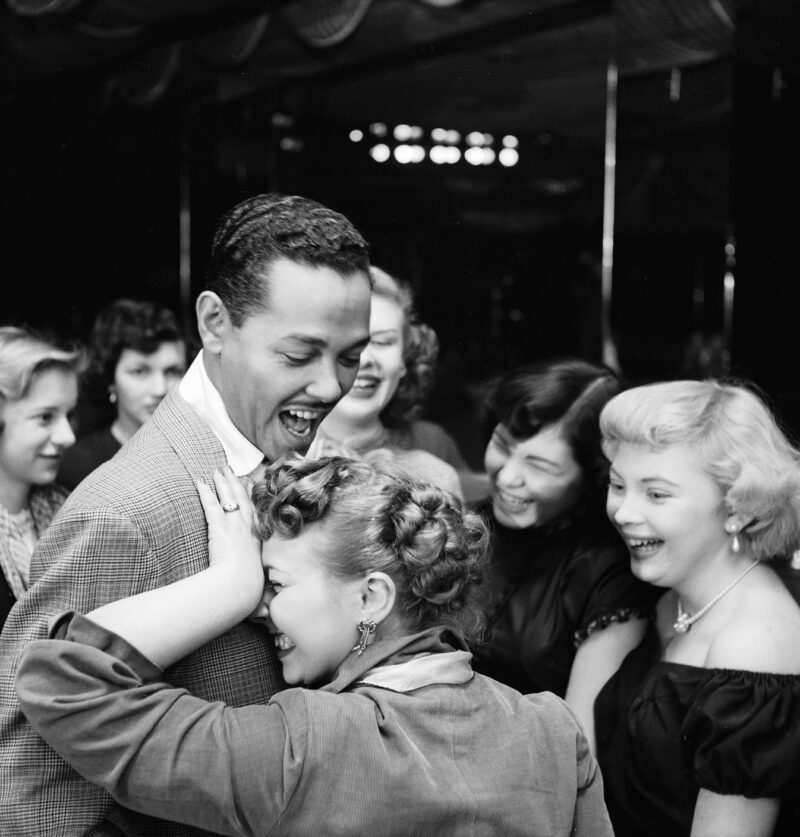
Martha Holmes, photograph from “Mr. B.,” LIFE, April 24, 1950 © LIFE Picture Collection, Dotdash Meredith Corp. Martha Holmes began photographing for LIFE in 1944. On view in the exhibition are Holmes’s 1950 photographs of mixed-race singer Billy Eckstine, including one of Eckstine being embraced by a white fan – a provocative image that Holmes felt was one of her best because she felt that it “told just what the world should be like.” Henry Luce supported this opinion.

Six pioneering women whose photographs for LIFE magazine skillfully captured events on a quickly evolving world stage will be the subject of Greenwich Historical Society’s new exhibition to debut March 6. These photographers enabled the public “to see life; to see the world; to eyewitness great events,” as described by LIFE magazine founder and editor-in-chief Henry Luce.

LIFE: Six Women Photographers features iconic images from these talented women who helped create modern photojournalism through their work as featured in the pages of LIFE magazine. On view through July 7, 2024, the exhibition presents more than 70 photographs by:

Margaret Bourke-White (1904-1971)
Marie Hansen (1918-1969)
Martha Holmes (1923-2006)
Lisa Larsen (ca. 1925-1959)
Nina Leen (ca. 1909-1995)
Hansel Mieth (1909-1998).

“We are thrilled to showcase the work s of these talented photographers who were on the vanguard of a transformative change in how twentieth-century Americans received and understood global cultural and political events,” says Maggie Dimock, curator of exhibitions and collections at Greenwich Historical Society. “This insightful exhibition offers a glimpse into how each of these remarkable women used their camera to capture topics that dominated American discourse through the last century, including U.S. industrial strength, the role of women and the family in modern American society, race relations, World War II, labor movements and the Cold War.”

A long-time Greenwich resident, Henry Luce (1898–1967) was convinced that American political, economic, and cultural power would, and should, dominate the era and that photojournalism, or “photo essays” as he coined them, could effectively shape America as an international power, inspiring its people, in his words, “to live and work and fight with vigor and enthusiasm.” For decades, Americans saw the world through the lens of the photographers at LIFE, and the magazine’s innovative photo essays became the publication’s trademark.

Of the 101 photographers on staff at LIFE during the magazine’s run as a weekly, only six full-time photographers were women. LIFE: Six Women Photographers highlights the work of these photographers while providing insight into the process through which they worked with editors to create visual stories, through the inclusion of photographs, vintage prints, copy prints and contact sheets. Published and unpublished photographs along with select memos, correspondence and other items from Time Inc. records show the editing process behind the final, published stories.

“The topic will provide fascinating historical context to the enormous changes underway today in media,” says Greenwich Historical Society Executive Director and CEO Debra Mecky. “And it will enable us to further our mission to strengthen the community’s connection to our past, to each other and to our future. Henry Luce was a Greenwich resident during the time he was arguably the most influential media figure in the twentieth century and one of the country’s most prominent citizens.”

LIFE: Six Women Photographers has been organized by the New-York Historical Society. The exhibition is curated by Marilyn Satin Kushner, curator and head, Department of Prints, Photographs, and Architectural Collections; and Sarah Gordon, curatorial scholar in women’s history, Center for Women’s History; with Erin Levitsky, Ryerson University; and William J. Simmons, Andrew Mellon Foundation Pre-Doctoral Fellow, Center for Women’s History. The New-York Historical Society holds the research archive of Time Inc., which was acquired by the Meredith Corporation (now Dotdash Meredith Corp.) in 2018

Margaret Bourke-White, photograph from “Franklin Roosevelt’s Wild West,” LIFE, November 23, 1936 © LIFE Picture Collection, Dotdash Meredith Corp. Bourke-White’s photograph of the Fort Peck Dam, a New Deal project in Montana, graced the inaugural cover of LIFE on November 23, 1936. This image of one of the dam turbines was part of the photo essay.

A series of lectures, workshops and discussions, film screenings and other activity related to the exhibition will be presented by Greenwich Historical Society throughout the duration of the exhibition, beginning with two in March:

Women of Photos and Letters: Margaret Bourke-White, Clare Booth Luce and Annie Leibovitz
Thursday, March 14 from 6:00 – 7:00 PM

In honor of Women’s History Month, Louisa Iacurci of the Connecticut Women’s Hall of Fame will explore the inspiring histories of Hall of Fame inductees whose work and lives are intertwined with social advocacy and journalistic activism, including photographers Margaret Bourke-White and Annie Leibovitz and writer, journalist and politician Clare Booth Luce.

LIFE: Six Women Photographers: A Lecture with Curator Marilyn Satin Kushner
Thursday, March 21 from 6:00 – 7:00 PM

In an illustrated lecture, Dr. Marilyn Satin Kushner, Curator and Head of the Department of Prints, Photographs, and Architectural Collections at New-York Historical Society, will expand on the curatorial process for LIFE: Six Women Photographers.

The full program schedule is available online: https://greenwichhistory.org/life-six-women-photographers/

Guided Gallery Tours:
Tours will be offered on select Sundays through June, from 1:00 – 1:30 PM. Free with admission, participants will enjoy an in-depth docent-led discussion of LIFE: Six Women Photographers, that shares insightful interpretation of the photographs on view, and a modern perspective to understanding the complex social backdrop in which they would have originally been seen by magazine readers. Dates: March 10, 24; April 7, 21; May 5, 19; June 2, 16, 30. For more information: https://greenwichhistory.org/event/guided-gallery-tour/

Communal Art-Making Is at the Core of Sanaa Gateja’s Monumental Paper Bead Tapestries

Communal Art-Making Is at the Core of Sanaa Gateja’s Monumental Paper Bead Tapestries

“Girls Voice” (2021), paper beads on barkcloth, 49 × 33½ inches. All images courtesy of Karma, shared with permission

For Sanaa Gateja, the pan-African philosophy of ubuntu—translating to “I am because we are,” the idea that society is what gives people humanity—is one of the most profound manifestations of art. Living and working in Kampala, Uganda, Gateja heads the Kwetu Africa Art and Development Centre, an organization he founded in the early 1990s. The center trains and employs about 15 people, who create small beads from post-consumer paper that the artist then stitches into large-scale tapestries.

Gateja’s preferred materials are vintage advertisements, political posters, outdated textbooks, and other colorful printed ephemera, which are hand-rolled, dyed, and cut to about three-quarters of an inch. The artist sews each component onto barkcloth, creating abstract compositions that evoke garden plots and rituals.

Works like “Voices of Peace” depict an anonymous congregation, with fiery botanicals brightening the background. Many of Gateja’s pieces advocate for environmental and social protections and speak to personal sufficiency and growth, the latter of which are intricately bound up with both nature and society as a whole.

Whether in the fragmented texts and imagery encased in the beads or the communal-making process, the tapestries encompass a mélange of tastes, preferences, and ideologies, all passed through the hands of several individuals before emerging in the final works. Nothing goes to waste, Gateja tells BOMB  in an interview, elaborating on his process:

I work on the floor. When I’m conceptualizing, I kneel and start to sketch; then I put beads on the barkcloth. I will start drawing the piece with chalk. Chalk allows me to go back and make changes. So, I’m on the floor. I have water jugs full of beads. Those with colors that don’t fit my plan, I will paint over. Painting comes at the end…I call my way of working “unit construction.” The bead is one unit, which is a sculpture. I look at the bead by itself as a complete sculpture.

Gateja is currently working toward a solo show titled NOURISHMENT, which will run from March 22 to May 18 at Karma in Los Angeles. Find more about his work on the gallery’s site.


abstract figures in red, orange, and yellow congregate in an embrace

“Look over Yonder” (2020), paper beads on barkcloth, 83¼ × 65¼ inches

a flower pot with green leaves and yellow flowers

“Home” (2021), paper, acrylic stitched on bark cloth, 82⅝ × 66⅞ inches

abstract figures stand together with fire-like plant growths above

“Voices of Peace” (2023), paper beads on barkcloth, 80 × 62½ inches

an abstract tree like floral form in orange, yellow, and green

“Thirst,” no date, paper, acrylic, natural dyes, stitching on bark cloth, 90½ × 59 inches

an abstract work with red and purple starfish like forms on a brown and yellow dotted backdrop

“Soil Fertility” (2023), paper beads on barkcloth, 49¾ × 59½ inches

Do stories and artists like this matter to you? Become a Colossal Member today and support independent arts publishing for as little as $5 per month. The article Communal Art-Making Is at the Core of Sanaa Gateja’s Monumental Paper Bead Tapestries appeared first on Colossal.

Greenwich Entertainment Acquires ‘Uncropped’: A Cinematic Journey …

Greenwich Entertainment Acquires ‘Uncropped’: A Cinematic Journey …
image

Greenwich Entertainment has proudly announced the acquisition of North American rights to ‘Uncropped’, a documentary that delves into the prolific work of renowned New York photographer James Hamilton. Directed by D.W. Young and produced alongside Judith Mizrachy, with executive production by acclaimed filmmaker Wes Anderson, the film is set to offer audiences an intimate look into the golden era of independent journalism through Hamilton’s lens.

Advertisment

Reviving a Visual Chronicle of Cultural History

For over four decades, James Hamilton has served as a visual historian, capturing the essence of American culture through his work with Harper’s Bazaar, The Village Voice, and The New York Observer. His photographs, ranging from candid street scenes in New York City to intimate portraits of celebrities like Alfred Hitchcock and Patti Smith, reflect not only the spirit of the times but also the transformative power of independent journalism. ‘Uncropped’ brings this rich visual archive to life, showcasing Hamilton’s unique ability to blend art with storytelling.

A Testament to Independent Journalism

Advertisment

The documentary not only celebrates Hamilton’s artistry but also highlights the critical role of publications like The Village Voice in fostering a vibrant culture of independent journalism. In an era where the independence of journalistic voices is increasingly under threat, ‘Uncropped’ emerges as a poignant reminder of the value of free expression and the impact of photography on public discourse. The film’s exploration of Hamilton’s work underscores the necessity of safeguarding spaces where creativity and journalism intersect without constraints.

Looking Towards the Premiere and Beyond

Set for a theatrical opening on April 26 at the IFC Center in New York, complete with Q&As featuring Hamilton, the filmmakers, and special guests, ‘Uncropped’ promises to be a must-see event. Following its theatrical run, the documentary will be available on digital platforms starting May 7th, ensuring that Hamilton’s legacy reaches a wide audience. As Greenwich Entertainment prepares to share Hamilton’s story with the world, the anticipation builds for a film that not only celebrates a remarkable career but also champions the enduring value of independent journalism.

As the curtain rises on ‘Uncropped’, viewers are invited to reflect on the changing landscapes of journalism and photography. In a world where the narratives of cultural history are continually being rewritten, Hamilton’s work serves as a beacon of authenticity and creative freedom. Through his lens, we are reminded of the power of independent voices to challenge, inspire, and transform society.

Celebrating Women’s Creativity: Hasselblad Heroines Illuminate Pho…

Celebrating Women’s Creativity: Hasselblad Heroines Illuminate Pho…
image

In honor of Women’s History Month, a distinguished luxury brand has unveiled its social media campaign, spotlighting the remarkable work and stories of established female photographers known as Hasselblad Heroines. This initiative, which began in 2019, has consistently showcased the talents and insights of these women, offering a platform for inspiration and recognition within the photography community.

Advertisment

Empowering Female Voices Through Photography

The 2024 iteration of the Hasselblad Heroines campaign spans six months, during which the compelling narratives and exceptional photography of both past and present Heroines will be shared. The focus extends across various genres, underlining the versatility and creativity of female photographers. The campaign is a testament to the superior quality of Hasselblad cameras and lenses, as well as the photographers’ unwavering dedication to their craft.

Featured prominently are the works and stories of four still-life photographers: Annie Spratt, Karen Thomas, Lydia Winters, and Andrea Zvadova. Each brings a unique perspective to the table, from Spratt’s breathtaking nature scenes and Thomas’s vibrant food photography to Winters’s captivating product shots and Zvadova’s innovative beauty portraits.

Advertisment

Spotlight on March’s Heroines

Annie Spratt, a mother of eight and a prolific photographer, shares her journey of overcoming discouragement to achieve widespread acclaim. Karen Thomas talks about her approach to food photography, her successes, and the importance of perseverance in the industry. Lydia Winters, Minecraft’s ‘chief storyteller,’ blends her passion for storytelling with her photographic skills, while Andrea Zvadova explores the beauty in diversity through her lens, challenging conventional beauty standards.

Their stories are not just about their achievements but also about the obstacles they’ve overcome and the lessons learned along the way. These narratives serve as powerful motivators for aspiring female photographers, emphasizing the importance of resilience, creativity, and finding one’s unique voice in a competitive field.

Advertisment

Inspiring Future Generations

The Hasselblad Heroine campaign goes beyond celebrating individual achievements; it’s about fostering a supportive community where aspiring female photographers can find role models and inspiration. By sharing these stories, Hasselblad not only honors the incredible work of these women but also encourages a dialogue about diversity, creativity, and empowerment in the photography industry.

As a father to a young aspiring female photographer myself, I find immense value in these stories. They not only highlight the potential for creativity and success regardless of gender but also underscore the importance of supporting and uplifting one another in our artistic endeavors. The Hasselblad Heroines campaign stands as a beacon of inspiration, urging the next generation to pursue their passions with determination and courage.

Moment’s photography-focused iPhone 15 cases drop to $40 in four colors (Save 20%)

Moment’s photography-focused iPhone 15 cases drop to $40 in four colors (Save 20%)

Moment is now discounting its iPhone 15 series smartphone cases for the first time in months. These covers come in styles for all of Apple’s newest smartphones and now sell for $40 shipped each. They come in four different colors each and drop from the usual $50 price tags. You’re saving 20% while scoring the second-best discount to date, as well as the first price cut since back in November when a Black Friday discount had it at $5 less. Our hands-on review offers a closer look at what to expect.

Available in four different colors across the iPhone 15 Pro and Pro Max handsets, these new Moment cases come in just a standard black for iPhone 15/Plus users. Each one sports a rugged design with a unique textured pattern on the back for some added grip to go alongside a raised lip around the screen and camera assembly for keeping both protected. But the real star of the show is support for the brand’s signature smartphone lenses thanks to the Drop-in mounts. Throw in MagSafe support, and you’re set with one of the best photography-focused phones on the market.

Today’s discounts on the new Moment iPhone 15 cases are perfect companions to the company’s new smartphone lenses. Of course, the new covers are compatible with these accessories, which were designed to pair with Apple’s latest and take full advantage of the refreshed camera array. We fully break down what’s new with the updated T-Series lens collection, which is now available for purchase.

Moment iPhone 15 case features:

The Moment Case for iPhone 15 is engineered to be your favorite everyday case – thin, stylish, tough, Magsafe compatible, and ready to make your camera phone an even better camera. Whether you’re traveling, shooting content on your phone, or looking for a touch of style…the Moment Case is for you.


Subscribe to the 9to5Toys YouTube Channel for all of the latest videos, reviews, and more!

Recent VideosRecent Videos

Club News: Architectural Photography Presentation Planned

Club News: Architectural Photography Presentation Planned

Discover the mesmerizing world of architectural photography with acclaimed photographer and former dean of the College of Fine Arts at Jacksonville University, Henry Rinne, at the Sandhills Photography Club’s upcoming meeting on Monday, March 11. Join us as Rinne unveils the captivating essence of architectural drama in his presentation titled “Finding Drama in Architecture.”

With exhibitions across the United States and publications in renowned books and magazines such as Downbeat and Lenswork’s “Our Magnificent Planet,” Rinne brings a wealth of experience to the table. 

This page requires Javascript.

Javascript is required for you to be able to read premium content. Please enable it in your browser settings.