Kenya Crowned World’s Premier Wildlife Photography Destination, In…

Kenya Crowned World’s Premier Wildlife Photography Destination, In…
image

Recent findings from a study conducted by Cape Town-based travel portal Go2Africa have placed Kenya at the pinnacle of wildlife photography destinations globally, with India also securing a spot in the coveted top ten list. This comprehensive analysis, which sifted through approximately 70 million images on Flickr, underscores the rich biodiversity and unparalleled wildlife photography opportunities these countries offer, marking them as must-visit locales for nature enthusiasts and photographers alike.

Advertisment

Global Leaders in Wildlife Photography

Kenya, renowned for its diverse ecosystems and home to over 25,000 animal species, leads the pack as the ultimate haven for wildlife photographers. The country’s national parks and reserves, such as the Masai Mara and Amboseli, provide prolific sightings of the ‘Big 5’ – lions, leopards, elephants, African buffalo, and rhinoceroses. Following closely behind Kenya, Canada, Australia, Botswana, and Tanzania, along with other nations, make up the rest of the top destinations, each offering unique wildlife encounters and photographic vistas. Notably, the study revealed a significant concentration of wildlife photographs originating from Africa, with Kruger National Park alone accounting for 40,965 photos.

Diverse Habitats, Diverse Subjects

Advertisment

While Singapore and India, ranking third and ninth respectively, highlight Asia’s representation in the top ten, their diverse landscapes contribute significantly to their standings. Singapore’s compact yet richly biodiverse rainforests serve as a sanctuary for a variety of species, including monkeys, birds, and otters, making it a prime spot for wildlife photography within an urban setting. Conversely, India’s vast and varied terrain encompasses everything from dense forests to arid deserts, hosting a plethora of wildlife like Bengal tigers, Asian elephants, and Asiatic wild dogs. The nation’s array of national parks, such as Kaziranga and Hemis, provide a backdrop for some of the most compelling wildlife photography on the continent.

Conservation Efforts Underpinning Wildlife Photography

Beyond the allure of capturing stunning wildlife images lies a critical narrative of conservation and the fight against wildlife crime. Initiatives like those spearheaded by the International Fund for Animal Welfare (IFAW) along the Kenya-Tanzania border emphasize the importance of protecting these natural habitats and their inhabitants from illegal activities. These efforts are not only vital for preserving biodiversity but also for ensuring that future generations can enjoy and photograph the world’s majestic wildlife in their natural settings.

As the world continues to grapple with environmental challenges, the recognition of Kenya, India, and other countries as leading wildlife photography destinations serves as a reminder of the beauty that nature offers. It also highlights the crucial role that photography can play in conservation efforts, showcasing the planet’s wonders while advocating for their protection. The findings from Go2Africa’s study not only celebrate the rich biodiversity found across continents but also reinforce the message that preserving these habitats is imperative for wildlife, communities, and global ecosystems alike.

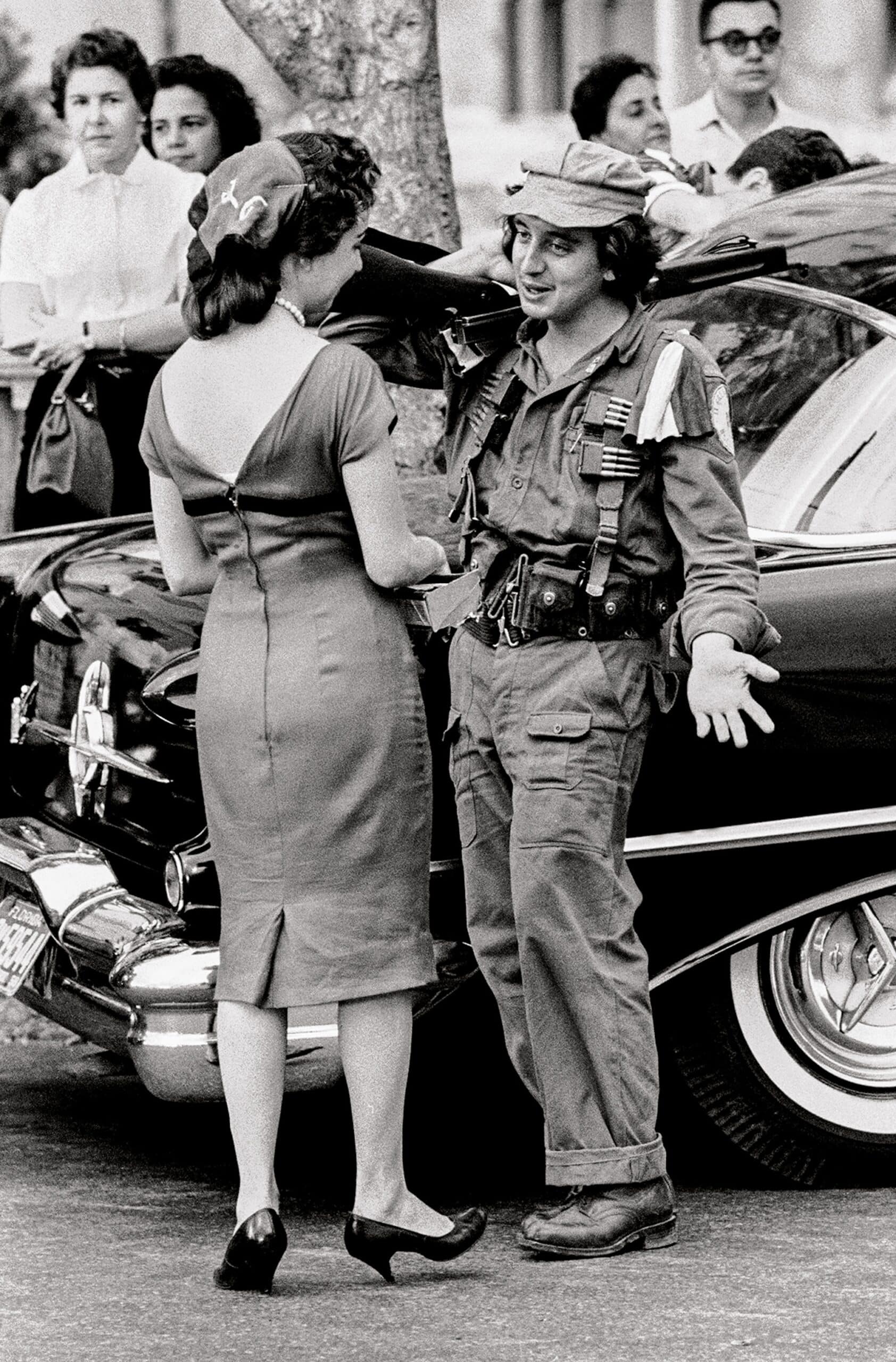
Burt Glinn: Half a Century as a Magnum Photographer

Burt Glinn: Half a Century as a Magnum Photographer

Sarah Stacke knew photographer Burt Glint for the last 8 years of his life, till he passed away in 2008. In her introduction to Burt Glinn: Half a Century as a Magnum Photographer, she reminisces of the influence he had on her how it altered he on life, along with memories of the man himself, and his over 50-year career.

“I remember Burt’s wit and his lopsided grin when he told stories, which was a lot. He loved fine things, especially clothes. He had big opinions, high expectations, and an incredible grasp of the narrative, technical, and administrative aspects of photography .… For more than half a century, Burt covered it all: conflict, celebrities, wildlife, science, corporations, travel, society, culture. Yet, looking through his archive, his interests clearly emerge.”

Glinn was born in Pittsburgh, Pennsylvania in 1925. After serving in the Army between 1943 and 1946 during World War II, he enrolled at Harvard University, where he studied literature. While at Harvard, Glinn became the photographer and photo editor for the Harvard Crimson, the student newspaper. His work for the paper attracted the attention of LIFE, who hired him as a photographer in 1949. By 1950 he had become a staff photographer at the magazine, but he continued as a freelancer, which allowed him to work for other publications like Holiday, Esquire, Paris-Match, and Newsweek.

CUBA. La Havana. 1959. Young “guerillero” in from hiding speaks to his first civillian lady. © Burt Glinn

How to see the world

“Burt’s editorial eye is key. He really knew how to see the world by placing himself in it.”

Susan Meiselas

In 1951, Glinn became an associate member of Magnum Photos, along with Eve Arnold and Dennis Stock. Together they were the first Americans to join the agency. Glinn became a full member in 1954. He went on to be the president of Magnum between 1972 and 1975 and was reelected to the post in 1987. Glinn gained recognition for his coverage of the Cuban Revolution and his in-depth color series on the South Seas, Japan, Russia, Mexico, and California, each of which was published as a complete issue of Holiday.

“Burt’s editorial eye is key. He really knew how to see the world by placing himself in it. He was part of the generation who were lucky to work when magazine assignments were still plentiful and long. He came out of that tradition, which meant that he went places, then stayed and documented them over time. His photographs of the Berlin Wall being built were an example of incredibly good work,” says photojournalist Susan Meiselas in an interview with Stacke that is included in the book.

Throughout his career, Glinn regularly covered national and international historical events, cultural icons, and political figures for leading publications. And in the process, he traveled widely to wherever the job required him to be. His subjects ranged from The Little Rock 9 to the Cuban Revolution to the aftermath of the assassination of Martin Luther King, Jr. There is also work covering the building of the Berlin Wall, Queen Elizabeth II visiting New York, along with photographs of musicians, celebrities and sporting events. And there are religious communities, portraits of their leaders, and their events and rituals, which Glinn tried to photograph as much as possible throughout his career.

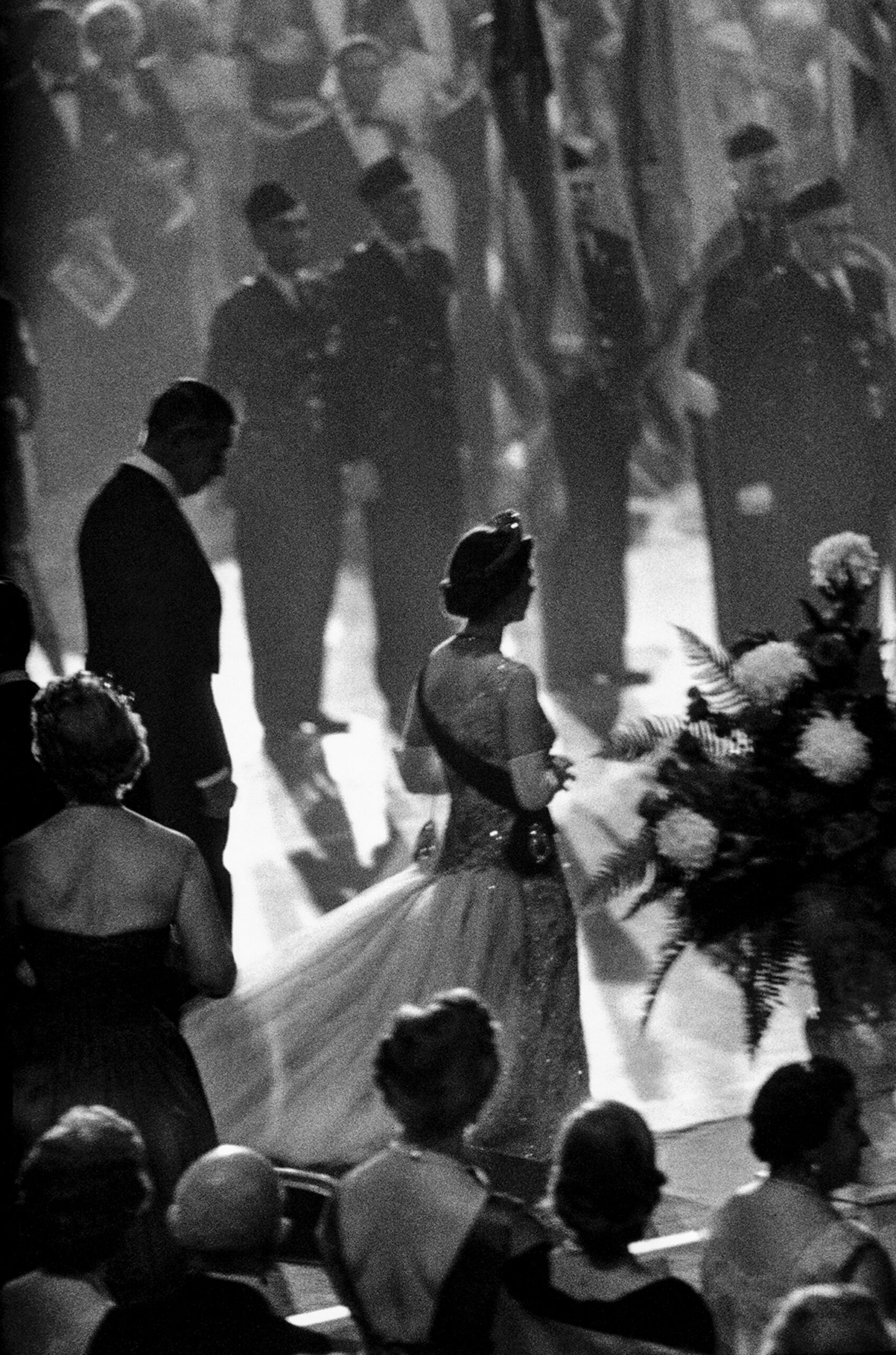
USA. New York City. 1957. Queen ELIZABETH II on her visit to America.
USA. New York City. 1957. Queen ELIZABETH II on her visit to America. © Burt Glinn
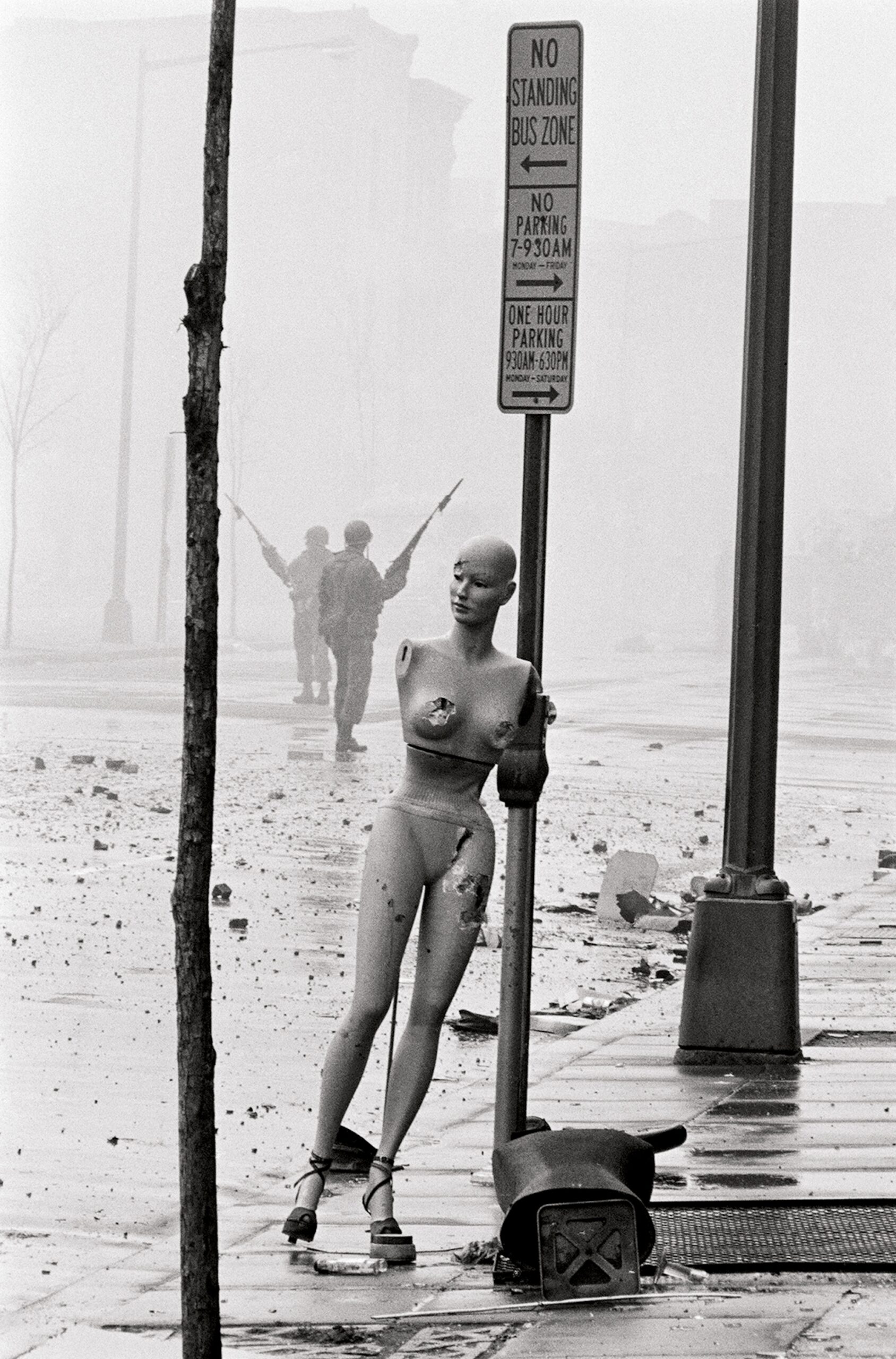
USA. Washington D.C. 1968. Street scene the morning after the assassination of Martin Luther King, leader of the civil rights movement.
USA. Washington D.C. 1968. Street scene the morning after the assassination of Martin Luther King, leader of the civil rights movement. © Burt Glinn

A career shaped by diversity

As Elena Prohaska Glinn, the photographer’s widow and custodian of his archive, recounts in her essay, “Burt began creating annual lists of his stories in 1948 and continued for 60 years. The lists reveal how diverse his interests were throughout his life. As an example, in 1959, one of Burt’s favorite years, he photographed more than 30 stories. It began when he abruptly left a New Year’s Eve party after hearing Cuba’s president Fulgencio Batista was on his way into exile and Fidel Castro was taking control. Burt caught the last Yellowbird flight from New York to Miami, then got a $20 charter plane to Cuba, where he spent nine days on the road with Fidel and his soldiers, documenting their triumphant procession into Havana. After some rest and assignments stateside, he covered the ultrarich and almost famous, often ridiculous, at Badrutt’s Palace Hotel St. Moritz in the haute Swiss Alps. Back in New York, he photographed Sammy Davis Jr., followed by the Beatniks.”

In the 1960s, he became one of the first photographers to enter the field of annual reports. Through that work, done over the next four decades, Glinn created a visual record of corporate America’s rapid growth. Throughout his career, he regularly covered national and international historical events, cultural icons, and political figures for leading publications.

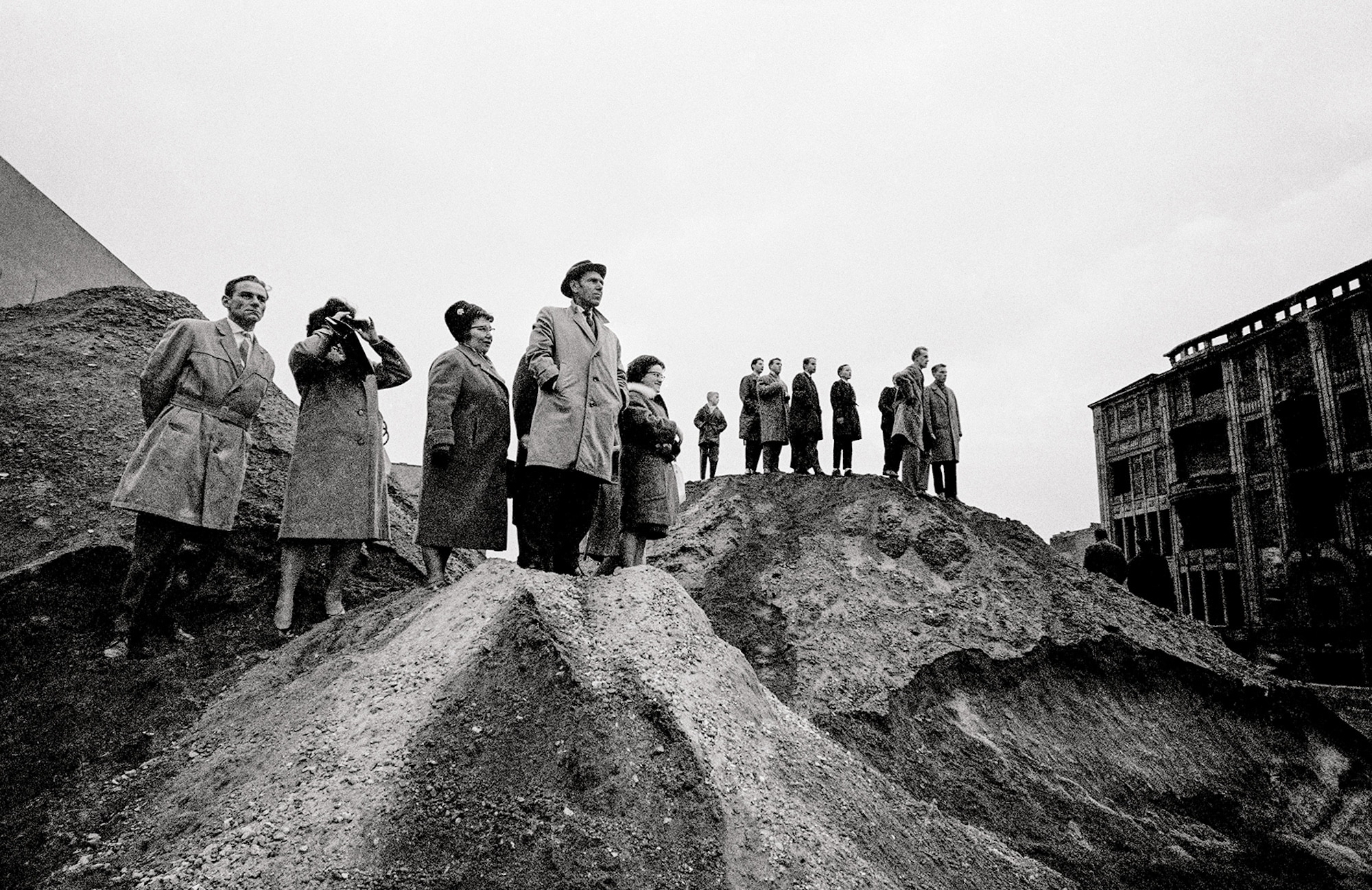
GERMANY, BERLIN, 1961. Westerners watching across the wall while it is still low enough to see over.
GERMANY, BERLIN, 1961. Westerners watching across the wall while it is still low enough to see over. © Burt Glinn

As Meiselas recounts, this change to corporate work was not just a chance for Glinn to explore new work opportunities, but also a chance for Magnum to grow into new areas as well.

“Transitioning into corporate work, he understood something about seizing an opportunity, and that was part of his success and business acumen. The opportunity wasn’t just for himself, but for other members of Magnum too. He wasn’t initially specialized in corporate work. You see him going into Goldman Sachs with an editorial eye. You understand why it was especially valuable to a corporation at that time and why they kept hiring him year after year, over decades. He documented that institution growing and changing as it transformed to become a significant player in the financial world. I think looking closely at change came from Burt’s photojournalistic training and provides insight into his success with corporate work.”

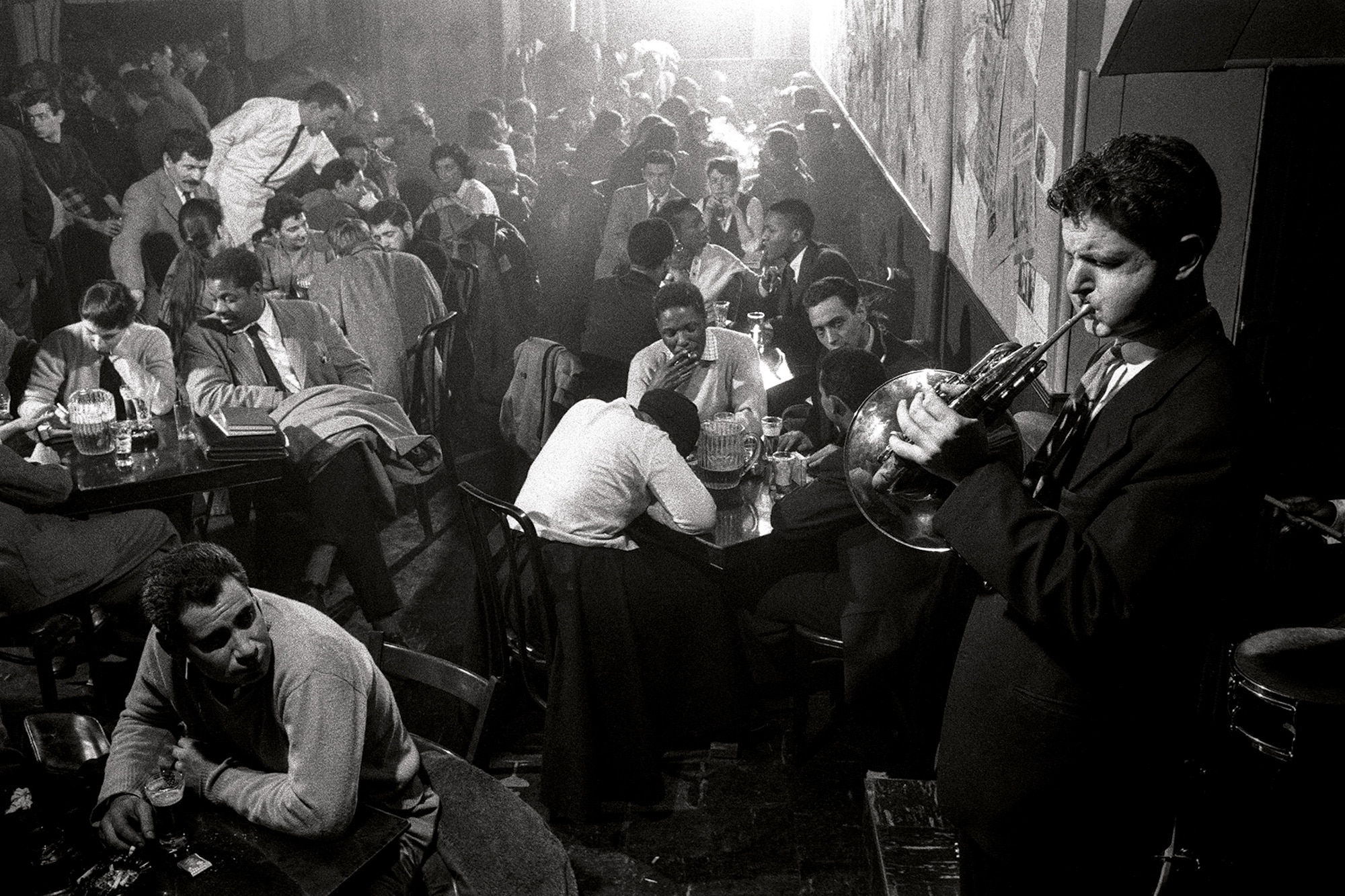
USA. New York City. 1957. David Amram entertains at the Five Spot Cafe.
USA. New York City. 1957. David Amram entertains at the Five Spot Cafe. © Burt Glinn

Generosity is the key

Burt Glinn: Half a Century as a Magnum Photographer is the first book to cover the breadth of Glinn’s career. The book encompasses 100 photographs broken down into 5 major themes that run throughout Glinn’s career. But even broken into groups, the photographs show the depth of the subjects of Glinn’s work along with his technical abilities, outstanding eye, sense of timing, and ability to create dynamic photographs no matter the subject.

Stake described Glinn’s diverse career this way in an email exchange, “I think being able to look at the ebb and flow of Burt’s long career is valuable for emerging and experienced photographers. There were years he focused on editorial work, years he focused on commercial work, and years he was able to combine both. In long careers, there are often chapters with different types of photography work—whether that’s editorial, commercial, non profit, curating, writing, bookmaking, etc.—and that’s a good thing. In Burt’s case, the editorial work helped him be a better commercial photographer and vice versa.  

And in a nod to the photographer himself, and to keep him physically in the book, each chapter is set off by a photograph of Glinn, and a color that harkens back to his sense of style. Glinn was known for his suits and ties and owned a wide range of both. Stacke has a box of some of Glinn’s old ties, which she and the design team used to study the colors that were in Glinn’s personal pallet. And using those as a base, they selected five colors that reflect Glinn color pallet for the chapter colors.

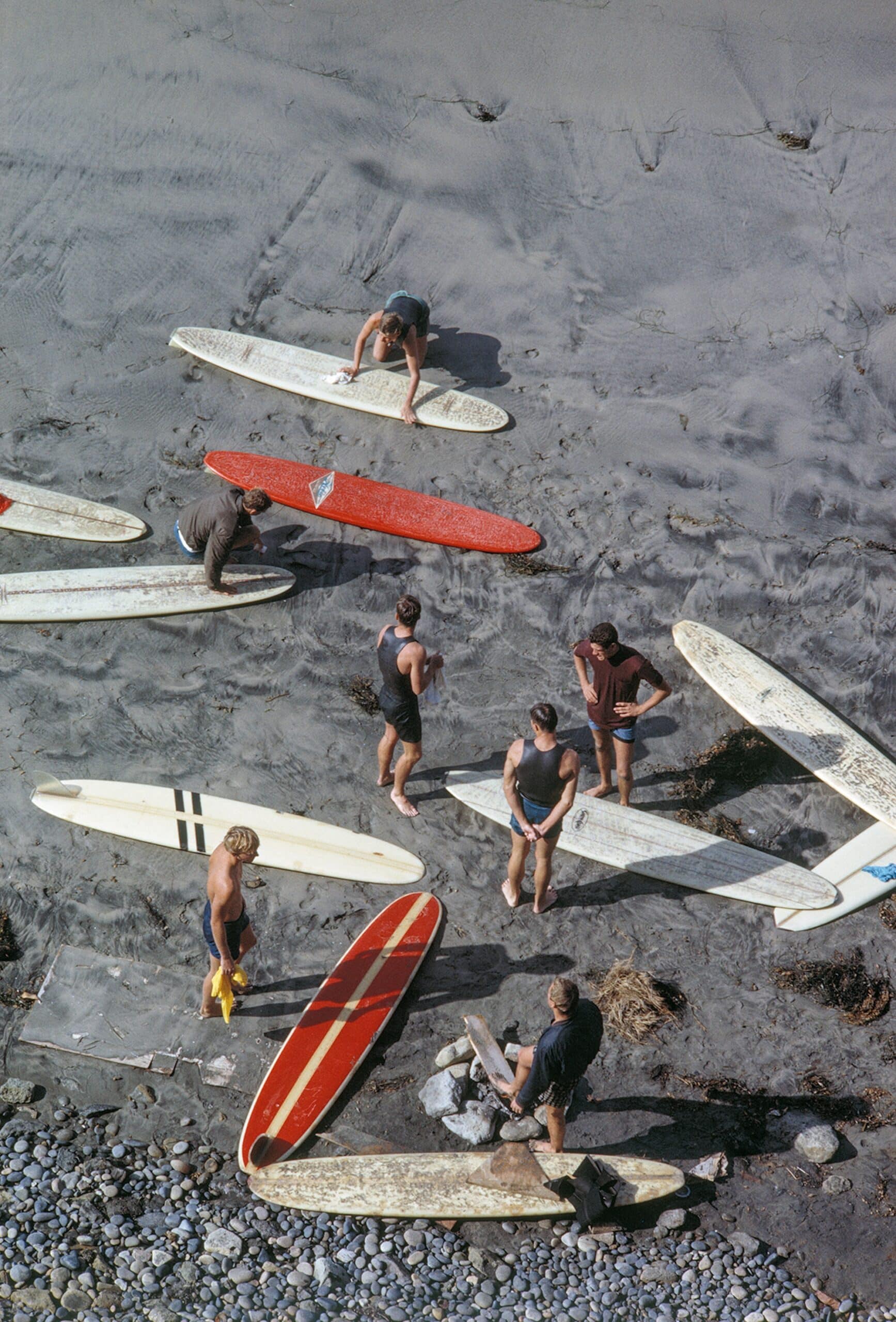
Surfers on the beach. Malibu, California, USA. 1965.
Surfers on the beach. Malibu, California, USA. 1965. © Burt Glinn
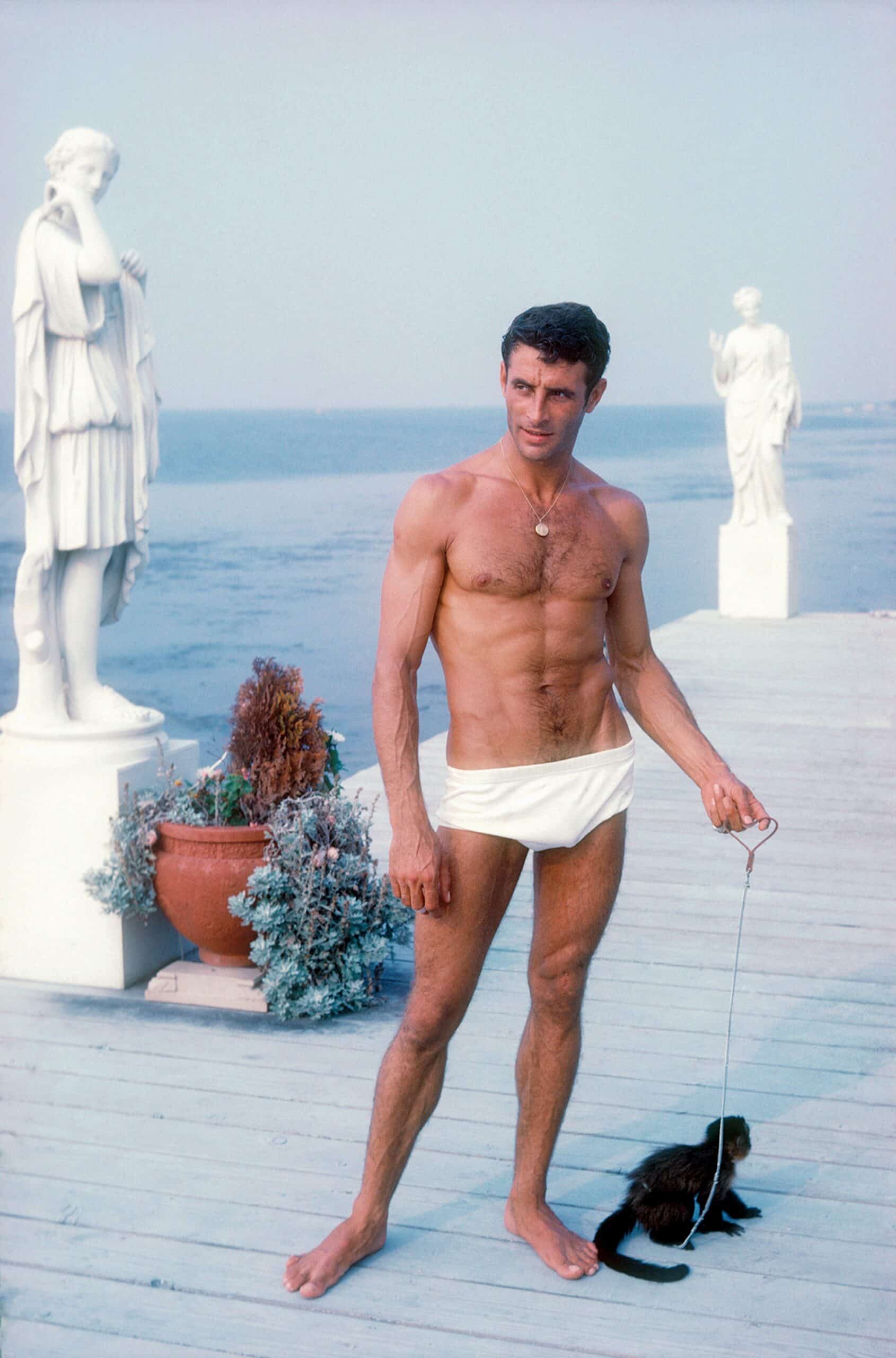
USA. New York. Fire Island. Guest in a bachelors hotels cherry grove.
USA. New York. Fire Island. Guest in a bachelors hotels cherry grove. © Burt Glinn

The other theme that runs through the book, especially in the essays and notes from his colleagues, including Gilles Peress and Larry Towell, was Glinn’s generosity.

Stacke’s memories from her time working with Glinn, as she recounted to me, further reinforce this: “The way Burt was generous with me was as a mentor. He shared his experience and knowledge with me, introduced me to people, and encouraged me to create and show photography work. Knowing how generous he was with me as a young photographer, it was really meaningful to learn that he was also generous with his peers. I think that can be harder because photography is a competitive field, but it’s clear that Burt shared his time, knowledge, experience, leadership skills, and even money with his peers.”

“Burt was one of the most generous members of Magnum. He always made time to help negotiate difficult internal and external situations.”

Susan Meiselas

Glinn was a versatile and skilled photographer whose eye was able to help shed light on some of the biggest stories of the second half of the 20th Century along with simple everyday life. But in many ways, his generosity maybe his greatest legacy in the eyes and minds of those who knew him. He was always ready to help younger photographers, introducing them to others and sharing his knowledge. Even his memorial, after his death in 2008, became a testament to his generosity, in that people who came made small donations that provided some of the seed money for the Magnum Foundation, a nonprofit organization that works to expand creativity and diversity in documentary photography through fellowships and awards. Even in his death he helped the next generation of photographers.

As Meiselas recounts in her interview, “Burt was one of the most generous members of Magnum. He always made time to help negotiate difficult internal and external situations. I’m sure he made connections for certain photographers into the worlds he knew, sharing his contacts and connecting them to his networks. That was my impression, and I think that’s his legacy. That kind of generosity is an inspiration for many to follow.”

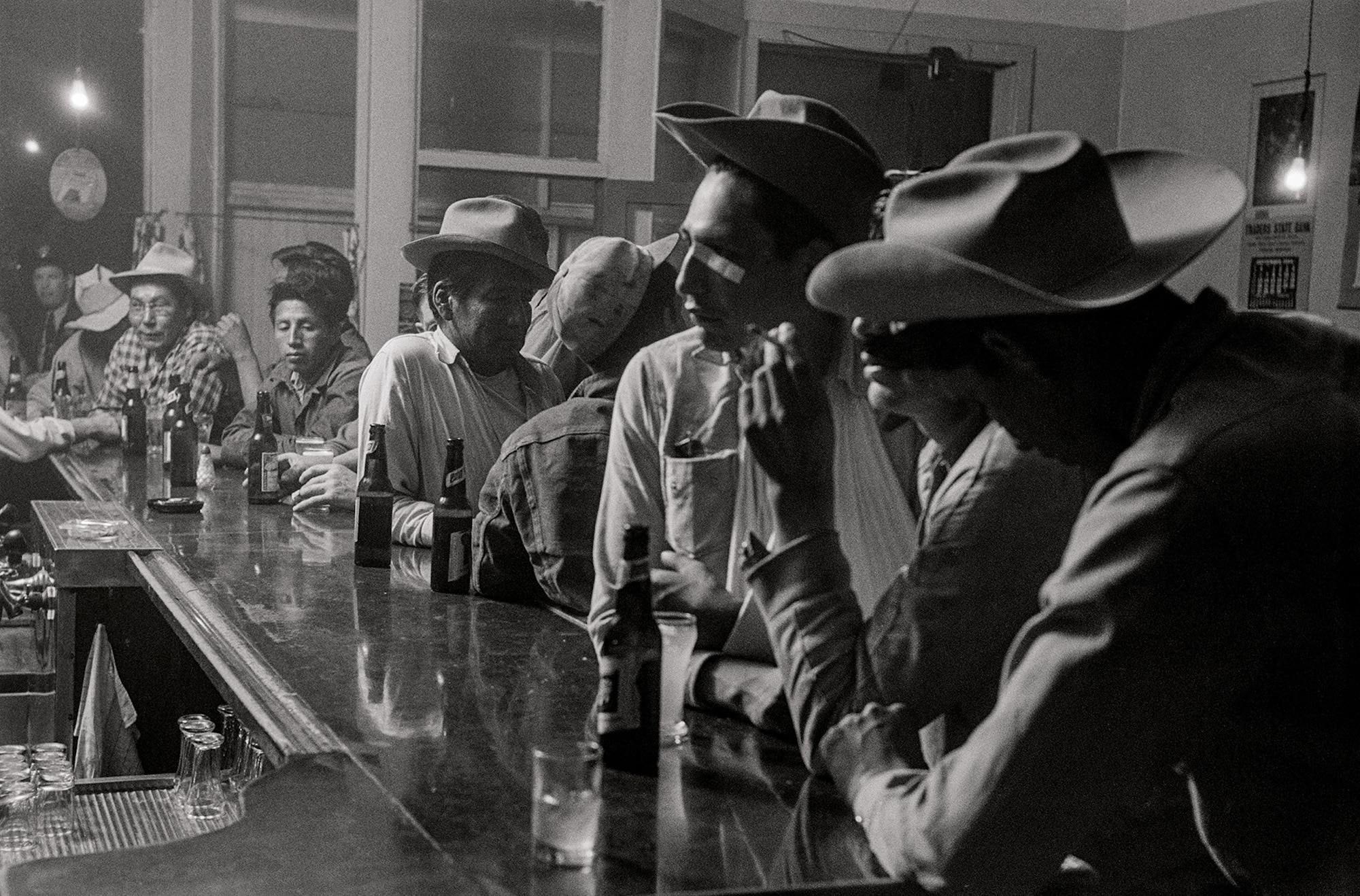
USA. Montana. 1954. Life on an Assiniboine Indian reservation.
USA. Montana. 1954. Life on an Assiniboine Indian reservation. © Burt Glinn
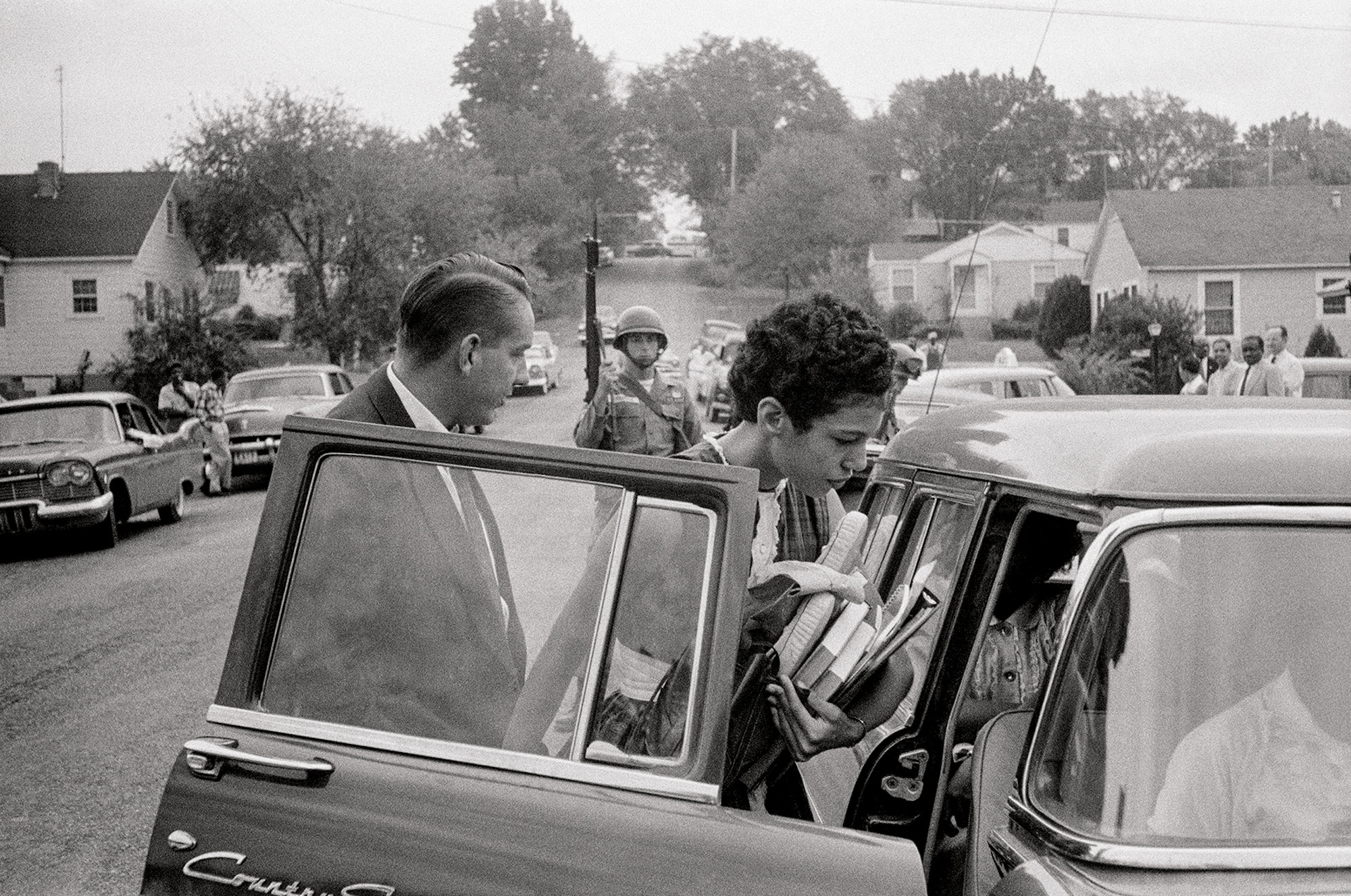
USA. Little Rock, Arkansas. 1957. First black teenagers to attend school at Little Rock High School.
USA. Little Rock, Arkansas. 1957. First black teenagers to attend school at Little Rock High School. © Burt Glinn

Burt Glinn: Half a Century as a Magnum Photographer can be purchased though Elena Prohaska Fine Arts on her website here.

Photo as a Service Market to Reach $74.2 Billion, Globally, by 2032 at 4.5% CAGR: Allied Market Research

Photo as a Service Market to Reach $74.2 Billion, Globally, by 2032 at 4.5% CAGR: Allied Market Research

PORTLAND, Ore., March 5, 2024 /PRNewswire/ — The proliferation of digital photography and widespread use of social media platforms have surged the growth of photo as a service market. With rise in demand for visually captivating content online, businesses, influencers, and individuals seek professional photography services to enhance their online presence. Social media platforms serve as powerful channels for showcasing high-quality images, driving the need for skilled photographers to meet the demand for captivating visual content. Such factors propel the growth of photo as a service market.

Allied Market Research published a report, titled,Photo as a Service Market By Type (School Photography, Event Photography, Wedding Photography, Theme Park and Cruise Line Photography, Photo Restoration, and Others): Global Opportunity Analysis and Industry Forecast, 2023-2032.”. According to the report, the global Photo as a Service Market generated $48.2 billion in 2022 and is anticipated to generate $74.2 billion by 2032, witnessing a CAGR of 4.5% from 2023 to 2032.

Download Sample Pages of Research Overview: https://www.alliedmarketresearch.com/request-sample/A312697

Prime determinants of growth

Advancements in technology and equipment have revolutionized the photo as a service market, enabling photographers to capture higher-quality images efficiently. Innovations such as high-resolution cameras, drone photography, and advanced editing software have expanded the capabilities of photographers, offered new creative possibilities, and met the evolving demands of clients. These advancements have increased the accessibility of professional photography services, thus driving the market growth, as businesses and individuals seek out high-quality visual content for their marketing, branding, and personal needs.

Report coverage & details:

Report Coverage

Details

Forecast Period

2023–2032

Base Year

2022

Market Size In 2021

$48.2 Billion

Market Size In 2031

$74.2 Billion

CAGR

4.5 %

No. Of Pages In Report

300

Segments Covered

Type And Region

Drivers

Increase In Demand For High-Quality Visual Content

Growth Of Freelance And Independent Photographers

Opportunities

Rise In Popularity Of Drone Photography

Increase In Demand From Commercial And E-Commerce Photography

Restraints

High Costs For Technological Advancements

Competition From DIY Solutions

Procure Complete Report (218 Pages PDF with Insights, Charts, Tables, and Figures): https://bit.ly/4ah2uSn

The wedding photography segment to maintain its leadership status during the forecast period

By type, the wedding photography segment held the highest market share in 2022, accounting for more than two-fifth of the global photo as a service market revenue and is estimated to maintain its leadership status during the forecast period. In the photo as a service market, wedding photography trends are evolving with a focus on candid and documentary styles, capturing genuine moments and emotions. However, the photo restoration segment is projected to attain the highest CAGR of 6.2% from 2023 to 2032. In the photo as a service market, photo restoration services are witnessing surge in demand with advanced AI algorithms and machine learning to enhance restoration capabilities, allowing for the revival of damaged and old photographs.

North America to maintain its dominance by 2032

Region-wise, Asia-Pacific held the highest market share in terms of revenue in 2022, accounting for more than one-third of the global photo as a service market revenue and expected to witness the fastest CAGR of 5.6% from 2023 to 2032. The Asia-Pacific photo as a service market experienced surge in demand due to rise in preference for premium wedding photography and school photography. As disposable incomes rise, there is a growing inclination toward high-quality, professional photography services for weddings and school events. 

Leading Market Players: –

  • Lifetouch Inc.
  • Cherry Hill Programs, Inc.
  • George Street Photo and Video, LLC
  • Strawbridge Studios, Inc.
  • Studio Alice Co. Ltd.
  • HR Imaging Partners Inc.
  • Bella Baby Photography, LLC
  • Fisher Studios Ltd.
  • MSP Photography Pty Ltd
  • Carma Media Productions LLC.

Want to Access the Statistical Data and Graphs, Key Players’ Strategies: https://www.alliedmarketresearch.com/purchase-enquiry/A312697

The report provides a detailed analysis of these key players in the global Photo as a Service Market. These players have adopted different strategies such as collaborations, expansion, joint ventures, agreements, and others to increase their market share and maintain dominant shares in different regions. The report is valuable in highlighting business performance, operating segments, product portfolio, and strategic moves of market players to showcase the competitive scenario.

 Similar Reports We Have on Consumer Goods Industry:

About Us:
Allied Market Research (AMR) is a full-service market research and business-consulting wing of Allied Analytics LLP based in Wilmington, Delaware. Allied Market Research provides global enterprises as well as medium and small businesses with unmatched quality of “Market Research Reports” and “Business Intelligence Solutions.” AMR has a targeted view to provide business insights and consulting to assist its clients to make strategic business decisions and achieve sustainable growth in their respective market domain.

Pawan Kumar, the CEO of Allied Market Research, is leading the organization toward providing high-quality data and insights. We are in professional corporate relations with various companies and this helps us in digging out market data that helps us generate accurate research data tables and confirms utmost accuracy in our market forecasting. Each and every data presented in the reports published by us is extracted through primary interviews with top officials from leading companies of domain concerned. Our secondary data procurement methodology includes deep online and offline research and discussion with knowledgeable professionals and analysts in the industry.

Contact:

David Correa
United States
1209 Orange Street,
Corporation Trust Center,
Wilmington, New Castle,
Delaware 19801 USA.
Int’l: +1-503-894-6022
Toll Free: +1-800-792-5285
Fax: +1-800-792-5285
help@alliedmarketresearch.com
Web: www.alliedmarketresearch.com
Allied Market Research Blog: https://blog.alliedmarketresearch.com 
Follow Us on | Facebook | LinkedIn | YouTube |

Logo: https://mma.prnewswire.com/media/636519/Allied_Market_Research_Logo.jpg 

Study Reveals The World’s Best Wildlife Photography Destinations

Study Reveals The World’s Best Wildlife Photography Destinations

Study Reveals The World's Best Wildlife Photography Destinations & India Is Among Them

Kruger National Park in South Africa. Image credit: Fokke Baarssen/ Shutterstock

A recent study by Cape Town-based travel portal Go2Africa has identified Kenya as the best destination for wildlife spotting and photography in the world. Singapore and India also made it to the top ten list, ranking third and ninth, respectively, for wildlife photography opportunities in Asia.

Canada closely follows Kenya in second place, with Australia taking the fourth spot in the list of best wildlife destinations spotting in the world. Botswana and Tanzania secure the fifth and sixth positions, while Lithuania ranks seventh. Namibia and South Africa round out the top ten, holding the eighth and tenth spots, respectively.

Kenya to India: Top destinations for wildlife photography

Top countries for game spotting Go2Africa
Top countries for wildlife photography. Image credit: Go2Africa

The study, which analysed around 70 million images on Flickr, highlights the top ten destinations with the highest number of wildlife photographs. The results reveal that half of the images originate from African countries such as Kenya, Botswana, Tanzania, Namibia, and South Africa, with the highest count recorded at Kruger National Park, totalling 40,965 photos.

Kenya emerges as a wildlife haven, boasting over 25,000 species of animals, 7,000 species of plants, and 2,000 fungi and bacteria. With excellent chances of spotting the iconic ‘Big 5’ lions, leopards, elephants, African buffalo, and rhinoceroses Kenya draws wildlife enthusiasts from across the globe.

While North America, Oceania, and Europe each have one country in the top ten list, Asia is represented by two countries, Singapore and India.

Related Stories

Best wildlife destinations in the world
Sungei Buloh Wetland Reserve, Singapore. Image credit: Danny/ Shutterstock

Singapore, famed for its dense rainforests, offers ample opportunities to spot wildlife such as monkeys, birds, monitor lizards, otters, and crocodiles in their natural habitats. Some of the best wildlife photography spots in the city-state include Bukit Timah Nature Reserve, Sungei Buloh Wetland Reserve, Pulau Ubin, Punggol Waterway Park, and Coney Island.

Kaziranga National Park
Kaziranga National Park, Assam, India. Image credit: Rofeeq.birdinghimalayas/ Shutterstock

India, celebrated for its diverse landscape, boasts numerous wildlife destinations ideal for game spotting. From the majestic Bengal tiger to Asian elephants and Asiatic wild dogs, India’s national parks and reserves offer unparalleled opportunities for wildlife photography. Whether it’s Hemis National Park in Jammu and Kashmir, Kaziranga National Park in Assam, Keoladeo National Park in Rajasthan, or Satpura National Park in Madhya Pradesh, India beckons wildlife enthusiasts with its rich biodiversity.

For further insights into the study, visit Go2Africa.

(Feature image credit: Fokke Baarssen/ Shutterstock)

Related: Into The Heart Of The Wild: Get Up Close With Wildlife At Africa’s National Parks

Written By

Pyusha Chatterjee

Pyusha Chatterjee

A journalist, Pyusha has previously worked with media organisations including The New Indian Express and Hindustan Times. A solo traveller by choice, she loves exploring life more than anything else, after food of course. When she isn’t gardening, writing, reading, cooking or singing out loud, you can spot her watching films and series, debating with ..Read More

Artists, children, sex workers: Christer Strömholm’s sympathetic street scenes

Artists, children, sex workers: Christer Strömholm’s sympathetic street scenes
image

Life in Spain interested Strömholm and he returned in the late 1950s, this time as a guide on bus tours from Sweden. Barcelona, Madrid, Palma and Valencia were among the places he visited. Here, his knowledge of art history came in handy, along with his insights into Spanish nightlife, to which travellers were also introduced. He had the opportunity to photograph urban environments, prostitutes, civil guards, American naval officers, priests and children

A sleeper awakes: how a painting sold for £100 turned out to be a Turner

A sleeper awakes: how a painting sold for £100 turned out to be a Turner

How many people dream of finding a work by a great master in a clearance sale for next to nothing? The latest example to come to light is an atmospheric architectural watercolour of a slightly dilapidated ecclesiastical building that was part of a stack of pictures found in the clearance sale of a Georgian mansion in Suffolk at the start of the 1990s. The cost was a mere £100, but despite not knowing who the artist was, the buyer, who wishes to remain anonymous, liked it enough to hang it in their dining room for the next 30 years.

The only clue as to its authorship was the name W Turner that was inscribed on the reverse. The buyer occasionally entertained thoughts that this might conceivably be by the one and only Joseph Mallord William Turner, and eventually got round to checking through Tate’s Turner Bequest of thousands of paintings and sketches which the artist left to the nation when he died in 1851. There, in the South Wales Sketchbook, they discovered a similar but less developed drawing of a chapel attached to St Davids Cathedral in Pembrokeshire, made on a tour of Wales in 1795 when Turner was just 20 years old.

Turner had been exhibiting at the Royal Academy from the age of 15 and was much in demand, along with Thomas Girtin, making romantic topographical views and copies of more established artists. Many of his subjects were architectural, bearing the hallmarks of his training as an architectural draughtsman.

From 1791, he travelled around Britain on summer sketching tours, sometimes working his sketches up into finished works for clients. Of his Welsh trip in the summer of 1795, he noted in his sketchbook that he set off from Wells in Somerset, and visited Picton Castle just before St Davids. From Haverfordwest, Turner travelled “36 miles and back” and noted, with some disappointment, “no inn”. Turner designated all places with good inns along the way with an ‘x’ so he would know where he could stay.

So, could the clearance sale watercolour be a previously unrecorded work by Turner? A research trip to Pembrokeshire by the new owner was inconclusive as the chapel had undergone significant repair work since Turner’s visit, and because the painter had taken some artistic licence with the viewpoint. The owner approached local auctioneer Cheffins in Cambridge, which had, last March, sold a rediscovered early Welsh view of Chepstow Castle by Turner for £93,375 to Chepstow Museum. Turner’s early topographical works do not fetch as much as his later Swiss mountain views, which can fetch millions. But the best, most romantic early views, such as one of Caernarvon Castle in 1798, have sold for nearly £500,000.


Bishop Vaughan's Chapel, by JMW Turner


Bishop Vaughan’s Chapel, by JMW Turner

As it did with Chepstow Castle, Cheffins called in Andrew Wilton, the first curator of the Clore Gallery for the Turner Collection at Tate Britain, who recognised it as a Turner and in perfect condition. He confirmed that it was a highly finished drawing by Turner that would have been worked up from his sketch back in his London studio after his return from Wales, and that the signature and location notes were in his own handwriting. The view, in fact, depicts with intricate detail and accuracy the entrance to a chapel built in 1509 for Bishop Edward Vaughan as his burial place.

Wilton concluded the painting was almost certainly produced as a commission for one of Turner’s patrons or friends and is the only known finished watercolour of this subject. Where it was for the couple of hundred years before its appearance in a Suffolk clearance sale, however, remains a mystery. Partly because of that and its early date, it has been estimated at a modest £20,000-£30,000 when it is auctioned by Cheffins on March 20. The painting also lacks the dramatic landscape setting that characterises his most sought-after work, because, as Wilton points out, the cathedral is set deep in a valley. The drama instead is extracted from the light and shade of the building itself.

Patricia Cross at Cheffins says: “This piece is a significant new discovery which provides a glimpse into Turner’s early development as an artist.” Having been completely missed last time it was for sale, it is also the perfect example of a “sleeper” that has finally awoken.


Could this Magritte help reverse London’s art market slump?


Food for thought: Magritte's L'ami intime, estimated at £30-50 million


Food for thought: Magritte’s L’ami intime, estimated at £30-50 million

London’s major winter sales of Impressionist, Modern and Contemporary art at Christie’s, Sotheby’s and Phillips begin tomorrow – a week later than last year, allowing them more time to halt what looked like a downward slide for the London market.

Last year’s London’s winter sales were estimated at £355 million, 26 per cent down from 2022.

But the slide may have tailed off.

This year, the week’s sales are estimated to bring £321 million, down just 9.5 per cent from 2023.

The most improved saleroom promises to be Christie’s, which has bumped up estimated sales by 20 per cent from £159 million last year to £191 million, with the help of L’ami intime, a £30-50 million René Magritte that belonged to the late publisher and conductor Gilbert Kaplan, who died in 2016, and his wife Lena.

The Kaplans bought it at auction in 1980 for close to £100,000, since when Magritte prices have soared.

Then at Christie’s there is a 1965 California swimming pool painting by David Hockney (£16 million), a 1963 Tangier landscape by Francis Bacon that once belonged to Roald Dahl and is being sold by the financier Pierre Lagrange (£15 million), and two Monets that could add £20 million to the total.

Sotheby’s, on the other hand, has nothing offered in the eight-figure bracket and present £110 million of art, down 32 per cent on last year, while Phillips’s estimates have fallen by 40.4 per cent to £20 million.


Elton John’s memorabilia surpasses expectations


Specs appeal: the singer's rainbow prescription sunglasses went for $22,680


Specs appeal: the singer’s rainbow prescription sunglasses went for $22,680

Christie’s marathon sale of works from Elton John’s Atlanta apartment ended last week with a total of $20.5 million (£16.2 million), double the pre-sale expectations.

Demand was heaviest for memorabilia with no widely accepted price levels. His silver platform boots, for instance, surpassed their $5,000 estimate to sell for $94,500. A pair of rainbow-hued sunglasses, estimated at $2,000, sold for $22,680.

The artwork and photography, pots by Grayson Perry, and a Banksy, on the other hand, tended to sell closer to estimates, which were clearly based on precedent, suggesting that the pop-star provenance did not always add value substantially. 

Sometimes estimates may have reflected the high prices he paid for things. For example, a Gilbert & George photographic work, Four Plants (1980), which cost him $186,000 in 2005, sold for just $189,000, within its estimate. 

Northern Lights: The challenges of capturing them on camera

Northern Lights: The challenges of capturing them on camera

By Barra BestBBC News NI weather presenter

imageBBC Weather Watcher Hareesh Ballycastle beach wooden walkwayBBC Weather Watcher Hareesh
The lights captured at the Ballycastle beach wooden walkway in County Antrim

The Northern Lights put on a dazzling display for photographers across the island of Ireland on Sunday night.

However, unlike countries closer to the Artic Circle, the spectacle is often more sporadic and less intense further south.

Ireland’s more southern latitude places it on the periphery of the aurora borealis zone.

Photographers face unique challenges that make the pursuit of these elusive colours a test of skill and patience.

imageRachel Cassidy The Sperrin Mountains - Rachel CassidyRachel Cassidy
The Sperrin Mountains

“It’s all about perseverance and determination,” according to photographer Rachel Cassidy who caught the display on camera.

“I’ve had this passion for the Northern Lights since I was a child,” she told BBC News NI.

“I’ve always wanted to go to Iceland to see them but you don’t need to travel that far.”

Cloudy sky problems

Changeable weather conditions, however, also present a challenge with clear skies a prerequisite in observing the aurora.

imageColleen Webb Benone Beach - Colleen WebbColleen Webb
The lights captured over Benone Beach in County Londonderry

Frequent cloud cover and rain often make it a waiting game.

Then there is light pollution, often associated with urban areas, which poses another significant obstacle.

“The cloud can be a challenge but sometimes you get lucky with some gaps in the cloud,” said Rachel.

“There is very little light pollution where I live, so I am quite fortunate.

“There’s a real buzz when it happens but you have to have a passion for it – it’s not for everyone.”

Professional camera

It is worth noting that what is seen in photographs is not necessarily what can be viewed with the naked eye.

Passionate photographers are often armed with advanced camera equipment to capture the natural wonder.

imageTom Gilroy Boho, Fermanagh - Tom Gilroy.Tom Gilroy
Boho in County Fermanagh

According to photographer Colleen Webb, that is because a camera captures more light on the sensors than the naked eye.

“You can probably capture a bit more with a mobile phone but with a more professional camera, like a DSLR, ever more can be seen,” she said.

“You would have to make sure the images are sharp and in focus and then you have to adjust the exposure and shutter speed.

“All of that together allows you to capture more light.”

Top tips for great shots

While the chances of seeing or capturing the lights on camera can be quite difficult, Colleen had this advice:

  • Keep an eye on the forecast to make sure the sky is clear
  • Go to a dark area with no lights and allow your eyes to adjust and you can often see a bit of the light
  • If you are in your car to keep warm, don’t have your car lights on – you won’t be able to see it and you might ruin the opportunity for others