LKF Group unveils two murals that combine AI and art

LKF Group unveils two murals that combine AI and art

Lan Kwai Fong Group (LKF Group) has partnered with non-profit arts organisation HKWALLS and Ruder Finn International to unveil two captivating murals that combine art and AI, creating an interactive mural experience for visitors.  

Visitors at both mural locations will have the unique opportunity to not only admire freshly painted artworks but also engage with them through the integration of AI technology, created in collaboration with Ruder Finn Interactive, the digital division under Ruder Finn International.  

By simply scanning a QR code placed at each HKWALLS mural and visiting lankwaifong.com (LKF Group’s ticketing and city guide platform), visitors can use prompts that enable them to create their own personalised interpretations of the street art using their smartphones.  

This interactive experience aims to elevate the enjoyment and appreciation of the artwork, offering a captivating fusion of art and technology. 

Allan Zeman, chairman of Lan Kwai Fong Group said, “We are thrilled to work with HKWALLS for this year’s Savouring Art, providing a platform for local and international artists to paint captivating murals in our city. By combining art and AI, we offer visitors a unique and interactive experience with the artwork. LKF Group remains committed to supporting our city’s growing art and cultural scene to create unforgettable experiences for both locals and visitors alike.” 

This comes as part of LKF Group’s annual ‘Savouring Art’ campaign in March, where art and culinary experiences converged in the heart of Lan Kwai Fong. It also comes in line with HKWALLS Festival 2024 which took place in late March, where two artists painted in Lan Kwai Fong for the first time. 

For example, Nut, a graffiti artist from China, has developed a distinct style influenced by the “blue-and-white porcelain” aesthetic from an early age. As a graffiti creator in China to embrace this style, Nut’s vibrant creations capture the essence of Oriental aesthetics.  

In his latest masterpiece, Nut fuses graffiti with the timeless beauty of blue-and-white porcelain. The artwork, featuring a crane and vase, exudes undeniable elegance reminiscent of delicate ceramic paintings.  

Reana Bachiller, a Filipina illustrator based in Hong Kong, has presented her digital illustrations that capture the fantasy and kookiness found within everyday life.  

Her mural, inspired by emotional vulnerability with a wholesome twist, serves as a reminder to express gratitude towards the people and environment around people. Additionally, the artwork promotes responsible drinking and supporting a work-life balance amidst the bustling city life of Hong Kong. 

MARKETING-INTERACTIVE has reached out to LKF Group for more information. 

Join us this coming 26 June for Content360 Hong Kong, a one-day-two-streams extravaganza under the theme of “Content that captivates”. Get together with our fellow marketers to learn about AI in content creation, integration of content with commerce and cross-border targeting, and find the recipe for success within the content marketing world! 

Related articles:

IWD special: LKF Group sales and marketing director Sylvia Lee
Lan Kwai Fong’s signature 2-day Japan Street Carnival returns with new pop-up at California Tower

This stunning photography book was shot with Sony compact cameras!

This stunning photography book was shot with Sony compact cameras!

Mikko Takkunen teaches us that small equipment doesn’t mean small output, as his new photography book Hong Kong was shot entirely on digital compact cameras

I recently sat down with Mikko to discuss the book, and after providing some fascinating insights into his process and approach we got on to the topic of gear. Having seen firsthand the stunning images in Hong Kong, when I asked which equipment he used I was expecting him to mention one of the best mirrorless or even a medium-format camera. To my surprise, it was quite the opposite. 

The following is an excerpt from the interview:

What photography equipment did you shoot with?

I shot with four cameras, but 90% was shot with a Sony RX100 VII, a small compact camera with a 24-200mm equivalent telephoto zoom lens. As it’s a fixed zoom you can’t get wide apertures, but most of the time I shoot with a large f-stop like f/8 or f/11.

I also shot with a Sony HX90 which is even smaller and compact but it has an insane 24 – 720mm equivalent lens which I used to capture images from the 19th-floor window onto the lower rooftops streets below. I could get close to people mostly using around 400mm or so, but I didn’t only shoot on a telephoto, there are photos from the street that were shot at 80, 28, 35, and 50mm.

What I like about the Sony cameras is they’re tiny and I even started buying my clothing based on if the pockets would fit the Sony so I could have them with me all the time. The telephoto capabilities also helped to compress the scene and helped depict a sense of density and claustrophobia.  

I also used a Fujifilm X100F, the camera that my wife got me in 2018, which was my first proper camera after many years of shooting with my phone. Then there are two images in the book that were taken with my iPhone 11 Pro, including the back cover of the yellow door. It’s quite incredible the back cover holds the quality and I don’t think you would be able to know that it’s an iPhone image.

To learn that the majority of the book was shot with not only a compact camera, but a compact camera with a sensor smaller than APS-C certainly took me by surprise – but it also made complete sense. 

Much like the great street photographers, Takkunen photographs the world as an observer, which means what he looks for in a camera is a small blueprint enabling him to have it on him easily at all times, and a large versatile zoom to capture details. He found that with the Sony RX100 VII, which is a lesson in the importance of finding what works for you and your practice.

The tradeoff for the size and high zoom function is usually a lower image quality, which may still be the case, but the image quality produced is still outstanding and was printed in great detail in a professionally published book by Kehrer – what more do you need?

A Sony RX100 VII compact camera was used to shoot the majority of the images in Mikko Takkunen new book

The Sony RX100 VII is a tiny compact camera that boasts several high-quality features, and in my opinion perhaps doesn’t get the recognition it deserves because of the smaller Type-1 (1-inch) sensor and higher f-stop. The RX100 VII’s 24-200mm zoom lens has a super fast AF with real-time tracking and eye AF, plus enhanced image stabilization and 4K video.

As photographers, we can often obsess over the latest and greatest gear, and for the majority, the final output is posted to social media where it dies as quickly as it’s uploaded. So it begs the question unless you’re printing on a large scale, why do we need a constantly increasing megapixel count? I am certainly guilty of putting off projects because I do not have the ‘right’ equipment, but I am now inspired to get started on those long put-off shoots and to use my iPhone more!

If you haven’t done so already, I recommend checking out the full interview with Mikko Takkunen where we discuss his beautiful new book Hong Kong

See our guides for more information on the best camera for street photography, the best compact camera, and the best camera phone.

Floral arrangements and photography to share the stage during Palm Beach Flower Show

Floral arrangements and photography to share the stage during Palm Beach Flower Show

April 11, 2024 at 5:17 AM
Intricate flower arrangements will share the stage with the flower-based photography from “Flora Imaginaria” at the Society of the Four Arts’ Philip Hulitar Sculpture Garden during the Garden Club of Palm Beach’s “Blooms in Focus.”

Experience the worlds of floral arrangements and photography melding together during the Garden Club of Palm Beach’s “Blooms in Focus” flower show this weekend.

Free to the public and scheduled for April 13 and 14 at the Philip Hulitar Sculpture Garden in Society of the Four Arts, the event will feature 33 floral arrangements standing beside the 71 botanical photographs that are part of the Four Arts’ “Flora Imaginaria: The Flower in Contemporary Photography” exhibit.

“Blooms in Focus” co-chair Kate Gubelmann said the arrangements will serve as an artistic dialogue between the photographs and their interpretation by the Garden Club of Palm Beach members. Shown above Red Lily by Ann Mandelbaum, part of the “Flora Imaginaria: The Flower in Contemporary Photography” collection.

Event Co-chair Kate Gubelmann said the arrangements serve as an artistic dialogue between the photographs and the Garden Club.

“It’s going to be looking at these photographs in a new way, through the eyes of a garden club member,” said Gubelmann, who co-chairs the event alongside Lesly Smith, Nancy Wildrick and Whitney Bylin.

Gubelmann noted that unlike most flower shows, every aspect of the arrangement will be completely up to the garden club members.

“I can’t say what will happen because unlike most flower shows, this is unrestricted,” she said. “So, the garden club members can use anything … so that’s going to make it interesting.”

She also noted that since the arrangements are not planned, they will be a surprise to everyone, including other Garden Club members.

Christine Aylward, president of the Garden Club of Palm Beach, said the flower show’s creation was fueled by the club’s drive to give back to the community.

“Many members, including provisional, are enthusiastically participating in this exhibit as a gift to our beloved community,” Aylward said in a prepared statement. “I’m incredibly proud of our members for dedicating their time, efforts and talents to present this exhibit despite our exceedingly busy schedule.”

If you go

What: “Blooms in Focus” flower show

Where: Society of the Four Arts’ Philip Hulitar Sculpture Garden, 100 Four Arts Plaza, Palm Beach

When: Saturday, April 13, from 10 a.m. to 5 p.m.; and Sunday, April 14, from 10 a.m. to 4 p.m.

Price: Free

Information: Garden Club Of Palm Beach “Blooms In Focus” Flower Show

Diego Diaz Lasa is a journalist at the Palm Beach Daily News, part of the USA TODAY Florida Network. You can reach him at dlasa@pbdailynews.com. Help support our journalism. Subscribe today.

This article originally appeared on Palm Beach Daily News: ‘Blooms in Focus’ flower show set for this weekend at the Four Arts

The best wildlife photos of the year

The best wildlife photos of the year
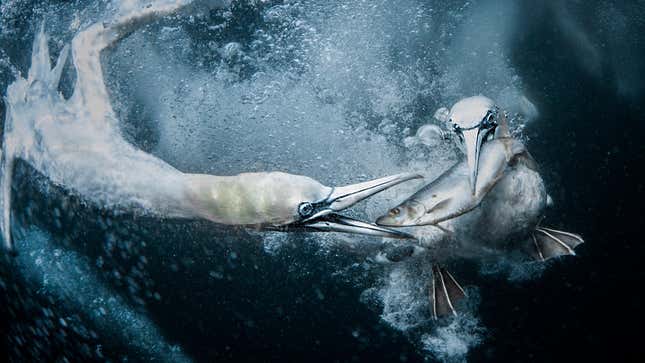
Two gannets vying for a fish off the Shetland Islands.

Two gannets vying for a fish off the Shetland Islands.
Photo: Tracey Lund

The natural world is full of wonder. Life thrives in its every corner, from the abyssal depths of the oceans to the loftiest heights above Earth’s mountains. Thankfully, nature photographers capture Earth’s biodiversity in intimate detail, which is fully on display in the winning images from the World Nature Photography Awards.

Advertisement

This year’s grand prize winner for the World Nature Photographer of the Year is Tracey Lund, for her fantastic shot of two gannets going after the same fish (seen above). But all the winners are worth a look, and you can view them here.

New photography exhibit and open house at Lucchesi Winery Tasting Room

New photography exhibit and open house at Lucchesi Winery Tasting Room
image

All are invited to a new exhibit of dramatic photos from the Gold Country Camera Group, opening Friday, April 19, from 4 to 7 p.m. The show is at the historic Lucchesi Mill Street Tasting Room in Grass Valley—a charming venue for fine art and fine wine. Refreshments will be provided. Linda Clough, owner of Lucchesi Vineyards, says, “The photos transport the viewer to soul-filled journeys in California as well as Costa Rica, Qatar, South Korea, Africa, and the Arizona Desert. I welcome all to join us for our opening reception. The artists look forward to discussing their works.”

The six award-winning photographers, Jim Bair, Bob Branstrom, Freddy Finney, Dave Nelson, Bill Ososki, and Ray Valone have diverse backgrounds from professional videographer and engineer to organization manager and city council member. Their love for and commitment to photography is evident in fourteen beautifully displayed works. “One can feel the utter stillness of the night sky in Death Valley, the searing heat of the desert, and the reverence for diverse cultures and the natural world. The shots are magical and evoke a sense of awe and wonder,” continued Clough. This show features stunning landscapes, “nightscapes,” abstracts, and scenes from around the world. The show will continue through mid-May.

Interest in working-class photography booms but barriers to industry remain

Interest in working-class photography booms but barriers to industry remain

At the end of Tish, the documentary about the photographer Tish Murtha, one of the lingering questions posed by her daughter Ella is how did this incredibly talented artist not manage to sustain a career in photography?

Murtha, who created unparalleled portraits of working-class life in Newcastle’s West End in the 1970s and 80s, has been “rediscovered” in recent years, but her inability to make a living in her lifetime not only haunts the film but also current photography – where working-class voices are increasingly rare.

“Primarily with Tish being a working-class woman and a single mother – that was the defining reason why she couldn’t sustain a career,” says Paul Sng, the director of Tish. “It’s much harder for women to progress in the arts to this day.”

In 2022, a study showed that the proportion of working-class artists had shrunk from 16.4% for those born between 1953 and 1962 to just 7.9% for those born four decades later. The research found that people who grew up in professional families were now four times more likely than those with working-class parents to be in creative work.

Sng believes that more should be done to help artists from working-class backgrounds, who might find it challenging, as Murtha did, to navigate the funding applications and institutions, such as Arts Council England, which enable artists to make a living.

“She should have been supported more; not everyone can write applications,” says Sng. “You can use video to apply these days but there are people who don’t have a mobile phone. It’s still very difficult for people like Tish to make it.”

Tish comes to BBC iPlayer at a time when there’s a boom in interest in working-class photography.

Along with the Murtha film there’s the Bert Hardy exhibition at the Photographers’ Gallery; Leo Regan’s film My Friend Lanre, which charts the rollercoaster life of former Independent photographer Lanre Fehintola, and Johny Pitts’ After the End of History: British Working Class Photography 1989-2024 is touring.

A working-class photographer who did sustain an incredible career was Bert Hardy.

Hardy – who was the eldest of seven children and grew up in a working-class family in Blackfriars, London – is arguably one of the most versatile British photographers of the 20th century.

He went on night raids during the Korean war, took images from within the Belsen concentration camp but also captured celebrity engagements and shot sporting heroes such as Sugar Ray Robinson.

But it was his work with Picture Post, where he covered all aspects of working-class life from mining communities and rural poverty to the diversity of Cardiff’s Butetown that is the most celebrated.

Karen McQuaid, the senior curator of the Hardy show, said: “He obviously had a huge abundance of talent but also knew what to do with it and was entrepreneurial and hungry for commercial success as well as anything else.”

Hardy also operated during a period where there was a proliferation of illustrated weekly magazines, such as Picture Post and Life, which had a circulation of more than 13m at its peak – something unthinkable now or even in Murtha’s era.

Pitts, whose exhibition features more than two dozen working-class photographers, says he wanted to give a platform to artists who sit outside the big institutions and also present a “messy” image of working-class life.

“These artists haven’t been given either a chance, haven’t conformed to upper middle class notions of what good taste is, or simply haven’t had the chance to build a network within that world,” says Pitts.

“[The exhibition] is not a sob story. This is, in some ways, a celebration of the tenacity of working-class photographers, but also just to show how stagnant mainstream photography has been.”

Man Ray friend to sell collection of 200 works including ‘iconic’ image

Man Ray friend to sell collection of 200 works including ‘iconic’ image

It is one of the most recognisable images of the surrealist movement: a black-and-white photograph by Man Ray of Kiki de Montparnasse with f-shaped sound holes painted on her back representing a violin.

Le Violon d’Ingres, which was produced in 1924 and signed by the US artist, set a record for the most expensive photograph when it sold for $12.4m (£9.8m) at auction in New York in 2022.

One of three prints made in 1970 from the original negative will go under the hammer in Paris on Thursday as part of an auction of 200 Man Ray works covering all aspects of his creative production from a collection of one of his close friends.

Elodie Morel-Bazin, the European head of photography at the auctioneers Christie’s, said the range of the work on sale was “marvellous”, adding: “There isn’t any other complete collections representing the whole range of Man Ray’s work like this and it’s the first to be sold by someone who actually knew him.”

She said lot 338, the Violon d’Ingres print, which has been given a catalogue estimate of €40,000-€60,000 (£34,200-£51,400), was produced under the supervision of Man Ray.

“He wanted to use a different technique so it’s completely different from the 1924 vintage print but is still one of the most iconic images in the world,” Morel-Bazin said.

Other photographs being sold include several self-portraits and others featuring major literary and artistic figures including Jean Cocteau, Louis Aragon, Pablo Picasso, Marcel Proust – on his deathbed – James Joyce, Elsa Schiaparelli and Catherine Deneuve.

The collection was amassed by Marion Meyer, the president of the International May Ray Association, who met the artist in Paris in the 1960s and became part of his inner circle. Man Ray had returned from Hollywood in 1951 with his wife, Juliet, and had settled in an old sculptor’s studio in the Latin Quarter.

Meyer was married to Marcel Zerbib, the artist’s editor, close friend and chess partner. “His [Man Ray’s] photographs were highly sought-after, but not his paintings, objects or drawings, and those were the works I really loved and wanted to preserve,” she said.

Born Emmanuel Radnitzky in Philadelphia, Man Ray established his career in US modernism in the 1910s before moving from New York to Paris a decade later and then splitting his time between the two cities. He died in Paris in November 1976 after a long career that spanned photography, painting, sculpture, drawing and other mediums.

The original Le Violon d’Ingres photograph was published in June 1924 on the front cover of the surrealist magazine Littérature, which was edited by André Breton. Man Ray was fascinated by the painter Jean-Auguste-Dominique Ingres and the photograph was a reference to Ingres’s languorous nudes and his hobby of playing the violin when not painting. Le violon d’Ingres is a French idiom meaning “hobby”.

After Man Ray’s death, Juliet was inundated with requests for certification of his work. Meyer, whom the artist had asked to look after his wife, set up the international association to document his art. “It has been an enormous project, but it is done now,” she said. “There is very little out there that we don’t know about.”

“For almost 60 years I’ve devoted my life to Man Ray, and I don’t feel he needs me any more. It’s done, I’ve fulfilled my goal,” Meyer added.