Photography exhibition begins at Punjabi varsity

Photography exhibition begins at Punjabi varsity

Tribune News Service

Patiala, April 19

The Vice-Chancellor of the university, Prof Arvind, inaugurated the photo exhibition organised by the Sobha Singh Fine Arts and Museum and Art Gallery. Addressing the gathering, he said, “In today’s times, anyone who has an interest can learn the art of photography. The continuous development of technology has also opened up many new avenues for the field of art.”

Talking about the photos at the exhibition that were clicked by Jaskaran Singh and Ranjodh Singh, Prof Arvind said such exhibitions inspire students and also help them learn art in different forms by observing the work of expert students.

Department Head, Dr Kavita Singh, said this exhibition would continue until April 30. She said technical aspects of photography would also be discussed during a separate session by Ranjodh Singh and Jaskaran Singh.

Registrar Prof Navjot Kaur praised the department’s steps for the exhibition. She said nowadays, the parameters of intellectual relations have changed, adding that respect for the arts and other relevant skills has increased.

About The Author

The Tribune News Service brings you the latest news, analysis and insights from the region, India and around the world. Follow the Tribune News Service for a wide-ranging coverage of events as they unfold, with perspective and clarity.

Wildlife Photography That’ll Knock Your Socks Off

Wildlife Photography That’ll Knock Your Socks Off

The winners of the 2024 Sony World Photography Awards have been announced, but it’s the wildlife photography produced by the runners up that knocks our socks off. Let’s see if you agree. Here are just a few of the short-list finalists in the Natural World & Wildlife category.

In this first image, Christopher Ratcliffe Iverson of Nature’s Echoes Photography says he “caught an unforgettable moment with a fox in a field that glowed like spun gold.”

wildlife photography 2
Image by Christopher Ratcliffe Iverson, 2024 Sony World Photography Awards Short List

Photographer Thien Nguyen Ngoc captured the incredible moment below. A sperm whale surfaces as her calf nurses.

wildlife photography 4
Image by Thien Nguyen Ngoc, 2024 Sony World Photography Awards Short List

Next, Pedro Jarque Krebs’ wildlife portraiture is nothing short of incredible. His photo of roosting bats made the short list in the 2024 Sony World Photography Awards competition.

wildlife photography 3
Image by Pedro Jarque Krebs, 2024 Sony World Photography Awards Short List

Finally, there’s this absolute gem captured by Jonathan McSwain. Seeing these playful river otters frozen in time gives us goosebumps.

Image by Jonathan McSwain, 2024 Sony World Photography Awards Short List

We think this is wildlife photography at its best. Which image is your favorite?

Pixar Fest Sculpture Installed in Town Square at Disneyland

Pixar Fest Sculpture Installed in Town Square at Disneyland
The previously-teased Pixar Fest sculpture has been installed in Town Square at Disneyland Park. Another sculpture is also in the works on the esplanade outside the park.

Pixar Fest Sculpture

The sculpture is currently surrounded by temporary fencing while installation is completed.

Here’s What’s Going in Indian Country, April 19th— 25th

Here’s What’s Going in Indian Country, April 19th— 25th

This week, there are plenty of events in Indian Country for everyone to enjoy. From powwows to a Native American Health Summit and Spring Arts Market, here is Native News Online’s weekly round-up of arts, culture, and entertainment offerings around Indian Country.

American Indian Week 2024
Albuquerque, NM

April 20, 2024

Join in for American Indian Week, which offers cultural dances, exhibitions, dining at Indian Pueblo Kitchen, and shopping at Indian Pueblo Store with direct access to Native artists. The event features over 40 artists selling pottery, jewelry, and paintings, accompanied by hourly cultural dance performances. 

Never miss Indian Country’s biggest stories and breaking news. Sign up to get our reporting sent straight to your inbox every weekday morning. 

Annual School’s Out Powwow
Witchita, KS

April 20, 2024

Join in for Wichita Public Schools Title VI Native American Indian Education Programs Annual School’s Out Pow wow. Come support Native American students in the community who work hard organizing, running, and participating in this powwow.

Native American Powwow at CDUDH
Carson, CA

April 20, 2024

Join in for California State University, Dominguez Hills’ 10th Annual Native American Pow Wow, which honors the Indigenous peoples of the Americas. Enjoy traditional dance and drum performances.

Spring Arts Market
Albuquerque, NM

April 20, 2024

Don’t miss out on this extraordinary event featuring over 40 Native American artists. Kicking off American Indian Week with a vibrant celebration of artistry, the courtyard will come alive with bustling market booths showcasing pottery, jewelry, paintings, and more.

2024 Time Out Wacipi Powwow
Grand Forks, ND

April 20, 2024

Time Out Week at the University of North Dakota is a dynamic celebration of diversity, featuring workshops, performances, and discussions that promote cultural understanding and unity among students. It’s a vibrant showcase of the university’s commitment to inclusivity and respect for all voices.

Native American Health Summit
Pembroke, NC

April 20, 2024

Join Trillium for this free public information event regarding Native American health. There will be discussion topics such as alcohol and substance awareness, diabetes and mental health.

Native American Series Speaker: Debi Cochise
Mountainair, NM

April 20, 2024

The Native American Series Speaker event featuring Debi Cochise is a significant gathering aimed at honoring and sharing indigenous perspectives and experiences. Through Cochise’s insights and storytelling, attendees can gain valuable insights into Native American culture, history, and contemporary issues. 

28th Annual University of Iowa Powwow
Iowa City, IA

April 20, 2024

The University of Iowa’s Powwow is a vibrant celebration of Native American culture, featuring dance, music, and art. It brings communities together to honor heritage and foster understanding through colorful traditions and lively festivities.

Celebrations of Traditions Powwow
San Antonio, TX

April 20, 2024

Celebrations of Traditions Pow Wow is an official Fiesta event, which will provide all who attend, individuals and families, the opportunity to view and participate in the American Indian culture and traditions of dance and music at an official Native American Pow Wow.

Young Learners’ Series: Dance
Florence, AL

April 20, 2024

The Young Learners program at the Florence Alabama Museums offers engaging and educational experiences tailored specifically for children. Through interactive exhibits, hands-on activities, and guided tours, young visitors will be immersed in the wonders of art, history, and science. This initiative provides a fun and enriching environment where children can explore, learn, and discover new interests while fostering a lifelong appreciation for culture and knowledge.

3rd Annual Powwow For the Planet 2024
Las Vegas, NV

April 19-20, 2024

The 2024 Powwow Planet event at UNLV is a dynamic celebration of Native American culture, featuring traditional dance, music, and art. It’s a vibrant gathering that honors indigenous heritage and fosters community connections. Attendees can immerse themselves in the rich traditions of Native American peoples while enjoying the lively atmosphere and festivities.

Powwow at Arizona State University
Tempe, AZ

April 19-21, 2024

The ASU Powwow is an annual celebration that showcases Native American culture through dance, music, and art. It’s a vibrant gathering that brings together communities to honor indigenous heritage and promote understanding. Attendees can experience the rich traditions and diversity of Native American peoples while enjoying performances and participating in cultural activities.

More Stories Like This

2024 Sundance Institute Native Filmmakers Lab Kicks Off April 24
Moses Brings Plenty Honored with Lifetime Achievement Award
Photographs from the 2024 Grand Valley State University Powwow
Q&A: Ruth-Ann Thorn, Founder of N8iv Beauty

Native Perspective.  Native Voices.  Native News. 

We launched Native News Online because the mainstream media often overlooks news that is important is Native people. We believe that everyone in Indian Country deserves equal access to news and commentary pertaining to them, their relatives and their communities. That’s why the story you’ve just finished was free — and we want to keep it that way, for all readers.  We hope you’ll consider making a donation to support our efforts so that we can continue publishing more stories that make a difference to Native people, whether they live on or off the reservation. Your donation will help us keep producing quality journalism and elevating Indigenous voices. Any contribution of any amount — big or small — gives us a better, stronger future and allows us to remain a force for change. Donate to Native News Online today and support independent Indigenous-centered journalism. Thank you.

About The Author
Kaili Berg
Author: Kaili BergEmail: This email address is being protected from spambots. You need JavaScript enabled to view it.
Staff Reporter
Kaili Berg (Aleut) is a member of the Alutiiq/Sugpiaq Nation, and a shareholder of Koniag, Inc. She is a staff reporter for Native News Online and Tribal Business News. Berg, who is based in Wisconsin, previously reported for the Ho-Chunk Nation newspaper, Hocak Worak. She went to school originally for nursing, but changed her major after finding her passion in communications at Western Technical College in Lacrosse, Wisconsin.


Vintage Pic of a Bearded, Masked Man Inspired ‘Batman’?

Vintage Pic of a Bearded, Masked Man Inspired ‘Batman’?
image
Claim:

A vintage 1892 photograph of a bearded butcher, Bill Smith, in a bat mask, was the inspiration for the character of Batman.

For years, a purported vintage photograph of a bearded man in a mask has circulated on the internet claiming to be the inspiration for the famed comic-book vigilante Batman. While we’ve done Batman-related legends before, this one has certainly spread far and wide without much evidence to support it. 

The claim has many variations. A number of posts on X claimed Wayne Bruce, a Scottish man who was the descendant of the Scottish king Robert the Bruce, was the inspiration for Bruce Wayne, the man who would go on to don Batman’s mask, including one in April 2024: 

According to another story attached to this photo, the man was a butcher named Bill Smith and the photograph was taken in New York City in 1892. 

The above photograph was not actually the inspiration for the character of Batman. 

We searched for the origins of the photo using reverse-image search and were directed to numerous reposts, as well as articles that claimed different sources. The photograph was on Reddit back in 2017, and appeared on Bandcamp, an audio distribution site, as a profile picture for user Dennis Kelly

The photograph also appears on the art and photography workshop Foto Marvellini, which was founded in 2011 and appeared to specialize in editing photographs to make them appear vintage. Titled “Bat barbone,” the image appears alongside other vintage photographs of people from different time periods wearing similar masks. Per the “Bat barbone” image description, it was “Printed in the darkroom and treated with tannic acid” and “Mounted in a wooden frame from the early 1900s.”

Andrea and Carlo Marvellini of Foto Marvellini confirmed to us that this was their original work and the first “Bat barbone” print was made in 2012. They digitally manipulated original photographs sourced from the U.S. Library of Congress from the 1860s and 1890s, inserting a mask in post-production. They also shared articles from art magazine Artribune and newspaper il Fatto Quotidiano, which covered their work in 2014 and 2016. 

They described their reasoning behind such works:

Our collective declines the theme of the “fake” in photography, plays with the absurd, celebrates past techniques, creates credible ancestors and faithful post-mortems. With [our] deliberately “deceptive” works, Foto Marvelli invites the viewer to remember that images in general, by nature, trigger and shape his emotions and his understanding of the world.

The claim that this man was the original inspiration for Batman also appeared back in 2016 on the website of the Suffolk Gazette, which claimed that Smith got into trouble with the law and “was first indicted in 1878 for catching and punching a thief who had run out of the shop with a leg of lamb over his shoulder.”

The article then claimed:

Mr Smith, then aged 43, was set free by the sympathetic judge, who was no doubt fed up with the never-ending list of petty criminals being hauled up before him.

The episode inspired Mr Smith who, according to parish records, had left Dallinghoo in Suffolk where he worked as a farm labourer to board a liner from Liverpool to New York to seek a better life.

Spurred on by a one-paragraph report of his court appearance in the New-York Tribune, he went on to tackle more thieves and soon gained notoriety as a vigilante.

It took four more years for him to adopt his famous head mask – to make him look like a bat and to hide his real identity. He then patrolled his neighbourhood by night looking for baddies.

However, the website Suffolk Gazette is satirical in nature. It even posted on Facebook in 2020, clarifying that the story was not real. 

So what were Batman’s actual origins? Created by Bob Kane and his partner Bill Finger, the first comic strip featuring the masked vigilante appeared in 1939 in Detective Comics. According to a 1998 New York Times obituary of Kane, he was inspired by “a 1920s movie called ‘The Mark of Zorro,’ a radio show called ‘The Shadow’ and a 1930 movie called ‘The Bat Whispers.’ That movie featured a criminal with a cape who shines his bat insignia on the wall just before he is about to kill his victims, and who, in at least one scene, stands on the roof of a building and spreads his cape out.”

Kane also credited artist Leonardo da Vinci for helping inspire him: “I remember when I was 12 or 13 I was an ardent reader of books on how things began … and I came across a book about Leonardo da Vinci. This had a picture of a flying machine with huge bat wings. … It looked like a bat man to me.”

Finger came up with the name Bruce Wayne, as well as Batman’s key features, like the scalloped edges of his cape and the blank white eyes. 

“When I first drew him I had eyes in there and it didn’t look right,” Kane once said. “Bill Finger said, ‘Take them out.”‘

Given that the photograph of the bearded man in a bat mask appears to be the original artwork from an Italian artists’ collective, has appeared in numerous online venues that are not connected to the comic book caped crusader, and that the original creators of Batman cited other sources of inspiration, we rate this claim about the image as “Miscaptioned.” 

2024 Venice Biennale highlights art of the Global South

2024 Venice Biennale highlights art of the Global South

Elisabetta Galla

04/20/2024April 20, 2024

Under the title “Foreigners Everywhere,” the 60th Venice Biennale is putting the art of the Global South in the spotlight. The exhibition, curated by the Biennale’s first curator from Latin America, Adriano Pedrosa, showcases work from marginalized groups — especially Indigenous artists.

https://p.dw.com/p/4ezfY

Sharpening showdown: Topaz Photo AI vs Luminar Neo

Sharpening showdown: Topaz Photo AI vs Luminar Neo

Sharpening software can sometimes take away the blur. But with Luminar Neo and Topaz Photo AI both offering powerful AI sharpening tools, choosing the right one can be challenging. We use a blurry, rocky arch to figure out what works here.

No, there will be no bird sharpening comparisons today!

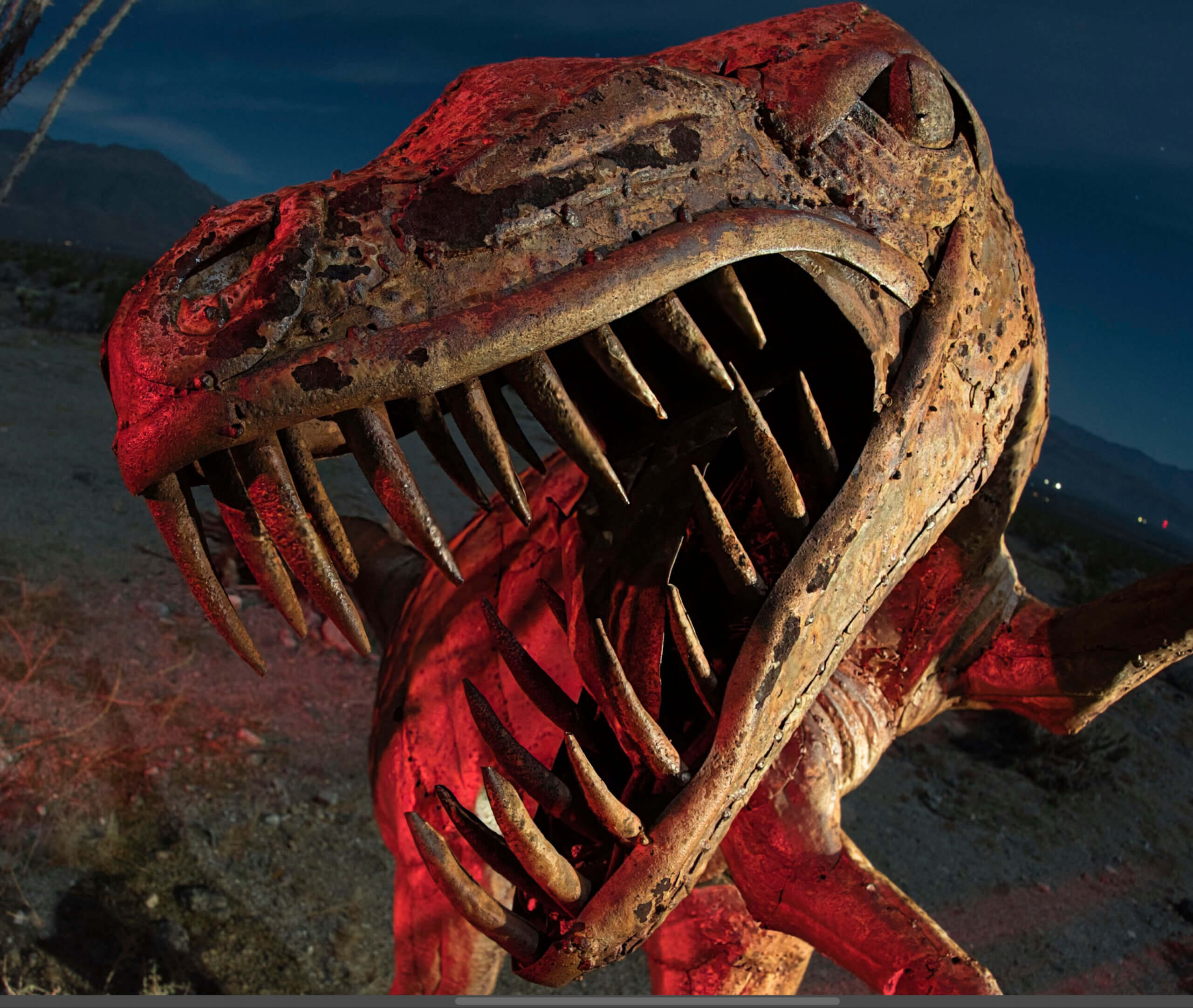
Sharpening software companies frequently like to advertise how great they work with birds. And with the feathery plumes and eyes, it does give a lot for sharpening software to sense. But I was wondering how it would work with night photos where part of the image was out of focus. I did two comparisons: one with a sculpture of a velociraptor in Borrego Springs, CA, and another with an old photo of Mobius Arch in Alabama Hills, CA.

I used only RAW files for each of the two comparisons. However, both programs are capable of sharpening TIFF or JPG files.

For our attempt at comparison, I used Topaz Labs Photo AI 2.4.2, which is the second version of Photo AI, and Luminar Neo 1.18.3, which had been just updated prior to writing this article. I didn’t intend this to be a comparison. I was going to simply kick the tires with Photo AI. But, well, things happen. Right as I got ready to submit this article, Topaz released Photo AI 3. However, all comparisons are still valid.

At the end of this article, I will share some brief thoughts about the ethical nature of using AI sharpening software for certain genres of photography, such as photojournalism.

Using Topaz Photo AI V2: Velociraptor sculpture

I first began with a velociraptor sculpture photo. I focused on the eye, and because I was so close to the sculpture, this left the snout a little out of focus.

Sharpening a sculpture using Topaz Photo AI V2.
Sharpening a sculpture using Topaz Photo AI V2. Autopilot began sensing what to do immediately.

Topaz Photo AI began using Autopilot to sense what the photo needed.

Sharpening a sculpture using Topaz Photo AI V2. This was the default setting from Autopilot.

I went with the default setting from Autopilot because it looked good, and it was a reasonably medium setting. The default was Standard with a setting of Strength of 57 and Minor Deblur of 16.

Sharpening a sculpture using Topaz Photo AI V2. Mask.
Sharpening a sculpture using Topaz Photo AI V2. The mask was done automatically by Photo AI.

Impressively, when I went to create a mask so I would only sharpen the sculpture, it was already done. This is great. If you are going to advertise that you are going to make things easier for photographers, this is the way to do it.

Luminar Neo: Velociraptor sculpture

Next up? Luminar Neo, using Supersharp.

Sharpening a sculpture using Luminar NEO SuperSharp. Mask.
Sharpening a sculpture using Luminar Neo Supersharp. This was the closest I could get with their Mask AI feature. I ended up using a brush to add on to their mask. In other words, Topaz Photo AI did a better job automatically sensing the mask, and even did so automatically.

Upon loading, I selected Supersharp, as it didn’t load this automatically a la some sort of Autopilot as Photo AI does.

Luminar Neo does not have a slider. I selected the medium strength for sharpening because I felt it would be closest to Photo AI. It put on a display of patterns moving back and forth, which at least tells you that it’s working on something. It takes a while for this to process, but once it does, everything works swiftly.

The Mask AI feature offered some choices, none of them, not surprisingly, a dinosaur. “Architecture” was the closest. I then used a brush to add to the rest of the mask so I would only sharpen the sculpture and nothing else.

Sharpening examples: Topaz Photo AI or Luminar Neo Supersharp — Velociraptor sculpture

Topaz Photo AI after sharpening: Velociraptor sculpture

Screenshot of sharpened image, Topaz Photo AI (Standard at a Strength of 57 and Minor Deblur of 16 from a RAW file.
Screenshot of sharpened image, Topaz Photo AI (Standard at a Strength of 57 and Minor Deblur of 16 from a RAW file).

Full size of the above image.

Luminar Neo Supersharp after sharpening: Velociraptor sculpture

Screenshot of sharpened image, Luminar NEO Medium SuperSharp from a RAW file.
Screenshot of sharpened image, Luminar NEO Medium Supersharp from a RAW file.

Full size of the above image.

RAW file with no sharpening: Velociraptor sculpture

Screenshot of RAW file, unsharpened.

Full size of the above image.

Results: Topaz Photo AI vs. Luminar Neo Supersharp — Velociraptor sculpture

Bearing in mind that I was using as close to medium settings as I could possibly get them, I would say that Topaz Photo AI gets the nod here, if for no other reason than it did it automatically, and made it as easy as it could possibly be to sharpen this. It actually did all the processing via Autopilot quicker than Luminar Neo did after selecting Supersharp. Also, the image was slightly sharper.

I am quite sure that if I fiddled with Luminar Neo Supersharp, I could get to address the blur as well as Photo AI. Perhaps simply using the strong selection might do it. But here, see for yourself. This time, I will also have high-resolution screenshots for you to look at as well in the hopes that you can decide for yourself.

Hey, one more comparison!

It’s very important to realize that sharpening software has different strengths and abilities. With that in mind, I thought I would try a single-exposure Milky Way photo from summer 2017.

The stars are beautifully sharp in this photo. The problem is that Mobius Arch is not. Why? I was a little too close to the arch for it to be regarded as “infinity” by the lens. Consequently, it’s a little blurry. It’s very challenging to determine whether something like this is perfectly in focus in the field. It’s dark, after all. But what I should have done was to examine it more carefully on my cameras LED screen. I could have then taken a second photo while focused on the arch, and blended them together.

Would either of these programs be able to rescue my mistake?

Using Topaz Photo AI V2: Mobius Arch

Topaz Photo AI. Sharpening at a medium setting, Strength of 50, Minor Denoise of 50.

For this next comparison, I wanted to do two attempts at sharpening. For the first one, I selected “Standard,” also selecting a Strength of 50 and a Minor Denoise of 50. This would be the generally moderate setting, just to see how it would do. One of the aspects of AI photo processing that critics frequently overlook is the ability, just like with many other programs, of selecting the setting you want instead of going with an automatic setting.

Topaz Photo AI. This is the mask it automatically selected, getting most of the arch.

Like before, Photo AI automatically selected a mask, this time automatically choosing “Subject.” It got most of Mobius Arch, as you can see.

Topaz Photo AI. Sharpening at a strong setting, Strength of 100.

As mentioned, I made two attempts at sharpening. This one was maxed out, using the Strong setting, and at a Strength of 100. We shall soon compare them to Luminar Neo’s attempts.

Using Luminar Neo: Mobius Arch

Luminar NEO Supersharp, selecting “High” for the setting.

I selected two settings, just as I did with Photo AI. Here, the choices given were Medium and High. Since there are no sharpening adjustments other than that, I just went with it. Of course, I also tested its ability to mask easily.

Luminar NEO Supersharp. This is the mask it selected after selecting “Mountains”.

Unlike Photo AI, you have to select a Mask unless you want it to sharpen the entire image. After clicking on “Mask AI”, Luminar Neo offered two settings, “Mountains and “Natural Ground”. “Mountains” worked better.

Sharpening examples: Topaz Photo AI or Luminar NEO Supersharp — Mobius Arch

Topaz Photo AI after sharpening: Mobius Arch

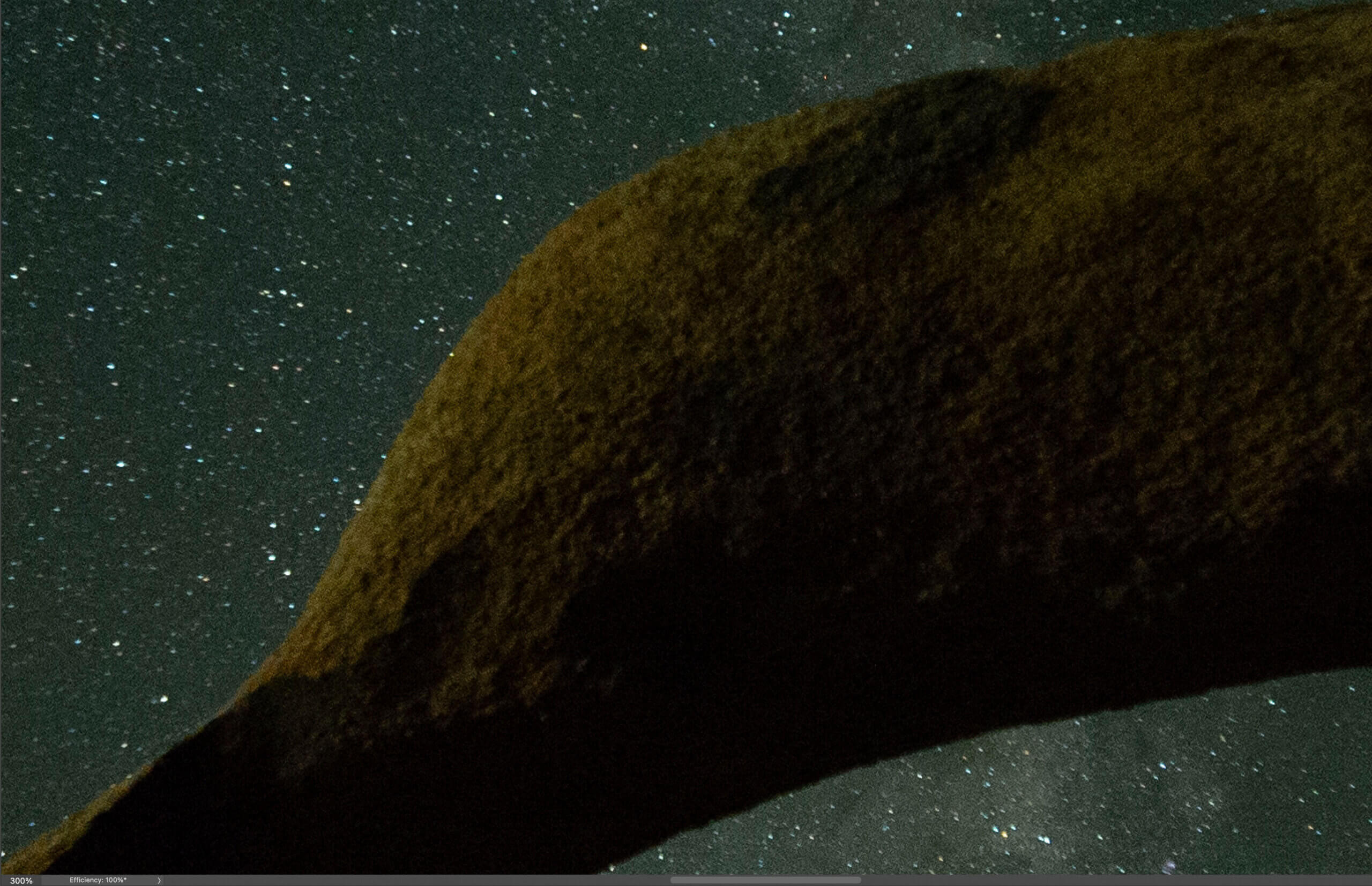
Screenshot of sharpened image, Topaz Photo AI (Standard at a Strength of 50 and Minor Deblur of 50 from a RAW file).

Full size of the above image.

Screenshot of sharpened image, Topaz Photo AI (Strong at a Strength of 100 from a RAW file).

Full size of the above image.

Luminar Neo Supersharp after sharpening: Velociraptor sculpture

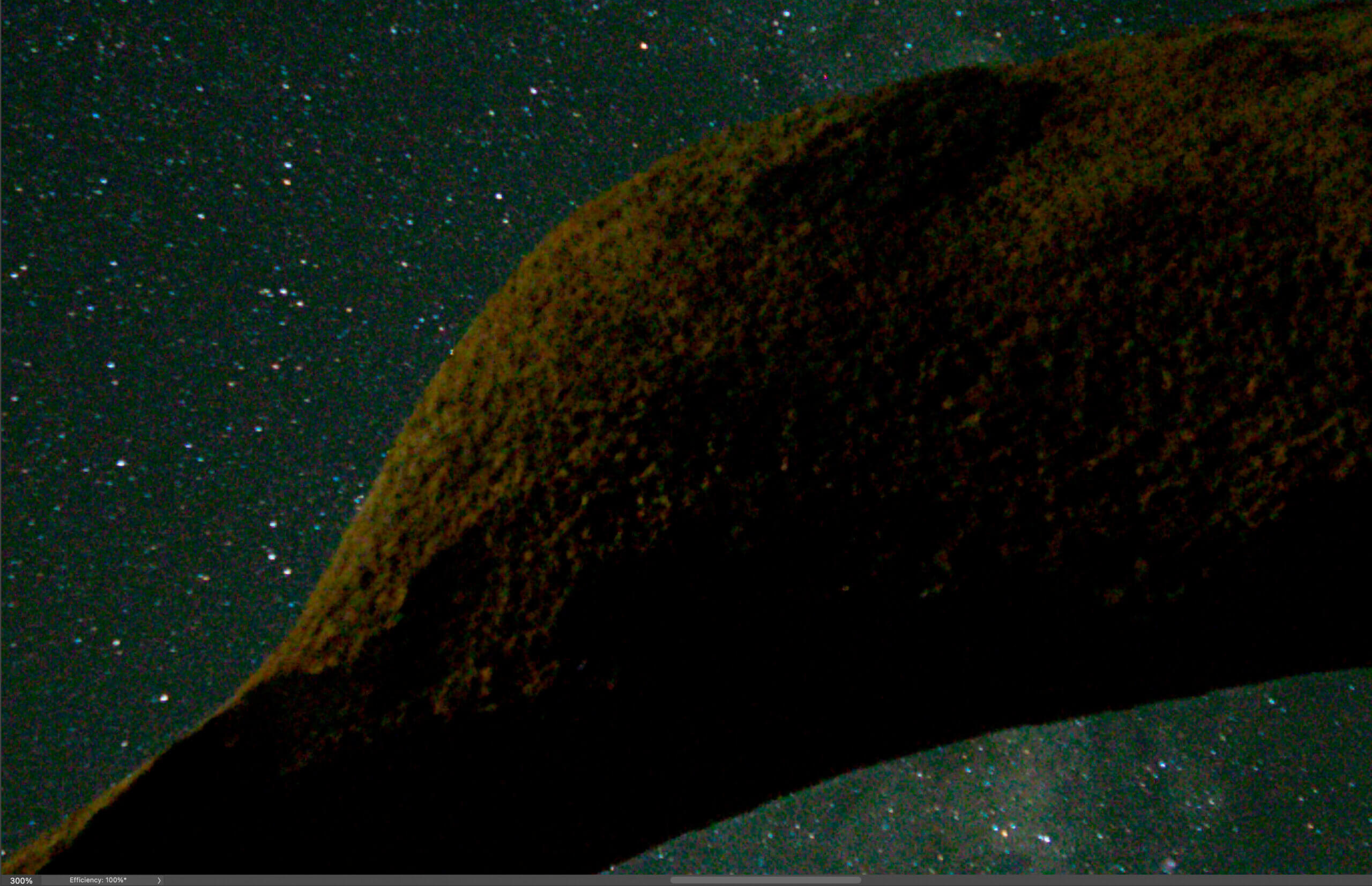
Screenshot of sharpened image, Luminar NEO Medium SuperSharp from a RAW file. 300% magnification.
Screenshot of sharpened image, Luminar NEO Medium Supersharp from a RAW file. 300% magnification.

Full size of the above image.

To try to compare photos to the sharpened ones from Photo AI, I made two different images, one sharpened on a medium setting (above), and one on a high setting (below).

Screenshot of sharpened image, Luminar NEO High SuperSharp from a RAW file. 300% magnification.
Screenshot of sharpened image, Luminar Neo High Supersharp from a RAW file. 300% magnification.

Full size of the above image.

RAW file with no sharpening: Velociraptor sculpture

Screenshot of RAW file, unsharpened. 300% magnification.

Full size of the above image.

Results: Topaz Photo AI vs. Luminar Neo Supersharp — Mobius Arch

Here, the results were a little different from the dinosaur sculpture.

Comparisons of the medium sharpening settings: Topaz Photo AI vs. Luminar Neo Supersharp

At the medium settings, Photo AI produced sharper settings while still not having artifacts. However, it also made the sky much darker. This is particularly curious since I had masked the arch so I would only sharpen that.

Comparisons of the strong sharpening settings: Topaz Photo AI vs. Luminar Neo Superharp

At the strong settings, Photo AI produced more detail without too many artifacts. Like the medium settings, it made the sky much darker. And this again with the same mask.

As mentioned before, Photo AI was considerably quicker at processing everything via Autopilot automatically upon loading. This includes applying denoising, and it also includes the mask for sharpening. If you like denoising and sharpening applied easily, Photo AI is pretty great. Luminar Neo, on the other hand, requires that you select SuperSharp, then takes a longer time after you select the amount of sharpening. Then if you want to apply an automatic mask, this also require more processing time. It’s a much slower process.

As you can see, depending on the type of photo and the subject, the results can be very different. If I just do one kind of photo, one software might consistently excel over the other. But when you select different kinds of photos, the choice is not so clear.

Topaz Photo AI 3.0 is here

As I was getting ready to submit this article, Topaz released Photo AI 3.0. 3.0’s new features include presets, flexible ordering of enhancements, panel docking & collapsing, enabling RAW color and lighting adjustments, and more. This new version includes the ability to adjust the color balance and lighting for RAW files as well as denoising. The presets allow you to create various filter combinations and settings. You now can reorder and combine enhancements in any order. But, as previously mentioned, the discussion and comparisons in this article (and the previous Photo AI V2 articles) are still relevant.

Is it ethical to use AI sharpening in genres such as photojournalism?

If you compare the sharpening in general to the RAW files, you’ll notice that the details aren’t identical. And you’ll notice that the details aren’t identical between each sharpening software either. The sharpening software with each of these programs is essentially making an educated guess, based on machine learning, as to what should go there. This approach is considerably more obvious with the Mobius Arch photo, which is why I chose this photo to share with you. There’s more “interpretation” with the texture of the rocks than there is with the better-defined sculpture of the dinosaur.

This raises potentially interesting questions. For instance, should a photojournalist take a photo for a magazine or newspaper, process it with an AI-based sharpening software program, and submit it to news agencies? Is it okay if the software has not changed the texture of the photo? While it certainly is vastly different compared to, say, using generative fill to add elements that were not there, is it still ethical?

When I had my photo in National Geographic Books, I had to submit my RAW file so they could verify that it was indeed a real photo. But not everyone has time to do this, and not everyone has time to pixel-peep all their photos when there are deadlines.

I use AI-based sharpening software, and it rarely changes the texture in a photo. But that’s because almost all my photos are already very sharp and well-defined. Here, though, the Mobius Arch photo is blurry enough that AI sharpening has altered the texture a bit. It’s not enough to get me to stop using it, but I do wonder about how this affects certain genres of photography. Also, I would also think that for photos expressly used for scientific research, you wouldn’t be able to use software like this at all.

Regardless, while it’s hardly perfect, sharpening software already works quite well. And the amazing part is that this technology is still in its infancy. As machine learning progresses, we will see incredible advances in this technology in the coming years.

What is your opinion on using AI sharpening software for genres such as photojournalism? What is your opinions on how well Topaz Photo AI V2 or Luminar Neo SuperSharp sharpen photos right now? Please leave your opinions in the comments!

The legacy and mystery of the display of Native American art at the 1932 Venice Biennale

The legacy and mystery of the display of Native American art at the 1932 Venice Biennale

In December 1931, the Italian commissioner of the 18th Venice Biennale penned a plea to organisers of the United States pavilion, who had yet to fully deliver their vision for the impending international art exhibition. “We should like some of your very great artists like Whistler,” he wrote, “and as for the living ones we should allow a room for [Paul] Manship as Sculptor, and [Maurice Sterne], or some others, as painters.”

The following January—four months before the exhibition’s opening—a reply arrived from New York. It confirmed that the US pavilion would feature, out of four rooms, one devoted to art by Native Americans, among them the Pueblo painters Fred Kabotie and Awa Tsireh. It would include neither Whistlers, nor Homers, nor Sargents—conspicuously setting aside the era’s assumed “great artists” to shine an international spotlight on lesser-known Indigenous names.

The resulting display was historic: it marked the first time that Native American artists represented the United States at the prestigious art exhibition, a distinction that has repeated only this month, with the Chocktow Cherokee artist Jeffrey Gibson’s takeover of the US pavilion at the 60th edition of the Biennale (until 24 November). Yet it has largely been forgotten, according to Jessica L. Horton, a professor of modern and contemporary Native American art at the University of Delaware.

“We are versed in a truism that Native artists have never exhibited in the US pavilion,” she argued in a 2015 paper. That claim was repeated as recently as last year: The New York Times issued a correction to an article that had erased this history, apparently relying on information provided by the commissioners of the 2024 US pavilion.

Installation view of the space in which to place me, Jeffrey Gibson’s exhibition for the United States pavilion at the 60th Venice Biennale, 20 April-24 November 24. At centre: WE HOLD THESE TRUTHS TO BE SELF-EVIDENT, 2024 Photograph by Timothy Schenck.

Today, little information remains about the Native art section of the 1932 pavilion, despite its commissioner, Martin Birnbaum, proclaiming it “the most popular exhibition of the entire display of all the nations”, the Times reported that May. Horton dove into historical archives during a 2011 trip to Venice, where she found the exhibition catalogue listing the participating artists: Ma Pe Wi, Santiago Cruz, Oqwa Pi, Tonita Peña, Awa Tsireh, Julian Martinez, Pen Yo Pin, Tse Ye Mo, Otis Polelonema and Fred Kabotie. Among their contributions, only one painting by Kabotie, Mountain Sheep Dance (undated), was reproduced in the catalogue, which did not include serious discussion of their work, Horton says. Installation photographs revealed that textiles, jewelry and pottery were shown alongside paintings, many of them depicting the motions and rituals of Pueblo dance. Most of their makers, excepting the potters Maria Martinez and Tonita Roybal, remain anonymous. It was “a very ethnographic type of presentation”, Kathleen Ash-Milby, a co-commissioner of Gibson’s 2024 pavilion, told NPR.

Other rooms of the 1932 pavilion featured paintings by non-Native artists including George Bellows, Arthur B. Davis and John Sloan, who is credited with assembling the Native art selection. Sloan had once described Pueblo watercolours as “the only 100% American art produced in this country”, and in 1931 had co-organised The Exposition of Indian Tribal Arts, a blockbuster touring exhibition of Native objects and paintings. Due to its success, a large selection of the works from that show were sent to Venice.

‘Aesthetic nationalism’

“His whole argument rested on Native art offering a modern aesthetic with ancient roots on the continent,” Horton tells The Art Newspaper. Contemporaneous reports affirmed this sentiment: responding to the 1931 exposition in a WOR radio broadcast, the critic and collector Christian Brinton claimed Native art “as an artistic treasury not only older but fresher and purer than anything Europe has to offer”. A Times headline announcing “Venice to exhibit art of Americans” was accompanied by the subheading: “An entire gallery to be given over to work of Indians.”

But this “export of aesthetic nationalism” to Venice, Horton argues, resulted in what she calls the pavilion’s ultimate “malfunction” as conflicting values came to the fore.

“There’s always been this complexity around who [Native artists] represent when we try to nationalise art, and that came out really clearly in the competing nationalisms on both sides of the Atlantic in the 1930s,” she says. “That made it hard for the organisers of the pavilion to swallow this choice, that Native artists could represent the United States as the nation’s great artists. Not everyone was ready to get on board with that, and so it was not claimed proudly by the organisers as a success.”

In her research, she details how Birnbaum slighted the pavilion in his introduction to the catalogue, suggesting that the country’s “truly outstanding works” were absent. Organisers also found the press response, which overwhelmingly failed to mention in detail the Native artists, disappointing. “They determine that this was a failure of representation,” Horton says.

Such transatlantic exhibitions of Native American art were not infrequent in the 1920s and 30s, reflecting collectors’ and patrons’ burgeoning interest in the Santa Fe market in particular. Most of the work was made by Native artists for consumption beyond their communities, with the knowledge that their art might travel. However, it was not often that overseas exhibitions, like the US pavilion show at the 1932 Venice Biennale, parsed the full complexities of artists’ visual and cultural choices, especially given that artistic merit was evaluated through a Western lens and by Eurocentric standards.

Radical for its time

Still, Horton says it would be a simplification to attribute the diminished legacy of the 1932 pavilion to a failure of well-intentioned white patrons to properly contextualise the work. “Sloan was doing something politically radical for his moment,” she says. “Within the cultural politics of the moment—especially in the 1920s, when Native American dancing was outlawed—just to be a champion of Native art and culture was a fairly radical decision to make as a white person circling in elite East Coast circles.”

The historical record further illuminates how the 1932 pavilion faded from dominant narratives. There is surprisingly little scholarship on the display despite its import. The whereabouts of many works in Sloan’s selection are unknown; due to the scarcity of information in the catalogue, Horton was able to locate only Kabotie’s paintings Mountain Sheep Dance and Snake Dance (around 1930) in the collection of the Smithsonian’s National Museum of the American Indian. Tonita Peña’s painting Basket Dance was later acquired by the Whitney Museum of American Art for $225.87—setting a record for the highest price paid for a Pueblo painting at the time. But Basket Dance has since disappeared from the Whitney’s collection, along with all related records.

Much has evolved in the ways institutions curate and care for Native contemporary art. But the US pavilion at the 1932 Biennale highlights complexities in the field that are unchanging and ever important, around notions of sovereignty, citizenship, rights and representation.

“Native American art didn’t fit that paradigm [of nationalism] neatly or clearly in the 1930s, any more than it does today,” Horton says. “The fact that it’s taken this long for a Native artist to again be invited into that position speaks to some real ambivalence, politically, around where art and sovereignty intersect.”