Take a look at this year’s winning images in the Sony World Photography Awards 2024

Take a look at this year’s winning images in the Sony World Photography Awards 2024


CNN
 — 

A French photographer has scooped the most prestigious prize at this year’s Sony World Photography Awards for a documentary project about the sterilization of women in Greenland.

Juliette Pavy was named as the overall winner of the annual competition at a ceremony in London on Thursday for her series entitled “Spiralkampagnen: Forced Contraception and Unintended Sterilisation of Greenlandic Women.”

Now in its 17th year, the Sony World Photography Awards celebrates powerful images that resonate with audiences around the world. Pavy’s winning portfolio set out to chart the severe and lasting impact of the Danish authorities’ involuntary birth control campaign in Greenland in the 1960s and 1970s, which affected several thousand Inuit women, some as young as 12.

Pavy, who received a cash prize of $25,000, was selected from the winners of the competition’s 10 professional categories. Her submission won the documentary category. Other professional categories include sport, the environment and portraiture.

In a press release issued ahead of the event, Monica Allende, chair of the 2024 jury, said of Pavy’s win: “The Sony World Photography Awards jury lauded Juliette Pavy’s empathetic portrayal of her subjects, capturing them in a manner that is both dignified and profoundly intimate, thereby highlighting her exceptional talent.”

Liam Man, a landscape photographer from the UK, was announced as the competition’s Open Photographer of the Year for his otherworldly shot (pictured above) entitled “Moonrise Sprites over Storr.”

It depicts the Old Man of Storr rock formation on Scotland’s Isle of Skye, taken late at night during a powerful blizzard.

A series about the landscape, wildlife and people of the Gila Wilderness in southwestern New Mexico garnered American photographer Kathleen Orlinsky the Sustainability prize. A regular contributor to National Geographic and The New York Times, Orlinsky has spent the past decade documenting the impact of the climate crisis.

Student photographer of the year went to Kayin Luys from Belgium, who interpreted the brief — which was simply entitled “Home” — to submit an intimate portrayal of his partner’s family.

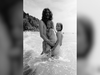
Meanwhile, 15-year-old Daniel Murray’s photograph of a solitary surfer on an empty beach in Cornwall, England earned him the youth photographer of the year accolade.

Internationally acclaimed photographer Sebastião Salgado received the Outstanding Contribution to Photography prize for his distinctive black-and-white works, captured over his five-decade-long career. Forty pictures taken by Salgado, who divides his time between his homeland of Brazil and France, will be on show as part of an exhibition featuring the work of the competition winners, finalists and others shortlisted at London’s Somerset House this spring.

The show will also feature work by last year’s overall winner, Edgar Martins from Portugal.

Last year’s competition attracted controversy when a German artist rejected the prize for the creative open category after revealing that his entry was generated by AI.

In its guidelines, the competition’s organizers state that entries “may feature manipulation, but where Entries are manipulated, the extent of which must be described in the image description section when submitting.” Computer-generated images are not allowed, however.

The visual feast of the Sony World Photography Awards 2024 is revealed

The visual feast of the Sony World Photography Awards 2024 is revealed

Announced today (18 April), the Sony World Photography Awards 2024 explores the newest and finest international artists and trends in its field. This year’s selection of nominees for the Architecture & Design category spans ten talents from as far afield as Canada, Malaysia and Finland. The winner, Ireland’s Siobhán Doran, scooped the top gong with her series Sala Mayor (Living Room).

© Albrecht Voss, Germany, Shortlist, Professional competition, Architecture & Design, Sony World Photography Awards 2024

© Albrecht Voss, Germany, Shortlist, Professional competition, Architecture & Design, Sony World Photography Awards 2024

(Image credit: © Albrecht Voss)

Sony World Photography Awards 2024: the winner and shortlist

The Architecture & Design category winner’s work focuses on the majestic documentation of historic mansions and is part of a book project by Doran, titled Houses that Sugar Built: An Intimate Portrait of Philippine Ancestral Homes.

© Francesco Amorosino, Italy, Shortlist, Professional competition, Architecture & Design, Sony World Photography Awards 2024 (1)

© Francesco Amorosino, Italy, Shortlist, Professional competition, Architecture & Design, Sony World Photography Awards 2024 

(Image credit: © Francesco Amorosino)

‘I largely set about photographing the houses against a spoken “backdrop”, as my colleague interviewed the owner or custodian, but sometimes worked in complete silence. The sala mayor (main living room) typically showcases the character of the architecture and the lifestyle of the people, but also leaves room for the viewer’s interpretation of these unique residences,’ wrote the artist.

© Julia Mustonen-Dahlkvist, Finland, Shortlist, Professional competition, Architecture & Design, Sony World Photography Awards 2024 (1)

© Julia Mustonen-Dahlkvist, Finland, Shortlist, Professional competition, Architecture & Design, Sony World Photography Awards 2024

(Image credit: © Julia Mustonen-Dahlkvist)

Notable entries among the finalists are Germany’s Albrecht Voss’ series Enlighten, which ‘presents modern alpine architecture as surreal man-made sculptures’; and Malaysia’s Nick Ng’ Blue Boy, a visual exploration of a 1962, seven-floor residential haven in the heart of Kuala Lumpur, designed by the architecture firm TY Lee and Sons. 

© Joseph Horton, United Kingdom, Shortlist, Professional competition, Architecture & Design, Sony World Photography Awards 2024 (1)

© Joseph Horton, United Kingdom, Shortlist, Professional competition, Architecture & Design, Sony World Photography Awards 2024

(Image credit: © Joseph Horton)

The Architecture & Design entries of the Sony World Photography Awards 2024, alongside the prize’s other categories, will be presented and celebrated in a dedicated photography exhibition that launches at Somerset House in London this spring. 

© Nick Ng, Malaysia, Shortlist, Professional competition, Architecture & Design, Sony World Photography Awards 2024 (1)

© Nick Ng, Malaysia, Shortlist, Professional competition, Architecture & Design, Sony World Photography Awards 2024 

(Image credit: © Nick Ng)

© Marc Koegel, Canada, Shortlist, Professional competition, Architecture & Design, Sony World Photography Awards 2024 (1)

© Marc Koegel, Canada, Shortlist, Professional competition, Architecture & Design, Sony World Photography Awards 2024

(Image credit: © Marc Koegel)

‘Sony World Photography Awards 2024’ will be on show at Somerset House in London, UK, 19 April – 6 May 2024

worldphoto.org

Native artists support sovereignty through art

Native artists support sovereignty through art

Themes of sovereignty, preservation of language, and art expressing these issues peppered the agenda for the Symposium on the American Indian, and the logo for this year’s event celebrated 100 years of recognized citizenship.

Makiya Deerinwater designed this year’s logo that populates flyers, programs and T-shirts, for the annual event at Northeastern State University.

“In 2023, I was commissioned to create the logo for this now 51st symposium. All I was provided was the theme, which was 100 years since the Indian Citizenship Act,” Deerinwater said.

Deerinwater wanted to convey the celebration that Native peoples are almost recognized people, and legally, they are finally acknowledged.

“I felt a way to present that was showing a traditional practice that many indigenous people do, which is stomp dance,” Deerinwater said.

The logo is a homage to the stomp dance and depicts a lineup alternating between man and woman, and the dancers circle counterclockwise. The figures represent a timeline – left to right – of Indigenous people. It starts with modern, then female seminary, to the trading era, and all the way back to pre-contact.

“So they go around the sun to represent the fire of the stomp dance but also a new generation – a new day,” Deerinwater said.

In the session “Soft Power: Proclaiming Tribal Sovereignty through Visual Arts,” three presenters shared how Native artists support sovereignty through their art.

Amber DuBoise-Shepherd, a member of Navaho, Sac and Fox/Prairie Band Potawatomi tribes, shared the work “Artspace At Untitled” in Oklahoma City, commissioned for an exhibit.

The project was woodblock printing. DuBoise-Shepherd began by drawing three figures on a 2-foot by 3-foot panel of wood. With chisels, she carved out the designs and then rolled ink over the board, each time creating darker and lighter highlights.

“A lot of my paintings are very narrative-based, so I try to tell a story from my Native background,” DuBoise-Shepherd said. “I will put in my french heritage – DuBoise – it means ‘the woods.'”

Her grandparents on her mother’s side were Navaho silversmiths, and her great-grandmother was a weaver. On her father’s side, her grandmother was a seamstress and fashion designer and created ribbon skirts and jingle dresses.

America Meredith, Cherokee Nation citizen, is publishing editor of “First American Art” magazine.

“[It was] impressed upon me that all the opportunities I have as an artist is because people sweated and made those opportunities happen,” Meredith said. “They fought a lot of heavy duty racism and lack of funding and support for the arts.”

The theme of Meredith’s talk was, “What does a tribe look like?” She said most people don’t have a clue what a tribe looks like. Who gives a tribe its image is the artist, Meredith said.

“Now we have lovely things like Osiyo TV and there are more and more tribal culture centers, which is absolutely fantastic,” Meredith said. “But in that thin thread of time during the ’60s and ’70s – before the internet – you kind of disappeared.”

It was the artists who showed what tribes were, Meredith said. 

“And by artists – I use that as a big umbrella. Because regalia makers are absolutely artists,” Meredith said.

Stacy Pratt, a member of the Mvskoke tribe, spoke on the art that adorns the walls of the Council Oak Comprehensive Healthcare campus in Tulsa.

“The hospital opened in August 2021, and can treat Natives and nonnatives – so [with] sovereignty, we’re the nation within your nation – and I was really proud of that,” Pratt said.

The art collection was part of the hospital’s conception, Pratt said. 

“Having a national art, respecting it and using it for your daily life is so important for your identity, but also as a nation,” Pratt said. 

Part of the money to open the hospital was dedicated to pay artists for pieces to adorn the walls of the facility, Pratt said.

“All the art was either bought from Muskogee artists or commissioned, so we have some massive murals in there,” Pratt said. 

More than 30 Mvskoke artists are currently in the collection, but it is ongoing, Pratt said.

“I’m also a patient of the hospital and a Muskogee citizen and those are two ways I experience this art collection,” Pratt said. “When you [enter the front doors] the first thing you see is Bobby Martin’s massive piece that goes all around [the lobby].”

Martin’s piece is about the Council Oak story – which is when the Muskogee reinstated their government after the tribe arrived in Indian Territory. 

“It tells the story all the way through the removal until the establishment of the government in Oklahoma,” Pratt said.

Buckley was there: the FSU student photographer who captured Tallahassee’s turbulent ‘60s & ‘70s

Buckley was there: the FSU student photographer who captured Tallahassee’s turbulent ‘60s & ‘70s

TALLAHASSEE, Fla. (WCTV) – Name a noteworthy moment in Tallahassee during the Vietnam War era, and there’s a good chance FSU physics major John Buckley was there, camera in hand.

Buckley had political activism on the mind throughout his college years, using 35mm film to tell a striking story.

View looking toward peace officers on the steps of the Capitol during the Free Sandford rally...
View looking toward peace officers on the steps of the Capitol during the Free Sandford rally by FSU students, 1969.(John Buckley / Florida Memory)

In one photo, FSU students rally at the Capitol steps, protesting over an international student’s arrest for disorderly conduct.

In another, legendary civil rights icon C.K. Steele speaks to a Frenchtown crowd, frustrated over the arrest of a man accused of firebombing a business.

Reverend C.K. Steele speaking to crowd during the 'Free Bill Johnson' rally, 1971.
Reverend C.K. Steele speaking to crowd during the ‘Free Bill Johnson’ rally, 1971.(John Buckley / Florida Memory)

The angst of an era captured on film, and saved for posterity by the State Archives.

Adam Watson is a photographic archivist at the archives.

“He was the photographer that took action, he showed up,” Watson said.

Watson invited WCTV into the photographic collection room at the State Archives, sifting through more than 5,000 images.

“You’re kind of right in the moment with him,” Watson said.

John Charles Buckley was born in 1945, spending his childhood years in Panama City Beach.

The Buckley family gathered around a dinner table in Panama City Beach. John is closest to the...
The Buckley family gathered around a dinner table in Panama City Beach. John is closest to the camera.(Michelle Holder)

His youngest sister, Michelle Holder, said John was independent from the start.

“He was the oldest of five,” she said. “John worked at a grocery store. And he walked and it wasn’t any small task back then- he walked a long, long way.”

Buckley made his way to Tallahassee, enrolling at Florida State University to study physics. He found himself on a college campus at a time when America – and the world- seemed at a breaking point.

“He cared so much about a lot of things, injustice mostly,” Holder said.

At some point, Buckley picked up a camera, and made it his mission to be in the right place at the right time.

“It almost seemed like he couldn’t help himself,” Watson said. “He had to document it. And that’s what is so great about that collection for us, to be able to see, and for the future to be able to see what those times were like.”

In 1971, controversy swirled on FSU’s campus. A student activist, known as ‘Radical’ Jack Lieberman, taught a noncredit course at FSU’s Center for Participant Education on how to start a revolution in America.

Scene from the CPE trial in the FSU Moore Auditorium - Tallahassee, Florida.
Scene from the CPE trial in the FSU Moore Auditorium – Tallahassee, Florida.(John Buckley Florida Memory)

Buckley was there as an on-campus hearing ended with Lieberman’s expulsion. Civil Rights Attorney Kent Spriggs was captured standing in the center of one photo showcasing the trial.

“Gives you a real window into what the time was like at that time,” Spriggs told WCTV.

Spriggs also represented two of the Quincy Five, another flashpoint moment for the Big Bend.

When five Gadsden County men were falsely accused of killing law enforcement, Buckley was there as FSU students protested outside the student union.

”Everybody kind of understood that if there was some kind of interesting political thing going on that Buckley would be there and he would be shooting,” Spriggs said.

Watson said Buckley’s wife, Pat, mentioned the camera kept him sane in those years.

“He just carried the camera around with him everywhere,” Watson said.

And yet, as the years passed, Buckley moved on. He became a chemistry teacher in Quincy, later working for the State.

A photo of John Buckley later in life.
A photo of John Buckley later in life.(Michelle Holder)

His sister said he rarely if ever took any photos again.

“He wouldn’t bring it to events because he was sick of it, I guess. I don’t know,” she said.

Thousands of photos from just a few whirlwind years in Tallahassee were collecting dust.

That is until Buckley received a terminal cancer diagnosis. His wife and friends pushed for Buckley to donate his collection.

Watson visited his home in 2008. He was one of the last people to hear Buckley’s life story.

“We sat for awhile just quietly,” Watson said. “He just sort of looked out. I was trying to imagine what was going through his head.”

It was a chance to reflect on a life.

“We got the collection in October 2008, and he passed away by December of that year,” Watson said.

Buckley’s legacy now lives on in the form of thousands of photos. A true Florida Memory.

Visit the John Buckley collection online at Florida Memory, the digital home of the archives. The website hosts just a fraction of the full collection, available for viewing by request at the archives.

To stay up to date on all the latest news as it develops, follow WCTV on Facebook and X (Twitter).

Have a news tip or see an error that needs correction? Write us here. Please include the article’s headline in your message.

Keep up with all the biggest headlines on the WCTV News app. Click here to download it now.

50 Over 50 exhibit on Saturday celebrates women through portrait photography

50 Over 50 exhibit on Saturday celebrates women through portrait photography

SANTA BARBARA, Calif. – A special event happening this weekend will celebrate a special milestone among women.

“50 Over 50 Portrait Gallery” is an exhibition highlighting 50 remarkable women and their stories of resilience; their diverse experiences, accomplishments and, the journeys that brought them to their 50 year milestone.

The exhibit will showcase the work of award-winning Santa Barbara portrait photographer, Ashleigh Taylor.

“Society tends to tell women our best days are when we are young— that there is an expiration date—but that’s just not true and I‘ve seen that first hand in my clients,” said Taylor, via email.

Event organizers said it is not about being a mother or a wife, sister or daughter or, any other title or label. The exhibit is a stand-alone celebration of each individual woman.

A gala event will accompany the gallery exhibit, giving attendees the chance to meet some of the women featured.

The free event is Saturday, April 20 from 5:30 p.m. to 7:30 p.m. at 633 Chapala Street.

Glenn Baglo, longtime Vancouver Sun photographer, dead at 75

Glenn Baglo, longtime Vancouver Sun photographer, dead at 75

Glenn Baglo’s gruff exterior hid his artistic spirit, and mediocrity exasperated him. Pete McMartin pays tribute to longtime Vancouver Sun photographer Glenn Baglo, who died Wednesday at the age of 75.

Article content

On Wednesday night, Vancouver Sun photographer Glenn Baglo died in Lions Gate Hospital of idiopathic pulmonary fibrosis. He was 75.

Given the relative anonymity news photographers work under, most Sun readers will not recognize his name. This is a shame, because during his 42-year-long career at The Sun, Baglo won two National Newspaper Awards, a Jack Webster Award, and amassed a portfolio of photographs that made him, in my opinion, not just the best news photographer at The Vancouver Sun but the best in Canada.

Advertisement 2

Story continues below

This advertisement has not loaded yet, but your article continues below.

Article content

Article content

And while all of the above speaks to his considerable talent — talent which helped revolutionize photo journalism in this country — it says nothing about Baglo himself, which is the real oversight since, well, there was no one like him. He was that rare person I was lucky enough to meet in my working life that had — and this seems the most appropriate word — texture.


See a gallery of Glenn Baglo’s photographs from over the years.


He was unapologetically rough-edged. He was pathologically contrarian. He chain-smoked, preferred beer to wine, and his favourite nouns and verbs were profanities he used liberally to fulminate on the idiocy of his editors, the public at large and, for that matter, me. Mediocrity exasperated him.

And yet when I think of him, he’s always laughing. He liked a party. And under that gruff exterior hid an artist. Consider, for example, his 1971 portrait of a family at Wreck Beach. Baglo won his second National Newspaper Award for it.

There had been plenty of photos in The Sun of nude sunbathers at Wreck Beach — all of them discreetly salacious — but the nudity in Baglo’s photo was anything but. It was of a mother, father and child standing in the surf, with the child huddled in a protective embrace between her parents. Baglo had waded out into the water to ask them to pose, and he waited until a spray of water, as he said, “hid the naughty bits.” The result was a photo that not only epitomized the popular image of Vancouver at the time — a Lotus Land full of hippies — but in that one singular moment captured a timeless and lyrical portrait of family.

Article content

Advertisement 3

Story continues below

This advertisement has not loaded yet, but your article continues below.

Article content

wreck beach
Vancouver Sun photographer Glenn Baglo won a National Newspaper Award in 1971 for this photograph of a nude family at Wreck Beach. Photo by GLENN BAGLO /PNG

Capturing those singular moments was central to Baglo’s talent. One grisly example came in 1997, when a Mission man named Doug Holtam murdered his pregnant wife and six-year-old daughter, and nearly beat his eight-year-old son to death. Holtam had started an affair with a younger woman and wanted to be rid of his family. Baglo and Sun reporter Lori Culbert were assigned to cover Holtam’s first court appearance, and after doing so, they — alone among the Vancouver media — drove out to Holtam’s house in Mission. The house stood at the end of a long gated driveway, and when they arrived, Culbert, on a whim, phoned the house on her mobile phone. To her amazement, the woman who Holtam had started the affair with answered.

Culbert asked her if she could interview her — “to tell her side of the story,” Culbert said — and the woman agreed. “But no photographer,” the girlfriend said. This didn’t deter Baglo.

“Glenn set up his camera at the end of the long driveway,” Culbert said, “and gave me instructions — in his usual gruff, direct way — to have her walk me to the door and to NOT get in the way of his shot when I left the house. So, when the interview was over and she showed me out, I stood to the side of the door when I left the house as Glenn told me to, and he got the photo of her with a telephoto lens despite having no idea when we would come out, having just seconds to take it, and being so far away.”

Advertisement 4

Story continues below

This advertisement has not loaded yet, but your article continues below.

Article content

shannon goddard
Shannon Goddard, lover of Douglas John Holtam, is pictured in this archive photo. Photo by GLENN BAGLO /PNG

Culbert got her interview, Baglo, his photo, and they had a front-page scoop the kind of which journalists live for.

“He had endless patience for the perfect shot,” Culbert said, “and I loved going out on breaking news stories with him — even if it meant sitting in his smoky car!”

Like Culbert, I too loved going out on stories with Baglo, despite a rocky start to our relationship. I was a cub reporter just starting at The Sun, and I said I wanted a photo of the person I had been interviewing taken in such a way, and he replied that if I ever told him how to take a photograph again, he would “beat the s- — -” out of me. It was a lesson I took to heart.

One of our more memorable trips together came in 1980. Baglo and I had flown by prop plane into the huge Spatsizi Plateau Wilderness Park, 500 kilometres north of Smithers. It was among the most remote terrain in all of B.C., and we had been sent there by The Sun to cover Greenpeace’s attempt to stop the big-game hunting that had been allowed in the park.

glenn baglo
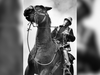
Oct. 17, 1980 — Vancouver Sun photographer Glenn Baglo on horseback at the Spatsizi Plateau. Photo by PETE MCMARTIN /PNG

We were in the park for five days, on horseback, along with a team of hunting guides and two wealthy German financiers who had paid a small fortune to hunt caribou. The Germans’ shooting skills were questionable at best, the horses we rode seemed intent on killing us, and Greenpeace was nowhere in sight. One caribou was killed, the carcass of which the celebratory Germans, much to our disgust, castrated. On the way back to our camp, I found a big whitened rack of caribou horns, tied them onto my saddle and decided I would take them back to Vancouver with me.

Advertisement 5

Story continues below

This advertisement has not loaded yet, but your article continues below.

Article content

But the real adventure for Baglo and I came on our flight out of the park. I sat in the front with the pilot and Baglo sat on a bearskin in the rear baggage area, and some time after we took off, clouds set in. The pilot took us lower and lower to get beneath the clouds, and at one point we were flying only a few hundred feet through a mountain valley. The clouds kept coming lower and lower, and the pilot, sounding genuinely concerned, was not encouraging, and Baglo and I thought, well, this is it, it’s been nice knowing you, they’ll never find our bodies in this terrain.

It was just then that the pilot spotted an old abandoned rail bed a few hundred feet below us. The rail bed was bare gravel, and just wide enough for the plane to land on, so the pilot took us down, landed, and Baglo and I, shaken, got out and took the longest pees in our lives. We sat there for a few hours in this mountain valley until the clouds lifted. We took off and made it to Smithers.

The first thing Baglo did at the airport was kick in the rear panel of our company car — “for The Sun almost killing us” — and I tore the car’s fabric headliner trying to fit the caribou horns into the back seat. Then we drove to what was considered the best restaurant in Smithers, which, at the time, was not saying much, and we ordered the most expensive steaks we could, drank two bottles of Baby Duck (because, the waitress told us, they had run out of red and white wine) and chased it with scotch. When we finished, we found a parking ticket on the car. It was the last straw for Baglo. He punched the parking meter as hard as he could, mangling his hand, which we then had to bandage up. The next day, I drove home but got a speeding ticket in Burns Lake for doing 80 km/h in a 50 km/h zone. Baglo took over driving and immediately got a speeding ticket, too, from the same cop, for doing 100 kph. I still marvel that we survived that trip. When we got back to the office, Baglo paid for the dent in the car and I paid for the torn headliner. The caribou horns are still in my backyard.

Advertisement 6

Story continues below

This advertisement has not loaded yet, but your article continues below.

Article content

One more story:

As a rookie reporter, I was sent out with Baglo to do an interview with a young boy for a reason I can no longer remember. I do remember how peeved I was doing it. I thought it was a puff piece, and when we got to the boy’s house I did a quick, cursory interview with him.

Then Baglo started taking photos. After a few shots, he went back to his car, took out a collapsible step ladder, set it up on the sidewalk in front of the boy’s house and asked the boy to pose on his bicycle. He took more photos from the top of the step ladder. Apparently dissatisfied, Baglo went back to his car and took out a light stand and set it up on the sidewalk. He took more photos. We were there for another half-hour. Watching him work, my impatience morphed into a kind of shame, and I came away thinking, there are no small stories, only lazy journalists, and that I had to up my game. Baglo taught me more about newspapering in that one afternoon than four years of journalism school had.

Last words:

When he was first hospitalized, he and I emailed each other, and the news he was getting from his doctor was not good. He knew his time was limited. Of that, he wrote:

Advertisement 7

Story continues below

This advertisement has not loaded yet, but your article continues below.

Article content

“At least I wasn’t born in Gaza.”

Soon after that he emailed me what may have been the last photo he ever took.

It was a self portrait. He was in his hospital bed, unshaven and haggard, hooked up to oxygen, but looking oddly calm and, as always, defiant. He regarded the lens with a look that was neither smiling nor unsmiling, and his expression seemed to be informed by thoughts of eternality.

In the photo, he was wearing a cardboard bed pan on his head, and on it he had written “I. Jones.”

“Made a hat for my grandson’s Indiana Jones costume,” he wrote in his email to me, as only he could. Damn if I didn’t laugh out loud.

mcmartincharles@gmail.com

Article content

Comments

Join the Conversation

This Week in Flyers