Griffin Art Gallery to host unique photography exhibit

Griffin Art Gallery to host unique photography exhibit

Tennessee High softball, D-B, and David Crockett …

11 hours ago


.cls-3{fill:#fff;fill-rule:evenodd}

VSP: ‘Operation DISS-rupt’ reduces speeding on I-81 …

12 hours ago


.cls-3{fill:#fff;fill-rule:evenodd}

Former NASCAR driver Kyle Petty makes pitstop in …

12 hours ago


.cls-3{fill:#fff;fill-rule:evenodd}

Sullivan County Health Council will address community …

12 hours ago


.cls-3{fill:#fff;fill-rule:evenodd}

HVMC becomes first facility in East TN to successfully …

12 hours ago


.cls-3{fill:#fff;fill-rule:evenodd}

Jonesborough proposed project to extend Lost State …

12 hours ago


.cls-3{fill:#fff;fill-rule:evenodd}

18 arrested on drug charges in Buchanan County

12 hours ago


.cls-3{fill:#fff;fill-rule:evenodd}

Vols football coach praises Bluff City native for …

14 hours ago


.cls-3{fill:#fff;fill-rule:evenodd}

Fall Branch church vandalized, sheriff reports

17 hours ago


.cls-3{fill:#fff;fill-rule:evenodd}

Kingsport Dental Clinic to ‘cut floss’ for grand …

17 hours ago


.cls-3{fill:#fff;fill-rule:evenodd}

What next for Methodist churches after major change …

17 hours ago


.cls-3{fill:#fff;fill-rule:evenodd}

Mother’s Day Flowers with the Plant Palace

17 hours ago


.cls-3{fill:#fff;fill-rule:evenodd}

Picture this: Arts Council holding second photography event

Picture this: Arts Council holding second photography event

NEWS RELEASE
SAULT AREA ARTS COUNCIL
*************************
The Sault Area Arts Council (SAAC) invites photographers to register for the second annual Chippewa County in Photographs event, which kicks off on May 31, 2024. The deadline to register is May 25, 2024.

Chippewa County in Photographs gives 48 photographers 48 hours to document 48 sections of Chippewa County. Beginning at 9 p.m. on Friday, June 7, and ending at 9 p.m. on Sunday, June 9, 48 photographers will explore specific sections of Chippewa County with their chosen camera medium – film, digital camera, iPhone, or any other alternative process. The resulting images will be on display at the Alberta House gallery for the month of August. Best in Show will receive a $300 award; first runner-up will receive a $200 award; and second runner-up will receive a $100 award.

Participants do not have to be residents of Chippewa County, but they must be in Chippewa County from June 7 through June 9 in order to participate in the event.

“Our 48/48/48 show is so thrilling because we are able to see the perspective of so many people within our community and how they connect with the landscape around us,” said Robin Sorquist, SAAC Gallery Director. “It is a joy to meet people of all different ages and interests as the area is documented year after year. This will also give us a fantastic perspective of how the landscape of the EUP changes over time as this show continues.”

Interested photographers can register for the event or learn more about it by visiting https://www.saultartcenter.com/august2024. A non-refundable $25 entry fee is required to register.

Chippewa County in Photographs event timeline:

  • May 25 – Registration deadline
  • May 31 – Kick-off reception; map selection
  • June 7-9 – Photographs taken
  • June 14 – Winners selected
  • August 1-31 – Gallery show
  • August 2 – Awards reception

The mission of the Sault Area Arts Council is to encourage all people to lead more artful lives through opportunities to learn about, create, and market the visual arts. Its purpose is to sponsor and encourage cultural and educational activities in Sault Ste. Marie and surrounding areas, sponsor cooperative planning, research, fund raising and educational programs, and undertake such other services deemed necessary to encourage participation in and appreciation of the arts by all citizens in the area.

*************************

Tips From a Local Wildlife Photographer on how to Get a Perfect Shot

Tips From a Local Wildlife Photographer on how to Get a Perfect Shot

Editor’s note: This is a guest column from Gavin King Regan, a 15-year-old local wildlife photographer.

Have a camera that’s been rotting in your closet because you just can’t figure out how to get a sharp photo? Just got one, but all your photos look too dark or too bright? Do you just want to get off automatic mode? Here is what you need to know to take the perfect picture and the best places locally to get a shot! 

Always try to get eye level with your subject! Often this will require you to lay flat on the ground but it makes for a more striking composition and adds a lot to your photo. (Photo by Gavin King Regan)

First, you need to understand the basics, which are actually much simpler than you might think. What do I mean by the basics? Generally, the most fundamental parts of a usable image are shutter speed, aperture and ISO. All other factors are secondary. These are collectively known as the exposure triangle, because if one is adjusted, another must be changed in order to have the right amount of light in your photo.

Shutter Speed – Shutter speed is how fast the light blocking curtains in your camera move which, in turn, determines how long your sensor is exposed to the light bouncing off whatever subject or scene is in front of your camera. This is known as the ‘exposure.’ The longer your sensor is exposed to the light, the brighter your image is going to be. The downside is that if you or your subject is moving, a long exposure can introduce blur to your image. A good rule of thumb is to try to keep your shutter speed at least the focal length of your lens. For example, if your lens is zoomed in to 300mm, 1/300 of a second should be sufficient to prevent blur caused by camera shake, but you may need to increase the shutter speed depending on how fast your subject is moving. Now, if you want to use a shorter exposure than your focal length, it may be prudent to use a tripod or to rest your camera on a solid surface to compensate for the longer exposure.

This photo of an American robin needed to be taken at 1/50 of a second in order to get the right amount of blur in the rain. This meant the camera had to be held very steady to avoid camera shake. (Photo by Gavin King Regan)

Aperture – This is the circular collection of small blades inside your camera that open and close to determine the amount of light that reaches the sensor. It is controlled by the number with the ‘f’ next to it on your camera’s display. The higher the f number (or f-stop), the smaller the aperture gets and the less light will reach your sensor. But you will have a greater depth of field (the amount of the picture in focus in front of and behind what you focus on). The smaller the f-stop, the wider the aperture gets and the more light will reach your sensor, but you will have a smaller depth of field. This may seem confusing at first, but it’s pretty easy once you can remember what increases and what decreases.

A low f-stop (f5.6 in this case) has resulted in only this lizard’s head being in focus. The background and foreground have been blurred, isolating the subject and making a more pleasing composition. (Photo by Gavin King Regan)

ISO – ISO determines how sensitive your camera’s sensor is to light. Increasing ISO will make your pictures brighter but it will also cause them to be noisy (grainy) and lessen the sharpness of your image. Think of it as artificially making your image brighter. The higher the ISO, the more noise, so try to keep it as low as possible without compromising the shot. What do I mean by that? I’m saying don’t sacrifice the needed shutter speed to freeze your subject just because you’re trying to shoot at a low ISO level. This photo of a spider on an apple sapling was taken at ISO 1600, the highest my camera will go, and it looks fine. Just be sure that you expose your shot properly as noise is most apparent in the darker areas of your photo.

This photo of a spider on an apple sapling was taking at ISO 1600, the highest my camera will go, and it looks just fine. (Photo by Gavin King Regan)

There are other intricacies to the wide world of photography that I am unable to explain in one article. To the beginner wildlife photographer, I would say get a camera, get outside and get close. The amount of wildlife inside your house (bugs, mice, etc) pales in comparison to the great outdoors. But where to go? With the many natural parks, ponds and places in the greater Lansing area it can be difficult to narrow down any one location to find a suitable subject to photograph. To that end, I have put together a list of a few good places to turn your lens and some of the birds you might get to shoot there:

Hawk Island Park is a very popular recreational area, which also offers an array of wildlife photography opportunities. The small lake at the park is a habitat for several species of waterfowl, including Canada geese. In fact, this time of year is one of the best for seeing waterfowl in Michigan.

The Lansing River Trail, specifically the part of this trail that goes right through Scott’s Woods Park before running into Hawk Island, is a good place to get some great shots! This shot of a house sparrow backlit by the sun was taken on one of my favorite points on the trail where it opens up by the creek. You can also see several species of shorebird and get quite close to the song sparrows as they sing their beautiful bubbling song in the bushes on the bank. I also spotted some signs that beavers live here just recently, for the first time in all the years I’ve walked the trail.

This shot of a house sparrow backlit by the sun was taken on one of my favorite points on the Lansing River Trail where it opens up by the creek. (Photo by Gavin King Regan)

Fenner Nature Center has 134 acres of land and over four miles of trails featuring various habitats. The park and trails are open everyday from 8 a.m. to dusk. The nature center has several observation decks and a bird viewing blind but visitors are asked to stay on the trail, which can be a serious drawback for a wildlife photographer.

 The upside to a nature center like this is that visitors are more likely to meet birders or other photographers who may be able to point them to an interesting subject. This does, however, bring up a very important point in photography: it’s not the subject that makes a good photo, nor is it the camera. A shot of a bird high up in the canopy in a tangle of branches against a plain blue sky with the light of the midday sun is still a bad shot whether it’s a duck at fifty megapixels or a dunlin at five. This shot of a common gray squirrel was taken using a 250mm camera setup with just six megapixels but thanks to good composition and technique, it’s a great shot. If you don’t live by anything especially intriguing, you can still take extraordinary pictures of ordinary subjects.

This shot of a common gray squirrel was taken using a 250mm six megapixel camera setup, but thanks to good composition and technique it’s a great shot.(Photo by Gavin King Regan)

Lake Lansing is another promising destination. Over 150 species of bird can be seen here (depending on what time of year it is), including blackbirds, warblers, herons and waterfowl such as wood ducks and Canada geese. The water itself is a pretty good opportunity to get some photos, but the area also features an expansive park on the north side of the lake that could offer some top-notch photo opportunities.

While I did focus on avian life in this list, also note that in all of these places you can also find various other animal species including whitetail deer, skunks, foxes, garter snakes, frogs and turtles. Finally, remember that the best camera is the one that’s in your hands right now, whether that’s your phone (which nowadays are actually rather impressive) or an $18,000 camera and lens setup (yes, that is a thing). This is the best shot I have ever gotten of a garter snake. It was taken with a Nikon Coolpix B500 which can control neither shutter speed, nor aperture. 

This is the best shot I have ever gotten of a garter snake and it was taken with a Nikon Coolpix B500 which allows me to control neither shutter speed, nor aperture. (Photo by Gavin King Regan)

I’m not saying go out and try to get good shots with a bad camera (if your camera cannot control shutter speed or aperture, I would suggest getting one that can), but I am saying that if you’re not getting good shots, it’s most likely you, not your camera. 

Want more tips and tricks to improve your photography? Follow me on Instagram (@Gavinkingphotography) where I post weekly photos and pro tips on how to get your own! Or you can go to kingwildlifephotography.com to sign up for my email list where I share deals, discounts, and ways to become a better photographer. And now that you know how to get the shot and where to go, it’s time to get your camera, get out and take your first great photo!

Vail cancels residency for Native American artist Danielle SeeWalker over painting commenting on the war in Gaza

Vail cancels residency for Native American artist Danielle SeeWalker over painting commenting on the war in Gaza
image

Updated at 2:15 p.m. on May 10, 2024

A Colorado artist says the Town of Vail canceled her residency after someone complained about a piece of art she created commenting on the war in Gaza.

Danielle SeeWalker said the piece in question, “G is for Genocide,” was not created for the residency and had nothing to do with the program. She said a town official informed her they were canceling the residency in a three-minute phone call.

“I even turned down other job opportunities because of this contact,” SeeWalker said in a statement. “The residency would have been three weeks this coming June and would include multiple community art events including working with youth, painting a mural in Vail Village, an art exhibition and giving a talk at their Symposium.”

Town Manager Russell Forrest did not immediately comment when contacted by CPR News Thursday or Friday, but a statement on the town’s website questions the appropriateness of SeeWalker’s work on Gaza.

“While the town initially embraced SeeWalker’s work surrounding Native American issues, her recent focus on the Israel-Gaza conflict raised concerns about the use of public funds to support a polarizing geopolitical issue,” the statement reads. The Art in Public Places (AIPP) board, which oversees the town’s public art program, said it had not received a proposal for SeeWalker’s planned mural for the residency, “therefore no contract was issued.”

The SeeWalker artwork in question is a painting that drew parallels between the war in Gaza and the historical genocide of Native Americans. In a May 9 email with the subject line “Silencing of a Native American artist,” SeeWalker, a Lakota artist, expressed disappointment with the lack of opportunity to explain the context or defend her artwork.

In an interview Friday, SeeWalker said it is important for her to speak her truth.

“As a person of color relating to other people of color that are going through genocide …. I take it very personal that this was something that they just didn’t want to have me be part of this residency because it affected somebody else,” SeeWalker said. “On a personal level, my artwork is very much … provocative. It tells stories, it’s centered around my identity as a Native American woman. It’s past experiences, current experiences, stories I’ve been told.” 

On Friday morning, a future SeeWalker event in Vail titled “Still Here: Redirecting the Native American Narrative with Danielle SeeWalker in conversation with Clay Jenkinson” was still live on the Vail Symposium website. It is scheduled to be held at Vail Interfaith Chapel on June 19 at 6 p.m.

A spokesperson for the Vail Symposium said in an email Friday that the group was still planning on hosting the event. SeeWalker said she’s open to it. She also has a message for the people offended by the Gaza artwork.

“I would love to say to them that it was never a piece about any conflict against them or their community or anything like that,” SeeWalker said, adding that there are parallels between the genocide of Jewish people and Native Americans. “It was simply me expressing my culture, my histories as it relates to my ancestors, what they had gone through, and what’s currently happening today to another group of population of people.”

When Can Wildlife Photographers Intervene?

When Can Wildlife Photographers Intervene?

This article first appeared in Issue 19 of our digital magazine CURIOUS

Advertisement

Fans of the David Attenborough BBC series Dynasties may remember a particularly harrowing scene in which a group of penguins got stuck in a ditch during a storm and couldn’t get out. It was a memorable episode, not only because of the desperate plight of the birds that would die if left to face the elements but also because the film crew made the difficult decision to break the “never intervene” rule that’s considered by some to be the golden principle of wildlife filmmaking.

Advertisement

The idea is that, no matter how upsetting it gets, an animal in danger shouldn’t be saved by humans. However, as “wild” environments have become increasingly influenced by human activity, the outlook on if and when it’s ethical to intervene has been debated.

Is it following nature’s course to let a turtle drown in fishing nets? What about letting fertile nests die during floods made worse by anthropogenically driven climate change? If we as a species are creating new and unnatural threats, is it our responsibility to undo them when presented with an opportunity to save an animal’s life?

We spoke to the directors and producers of the BBC’s Planet Earth III, Matt Brandon, Mike Gunton, and Nick Easton, to see how they approached the tricky subject during filming. Episode one of the series presents the troubling case of Raine Island: a place that’s the largest known rookery on Earth for green turtles but is slowly sinking beneath rising sea levels.

First Nations people have been protecting turtles here for thousands of years, and the Planet Earth III film crew got involved in helping some stranded turtles that would have otherwise perished on the rocks make it safely back into the ocean.

Advertisement

What has been the rule about filmmakers intervening with wild animals?

Matt Brandon (MB): I think the rules are changing, but one of the golden rules of wildlife filmmaking is that when you’re witnessing a natural event, you really try not to get involved. It can be really difficult sometimes when you’re watching those things, but that is the rule.

Why are the rules changing?

MB: What we’re seeing now is that many of the things that our crews are witnessing around the world are no longer natural. We actually do cover that in one of our “The Making Of” sequences, where[…] Columbus crabs are floating in something like 12 million tonnes of plastic and discarded nets that are thrown into the ocean every year.

Advertisement

How does that trash affect the crabs?

MB: For the Columbus crabs, it’s no bad thing, they are actually adapting quite well. But for turtles, it can be absolutely tragic. Over the period where they were filming, [the crew] found numerous turtles trapped in nets and there was no way those turtles could survive, so they did step in and cut them free.

Were they successful?

MB: I think they were able to save all bar one of them, so that’s probably the right choice and a justifiable thing to do.

Advertisement

Do the crews operate alone or are there people on hand to help with these decisions?

Mike Gunton (MG): We work with scientists and field workers so it’s not just a crew themselves, it’s often monitored or driven by working with scientific teams who make that decision as well.

We saw teams helping out with stranded sea turtles on Raine Island. What was the story there?

Nick Easton: I think to explain that Raine Island situation, there’s also cultural sensitivities [at play].

Advertisement

The Wuthathi people’s association with Raine Island [as the traditional custodians and owners] goes back 2,000 years at least. So, it’s not our place to intervene, it’s their place in which we are guests, so we took their lead there and our crews helped.

What can people expect from Planet Earth III?

MG: What Planet Earth III does; I mean it still has all the DNA of Planet Earth[…] the cinematic, extraordinary, visually rich, jaw-dropping visuals, amazing animal dramas, magic carpet ride to the four corners of the planet. But it has this other context, which is that we’re now in a new natural history, of a new time in our lives, where the planet is changing and there’s this huge force which Darwin would call a selection pressure. And that selection pressure is humanity.

Planet Earth III is available now on BBC iPlayer.

Advertisement

CURIOUS magazine is a digital magazine from IFLScience featuring interviews, experts, deep dives, fun facts, news, book excerpts, and much more. Issue 22 is out now.

Anja Brunt’s Clever Collages Give Ephemeral Articles a Second Life

Anja Brunt’s Clever Collages Give Ephemeral Articles a Second Life

All images © Anja Brunt, shared with permission

Inspired by Dada and Surrealism, Anja Brunt’s instinctive paper medleys evoke a sense of whimsy, spontaneity, and randomness. The Amsterdam-based graphic designer has been creating assemblages for six years as a way to relax. After falling in love with the many possibilities of the medium, she began to work intuitively, cutting and arranging vintage ephemera into iterations of bodies, buildings, and bold text.

Brunt collects materials from every place imaginable. From papers she finds in chocolate boxes and antique playing cards to instruction leaflets and train tickets, the artist sources both aged pieces and contemporary media gathered from her daily life. As she accumulates promising morsels over time, she organizes each fragment into boxes and old stamp albums, where they await their addition into a montage.

At the moment, Brunt is exploring collage animation. Keep up with her newest projects on her website and Instagram.


vintage papers collaged into the shape of two standing figures

vintage papers collaged into the shape of buildings and a road sign

old train tickets arranged in a grid with stamps of the letters D and A.

vintage papers collaged into the shape of a bulbous figure with one large eye

vintage papers collaged into the shape of buildings

vintage papers collaged into the shape of two standing figures

vintage papers collaged into the shape of a figure


Do stories and artists like this matter to you? Become a Colossal Member today and support independent arts publishing for as little as $5 per month. The article Anja Brunt’s Clever Collages Give Ephemeral Articles a Second Life appeared first on Colossal.

Photographer Creates Stunning Artwork by Taking Close-up Images of Eyes–Each One Is Unique

Photographer Creates Stunning Artwork by Taking Close-up Images of Eyes–Each One Is Unique
By Moonlight Photography / SWNS

Andriana Green captures the unique patterns and colors of the human iris
before transforming the results into beautiful works of art.

Stunning macro images show the ‘windows of the soul’ looking like other-worldly planets, as a yin and yang and also connected as wheels on a bike.

The colorful new photography trend has increasingly seen couples and families getting their pupils snapped up close for a unique keepsake.

Green says everyone’s eye is different, reflecting our personality, emotions, and identity.

Her photos show the complex and intricate textures hidden within the human iris which gives our eyes a unique character.

“I used to think people had just green, brown, or blue eyes,” said Andriana, who lives with husband Cameron and their three-year-old daughter Nicole. “But with these pictures you can really see all the different lines and areas of the eye, everyone really is unique,” she said, comparing them to snowflakes or fingerprints.

“I find them truly beautiful and fascinating. They look like something from outer space, almost like planets by themselves.

By Moonlight Photography / SWNS

“I’m originally from Bulgaria and found out about the trend a few months ago when we went back to visit some family. There was a big international business fair taking place in the city, so we went along to see what was happening and that’s when I saw it.”

PHOTOGRAPHY IDEAS: Say Cheese… for a Thousand Years: Camera Set up to Capture a Millennium-long Exposure of Tucson

“It is becoming more in demand here too so I thought I’d give it a go and it is proving popular with people wanting a different family portrait,” she adds.

“I mostly concentrate on family and children’s photography but in a matter of weeks, this seems to be quite sought after.”

In order to take the close-up pictures, Green says it’s necessary to shine a continuous light into the eyes, meaning her subjects will be required to sit completely still for a few minutes.

For this reason, she says this type of photography might not be suitable for younger children or anyone who suffers from light sensitivity.

Moonlight Photography / SWNS

MORE STORIES LIKE THIS: See What Magic Happens When a Photographer Adds Himself to Famous Album Covers – LOOK

“The process of taking the pictures only takes about half an hour but the editing takes three to four hours, so that is the time-consuming part,” said Green, who runs Moonlight Photography.

“The finished pictures make a really unique piece of art to hang on the walk and a great talking point.”

SHARE These Stunning, Alternative Portraits With Your Friends… 

“You Ghosted Andy Warhol”: Magdalena Wosinska, in Conversation With Christopher Makos

“You Ghosted Andy Warhol”: Magdalena Wosinska, in Conversation With Christopher Makos
Magdalena Wosinska

All photos by Magdalena Wosinska.

“Moving from communist Poland at the age of eight,” says photographer Magdalena Wosinska, “I slowly found skateboarding as a passport into this weird fucking culture.” Since the 90s, Wosinska has been on the board and the boardwalks, snapping photos of crispy L.A. skaters like Chad Muska and Ed Templeton. Now, Los Angeles’s Fahey Klein Gallery is showing Fulfill the Dream, Wosinska’s vibrant photographs of the scene, addition to a thick book published by Homecoming Gallery. Wosinska’s sumptuous images merge two styles the art world has desperately tried to separate: fine art and street photographs. “You’re like a clean Nan Goldin,” says the photographer and Interview alum Christopher Makos, who knows a thing or two about capturing a micro-culture. Makos left his native California in the 70’s to become a photographer in New York, where he quickly caught the eye of Andy Warhol and Bob Colacello. Last month, from her sunny L.A. studio, Wosinska met with him on Zoom to talk about life-changing encounters, photographing skater boys, and Eastern European resilience. By the end of the call, the two were making plans to pal around New York together this summer.

———

MAGDALENA WOSINSKA: Are you in New York?

CHRISTOPHER MAKOS: Yeah, in New York we’re having 80 degree weather, Magdalena. You’re so pretty. When I look at you, I’m like, “What are you doing photographing them?” They should be photographing you.

WOSINSKA: Oh, you know this as a photographer. I hate being in photos. Do you like being in photos?

MAKOS: I was recently at this big event that I organized in my country studio in Pennsylvania. We hired a photographer. I looked 1,000-years-old. I hated the pictures. Anyway, nough about me.

WOSINSKA: Wait, I do have a question, though. Have you ever had a photographer take a great picture of you?

MAKOS: Wow, what a good question. You want to know the truth? I don’t really hang out with photographers. I hang around with clients.

WOSINSKA: True.

MAKOS: Clients write checks, which is my favorite thing.

WOSINSKA: Same.

MAKOS: Your background is so interesting to me. You moved from Poland as a young teenage girl. One of my biggest collectors, Luba Michailova, she’s from the Ukraine and the thing about you sweet commie girls is you grew up under a different thing. You take nothing for granted, because you come from a system that was so regulated, that you can see the joy of what you do in your photos.

WOSINSKA: Thanks for saying that. I can never over-order at a restaurant, because when people throw food away, I get so bummed. Growing up, you had to have a connection to a butcher to get meat. We got oranges for Christmas. When people throw food away, I’m just like, “This is absurd.” But you end up being very resourceful and frugal. Moving from communist Poland at the age of eight, I slowly found skateboarding as a passport into this weird fucking culture where everything was accessible, but I still couldn’t afford it because we were poor. But coming here, if you can be the first person in your family to have a voice, maybe somebody will give a fuck and listen. My voice is through my eyes and pictures. I’ll never take that for granted.

Magdalena Wosinska

MAKOS: Do you get back east at all?

WOSINSKA: Yeah, I go to Poland once a year. My dad lives there. After my mom died, I was like, “Dad, go home. Go home to die, but have fun until you do.”

MAKOS: Is your show ongoing right now?

WOSINSKA: Yeah. It’s there until June 1st, so if you happen to be in L.A. in the next month, that’d be awesome. It’s nice to have someone take you seriously and give a fuck, and then if you’re a commercial photographer, to fund your art career, no one takes you seriously in the art world. I’m like, “I don’t have rich parents. How the fuck am I going to pay for this?” Then the commercial world thinks you’re too raw for their commercial world if you’re making art. 

MAKOS: Don’t worry. It just takes time. I don’t know if you know my pictures of Warhol in drag, that series called Altered Image.

WOSINSKA: Yeah, of course.

MAKOS: It was a collaborative thing based on Marcel Duchamp. For the longest time, they were always art photos. Then I started doing things with Ferragamo and then they became fashionable. You’ll get there, it just takes time. 

WOSINSKA: You have to evolve. And people have to evolve into understanding how you see the world. 

MAKOS: Oh, no. Your pictures are so ripe for fashion. 

WOSINSKA: Yeah, but the fashion world laughs at me.

Magdalena Wosinska

MAKOS: Your stuff is so fashionable. So many of these sexy guy pictures that I have, they didn’t mean anything until I did something with Calvin Kliein. All the big brands, they think it’s really sexy to team up with somebody like me. Your moment might be right there or it could be tomorrow. You’re not at the beginning of your career, but you are. You know what I mean? You have nothing to worry about. I looked at all your pictures and your skateboarder book. You’re there. I feel like a judge on American Idol

WOSINSKA: It feels good to hear you say that though, because I’ve been taking pictures for 26 years and sometimes I’m like, “Is this the beginning? Is this the middle? Is it the transition?” When does everybody else ever decide if it’s cool or not? 

MAKOS: Just keep doing you. Hopefully you can find either a sugar mama or sugar daddy to sponsor you. I always say that in order to really make it in Los Angeles, you have to have a gym card and a set of Lululemon outfits.

WOSINSKA: And get into parties at the Chateau, because that’s where your clients are.

MAKOS: Of course. Chateau is sort of really coming back with a vengeance now, isn’t it? A lot of my New York friends always stay there. But when I go to L.A., I’m just trying to find some really cheap Mexican taco shack.

WOSINSKA: Come to Highland Park and I’ll give you a tour.

Magdalena Wosinska 

MAKOS: I’d love to. When did your most recent book come out?

WOSINSKA: It came out April 18th. The opening was amazing, it was like 300-plus people, there was a line around the corner. I was like, “Holy shit!” I would’ve been happy with 50 or 100 people. And then after the show, I played with my punk band at the after party and we had a mosh pit. It was hilarious. And the next day, we had a dinner with collectors and curators and I was like, “Wow, this is such a fascinating life.”I kind of just hang out, live under a rock, take pictures of things that I find interesting. But that weekend I was like, “Oh, I get it.” If you’re friends with people, they’re more likely to put you in the right room with the right people.

MAKOS: You want balance, but it’s fun to hang around with the right people, because that often leads to a different movement in your career. Sometimes being around people in different lanes can open you up to other ideas. I was always open to anything. I remember a collector asked me to do her catalog for a sandpaper company and they’re some of my most interesting artistic pictures, actually. As a project, you should get somebody to sponsor you to come to New York City. The street scenes are sort of over the top here. We’re kind of having a resurgence of the ’70s and ’80s everywhere in America where there are street people, all of that kind of stuff. You can go to the East Village and capture a scene. You can go to the West Village, where I live, and capture a scene, which is all this kind of whiny, entitled white girls. Those girls are unbelievable. Those girls in the ’80s used to be in the Upper East Side. Or you can go to the Upper West Side and see families with babies. Los Angeles is one big, beautiful, sprawling suburb, whereas New York is so condensed. When I look at your pictures, you are ripe for a trip back east. Not on your own dime, though. 

WOSINSKA: Oh, I would love that. I need to spend more time there anyway. I used to spend a lot of time there in my twenties and then I was like, “Wow, I’m tired.” I don’t really get that inspired by being in L.A. anymore. I get inspired going back home, connecting to the people in Poland. But in L.A, everyone is so prepared to be cool that it doesn’t feel real. I want it to be raw, and real, and fun. But I have a question for you. Did you have a moment in your career where you met one person that you’re like, “Oh, this changed my career.”

MAKOS: When I was introduced to Andy Warhol, I was shocked because I had thought that he died. 

WOSINSKA: [Laughs] Probably ‘cause of the assassination where he didn’t die.

MAKOS: When I came to New York, I was this super cool, blue-eyed, pretty blonde boy from Southern California. Everybody wanted to fuck me.

Magdalena Wosinska

WOSINSKA: How old were you?

MAKOS: I was like, 19. And I was just cute as a button. I didn’t know anything. But I was smart enough to know how to listen. I listened all the time. I met Warhol and he invited me to go to Max’s Kansas City where Lou Reed and everyone was. I was fresh from Southern California, so a dark club at night didn’t appeal to me.

WOSINSKA: You’re like, “I have to wake up at 6:00 in the morning to catch the surf.” They’re like, “We’re going to do cocaine till 6:00 in the morning…”

MAKOS: Right. I took his number and didn’t follow up like every New Yorker. 

WOSINSKA: You ghosted Andy Warhol.

MAKOS: Yeah, I ghosted him. But my first photography show was in New York at 792 West Broadway. It was all my photographs of just my life. This was during Yoko Ono, Nam June Paik, Fluxus Period. Rather than put the pictures on the wall, I took the entire show and put it on the floor and then covered the floor with plexiglass. It was called Step On It. I thought, “This is a good time to meet Warhol.” He couldn’t make it, but Bob Colachello, then editor of Interview Magazine, came. He loved it and said, “Come to the factory.” Bingo! This was my career on my terms, not being just a hanger-on. That moment changed everything. 

WOSINSKA: I love that. How old were you?

MAKOS: I must’ve been in my early twenties. That was an amazing time because that was the scene of New York City exporting all of American culture all around the world. Now America exports animosity and politics and all this kind of bullshit. The only sort of nice thing is Taylor Swift and [Travis] Kelce, the football player. That’s the only thing that seems to get any attention other than Donald Trump, which is just unbelievable. I love your studio, by the way.

WOSINSKA: I’m going to give you a tour.

MAKOS: Oh, cool. Please.

WOSINSKA: This is a photo that’s probably the most important thing that I’ve ever done in my career. It’s the cover of the New York Times of me bathing my mom before she passed away.

MAKOS: Oh my god, that’s so beautiful.

WOSINSKA: I was like, “Mom, do you mind if we’re on the cover of The New York Times?” And she’s like, “But what is this New York Times?” And I’m like, “It’s the most famous newspaper in the world.” She’s like, “But why do they want two naked women in bathtub?” 

MAKOS: [Laughs] 

WOSINSKA: What’s the sketchiest thing that’s ever happened to you on a photo shoot?

MAKOS: Sandra Bernhard. I was doing a photo shoot of her for Interview Magazine and I took a Polaroid of her, which I thought was nice considering what she looks like, and she immediately went to the bathroom crying. I think that she thought she was going to be some beauty, but fashion and makeup can only do so much.

WOSINSKA: You get what you get, right?

MAKOS: I often talk about being a therapist. We help people find out who they are. If we can figure out how to photograph that, then that’s a successful photograph.

WOSINSKA: It’s a trust thing, right? If somebody doesn’t trust you, you’re not going to get a good photo. So many times when I photograph celebrities, they fucking hate being there, it’s an inconvenience. I still think that if you’re being photographed, it’s an honor, so stop being a little bitch and fucking show up and be kind. But I figured out a little system. I show up alone, I never bring an assistant, I don’t bring a DigiTech, I shoot on a film camera, I show up with a tiny camera that nobody takes seriously, so they’re not intimidated by it. They might want the bells and whistles but I’m like, “I’m not going to give it to you because we’re fucking equal. Let’s make a good picture. That’s the only thing I care about right now. To connect to your soul.”

MAKOS: Yeah, exactly. I give you such kudos for breaking through. Number one, because you’re a woman. And number two, you have to be so strong to do that out there. Everything’s harder if you’re a woman. That’s changing, fortunately.  And of course, your narrative is so cool. Polish, former commie girl. I love that story. All the people that came from the former Soviet Union were really resourceful.

WOSINSKA: Totally. And not only being a woman in this world, but I shoot so many different things and everybody wants to pigeonhole me. Why can’t I be good at all of it? People ask me, “Do you feel more Polish or American?” I’m like, “I have a Polish soul and I live an American lifestyle.” My heart and resilience and sense of self comes from just a completely different culture. I want to ask you, who made the biggest impact on your life in the beginning of your photo career?

MAKOS: People like Tennessee Williams. I photographed Tennessee Williams early on in front of Harry Winston Jewelers. Another person was Elizabeth Taylor, because I knew Malcolm Forbes quite well and that’s when Malcolm Forbes and her were sort of pretending to date each other. Most of my adult life, I have been lucky enough to be around all kinds of interesting people that have given me so much. I always say, “If I get hit on my bike tomorrow, don’t worry. I’ve lived the lives of 10 of you.”

WOSINSKA: You deserve it all. My goal is to show in museums. Hopefully people will take me seriously so I can do that in the next two to five years.

MAKOS: Don’t worry, that’s going to happen in a minute. Trust me. You’re like a clean Nan Goldin. You know what I mean?

WOSINSKA: Thank god. 

MAKOS: You know Nan Goldin’s work. It’s all dark and drug addicts and dicks and vaginas…

WOSINSKA: Mine’s like, dicks and vaginas but in the sunshine on a cliff.

MAKOS: Which is perfect, because no one’s doing that. What do you want to do next?

WOSINSKA: I hope this book gets connected to a lot of people in the world. 

MAKOS: Who’s publishing it?

WOSINSKA: Homecoming Gallery. They’re from Amsterdam. It’s a female-run publisher. It was really cool because I pitched this book to a lot of publishers and they all said-

MAKOS: No.

WOSINSKA: “Unfortunately, we have a lot of other books coming out.” All male photographers, of course. And I was like, “Has a woman ever put out a book about skateboarding?” And they’re like, “No.” And I’m like, “Okay, cool. Get back to me in a couple years when you realize you should have done this.”

MAKOS: Well, you understand that no book company is going to promote your book in the way that you can, right?

WOSINSKA: That’s why I wheat pasted shit all over L.A. with a bunch of taggers.

MAKOS: Oh, cool. I could get you a talk and a gig at the Strand Bookstore in New York City, which is the most important bookstore in America.

WOSINSKA: I would be so honored to do that. You’re fascinating. We’re definitely hanging out when I come to New York.

MAKOS: Oh, for sure. And I know the people at The Strand. You’ll get my whole New York crowd, which is easy to do.

WOSINSKA: We’re going to become best friends by accident by the end of this.

How I lost all my photo gear in Italy

How I lost all my photo gear in Italy
[embedded content]

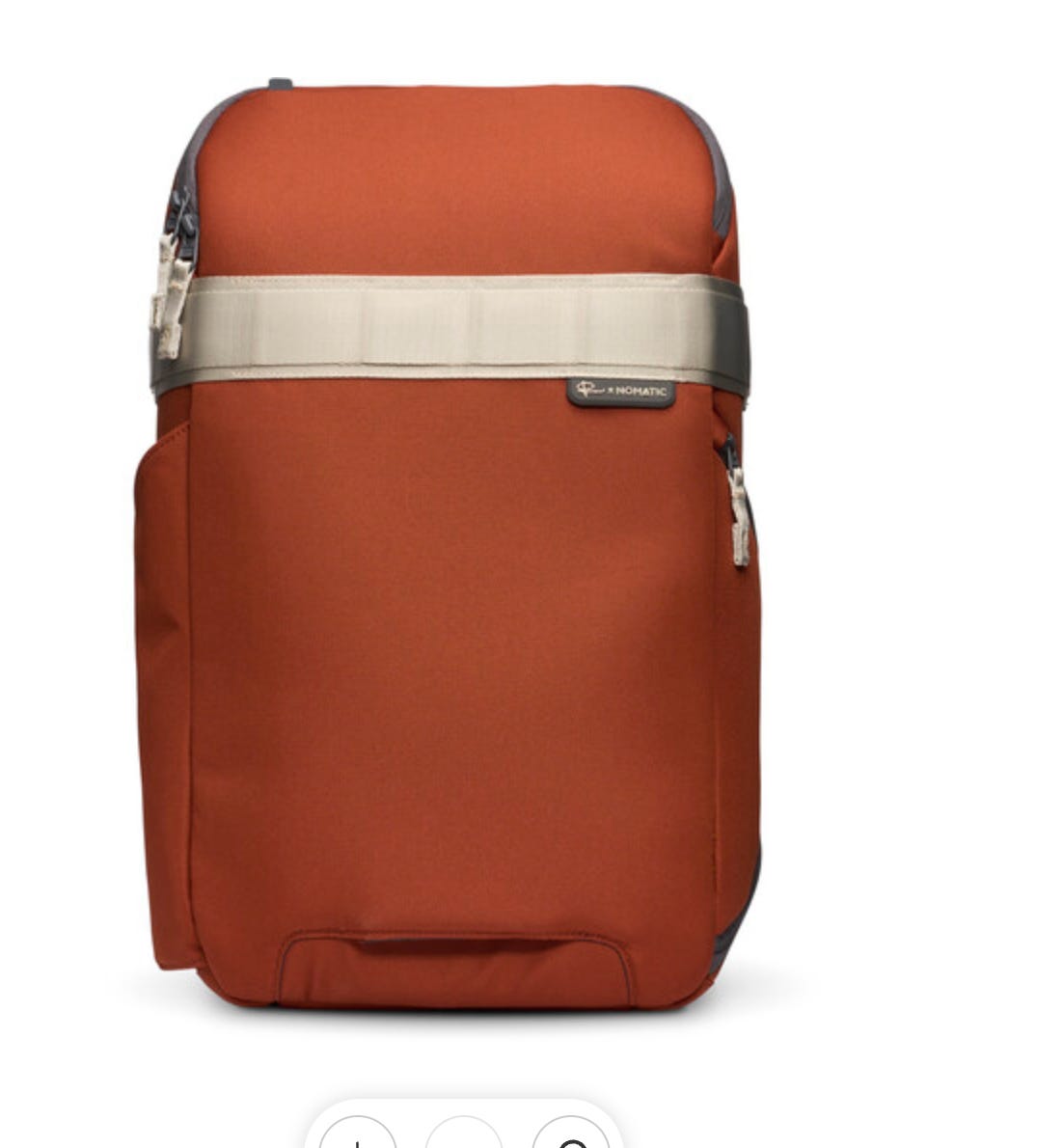
The Nomatic orange pack was full of essentials—some $7,200 worth of drone, laptop, extra phones, solid state drives, microphones, GoPros, Insta360, plus all the charging cables and European power adapters. Everything I needed to be able to write stuff like this, and have access to essential directions to get myself around in a foreign country, and communicate with others. (The incredible Translate app!)

And it was the taxi driver’s fault.

Let me tell you what happened, and keep reading all the way to the end, because there’s a funny coda involving my wife Ruth as well.

The taxi met us at 7:30 in Palermo at our B&B (Bed and Breakfast Cannoli, a fine establishment, though they don’t actually serve any cannoli) to take us to the bus station for our next stop in Siracusa, and there are only two scheduled departures a day—at 8 a.m. and 1 p.m.

lost gear in italylost gear in italy
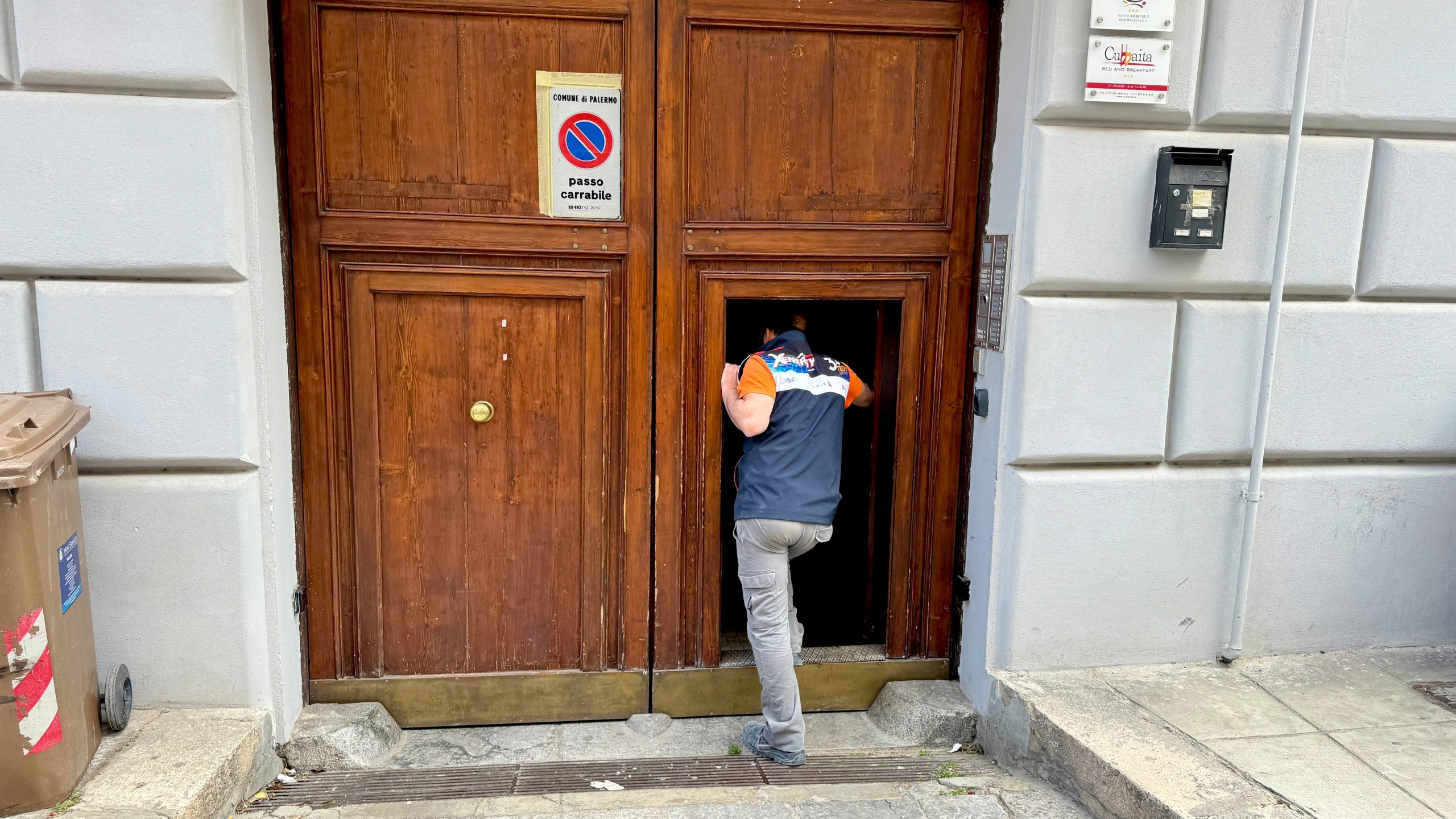
The crazy entrance to the Bed and Breakfast Cannoli in Palermo

The cabbie pulled up and double parked. A woman in the car behind behind him couldn’t pass and immediately started screaming at him like he’d murdered her baby—and he screamed back. I don’t speak Italian, but it was just like something you might see in an Italian movie. It went on for quite a while, or at least so it seemed.

He then opened his trunk, and began reaching for our bags, continuing to yell at the woman all the while. He wanted to put them in the back of his crowded car himself. Fine, I thought, and took my place in the back seat. He threw the bags in the trunk and we took off.

(MOVIE CLUE: SMELL A PROBLEM YET?)

In five minutes, he weaved his way expertly through traffic and we arrived at the train station. “Twenty euro,” he said. When he opened his trunk there were our two suitcases, my tripod and only one backpack, Ruth’s.

Mine was nowhere to be found. Horror as we realized that the orange backpack wasn’t there.

lost gear in italylost gear in italy
Nomatic Luma Backpack

I demanded that he drive back to the B&B immediately, but he didn’t understand and wanted to be paid. I typed “drive back!” into Google Translate, and he got the message.

As he navigated his way through what was now Only in Italy early morning gridlock, with everyone seemingly honking horns, scooters coming at us from every direction, drivers weaving in and out of lanes, zipping through red lights and passengers taking their lives in their hands on the streets of Palermo, I braced for the worst.

After all, just the day before, Ruth had ordered a Croissant from a cafe, ate half of it, stood up to take a photo and walked a few yards away. Within seconds, a man came right over and snatched the remains off the table and put it in his mouth, as I was sitting right there.

My backpack didn’t stand a chance!

There’s a recent story about a photographer visiting Italy who stowed his gear bag (with $16,000 worth of stuff) on a train along with other luggage and took his seat, and then never saw his bag again. It was lifted by a trio of gear snatchers. The comments to his video had many people talking of similar experiences in Italy.

My bag was a goner. I knew it.

But as we finally arrived back outside the B&B, there was actually a storybook ending. The backpack had been pulled off the road and propped neatly against the wall, as two kind gents waited there, apparently certain that the owner would return for it. They were grinning with joy as we pulled up.

I was delirious.

We tipped them 15 Euro for their troubles, just what Ruth happened to have on hand, and dashed back to the station, where we ended up missing our bus by 60 seconds. (And the cabbie charged 60 euros for driving there, back and back again.)

But which would you rather do? Lose your laptop or miss a bus?

Moral: never let a cab driver in another country put your gear bag in the trunk. Hold it in your lap the entire time!

lost gear in italylost gear in italy