Contact photography festival probes identity from Turkestan to Manhattan

Contact photography festival probes identity from Turkestan to Manhattan
image
Open this photo in gallery:

In My Silk Road to You, Kazakh artist Almagul Menlibayeva plays on an audience’s exotic image of the region by posing women against monuments and landscapes of Central Asia.Courtesy the artist

An Asian woman poses in front of a medieval monument in Turkestan wearing an improbably large headdress fashioned from dozens of red-and-silver skullcaps, their interlocking arrangement echoing the decorative tiles on the wall behind her. An African couple stands in a dark space with corn stalks around them, their faces masked by husks and their hands replaced by cobs.

Those dramatically staged images – commenting on cultural identity in Kazakhstan on the one hand and the Ivory Coast on the other – are just two of the thousands of photographs that can be seen at this year’s Contact festival.

Open this photo in gallery:

Ho Tam’s Manifesto of Hair is a series devoted to the hair salons and barbershops of Manhattan’s Chinatown.Courtesy the artist

The May festival took a hit when it lost Scotiabank as a title sponsor this year: There will be no catalogue and fewer outdoor works. That’s a loss because those unlooked-for civic encounters with surprising Contact billboards are often the festival’s strongest suit. Still, there are some public art projects, including colourfully costumed and gymnastically posed human figures by Los Angeles photographer Arielle Bobb-Willis on display at the Davisville subway station. But the main action comprises the 36 curated shows invited by festival organizers, plus another 104 community contributions generated by an open call.

If a single theme emerges from this cornucopia, it is one of probing community identity through variations on documentary photography. In this regard, the McMichael Canadian Art Collection in Kleinburg, Ont., is unveiling a treasure-trove: more than 100 photographs of Indigenous life in Northern Ontario in the 1950s and 1960s, taken by John Macfie, a government trapline manager who travelled to Anishinaabe, Cree and Anisininew communities in the Hudson Bay watershed.

Open this photo in gallery:

John Macfie’s People of the Watershed exhibition has more than 100 photographs of Indigenous life in Northern Ontario in the 1950s and 1960s.Courtesy the artist

The exhibition, People of the Watershed, which continues all summer and fall after Contact wraps, will chart the transition from traditional to contemporary practices as hunters moved off the land in that period. Macfie, who died in 2018, shot adults at work, mending a boat or a fishing net, and children at play, skipping rope or showing off a caribou skull and antlers. He was an amateur photographer and non-Indigenous but the images reflect a sensitive eye and respectful approach to a solid documentary project.

In another time and another place, Yuwen Vera Wang’s images of her ancestral village near the city of Yantai in northeast China also take a documentary approach but with a decidedly elegiac tone. Last year, Wang returned from Canada to the Chinese village where her paternal grandparents spent their lives. As in many areas in rural China, its population is aged because the younger generation has left for the city.

Open this photo in gallery:

Yuwen Vera Wang’s images of her ancestral village near the city of Yantai in northeast China look at memory and loneliness in a disappearing China.Courtesy the artist

Wang’s images, on show at the Artspace Gallery at 401 Richmond are not an indictment of the lack of health care and social services that the photographer has observed, but rather a poetic look at memory and loneliness in a disappearing China. Many of her photographs include no people, but rather the objects that mark their presence: a magnifying glass, a Mao statuette or clean sheets hanging on a line.

Both of these projects relied on what the photographer might find in front of the camera; conversely, the art of Kazakh artist Almagul Menlibayeva and Nuits Balnéaires from the Ivory Coast is purposefully stagy. Both these artists produce photo shoots with elaborate costumes and props to create images that reveal or critique their cultures.

Menlibayeva, a Kazakh who works in Germany, is showing two series at the Aga Khan Museum. In My Silk Road to You she poses women against monuments and landscapes of Central Asia, dressing them in architectural costumes that include swathes of highly decorative fabrics, playing on an audience’s exotic image of the region. She critiques that colonial conflict between modernity and tradition more emphatically in a second series, Nomadized Suprematism, that poses women, sometimes in military uniforms, against the concrete remains of Soviet-era industrial or nuclear facilities.

Open this photo in gallery:

Nuits Balnéaires evokes the seven families who founded the coastal city of Grand-Bassam in the 13th century, photographing their descendants in surreal portraits.Courtesy the artist

Meanwhile, Balnéaires evokes the seven families who founded the coastal city of Grand-Bassam in the 13th century, photographing their descendants in surreal portraits symbolizing the various attributes of each clan with extravagant props and lush landscapes. United in Bassam, at the Meridian Arts Centre in North York, includes, for example, a figure standing under palm trees in a yellow robe wearing a woven helmet that transforms him into a parrot, a reference to the Adahonlin family’s role as teachers while palm nuts symbolize their work as farmers. In other images, figures are surrounded by corn stalks, wrapped in gold robes or use bowls fashioned from the calabash gourd as hats, as Balnéaires commissions local artists in the Ivory Coast to craft a mysterious new iconography.

This startling work is also mounted on billboards at College and Delaware streets while Menlibayeva’s photography is on view both indoors at the Aga Khan Museum and outdoors in the surrounding park.

The work of Vancouver artist Ho Tam falls somewhere between these documentary and artistic impulses: His Manifesto of Hair is a series devoted to the hair salons and barbershops of Manhattan’s Chinatown, which he observed while living in New York in the 1990s and early 2000s. There are more than 100 such businesses in the space of a few blocks, outnumbered only by Chinese restaurants. On show at Paul Petro Contemporary Art, these addictive images use saturated colours and carefully observed street life to speak about identity – maybe joyous, maybe enforced – in a subculture marked by fierce ethnic pride and cutthroat entrepreneurialism.

Contact continues in the GTA through May.

The best photo magazine subscription deals in 2024

The best photo magazine subscription deals in 2024

Getting a photography magazine is a great way to help improve your picture-taking knowledge, and to keep up with the latest kit and trends. The publishers of DigitalCameraWorld.com have four monthly magazines aimed at photographers – all with their unique spin on the world of digital imaging. 

With this huge range of titles on offer, there’s something for everyone, regardless of skill level and camera system – and we can send the magazine direct to your door as soon as it is printed (or you can go digital, and have it sent to your phone, tablet or computer for you to read electronically, if you want to go paper-free).

There are plenty of other offers available too, from print and digital magazine subscriptions to bookazines, binders and back issues. Digital editions of the magazines are particularly cost-effective for those living outside the UK – and will get to you quicker.

With most titles publishing 13 issues per year, a magazine subscription really is the gift that keeps on giving – whether for yourself, partner, friend of family member. 

The photo magazines below are sister brands to Digital Camera World, meaning they’re staffed by experts in their field, and deliver a great mix of tutorials, tips, buying advice, reviews and inspiration in every issue. 

The best photography magazine subscription deals

Best design magazine deals

As well as our photo magazines, we also publish two great magazines for digital creatives…

Read more:

Best books on photography
50 best camera accessories, gadgets and gifts for photographers

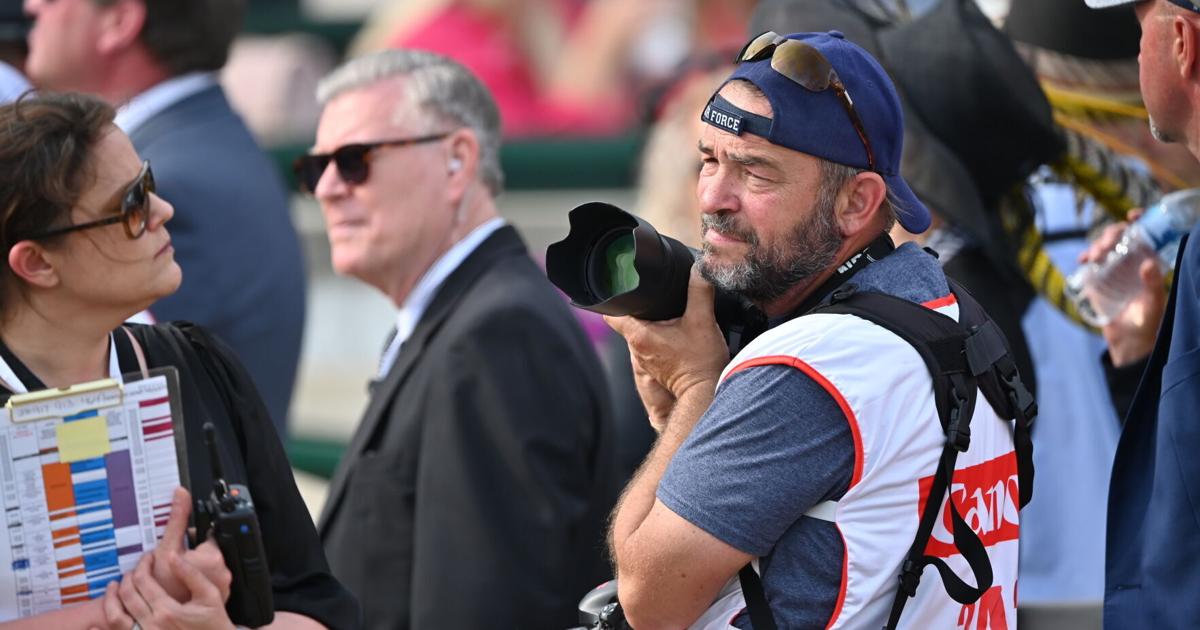
Derby Joe: Southern Indiana photographer to shoot 11th Kentucky Derby

Derby Joe: Southern Indiana photographer to shoot 11th Kentucky Derby

Joe Ullrich would tell you he isn’t artistic. His photography, however, tells another story.

Ullrich, a regular sports photographer for the News and Tribune in Jeffersonville, will be shooting his 11th Kentucky Derby this year. He only missed one Derby in the past 12 years – 2020 – when COVID protocols prevented him from attending. He has been primarily a sports photographer for the newspaper for 14 years, covering everything from regular season games to state championship celebrations.

Today, he will be joining hundreds of other photographers to capture the 150th Kentucky Derby.

“I’m pretty sure my affinity for sports photography is based on the fact that I am a very technically-minded individual,” Ullrich explained. “Sports photography is based on a mechanical and technical shooting style and that fits my human profile perfectly. Unfortunately, I possess little artistic ability so I rely on my technical proficiency to succeed at my craft.”

And succeed he does. Capturing everything from high school sports to natural landscapes and wildlife, Ullrich has a portfolio that would match up to the most accomplished photographers. But he only shoots photos after his “real job” is done for the day.

By day, Ullrich works as an electrician and certified Generac Generator repair technician. He is the lead electrician for ABTech Electrical Service. He has worked at ABTech for 10 years and currently installs Generac whole-home generators and performs maintenance and repairs as a certified Generac repair technician.

By night, however, Ullrich dons his Nikon camera and lenses, and captures memories for the News and Tribune and all the families it serves in Clark and Floyd counties. The 57-year-old photographer is a Sellersburg resident and limits his professional photography to shooting for the News and Tribune and his own personal satisfaction.

“I really only shoot for the News and Tribune and myself. I have spent some time outdoors photographing nature landscapes and have done some wildlife photography,” Ullrich said.

Ullrich became interested in photography as a boy. He says his interest was instilled by his grandfather, another avid photographer.

“I remember as a youngster looking at his photos and gear and always thought it would be something I would like to learn about,” Ullrich said. “My mom had a Yashica 35mm camera that I was able to get my hands on and start using on some of my Boy Scouts trips around the country. That was the first time I was bitten by the photography bug.”

Ullrich was attending training in the Air Force at Fort Dix in New Jersey when he bought a brand-new Minolta X-700, using that equipment for several years during his stint in the military.

Today, Ullrich sports all Nikon equipment – moving from basic film cameras early on to highly advanced digital equipment today.

“When I was stationed in Greece, I purchased two Nikon lenses to use with a Nikon camera body that I was going to purchase at a later date,” Ullrich remembered. “I ordered the camera body a month later and for some reason, the purchase didn’t go through. So, I had these two Nikon lenses for 10 years and did not have a body for them.”

Ullrich ultimately bought that camera body and has been a Nikon user ever since.

“The main reason I went with Nikon is that all the photographers that I had been around in the past were mostly using Nikons and, at that time, they were at the top of the camera market.”

Since his first Derby in 2013, Ullrich has seen and captured with his camera hundreds of races. All the preliminary races each year are his practice ground for the two minutes he gets to photograph the “the most exciting two minutes in sports.”

“I go to Churchill Downs and get my equipment set up and I go and practice for two or three days keeping in mind the Kentucky Derby is the moment I need to capture,” Ullrich said.

When asked about his favorite moment thus far at the Kentucky Derby, Ullrich is quick to credit all of the great moments documenting the historic event. He does have a favorite, however.

“I would say one of the best moments I have would be when American Pharoah won the triple crown. Having spent some limited time in and around horse racing, that moment was pretty special,” he said.

American Pharoah won the American Triple Crown and the Breeders’ Cup Classic in 2015. He was the 12th Triple Crown winner in history, and in winning all four races, became the first horse to win the modern Grand Slam of Thoroughbred racing.

Of the thousands of images Ullrich has captured through the years, he doesn’t really have a favorite. He does love shooting natural landscapes and nature photos because, “coming home with some really cool photos and an adventure you can attach to them is about as good as it gets.”

Outside of his day job and photography, Ullrich can be found backpacking, hiking, camping and working in his garden. He also enjoys fishing and hunting.

This week, however, he will be hunting for that perfect Kentucky Derby photograph to compliment his already extensive collection of work.

Photography camp for youths starts today. Mylapore MLA initiates this

Photography camp for youths starts today. Mylapore MLA initiates this


Starting today, May 4, is a ‘Basics in Photography’ camp for youths that the Mylapore MLA, Dha Velu has curated, as he does annually.

Anybody who wants to learn the skills of shooting pictures and has a camera of any kind can join this free camp, that starts at Lady Sivaswami Ayyar Girls School, Mylapore.

Leading photographers of newspapers are resource people at this all-weekends only camp that runs through May. While lectures take place at this school, practicals will be in the outdoors like Nageswara Rao Park.

Call 7994 88 7994.

Iconic UGA Iron Horse landmark sculpture to be restored

Iconic UGA Iron Horse landmark sculpture to be restored
From UGA Today Iron Horse, a popular destination for tourists and University of Georgia students, will undergo restoration this summer. The sculpture will be temporarily removed from its current location along Highway 15 during the restoration process, and it will be reinstalled in late summer.Patty Curtis and her daughter, Alice Hugel, generously gifted the sculpture and the land on which it sits to the university this year. Amy Abbe, a local conservator, will assess the 12-foot, 2-ton sculptu

How Steve McCurry captured the incredible acrobatics of China’s Shaolin monks

How Steve McCurry captured the incredible acrobatics of China’s Shaolin monks


CNN
 — 

Editor’s Note: In Snap, we look at the power of a single photograph, chronicling stories about how both modern and historical images have been made.

A young Shaolin monk runs horizontally across a wall, intense concentration, and perhaps a hint of astonishment, visible in his face. Four other trainees at a martial arts academy near the Shaolin Temple in China’s Henan province lounge nonchalantly, seemingly unaware of the gravity-defying action taking place above their heads. Their bright orange robes and Feiyue sneakers stand in contrast to the earthen wall behind them.

The blurred back of a man on the left side of the image highlights the sharp movement at its center. A monk stretching in the background demonstrates his dexterity in a split-like stance.

“There’s this high-level action,” photographer Steve McCurry told CNN of the photo’s composition in a video call from his home in Philadelphia. “And these other boys are just hanging out.”

The image is featured in Magnum’s Square Print Sale, which ends May 5, alongside other photographers’ works. He shot it back in 2004, as part of a personal project, while traveling the world to document various forms of Buddhism. While he doesn’t consider himself to be Buddhist, McCurry has long been interested in the religion and applies some of its principles to his own life.

The Shaolin Temple – which was founded in AD 495 on the slopes of the sacred Mount Song – is said to be the home of Chan Buddhism. Although the religion emphasizes nonviolence, the temple’s warrior monks initially practiced martial arts to defend themselves from bandits. Over time, their rigorous physical training became inexorably linked with their quest to achieve enlightenment.

Today, Shaolin kung fu is widely known, and the monks’ feats in athleticism have been emulated in popular movies. The 1982 movie “The Shaolin Temple,” which launched Jet Li’s career and was filmed on location, was one of the films that brought renewed interest in the monastery. By the time McCurry visited in 2004, dozens of martial arts schools had sprung up on the road leading up to the temple.

“It’s incredible to watch them perform and train,” he said. “You can’t imagine that people can actually do that with their bodies.”

A career on the road

McCurry started his career working at a local newspaper after graduating from Pennsylvania State University. He then started traveling abroad as a freelance photographer, shooting images of people in some of the world’s most dangerous and remote places.

His career took off in earnest after he snuck across the border from Pakistan into Afghanistan in 1979, right before the Soviet invasion. He smuggled film out by hiding it in his clothing, providing the world some of the first photos of the conflict that left at least 500,000 Afghans dead and millions displaced.

His 1984 “Afghan girl” photograph – which captured the piercing green eyes of a 12-year-old refugee in Peshawar, Pakistan and was featured on National Geographic magazine’s June 1985 cover – is one of the world’s most famous photos.

Over the course of his 50-year career, McCurry, now 74, has filled more than 20 passports, snapping animals and festivals, worshippers and fighters, conflicts and catastrophes in destinations from Niger to India. He captures the ancient against the modern, the curious amid the day-to-day and accentuates the familiarity of strangers.

In 2016, McCurry came under fire when one of his photos in an exhibition was discovered to be digitally altered. He said it had happened in his studio while he was out traveling, but more images that appeared to be manipulated began surfacing, igniting a debate around the ethics of photojournalism.

In response to the allegations, the photographer told Time magazine later that year that beyond the brief stint at the local newspaper in Pennsylvania, he had never been employed by a newspaper, news magazine or news outlet. As a freelancer, he had taken on various assignments, including advertising campaigns. He said his work had “migrated into the fine art field” and that he considered himself a “visual storyteller.”

He added that he understood it could be “confusing … for people who think I’m still a photojournalist,” and that going forward, he would only use Photoshop “in a minimal way, even for my own work taken on personal trips.”

Shaolin Monastery or Shaolin Temple, a Chan Buddhist temple on Mount Song in Dengfeng, Zhengzhou..

‘Going back again and again’

Before shooting the photograph of the wall-running monk, McCurry had already paid a visit to the Shaolin Temple two decades earlier. He says it was “really empty” during that first trip, and he saw only “bicycles and people in these Mao suits.”

By the time he returned, a kung fu craze had gripped the nation. The area felt more commercial, he recalled. Tens of thousands of (mostly) Chinese boys and men were inspired by a wave of kung fu movies, and were training at the dozens of schools in the area.

The photographer was granted permission at one of the academies and spent a few days with the monks as they went about their daily routine, which included practicing acrobatics on repeat. Some of the boys ate with McCurry at a noodle joint across the street, sharing their hopes to eventually land jobs in security services, performance troupes, as well as the entertainment industry. “They were normal kids,” he said. “But they were very, very dedicated and serious about this practice.”

He captured other photographs of monks’ intense training regimes during his stay, including several hanging upside down by their feet, hands calmly pressed into a prayer pose.

McCurry sought to find the right combination of variables like the subject, angle, light, and background, as the monks perfected their moves. “It’s a (matter) of photographing and going back again and again.”

His perseverance paid off. “It’s a picture that evokes a lot of emotion,” he said of the final shot of the wall-running monk. “It either brings a smile to people’s faces, or they’re kind of in awe of the physicality of these young boys.”