The truth about landscape photography that you need to hear

The truth about landscape photography that you need to hear
[embedded content]

Landscape photography brings together spending time in nature and taking some amazing shots. It’s a win-win, right? Well… Not quite, at least not always. In this video, William Patino takes you on a hike with him and shares the truth about landscape photography that’s a bit bitter – but it’s necessary to know.

I’ll try to break it down into lessons you can learn from William, but also from my own experience I’ll share here and there throughout this article.

The harsh truth

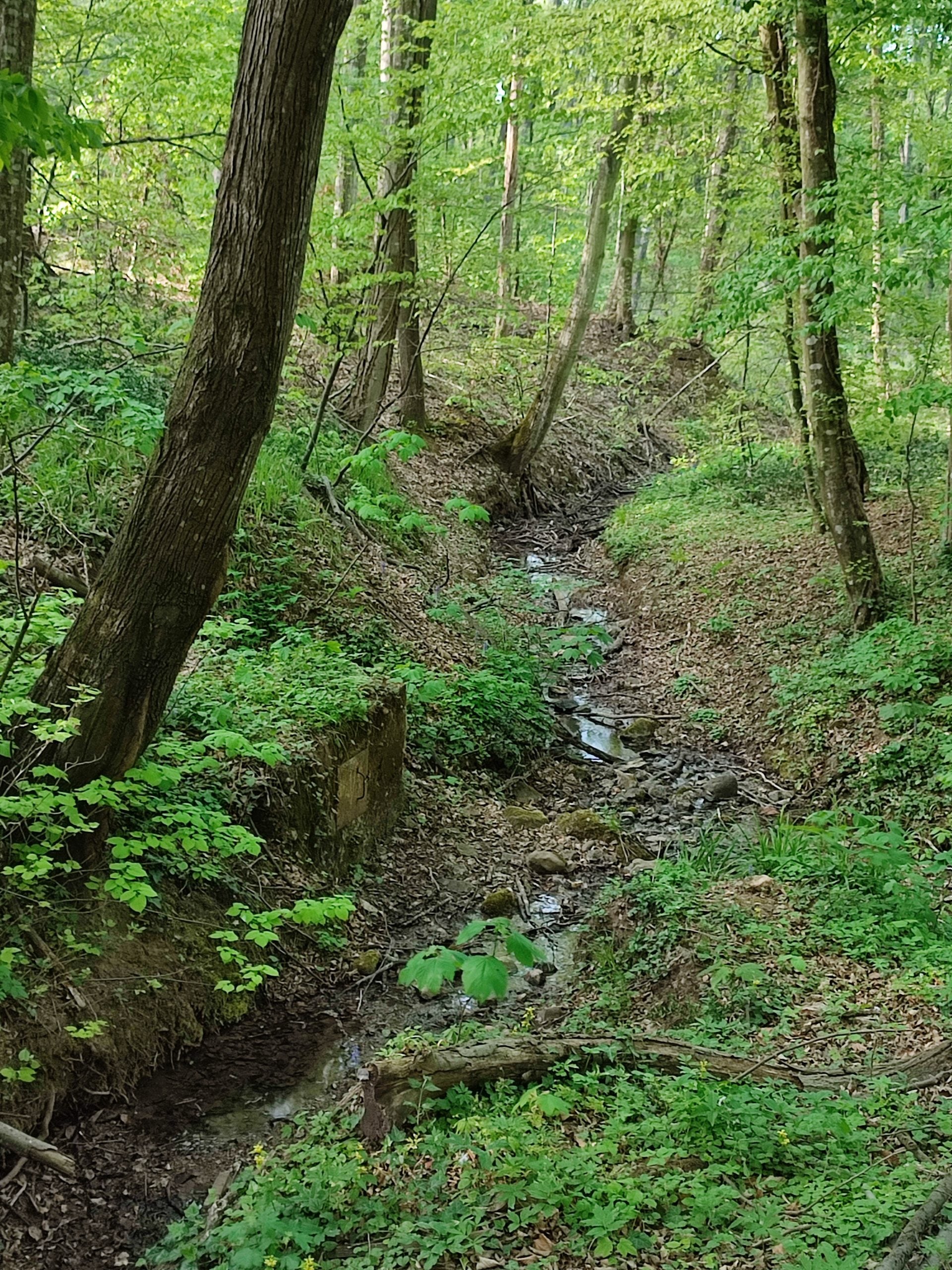
From William’s adventure, we can learn that not every outing will result in a portfolio-worthy image. William went on a hike 70 km away from civilization, and he was on a slippery, wet terrain about 4km from his car. He went out specifically to shoot landscapes, and the scenes around him were truly beautiful. inspiration everywhere: a waterfall, a turquoise stream, incredible trees, and rock textures… However, he ended up discarding the photos he took during the hike.

This sounds discouraging, doesn’t it? You take a trip to a place far from home, and you get wet, tired, and dirty; you definitely visit and photograph incredible places – yet no photos are good enough. None of them do justice to the amazing sights you saw. No matter how disappointed this makes you, it is a normal part of photography. And there are still things you are getting from the experience, so let’s go through them as well.

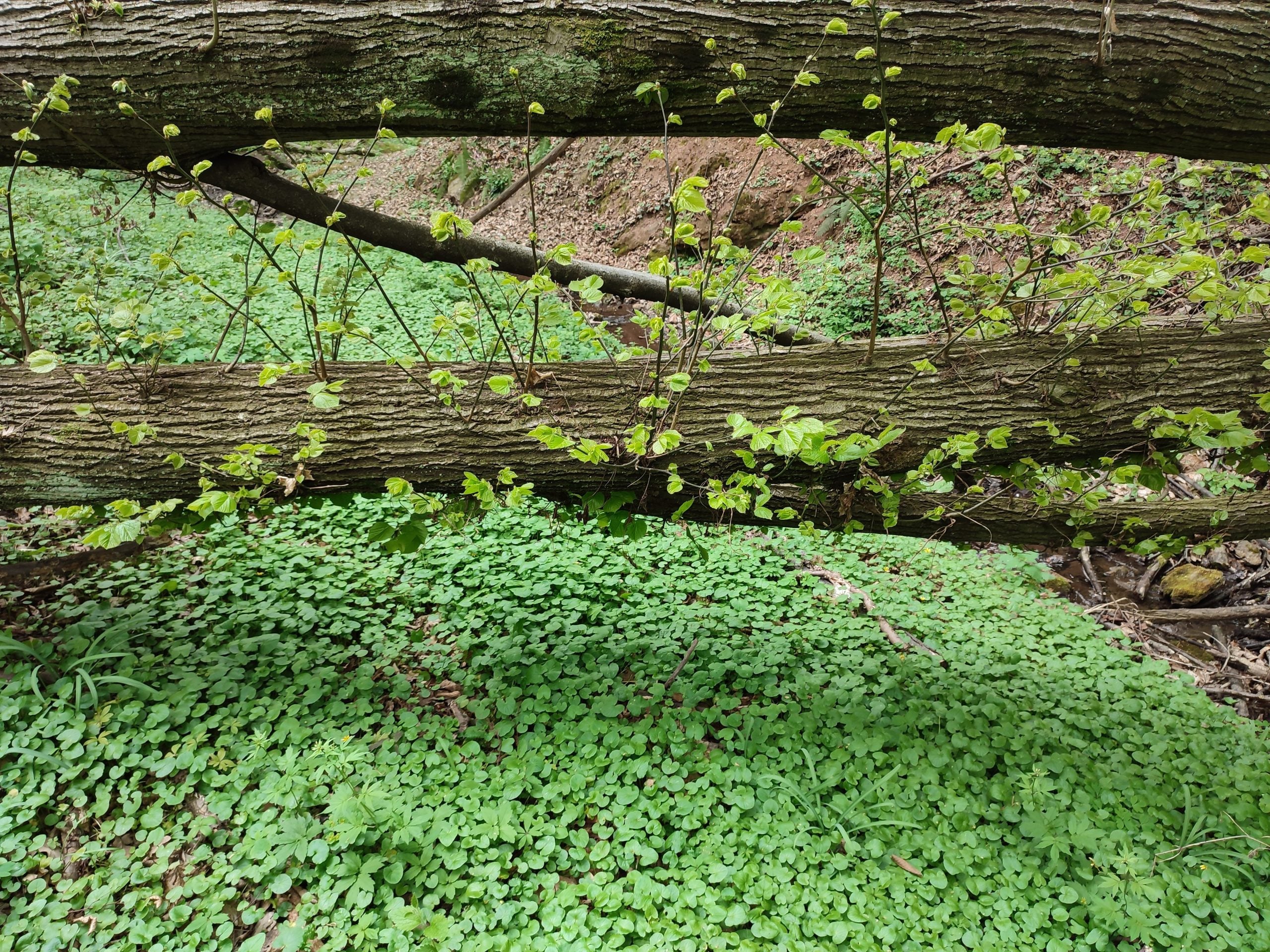
closeup plantcloseup plant

What are you getting?

Photography experience

If you feel that your photos aren’t working, learn to dissect why. In the video, William discusses the reasons why he discarded each photo. This self-critique is an important part of developing as a photographer. He also mentions the four pillars of photography: subject, composition, light, and post-processing. Analyze your photos based on these elements, and considering including them in the future.

When editing, take breaks and return to your photos with fresh eyes. William mentions how he decided against including a photo he initially liked after processing it. Taking a break from your photos can help you see them more objectively. Don’t be afraid to scrap a photo. If you don’t love it, it probably won’t resonate with viewers either. There’s no shame in discarding a photo, even if you spent a lot of time taking it.

New knowledge

Remember that you’ve still gained experience and learned something. Even though he didn’t get the photos he wanted, William points out that he still had a fun and educational experience. He learned from his mistakes and can apply that knowledge to future shoots.

Time in nature

What I’d like to add is that you spent time in nature, and it means so much for your body and soul. I started hiking a lot, and I don’t always come home with photos I love. Heck, most times I don’t even bring my camera, only my phone.

Still, I always discover some new bugs, plants, fungi and animals. I use Seek app I wrote about before to identify new species and learn about them. I explore new locations and challenge my body to get me through it safely. I’ve been through some crazy adventures that taught me so much about myself and what I’m capable of. Even if you don’t take a single shot while you’re out there in nature – all this is still worth the trip and the effort.

After all, sometimes the best photos are found totally unexpectedly. William got his best photo close to his car on the way home after a hike where he didn’t find any keepers. Be open to finding photo opportunities everywhere you go and cherish the entire experience, not just the images you bring home from a hike.

Architectural photography

Architectural photography

Architectural photographer Randhir Singh’s three books—part of a nine-volume series—celebrating modern architecture in South Asia are odes to three landmark architectural projects (and their celebrated architects) that are exemplary specimens of modernist expression in India and also proud assertions of the country’s robust nation-building process.

Carmen Winant’s New Photo Book Frames Abortion as a Vital Human Right

Carmen Winant’s New Photo Book Frames Abortion as a Vital Human Right

The publication focuses on imagery from the near-50-year period in which abortion was legal in the United States. Here, she talks about abortions as an essential form of healthcare

May 24, 2024

Women answer phones; identical chairs are arranged around neutral rooms; hands press down gently onto someone’s back, or their foot. In Carmen Winant’s new photo book, The Last Safe Abortion, the images are humble, even banal – mostly made up of waiting rooms and women at work. Yet, interspersed between these scenes are images that have a greater charge: a balloon reading “abortion hotline”, a banner daubed with “abort the patriarchy,” a quilt wall-hanging, hand-stitched with “you are safe here”, or a woman gently spreading another woman’s legs.

The Last Safe Abortion is a spectacular work, precisely because of the unspectacular photographs it contains. Comprised of archival images taken between the 1960s and 90s, and Winant’s own photography, the book presents abortion as a vital form of care, and clinic staffers as vital, feminist care workers. More than that though, it shows abortion as routine – as profoundly normal – while also revealing beauty in this banality.

Winant has trod similar ground before, previously focusing on domestic violence workers, or, in her acclaimed 2018 work My Birth, presenting over 2,000 photographs of women in labour, including her own mother. At the same time, however, this project feels radically unique. On June 24, 2022, the US Supreme Court overturned the constitutional right to an abortion, reversing Roe v Wade. Winant had already begun work on this project, but the 2022 ruling brought it into devastatingly sharp relief. Now, The Last Safe Abortion feels like an invaluable record of an ongoing struggle – the daily work of resistance.

Below, in her own words, Carmen Winant tells the story behind The Last Safe Abortion.

“I started the project over four years ago. That was before the context in which I’m now situated – rapidly eroding abortion rights, reproductive justice and healthcare. I live in Ohio where none of this is abstract. It was one of the first states to enact a so-called ‘heartbeat bill’. I’ve never worked on a project that existed so ruthlessly in the present. Clinics were shuttering around me in real time – between emails as I worked. It made the project feel very real, and terrifying.

“There were two entry points into it. One is my own feminist politics. Reproductive healthcare, and justice work have always been the bedrock of how I relate to my own feminism. And then the other entry point is the strategy of anti-abortion activists, who have weaponised photography. I remember encountering those big, gory photographs of so-called ‘fetuses’. I teach photography. I think in photographs, and it felt to me like there was a chasm between how they were relating to and utilising photographs and how we were using slogans. Where was photographic representation in our movement? How could I think about it strategically as a tool? I just started to think, what is the visuality of abortion care?”

“Abortion clinics are feminist healthcare spaces, and I think that’s important to name and make distinct from a conventional healthcare context. They’re generally non-hierarchical, non-punitive and they treat the whole person, not just the body. My hope is that that feeling is conveyed in the photographs.

“If you Google ‘abortion’ or ‘abortion clinic’, it’s so often protests, counter-protests, a clinic that’s been firebombed, protesters screaming at incoming patients. It’s so loaded and so aggressive, and violent and hostile – it’s an agitated space. That’s not what it looks or feels like on the inside – all the mundane tasks, all the instrumental care embedded inside of that.

“One thing I was interested in was how the clinic gets the word out about themselves. How do they share information about their services? So there’s a lot of tabling at local community events. Bulletin boards, that kind of thing. There’s pictures of women sterilising medical equipment, but there’s also pictures from so and so’s birthday party and so and so finishing off the roll, shooting pictures of themselves in the mirror. One thing that I encountered in various archives over and over – there’s so many staff birthday parties. I could have made a whole book of cakes! And so much tenderness. Touching, and support between each other or that they offer to patients. That to me is really reflective of their status in this community that is informed by feminist principles.

“99 per cent of the photographs are of staffers who are enacting the role of patient, because they’re not photographing their patients. unless, in a few cases, they have express permission. But there’s something that’s very tender about that. The staffers are standing in, they’re taking the time and they’re posing. They’re really deeply doing this work on all levels, and approaching photography as a tool, all these years before. So, when I asked myself, what is the visuality of abortion care, and where has it been as a tool in the movement? There it is. They’ve been doing it.”

The Last Safe Abortion by Carmen Winant is published by Mack, and is out now.

Capture perfect photos with vivo V30e, the new mid-range smartphone for photography lovers

Capture perfect photos with vivo V30e, the new mid-range smartphone for photography lovers

Global smartphone brand vivo announced the arrival of the highly anticipated vivo V30e, the final addition to its acclaimed mid-range V30 Series. 

vivo V30e

Priced at just Php 17,999, the vivo V30e is designed to deliver the best mobile photography experience without compromising on style and performance. 

Here are the top reasons why vivo V30e is perfect for people who love taking photos.

Unmatched camera quality

The vivo V30e is equipped with a state-of-the-art camera system that sets new standards for mid-range smartphones in its price range. It boasts a 50MP Sony IMX882 main camera, which is renowned for its accurate color reproduction, ensuring that photos are vibrant and true-to-life with no color cast.

vivo V30e

It also has a 32MP selfie camera that guarantees stunning, poster-like selfies with just one tap, and an 8MP wide-angle camera that supports a 120-degree field of view, capturing every detail even in group photos.

Revolutionary portraits with Aura Light 3.0

Experience the best portraits with the innovative Aura Light 3.0. This industry-leading light-filling tool ensures perfect portraits even in the darkest environments. 

vivo V30e

With smart adjustments for cool and warm tones, your photos will always have harmonious and vibrant colors, bringing both subjects and landscapes to life.

Extended battery life for endless photography

Never worry about running out of battery during a photo session. The vivo V30e features the largest battery capacity in the Ve Series with a massive 5500mAh battery. 

Also, you can enjoy up to 22 hours of video streaming, 15 hours of social media usage, 9 hours of gaming, or 53 hours of music playback on a single charge.

Superior durability for adventurous photography

Capture memories without hesitation, thanks to the vivo V30e’s robust durability. It boasts an IP64 rating for dust and water resistance, which ensures it can survive accidental submersion in up to 5 feet of water for 30 minutes.

The vivo V30e offers seamless performance with 8GB RAM and 256GB of internal storage, expandable up to 1TB. The 8GB RAM with up to 8GB extended RAM ensures smooth multitasking even with 27 apps running in the background. It also has a 120Hz AMOLED 3D curved screen display that provides an immersive viewing experience – perfect for gaming, streaming, and browsing.

vivo V30e

The vivo V30e is now available in two stunning colors: Cloud White and Coco Brown. You can purchase the vivo V30e at any vivo physical store nationwide, or online on Shopee, Lazada, and TikTok.

Don’t miss out on the vivo V30e, the best mid-range smartphone designed for photography lovers and those seeking exceptional performance. Visit vivo website to learn the full features of the vivo V30e.

ADVT.

This article is brought to you by vivo.

TOPICS:

EDITORS’ PICK

Photographer documents the last surviving rainforests of Great Britain

Photographer documents the last surviving rainforests of Great Britain

Editor’s Note: Call to Earth is a CNN editorial series committed to reporting on the environmental challenges facing our planet, together with the solutions. Rolex’s Perpetual Planet initiative has partnered with CNN to drive awareness and education around key sustainability issues and to inspire positive action.


CNN
 — 

Lush greens, tangled wood, blurs of light – giant images of rainforests hang on the walls of a church in London. Sounds of the wind whipping through trees and birdsong fill the room.

The images are not of tropical rainforests, but very rare temperate rainforest in the UK. This type of woodland once covered most of western Britain and Ireland – the country’s wet, mild conditions providing the perfect conditions for it to flourish.

Today, due to excessive agriculture and development, rainforests cover less than 1% of Britain, found in isolated pockets running from Cornwall in the south to northwest Scotland.

When photographer Joanna Vestey discovered that rainforests existed in her home nation, she wanted to see them for herself and make the forests accessible for everyone else. Through a series of photographs and audio recordings, on display in an immersive exhibition in London’s Fitzrovia Chapel this week, she hopes to raise awareness of the endangered habitat, while also exploring the forests’ potential health benefits.

Forest bathing

Vestey’s first trip to a temperate rainforest was in Devon, southwest England. Stepping into it from a modern conifer forest, she immediately felt the difference: the temperature dropped, the trees became more varied – oak, birch, ash, pine, hazel – and a tangle of mosses and lichens climbed over it all. The experience was “magical,” she said.

Since then, Vestey estimated she has visited around 60% of the remaining temperate rainforests in the UK. At each spot, she would find a position to take a photograph, set up her tripod, and using an analogue camera, take a long exposure image over a period of two hours. Leaving the camera’s shutter open so long created a unique effect: “There are these incredible blurs where the wind blows branches across where it’s raining and raindrops fall on the lens,” she said. “It’s a more organic way of working.”

Her method was inspired by research into “forest bathing,” a concept that originated in Japan, whereby being quiet and calm among trees while breathing deeply is thought to help people de-stress and boost their health.

Vestey had read “Into the Forest,” a book by Japanese immunologist and forest medicine expert Dr. Qing Li, who, after extensive physiological testing, discovered that being exposed to a forest environment for two hours is beneficial mentally and physically. After four to six hours’ exposure a person’s immune functions can be boosted for one week, and after three days and two nights changes occur on a cellular level that can boost immune functions for up to 30 days, according to Li’s research. To reflect this optimal time period, Vestey’s final collection of 26 images amounts to a combined exposure time of three days and two nights.

She recorded the sounds of the forest at the same time. “(There’s) everything from babbling brooks to torrential rainfall, to noisy birds and sheep, and the beautiful wind in the trees,” she said, adding that the aim of the combined audio and visual elements is to recreate the experience of sitting in the forest for those who don’t have access.

“Anxiety levels and depression are so high at the moment, especially among young people, and there’s so much research about the connection with nature and how beneficial that can be,” she said. “I’m trying to explore whether I can share the experience I have standing in a forest, by taking it into a hospital or a clinic or a school and share in some way that virtual immersion into nature.”

Healing powers

With a grant from the UK’s Art Council, Vestey is working with a team of researchers from the University of Exeter to test whether these benefits are transferable to an audio and image experience. She has also partnered with The Thousand Year Trust, a charity founded by Merlin Hanbury-Tenison and his wife Lizzie, which is working to triple the amount of rainforest across the UK in the next 30 years.

The couple are strong advocates of the health benefits time in the rainforest can bring. After working in the British military and doing three tours in Afghanistan, Hanbury-Tenison was suffering from complex PTSD, while Lizzie was struggling after a series of miscarriages. They started spending more time in the ancient woodland at Cabilla, their family’s 300-acre farm on Bodmin Moor, Cornwall.

“Both of us were getting a lot of healing and nourishment from spending time in this space, and it became very clear to us that the healing power of nature was something we wanted to focus more of our energies upon,” said Hanbury-Tenison.

British photographer Joanna Vestey wants to raise awareness of Britain’s rare rainforests through her work.

As well as working to plant more trees and restore rainforest cover across the UK, the charity is building what it calls the first Atlantic temperate rainforest research station on Bodmin Moor. Similar to Vestey, some of the research will explore whether the forests’ mental health and wellbeing benefits can be accessed outside of the natural space.

Hanbury-Tenison explained that the lichens and mosses that grow on the trees in the UK’s temperate rainforest secrete volatile organic compounds called terpenes which some say can reduce a person’s inflammation and cortisol levels, the main stress hormone, when breathed in. “We’re doing a lot of research into how we can synthesize the terpenes within the rainforest so that you could have diffusers and room misters that are put into places like NHS wards or nursing homes,” he said.

Vestey hopes that by combining scientific research with immersive art, her photographs will move from being in an exhibition space to being in a support or wellbeing space – all while raising awareness of the UK’s remaining rainforests.

“I’ve always been really interested in what photography can do, and how it can amplify things,” she said. “If you can invite someone to sit with an image … they can decide whether they now feel more connected to nature and want to do something about stewardship.”