Best Camera for Product Photography: Top Brands


3 hours ago
By Nathan Bevan, BBC News
 Lee McGrath
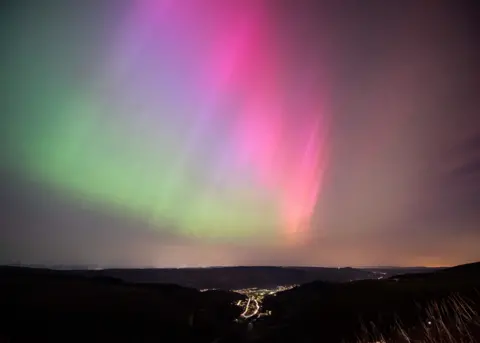
He captured some stunning images of the Northern Lights above the south Wales valleys last month.
But for his latest shots of amazing natural phenomenon, photographer Lee McGrath did not need to look up at the sky.
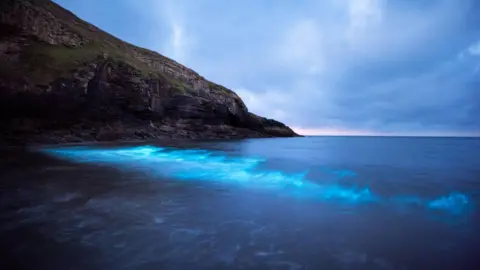
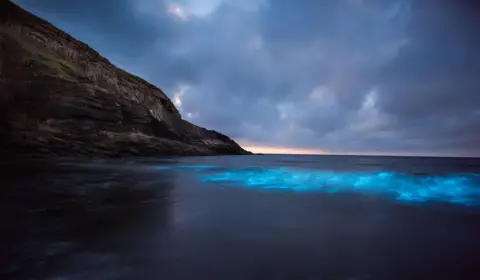
Instead he stared down at the waves lapping the shores of Dunraven Bay, Vale of Glamorgan, where bioluminescent plankton were lighting the water an incredible electric blue.
Captured in the early hours of Friday, it is thought to be the first sighting of this magical occurrence in Wales in 2024 and the kind of shot which features highly on every photographer’s bucket list.
“We are so lucky in Wales; a few steps outside our door and we can capture the Aurora, Milky Way and bioluminescent plankton,” Mr McGrath said.
“To be able to see all these natural phenomena in our own country is pretty special.
“In 2020, we were also able to witness Comet Neowise in Wales as well as noctilucent (or night-shining) clouds the very same evening.”
The light in his latest shots is an ethereal blue that flashes along the edge of a wave as is rolls into shore.
It is caused by bioluminescent plankton, tiny creatures floating in the sea that have the ability to emit light when disturbed by a predator or motion.
Aside from plankton, it is a trick also shared by the likes of certain squid and jellyfish species, as well as insects such as fireflies and glow-worms.
The result sees hordes of onlookers regularly flock to certain parts of the UK coast each year to witness it first hand during the night-time hours.
There are even numerous sites on social media where enthusiasts meet to share information with other plankton seekers about the best times and places in which to do so.
 Lee McGrath
“Me and a couple of other local photographers have been following the plankton for a few years and have built up a map of where previous sightings have taken place,” said Mr McGrath, an NHS worker from Bridgend.
“Then it’s all about putting in the time to place yourself in those locations and just hope you’ll be lucky.”
He added: “I spent four hours at Dunraven Bay because, from around midnight, I could see slight sparkles starting to appear in the waves.
“Then, from about three in the morning, it got stronger and I was able to capture a few images.
“We think the warm weather helps as it usually pops up around this time of year, but it can go as late as October sometimes.”
 Lee McGrath
Likening the experience to “meditation” and the kind of thing “that really puts life into perspective,” Mr McGrath warned others trying to get similar photos to be careful.
“Shooting at night can be tricky and you need to be aware of your surroundings,” he said.
“The tides can come in quicker than you think and it’s easy to get yourself into a bit of a situation.”
He added: “One other tip: keep torches to a minimum wherever possible, you will see more bioluminescence using less light.”


“If you want to take pictures, have a long lens”

Tucked away in northwest Edmonton, hived off by the Henday, the shoreline of a shallow natural lake sprawls eight kilometres at the beating wetland heart of Lois Hole Centennial Park.
Big Lake is bigger than ever this year, thanks to the province chipping in another 238 hectares in January 2024. That’s up from the 1,119 hectares of lake and wetlands designated Big Lake Natural Area in 1999, and Lois Hole Centennial Provincial Park (LHCPP), formed by the province in 2005 in honour of the late lieutenant-governor of Alberta.
Advertisement 2
Story continues below
This advertisement has not loaded yet, but your article continues below.
Article content
At-risk birds that hang out among the 235 species spotted at Big Lake include Sprague’s pipits, trumpeter and tundra swans, and peregrine falcons.
Among the pelicans, great blue herons, lesser yellowlegs and loons, the world-travelling Franklin’s gulls flock in annually by the thousands from Peru and Chile to create floating nests anchored in vegetation flourishing in the shallows.
A small mammalian universe, Big Lake hosts an impressive array from the large — lumbering moose — to the small — 13-striped ground squirrel.
Others in the marshy habitat range from white-tailed deer and beaver to red fox, snowshoe hare or the shy, fierce wolverine.
Coyotes can be seen frolicking there from nearby Ray Gibbon Drive, which is too often bloodied by moose strikes.
Big Lake is also the artistic home to prize-winning St. Albert photographer and artist Memory Roth, whose misty-tinged and grippingly detailed wildlife paintings are known for capturing infinite details in realism, like the sunset’s glow on a moose’s beard.
In 2006, a friend invited her to do an art class, and Roth found her niche in painting — oils, not acrylic, as she prefers the longer window for blending.

Travel Time
Article content
Advertisement 3
Story continues below
This advertisement has not loaded yet, but your article continues below.
Article content

Before he died, her husband urged her to pursue her artistic talents.
“I wasn’t sure if I would, but I did a series, and it just kind of grew up,” Roth said.
That led to recognition — awards and publications — particularly after she joined the Federation of Canadian Artists.
Roth recalled needing to find something new to do on quiet evenings.

A photographer friend introduced her to Big Lake, where she looks to capture the beautiful and the unusual — first with photo images, then with brushstrokes. Like the bristly bulk of “Porky,” the resident porcupine, perched up a tree like some prickly, oversized bird.
Her favourite Big Lake denizen? The ruddy duck, also known as Oxyura jamaicensis, is a smaller, stiff-tailed charmer with his own modus operandi for impressing females during mating season. His grey bill turns bright turquoise and he flirts aquatically.
“The male makes bubbles just below his chest to impress women,” Roth said.

Just four metres deep, Big Lake is part of the Sturgeon River chain that leads from Hoople Lake to the North Saskatchewan River.
Advertisement 4
Story continues below
This advertisement has not loaded yet, but your article continues below.
Article content
One of just three bird’s-foot deltas in Alberta, with long channels that branch outward like a bird’s foot, it’s numbered by Alberta Fish and Wildlife among the 20 most important habitat areas in the province.
Nomadic people’s sites as well as recovered stone tools and weapons show the lake was a prehistoric centre, perched on the sands and gravels of the glacier-born Empress Formation, an aquifer 100 feet below its surface.
The Big Lake Environment Support Society (BLESS) welcomed news of the lake’s growth.
“These additional lands will now be environmentally protected and only used for nature-based activities compatible with the conservation of this important wetland and bird habitat,” said Kevin Aschim, BLESS vice-president, in a media release.
The addition included a 90-acre parcel north of 137 Avenue and a parcel southwest of the intersection at Ray Gibbon Drive and LeClair Way. A parcel in the northwest corner of Edmonton’s Starling neighbourhood was also set aside for LHCPP.
A proposed realignment of nearby roadways is expected to protect the natural area.
Advertisement 5
Story continues below
This advertisement has not loaded yet, but your article continues below.
Article content
Memory Roth recalls a surprise encounter with a 1,200-pound male moose on the trail at Big Lake.
“I thought, ‘What do I do? Do I run? Do I lie down? What do I do?’” she said.
Another woman called out, “Are you OK?” and distracted the moose.
But then Roth responded “I’m OK, as long as he’s OK,” and he fixed his ire back on her. Then, thanks to the distraction from other hikers, she evaded a closer, more dangerous encounter.
She applies lessons learned about respecting the hulking herbivore that’s not an uncommon sight on the trails of Big Lake or the nearby Grey Nuns White Spruce Park, where she sometimes wanders for inspiration, with its four kilometres of trails, boardwalks, picnic shelters and viewpoints.

In a panic during mating or calving seasons, a stressed moose can build speeds to 60 kilometres per hour.
“You stay far away. If you want to take pictures, have a long lens,” Roth said.
“If you see they look agitated — the hair on the back of their neck and on their backs will start to stand up — or if they start snorting, if they start pawing, if they urinate, if they flatten their ears, it’s almost too late.
Advertisement 6
Story continues below
This advertisement has not loaded yet, but your article continues below.
Article content
“You have to respect the wildlife that you see, respect the boundaries that you need to keep, and if you get a great shot in those boundaries, great.”
Recommended from Editorial
Bookmark our website and support our journalism: Don’t miss the news you need to know — add EdmontonJournal.com and EdmontonSun.com to your bookmarks and sign up for our newsletters.
You can also support our journalism by becoming a digital subscriber. Subscribers gain unlimited access to The Edmonton Journal, Edmonton Sun, National Post and 13 other Canadian news sites. The Edmonton Journal | The Edmonton Sun
Article content

The British summer time, it has been said, consists of two fine days and a thunderstorm.
While this may be somewhat of an exaggeration, it can be said that we certainly never know what we’re going to get in the UK, however, that just makes us even more determined to enjoy the good days.
This summer the Print Sales Gallery at the Photographers’ Gallery in London’s Soho, will celebrate the romance and nostalgia of a British seaside summer with ‘By the Seaside’, which will run from June 28 to September 08.
From the glitzy heyday in the post-war decades, to 21st century staycations, seven UK-based photographers capture the British seaside in all its eccentric glory.
The Photographers’ Gallery was founded in 1971 as the first public gallery in the UK devoted solely to photography, and remains at the forefront of preserving and presenting photography in all its forms.
What is lesser known, is that the gallery is home to the Print Sales Gallery. All the photos exhibited in ‘By the Seaside’ will be available to purchase from £600 plus VAT. Profits from print sales support the Photographers’ Gallery public programme.


The great British summer holiday came into fashion in the post war years of the 1950s and 60s, largely thanks to the Holiday Pay Act of 1938. This granted paid holiday leave to working class employees, and was the first law on paid leave in the UK.
The result of a 20 year campaign by trade unions, the one week paid holiday fell short of the two weeks originally demanded.
Nonetheless, this was the start of a society changing movement in the UK, and people flocked to the its many, previously sleepy, coastal towns.
Where you went largely depended on where you lived. For example if you lived in the north near the mill towns, Manchester, Liverpool, or Glasgow, you would probably go to Blackpool or Morecambe. People from Leeds would set off for Scarborough or Filey, and Londoners would aim for Margate or Brighton.
This was also the golden age of all inclusive holiday camps, designed to give housewives a welcome rest, and provided endless entertainment for children.
Whether just for a day out or a week’s holiday, the seaside promised fun and escapism, and despite the allure of the Caribbean ocean, the pull of a stick of rock and a bucket and spade still fills many Brits with a friendly nostalgia.
If you want to capture some summer nostalgia this year why not try out some of the best film cameras around? You could also go back to basics with the best disposable cameras, or the best retro cameras.


Black-and-white photography is, technically, the oldest genre in the field, dating back to the inception of early photographic technology in the 19th Century. However, despite the advances in color film processing, the practice of eliminating colors has remained popular as a style choice, offering plenty of opportunities to experiment.
With the advantages of digital cameras, particularly the advent of dedicated cameras for black-and-white photography, monochrome shooters have adapted new techniques and ways of processing images – yet working solely with greyscale tonality remains a complex task. Black-and-white photographs have a timeless quality and offer a unique perspective on reality. Being limited to shades of grey only shifts the focus to the subject, and certain characteristics in the scene become more prominent.
I had a conversation with monochrome expert, Mostafa Nodeh, about his photography. His black-and-white work is exceptional, showcasing a preference for simplicity and deliberate avoidance of distractions, thus allowing for clear and impactful messaging.

Mostafa Nodeh is a self-taught artist and photographer living in Gilan, Iran. He is known for his minimalistic black-and-white landscape photographs, which are deeply rooted in themes, ideas and symbolism inspired by concept photography. Mostafa’s photography art invites viewers to take a break from the fast pace of modern life and has been featured in various publications, attracting a large international audience.
When we remove the color, we are compelled to explore the relationship between different image elements, which makes us discover different ways to show the subject. By doing so, we can deconstruct what the viewer expects, making it possible to define the form of expressing our subject through stronger elements of the scene.
Psychologically, different shades of grey and deep contrasts between black and white are captivating and create a connection that draws our attention to the subject. For this reason, many photographers use black-and-white to give importance to different connections in the photo and to evoke and strengthen emotions and atmosphere.

Unlike other forms of photography, such as surrealism, fine art and abstract, conceptual art photography is a style that relies on specific ideas to convey its message. This genre of photography uses all methods to communicate its intended message. The general product may resemble other forms
of photography, but the underlying idea is what defines conceptual art photography.
Focusing on a subject solely is not as easy as it sounds. It requires an eye for detail and time. For example, instead of taking several photos of different subjects, first try to spend a whole day or even longer photographing one subject only. Choose a tree and explore the subject. Shoot it from a wide angle, get close with a macro lens, shoot its leaves, and shoot it with a long lens.
Also, make use of different angles of the camera, and get creative in discovering compositions; the outcomes might surprise you and can be spectacular! Sometimes, all you have to do is move your camera slightly, whereas, on the other hand, some scenes benefit from a dramatic change of view.


In my opinion, a great monochrome photo is one that honestly portrays the true beauty of the subject. It’s the same when it comes to paintings. If you remove the colors, you should be able to see the subject’s beauty. The same principle applies to photographs. By not relying on color, you can truly appreciate the simplicity, splendor and majesty of the subject.
My advice is to never delete your photos, especially when you are in the early stages of photography. When you’ve spent some time improving the art of black-and-white photography, you can go back and analyze your older work. This will show you how far you’ve come as a photographer and give you a better idea of where you stand. You may also find that a photo you previously thought was useless or lacking in interest just needs a touch of professional editing to turn it around.

This month, I have a solo exhibition in a gallery in Toronto, Canada, under the management of Firouze Aghadashlou. I would like to thank Firouze Aziz for inviting me to Canada. After that, I will continue to spend my free time travelling and enjoying time in nature. I enjoy being outside and focusing on a goal and that is my photographic ambition.
This is my way to relax and escape from the real world. Landscapes in nature have always fascinated me because they are always changing. I can go back to a place and it will always be different from when I saw it last due to the time of day, year or weather conditions. I will continue to be a spectator in the great theatre of nature.

In addition to the best cameras for black and white photography in the digital realm, the best film cameras enable you to get truly back to basics with your mono photography.

Snow Bear, also known as Melanie Villeneuve of Vankleek Hill, has raised $109.85 for the Odawa Native Friendship Centre in Ottawa.
Villeneuve’s Kindness Market, where she sells Indigenous crafts from her Snow Bear’s Arts and Crafts Corner at various local events, aims to provide a compassionate boost to Indigenous, Inuit, and Métis communities.
The Kindness Market is organized with the assistance of the Creating Centre, Samme Putzel, Susie Fairbrother, and the Vankleek Hill Farmer’s Market.
This spring, Villeneuve, who is Métis and makes some of the crafts, set up the Kindness Market this spring at Refuge Les Chevaux d’Espoir horse refuge, an artisan market in Vankleek Hill, and the Vankleek Hill Farmer’s Market.









Comments