‘My flash kept blinding everyone on the dancefloor’: Elaine Constantine on capturing 90s northern soul all-nighters

‘My flash kept blinding everyone on the dancefloor’: Elaine Constantine on capturing 90s northern soul all-nighters

In 1993, Elaine Constantine was commissioned by the Face magazine to photograph a northern soul night at the 100 Club in London. “It was challenging, to say the least,” she recalls. “The place was really dark except for the illuminated signs for the exits and the toilets, and a few lamps above the record decks. The only way to photograph was with a flash, which kept blinding everyone on the dancefloor.”

Having recently moved to London from Manchester, Constantine had come of age on the northern soul scene a decade earlier, regularly attending all-nighters across the country as a teenager. At the 100 Club, she immediately noticed that the crowd was older and the records more obscure, but the dancers were as energetic and self-absorbed as ever. When she heard the familiar propulsive thump of Lester Tipton’s rare mid-60s record This Won’t Change, it proved irresistible. She put down her camera under a chair and took to the dancefloor, losing herself in the music until the dawn.

Now, just over 30 years later, the photographs Constantine took of the scene are being published in a book called I’m Com’un Home in the Morn’un, the title an insider’s nod to a northern soul classic from 1970 by the gravelly voiced Lou Pride. Shot in the 100 Club and also at the Ritz, Manchester, as well as various lesser-known venues across the country, it’s an intimate glimpse of a peculiarly British subculture that began in the 1960s and stubbornly refuses to die. Its roots lie in a predominantly working-class soul music scene that took hold in the industrial north and the Midlands following the demise of the mod movement.

By the early 1970s, at venues such as the Wigan Casino and the Twisted Wheel in Manchester, the defining stylistic aspects of northern soul had been established: loose athletic tops, wide trousers and skirts that facilitated often acrobatic dance moves. Out on the floor, the atmosphere was both communal and fiercely competitive, the more extravagant dancers executing high kicks, backflips and dizzying 360-degree spins to the up-tempo thrust of often obscure American soul 45s. For confidence and staying power, amphetamine was the stimulant of choice.

When Constantine initially revisited the music of her youth for the Face in the early 90s, she was “reluctant to be dragged back into the scene”, but over the next year or so, she kept photographing around Manchester, the Midlands and Yorkshire, while simultaneously establishing a reputation as a fashion photographer.

Constantine first picked up a camera as a teenager in her home town, Bury, where, encouraged by her mother, she attended an amateur photography workshop. There, one of the teachers showed her a copy of In Flagrante, the late Chris Killip’s celebrated photobook about working-class life in the north-east of England during the Thatcher years. “I was 19 and on the dole and that book changed my life,” she recalls. “I was stunned by the raw power of his images and remember thinking, maybe there is hope for me.”

All these years later, though, Constantine remains something of an outsider in terms of British photography culture. “I still don’t work like a traditional documentary photographer,” she says, cheerily. “I tend to go off on my own tangents, more for enjoyment than anything else.”

This may be why, at 58, I’m Com’un Home in the Morn’un is her debut photobook. It grew out of a talk she gave at the Martin Parr Foundation in Bristol in 2022. Parr, the veteran British photographer, recognising the cultural importance of the northern soul series, suggested she should do a book and an exhibition of the work (the book will be launched there in July).

skip past newsletter promotion

In the interim, her rekindled passion for the music of her youth led to her directing her first feature film: Northern Soul was released in 2014, and was nominated for a Bafta. It was a bruising, if ultimately rewarding, experience, she recalls. The film was denied a theatrical run at first, then became a social media cause celebre, with fans successfully pressurising their local cinemas to show it. It made the box office Top 10 on its first week of release and was an even bigger success on DVD. “Everyone in the industry thought it would be niche,” she says, “but there were queues around the block at every indie cinema that screened it.”

Like the film, Constantine’s new photobook is an ode to a subculture that endures against all the odds. “When I was shooting the scene in the 90s, it was dwindling.” she says. “There are still regular nights across the country where the regulars are mainly older, but there are also clubs in places like south London and Bristol, where it’s all youngsters on the dancefloor.”

She describes the song whose title she borrowed for her book as “a record that never dates”. For the faithful, old and young, the northern soul scene continues to cast a similar spell. Her images are a testament to the power of the music and those who have kept a passion for it through the generations.

Overcoming Technical Hurdles in Portrait Photography

Overcoming Technical Hurdles in Portrait Photography

Shooting in exotic locations presents unique challenges and opportunities for photographers. Capturing the essence of a place while managing technical difficulties and working with models requires skill, adaptability, and creative problem-solving.

Coming to you from Irene Rudynk, this insightful video takes you behind the scenes of a photoshoot at Bali’s Banana Waterfalls. Rudynk faced several challenges, including difficult lighting conditions and communication issues due to the loud waterfall. She opted for wider shots to showcase more of the location, pushing herself out of her comfort zone. The cloudy yet bright jungle setting created tricky lighting situations, with light coming only from above and quickly becoming unflattering. To simplify the shoot, Rudynk chose black bikinis for both models when they posed together, allowing the stunning backdrop to take center stage.

Rudynk shares valuable tips for capturing natural-looking shots in such environments. She instructed her models to move constantly but slowly, allowing her to snap multiple pictures and choose the best poses. For an intimate look, she directed the models to pretend they were whispering to each other while maintaining subtle pose changes. Rudynk emphasizes the importance of showing models the images on the camera’s back screen, helping them understand the composition and their appearance in the shot.

The video also discusses the technical aspects of photography in challenging conditions. Rudynk encountered exposure issues due to the stark contrast between dark and bright areas. She initially shot underexposed images, planning to brighten them in post-processing. However, she struggled to recover shadow detail, leading to an important lesson about camera settings. A fellow photographer pointed out that using the electronic shutter on her Canon EOS R5 resulted in 12-bit files instead of 14-bit, limiting her ability to recover shadow detail. This experience taught Rudynk to use full raw and mechanical shutter settings when shooting in high-contrast situations to maximize image information. Check out the video above for the full rundown from Rudynk.

If you would like to continue learning about the art of portraiture, be sure to check out our range of tutorials on the subject in the Fstoppers store.

Is the new Pixii Max the best option for color AND black-and-white photography?

Is the new Pixii Max the best option for color AND black-and-white photography?

We’re still awaiting the full specs of the new Pixii Max rangefinder camera, though it sounds like I hit the nail on the head when I wrote what I wanted to see from it

However, one confirmed spec got me thinking more about the system – and how it could be the one and only camera for photographers who want a true monochrome camera (Monochrom, if you’re a Leica user) that can also shoot color.

I’m not a very technical person, but getting a genuine monochrome image from a camera that also shoots color with a Bayer filter sensor hasn’t been ‘truly’ possible before – until Pixii did so with its Monochrome camera, which can also shoot color.

Well, now this technology has been further developed and integrated into its latest offering, with its new 24MP full-frame sensor. And it got me thinking: could this be the best all-in-one for those who want authentic monochrome images while also having the opportunity to shoot color?

Man in the hat – Shot on a Leica M-E with a 21mm lens (Image credit: Sebastian Oakley / Digital Camera World)

As a photographer who has been shooting exclusively in black-and-white for over a year, and someone who only shoots black-and-white film with my Leica M2, I can say there are times that I just want to shoot color and times when I want a true black-and-white experience – like shooting on the Leica M11 Monochrom.

But thanks to some clever tech, Pixii Camera has managed to merge the two in an exciting and possibly industry-leading way. Basically, Pixii explains that all camera sensors are born monochrome, and at the silicon level each sensor pixel-counts the intensity of light – basically “seeing” in shades of grey, before the Bayer filter is added to record color.

Because of this, Pixii managed to engineer the quantity of light that can hit a defined pixel on the sensor through the Bayer filter – enabling Pixii to recreate the response of the underlying monochrome sensor, which then produces a true 16-bit monochrome RAW DNG image. 

Willow tree – Shot on a Leica MP with Ilford HP5 (Image credit: Future)

It all  sounds like complete wizardry to me, but it would enable many photographers like myself that want true monochrome images, while also having the benefit of shooting color by simply sliding a slider within the camera app on your phone towards either Mono or Bayer (for color images)

Pixii also acknowledged that there is a slight trade-off for this magical sensor when you look at the FAQs on its website, and I’ve included the full Q&A below to help offer clarity: 

Q: “But I shall only be able to attain the ultimate performance with a monochrome-only sensor, right?!”

Pixii: Sure. All other things being equal, a non-Bayer sensor gives you that extra stop of sensitivity at the same gain level and a tad more resolution as well. Please consider also that the camera itself is only part of the equation and that, without equally performant lenses, this little bit of extra performance can easily be lost. You just need to decide whether the marginal performance increase justifies buying another dedicated B&W-only camera.”

Shot on the Leica M-A with Ilford HP5 (Image credit: Sebastian Oakley / Digital Camera World)

Maybe this is a bit of a marketing spin to make you invest your hard-earned cash into the Pixii system rather than blowing it all on a new Leica M11 Monochrom. But the Pixii Max does something that Leicas currently can’t: it takes true 16-bit RAW DNG monochrome images, while also shooting true color images at a moment’s notice.

I’d love to get my hands on one to fully test this theory of mine out, as I see it would mean I’m only carrying one camera round, rather than two if I want to shoot a day full of color and black-and-white. Yes, I can just change the color profile to Black and White on my Leica – but that’s not true monochrome!

So if anyone at Pixii Camera is reading this, or anyone who knows people at Pixii, then send them this article – I want to get my hands on a Max and see this awesome feature in the flesh!

You might be interested in the best cameras for black and white photography, or perhaps the best film cameras, or maybe even the best rangefinder cameras.

The Sunday Crossword Puzzle of Photographers is Here!

The Sunday Crossword Puzzle of Photographers is Here!
Spread the love

Here comes another puzzle to keep you somewhat busy this Sunday morning. Straight out of the oven, this one has a new underlying structure. Making these is harder than it looks, seriously! I hope you get as much enjoyment out of it as I did of making it.

The Phoblographer realizes that, as a publication, we don’t always have to be so serious. So, each weekend, we work to bring you a bit of fun in our Humor section and through our Crosswords. Inspired by some of the classic political cartoons and offerings of other publications, we’re tapping into some of the things that only photographers love to laugh about. And we’re turning those into cartoons and crossword puzzles that we think you’ll want to share with lots of the rest of your friends in the photo community. Yes, we believe and hope that you have friends in the photo world.

You can expect to see these cartoons once a week on Saturdays and crosswords every Sunday for as long as we keep doing this.

Most of all, however, we hope that they bring you joy, even for at least a little bit. Ideally, they’ll bring you joy in a way that you recognize. Sometimes, you may moan. At other times, you’ll probably roll your eyes. There’s nothing wrong with genuinely showing off a bit of a laugh or a smile.

Best DSLR cameras of 2024 for beginner photographers and experienced snappers

Best DSLR cameras of 2024 for beginner photographers and experienced snappers
ES Best

Photography is an art form, and one which we’ve arguably started to take a tad for granted.

Everyone has a camera in their pockets nowadays, and many of those cameras are halfway decent at taking pictures – but none are a patch on the industry standard. If you’re looking to take your picture-taking more seriously, you’ll want a DSLR. But where to start?

What does DSLR stand for?

DSLR stands for ‘Digital Single-Lens Reflex’, in reference to the camera’s form and operation.

DSLRs borrow their form and core aspects of their function from SLRs before them, film cameras which used a mirror to reflect the lens’ view upwards into a separate viewfinder pentaprism. The ‘D’ addition represents the replacement of analogue film with a light sensor – the type and fidelity of which can have dramatic impacts on the ‘feel’ of the pictures produced.

What should you look for in a DSLR?

Within the DSLR format, there are many variables to consider, like sensor type and size. But professional photographers have considerations beyond raw specs. “With regards to a DSLR, I always compare price, image quality and adaptability with lenses”, says Natasha Koziarska, a music and events photographer who has worked at gigs for the likes of Feeder, The Darkness and Shame. 

“I find that I often stick with a brand that I know well, as the image tones and camera interface are familiar to me. Also, it means I can use my old lenses in a new camera!” This is because DSLRs are camera bodies, which receive different lenses for different styles of shooting; brands have their own proprietary lens mount designs, which can make using lenses from other brands less than ideal – even with an appropriate adapter.

“A bonus for me too is its weight,” adds Koziarska, “and how easy it is to handle over time.” Gigging photographers will become intimately aware of the weight of their gear, and extensive shoots with heavier equipment can work to the detriment of both shoot and shooter.

End of an era

The DSLR camera is an indispensable tool, but is one that faces stiff competition from an ever-evolving medium. Some say it is nearing the end of its life cycle all of which link back to technological evolution. Newer mirrorless cameras are lighter, higher-fidelity and quicker to shoot with, while smartphone manufacturers have gotten better at squeezing high-fidelity sensors into minuscule dimensions.

But none of these make the DSLR any less practical than it is as a format – and certain models of DSLR remain the gold standard for professional digital photography.

What it does mean is that new DSLR releases are fewer and farther between, as manufacturers turn their attention to the possibilities of new formats and technologies.

Best DSLR cameras to buy at a glance

As such, many of the products on this round-up have spent a fair bit of time on the market, some having been in production for nearly a decade. That they remain competitive and sought-after cameras in today’s landscape speaks volumes about their quality and performance. But of this large and storied crop, which should you consider for your own photographic pursuits?

We’ve rounded up the best below to check out.

As far as price-accessible all-rounders are concerned, it is difficult to do much better than the Canon EOS 250D. It is a complete piece of kit, with a perfectly viable sensor and some impressive video-recording capabilities to boot.However, the best of the bunch is the Canon EOS 5D Mark IV. The 5D inarguably delivers the best for its money, being a lightweight DSLR with a smorgasbord of smart features, and inarguably brilliant hard- and software at its core.

Photographer returns to south Wales mines after 1980s strike

Photographer returns to south Wales mines after 1980s strike

5 hours ago

By Natalie Grice, BBC News

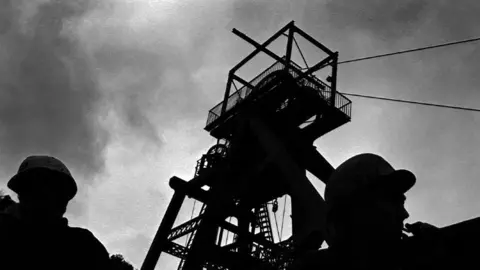
imageRoger Tiley Miners in silhouette at Celynen South before the strike had begunRoger Tiley

“I was planning to go and find a war or something when I finished my course. And in a way the war was on my doorstep.”

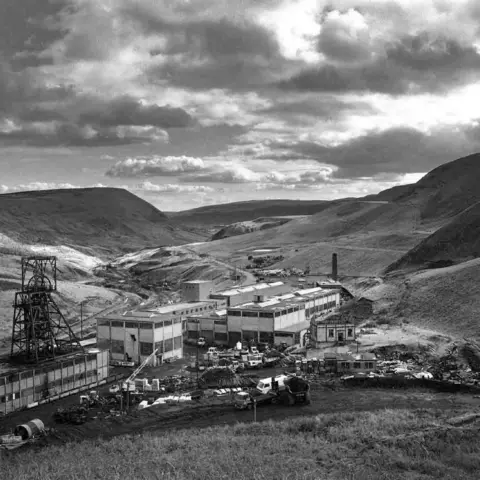
The “war” referred to by photographer Roger Tiley is the 1984-85 miners’ strike that began a few short months before he was due to finish his degree in Newport, and which altered the course of his emerging professional life.

It saw him roam the south Wales valleys, showing the mining community he had grown up in as it battled for its very existence, sending his photographs off to newspapers in London.

The year-long strike ended in defeat for the miners, and was followed by the rapid closure of the pits that had formed the backdrop to Roger’s life.

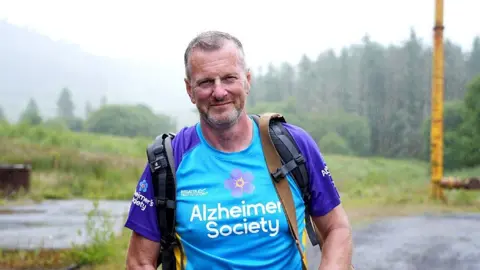
Now he has retraced his steps across the coalfield from the south-east Wales valleys where he grew up to his present home in the Swansea valley, to raise money for the Alzheimer’s Society and look at the transformation of the landscape in the intervening decades.

As a local boy, Roger had already spent some time taking pictures in the collieries in the year or so before the strike began, and this relationship allowed him access to communities which knew and trusted him.

“I’m originally from Cross Keys in the Gwent valleys and some of my friends went to work in the collieries,” he said.

imageRoger Tiley walking in an Alzheimer's Society t-shirt

“Jobs didn’t seem to be much of a problem in the 1970s. If you wanted to work, you could get a job in a factory, in the steel industry or in the collieries. Within 10 or 15 miles of me there were quite a few collieries still working, around about eight.

“The miners’ strike was very hard but I think I look back on it with fond memories in the fact that people were so good to me and so helpful.

“It’s a time that was desperate for a lot of mining families up in the valleys and I think what they were fighting for I believed in.

“I was very careful of where I turned the camera because I didn’t want anybody using the pictures in the way that I didn’t intend them to be used.”

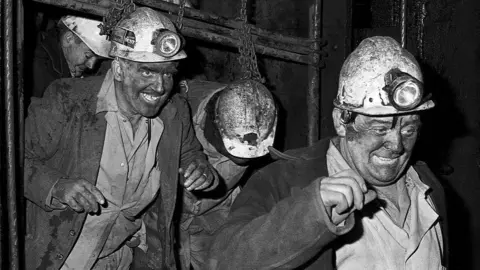
imageRoger Tiley Miners underground coming out of a liftRoger Tiley

In between taking photographs, Roger also got involved with helping support the miners and distributing food parcels, which he “really loved. I’m proud I had the opportunity to do that.”

One of the sites that holds particular resonance for him is Celynen South colliery near Abercarn in the Ebbw valley, where he first documented the working life of a colliery.

“That’s where I started taking pictures. I wrote to the manager and he said I could come up,” he explained.

“There’s two miners waiting to go underground and there’s a pithead wheel in the background and it’s a very graphic picture. Over the years it’s been used time and time again.”

Roger returned to the closed pit after the strike ended and he was commissioned to document the impact it had had on the valleys.

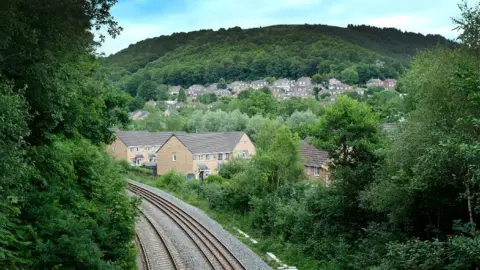
imageRoger Tiley Housing estate on the site of the former Celynen South collieryRoger Tiley

Roger returned to the closed pit after the strike ended and was commissioned to document the impact it had on the valleys.

“One of the first set of pictures that I took of the actual area, the landscape, was Celynen South. It was very sad. In those days they didn’t fence things off. They just demolished the pit and you could just walk on to it, which I did.

“Some of the buildings were demolished, the pithead wheel was there but some of the ropes they used for the cage had gone. It just looked really sad.”

“There’s a housing estate on the colliery site now. There isn’t anything really to mark that there was a pit there.

“In a way I suppose that’s positive; it isn’t wasteland any more. It was for a good few years, but now at least there’s houses on there providing homes for people.”

imageRoger Tiley Mardy colliery in 1985, with the pithead and other buildings in the forefront, and mountains behindRoger Tiley

The changes to the landscape vary widely across the former coalfields.

“Some have factory units on them, half-empty I would say. Mardy [colliery in Maerdy, Rhondda Cynon Taf] is one place where you could walk up there and unless you knew there was a colliery, you wouldn’t [be able to tell].

“There’s some concrete bases there from the buildings and there’s some tiles from the pit canteen that are still there, but youngsters wouldn’t really know that.”

Other places like Penrhiwceiber in the Cynon valley have become playing fields.

imageRoger Tiley Mardy colliery siteRoger Tiley

While he acknowledges the good in reusing sites, Roger laments the loss of so many jobs and the community they engendered.

“Each pit would have employed in the region of 1,000-plus men. If you multiply that by 30, 31 pits still working at the time of the strike, that’s a lot of men, and all the industries around it, suppliers etc.

“So you’re probably looking at 40,000-50,000 people employed in the south Wales coalfield, and that’s all gone.”

imageRoger Tiley Ray LawrenceRoger Tiley

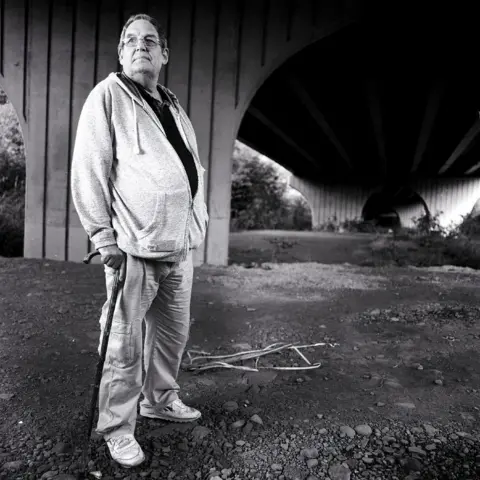
Ray Lawrence, NUM lodge secretary at Celynen South for 14 years, worked as an electrician for 25 years in the mine and joined Roger as he reached the pit on his six-day walk.

“It’s hard to imagine it now,” said Ray. “I’m looking around and it’s so peaceful. But 40 years ago there was a dirty great big hole in the ground there and every morning 500 or 600 men would disappear down there.

“The place was vibrant. There was the rattle of the trams, the whirr of the winder, everything was going on, it was alive,” he said.

“There was a fence where everyone would stop and have a cigarette when they came up or before they went down. It was a real, living experience.

“Mining is a difficult thing to explain. To people outside of it, they think it’s a dirty, horrible job, which it was, but the camaraderie made up for that and it’s hard to let it go. You talk to men 40 years after and the majority of them say ‘I’d go back tomorrow if I could’.”

imageRoger Tiley Zip World Tower with the old pit head winding gear seen through the windowRoger Tiley

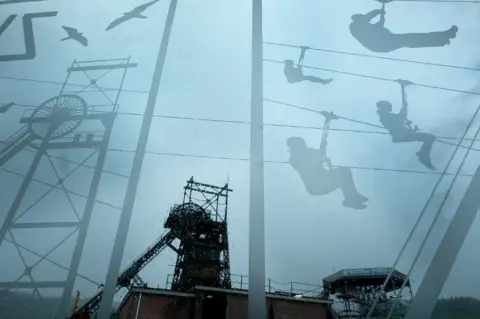
Liam Willetts is the marketing co-ordinator for Zip World Tower, a high-adrenaline activity complex on the site of the old Tower colliery near Hirwaun, Rhondda Cynon Taf, and one of the stopping points on Roger’s walk.

Tower was a rare success story post-strike, as its workforce banded together and bought it in 1994, keeping it operational until 2008 when it became the last deep coalmine in the UK to close.

Zip World opened zip lines and other attractions on the redeveloped land in 2021, but Liam said its mining past was central to the site.

imageLiam Willetts standing in the equipment room at Zip World Tower

Liam said: “The staff talk to all the customers, tell them the history of the site, and everyone’s really interested, especially the locals.

“It’s great to see that it’s been preserved in some sense as well. I think that was carefully thought through when building this site as a Zip World attraction.

“We’ve got some stories and newspaper cutouts that people like to look at. A huge part of the attraction is the history and the heritage.”

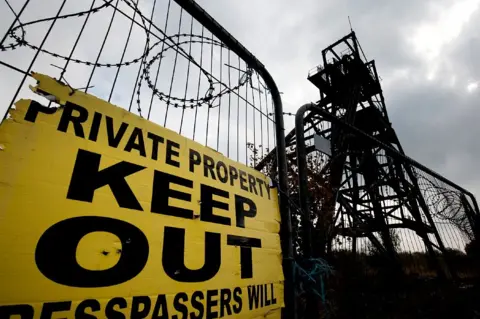
imageRoger Tiley Mine winding gear with a keep out sign, fencing and barbed wire in front of itRoger Tiley
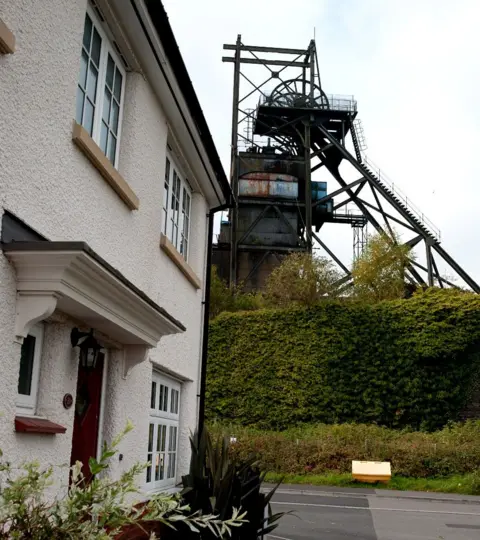
imageRoper Tiley House near the winding gear at the former Penallta collieryRoper Tiley

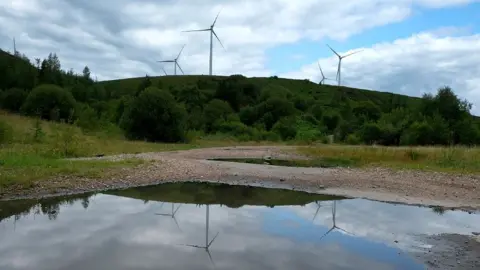
The landscapes of the coalfields have changed enormously, sometimes beyond all recognition. Nature has reclaimed many, and the environmental impact in climate terms cannot be doubted.

Roger acknowledges this: “The valleys are very green now. I live in Ystradgynlais and it’s a stunning place. There’s people from outside coming in to live, it’s a pretty, much sought-after area.

“The old coal [railway] lines are being used for people commuting to Cardiff, Newport and Bristol.

“So they’ve changed. For the better? I don’t know. I grew up in the 60s and I played on the coal tips, so that’s what I love.

“But then you walk outside and there’s these beautiful walks on the mountains and everything is green and lush. It’s a difficult argument.”

The big picture: Louis Stettner on commuters in 1950s New York

The big picture: Louis Stettner on commuters in 1950s New York
image

The ability to manipulate a broadsheet newspaper on a crowded commuter train is one of those skills, like full attention and mental arithmetic, mostly lost to our digital world. Louis Stettner’s photographs from the 1950s are fascinated by these images of a New York newsprint world, the ways in which ordinary Americans demanded information morning and night, as if they had a feeling that might soon be going out of style.

Many of Stettner’s pictures of that period were taken at Penn station. They contrasted with an earlier series of portraits taken on the New York subway. There, subjects had looked his camera squarely in the eye. Here, his people are mostly in worlds of their own; he liked scenes from “the smoke, fumes, the bustle” of the city, in which there were “still moments or stray corners that have sometimes touched eternity”.

This image is included in a full retrospective monograph of Stettner’s long life and career (he died in 2016, aged 93). The collection traces the ways in which he developed a profound kind of empathy. Much of this, he later suggested, dated back to being a combat photographer during the second world war, an experience that gave him a deep sense of connection with “my fellow countrymen – fishermen, industrial workers, storekeepers – whom I had previously only brushed up against in Times Square”. Stettner was among those artists who took advantage of the GI bill to be based in Paris, where he befriended celebrated photographers, including Brassaï, and his work subsequently became an important link between French and American street portraiture. You can feel him experimenting with some of that Parisian spirit in these pictures from the 50s: in his interest in a society, rather than the individual, and in a quiet love of the quotidian, of people going about their routines, alone together.

Acclaimed local photographer Dan Jordan announces August display at Olean Library

Acclaimed local photographer Dan Jordan announces August display at Olean Library

Don’t miss the reception on August 2 to kick off the residency

From Dan Jordan,

The Olean Public Library will host an exhibition of my wildlife images during the month of August 2024. Almost all of the images were captured in 2024, so have never been exhibited before. There will be a reception on August 2 at 4 PM with refreshments served. At the reception, you can meet the artist (that’s me!) and ask any questions you may have about my display or my methods for capturing compelling wildlife photos.

I am presenting my images differently from past exhibitions. I will have clusters of photos of a common theme. As of now, I am planning on having 10 different clusters of images on display. There will be as many images on display as the ‘walls will hold’!

2024 has been a banner year for wildlife photography. My collection of images reflects that.

I hope you can attend the reception or visit the library any day during August to view my images. If you are coming from out of town specifically to see the exhibition, call the library to make sure that the exhibition room is not going to be occupied, they sometimes host meetings in that room. (716.372.0200)

I look forward to seeing you there!

Need2Know: Darnell Renee Photography opens studio in Prescott; NOAH Thrift Store in Prescott celebrates 25 years; Recovery Electric opens in Prescott Valley

Need2Know: Darnell Renee Photography opens studio in Prescott; NOAH Thrift Store in Prescott celebrates 25 years; Recovery Electric opens in Prescott Valley
image

Darnell Renee Photography opens studio in Prescott

Darnell Renee Photography cut the ribbon on its new studio at 110 S. Montezuma St., Suite H, in the Hotel St. Michael building in Prescott in June.

This page requires Javascript.

Javascript is required for you to be able to read premium content. Please enable it in your browser settings.

Why One Great Shot Is Better Than Hundreds in Landscape Photography |

Why One Great Shot Is Better Than Hundreds in Landscape Photography |

In landscape photography, there’s often a misconception that success is measured by the number of great shots captured in a single outing. However, this mindset can be limiting and lead to burnout for many. Sometimes, the true reward comes from capturing just one exceptional shot. Focusing on quality over quantity not only enhances your craft but also deepens your connection with the landscape. Here’s why and how to embrace this approach.

The Pressure of Multiple Shots

Modern digital photography makes it easy to take numerous photos in one session, potentially leading to:

  • Burnout: Constantly striving for multiple perfect shots can be exhausting.
  • Shallow Engagement: Rapid shooting can prevent a deep understanding of the landscape.
  • Overwhelmed in Post-Processing: Sorting through many images is time-consuming and can detract from the creative process.

The Joy of One Good Shot

Focusing on capturing one exceptional image can change your approach to photography today and long into the future:

  • Increased Focus and Patience: When aiming for just one good shot, you become more focused and patient. You spend more time observing the landscape, studying the light, and considering your composition, leading to more thoughtful and stronger images.

  • Mindful Observation: Instead of rushing to capture every potential scene, you slow down and observe more mindfully. You notice subtle changes in light, weather, and atmosphere that might have gone unnoticed in a hurried shoot.

  • Creative Fulfillment: There’s a unique satisfaction from knowing you have captured a moment perfectly. One well-executed shot that tells a story or evokes a strong emotion can be more rewarding than a hundred mediocre ones.

Case Study: Old Walls and Trees on a Hillside

Imagine exploring an undulating hillside with old stone walls intersecting at various points, creating a natural grid. At one such intersection, you spot two trees, perfectly placed to create a balanced composition. You decide to focus on capturing this scene.

You set up your tripod and compose your shot. The light is constantly changing as clouds move across the sky, casting shadows and beams of sunlight intermittently. Instead of trying to capture every variation, you choose to wait for the perfect moment when the light will highlight the trees and the walls, adding depth and contrast to the scene. This exact thing happened to me recently, and I was glad I was able to switch gears and focus on getting just one shot from the outing.

Techniques for Capturing One Good Shot

  1. Scout and Plan: Spend time scouting your location. Understand the best vantage points and plan your shoot around optimal lighting conditions. Arrive early and stay late for unique lighting opportunities.

  2. Use a Tripod: A tripod stabilizes your camera, allowing for precise compositions and long exposures. It also forces you to slow down and consider your shot more carefully. Once you have your composition locked in, you know you won’t have to reframe it again until that precise moment happens.

  3. Observe the Light: Light is the most critical element in landscape photography. Watch how it changes and interacts with the landscape. Be ready to capture the moment when the light is just right. There will no doubt be many near misses, and this is something you need to consider, but I suggest even taking these near-miss shots, as you never know if the light will return after all.

  4. Compose Thoughtfully: Pay attention to the composition. Use the rule of thirds, leading lines, and natural frames to create a balanced and engaging image. Once you have this done, it’s time to fine-tune and look for any elements that are intersecting or need to be removed from the scene.

  5. Be Patient: Patience is key. Good light and perfect moments don’t happen on demand. Be willing to wait and observe. At times, you may feel like giving up on your mission, but with practice, you will get the rewards.

  6. Shoot in raw: Shooting in raw format provides more flexibility in post-processing, allowing you to recover details from shadows and highlights and adjust the image without loss of quality. So check those settings are in place as you don’t want to get home and realize that you shot in JPEG.

  7. High-Speed Continuous Mode: For dynamic scenes where the light changes rapidly, using high-speed continuous mode can help you capture the perfect moment without missing it.

The Reward of Waiting

In our example, you patiently wait for the right moment when a beam of sunlight breaks through the clouds, illuminating the two trees and casting shadows that highlight the texture of the stone walls. This moment transforms the scene, adding depth and contrast that weren’t there before. You capture the shot, knowing you’ve created something special.

At its core, landscape photography is about capturing the essence of the natural world. It’s about being present, observing, and connecting with the environment. When you focus on getting one good shot, you’re forced to engage more deeply with the landscape, becoming attuned to its rhythms, light, and mood.

This approach not only leads to better photographs but also enriches your experience as a photographer. It reminds you why you fell in love with landscape photography in the first place – the joy of being in nature, the thrill of chasing the perfect shot, and the satisfaction of capturing a moment that resonates.

Conclusion

In landscape photography, sometimes less is more. Focusing on capturing one good shot can be more rewarding than trying to take multiple average ones. It encourages patience, mindful observation, and a deeper connection with the landscape. By embracing this approach, you’ll not only improve the quality of your photographs but also find greater fulfillment in your photography journey.

Remember, the goal is not to fill your memory card with countless images but to capture a moment that tells a story, evokes emotion, and showcases the beauty of the natural world. So next time you head out with your camera, slow down, observe, and aim for that one perfect shot. It might just be the most rewarding image you ever capture.

Have you tried this approach, and it failed or worked? Or perhaps you are a run-and-gun photographer who can’t be bothered with this waiting game? Let’s continue the conversation in the comments below.