Williamsport, Pa. — The Gallery at Penn College is opening the new year with an intriguing exhibit of kinetic sculptures and automata made from found and thrifted objects.
Penn College Gallery showcases unusual clockwork sculptures


Renowned British actor Ben Whishaw is set to embody the late photographer Peter Hujar in an upcoming cinematic venture helmed by American director Ira Sachs, according to reports from Deadline.
Peter Hujar, whose legacy endures through his evocative photography, succumbed to Aids-related complications in 1987. An influential figure in Downtown Manhattan’s artistic milieu, Hujar carved his niche capturing candid and poignant portraits of the city’s cultural vanguard during the 1960s and 70s. His monochrome masterpieces featuring Fran Lebowitz, Susan Sontag, and Vince Aletti remain iconic representations of that era.
Despite receiving modest recognition during his lifetime, Hujar is now acknowledged as a pivotal creative force of the 20th century. His associations with luminaries like Robert Mapplethorpe, Andy Warhol, and David Wojnarowicz further solidified his status in the annals of that transformative period. Institutions worldwide, including the Art Institute of Chicago, the Tate Modern in London, and the Morgan Library & Museum in New York, house his significant body of work.
Whishaw, known for his role as Q in recent James Bond films, previously collaborated with Sachs on the acclaimed film Passages, which has been generating awards buzz. The actor, adorned with numerous Bafta, Golden Globe, and Emmy accolades for his screen performances, described the untitled Hujar movie as a “very small, very intimate little film” during a conversation with Deadline. Production is slated to commence after Whishaw wraps up work on the Netflix six-part thriller, Black Dove. Stella Schnabel, daughter of artist Julian Schnabel, will join Whishaw in the cast, though her role remains undisclosed.
Peter Hujar, born on October 11, 1934, in Trenton, New Jersey, was a visionary photographer whose lens chronicled the vibrant and avant-garde arts scene of Downtown Manhattan. His journey into photography saw him becoming a leading figure in the 1960s and 70s, capturing the essence of cultural luminaries like Fran Lebowitz, Susan Sontag, and Vince Aletti.
Hujar’s monochrome portraits, known for their tenderness and candidness, have endured as iconic images of an era that embraced artistic experimentation and cultural evolution. Despite receiving modest recognition during his lifetime, his posthumous acclaim has solidified him as a major creative force of the 20th century.
Apart from his contributions to the arts, Hujar’s personal relationships with influential figures like Robert Mapplethorpe, Andy Warhol, and David Wojnarowicz added layers to his legacy. His work, now held in prestigious institutions worldwide, reflects an intimate connection with his subjects and an innate ability to capture the spirit of his time.
Peter Hujar’s profound impact on the world of photography continues to be celebrated, and his photographs serve as a testament to the enduring power of visual storytelling.
Ben Whishaw born on October 14, 1980, in Clifton, Bedfordshire is a highly acclaimed British actor renowned for his versatility and compelling performances. His journey into the world of acting began at the Royal Academy of Dramatic Art (RADA), where he honed his craft and laid the foundation for a remarkable career.
Whishaw’s breakthrough came with his role in the critically acclaimed film “Perfume: The Story of a Murderer” (2006), where he showcased his ability to inhabit complex characters. He gained widespread recognition for his portrayal of John Keats in the romantic drama “Bright Star” (2009), earning him nominations for various awards.
The actor’s remarkable talent extends across stage and screen. His portrayal of Q in the James Bond film series, starting with “Skyfall” (2012), has left an indelible mark on popular culture. Whishaw’s work in television, including the series “Criminal Justice” (2008) and “A Very English Scandal” (2018), has garnered critical acclaim and accolades.
Beyond his acting prowess, Ben Whishaw is known for his distinctive voice, lending it to beloved characters such as Paddington Bear in the “Paddington” film series.
With numerous awards, including a BAFTA, a Golden Globe, and an Emmy, Whishaw continues to captivate audiences with his nuanced performances and remains a prominent figure in the realm of contemporary British acting.
Photo: Dulce Osuna Creative Commons Attribution 3.0
Read More
Visit
Ben Whishaw, Ira Sachs film, Photographer Peter Hujar

Dodging and burning, a technique widely used by portrait photographers, is also highly effective in landscape work. This technique, traditionally associated with Photoshop, can significantly alter the visual impact of an image. However, many photographers may not realize that this method can also be done in Lightroom, and this excellent video tutorial will show you how to do just that.
Coming to you from Christian Möhrle – The Phlog Photography, this helpful video tutorial will show you how to dodge and burn landscape images using Lightroom. First, Möhrle demonstrates how to alter the Adobe standard profile to control contrast, adjust exposure for detailing, and modify highlights, whites, shadows, and blacks to achieve a balanced base image. This initial step is crucial as it lays the foundation for more focused editing. The tutorial then proceeds to explain how to selectively enhance specific areas of an image, such as making the blue sky darker or brightening the highlights in the foreground. This targeted approach, using Lightroom’s masking panel, allows for precise adjustments, ensuring that only the intended areas are affected. The use of range masks – color, luminance, and depth – is particularly emphasized, as these can be used to target specific tones or colors within a photograph.
This technique allows for a more nuanced and dynamic approach to editing, enabling photographers to draw attention to key elements of their images. After all, there’s a reason dodging and burning is one of the oldest and most trusted techniques in the craft. Check out the video above for the full rundown from Möhrle.
And if you really want to dive into landscape photography, check out our latest tutorial, “Photographing the World: Japan With Elia Locardi!”


Copyright 2024 BBC. All rights reserved. The BBC is not responsible for the content of external sites. Read about our approach to external linking.
Beta Terms By using the Beta Site, you agree that such use is at your own risk and you know that the Beta Site may include known or unknown bugs or errors, that we have no obligation to make this Beta Site available with or without charge for any period of time, nor to make it available at all, and that nothing in these Beta Terms or your use of the Beta Site creates any employment relationship between you and us. The Beta Site is provided on an “as is” and “as available” basis and we make no warranty to you of any kind, express or implied.
In case of conflict between these Beta Terms and the BBC Terms of Use these Beta Terms shall prevail.

Taking decent photographs has never been easier – but to advance your own creativity you will need to think more about the aperture, ISO and shutter speed. There are many variables to consider; the subject, the lighting and the desired effect. For scenics, mounting the camera on a tripod will enable a small lens aperture to give lots of front-to-back sharpness while for moving subjects, a fast shutter will stop any movement. But there are no rules.
Here are seven situations where being deliberate with your shutter speed can pay off with better photos…


Go for a high shutter speed of 1/1,000 sec or faster to get a pin-sharp bird and completely frozen movement in the wings. Alternatively use a slower shutter in tandem with panning the bird’s movement so that it is recognisably sharp but with blurred wings against a smooth background. Both techniques work, so it just depends on the effect you want to achieve.


Fast shutter speeds, wide lens apertures and high ISO settings will let you capture sharp shots of many rides, but it’s more fun to get creative with longer shutter speeds. With the latest in-body image stabilizers, it is possible to get acceptably sharp handheld exposures at one or even two seconds, so if you have an IBIS-equipped camera then try tripod-free shooting.


There are two schools of thought here: some people prefer moving water to be blurred, smooth and milky, while others like it sharp, crisp and full of detail. There is no right or wrong, it’s just a matter of taste. The shutter speed you require will depend on the desired effect as well as the water’s flow rate. A fast-flowing stream might blur pleasingly with an exposure of just a few seconds.


Splashing water, just like flowing water, can be depicted in different ways depending on the shutter speed. A fast shutter will ‘freeze’ every droplet and, for this, you will need 1/1,000 sec or more. In flat light, you may need a faster ISO and a wider aperture to enable this. In sunlight, the problem could then be the contrast that might not be recoverable, even from raw files.


Capturing sky movement needs a good tripod and a sky with cloud detail. You’ll also need a strong ND filter to enable ultra-long exposures without overexposure. A 10-stop ND is a good start but better still, a 15-stop ND. If the speed required is 1/125 sec for a normal exposure, using a 10-stop ND takes this down to eight seconds, while a 15-stop ND will allow a four-minute exposure.


In action photography, sharpness is the priority so fast shutter speeds are essential. The faster the action, the faster the shutter speed you need, but there are other factors to consider. With cricket, football and swimming, speeds of 1/2,000 sec or 1/4,000 sec are best, while for motorsports, cycling and aviation, a fast shutter speed works against you, with the results looking static.


Photograph jet planes, and their high speed demands a fast shutter. Propeller planes are less rapid so you can get away with slower speeds, but there is another reason why fast shutter speeds work less well. Shoot a plane at 1/1,000 sec and the propeller can look almost static, so you’ll get more appealing results if you drop down to a shutter speed in the region of 1/200-1/320 sec.

Take a look at our shutter speed cheat sheet, and take a look at the best cameras for wildlife photography, the best lenses for bird photography, and the best cameras for sports photography and best lenses for sports photography.


Stephen Leslie has an occasional YouTube channel on which he talks about photographs he likes – some his own, some by photographers he admires. In one recent episode he featured this picture, which he took on Oxford Street in London in February 2018. The theme of that YouTube chat was the idea of anemoia, a niche form of nostalgia that prompts a yearning for a historical time and place that you have never actually experienced. Photographs can be perfect anemoia triggers, and this one works by layering retro longing from several different eras.
The snow sharpens those emotional cues, of course. But it is the combination of the self-consciously vintage HMV sign – with all its vinyl associations – and the bowler-hatted man at the kerbside (a now redundant Oxford Street “greeter”) that properly opens up those possibilities. Leslie came upon the surprise of the scene when he emerged from the underground – it hadn’t been snowing at all when he boarded the train; all its constituent parts were waiting for him in the make-believe of Oxford Street, a gift from real life.
Looking back at the picture – which is included in a terrific, off-beam new collection of the photographer’s work, Mostly False Reports – Leslie retells the story of His Master’s Voice, the name itself sentimental shorthand for communing with the ghosts of the past, which made it such an evocative piece of branding. By 2018, the famous Victorian picture of the fox terrier Nipper cocking an ear to his late owner’s voice on a gramophone had gone through many different neon renderings on the famous storefront, once the biggest record shop in the world. That this one, which itself referenced a 1920s version, was boarded over not long after this picture was taken – by the garishly ubiquitous American House of Candy – gives it an added poignancy; anemoia squared.


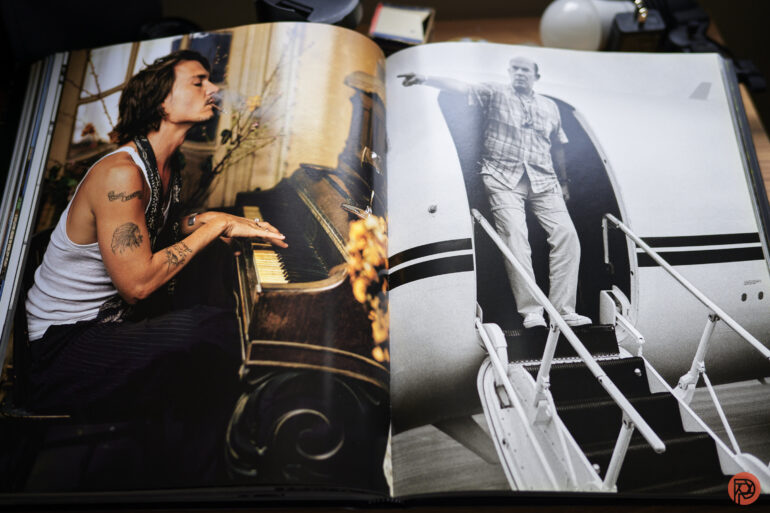
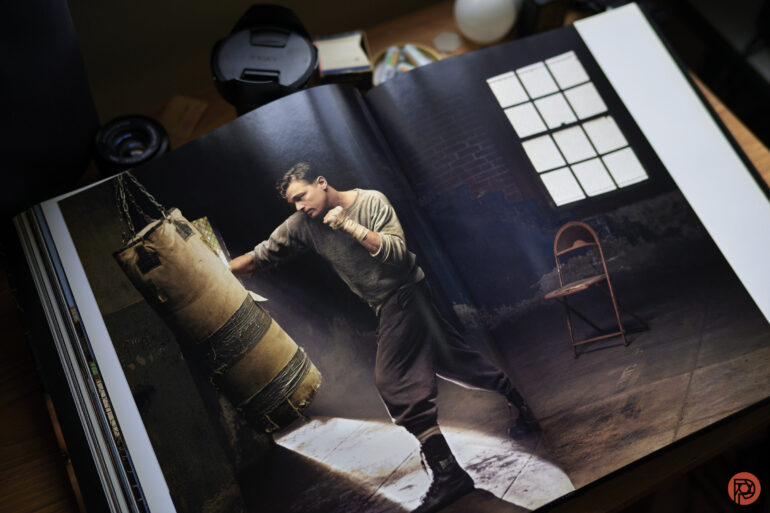
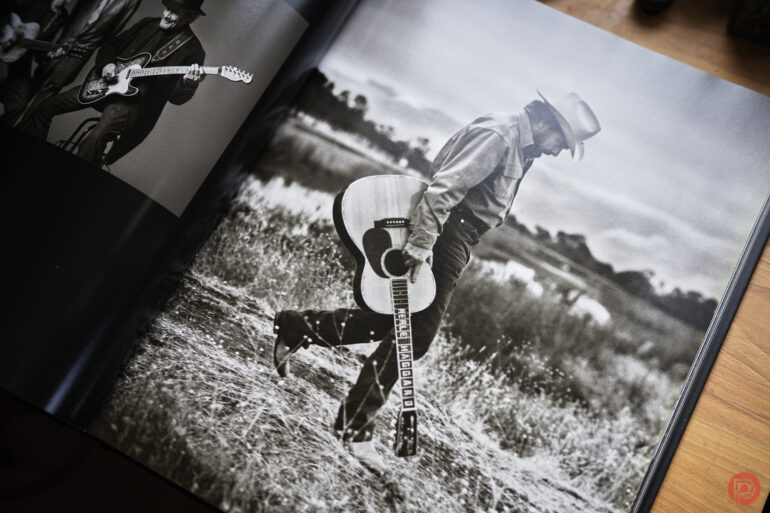
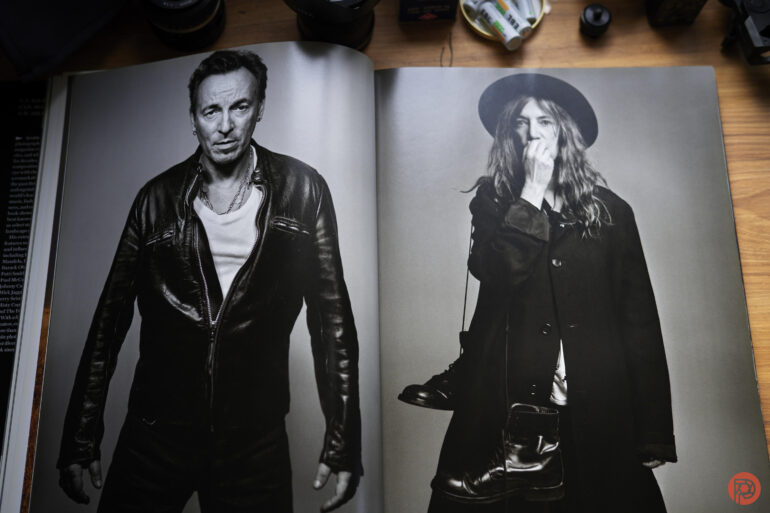
I’m obsessed with the idea of printed photo books. If someone were to look at my while I peer at them, they’d notice the fascination in my face — synonamous to the way a dog looks at a bone. And it’s only now that I’ve had some time to look at Mark Seliger Photographs, a book by the famous photographer compiling a ton of images that he’s done throughout his career. But unlike other photo books, these aren’t just any photographs — they’re Mark Seliger’s. He’s not just any photographer, he’s a master that’s incredibly capable and who is bound to be one of those regularly studied and taught in educational academies. Lots of YouTubers don’t talk about him because they just don’t get it; but they all acknowledge how gorgeous his images are.

Mark signed my copy years ago, and even gave me a bit of heat when I asked him a challenging question after he gave a talk. Later on, he apologized to me about it — more or less explaining that it’s basically just marketing. And I get that — it’s a sign of an artist from a very specific time period. Demeanors like that don’t really work with every audience of every age, and only time and therapy will tell to see how that works as a strategy. Even though the demeanor might not work, the photographs do.
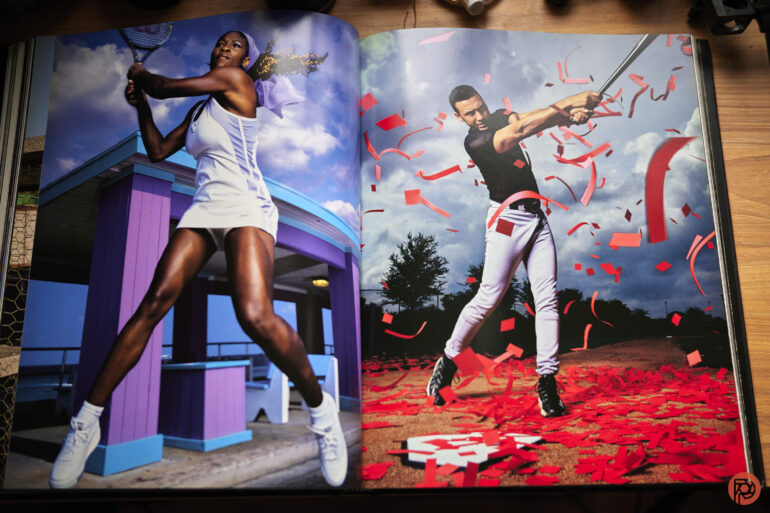
Mark Seliger Photographs is a combination of beautiful photographs that you want to stare at endlessly and images that are ultimately ruined by pagination issues. When the pagination is perfect, each and every photo will be worth the breath that they take away from you. When the pagination utterly ruins the images, you’ll feel like saying “well, at least you tried,” while still acknowledging that the images are stunning. Seriously, why do some images need to be split down the book fold instead of giving them a dedicated page? Despite this, the photographs are so beautifully selected and made to look great with the paper that it’s forgivable. Oh yeah, and there’s a short interview with him posed in Q+A format very simply to start in the beginning of the book. But after that, this is through and through a picture book.
The images are in both black and white. To view them best, we recommend paging through the book while illuminating it with window light. Prop the book up a few inches to make the light diffused as much as possible. The pages have a slight sheen on them and will surely have issues with reflections. So you’ll need to mitigate that. I also really recommend standing up while paging through it depending on how high your table is. Ultimately, the book should be around waist height so that you can take in in the images fully for what they are.
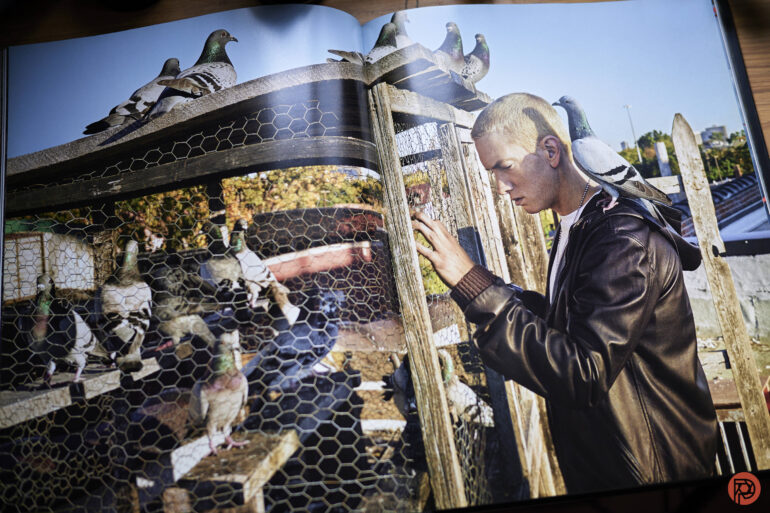
We’re here mostly to talk about the photographs. Throughout Mark Seliger Photographs, you’ll find images of the various celebrities that he’s photographed over the years. Some are still with us, while others aren’t. Many are easily recognizable. The book has a combination of black and white images along with vivid, sumptuous full-color photographs. If these were in a museum, you wouldn’t be able to touch them. But because they’re in a photo book, it’s easy to touch and feel the prints. They all feel the same, and the quality of the print itself has nothing very special vs something made in perhaps a darkroom or somewhere else. But the images are worth peering over for hours and hours.
Of course, he work has influenced that of many photographers. One of which is the one behind the Living Heroes project that we featured a while back.
Any photographer that wants to get into portraiture and doesn’t want to have the same look that everyone else does on Instagram should pick up this book. Technically speaking, they’re worth looking at the light and how seamless and natural it all looks. Artistically speaking, there are lots of moments that are worth celebrating. Both sides of your brain will come out of this experience well nourished.
You can pick this book up on Amazon. We’re giving it five out of five stars despite the issues we have with pagination.