
Getting intimate … Close-Up Photographer of the Year winners


Editor’s Note: Call to Earth is a CNN editorial series committed to reporting on the environmental challenges facing our planet, together with the solutions. Rolex’s Perpetual Planet initiative has partnered with CNN to drive awareness and education around key sustainability issues and to inspire positive action.
Mesmerizing photos of ants firing acid, a shrimp floating over a rainbow-colored mosaic sea star, and a butterfly peering in at a wedding party are among the winning images of the Close-up Photographer of the Year 2023 competition.
The contest, in its fifth year, celebrates micro and macro photography, striving to show the hidden wonders of the natural world, from microscopic fungi to majestic animals. Micro is the term used for taking photos of tiny subjects that require magnification, while macro involves capturing close-up images of larger subjects.
Tracy Calder, co-founder of the competition and jury member, told CNN how the photos reveal unusual interactions between animals and plants, demonstrating how everything in the natural world is interconnected and interdependent. It “celebrates animals and behavior that people have never seen or encountered before,” she said.
This year’s grand prize went to Hungarian photographer Csaba Daróczi, for his black and white image of a Eurasian nuthatch soaring through a forest. Taken with a GoPro from inside a hollowed-out tree stump, the striking image offers a new perspective of the bird against the backdrop of outstretched trees.
The title of young close-up photographer of the year went to 17-year-old Spaniard Carlos Pérez Naval for his image of a Moorish gecko on a wall covered with pyrolusite crystals. “These magnesium minerals create stunning formations, which look just like petrified trees, but they are so small that they’re tricky to spot,” he said in a press release.

“I wanted to capture a gecko in the ‘petrified forest’ for a long time, but they only recently appeared in my village – probably carried in fruit baskets from hotter areas. Due to climate change they can now survive here,” he added.
The jury – made up of 23 photographers, scientists and naturalists – chose the winning photos for each category from a total of 12,000 entries from 67 countries. Many were taken in areas local to the photographers, showing the beauty of what can be seen in your own backyard, said Calder.
She, along with her husband Daniel, founded the competition in 2018. Both are professional photographers. While many other photo awards feature close-up categories, they believed there was a need for an entire competition dedicated to macro and micro photography.
“It’s often easier for people to get behind conservation stories featuring ‘cute’ or more obvious animals and plants: rhinos, pandas, orchids. But the lesser-known insects and plants we often consider weeds have a huge role to play in keeping everything balanced. Close-up photography often showcases these animals and plants,” she said.
“There’s also a joy in showing people things they wouldn’t be able to see without a macro lens or microscope. Many of the creatures and plants we show are all around us but are never noticed. The competition is a way for them to be noticed,” she added.


First shared as an online gallery in 2020, Deaf Mosaic seeks to capture Deaf people from “all walks of life”, with Iliffe stressing the “vital message” that “with the right support, deaf people can do anything”.
42 portraits will appear at UCLH, as part of a collaboration supported by the NHS Trust’s arts and heritage team, who cite a “substantial body of evidence” that art displayed in hospitals has a positive impact on the health and wellbeing of staff, patients and visitors.
Iliffe, a user of UCLH audiology services for 35 years, said: “When I was growing up, it often felt as if I was the only deaf person in the world. The audiology staff were great but after my appointment I’d go straight back to the outside world with all its prejudices and barriers.
“I didn’t have any deaf adult role models for what I might aspire to when I grew up.
“I want today’s generation of deaf children and adults to have earlier access to positive role models – such as the architect Martin Glover or scientist Tamara Denner – and to feel that they too have the right to their own dreams and to be supported to achieve those.”
Other deaf individuals featured include TV chef Scott “Punk Chef” Garthwaite, Edinburgh Fringe performer Rinkoo Barpaga and actress and author Samantha Baines.
Baines, who was told she had hearing loss at the age of 29, said: “I worried that both my career and life as I knew it was over. I had never met anyone in my age group who was deaf and I felt very alone.
“Walking out of that first hearing test, it would have been a massive boost to see something like Deaf Mosaic in the waiting rooms. I’d have seen all these vibrant, multi-faceted deaf people, breaking down barriers and achieving amazing things.
“It would have meant so much to see role models – like Nadia Nadarajah, a successful actress, or Dame Evelyn Glennie, now a world-famous musician – and to see those role models straight away, rather than seek them out myself years later.”
Wanda Aleksy, UCLH’s head of auditory implants, added: “The right support at the right time can make such a difference to the lives of deaf people and their families. Stephen’s photographs are truly inspirational.”
While Deaf Mosaic has gallery exhibitions before – including one at the adult education centre City Lit last year – the UCLH partnership marks the first time Iliffe’s work has appeared inside an audiology clinic.
“It’s fantastic that UCLH saw how this would add value to their patients’ experiences. They want people not only to get a service here, but to come away feeling uplifted too,” he said.
At the end of April, images from the Deaf Mosaic collection were displayed in London’s Pancras Square – the first deaf photography exhibition for the outdoor space which was described as Iliffe’s “biggest and most prominent location yet” for the project.
The exhibition can be found on the ground floor and patient waiting areas of the UCLH Royal National ENT (Ear, Nose and Throat) and Eastman Dental Hospitals site from Monday.
Images: Courtesy of Stephen Iliffe.

This image of an oak peacock moth resting on a window as a wedding party takes place inside won the butterflies and dragonflies category. Also taken by Csaba Daróczi, he recalls how he had seen insects being attracted to the lights of the wedding hall in Uzsa, Hungary, and when he moved closer he spotted the exquisite moth.

Ever since reading my first photography book, there’s been one rule for sharper photos, and that’s to keep everything stationary. When hand-holding the camera, the traditional wisdom for shake-free shots was to use the reciprocal of the focal length. For a 500mm lens that means 1/500 sec, or for a camera with a crop sensor work with effective focal length – as 500mm becomes 800mm then use 1/800 sec.
But with high-resolution digital sensors and larger viewing screens means that sharpness or lack of it is much more readily seen. A 24-inch monitor with 1920 pixels across is commonplace and if you zoom in to 100% on a 24MP image it’s like looking at a 1.5 metre print. It should be no surprise that you see more faults looking at digital images at full-size on a monitor.
About Canon Pro: Brian Worley

Brian is a freelance photographer and photo tutor, based in Oxfordshire. He has unrivaled EOS DSLR knowledge, after working for Canon for over 15 years, and is on hand to answer all the EOS and photographic queries in Canon-centric magazine PhotoPlus.
Visit Brian’s website
When the first 4.1MP EOS-1D was updated to the 8.2MP EOS-1D Mark II, professional sports photographers found they needed to use faster shutter speeds to achieve the same level of sharpness they were used to. Fast forward to the 24MP to 45MP in use today and it becomes clear that the old rules may have stopped being as effective as they once were.
Image Stabilization, both in-lens and in-body, has certainly helped to reduce the effects of camera shake. But if the subject is moving, you will also detect motion blur at faster shutter speeds than in the past. For portraits it’s good to expect to set the shutter speed to 1/125 sec or faster to freeze movement. No amount of image stabilisation will help correct a moving subject.

Those of you who use Program and Aperture Priority exposure modes can use Auto ISO to avoid camera shake. The camera programming takes the lens focal length into account when choosing shutter speeds and ISO settings, but it’s based around the reciprocal of the focal length idea.
Many advanced cameras have the option to change how Auto ISO works with these modes, giving control for faster or slower shutter speeds. Check your ISO settings for the min shutter speed option, and use this custom setting to increase the shutter speed by 1-stop for a simple way to avoid camera shake with high-resolution images.
If this article was of interest, you might also like to find out more about the best Canon RF lenses, or see our list of the highest-resolution cameras available.


The impending emergence of Aubrey Odle’s A-Pro Photography Establishment would appear all set to coincide with the surfeit of transformations that are taking place in now oil-rich Guyana and which will have to be captured for posterity. Through a combination of passion, innovation and dedication, he has already began to embrace the assignment of using his camera to record what he can of Guyana’s long-awaited transformation. His mission commenced out of the curiosity of a curious videographer obsessed with capturing what he considered to be worthwhile images. These days, his efforts have made his name a respected one in the photography industry. This, he says, is a testament to the persistence of a creative spirit.

The Wildlife Photography Challenge or the Shoot Animals Photography Challenge is one of the newest daily events in GTA Online where you can click photographs of various animals to earn money and other rewards. It is also one of the best ways to explore every nook and cranny of the title’s huge open world. Rockstar Games has listed 15 different animals for the challenge, and a boar is one of them.
The boar is a wild animal slightly bigger than the domesticated pig. This article explains where you can find boars for the Wildlife Photography contest.
” loading=”lazy” width=”1440″ height=”220″ alt=”fortnite-promotional-banner”>
Boars typically spawn in the suburban areas of Los Santos County and Blaine County. While rabbit spawn locations in GTA Online are the most common, boars are more difficult to spot. The color of their fur also makes them tough to spot in the wild. Nonetheless, you can search at the following locations to find boars:


Since the boar is a wild animal, you should exercise caution when approaching it. Although it won’t attack you, it will run away as soon as it senses your presence. Therefore, whenever you see boars on the map, you need to approach them stealthily to click photos.
You are advised against going too close to them as that can cause them to flee. If you accidentally mess up the photo, you can always return to the same spot after a few minutes to find another boar.
The Wildlife Photography Challenge offers $20,000 and 500 RP for each photo you send to the LS Tourist Board contact. However, the contest accepts only three assigned animals’ photos per day. Therefore, you must visit the LS Tourist Board located in Chiliad Mountain State Wilderness to know the animals of the day.
Sometimes, the contest assigns you domesticated animals, such as hens and dogs, which are easy to find. Like the boar, the hen locations for the GTA Online photography contest are scattered around rural and suburban areas.
While you get $20,000 for photographing each animal, you’ll get an additional $40,000 and 5,000 RP when photographing all three. You can also unlock the Declasse Park Ranger and the Zoophilist Outfit. Once you photograph 10 animals in the contest, you’ll unlock the trade price of the Park Ranger.
This is one of the best ways to make money after the latest GTA Online weekly update. New players can also participate to fill their bank account and level up quickly.
Poll : Did you spot any boars in GTA Online recently?
0 votes

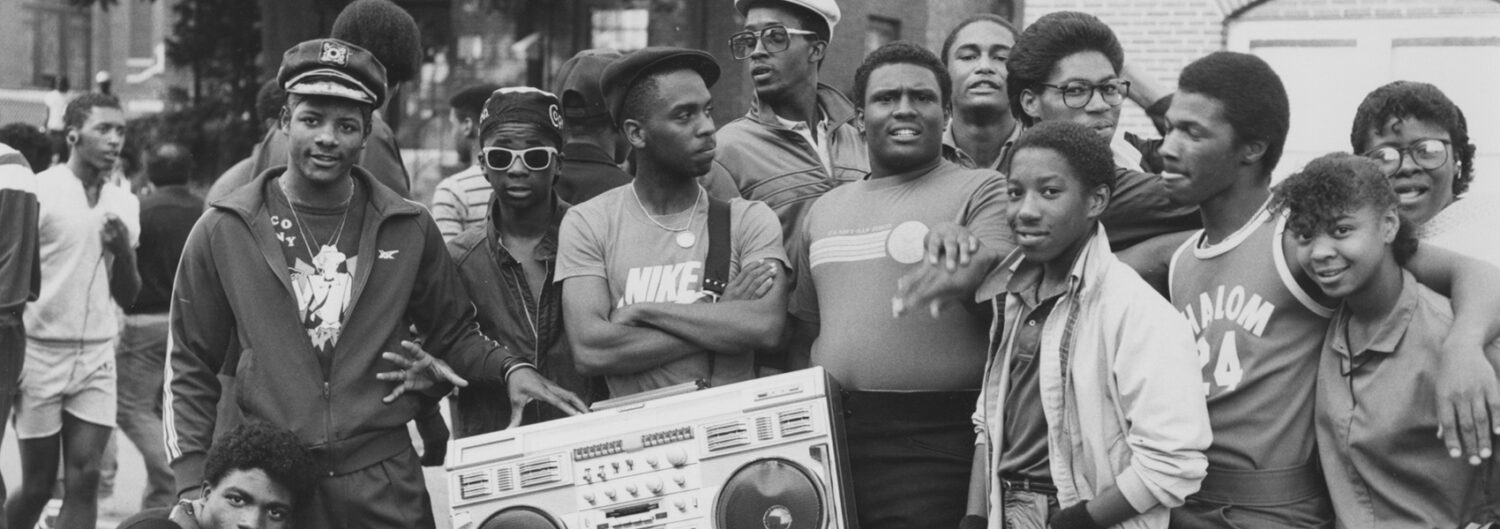
Marquette University will kick off 2024 with a new exhibition set to open on Thursday, Jan. 18 at the Haggerty Museum of Art highlighting the photography of Marquette alumni Bill Tennessen.
Tennessen was born in 1934 and was raised on Milwaukee’s North Side on North 39th Street before becoming a graduate of Marquette University’s College of Business Administration in 1956. In 1981, Tennessen started to contribute photos to the historic Wisconsin African American newspaper, Milwaukee Community Journal. A self-taught photographer, Tennessen captured many meaningful events in Milwaukee’s African American community such as the Ernest Lacy demonstrations, Juneteenth celebrations, and activities by both the Boys & Girls Clubs of Greater Milwaukee and Ko-Thi Dance Company, along with multiple sports events in Milwaukee.
The exhibition entitled “Dynamic Range” was curated by Haggety Museum Curator for Academic Engagement Lynne Shumow in collaboration with Marquette Professor and Director of the Center for Urban Research, Teaching and Outreach Dr. Robert Smith and Education and Research Coordinator at America’s Black Holocaust Museum Mia Phifer. Additional assistance was provided by Kate Rose, Caroline Bielski, Sebastien Brown, Sophia Furman, Logan Glembin, Niktalia Jules, and Adamali De La Cruz, as well as support provided by the Marquette University Women’s Council Endowment Fund.
There will be a reception event that is free and open to the public at the 1234 W Tory Hill St. location in Milwaukee, though spots must be reserved.
To reserve a spot for the opening reception, visit the event page here.





