About

Posts by :

Check Out This Stunning Campus Restaurant Photographed by California Based Architectural Photographer Zack Benson

Check Out This Stunning Campus Restaurant Photographed by California Based Architectural Photographer Zack Benson

Project of the Week

We’re back on Project of the Week with another one of Zack Benson’s perfectly photographed restaurants — Soda & Swine. Zack’s photographs of Morning Glory were the object of my fixation back in March of 2020, and this new project – which is actually the coolest college dining hall on the University of California San Diego’s campus by Consortium Holdings and BASILE Studio – is my new favorite!

Sporting the same glossy feeling, powerful compositions, sexy lighting, and warm colorations as his other spectacular shoots, Zack’s images of Soda & Swine are so inviting and pique our interest in dining here.

Zack starts off by explaining one of his favorite photographs, saying, “I like the shot with the front door and sunlight streaming in. A version of this shot was on the shot list, but when I saw the late afternoon light coming in we quickly pivoted and composed the shot around the sunlight.

Often you have to work really hard to get a shot but my favorite ones are the ones that just bloom right in front of you. Like a fresh flower that just opened. You are at the right place at the right time and have the skill to capture it. When those stars all align, you feel the harmony with your subject and it is amazing.”

This next scene is arguably the hero shot of the project. We get a good look at the restaurant in its entirety, noting the bar area and table seating. Zack shows off the materiality and that glossy, glitzy feeling that conveys how dining here is special.

“Everything in the restaurant is custom-made. So one of the biggest challenges was when we would shoot. Of course, the client wants to shoot as soon as possible but I often have to push back and make sure everything is completed, finished and ‘photo ready.’ If something is missing I have to figure out how to overcome it. It could be art, furniture, signage etc,” Zack explains in regards to the shoot day.

He continues, “When possible, I scout a project before the shoot and then address any issues I find with the client making sure we aren’t missing anything we can’t live without. We were able shoot right before the grand opening. We started in the afternoon and then shot late into the night.”

I asked Zack a little bit about the business side of things, like locking down this commission and any advice he had about running his architectural photography business. He shared, “Like most of my shoots I already had an established relationship with the client. 95% of my work is repeat clients, I do no marketing besides my website but I probably should. I have been very fortunate with ‘word of mouth.’”

He continues, “When I was younger I wanted to be everyone’s photographer and shoot everything I could. That is an absurd idea that sets you up to fail. With more time in the saddle, you realize to focus on the things you enjoy. Try to identify the things/projects that you should let go.

Are you running your business or is your business running you? What is the goal of your photo business? I don’t mean a “mission statement” on your website. I don’t mean what it does for your clients. I mean what does it do for the owner, you! I spent many years trying to build my business up. Each year making a bit more. It became successful and I’m grateful for that but I was running myself very hard. Working nights weekends, and traveling way to much, etc. I became very burnt out and I am finally trying to recover from that now. To me my business has three goals:

1. Stimulate me creatively and mentally

2. Stimulate me financially allowing me and my family to have a work-life balance.

3. Produce high-quality work that you can take pride in.

If my business is not doing these three things then it is not successful. If I am very busy making lots of money but I am missing out on family time then it is not successful. Make sure your business is serving you and not the other way around.”

An enormous thank you to Zack for sharing this gorgeous project with us and a bit about his mentality while shooting and running his architectural photography business! What an awesome project, and a wise photographer!

You can find more of Zack’s amazing work on his website zackbenson.com and on good ole Instagram @zackbensonphoto.

If you have a project you’d like to be considered for Project of the Week, you can submit it here.

Photography exhibition | Documenting life on the margins

Photography exhibition | Documenting life on the margins

Broken, Asha Thadani’s exhibition of photographs of Dalit lives, makes us face some uncomfortable realities, but without robbing her subjects of their dignity

Amit Dixit

ISSUE DATE: Dec 25, 2023 | UPDATED: Dec 15, 2023 18:27 IST

According to self-taught photographer Asha Thadani, her work “has always centred around patterns and boundaries and power structures that define or differentiate the world and the complex ways in which these lines become etched, blurred, brittle and porous”. Thadani finds Dalit lives to be on this vulnerable frontier and feels “their inner world is not represented enough”. Broken: Dalit Lives, her ongoing exhibition at the India Habitat Centre, New Delhi (on till January 7, 2024), addresses this imbalance by showcasing 10 Dalit communities from across India. This is a substantial body of work, still in progress, and the set being exhibited took Thadani seven years to document.

First gallery show dedicated to Ghanaian photography pioneer will display previously unseen works capturing life under colonial rule

First gallery show dedicated to Ghanaian photography pioneer will display previously unseen works capturing life under colonial rule

Few people photographed as many major events and notable figures in Ghana’s pre and post-colonial history as the late J.K. Bruce-Vanderpuije.

On 28 February 1948, he captured on camera the fatal shooting of three local ex-servicemen who were on a march to the seat of the British colonial government, protesting unpaid war allowances. Riots and further protests broke out in response to the shooting, and Bruce-Vanderpuije’s images were tendered as evidence in a commission of inquiry that was set up to investigate. The 1948 Accra riots, as they are now known, are said to have been a pivotal moment leading to the independence of Ghana and other African countries.

In the 1920s, as the official photographer of Achimota School (formerly known as Prince of Wales College and co-founded by the then Gold Coast governor Sir Frederick Gordon Guggisberg) he had captured images of a very young Kwame Nkrumah, who would later become the first president of the newly independent Ghana. On 6 March 1957, the day independence became a reality, Bruce-Vanderpuije was at the old polo grounds (now Kwame Nkrumah Mausoleum), capturing the moment Nkrumah famously proclaimed, “…at long last, the battle has ended… Ghana, your beloved country, is free forever.”

J. K. Bruce-Vanderpuije, Kwame Nkrumah Waving (1961)

Courtesy of Deo Gratias Studio and Efie Gallery, Dubai

“He was probably the only person to take certain photographs in [Ghana’s] history at a certain time,” says Kate Aku Tamakloe, his granddaughter and manager of the century-old photo studio he founded. There might have been other photographers during Nkrumah’s landmark 1957 pronouncement, she adds, “but he was right in front.”

“That picture,” she added, referring to the print of Nkrumah on a podium flanked by members of the Gold Coast cabinet at the entrance of the Deo Gratias studio. “We [at the studio] have several of them. It’s [an image that is] out there but [his version] is unique to him.”

J. K. Bruce-Vanderpuije, Telephonist at their Exchange (1940s)

Courtesy of Deo Gratias Studio and Efie Gallery, Dubai

Referred to as the forgotten forefather of 20th-century African photography, James Kobla Bruce-Vanderpuije was born in Jamestown (a suburb of Ghana’s capital city, Accra) on 7 March 1899 to Emmanuel Vanderpuije, who worked in the shipping industry, and Eleanor Afua Bruce of the Otublohum royal family.

He took up photography as a hobby while at school. Later, he spent three years learning from photographer J.A.C Holm, and also worked briefly with the Accra Metropolitan Authority (then known as Accra Town Council.) In 1922, aged 23, he established the Deo Gratias Photo Studio in Jamestown, now said to be the oldest operational photography studio in West Africa.

J. K. Bruce-Vanderpuije, Miss Ghana (1958)

Courtesy of Deo Gratias Studio and Efie Gallery Dubai

Under his helm, the studio was a hub of activity with diplomats, elites, and traditional and community leaders all trooping in to have their portraits taken. The studio has an archive of more than 50,000 images— taken over a span of seven decades—of figures ranging from Nkrumah to the late Ghanaian politician J.B. Danquah and the late British Queen Elizabeth II.

Around a decade ago, Tamakloe (who now runs Deo Gratias studio) set out on a journey to “categorise”, she says, the images in the portfolio as a way to make it easier to process requests she was receiving for photographs. She grouped images based on themes including “families,” “weddings,” “funerals,” and “people wearing [specific] Kente design”. This was done with the assistance of her now visually impaired 89-year-old father Isaac Hudson Bruce-Vanderpuije (J.K’s son, and the person who first inherited the space). Isaac shared stories about some of the pictures and helped to identify their subjects.

J. K. Bruce-Vanderpuije, Fishermen at Sea (1940s)

Courtesy of Deo Gratias Studio and Efie Gallery, Dubai

Tamakloe has also worked hard to preserve the images, a journey that itself has included some bumps in the road, including losing the hard drive after beginning the process of digitising the archive, an experience Tamakloe says was “very depressing after having done so much.” She says, however, that she is “enjoying that the end is not yet here because I’m still discovering” images—citing recent examples such as a photograph of Seth Anthony, the first African commissioned as an officer of the British Army, and his family in the 1940s. It was one of Anthony’s daughters, who visited the studio in 2016, that identified him in the photograph.

Prints of images from the archive, including the shot of Seth Anthony, were featured in a group presentation by Efie Gallery at the 1-54 Contemporary African Art Fair in London this past October. On 12 January 2024, Unveiling the Shadows of the Past: J.K Bruce-Vanderpuije – The Hidden Icon of Photography, the first gallery show to be dedicated to Bruce-Vanderpuije’s work, will be on view at the Efie Gallery in Dubai. Curated by Ethiopian photographer Aida Muluneh, it will showcase more than 40 previously unseen black-and-white images by Bruce-Vanderpuije, depicting life in Ghana in the 1920s and 30s and offering insight into the formation of an independent, 20th-century Ghanian social and political identity as the country prepared to liberate itself from colonial rule.

J. K. Bruce-Vanderpuije, Nee Kodjo Ababio IV (1936)

Courtesy of Deo Gratias Studio and Efie Gallery, Dubai

“I am really looking forward to having interactions with people who will see [the images] for the first time—not just the art or photo lovers but also historians,” says Tamakloe of the upcoming exhibition. “I have always said I want to tell the Ghanaian story.”

Wedding Photographer Dies After Falling From Roof While Taking Pictures

Wedding Photographer Dies After Falling From Roof While Taking Pictures
The Kitano Club in Kobe City.

A wedding photographer in Japan has died after he fell from the roof of a restaurant while photographing a couple as they prepared for their wedding.

The 26-year-old was at the Kitano Club in Kobe City on the morning of November 26 when he fell from the third floor, a distance of 30 feet (nine meters). He suffered a blow to the head and was transferred to a local hospital where he died two weeks later on December 9.

According to local police who held a press conference, the cause of death was septic shock brought on by the injury to his head.

The man was reportedly taking photos of the couple on the roof of the venue at a pre-wedding event when he stepped back and fell.

The rooftop offers a spectacular view across Kobe City and has a lawn on top of it but there was no fence in the area he fell. Police are now investigating whether the photographer’s death was due to professional negligence.

The Kitano Club is a popular wedding venue, the grass lawn elevating couples above the skyline allowing for spectacular photos of the bride and groom but serious questions will have to be answered as to how this happened.

In 2015, wedding photographer Gordon Jack passed away at the wedding rehearsal of tennis superstar Andy Murray.

Initially, it was reported he had fallen and had a freak accident but it was later revealed he had actually suffered a heart attack which is what caused him to fall.

The Perils of Being a Photographer

Wedding photography can be hazardous: there are a lot of moving parts and photographers can find themselves in unfamiliar locations, walking backward, and having to avoid random objects and small children.

Most professionals will have insurance to cover themselves in case anything goes wrong.

Earlier this year, PetaPixel interviewed Robyn Lindemann, an elite wedding photographer from Chicago who was forced to close her business after a rare eye disease caused her to go blind and she lost almost all of her peripheral vision.

“I was horribly embarrassed when I missed the outreach of a common handshake, bumped into little flower girls, or humiliatingly tripped over something that was outside my visual field range,” she said.

Lambeth Archives hosts Harry Jacobs Photo Archive

Lambeth Archives hosts Harry Jacobs Photo Archive

Rescued from a closed studio in 1999, The Harry Jacobs photographic archive is one of Lambeth Archives’ many treasures.

Finding history

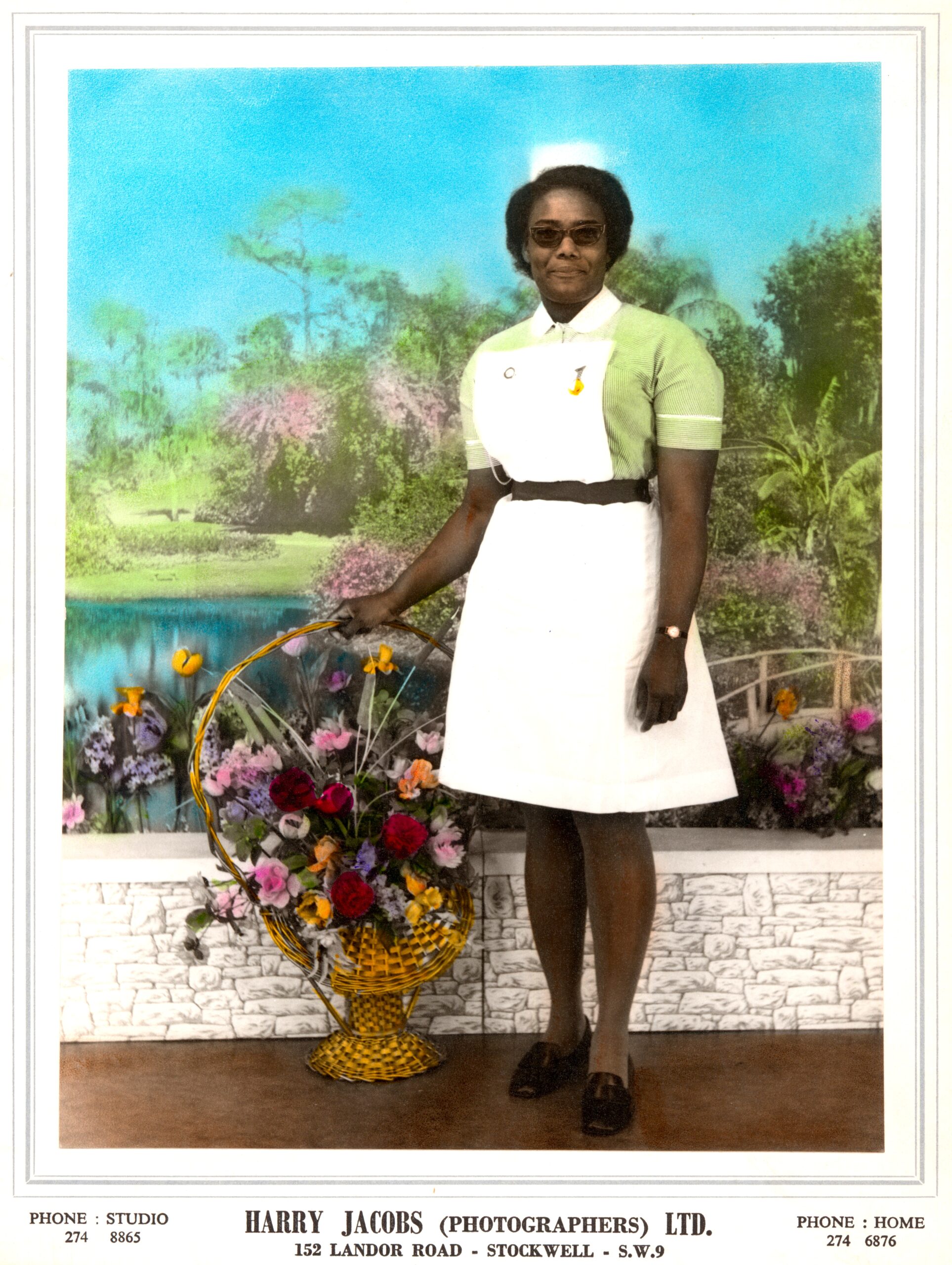
Hand-tinted photo of nurse from Harry Jacobs' studio

Hand-tinted photo showing Harry Jacobs’ unchanging studio backdrop

The Jacobs photographic archive – over 5,000 rescued portrait pictures – is available for everyone to view at Lambeth Archives. Local people visit in search of the past, finding photographs of parents, friends, neighbours and relations – and sometimes even themselves.

Local institution

Jacobs’ photos capture the personal and domestic side of the Windrush Generation. Jacobs started taking pictures of Jamaican families in their front rooms and became the portrait photographer of choice for the local Black community for more than 35 years – so much so that when Jamaican Prime Minister, Hugh Shearer visited Brixton in 1969, Harry was called to record the occasion.

The Harry Jacobs Story

Two years before the Windrush voyage, young Eastender Harry Jacobs returned from the Second World War: “I’d never done photography before, but I started with a 35mm Leica camera. Going out ‘on the knocker’ I used to explain what I was doing and say, “I don’t want to bother old people; are there any families with children on the street?” and she’d say “Oh, Mrs so-and-so opposite, Mary at no. 24 and so on”. I‘d knock, arrange to go back in the evening, and the whole family would be in their best clothes in the front room.“

Posing for portraits

After 1962, when Harry Jacobs opened his own studio at 152 Landor Road, Stockwell, posing for a portrait became a rite of passage for generations of local people. “I became a bit of an institution for the black community in Brixton. The funny thing was people used to insist it was a scene from their home country. Jamaicans would say it was Hope Gardens, ‘Oh! The waterfall was just there; and the trees; it reminds me of home’. I didn’t use many props; there was the famous basket of flowers, the raffia chair and the Bakelite telephone; for children there was a tricycle and a plastic parrot; and every Christmas the tinsel Christmas tree came out.”

Rescuing the pictures

When Lambeth Archives staff arrived at the closed studio in 1999 to rescue the contents, they were confronted by a montage of over 2,000 photographs covering the shop and studio walls: proud faces and special moments; in work uniforms and party frocks, displaying new hairstyles and babies, new suits and swimsuits, offering wedding toasts and eating funeral meats.”

Lambeth Archives opens in Brixton

I Took 12 Portraits Of Dogs And Turned Them Into A Cute Calendar To Support A Local Rescue (12 Pics)

I Took 12 Portraits Of Dogs And Turned Them Into A Cute Calendar To Support A Local Rescue (12 Pics)
ADVERTISEMENT

Pet rescue is near and dear to my heart, and one of my favorite ways to give back.

For the past three years, I’ve partnered with a central Florida rescue organization – Happy Trails Animal Rescue – creating an annual calendar featuring dogs they’ve adopted out or supported through their numerous community outreach programs.

Happy Trails focuses on dogs who need some additional support to be happy, content family members. They might be nervous around new people or situations, find other dogs frightening, need help channeling their energy, have disabilities like deafness or blindness, or simply do best with some enrichment. Happy Trails meets them where they are to help them be their best selves – along with running a much-needed pet food pantry.

More info: happytrailsanimalrescue.com

Perspective | This photographer is exploring climate change’s effects in Hungary

Perspective | This photographer is exploring climate change’s effects in Hungary

Like many photographers, András Zoltai has spent much time photographing outside of his home country. He has worked on projects in Armenia, Crimea, New York, the Balkans and India.

It was in India where Zoltai, while working on an environmental story about the Brahmaputra River that he realized he should, in fact, also be looking at environmental issues in is home country of Hungary.

Zoltai’s project is ongoing, but he says he wants to “explore the fragile relationship between humans and water at a more metaphorical level through my human encounters and memories, but still focusing on how climate change and human negligence affect our most precious resource—WATER and the QUALITY OF LIFE that surrounds it.”

Interestingly enough, Zoltai grew up near Hungary’s second biggest river, the Tisza. He told In Sight:

“My entire childhood was inevitably shaped by the presence of the river and the thermal springs around my hometown, Szentes. This region was one of the most rich and vivid livelihoods in Hungary before the river regulations took place in the 19th century. The developments around water ecosystem, and the threats of recent climate issues has been constantly impacting the environment, causing huge droughts, extreme weather events and limiting our direct access to living waters.”

Zoltai’s images are poetic encounters with Hungarians and climate changes affect on them. He told In Sight, “My main motivation is to photograph the current relationship between human and water, reveal the country’s critical points, concentrate on countryside people whole livelhihood and place of residence also heavily depend on the presence of water.”

Today on In Sight we are pleased to show the beginnings of Zoltai’s project, “Blue Memoir.”

You can see more of Zoltai’s work on his website, here.

DIVE’s Big Shot Cephalopods photo competition

DIVE’s Big Shot Cephalopods photo competition

Our next Big Shot underwater photography competition starts now – send us your best cephalopod pictures by 11 February 2024 for the chance to win an Aggressor Adventures liveaboard trip to the Egyptian Red Sea


Our Big Shot Megafauna and Big Shot Kaleidoscope underwater photography competitions have been a great success, with some amazingly beautiful images published in our two most recent print magazines.

For the Spring 2024 issue of DIVE, we’re asking you to send us your best shots of cephalopods – octopus, cuttlefish, squids and nautilus. The best pictures will be printed in the magazine, with the overall winner rewarded with a seven-night trip on board the Red Sea Aggressor IV (worth US$2,699) courtesy of Aggressor Adventures.

aggressor adventures red sea aggressor iv scuba diving liveaboard

There are many different species of cephalopod, many of which make easy subjects for photography – but cephalopods are also highly intelligent, so capturing the perfect shot means capturing some of the animal’s personality as much as it does its interesting features.

To enter the competition, submit up to ten of your best shots – plus, you also need to make sure that your entries are uploaded to either Instagram, Facebook or X with the tags and hashtags as listed in the ‘How to enter’ box below.

The deadline for entries is midnight (GMT) on Sunday, 11 February 2024.

The overall winner of the competition will win a free place for one person for seven nights diving onboard the Red Sea Aggressor IV (flights not included).

How to enter:
  1. Submit your images (minimum 1, maximum 10) using the form below, AND:
  2. Tag your shots on Instagram with: #DIVEsBigShotCephalopods @AggressorAdventures @Divemag OR
  3. Tag your shots on Facebook with: #DIVEsBigShotCephalopods @AggressorAdventures @DigitalDive OR
  4. Tag your pics on X (formerly Twitter) with: #DIVEsBigShotCephalopods #AggressorAdventures @DiveMagazine
  5. You can submit a maximum of 10 pictures to the competition, but you can only use the form once, so make sure you submit them all together; you can’t upload them one after the other.
  6. That’s it! Note that the photos are moderated so may take up to 24 hours to appear in the gallery.
Important Information – please read!
  • Please read the terms and conditions carefully before entering.
  • You must be the original photographer and copyright holder of the picture you submit
  • You must have access to high-resolution original versions of the pictures you submit
  • Entering will subscribe you to our free, weekly newsletter (you can unsubscribe at any time)
  • Your details will be shared with Aggressor Adventures (but no other third party)
  • Problems with your entry? e-mail info@divemagazine.com

DIVE’s BIG SHOT CEPHALOPODS Photography Competition Terms and Conditions

By entering this competition; entrants agree to be bound by these rules.

  • The competition opens on 15 December 2023 at 11:00am and closes on 11 February 2024 at 23:59 (BST)
  • The best images will be selected by the judges for publication in the Spring 2024 issue of DIVE. One image will be selected as the overall winner by the judges and the overall winner will receive an Aggressor Adventures liveaboard trip to Egypt onboard the Red Sea Aggressor IV.
  • The judges’ decision is final; no correspondence will be entered into.
  • The prize is a week’s trip for one person aboard the Red Sea Aggressor IV on dates to be agreed with Aggressor Adventures.
  • Flights are not included; prize winners are responsible for their own transport to and from Marsa Alam, Egypt.
  • Local taxes, visas, health requirements and travel insurance are the responsibility of the prize winner.
  • All entrants submitting a photograph that is selected for publication will receive one year’s digital subscription to DIVE Magazine.
  • Participating in this competition will subscribe the entrant to DIVE’s weekly newsletter. The newsletter, which contains a weekly digest of articles, plus news of special offers and competitions is completely free of charge, and can be unsubscribed from at any time without penalty. No data will be shared with any third party except Aggressor Adventures (see below)
  • The name and e-mail address of all entrants to all of DIVE’s Big Shot competitions will be shared with Aggressor Adventures.
  • Prizes are non-transferable, and there is no cash alternative.
  • DIVE Magazine, and all partners involved cannot accept any responsibility for any damage, loss, injury or disappointment suffered by any entrant entering the competition or as a result of accepting any prize.
  • Entrants agree on their behalf, and on behalf of their respective heirs, executors, administrators, legal representatives, successors and assigns (‘Released Parties’) to release, defend and hold harmless DIVE magazine and Aggressor Adventures, and any partner involved, as well as the employees, officers, directors and agents of each, from any and all actions, causes of action, suits, expenses, lost profits, indirect or direct damages, consequential damages, incidental damages, punitive or exemplary damages, judgments, claims and demands whatsoever against Released Parties arising out of or in connection with entrant’s participation, acceptance and use or misuse of any prize, including any travel-related activities.
  • All the photography must be the work of the entrant and the entrants must have full rights for the use of any photograph. All images must be available in high resolution (300 dpi minimum) and must be supplied as a JPEG file on request.
  • The entrants agree to give DIVE magazine non-exclusive rights to submissions of photographs for the purposes of promotion of the competition in print and online.
  • The laws of England and Wales govern this agreement.