About

Posts by :

Embrace the holiday spirit in OKC: Ice skating, art exhibits, and a merry pooch parade await you this weekend

Embrace the holiday spirit in OKC: Ice skating, art exhibits, and a merry pooch parade await you this weekend

Looking for something to do in OKC this weekend?

We’ve got you covered.

From ice skating, and art exhibits, to a merry pooch parade, OKC has much to offer this weekend.

Events on Saturday, December 2:

  • ‘Tis the Season at Scissortail Park: Shop for everyone on your list and support local businesses set up along The Promenade. Enjoy shopping, live music, and holiday performances from 5 P.M. to 9 P.M. For more information, visit here.
  • The Devon Ice Rink: The family-friendly ice rink is open from 11 A.M. to 11 P.M. on Saturday and is $14 per person with a skate rental. For more information, visit here.
  • Eva Schlegel: Multiple Voices is a free, public art exhibit at the Oklahoma Contemporary Arts Center. ‘Schlegel created a series of polished and translucent surfaces that catch light and reflect part of the surrounding environment, encouraging visitors to gather, play, and learn.’ For more information, visit here.
  • Lyric Theatre’s A Christmas Carol is making its return this holiday season. ‘Join Ebenezer Scrooge, a host of ghosts, and Charles Dickens’ characters as they spring to life in Lyric’s spectacular, new production.’ For more information, and to purchase tickets, visit here.
  • Merry Pooch Parade: This Saturday, December 2 from 1 P.M. to 2 P.M., dress your pup up in holiday gear to meet Santa Claus at the Devon Lawn. Prizes will be awarded for the best-dressed pups, and the cost to enter is $5 for member dogs and $10 for non-member dogs. For more information, visit here.

Events on Sunday, December 3:

  • A Candy Cane Christmas: Join the American Banjo Museum for live Christmas music from Johnny Baier, Tyler Jackson, and Lucas Ross as well as photos with Santa and Christmas treats. Admission is $8 for adults and free for children under 15. For more information, visit here.
  • The Sleigh Bells Market: The OKC Farmers Market is having a ‘holiday retail extravaganza’ that will feature vintage and local handmade goods. There will also be a food truck and a cash bar. Admission is free. For more information, visit here.
  • Canterbury Voices: Handel’s Messiah is this Sunday, December 3 at the Civic Center Music Hall. The OKC Philharmonic will join Canterbury Voices to bring this performance to life. ‘Composed in the 18th century, this timeless masterpiece intertwines biblical texts with exquisite melodies, stirring the emotions and illuminating the human experience.’ For more information, and to purchase tickets, visit here.
  • Sunday Jazz Brunch at Tellers: Every Sunday Tellers hosts jazz brunch from 11 A.M. to 3 P.M. featuring classics like eggs benedict, lemon buttermilk pancakes, and Italian favorites from a wood-fired grill. The event also features live jazz music. For more information, visit here.

For more events and information on what’s happening in OKC this weekend, visit here.

For more local news delivered straight to your inbox, sign up for our daily newsletter by clicking here.

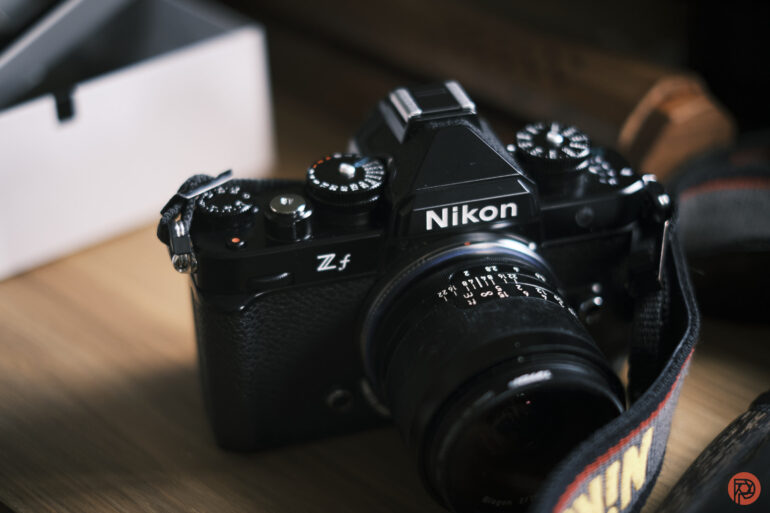
We Turned the Nikon Zf into a Street Photography Workhorse

We Turned the Nikon Zf into a Street Photography Workhorse

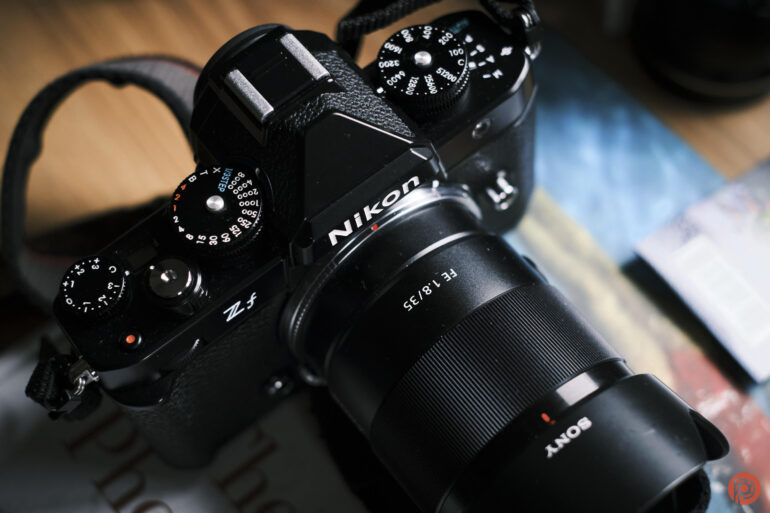
I never thought that I’d say this, but some of the best lenses for the Nikon Zf aren’t made by Nikon. They’re made by Tamron and Sony. While we’re reviewing the Nikon Zf, we’ve found that the lenses we received from Nikon weren’t always the best for autofocusing. To clarify that statement, Nikon sent us the 40mm f2 and the 24-70mm f4 — and while I adore the 40mm f2, it’s not the best for autofocusing. However, we’ve got the Megadap ETZ21 Pro around the office, which adapts Sony E mount lenses to Nikon Z bodies. And the results were really incredible to us.

We used the Sony Zeiss 55mm f1.8, the Sony 35mm f1.8 FE, and the Zeiss Loxia 35mm f2 — which are all lenses we own. When I say that putting Sony’s own lenses on the Nikon Zf is a night-and-day experience, I’m truly not joking.

First off, the Zeiss Loxia 35mm f2 has problems on Sony cameras that we’ve reported about previously. But that problem doesn’t happen when it’s adapted to the Nikon Zf. It almost makes me feel like Zeiss could get new life by upgrading the build quality of the Loxia lenses and making them for the Nikon Z mount. And since this is a manual focus lens, it’s so perfect for street photography for several reasons.

  • It’s a Zeiss lens, and the image quality is incredible.
  • It’s manual focus, so I set the lens to focus 6 feet away at f5.6. Because of zone focusing, this gave me quite a bit of space to work with.
  • The Nikon Zf has incredibly clean image quality, even at ISO 51,200.
  • The camera can shoot seven frames a second

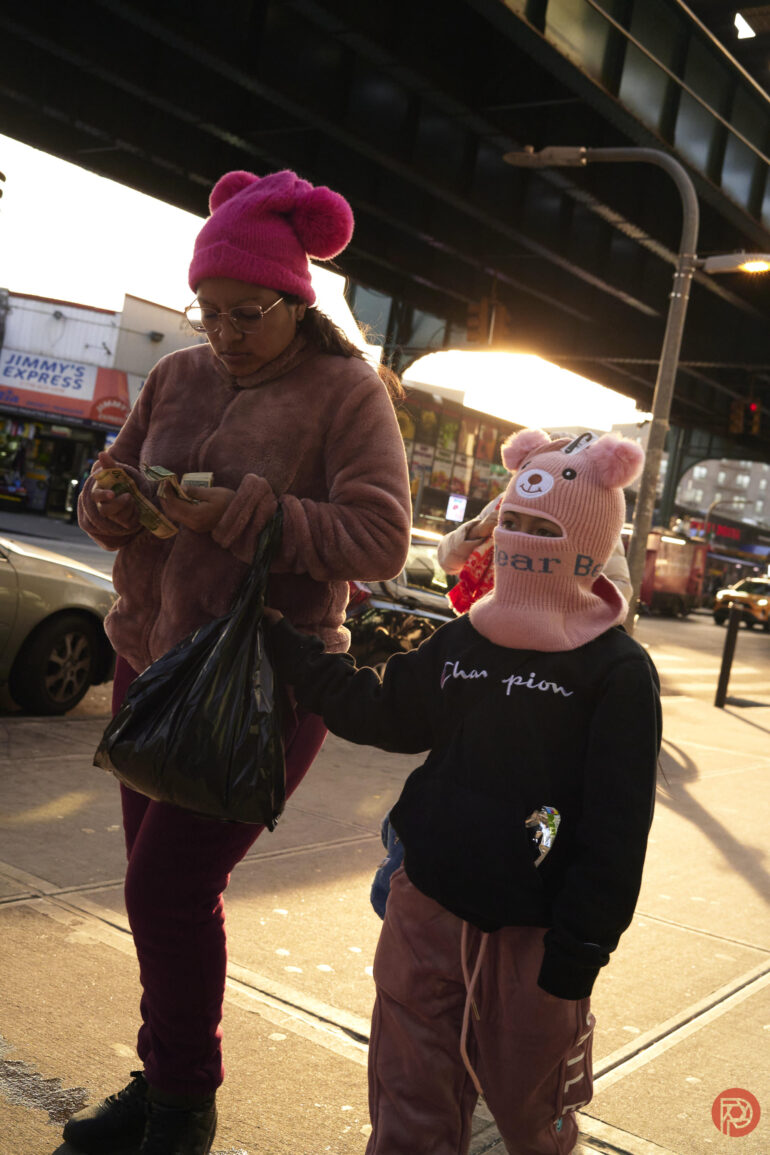
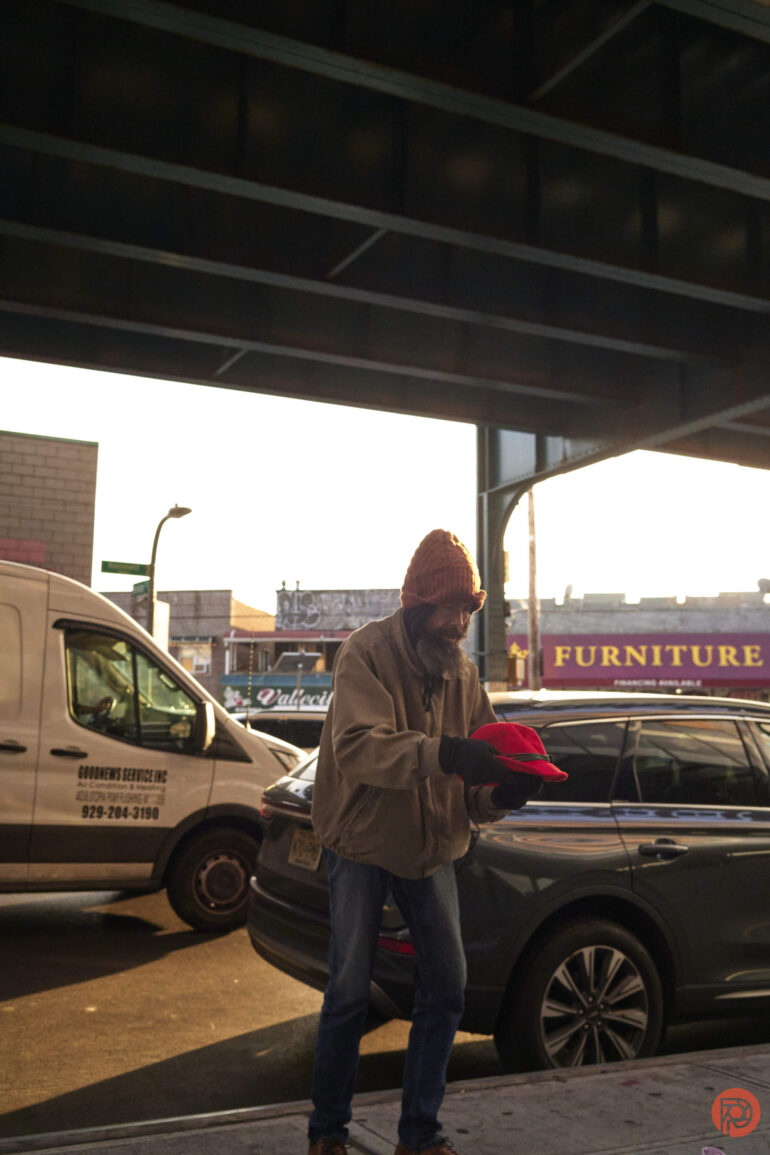
Couple all of these together, and it’s a perfect combination for street photography. Using the Megadap ETZ21 Pro to shoot with the Zeiss 35mm f2 on the Nikon Zf is the single most pleasing experience I’ve had so far during my review process. It was almost like shooting with a Leica M — but this is a Nikon Z body with incredible ergonomics. During my outing with this camera and lens combo, I’ve gotten some of my favorite photographs to date with the camera.

But then we just had to test the autofocusing abilities. With Nikon’s own lenses, the autofocus of the Nikon Zf isn’t anything worth talking about for street photography. They work well enough for many situations, but the combo of the 40mm f2 and the Nikon Zf can’t keep up with fast-moving subjects. However, I felt the Sony 35mm f1.8 FE autofocused much faster than the Nikon 40mm f2 on the Nikon Zf body.

More importantly, it could track people of color with darker skin, even in low light. However, it wasn’t in the darkest situations that we’ve encountered. This is where I was incredibly surprised because Sony’s own cameras are pretty bad at this.

Crazy, right? Well, not really. The 35mm f1.8 is a much more expensive lens than the 40mm f2. I could kind of expect this to happen. Tamron’s Z mount lenses also focused faster than the three Nikon lenses we have right now.

This makes us wonder how the Nikon Zf will work with Nikon’s own 35mm f1.8 — and I’d assume that it’s good, but not as good as Sony’s. I hope that Nikon’s autofocus improves for their smaller primes as they pair perfectly with the Nikon Zf’s retro and smaller camera body. And just think, I wouldn’t have even knew that this would happen if it weren’t for the Megadap ETZ21 Pro.

There’s no clear word on weather resistance when using the adapter though, so I’d be careful in inclement weather.

Beyoncé the Auteur Takes Center Stage in ‘Renaissance’

Beyoncé the Auteur Takes Center Stage in ‘Renaissance’
image

She is essentially one on the new film, but she has also demonstrated throughout her career just who is in charge of her art.

“I’m excited for people to see the show,” Beyoncé says early in “Renaissance: A Film by Beyoncé,” based on her recent world tour and seventh studio album. “But I’m really excited for everyone to see the process.”

I’ve long wanted to understand her process better, too, especially because she has taken to rarely giving interviews. Instead she has let her art speak for itself, a risky venture when critics do the interpreting without her input. My interest in her approach is partly scholarly. I regularly teach courses on her and want my students to learn from her observations. But my enthusiasm is also speculative. I often wonder whether our ignorance of her creative practice has minimized and denied her innovation, ingenuity and individual contributions to her own body of work.

If “Renaissance” was only a film about her beaming audience, dazzling performances and the making of the tour, that would be more than enough. However, it’s clear early on that Beyoncé is not entirely interested in fetishizing her “process” to validate her artistry. Instead, the movie deconstructs its subject to expand our understanding of her. More poignantly, it critiques how race, gender and genre have limited our ability to see her talent and, by doing so, liberates her from ever again having to prove her singular impact on American culture.

It does so by quickly establishing her creative control. The concert itself reveled in Beyoncé’s simultaneous mastery of dance, music, fashion and live performance, which makes her unparalleled among artists today. On the other hand, the film shows her working backstage and sometimes even underneath it. As the tour director, executive producer and creative director, she oversaw everything from hiring and salaries to musical selections, marketing, choreography, costumes and video.

But what makes “Renaissance” unique among other great concert films is that she did not just star in it the way the Talking Heads did in Jonathan Demme’s classic “Stop Making Sense” or Madonna in Alek Keshishian’s provocative “Truth or Dare.” Beyoncé also wrote, directed and produced the film. In fact, she has created some of the past decade’s most memorable cinematic musical experiences and should be considered an auteur — in terms of both this film and her career.

In this way, “Renaissance” is the culmination of her visual projects, beginning with the visual albums “Beyoncé” (2013) and “Lemonade” (2016); her intimate documentary “Life Is but a Dream” (2013); the 2019 Coachella concert film “Homecoming”; and “Black Is King” (2020), the visual companion she and Blitz Bazawule made for the soundtrack “The Lion King: The Gift.” But by offering the most in-depth document of her vision, preparation and personal sacrifice, the new film goes further than these productions.

Beyoncé in a scene from “Life Is but a Dream,” her intimate 2013 documentary.Parkwood Entertainment

The film opens with Beyoncé commanding our attention in a citron yellow dress, her hair blowing as she belts “Dangerously in Love 2.” She later revisits that moment through a flashback showing her at work with her production team. Via voice-overs and close-ups of her in far more casual clothing, we watch as she gives her team notes about camera angles, lighting and the speed and direction of the mechanical fans. If only we could rewind to that first performance to better appreciate all the technical components that went into making that moment appear so flawless.

In another scene in which the entire sound system cuts out as she sings “Alien Superstar” in Glendale, Ariz., the tension really mounts. She and her dancers leave the stage immediately. That’s all the live audience knows. But as a film director, she has the cameras follow her backstage to capture her audio team’s update (“It will be back on in three minutes”). Within that short period, she convinces the wardrobe department she has enough time for a quick costume change, then, in a new outfit, meets with her head of music production to test a new transition to the next song. It is an exhilarating sequence that makes her seamless comeback to the stage even more admirable and shows her remarkable sense of timing and tension as a storyteller and filmmaker.

These moments pose the question of why it took her so long to exhibit such a thrilling illustration of her leadership. And then I realized: We were the problem; we just hadn’t listened to her.

Beyoncé has spent most of her career telling us she was in charge. As far back as 2004, “Beyoncé: Live at Wembley,” a concert film about her first solo tour, featured the artist at 22 as well as its creative director, Kim Burse, and choreographer, Frank Gatson, discussing how the headliner had helped conceive the show and chose its costumes, songs and choreography. Subsequent documentaries like the short “Beyoncé: Year of 4” and “Life Is but a Dream” focused even more intensely on her artistic independence after she split from her father and longtime manager, Mathew Knowles, and started her own company, Parkwood, to manage herself.

She returned to this theme of independence again in “Homecoming,” when, cinéma vérité-style, she shares the inspiration she found in the Battle of the Bands of historically Black colleges and universities; her use of three different sound stages to rehearse with the band, the dancers and her production team; and her intricate collaboration with Balmain’s Olivier Rousteing to design more than 200 outfits for the show. “In the rehearsals, I am directing and watching the show,” she says in “Homecoming” and notes, “I’m in the audience, and I’m able to be on the stage and kind of see the stage at the same time.”

And yet even in “Homecoming,” she points out how her team tried to ignore her directives in the lead-up to Coachella. At one point, she expresses her frustration to a film crew that isn’t listening to her when she describes what it will take to translate the energetic performances from the stage to the screen. “Until I see some of my notes applied,” an exasperated Beyoncé warns, “it doesn’t make sense for me to make more.”

A scene from “Homecoming,” her 2019 film in which she made clear that she was the director.Parkwood Entertainment/Netflix, via Associated Press

But in “Renaissance,” she explains her crew’s dismissiveness. “Communicating as a Black woman, everything is a fight,” she says, and adds, “I constantly have to repeat myself.” In back-to-back scenes, she shows what that looks like when she tries to buy two separate cameras to film her show. A team member informs her that one camera is unavailable, only to eventually admit that he can find it after she doubts him. In the next scene, she readies herself for the pushback. When someone else tells her the other camera does not exist, she reveals she has already found it online, so it just needs to be purchased. While this exchange is humorous, it is not minor. It is the frequency that makes the second-guessing larger-than-life and, unfortunately, far too relatable, especially for many Black women in positions of authority.

Management is one challenge; motherhood is far more demanding. The film pivots to Beyoncé’s ambivalence in allowing her older daughter, Blue Ivy, to perform with her on tour, only for Beyoncé to witness her growth as a young artist. And when we watch Beyoncé thank her mother, Tina Knowles, for protecting her from the more vicious aspects of the music industry, we realize not only that Mama Tina is her maternal template, but also that Beyoncé herself considers her three children, including the twins, Rumi and Sir, fuel for her creative process rather than fully outside of it.

After these exchanges, “Renaissance” opens up more and allows its star to reject the idea of solitary genius. Through archival footage, photographs and shots of dancers onstage, Beyoncé showcases the Black queer ballroom culture that inspired her album and concert choreography. She also pays homage to iconic Black women like Diana Ross and Tina Turner, who influenced her career, and to her hometown, Houston, where she was a founding member of the girl group Destiny’s Child. By exploring her indebtedness to a people and place, she confidently embraces her own contributions alongside those of her community and her collaborators. The payoff: She paints a more transparent portrait of the creative process.


Whether “Renaissance” will dampen criticism regarding her generous sharing of credits or drive a new appreciation of her artistry remains to be seen. By the end, Beyoncé declares she is ready for the next phase of her life and finally feels free.

May this film be the last time she has to repeat herself.

Shooting Waves – the story behind Paul Gibbins Photography

Shooting Waves – the story behind Paul Gibbins Photography

image

Shooting Waves – the story behind Paul Gibbins Photography

by Paul Gibbins 2 Dec 01:04 PST

Final Fling, Plymouth, October 2023 – Canon 5d Mk 3 300mm Prime at f7.1 / 1/640 / ISO 250 © Paul Gibbins Photography

Sailing less now I needed an excuse to be on the water. I stumbled into photography in 2017, entirely self taught, but gravitated towards the sea as I thought I would combine my interest with an understanding of boats from many years cruising, racing and teaching. I’m also a former Royal Marine, so familiar with the ‘how hard can it be? I’ll give it a go’ approach.

The number of pro-sports photographers on the water is increasing, especially as events attract more sponsors that demand more timely, quality coverage to reach new audiences on many different media platforms. This places a huge responsibility on professional photographers to shoot for different formats, including short form video and stills imagery with drones. Speed of image capture to publication is paramount, everyone likes to see a selection of shots on the Club Bar TV after racing.

But this is a huge challenge for an enthusiast. Yes, those social feeds might need updating by sundown, but good editing takes time, and the pressure is on, especially when like me, it is a solo enterprise. SailGP lead by example, where stills images are captured and uploaded into the cloud in real time, to be edited by a 3rd party, and ready for media consumption in as little as 50 seconds.

On the water I like getting close to people and the subject, which comes at risk when you have a big fleet coming towards you. But with careful planning, identified escape routes and some good boat driving, getting ‘the shot’ is doable. I’m constantly looking for the emotion of being on the water: the sweat and the smiles of being on a boat and getting it to move. It’s intrusive, but the connection between the machine and the person visually captures the ‘why we go sailing’ of our sport.

Photography at sea certainly has its challenges, it’s tricky but rewarding. The environment is hard on expensive kit, sea salt is toxic. In front of the lens, everything is moving, composition is limited and framing becomes an exercise in compromise. While we are all photographers with our phones, there’s a quality that can only be achieved with a professional camera and a fast lens.

Photographers often obsess about kit, what camera, what lens and what setting is needed for a particular shot but it’s our ‘eye’ that remains the most important. On the water, knowing where to be with my cameras is crucial. I have two rules: get close, but don’t get in the way. I don’t always get it right, but this is often forgotten when the gallery is uploaded.

This year I’ve been lucky to shoot events throughout the South West, and also a few private clients just wanting some images of their boats. I’m also seeing more Foiling on the water, some Wakeboarding, and offshore rowing of course, which I always enjoy shooting. Off the water, I’ve been lucky to do a product shoot for a local Devon Cycling brand and a Triathlon – if there’s water and movement, I’m interested! But I remain a small enterprise with a side hustle that puts a smile on my face.

If you enjoy a photo, it’s easy to share it, like it, or make a comment; all photographers like some interaction and feedback. If you can, make a purchase, help support that photographer, he/she will probably have spent thousands on kit and invested many hours of learning to be there. But most of all, when you see someone with a camera on the water, smile and wave, that always makes a great shot.

paulgibbinsphotography.mypixieset.com

Sam Youkilis’ ‘Somewhere’ is an ode to the beauty of everyday life across cultures

Sam Youkilis’ ‘Somewhere’ is an ode to the beauty of everyday life across cultures

The reason most people come across Sam Youkilis’ work is none other than doom scrolling. Yet, among the hard drive of infinite visual memories that is Instagram, it’s one of the few online destinations where one can easily find stillness. A native of New York, now calling Italy home, Youkilis is a photographer and filmmaker capturing the daily nuances of existence – acts of kindness, wittiness, and love. His work has been described as ‘a generous indexing of everyday life’, often expressed through a visual language that is both deep and effortless.

Sam Youkilis’ ‘Somewhere’, an archive of human joy and kinship

sam youkilis somewhere book loose joints

(Image credit: © Sam Youkilis (2023). Courtesy of Loose Joints)

For the last six years, he’s been observing the world and portraying the beauty of the seemingly mundane through his iPhone camera. Published by Loose Joints, his first photography book, Somewhere 2017 – 2023, arrives as a substantial 500-page testament to his exploration of universal themes. Departing from the traditional photography archive, Somewhere takes readers on a journey through human behaviours, touching on diverse themes like unmade beds, the act of cutting, thresholds, dancing couples, and gestures of romance.

somewhere sam youkilis book loose joints

(Image credit: © Sam Youkilis (2023). Courtesy of Loose Joints)

somewhere sam youkilis book loose joints

(Image credit: © Sam Youkilis (2023). Courtesy of Loose Joints)

In crafting the book, Youkilis drew from his current archive of iPhone video work, spanning from the project’s inception to its development. He explains ‘[Somewhere] is a comprehensive amalgamation of everything I’ve made up until now, but since my work is continuing and these themes and subjects are innate to my work, all of the series are works in progress in a way.’ The process involved delving into the archive, leading to the identification of themes and repetitions that have proven invaluable for his evolving understanding of motifs in his photography.

somewhere sam youkilis book loose joints

(Image credit: © Sam Youkilis (2023). Courtesy of Loose Joints)

somewhere sam youkilis book loose joints

(Image credit: © Sam Youkilis (2023). Courtesy of Loose Joints)

Moving from the dynamic nature of Youkilis’ online feed, experiencing his work in print provides a different perspective. He notes, ‘It’s strange for me as I’m so familiar with the motion aspect of almost all of the stills. I see them as moving, even when looking through the book and it’s the first time I’m able to interact with them as stills. I present my work in two ways on the internet – one is through stories which are very diaristic and reflect my day. The other way is as carousels and very often I organise these carousels by theme, quite similar to the way these chapters break the book up.’

somewhere sam youkilis book loose joints

(Image credit: © Sam Youkilis (2023). Courtesy of Loose Joints)

somewhere sam youkilis book loose joints

(Image credit: © Sam Youkilis (2023). Courtesy of Loose Joints)

Somewhere unfolds as a visual exploration of the world, leveraging Youkilis’ extensive archive and typology to unveil the profound essence of diverse global locations. Each page serves as a celebration of the real, engaging with both ephemerality and sincerity. Youkilis’ attention to composition, colour, chiaroscuro, and framing speaks to his deep affinity for the photographic medium, elevating his work beyond mere snapshots.

somewhere sam youkilis book loose joints

(Image credit: © Sam Youkilis (2023). Courtesy of Loose Joints)

somewhere sam youkilis book loose joints

(Image credit: © Sam Youkilis (2023). Courtesy of Loose Joints)

Somewhere 2017 – 2023, by Sam Youkilis, published by Loose Joints.